Concrete work options and costs in Rockland
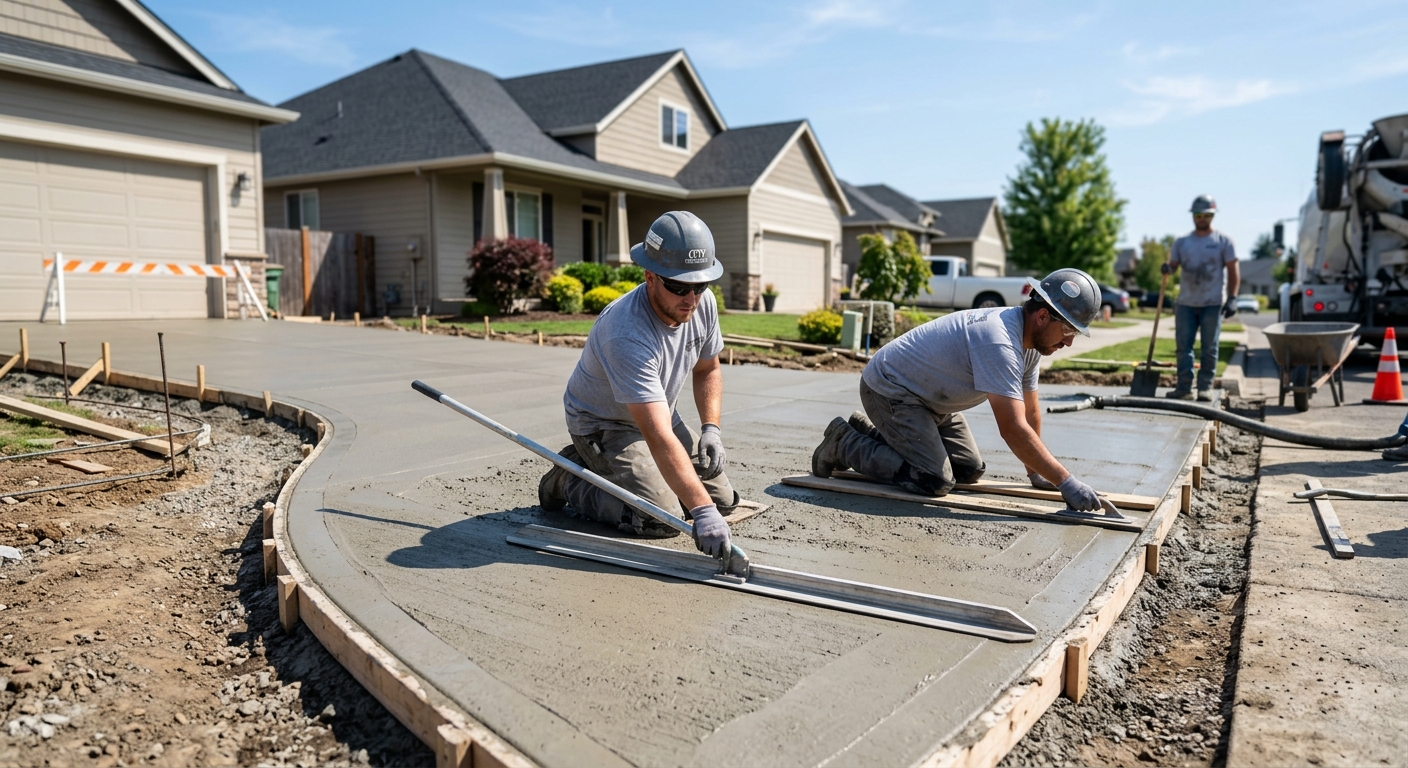
Concrete work in Rockland, British Columbia is mainly about building flatwork and foundations that can handle our coastal-wet conditions and the persistent freeze–thaw cycles that stress sidewalks, driveways, and exterior slabs. Rockland’s housing stock is sized for families—Statistics Canada reported a total population of 3,740 in 2021 (Statistics Canada, 2021 Census)—and most concrete projects here are residential: driveway replacements, patios, walkways, and the occasional garage or foundation modification. You’ll also see lots of demand tied to established neighbourhoods where people renovate for curb appeal and long service life, including around the residential corridor in and near the Rockland-area streets that connect properties to the Trans-Canada Highway access routes. In that context, Lower Mainland–Southwest pricing is affected by contractor availability and how weather impacts scheduling and curing.
In Rockland, the regional frost depth that local practice plans around is shallow compared with interior BC, but we still protect slabs and footings by placing them below the design frost line (commonly planned near 450 mm / 18"). With frequent freeze–thaw, saturated soils, and heavy rainfall, quotes can vary because base prep (compacted granular and drainage), air-entrained mix design, and longer curing/cover strategies are not optional add-ons—they’re how we avoid surface scaling and cracking. A standard broom-finish driveway can land near the regional backbone range for concrete flatwork, while decorative options cost more because they require denser finishing control and specialized stamping/finishing.
Below is a practical comparison of typical options you’ll see in Rockland, so you can line up apples-to-apples before you request itemised quotes.
| Application |
Typical Size |
Key Spec |
Finish Option |
Price Range |
| Concrete driveway (standard broom finish) |
300–400 sq. ft. |
Reinforced slab on compacted granular base; air-entrained concrete for exterior exposure |
Broom finish + proper joints |
$18,000–$28,000 |
| Exposed aggregate driveway |
300–400 sq. ft. |
Air-entrained mix; well-compacted base; wash/expose process timing control |
Exposed aggregate finish |
$22,000–$32,000 |
| Stamped concrete driveway or patio |
200–350 sq. ft. |
Air-entrained mix; integral color and proper curing/finisher workflow |
Stamping + release + sealer |
$22,000–$36,000 |
| Plain concrete patio or walkway |
120–250 sq. ft. |
Reinforced slab where needed; compacted base and drainage |
Float/steel trowel or light broom + joints |
$4,500–$6,500 |
| Garage floor (interior slab) |
400–600 sq. ft. |
Vapour barrier (if required), reinforced slab, proper thickness |
Steel-trowel finish or broom on entry |
$10,000–$18,000 |
| Foundation footings (structural, below frost) |
Per project (typical 1–3 bedrooms) |
Excavation and forms; concrete placed below design frost depth; engineered rebar |
Structural concrete only |
$25,000–$55,000 |
Prices are estimates only and vary by project scope, site access and material selection.
What affects the price of concrete work in Rockland
In Rockland and across the Lower Mainland–Southwest, two quotes for the “same” concrete job can differ by 30–50% because what’s truly being priced is not just the concrete—it’s excavation depth, base construction, mix specification, reinforcement, scheduling around rain/cold nights, and curing protection. Even within British Columbia, regional differences in frost depth planning and seasonal construction windows change labour hours and material logistics. Mild winters can reduce cold-weather heating costs, but our coastal-wet climate still drives extra care for drainage, sealing, and longer cure windows to reach durable surface performance.
Specifically, frost line depth and freeze–thaw cycles dictate every key detail in the Lower Mainland–Southwest. Exterior slabs and sidewalks typically rely on air-entrained concrete mixes and properly located thickened edges and footings placed below the design frost line (commonly planned around 450 mm / 18"). In colder regions, deeper excavation and cold-weather curing raise their costs; in Rockland, your contractor still pays for the fundamentals that prevent freeze–thaw scaling—compact granular base, good subgrade drainage, control joints, and curing/cover strategies.
Two quick Rockland examples: if a driveway replacement requires removing saturated topsoil and replacing granular base to reach firm subgrade, excavation and forming costs climb fast—often pushing a standard slab closer to the upper end of the regional flatwork backbone (around $18–$28). If you choose stamped concrete, the extra labour and finishing control are usually justified because decorative work is more schedule-sensitive; it typically aligns with the $22–$36 range and also requires a solid curing plan to prevent surface defects.
Housing age affects this too. Older lots sometimes have settled approaches or drainage issues—fixing them can be the difference between “a simple pour” and a full prep/rebase scope, with costs rising by thousands depending on how deep and extensive the drainage upgrades are.
| Price Factor |
Why It Matters |
Cost Impact |
| Frost line depth — determines footing depth and form height |
Footings must be placed below the local design frost to reduce frost heave and settlement-driven cracking. |
Higher excavation and forming; can add thousands on foundation-related work. |
| Site preparation — excavation, grading, compacted granular base |
Saturated soils and poor grading cause pumping, voids, and surface failure during freeze–thaw. |
More truckloads/material and labour if base replacement or drainage is required. |
| Reinforcement — rebar or wire mesh requirement |
Controls crack widths and improves durability for heavier traffic areas. |
Material plus labour time for placing and chairing steel. |
| Mix design — air-entrainment and compressive strength spec |
Air-entrainment (typically 5–7% for exterior) helps the slab survive freeze–thaw scaling. |
Often modest per yard, but critical for long-term performance and warranty. |
| Finish type — broom vs. stamped vs. exposed aggregate |
Decorative finishes require tighter finishing timing, extra materials, and skilled labour. |
Can shift a job from broom-finish pricing toward stamped/exposed pricing. |
| Pour size and concrete truck access to site |
Narrow access or multiple placements can mean more labour and smaller batching strategies. |
Traffic control, pump/hosing, and extra crew time. |
| Cold-weather curing precautions — heating and blankets |
Cool nights and humidity can slow set/strength gain if not managed. |
Blankets, heaters, and longer protection periods add cost. |
| Control joint pattern and sealing cost |
Joints manage cracking; sealing reduces chloride/de-icer and moisture impacts on surfaces. |
Additional labour and materials, but cheaper than premature repairs. |
Permits & regulations in British Columbia
In British Columbia, structural concrete work—such as foundation footings, foundation walls, and grade beams—typically requires a building permit and often engineered drawings that the municipality or building department reviews. Concrete flatwork like patios, walkways, and driveways usually does not require a permit on its own, unless it affects lot grading, impervious surface coverage limits, or the municipal right-of-way. Because requirements can vary by site conditions, it’s smart to confirm with the local authority before breaking ground.
Before you hire a crew in Rockland, verify three basics:
- Contractor licence: Check the appropriate provincial registry for the contractor category tied to the work they’re proposing.
- Liability insurance: Ask for a current certificate of insurance showing active coverage and adequate limits for the contract.
- WSIB/WCB coverage: Request proof of coverage and ensure it’s valid for the workers assigned to your site.
Step-by-step for homeowners:
- Ask the contractor for their certificate of insurance and clearance/coverage letter prior to scheduling.
- Match the business name on the certificate to the company contract documents (avoid mismatches).
- Look for expiry dates and the project location on the documentation where applicable.
- For any foundation-related scope, confirm the permit pull is included or clearly allocated in the quote.
- Collect references for similar-scale jobs, ideally with a comparable freeze–thaw exposure profile and outdoor curing plan.
This due diligence protects you if there’s cracking, settlement, or water management issues after the pour.
Getting concrete right in Rockland's freeze-thaw climate
Concrete failures in Rockland most often come from poor base preparation, inadequate air-entrainment, and curing that doesn’t consider cool, humid weather. In a coastal-wet climate with frequent freeze–thaw cycles, water gets into the slab edges, around joints, and through micro-cracks. When temperatures swing around freezing, that trapped moisture expands and stresses the surface. Over time, you can see scaling/spalling and widening cracks—especially on driveways and walkways exposed to rain, damp soil, and de-icing salts.
To spec the job correctly in Rockland, focus on five points. (1) Base preparation: compacted granular sub-base to the right depth for local soil conditions and frost protection so the slab doesn’t flex. (2) Mix design: require air-entrainment typically in the 5–7% range for exterior flatwork, plus a minimum 32 MPa compressive strength for durability. (3) Control joints: install joints at a spacing pattern that limits random cracking and accounts for slab dimensions. (4) Curing: protect and cure for at least 7 days under suitable conditions; in cold or damp weather, crews often need blankets and controlled protection to reach strength. (5) Sealing: apply a penetrating sealer after the slab has cured (commonly around 28 days) to help repel de-icing salts and water.
If you’re comparing options, an example decision that’s usually worth the money: going from a basic broom-finish driveway to a properly detailed exposed aggregate or stamped option may add cost (often aligning with the $22–$36 decorative band), but only if the contractor is also delivering the same rigorous base, air-entrained mix, and joint/sealing plan. If someone “cuts corners” on air-entrainment or joints, you’ll pay later—repairs and partial re-pours quickly erase the savings.
Use these specs as your checklist and ask technical questions early, especially about air-entrainment and joint layout, because spalling starts long before visible cracking becomes obvious.
| Spec |
Why It Matters in Rockland |
What to Ask For |
Impact if Skipped |
| Compacted granular base (depth?) |
A stable base prevents pumping and reduces cracking that water can enter during rain and freeze–thaw. |
Confirm granular type and target compacted thickness (based on site soil and slab design). |
Settlement and early cracking; possible edge spalling from water infiltration. |
| Air-entrained concrete mix (target air %?) |
Air-entrainment helps resist freeze–thaw scaling on exterior surfaces. |
Request target air content (typically 5–7% for exterior flatwork) and confirmation of exterior exposure mix. |
Higher risk of spalling/scale within the first few seasons in wet, freeze–thaw conditions. |
| Compressive strength (MPa rating) |
Ensures long-term strength gain so the surface withstands freeze cycles and traffic. |
Minimum 32 MPa specified for the mix, with placement/curing notes. |
Soft surface and accelerated wear; poor durability even if it looks fine initially. |
| Control joints (spacing per ACI guidelines) |
Joints manage shrinkage cracking so it doesn’t become random and water-catching. |
Ask for the joint layout and spacing for your slab dimensions. |
Random cracking pathways, water intrusion, and widening repairs later. |
| Minimum 7-day curing period |
Cold nights and high humidity can slow strength development. |
Confirm cure period and protection plan if forecast temperatures are cool. |
Reduced strength at exposure; higher chance of surface defects and cracking. |
| Penetrating sealer (when applied after cure) |
Sealing helps repel moisture and de-icing salts that drive deterioration. |
Confirm sealer type and timing (commonly after ~28 days curing). |
More scaling and staining; shorter service life on exterior flatwork. |
How to choose a concrete work contractor in Rockland
Choosing the right contractor in Rockland starts with verification. In British Columbia, ask for proof of the contractor’s current licence/registration relevant to the work, plus active liability insurance and workers’ coverage (WSIB/WCB). To check each item: (1) use the provincial online registry for licence status, (2) review the certificate of insurance for coverage limits and effective dates, and (3) confirm workers’ compensation coverage via the clearance/coverage letter the contractor provides. Don’t accept expired documents—especially for multi-day pours where risks include excavation, rebar handling, and uneven subgrade.
Next, get 2–3 itemised written quotes that separate labour and materials (concrete supply, rebar/wire mesh, compacted granular, forms, disposal, and sealing/curing protection). A quote that’s only a lump sum is harder to compare fairly. Read the scope line by line: is permit pulling included if you’re doing foundation work? Is excavation haul-away and disposal included? What is excluded (undermined soil repairs, drainage adjustments, removal of old concrete, or replacement of base material)?
Warranty matters too. Ask for the workmanship warranty length and what it covers (cracking, spalling, surface scaling) and whether any product/manufacturer warranty is transferable. For payment, never pay more than 10–15% upfront; use a holdback plan tied to completion milestones (base inspection, reinforcement sign-off, final finishing and cure period). Finally, request a start date and completion estimate in writing, because rain and cool nights in the Lower Mainland–Southwest can change how long crews need to protect curing.
- Licence/registration status verified before the contract is signed
- Certificate of insurance and workers’ coverage provided and current
- Itemised quote (labour vs materials) rather than one blanket number
- Explicit base prep depth and drainage plan for saturated soils
- Confirmation of air-entrainment and exterior exposure mix details
- Reinforcement method stated (mesh vs rebar, placement and cover)
- Joint layout included with spacing and sealing approach
- Stated curing plan for cool or wet weather (blankets/sealers as needed)
- Disposal/haul-away listed (or excluded) clearly
- Access plan for concrete trucks/pumps and how they’ll handle narrow driveways
- Payment schedule with a holdback until finishing and cleanup are done
- Schedule tied to weather windows, not just “as soon as possible”
Concrete red flags in Rockland include: vague mix specs (no air-entrainment stated), no written joint layout, cutting back on base thickness, promising indoor-style finishing for exterior freeze–thaw exposure, and asking for large upfront payments without tying money to inspections and milestones.
Frequently asked questions — concrete work in Rockland
When is the best time to pour concrete in Rockland?
For Rockland and the Lower Mainland–Southwest, the best window is typically late spring through summer when day temperatures stay steadier and rain is less disruptive. That said, crews still pour in shoulder seasons if the forecast and site conditions allow proper protection—air-entrained concrete and a robust curing plan are what protect the slab when nights cool down. If you’re planning a driveway or patio replacement around a wet spell, ask the contractor how they handle drainage, cover curing blankets, and surface protection against persistent humidity. In practice, a well-prepped job can still be done safely outside midsummer, but it may affect the timeline. Expect scheduling to be tighter during peak season because many contractors are competing for weather windows in the Vancouver–Surrey–Abbotsford corridor (Statistics Canada, 2021 Census).
How long does concrete take to cure?
Concrete curing is not one single moment—it’s strength gain over time. For Rockland, most homeowners need to plan around at least a minimum 7-day curing period with protection so the slab can reach adequate strength before it’s heavily exposed. Even after the slab can bear light traffic, the surface durability continues developing as the cement hydrates. For exterior protection, sealing is commonly done after full cure—often around 28 days—so the sealer can penetrate and help repel moisture and de-icing salts. If you pour close to cool, damp weather, the contractor may use curing blankets and extended protection to avoid premature drying or freezing at early ages. Skipping or rushing cure is a common reason for early scaling.
Do I need a permit for concrete work in British Columbia?
In British Columbia, structural concrete work like foundation footings, foundation walls, and grade beams typically requires a building permit and engineered drawings reviewed as part of the permitting process. For concrete flatwork—patios, walkways, and most driveways—permits are often not required by default, but it can change if your project affects lot grading, impervious surface coverage rules, or any municipal right-of-way concerns. For a homeowner in Rockland, the best approach is to ask the contractor whether the scope is “flatwork only” or includes foundation changes, then confirm requirements with the local authority before breaking ground. Also verify the contractor is insured and has the right coverage documentation for the workers assigned to your property in BC.
Concrete vs pavers for a patio in Rockland?
Concrete and pavers can both look great, but they behave differently in a wet freeze–thaw climate like Rockland’s. Concrete patios are usually better when you want a uniform surface with fewer seams; with the right base prep, air-entrained mix, and control joints, concrete can handle seasonal moisture swings. Pavers can be easier to replace if a single section fails, but they rely heavily on drainage, correct bedding, and tight edging—otherwise they can shift with freeze–thaw. Cost-wise, simple concrete patios often align with the regional backbone range of about $16–$26 for patios/walkways (project totals depend on size). Decorative concrete (like stamping) tends to cost more, while pavers can vary widely depending on thickness, base materials, and cutting complexity.
How long does a concrete driveway last?
A well-built concrete driveway in Rockland can last many years—often a decade or more—because exterior exposure is managed through air-entrained concrete, properly compacted granular base, correct joint spacing, and sealing. The freeze–thaw cycles and coastal rainfall make the details matter: if water gets into edges and joints and the slab wasn’t air-entrained, you’ll see scaling/spalling sooner. If drainage and base prep are done right, the surface typically holds up better even under traffic and damp winters. If you’re budgeting, expect driveway replacements commonly to fall around the $18–$28 backbone for concrete slabs (size and reinforcement matter), and decorative options like stamped/exposed finishes generally cost more because the finishing workflow and curing protection must be more controlled.
What is air-entrained concrete and why does it matter here?
Air-entrained concrete is designed for durability in freeze–thaw environments. Tiny air bubbles in the mix give freezing water a place to expand, which reduces internal stress and helps prevent surface scaling and spalling. In Rockland and the Lower Mainland–Southwest, even though winters are milder than inland BC, freeze–thaw cycles combined with saturated soils and heavy coastal rainfall still put exterior slabs under stress. That’s why exterior flatwork (driveways, patios, walkways) should typically use an air-entrained mix with a target air content around 5–7% and be protected with correct curing and joint sealing. If a contractor can’t clearly state the mix spec (air content and exterior exposure), treat it as a major workmanship risk—because the failure mechanism often starts within the first few seasons.