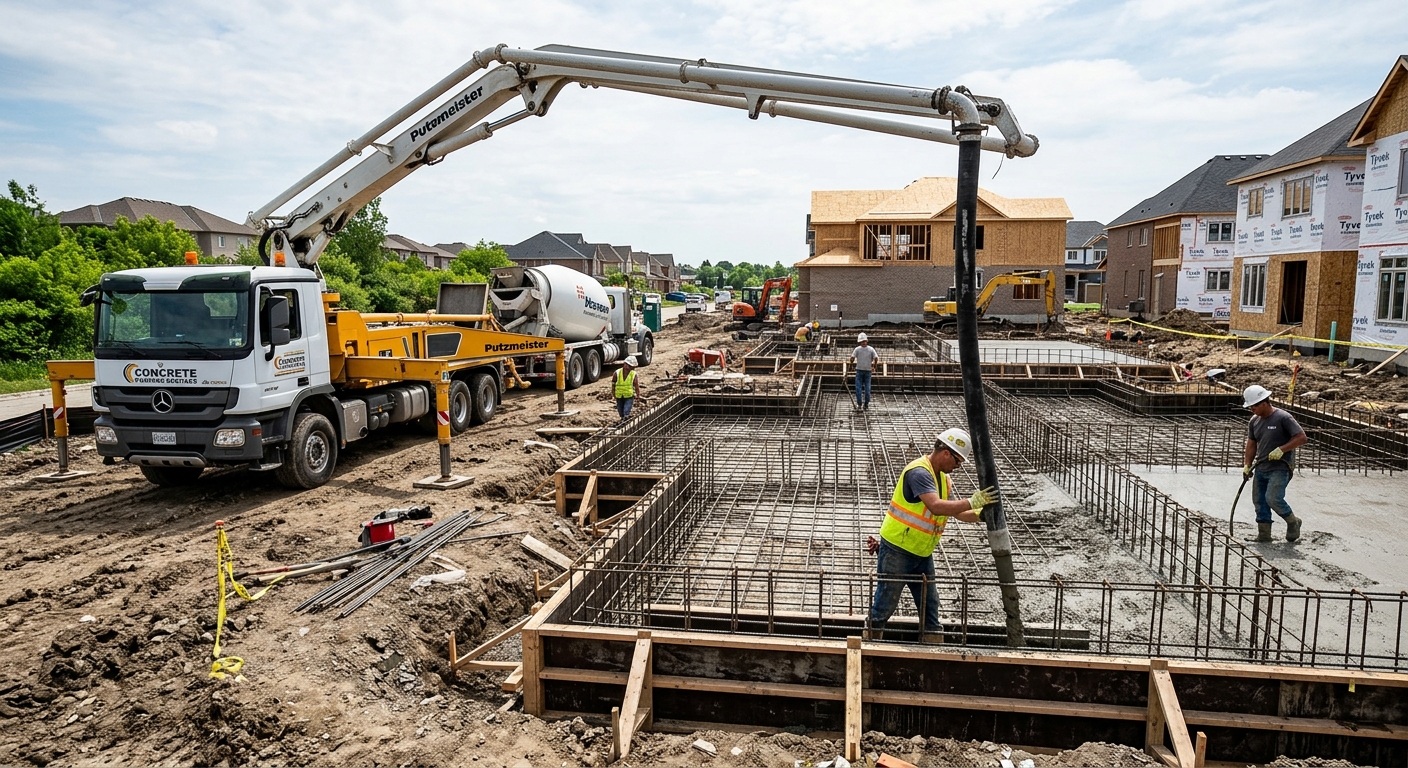
Concrete work options and costs in East Sooke
Concrete work in East Sooke is a practical choice because it handles the area’s typical wet winters better than many alternatives—especially when the job is spec’d for freeze–thaw wear. With East Sooke’s population at 1,500 (Statistics Canada, 2021 Census), the market is smaller than larger centres, so availability can be more limited in peak season and that can affect scheduling. Most concrete flatwork demand comes from the neighbourhoods that see regular driveway and walkway renewals; in particular, many projects cluster around the highway corridor and older residential pockets where slabs were installed decades ago and surfaces are now scaling or cracking.
On Vancouver Island and the Coast, the frost line is relatively shallow compared to interior provinces, but repeated freeze–thaw cycles still punish exterior slabs. Our design approach assumes footings and foundations must sit below frost with proper granular base and drainage to reduce heave and random cracking. That climate reality pushes costs toward air-entrained mixes, thoughtful jointing, and weather protection during curing. Even though winters are milder than interior BC, saturated soils and cool temperatures slow strength gain—so good contractors account for curing time, site access, and rain management when pricing.
Below is a typical cost comparison for common East Sooke concrete projects, so you can line up apples-to-apples before you ask for quotes.
| Application |
Typical Size |
Key Spec |
Finish Option |
Price Range |
| Concrete driveway (standard broom finish) |
400–600 sq. ft. |
Air-entrained exterior mix, control joints |
Broom finish, basic edging |
$6,400–$12,000 |
| Exposed aggregate driveway |
400–600 sq. ft. |
Air-entrained exterior mix, surface retarder/exposure |
Exposed aggregate with sealed surface |
$8,500–$15,500 |
| Stamped concrete driveway or patio |
300–500 sq. ft. |
Air-entrained exterior mix, release agents, joints |
Stamp pattern + integral colour |
$8,000–$17,500 |
| Plain concrete patio or walkway |
200–400 sq. ft. |
Air-entrained mix, compacted base |
Float/screed + light broom |
$2,800–$9,000 |
| Garage floor (interior slab) |
350–500 sq. ft. |
Vapour barrier (as required), joints as needed |
Standard trowel/brush finish |
$5,000–$12,000 |
| Foundation footings (structural, below frost) |
Varies by home layout |
Excavation to design depth, reinforcement |
Formwork + engineered spec |
$10,000–$22,000 |
Prices are estimates only and vary by project scope, site access and material selection.
What affects the price of concrete work in East Sooke
On Vancouver Island and the Coast, it’s common to see the same concrete project come in 30–50% apart between quotes. In East Sooke, the spread usually isn’t because “concrete costs more” locally—it’s because contractors are pricing different specifications and risks. Two crews can both say “driveway,” but one may include a properly compacted granular base to the right depth, air-entrained concrete designed for freeze–thaw, and an appropriate joint layout; the other may not. The labour and equipment hours behind those differences are what you’re paying for.
Frost-line depth and freeze–thaw cycles dictate the details in this region. Footings must extend below the design frost depth to prevent frost heave, and exterior slabs require air-entrained mixes to survive repeated wetting and freezing. In colder regions the pour season is shorter and cold-weather curing precautions (heating, insulating blankets, curing protection) become necessary; on coastal BC, those costs still show up during cold snaps, especially when the site stays saturated and curing temps hover at the low end. De-icing salt accelerates surface damage, so sealing is often a smart add-on for exterior slabs.
Here are a few East Sooke examples of what moves the price up or down: (1) a driveway replacement where the old base is “muddy” or undermined may require extra excavation and granular rebuild, pushing closer to the higher end of the $16–$25 per sq. ft. driveway band; (2) adding stamped finishes can be justified—especially for curb appeal—because stamped work typically lands in the $22–$35 per sq. ft. range, reflecting labour, colour/materials, and finishing time; (3) difficult truck access or crane/mini-excavator needs can add mobilization and longer labour days, even when the slab size is unchanged.
| Price Factor |
Why It Matters |
Cost Impact |
| Frost line depth — determines footing depth and form height |
Controls heave risk; affects excavation and concrete volume |
Can add 15–40% on structural footing work |
| Site preparation — excavation, grading, compacted granular base |
Weak base leads to settlement and cracking |
Often the #1 swing factor on driveways/slabs |
| Reinforcement — rebar or wire mesh requirement |
Supports load and reduces slab curling/cracking |
Typical add 5–20% depending on spec |
| Mix design — air-entrainment and compressive strength spec |
Freeze–thaw durability depends on air content and strength |
Small per-yard increase but can shift total 5–15% |
| Finish type — broom vs. stamped vs. exposed aggregate |
More finishing labour and materials time |
Stamped/exposed can raise cost materially (often 25–60% vs broom) |
| Pour size and concrete truck access to site |
Access determines pump vs chute, labour, and timing |
Can add several thousand dollars on tight sites |
| Cold-weather curing precautions — heating and blankets |
Protects curing strength gain and reduces surface damage |
Often adds 3–12% when conditions require it |
| Control joint pattern and sealing cost |
Jointing controls cracking; sealing helps repel de-icing salts |
Sealing is usually modest vs rework risk |
Permits & regulations in British Columbia
In British Columbia, most structural concrete work requires a building permit, especially when it forms part of a load-bearing system. That typically includes footings, foundation walls, grade beams, and any reinforced concrete elements tied to structural design. For these jobs, municipalities often require engineered drawings and inspections at key stages (for example, after excavation and before concrete placement). Concrete flatwork—like patios, walkways, and driveways—usually does not require a permit by default, unless the project affects lot grading, drainage, or impervious surface/lot coverage rules, or interferes with municipal right-of-way requirements. Because bylaws can vary by situation, always confirm with the local authority before breaking ground.
To verify a contractor in East Sooke, ask for three key documents and check them in writing: (1) their business licence details and contractor credentials—start with the appropriate provincial online registry search for the company name; (2) proof of liability insurance (current certificate of insurance) naming you if required, and confirm coverage limits are appropriate for exterior concrete work; and (3) proof of WSIB/WCB coverage (or their exemption paperwork, if applicable). Request a certificate of insurance and a current clearance/coverage letter before the first pour date. Finally, ask for references from similar-scale Vancouver Island projects (driveways, exterior slabs, or footing work) so you can confirm how they handle rain delays, curing protection, and jointing.
Getting concrete right in East Sooke's freeze-thaw climate
Concrete fails in East Sooke mainly when water finds a weak spot and then freezes. The typical symptoms are scaling, surface pitting, spalling near edges, and random cracking that shows up after repeated wetting and cold snaps. To spec the job correctly, the biggest levers are base preparation, mix design, joints, curing, and sealing—because freeze–thaw durability depends on all of them working together.
(1) Base preparation: use a compacted granular sub-base to the right depth for local soils and frost requirements, with drainage that prevents water from sitting under the slab. (2) Mix design: for exterior flatwork, require air-entrainment—typically 5–7% air content—and a minimum compressive strength of 32 MPa (per common spec practice for quality exterior work). (3) Control joints: install them to control where cracks will form, reducing random cracking across visible surfaces. (4) Curing: plan for a minimum 7-day curing period under proper conditions; in cold or wet weather, contractors may need curing blankets or protection to maintain temperature and prevent early damage. (5) Sealing: apply a penetrating sealer after the slab cures (commonly at 28 days) to repel de-icing salts and reduce surface water absorption.
When you’re comparing options, the price difference can make sense. For example, if a basic broom driveway is quoted near the lower band of $16–$25 per sq. ft., an exposed aggregate driveway may land toward the higher end due to additional finishing steps and surface exposure. That cost is justified when the contractor still maintains the correct base, air content, and jointing—otherwise “prettier” finishes won’t last.
To avoid spalling from inadequate air-entrainment, ask direct questions: “What air content are you targeting for this exterior slab?” “What’s the curing plan if temps drop overnight?” “How will you protect edges and corners from early freeze?” Those answers should be specific, not vague.
| Spec |
Why It Matters in East Sooke |
What to Ask For |
Impact if Skipped |
| Compacted granular base (depth?) |
Controls settlement and limits water under the slab during freeze–thaw |
Minimum granular thickness and compaction testing/approval method |
Settlement, rocking edges, and faster cracking |
| Air-entrained concrete mix (target air %?) |
Improves freeze–thaw durability and reduces scaling/spalling |
Target 5–7% air for exterior flatwork and confirmation of mix design |
Surface scaling and spalling after winter cycles |
| Compressive strength (MPa rating) |
Strength gain supports long-term performance and resists early damage |
Minimum 32 MPa specified for exterior work |
Premature wear and increased surface defects |
| Control joints (spacing per ACI guidelines) |
Creates intended crack locations so random cracking is minimized |
Joint spacing plan matched to slab size and geometry |
Random cracking through finish and edges |
| Minimum 7-day curing period |
Cool, wet conditions slow strength gain in coastal BC |
7-day minimum protection plan; what happens if temperatures drop |
Lower early strength, increased cracking risk |
| Penetrating sealer (when applied after cure) |
Helps repel water and de-icing salts common in driveways |
Application timing (commonly after 28 days) and sealer type |
Faster surface deterioration and salt-related spalling |
How to choose a concrete work contractor in East Sooke
Start by verifying the contractor’s British Columbia requirements and coverage. Ask for (1) proof of the business operating status and any relevant contractor credentials; then (2) a current certificate of liability insurance showing adequate limits for concrete and exterior work; and (3) WSIB/WCB coverage proof (or correct exemption documentation). For each, insist on documents with valid dates—don’t rely on verbal confirmation. If someone can’t provide paperwork quickly, that’s a major red flag in a small market like East Sooke where schedule pressure can tempt corners.
Next, get 2–3 itemised written quotes, not “one number.” Good quotes separate labour and materials and should clearly list excavation/grading, granular base, reinforcement, concrete mix specs (including air content/strength), finish type, joints, curing/protection, sealing, and disposal. Watch for exclusions: permit pulls (if structural), saw-cutting, disposal of old concrete, and any landscape restoration are common gaps. A clear timeline matters too—ask for a start date and an estimated completion date, acknowledging weather contingencies for curing on Vancouver Island.
For payment, never agree to pay more than about 10–15% upfront. Hold back the balance until the finish work is complete and surfaces are protected and cured. Confirm warranty terms: workmanship warranty length, whether it covers cracking, joint performance, and surface scaling; and whether any manufacturer product warranty (like sealers or admixtures) is included and transferable.
- Ask for air-entrainment and compressive strength targets in writing for exterior slabs.
- Confirm they design footings below frost for foundations and match engineered drawings.
- Require a granular base spec (depth and compaction approach) before concrete is placed.
- Make sure reinforcement details (mesh/rebar, grade) are included where required.
- Check that control joint spacing and sealing plan are spelled out.
- Look for curing protection details (blankets/heating) in the quote and schedule.
- Verify disposal/hauling is included if they’re removing old concrete.
- Confirm what’s included for edges, slopes, and drainage—especially near doors.
- Use itemised pricing so you can compare broom vs stamped vs exposed aggregate fairly.
- Set a payment schedule with a holdback until cleanup and cure-related tasks finish.
- Ask for photos and references from similar East Sooke freeze–thaw conditions.
- Get all changes documented as addenda (no side agreements).
In East Sooke, red flags include: (1) vague mix descriptions like “standard concrete” with no air-content/strength spec for exterior work; (2) no mention of jointing plans or sealing timelines; (3) contractors who demand large upfront payments or won’t hold back until completion; (4) missing or outdated insurance/coverage documents; and (5) promises to pour through heavy rain without a protection and curing plan.
Frequently asked questions — concrete work in East Sooke
Do I need a permit for concrete work in British Columbia?
In British Columbia, structural concrete such as footings, foundation walls, and grade beams typically requires a building permit and often engineered drawings reviewed by the municipality. Concrete flatwork (patios, walkways, and driveways) usually does not require a permit unless it changes lot grading/drainage, impacts impervious surface/coverage limits, or affects municipal right-of-way requirements. For an East Sooke project, the safest approach is to confirm with the local authority before breaking ground—especially if you’re changing slopes, adding retaining/drainage work, or touching drainage patterns. When you request quotes, ask whether the contractor is pulling any permit (if applicable) and whether inspections are included in the scope.
Concrete vs pavers for a patio in East Sooke?
Concrete and pavers can both work well on a patio in East Sooke, but the decision should match your freeze–thaw tolerance and maintenance expectations. A properly built concrete patio—compacted granular base, air-entrained mix, and good control joints—handles wet winters and repeated freeze–thaw cycles reliably, especially when a sealer is used. Pavers can look great and are modular for future repairs, but they can shift if the base is weak or drainage is poor, leading to uneven surfaces. Cost-wise, plain concrete patios often fall in the lower bands (for example, around $2,800 – $9,000 for typical small-to-medium slabs), while pavers vary widely depending on unit cost and base depth. If you’re comparing quotes, insist on the same base thickness and drainage plan for a fair comparison.
How long does a concrete driveway last?
A well-built concrete driveway in East Sooke commonly lasts decades. The real question is how it’s built for the climate: air-entrained exterior concrete, correct sub-base compaction, proper joint spacing, and curing protection during cool or wet weather. Driveways that get de-icing salt exposure without a penetrating sealer often show scaling earlier, especially along edges. Finishes can also matter—broom-finished concrete is durable, while exposed aggregate and stamped finishes can last just as long when the contractor still uses the correct mix and base. If your contractor is quoting within the local driveway band (for example, $6,400 – $12,000 for many typical broom-finish replacements), ask what’s included beyond the concrete itself: excavation, granular base, joint pattern, and sealing. Those details are what determine lifespan.
What is air-entrained concrete and why does it matter here?
Air-entrained concrete is designed with tiny microscopic air bubbles that give freezing water a place to expand, improving durability during freeze–thaw cycles. In East Sooke and the broader Vancouver Island and Coast region, repeated wetting and freezing can cause scaling and spalling if the mix isn’t right. That’s why good exterior flatwork specs include air-entrainment—commonly targeting roughly 5–7% air content for exterior slabs—and a minimum compressive strength such as 32 MPa in quality work. When you’re comparing quotes, require the contractor to specify the mix design for exterior exposure rather than using vague language. A slightly higher material cost is usually far cheaper than repairs after a winter season.
How do I prepare the base for a concrete slab?
Concrete base prep is mainly about two things: removing unsuitable material and building a compacted granular sub-base that won’t pump water during freeze–thaw. For East Sooke, the contractor should excavate to the design subgrade, then place and compact granular material in lifts to reach the specified depth and compaction level. Proper drainage matters—water sitting under a slab increases heave and cracking risk. Ask how they will handle poor subgrade, whether they include additional granular rebuild if needed, and whether reinforcement and joints are installed after the base is approved. A well-prepared base is what keeps the project within a realistic cost band for the work type (for example, driveway pricing commonly aligns with the local $16–$25 per sq. ft. framework), because the contractor isn’t cutting corners.
How do I compare concrete quotes?
To compare concrete quotes in East Sooke, insist on itemised line items and technical specs—not just final totals. Compare: excavation and disposal, granular base depth and compaction method, reinforcement (if required), concrete mix strength and air-entrainment for exterior work, control joint spacing, curing protection plan, finish type (broom vs stamped vs exposed aggregate), and sealing (timing around cure, often after 28 days). Make sure truck access/pump assumptions are included so you’re not comparing different equipment days. Also check payment schedules and warranty coverage for workmanship and surface issues. If one quote sits far below others, ask what’s missing—common omissions are sealing, correct mix design, jointing, or curing protection. For reference, driveway and patio totals often land within banded ranges such as $6,400 – $12,000 for broom-finished driveways and $2,800 – $9,000 for typical plain patios/walkways, depending on size and site conditions.