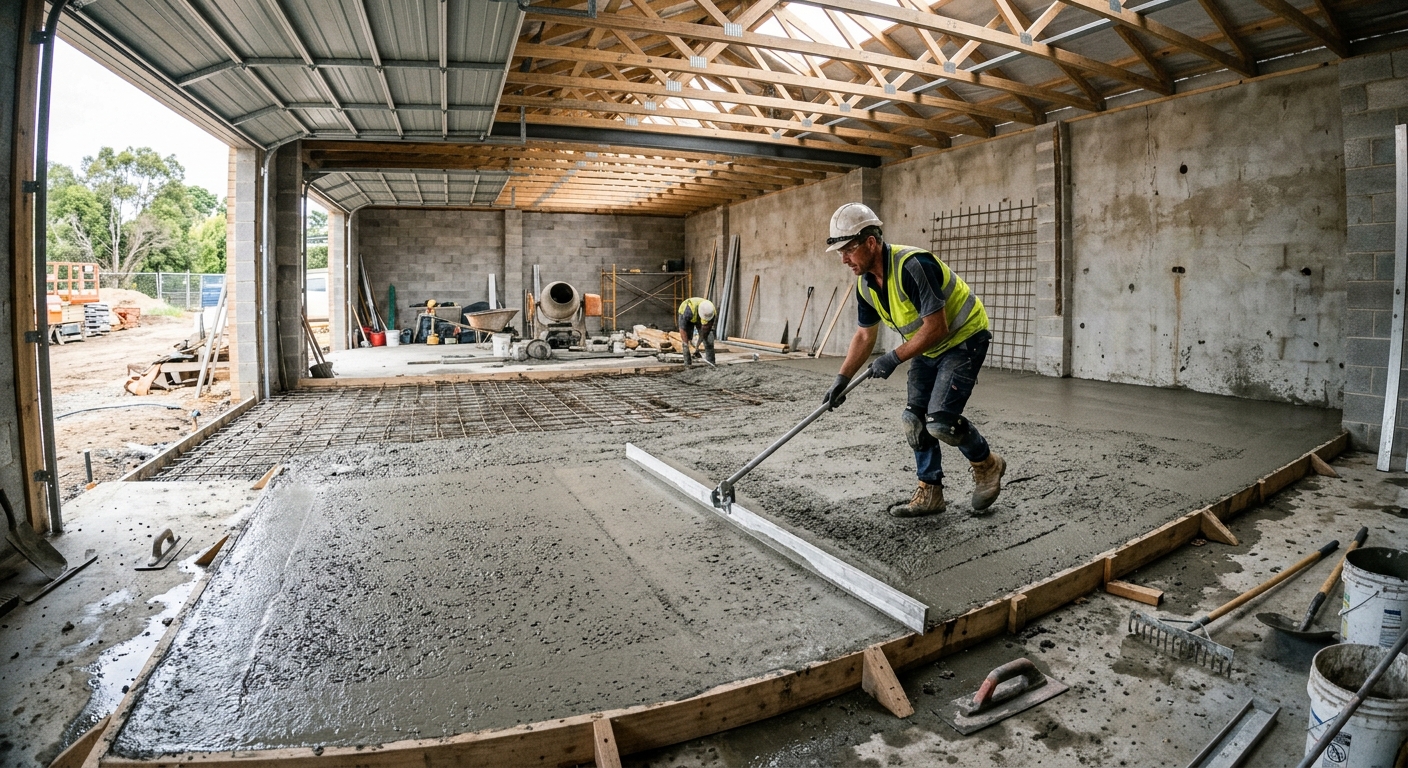
Concrete work options and costs in Cedar Cove
Concrete work in Cedar Cove is a practical, long-term play—especially for driveways, patios, and foundation work that must handle Lower Mainland–Southwest freeze–thaw cycles, coastal rainfall, and a shallow but meaningful frost depth. Cedar Cove has a small-town feel with a population of about 6,000 (Statistics Canada, 2021 Census), and most concrete flatwork demand comes from established neighbourhoods where homeowners are upgrading their exterior surfaces rather than moving new lots. Another reason concrete is steady here is the housing mix: many properties are single-detached homes, and that typically means more driveway and patio replacements over time. In the Lower Mainland–Southwest, local practice commonly assumes a frost depth around 450 mm / 18", so footings, piers, and thickened edges are placed below that to help prevent frost heave and surface scaling. At the same time, the coastal-wet climate can stretch schedules—cool nights, high humidity, and prolonged rain may require curing blankets, sealers, and longer cure times to reach design strength and surface durability. Labour availability can also affect pricing in the Vancouver–Surrey–Abbotsford corridor, particularly during the busier dry-window seasons.
If you’re comparing options, the easiest way is to look at scope and finish side-by-side. Below are typical size expectations and the concrete specs that drive cost, then you can match a quote to what’s actually being built for your site in Cedar Cove (including access for the concrete truck).
| Application |
Typical Size |
Key Spec |
Finish Option |
Price Range |
| Concrete driveway (standard broom finish) |
12 m x 3 m (about 36 m²) |
4"–5" slab; compacted granular base; control joints; air-entrained mix |
Broom finish, sealer optional |
$18,000–$28,000 |
| Exposed aggregate driveway |
12 m x 3 m (about 36 m²) |
Engineered base prep; air-entrained mix; exposure process; joint detailing |
Exposed aggregate, often with sealer |
$22,000–$35,000 |
| Stamped concrete driveway or patio |
9 m x 4 m (about 36 m²) |
Reinforcement as required; base thickness and drainage; proper curing |
Stamped patterns (slip-resistant finishes) |
$25,000–$44,000 |
| Plain concrete patio or walkway |
6 m x 3 m (about 18 m²) |
4" slab; compacted granular base; joints; exterior-rated mix |
Light broom/steel trowel edge |
$3,000–$6,000 |
| Garage floor (interior slab) |
6 m x 6 m (about 36 m²) |
Vapour/grade considerations; reinforcement/wire mesh as needed |
Steel trowel with optional finish |
$10,000–$18,000 |
| Foundation footings (structural, below frost) |
Per linear metre (project varies) |
Excavate below frost; rebar cage; engineered dimensions; concrete placement plan |
Structural concrete only |
$200–$350 |
Prices are estimates only and vary by project scope, site access and material selection.
What affects the price of concrete work in Cedar Cove
In Cedar Cove and across the Lower Mainland–Southwest, you can see the same basic “driveway replacement” quote range by roughly 30–50% between contractors—even when both say “concrete driveway.” The reason is that concrete pricing isn’t only about the cubic yards; it’s about what each contractor includes in the base prep, drainage, reinforcement, mix design, and curing approach for our coastal-wet, freeze–thaw conditions. A shallow frost line around 450 mm / 18" still matters here: exterior footings and thickened edges must be placed below the design frost depth to reduce frost heave risk. That typically means more excavation and formwork than people expect for “flatwork,” plus air-entrained mixes to resist scaling. When we get cool nights, prolonged humidity, or rain delays, contractors may add curing blankets, sealants, and tighter scheduling to achieve the specified performance—costs that are higher than in some milder periods or regions.
Cold-weather curing precautions can also change the timeline and crew efficiency. In colder parts of BC, the pour season tends to be shorter; in Cedar Cove, it’s longer than interior BC but still not like summer-straight-in climates. De-icing salt accelerates surface deterioration, so sealing becomes more than an optional aesthetic.
Two examples of how this shows up in real quotes: (1) If one quote keeps the driveway base at a minimal thickness and the other specifies a properly compacted granular base with improved drainage, the second is usually more expensive upfront but reduces future settlement and cracking—often making the difference worth it. (2) A stamped driveway can add cost compared with a broom finish; if your quote falls near typical exterior slab bands, e.g., broom-driveway pricing around $18,000–$28,000 for a common-sized pour versus decorative options at $22,000–$36,000 within local per-m² ranges, the justification is labour-intensive finishing, colour/stamping materials, and more careful curing and joint control.
| Price Factor |
Why It Matters |
Cost Impact |
| Frost line depth |
Footings and thickened edges must sit below frost to prevent frost heave. |
Higher excavation and form height; can change foundation/edge costs materially. |
| Site preparation |
Correct excavation, grading, and compacted granular base controls settlement. |
More granular material, compaction passes, and hauling/disposal. |
| Reinforcement |
Rebar or mesh helps control cracking and improves slab performance. |
Adds material and labour; required more often for driveways and thicker slabs. |
| Mix design |
Air-entrainment (and strength spec) is critical in freeze–thaw and wet coastal exposure. |
Typically increases material cost and may affect ordering minimums. |
| Finish type |
Broom finishes are quicker; exposed aggregate and stamping require more labour and precision. |
Decorative finishes commonly raise labour and materials by a noticeable margin. |
| Pour size and concrete truck access to site |
Access constraints can require pump use, shorter lead times, or more manpower. |
Truck/pump charges and increased crew time can add up quickly. |
| Cold-weather curing precautions |
Blankets/heating protect strength gain when nights are cool or curing is slowed by humidity. |
Consumables + longer schedules; can increase cost and supervision time. |
| Control joint pattern and sealing cost |
Joint placement reduces random cracking; sealing helps repel chloride exposure from de-icing salts. |
More layout time and added materials (sealer) for best durability. |
Permits & regulations in British Columbia
In British Columbia, the permit requirement depends on what concrete work you’re doing and whether it’s supporting the structure or changing site drainage/grade. Structural concrete work—such as footings, foundation walls, and grade beams—typically requires a building permit, and it often involves engineered drawings reviewed by the municipality or building official. Concrete flatwork (driveways, patios, and walkways) usually does not require a permit by default, but it can when it affects lot grading, roof-drain/downslope management, or impervious surface coverage rules near property lines or drainage features. Because every lot has different drainage and compliance details, confirm requirements with the local authority before breaking ground.
For homeowner due diligence in Cedar Cove, BC, verify three things step-by-step. First, check the contractor’s licence and business info through the relevant BC online resources (start with their business profile and registration details provided in their paperwork). Second, request a current certificate of liability insurance listing your address as an additional interest if possible. Third, verify coverage for workers through WCB/WSIB-type coverage appropriate to the province (ask for the clearance letter or proof of account/coverage). Then ask for references on similar-scale driveway or footing projects, ideally within the Lower Mainland–Southwest climate where freeze–thaw durability matters.
Getting concrete right in Cedar Cove's freeze-thaw climate
Concrete failures in Cedar Cove are usually about water, air, and timing. Our Lower Mainland–Southwest freeze–thaw cycles and saturated soils can push water into the slab and near-surface paste. The biggest culprit is spalling from freeze–thaw damage when the mix doesn’t have enough air and when the concrete isn’t cured and protected properly. To spec concrete correctly, start with base preparation: compacted granular sub-base to the right depth for local soil and the frost-protection requirements. Next, require an exterior-grade, air-entrained mix—commonly targeting about 5–7% air content for exterior flatwork—plus a minimum compressive strength around 32 MPa (or higher if engineered). Control joints matter too: they’re the “planned cracks,” spaced to reduce random cracking. For curing, plan for at least a 7-day curing period under suitable conditions; when it’s cool or humid, crews often use curing blankets or protect-in-place methods to reach design strength before exposing the surface. Finally, sealing is critical in salt-exposed driveways: a penetrating sealer is typically applied after the concrete has cured—commonly at 28 days—to improve water and chloride resistance.
As a dollar example, if a stamped patio and a plain patio both fit your budget around the usual patio band of $16,000–$26,000, but one quote includes proper air-entrainment, correct base prep, and joint sealing while the other “skips” sealer or under-specifies base depth, the cheaper option can cost more later through surface scaling or early repairs. Ask the contractor to explain how they will prevent spalling, not just how they’ll finish the top.
| Spec |
Why It Matters in Cedar Cove |
What to Ask For |
Impact if Skipped |
| Compacted granular base (depth?) |
Controls settlement and provides frost-robust support in a coastal-wet environment. |
Confirm base thickness and compaction method for your soil and frost considerations (typically compacted to engineered depth). |
Uneven settlement, cracked slab, and faster deterioration near edges and joints. |
| Air-entrained concrete mix (target air %?) |
Reduces freeze–thaw scaling and spalling by providing pressure-relief micro air voids. |
Ask for exterior mix with 5–7% air content target (based on exposure class and slab type). |
Surface scaling/spalling within a few winters, especially under de-icing and wetting. |
| Compressive strength (MPa rating) |
Ensures durability and performance under moisture cycling. |
Minimum 32 MPa compressive strength (and higher if engineered for your design). |
Lower strength gain leads to early surface wear and cracking under traffic or freeze–thaw. |
| Control joints (spacing per ACI guidelines) |
Keeps cracking predictable instead of random. |
Joint spacing plan and sawcut timing (provide a joint layout in writing). |
Random cracks, wider openings, and increased water infiltration. |
| Minimum 7-day curing period |
Cool nights and high humidity can slow strength development. |
Confirm curing method and protection schedule; require curing blankets/sealing protection if needed. |
Insufficient strength at exposure, increased risk of surface damage and scaling. |
| Penetrating sealer (when applied after cure) |
Helps repel chlorides from de-icing and reduces water uptake. |
Ask for penetrating sealer applied after curing—commonly around 28 days post-pour (weather dependent). |
Faster deterioration from moisture and salts; shortened service life. |
How to choose a concrete work contractor in Cedar Cove
Choosing the right contractor in Cedar Cove comes down to proof and clarity. In British Columbia, first verify the contractor’s licence/business registration details and ensure they’re operating as a legitimate entity (not a “quote-only” operation). Next, request a certificate of liability insurance that covers your address and the specific work scope. Then confirm worker coverage through the province’s WCB system—ask for a clearance letter or proof of current account/coverage. If a contractor can’t provide these without delay, that’s a red flag.
When you request quotes, don’t accept a single lump-sum number without a breakdown. Get 2–3 itemised written quotes that show labour vs. materials, removal/disposal, base prep, reinforcement, mix type/air-entrainment notes, finish method, and curing/sealing. Scope clarity prevents surprises like “we assumed we’d reuse material” or “sealer isn’t included.” Also ask whether permits are included (structural work usually needs permits; flatwork often doesn’t unless grading/drainage rules apply) and whether disposal/haul-away is included for removed concrete and contaminated soil.
For warranty, look for both workmanship coverage (how long they stand behind labour) and whether product/manufacturer warranties are included for concrete additives or related systems. Make sure warranties are transferable if you sell the home. Payment schedules should be conservative: never pay more than 10–15% upfront; use progress payments tied to defined milestones; hold back until the job is complete and clean-up is done. Finally, require a written start date and completion estimate that aligns with weather windows for curing in the Lower Mainland–Southwest.
- Ask for an itemised quote (base prep, reinforcement, removal/disposal, curing, sealing).
- Confirm the mix is air-entrained for exterior freeze–thaw exposure.
- Request joint layout details and sawcut timing (not just “we’ll do joints”).
- Get base thickness and compaction plan in writing for your soil conditions.
- Verify liability insurance before signing—ask for the COI copy.
- Verify WCB coverage/clearance letter for workers.
- Confirm whether a pump will be needed (access issues change cost and schedule).
- Ask how rain delays are handled and what they do for curing protection.
- Clarify disposal/haul-away fees for removed concrete and any unsuitable soil.
- Confirm if sealer is included and when it will be applied (after proper cure).
- Ask about warranty length and whether it includes crack/settlement adjustments.
- Use a holdback and keep upfront payments to 10–15% maximum.
In Cedar Cove, concrete contractor red flags include vague scopes (“concrete and finish”), missing proof of insurance/WCB coverage, refusing to discuss air-entrainment and jointing, pressuring for large upfront payments, and starting without a drainage plan for wet coastal sites.
Frequently asked questions — concrete work in Cedar Cove
How do I compare concrete quotes?
To compare concrete quotes in Cedar Cove (BC), treat the price as only one piece of the puzzle. Ask each contractor for an itemised breakdown: removal/disposal, excavation and compacted granular base, reinforcement, mix design notes (specifically air-entrainment for exterior work), and the finishing method. Make sure curing and sealing are either clearly included or clearly excluded. If one quote is near the typical driveway band—often around $18,000–$28,000 for a common-sized broom-finish driveway—confirm what’s inside that number. A lower price can mean thinner base prep, less reinforcement, or no sealer, which matters in our coastal wetting and freeze–thaw cycles. Finally, confirm access assumptions (truck vs pump) so you’re comparing the same buildability conditions.
Can concrete be poured in cold weather in Cedar Cove?
Yes, concrete can be poured in cold weather in Cedar Cove, but it has to be managed correctly. The key issue is curing: when temperatures are cool, strength gain slows and the concrete is more vulnerable to early damage if water freezes within the first stage of curing. Contractors often use curing blankets, insulating methods, and sometimes on-site heating to keep conditions stable until the concrete reaches the required strength. You should ask what temperature range they plan for, how they protect the slab edges and joints, and how long they will keep blankets in place. In the Lower Mainland–Southwest, the season is usually longer than interior BC, but prolonged cool nights and damp weather can still add time and labour to ensure proper curing and durability.
How do I maintain concrete in Cedar Cove's freeze-thaw climate?
Maintenance in Cedar Cove is mainly about limiting water and chloride exposure. First, use a penetrating sealer after the concrete has fully cured—commonly around 28 days post-pour—so the surface resists moisture and de-icing salts. Keep an eye on drainage: if water pools near your driveway or patio edges, concrete will deteriorate faster through freeze–thaw cycling. For snow and ice, avoid metal shovels and minimize salt use when possible; salts can increase surface spalling risk. Re-check expansion/control joint areas: sealed and properly performing joints prevent water intrusion into cracks. When you wash the slab, do it gently to avoid removing protective layers before you reseal later.
What causes concrete to spall in Cedar Cove winters?
Concrete spalling is usually a freeze–thaw failure at the surface, made worse by wetting from rain and meltwater plus exposure to de-icing salts. The biggest technical cause is inadequate air-entrainment—if the mix doesn’t have the correct micro air void system, water that enters the paste can expand as it freezes and break the surface. Other contributing factors include insufficient base prep (allowing movement), poorly timed or missing control joints (creating random cracking), and curing shortcuts that reduce early strength gain. In Cedar Cove’s Lower Mainland–Southwest conditions, these problems show up sooner because moisture availability is high. That’s why a durable exterior bid should explicitly address air-entrained mix design, proper curing, and sealing after cure.
What is rebar and when is it required in British Columbia?
Rebar (reinforcing bar) is steel embedded in concrete to help control cracking and provide structural capacity for certain slab and foundation applications. In British Columbia, whether rebar is required depends on the engineering design and slab use—driveways and structural slabs typically have reinforcement requirements different from simple interior finishes. For structural concrete such as footings and foundation elements, rebar is commonly part of engineered drawings submitted for permitting and review. For flatwork like patios and walkways, reinforcement may be specified based on thickness, load expectations, and soil conditions. In Cedar Cove, because our wet conditions and freeze–thaw cycles punish poorly supported slabs, you should ask for the reinforcement spec—rebar vs wire mesh, bar spacing, and slab thickness—so the quote matches the performance requirements, not just the decorative finish.
How long does a concrete project take in Cedar Cove?
Project length depends on size, site access, and weather, especially due to curing needs in Cedar Cove and the Lower Mainland–Southwest climate. For a typical exterior flatwork job, concrete placement is usually only a single day, but the overall timeline includes prep, form/set-up, concrete ordering lead time, finishing, and protection/curing. While you may be able to walk on a slab relatively soon, full durability requires proper curing—often at least 7 days for basic strength development under good conditions, and longer if cool nights slow curing. If sealing is included, sealer typically goes on later (commonly around 28 days) to ensure the concrete is ready. If your scope includes excavation or foundation work, permit review and forming can extend the schedule, and prolonged rain can shift dates.