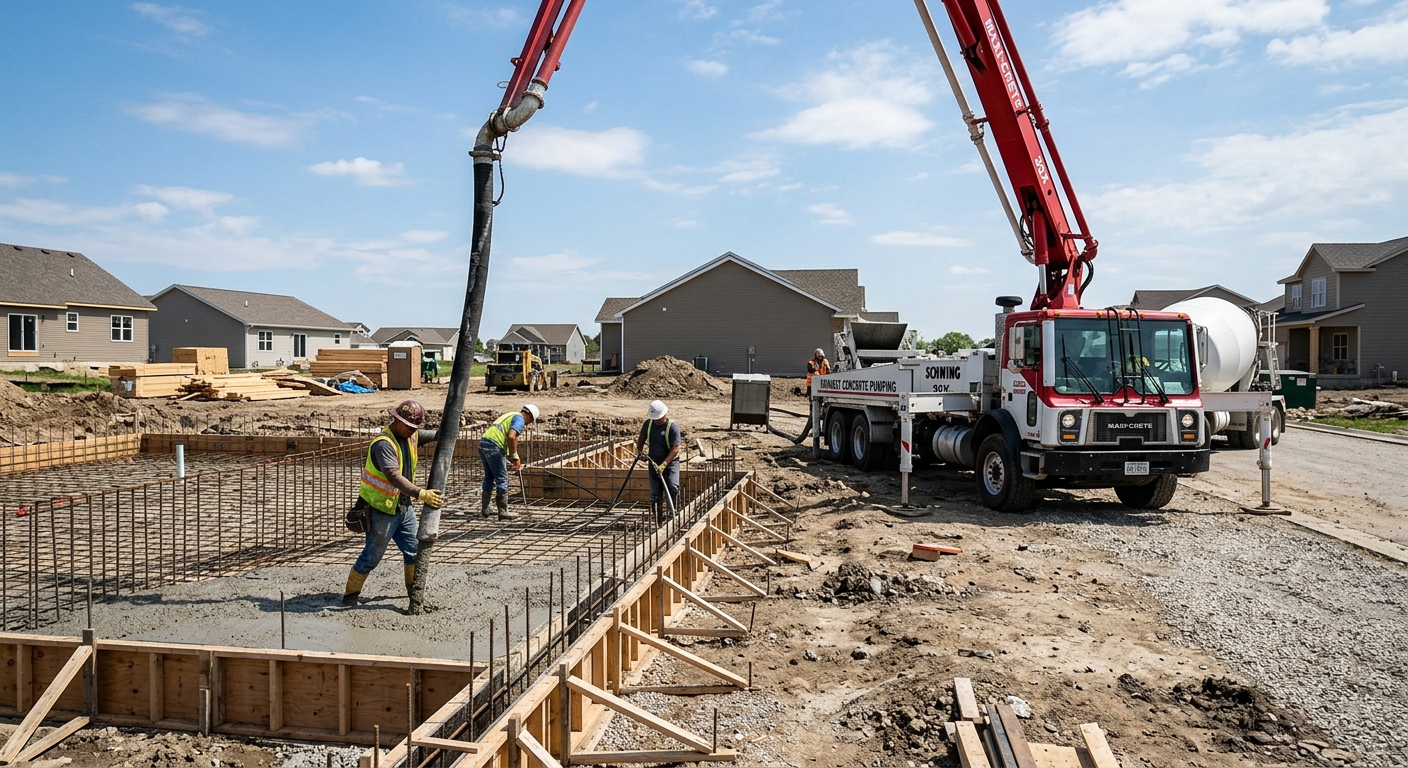
Concrete work options and costs in Grand Forks
Concrete work in Grand Forks is typically focused on durable exterior flatwork—most commonly driveways, patios and walkways—because the local housing stock includes a large share of single-detached homes (75.9% of dwellings) and many properties are older (55.6% built before 1981). In a town of 4,112 people, those repairs and upgrades tend to cluster in practical areas where residents need traction and reliable access after winter storms. One of the places we see steady demand is the core residential pockets around town (near Main Street and the surrounding neighbourhoods), where resurfacing worn aprons, adding garage aprons, and replacing small trip hazards are frequent projects.
In the Kootenays, pricing is shaped by cold continental winters and freeze–thaw cycles. Frost can push contractors to set footings deeper and prepare a better-draining base, and exterior slabs usually need air-entrained concrete. Because the pour season can be shorter, we also build in heating/blankets and tighter scheduling to protect early-age curing. That’s why you’ll sometimes see Grand Forks quotes higher than you’d expect from milder parts of BC—even when the square footage looks similar on paper. Finish selection matters too: plain broom finish costs less than exposed aggregate, and stamped work carries extra labour for forms, finishing and colour/seal systems.
Below are realistic starting bands for common projects in Grand Forks, so you can compare contractor proposals before you get into design details.
| Application |
Typical Size |
Key Spec |
Finish Option |
Price Range |
| Concrete driveway (standard broom finish) |
480 sq. ft. (24 ft x 20 ft) |
4 in slab, air-entrained, compacted base, control joints |
Broom finish |
$18,000–$28,000 |
| Exposed aggregate driveway |
480 sq. ft. (24 ft x 20 ft) |
4 in slab, air-entrained, proper aggregate grading, curing & wash |
Exposed aggregate |
$22,000–$34,000 |
| Stamped concrete driveway or patio |
300 sq. ft. (20 ft x 15 ft) |
4 in slab, air-entrained, release agent, colour hardener/sealer system |
Stamped |
$25,000–$40,000 |
| Plain concrete patio or walkway |
160 sq. ft. (20 ft x 8 ft) |
4 in slab, air-entrained, compacted base, joints as needed |
Plain/smooth trowel or light broom |
$14,000–$24,000 |
| Garage floor (interior slab) |
440 sq. ft. (22 ft x 20 ft) |
4–5 in slab, vapour barrier, reinforcement as required |
Broom finish |
$18,000–$30,000 |
| Foundation footings (structural, below frost) |
Typical 1,000–1,600 ln. ft. total footing |
Excavation, rebar, concrete placement below frost depth, drainage details |
Structural concrete placement |
$70,000–$120,000 |
Prices are estimates only and vary by project scope, site access and material selection.
What affects the price of concrete work in Grand Forks
In Grand Forks and across Kootenay communities, it’s common to see quotes for the “same” concrete job differ by 30–50% once you account for the realities of winter work and what’s actually included. The concrete itself isn’t the only cost driver: in cold continental winters, the frost line and freeze–thaw cycles dictate everything from footing depth to slab thickness and the air-entrainment requirement for exterior work. Where footings must extend below the design frost depth, excavation and formwork increase, and that can add substantial labour and equipment time. Exterior slabs then need air-entrained mixes to survive repeated freezing and thawing, or you risk spalling and scaling.
Cold-weather curing also changes the schedule and cost. In Grand Forks, the pour season can be shorter, so we often factor in insulation blankets, temporary heat, and extra protection time to achieve proper strength gain before weather turns. De-icing salts used during winter maintenance can accelerate surface deterioration if the concrete isn’t sealed; sealing may be an add-on, but it’s a lot cheaper than replacing a failing surface. Finish choices also swing price: a standard driveway band sits near the $18–$28 range, while stamped or more labour-intensive decorative work can land closer to $25–$40 depending on patterning, colour and square footage.
Local conditions that commonly raise cost include soft/variable soils requiring deeper removal and stronger base preparation, limited truck access on narrower residential streets, and sites with existing foundations or drainage we have to protect. Costs can drop slightly when the site is already well-prepped (grading done, clear access, straightforward drainage), or when you’re matching an existing slab footprint with minimal demo.
| Price Factor |
Why It Matters |
Cost Impact |
| Frost line depth — determines footing depth and form height |
Footings must sit below frost depth to reduce heave |
Higher excavation and concrete volume ($) |
| Site preparation — excavation, grading, compacted granular base |
Drained, compacted base prevents settlement and cracking |
Extra base material + equipment time ($–$$) |
| Reinforcement — rebar or wire mesh requirement |
Controls cracking and supports load transfer |
Material and placement labour ($) |
| Mix design — air-entrainment and compressive strength spec |
Durable exterior performance through freeze–thaw cycles |
Premium mix and testing/quality control ($) |
| Finish type — broom vs. stamped vs. exposed aggregate |
Surface durability and labour intensity |
Labour + finishing materials increase ($–$$) |
| Pour size and concrete truck access to site |
More breaks, smaller lifts, or pumping affects production |
Can add mobilization and line-up time ($) |
| Cold-weather curing precautions — heating and blankets |
Protects early-age concrete from freezing and scaling |
Materials + labour during critical days ($–$$) |
| Control joint pattern and sealing cost |
Joints guide cracking; sealing helps resist salt and moisture |
Minor adders that prevent costly failures ($) |
Permits & regulations in British Columbia
In British Columbia, structural concrete work typically requires a building permit and often engineered drawings that get reviewed by the municipality. That includes items like foundation walls, grade beams, and structural footings (the parts of the foundation that carry loads and must be built to design). For concrete flatwork—driveways, patios, and walkways—permits are usually not required by default unless the work affects lot grading, stormwater/servicing connections, impervious surface coverage limits, or the municipal right-of-way. Before breaking ground in Grand Forks, confirm the exact trigger conditions with the local authority so your project is compliant from day one.
When hiring a contractor in BC, verify three things step-by-step: licensing status/eligibility (where applicable), liability insurance, and workers’ compensation coverage. Start by asking the contractor for a current certificate of insurance (COI) showing general liability. Next, ask for proof of coverage for workers under the provincial workers’ compensation system (commonly referred to as WCB or WorkSafeBC). Finally, check references for similar-scope work in Kootenay communities so you’re not relying on “we do everything” claims. You can also request written confirmation of coverage start/end dates and ensure the COI lists your property address or includes appropriate additional insured language where required.
One practical homeowner move: ask the contractor to state whether they’re pulling permits for any structural scope, and whether their quote includes inspection scheduling and any required engineer sign-offs for the foundation elements.
Getting concrete right in Grand Forks's freeze-thaw climate
Concrete can fail in Grand Forks when the base isn’t properly compacted and drained, when the mix doesn’t include enough air for freeze–thaw durability, or when curing is rushed during cold snaps. The fix starts before the truck arrives: (1) base preparation—excavate to the right depth, place granular base in lifts, and compact thoroughly so water doesn’t sit under the slab. (2) Mix design—use air-entrainment suitable for exterior exposure; for many exterior flatwork applications, that’s typically around 5–7% air content, and we target at least 32 MPa compressive strength for structural durability. (3) Control joints—install joints to control where shrinkage/cracking happens, rather than letting random cracks form. (4) Curing—plan for at least 7 days of proper curing conditions; in winter or shoulder-season weather, that can mean insulating blankets and/or heating. (5) Sealing—apply a penetrating sealer after the concrete has cured (commonly around 28 days post-pour) to reduce moisture and salt ingress.
Here’s how to ask the right technical questions to avoid the most common failure we see in cold climates: spalling caused by inadequate air-entrainment or poor curing. If a contractor only says “we use concrete” without discussing air content, joint spacing, and curing protection, that’s a problem. If they can talk specifically about compaction, drainage, air-entrainment, and joint layout, you’re in safer territory.
On price justification: if you’re choosing between a standard broom-finished driveway and a decorative stamped option, the stamp step-up can be meaningful. For example, a basic driveway often falls in the $18–$28 band, while stamped work can move toward $25–$40. The additional dollars are usually labour and finishing complexity—not just “nicer colour.” If your goal is longevity through freeze–thaw, invest first in base prep, air-entrainment, and curing, then layer finish aesthetics on top.
| Spec |
Why It Matters in Grand Forks |
What to Ask For |
Impact if Skipped |
| Compacted granular base (depth?) |
Controls settlement and keeps water from sitting under the slab |
“What base depth and compaction method are you using for my soil?” |
Uneven surfaces, cracking, premature failure |
| Air-entrained concrete mix (target air %?) |
Provides freeze–thaw resistance and reduces spalling |
“What air content are you designing for exterior exposure?” |
Surface scaling and concrete pop-outs |
| Compressive strength (MPa rating) |
Ensures strength gain for load durability in cold weather |
“Are you using at least 32 MPa and how is it protected during cold?” |
Weak surface, scaling, faster deterioration |
| Control joints (spacing per ACI guidelines) |
Manages where shrinkage cracking occurs |
“What joint spacing pattern will you use and how soon after finishing?” |
Random cracks that widen and invite water |
| Minimum 7-day curing period |
Cold snaps can stop hydration if protection isn’t planned |
“What curing plan do you use if temperatures drop?” |
Reduced strength and surface damage |
| Penetrating sealer (when applied after cure) |
Improves resistance to de-icing salts and moisture |
“Will you apply penetrating sealer about 28 days after the pour, and what brand/system?” |
Salt attack, staining, and faster spalling |
How to choose a concrete work contractor in Grand Forks
Start by verifying contractor coverage in British Columbia. Ask for a current certificate of insurance (general liability) and confirm the policy is active for the dates of your project. Next, request proof of workers’ compensation coverage under the provincial system (WorkSafeBC/WCB). If they can’t provide either document, that’s a serious warning sign. For licensing/registration, confirm the contractor is properly registered/eligible to perform the scope they’re advertising, and don’t rely on word-of-mouth—ask them to provide their business details and any applicable registration information before you schedule a pour.
Then get 2–3 itemised written quotes. You want labour and material breakdowns (concrete supply, rebar/mesh, excavation and base materials, formwork, finishing, joints, sealing, disposal/hauling). Avoid quotes that are only a lump sum without clear line items, especially when comparing finishes like broom, exposed aggregate, or stamped work. Read the exclusions: is demo removal included, is disposal included, does the price include permit pulls if required, and what happens if subgrade conditions are worse than expected?
Warranty matters too. Ask for a workmanship warranty length (and what “workmanship” covers), whether there’s a product/manufacturer warranty for sealers, and whether any warranty transfers if you sell the home. For payment schedule, never agree to pay the majority upfront; keep deposits around 10–15%, then hold back the remainder until the job is complete and deficiencies are corrected. Get the timeline and weather-plan in writing—start date, pour day, cure/protection steps, and a completion estimate.
- Ask what air content is specified for exterior flatwork in cold-weather conditions.
- Confirm the depth and compaction of the granular base (and whether drainage is included).
- Verify reinforcement details: mesh vs rebar, and where it’s placed.
- Require a written joint plan (pattern and spacing) for driveways, slabs and walks.
- Ask how they protect fresh concrete during cold nights (blankets/heating).
- Confirm sealing timing for salt protection (typically after cure).
- Check whether equipment access (forms, screed, truck placement) affects cost.
- Ensure disposal/hauling of old concrete is clearly included or excluded.
- Ask about surface preparation for overlays (bonding/grinding requirements).
- Request a sample of finish work if stamped/exposed aggregate is proposed.
- Confirm insurance documents are current and cover the full project duration.
- Review warranty terms in plain language, including exclusions for misuse/settlement.
Concrete red flags in Grand Forks include: no discussion of freeze–thaw specs (air-entrainment or curing), quotes that ignore site prep and base compaction, missing insurance/WCB documentation, skipping control joints or sealing, and vague timelines that don’t mention heating/blankets when temperatures swing.
Frequently asked questions — concrete work in Grand Forks
What is rebar and when is it required in British Columbia?
Rebar (reinforcing steel bars) is used to add tensile capacity and reduce crack widths in concrete members—especially in foundation elements and areas exposed to heavier loads. In British Columbia, whether rebar is required depends on the structural design and engineering requirements for the specific portion of the structure (for example, engineered footings, foundation walls, and grade beams). For concrete flatwork like driveways and patios, contractors may use wire mesh or rebar depending on slab thickness, soil conditions, and loading (parking a truck, garage use, or poor subgrade). In Grand Forks, we also pay extra attention to base prep and jointing because freeze–thaw cycles can worsen movement-related cracking. A well-written quote should clearly state whether you’re getting mesh/rebar, where it’s placed, and how it’s supported during the pour.
How long does a concrete project take in Grand Forks?
Timelines in Grand Forks depend on weather, curing protection needs, and the size/scope of the slab or foundation work. A typical exterior flatwork job often moves quickly—many driveway or walkway pours can be completed in one day for placement and finishing—but the project is not “done” until curing protection is complete and surfaces are ready for use. In cold snaps, contractors may need insulating blankets or temporary heat to support proper strength gain, which can extend the calendar even if the pour day is fast. For foundation/footing work, the schedule is longer because excavation, formwork, inspections (where required), reinforcement placement, and concrete placement must be coordinated. As a reference for homeowners: if you’re comparing a standard driveway in the $18–$28 band versus stamped work (often higher), decorative projects typically require more steps and careful finishing—so expect a longer timeline.
What is a concrete overlay and is it suited to Grand Forks?
A concrete overlay is a new layer poured over an existing concrete slab to restore appearance and levelness, provided the existing surface can support the new thickness and has an adequate bond. In Grand Forks and the Kootenays, overlays can be a good option when the original slab is mostly solid (not extensively undermined) and when preparation is done properly—usually grinding/cleaning and addressing any drainage or settlement issues first. Overlays are less suitable when the old concrete is heavily cracked through, pumping water, or significantly settled, because the overlay can telegraph movement and fail from below. Overlays also need the same freeze–thaw durability considerations as new flatwork: air-entrained concrete, proper joint strategy, and curing protection during cold weather. If your existing driveway has spalling from salt exposure, sealing and drainage planning become even more important.
How do I seal concrete to protect it in Grand Forks?
In Grand Forks, sealing is mainly about reducing moisture and salt ingress from winter maintenance, which helps prevent surface deterioration and scaling. The timing is critical: you generally apply a penetrating sealer after the concrete has cured (often around 28 days post-pour, assuming weather and slab conditions allow). Before sealing, the surface should be clean, dry, and free of dust, curing compounds, or film-formers that can block penetration. Ask your contractor what sealer system they use, including application method and coverage rate. A common homeowner mistake is sealing too early or sealing over an unprepared surface—both reduce performance. If you’re budgeting, sealing may be a separate line item from the driveway or patio price range (for example, broom-finished work often starts in the $18–$28 band, while decorative projects typically price higher due to extra finishing and colour/sealer systems).
What is the difference between concrete and cement?
Concrete is the full construction material—cement plus water, aggregate (sand and gravel/crushed stone), and sometimes additives like air-entrainment for freeze–thaw durability. Cement is just one ingredient inside concrete; it’s the binder that reacts with water to create strength. In practical terms, homeowners don’t usually “choose cement,” but they should absolutely ask what concrete mix design is being used—especially for Grand Forks exterior work. For example, for driveways and patios exposed to winter freeze–thaw cycles and de-icing salt, you want an air-entrained mix designed for durability and typically at least 32 MPa compressive strength. A quality contractor will also explain how curing will be protected during cold weather and how joints will be planned to reduce random cracking.
How much does concrete work cost in Grand Forks?
Concrete costs in Grand Forks depend on scope (demo, excavation, base prep, reinforcement), finish type, and winter scheduling/cure protection. For quick reference, many homeowners see driveway/slab work priced in the $18–$28 range for standard broom-finished concrete, while patio/walkway work can start around $14–$24 depending on size and thickness. Stamped concrete typically costs more because of extra labour and materials; for decorative driveway or patio work, you often see bands around $25–$40. If you’re budgeting foundation footings, structural below-frost work is commonly priced in the $70–$120 range depending on the length of footings, excavation depth, and reinforcement requirements. In a community with 1,385 homeowner households (Statistics Canada, 2021 Census) and many older homes, repair and replacement demand is real—so getting multiple itemised quotes and confirming cold-weather curing details can protect you from “cheaper” bids that skip critical specs.