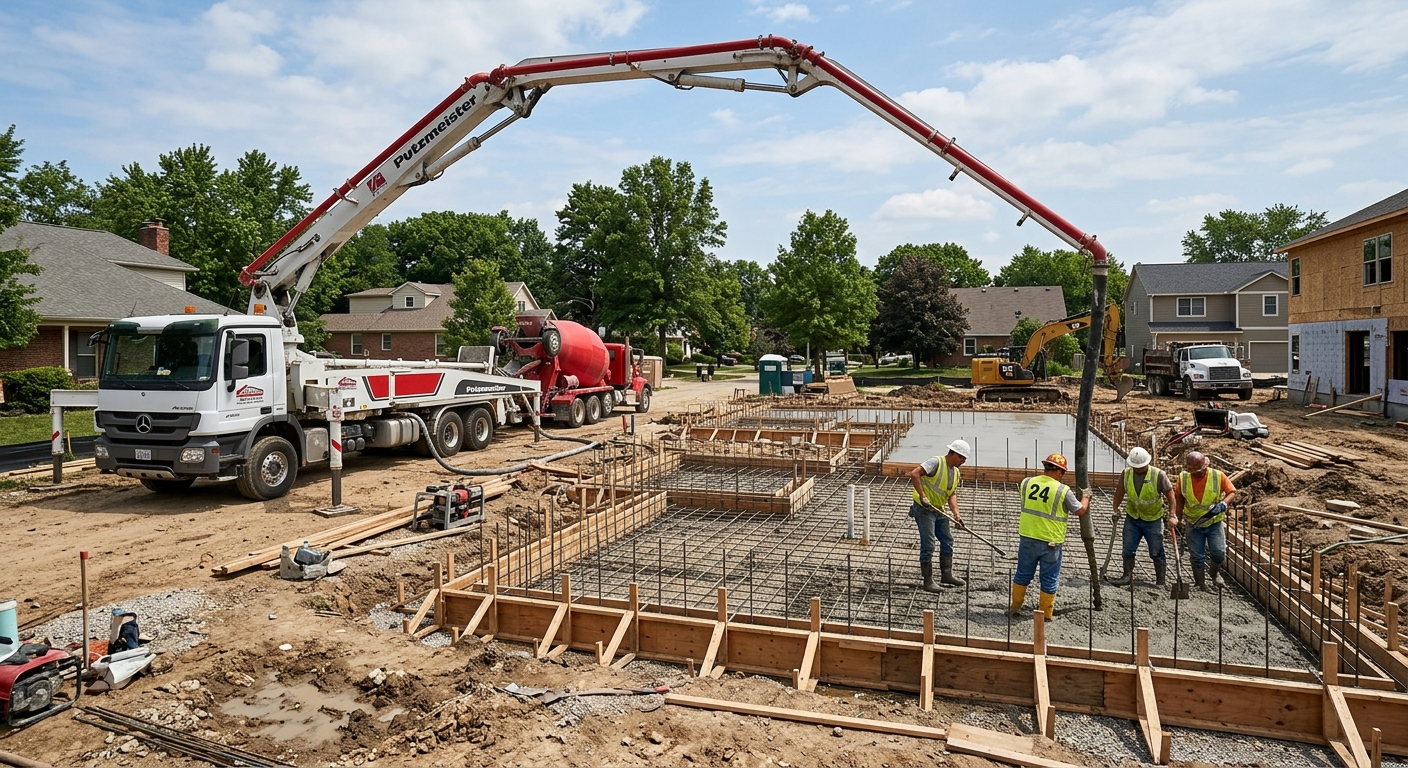
Concrete work options and costs in Cadboro Bay
Concrete work in Cadboro Bay, British Columbia is shaped by the Lower Mainland–Southwest climate: mild winters overall, but frequent coastal rain and freeze–thaw cycles that punish poorly drained base and concrete mixes with the wrong air content. In a community of about 4,000 people (Statistics Canada, 2021 Census), there’s steady demand for practical flatwork—especially around mature residential pockets such as Cadboro Bay Village, where many homes have older driveways and patios that show cracking, scaling, or uneven settling.
Because the local market is closely tied to the region’s housing form, it’s common to see recurring driveway and walkway scopes tied to detached and family-sized properties, which puts consistent pressure on scheduling for excavation, forming, and curing crews during the wetter shoulder seasons. Even though the frost line is typically shallower than in much of Canada, local practice still assumes a design frost depth around 450 mm / 18", so footings, thickened edges, and any structural work are placed below that to reduce frost heave risk. For exterior slabs and driveways, our contracts also commonly include air-entrained mix design, proper control-joint layout, and longer curing measures when nights stay cool and humidity stays high.
That’s why two bids for the “same” driveway can differ meaningfully—truck access, base thickness, reinforcement strategy, finish detailing, and the time we can protect the pour from rain and early drying. Use the table below as a starting point to compare options before you request a written, itemised quote.
| Application |
Typical Size |
Key Spec |
Finish Option |
Price Range |
| Concrete driveway (standard broom finish) |
16 ft x 10 ft (160 sq. ft.) |
Air-entrained exterior mix, control joints, compacted granular base |
Broom finish + standard joint pattern |
$2,880 – $4,480 |
| Exposed aggregate driveway |
16 ft x 10 ft (160 sq. ft.) |
Air-entrained mix, proper curing + surface wash timing |
Exposed aggregate finish |
$3,200 – $5,120 |
| Stamped concrete driveway or patio |
16 ft x 10 ft (160 sq. ft.) |
Air-entrained mix, colour hardener/sealer system, joint planning |
Stamped pattern + release agent + sealer |
$3,520 – $5,760 |
| Plain concrete patio or walkway |
12 ft x 8 ft (96 sq. ft.) |
Exterior mix, compacted granular base, control joints where needed |
Float/trowel with light broom texture |
$1,540 – $2,500 |
| Garage floor (interior slab) |
20 ft x 20 ft (400 sq. ft.) |
30+ MPa mix, vapour considerations as applicable, reinforcing as needed |
Float finish |
$7,200 – $11,200 |
| Foundation footings (structural, below frost) |
Per 1 lineal foot equivalent |
Excavation below frost, structural concrete, reinforcement as designed |
Structural concrete (not a visible finish) |
$200 – $350 |
Prices are estimates only and vary by project scope, site access and material selection.
What affects the price of concrete work in Cadboro Bay
In the Lower Mainland–Southwest, it’s common to see concrete quotes for what looks like the same driveway or patio come in 30–50% apart. The difference usually isn’t “mystery pricing”—it’s the hidden scope: how deep the base is, whether the contractor includes reinforcement, the mix design (air-entrainment and strength), and how they plan around rain, cool nights and freeze–thaw cycles. Contractors also carry different overheads tied to crew availability and the reality that in coastal regions, curing protection (blankets, temporary covers, careful timing) is often needed more often than homeowners expect.
Frost and freeze–thaw drive design and cost in every exterior application. Local practice typically assumes a design frost depth around 450 mm / 18", and footings must extend below that frost line to reduce heave. For exterior flatwork, air-entrained concrete is a must to survive freeze–thaw scaling and surface loss. When we’re comparing bids across British Columbia, colder regions generally have a shorter pour season and sometimes require colder-weather curing precautions (insulation blankets and heating), which adds cost; in the Lower Mainland–Southwest, the “cost lever” is often wet weather scheduling, drainage and curing controls rather than heavy winter heating.
Here in Cadboro Bay, small site factors raise cost quickly: a narrow driveway with limited truck access can increase labour for forming and rebar placement, and saturated soils can require additional granular drainage and longer drying time before we can place compacted base. On the other hand, a simple, open patio with easy access often lets contractors stay closer to the base price band (for example, plain patio/walkway work often lines up with $16–$26 per sq. ft.). Meanwhile, decorative options like stamped concrete can be justified when you want longevity in appearance and accept higher material and finishing labour (often tracking the $22–$36 per sq. ft. band for stamped work, depending on complexity).
Homes built decades ago also matter. Older lots frequently have weaker drainage, heavier topsoil, and less stable grades—so the “same size” slab can require more excavation and base rework, which shows up in your budget more than many homeowners anticipate.
| Price Factor |
Why It Matters |
Cost Impact |
| Frost line depth — determines footing depth and form height |
Footings and thickened edges must be below frost to reduce heave risk |
Increases excavation depth and concrete volume; can change the entire scope |
| Site preparation — excavation, grading, compacted granular base |
Proper base prevents settlement and helps drainage during coastal rainfall |
More excavation/granular = higher labour and material costs |
| Reinforcement — rebar or wire mesh requirement |
Controls cracking and supports structural load needs |
Rebar ties, chairs, and placement time add cost; can reduce premature failure |
| Mix design — air-entrainment and compressive strength spec |
Air-entrainment improves freeze–thaw durability; strength supports long-term performance |
Exterior mix design adds incremental material cost, but reduces scaling/spalling risk |
| Finish type — broom vs. stamped vs. exposed aggregate |
Finish systems drive labour time, materials, and sealers |
Stamped and exposed aggregate typically add cost vs. broom finish |
| Pour size and concrete truck access to site |
Access affects pump vs. wheelbarrow handling, labour, and schedule reliability |
Poor access can raise costs due to labour and re-handling |
| Cold-weather curing precautions — heating and blankets |
Even in coastal BC, cool, humid conditions can slow strength gain |
Blankets/heating add setup and labour, especially if nights are cold |
| Control joint pattern and sealing cost |
Joints limit random cracking; sealing helps repel de-icing salts and rainfall staining |
More joint layout time and sealer materials increase line items |
Permits & regulations in British Columbia
In British Columbia, structural concrete work generally requires a building permit, and municipalities often expect engineered drawings to be reviewed before construction. This typically includes footings, foundation walls, and grade beams, especially where they support the main structure or transfer loads. In contrast, concrete flatwork like driveways, patios and walkways usually does not require a permit when it’s limited to normal site improvements—however, permits can come into play if the work affects lot grading, changes drainage patterns, or impacts municipal requirements around impervious surface coverage or work near the right-of-way.
If you’re in Cadboro Bay and planning a driveway replacement or patio pour, the safest approach is to confirm with the local authority before you break ground—especially if you’re lowering/raising grades, building retaining elements, or connecting to drains. Separately, verify your contractor’s coverage. In BC, you should ask for liability insurance (certificate of insurance) and confirmation of Workers’ compensation coverage (commonly referred to as WCB) before work starts. For step-by-step checks, start with:
- Search the contractor’s business info through the provincial online contractor/licensing registry for status and eligibility.
- Request a current certificate of insurance naming your property/client where applicable.
- Ask for proof of WCB coverage or a clearance letter.
- Confirm they’ve completed similar scopes (driveway vs. stamped vs. foundation) with references and photos.
- Keep all documents in writing so you can verify coverage aligns with the dated project scope.
Getting concrete right in Cadboro Bay's freeze-thaw climate
Concrete failures in Cadboro Bay are usually less about the brand of concrete and more about what’s under and around it. The top causes we see are: inadequate base prep (leading to settlement), poor drainage (keeping soils saturated after coastal rain), insufficient air-entrainment (leading to freeze–thaw damage), and weak curing practices (slowed strength gain during cool, humid periods). The solution is to specify the job correctly for Lower Mainland–Southwest conditions rather than “standard everything.”
(1) Base preparation: place compacted granular sub-base to the depth needed for local soil and anticipated loading, with attention to grading so water doesn’t pond near edges. (2) Mix design: require air-entrainment for exterior slabs—commonly 5–7% air for freeze–thaw durability—and a minimum 32 MPa compressive strength (or higher where the engineer/spec calls for it). (3) Control joints: set a joint spacing pattern that limits random cracking and provides planned “break lines.” (4) Curing: protect the pour and plan for at least 7 days of proper curing conditions; in cool, damp weather, this may mean blankets or covers to keep temperature and moisture in the right range. (5) Sealing: apply a penetrating sealer after cure—often around 28 days post-pour—so the surface repels moisture and helps with de-icing salt protection in winter.
If you’re comparing options, note where the price difference is worth it. For example, moving from a broom-finish driveway to stamped concrete can add labour and material—often pushing toward the higher stamped band (roughly $22–$36 per sq. ft.). That spend is justified when the base prep and mix are still upgraded to the same exterior specifications; it isn’t justified if the base depth or air-entrainment is reduced just to “fit the budget.”
| Spec |
Why It Matters in Cadboro Bay |
What to Ask For |
Impact if Skipped |
| Compacted granular base (depth?) |
Stable base prevents settlement and helps drainage under wet coastal cycles |
Specify base depth/grade, compaction method, and drainage/grade slopes |
Cracking, uneven surface, and premature edge failure |
| Air-entrained concrete mix (target air %?) |
Freeze–thaw durability depends on correct air content for exterior surfaces |
Confirm air-entrainment target (typically 5–7%) and exterior exposure requirement |
Spalling and scaling in future winters |
| Compressive strength (MPa rating) |
Adequate strength gain supports long-term wear in a wet/cool climate |
Minimum 32 MPa (or higher if engineered) and expected curing practices |
Surface deterioration, reduced durability |
| Control joints (spacing per ACI guidelines) |
Controls where cracks form, reducing random cracking |
Joint spacing, sawcut timing, and sealant/finish plan where required |
Random cracking and water infiltration through unplanned cracks |
| Minimum 7-day curing period |
Cool nights and humidity can slow strength if curing is rushed |
Protection plan (covers/blankets if needed) and curing duration expectations |
Weaker surface, increased scaling risk |
| Penetrating sealer (when applied after cure) |
Repels moisture and improves resistance to salt and staining cycles |
Specify sealer type and that it’s applied after cure (commonly around 28 days) |
Faster staining, more surface wear and salt-related damage |
How to choose a concrete work contractor in Cadboro Bay
Choosing a contractor in Cadboro Bay starts with verifying proper credentials and then forcing clarity in the quote. In British Columbia, you should confirm the contractor’s licensing status through the appropriate provincial online registry, then request a current certificate of liability insurance before the first day on site. For worker coverage, ask for proof of WCB (often via clearance letter documentation) so you aren’t exposed if something goes wrong on the job. Don’t accept “we’re covered” without seeing documentation.
Next, request 2–3 itemised written quotes—not just a lump sum. The best quotes break down labour, materials, excavation/haul, base prep, reinforcement, concrete supply, finishing, curing protection, and sealing (if included). Read the exclusions carefully: is permit pulling included (if required), is disposal/hauling included, and is winter/rain curing protection part of the scope? Clarify whether they include sawcut joints and whether sealing is part of the driveway/patio scope.
For warranty, ask for the workmanship warranty length in writing and whether any product/manufacturer warranties apply to sealers, integral colours, or admixtures. If you sell the home, ask if the workmanship warranty is transferable.
On payment, keep it safe: never pay more than 10–15% upfront. Use a holdback until the final finish is complete and surfaces are cured/accepted. Finally, require a timeline with a start date and completion estimate in writing—Lower Mainland scheduling can shift around rain, truck availability, and curing conditions.
- Provide licence and insurance documentation with the quote.
- Confirm WCB coverage via clearance letter or proof.
- Request itemised pricing for excavation, base, reinforcement, concrete supply, finishing and curing.
- Ask for concrete mix spec: exterior exposure, air-entrainment, and strength rating.
- Confirm whether they include proper drainage/grading and granular base thickness.
- Verify joint layout: location, spacing, and sawcut timing.
- Ask what curing protection is included for cool, humid nights.
- For sealing: ask when sealer is applied and what product type is used.
- Check whether disposal/haul-off of excavated material is included.
- Confirm access requirements (pump vs. wheelbarrow) and any equipment surcharges.
- Get start date and completion timeline in writing.
- Use a payment schedule with a holdback until acceptance.
Concrete red flags in Cadboro Bay: bids that don’t mention air-entrainment for exterior work, “standard” base thickness without soil/drainage discussion, missing joint layout details, refusing to provide insurance/WCB documentation, or pressure to pay a large deposit before any site prep starts.
Frequently asked questions — concrete work in Cadboro Bay
How long does a concrete driveway last?
In Cadboro Bay and the Lower Mainland–Southwest, a well-built concrete driveway commonly lasts 20–30 years, and sometimes longer, when the base is properly compacted, drainage is correct, and the concrete is specified for freeze–thaw durability. The biggest “life span” drivers are the exterior mix design (air-entrained concrete) and whether control joints are installed so cracks don’t become random pathways for water. Even with mild winters, freeze–thaw cycles and coastal wet weather can accelerate surface scaling if air-entrainment or curing is wrong. If you’re comparing options, a basic broom-finished driveway often sits around the local range of about $18–$28 per sq. ft.—but choosing a lower-spec mix to hit the low end can shorten service life.
What is air-entrained concrete and why does it matter here?
Air-entrained concrete includes microscopic air bubbles that give freezing water a place to expand. In British Columbia’s coastal climate, water can saturate the surface and edges during rain, then freeze during colder snaps—creating freeze–thaw stress that leads to scaling and spalling if the concrete isn’t properly air-entrained. For exterior flatwork in Cadboro Bay, contractors typically target about 5–7% air for freeze–thaw durability and pair that with a minimum strength spec (commonly 32 MPa). This matters because it’s not just a “quality upgrade”—it’s part of surviving the repeated wet/cold cycles. A contractor who skips or downplays this specification is the one most likely to give you a low quote that fails early.
How do I prepare the base for a concrete slab?
Base preparation in Cadboro Bay is mostly about stable, well-drained ground. Your contractor should excavate to a planned depth, grade the area so water won’t pond, and place a compacted granular sub-base to the thickness that fits local soil conditions and the slab’s use. They should also compact in lifts and confirm consistency before placing reinforcement and concrete. Because the region sees frequent coastal rainfall and freeze–thaw cycles, drainage and the ability for water to move away from the slab edges are essential. If you have older fill or soft spots, the base prep scope may increase, which is often where a higher quote is actually “buying” long-term performance.
How do I compare concrete quotes?
Compare quotes by matching the scope line-by-line, not just total price. Ask each contractor to show concrete quantity, base thickness/compaction approach, reinforcement (if any), air-entrainment and strength targets, finish type, control joint layout, curing protection, and whether sealing is included (and when it will be applied). In Cadboro Bay, finish upgrades can move prices significantly—for instance, a stamped driveway or patio is often in the higher band (commonly $22–$36 per sq. ft.) due to colour/texture systems and labour. A plain patio/walkway is usually lower (around $16–26 per sq. ft.). If one quote is far cheaper, look for what’s missing—often it’s air-entrainment, base prep depth, joint details, or curing protection. Clarify exclusions like disposal/haul-off and rain delays before you sign.
Can concrete be poured in cold weather in Cadboro Bay?
Yes, concrete can be poured in cold weather in Cadboro Bay, but it requires a plan to protect curing. British Columbia’s Lower Mainland–Southwest climate is often milder than interior regions, yet cool nights and wet conditions can still slow strength development and increase risk if protection isn’t used. Contractors should monitor temperature, protect the slab with curing blankets or covers when needed, and schedule pours so concrete doesn’t freeze early. Ask how they’ll keep the slab within required temperature ranges during the first critical period after placement. A good contractor will discuss cold-weather curing precautions in the quote and won’t rely on “it’ll be fine” if rain or evening temperatures are likely.
How do I maintain concrete in Cadboro Bay's freeze-thaw climate?
Maintenance in Cadboro Bay is about keeping water from staying in contact with the surface and protecting it from salt-related wear. After new concrete, allow full cure before heavy use, then use a penetrating sealer once the slab has cured sufficiently (often around 28 days in practice). Sweep debris to prevent staining, and keep landscaping water from oversaturating the edges. During winter, use de-icing products carefully and follow up by inspecting for any early scaling around edges and control joints. Re-sealing schedules vary by exposure, but keep an eye on high-traffic and sun/part-shade areas. If you notice spalling or joint deterioration early, addressing it sooner can be far cheaper than replacing a whole section.