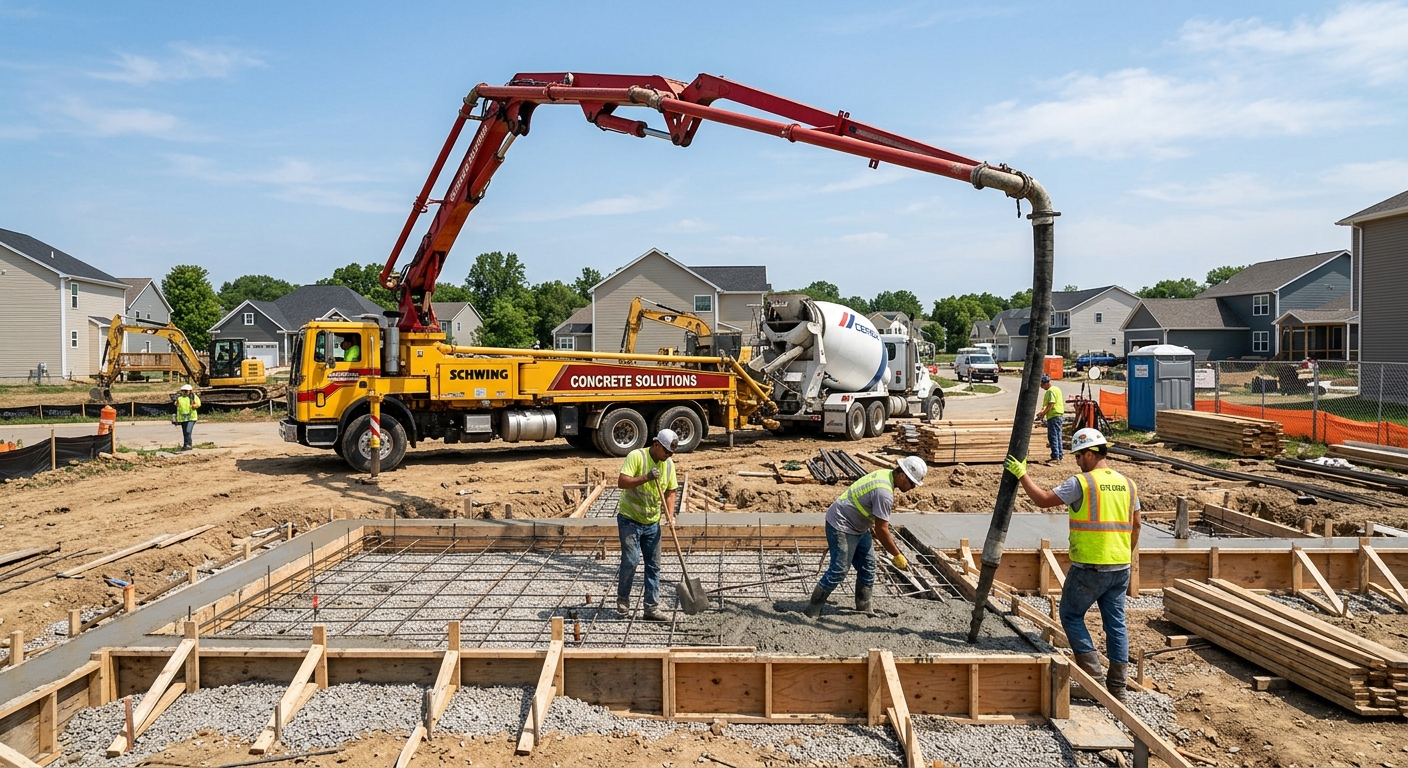
Concrete work options and costs in Harbour Village
Concrete work in Harbour Village is typically in high demand because many local homeowners are maintaining or improving established properties in a coastal-wet climate. With a population of 2,711 (Statistics Canada, 2021 Census), Harbour Village is small enough that the concrete crews and specialty finishers who are available for short pour windows can get booked quickly—especially around patio and driveway season. You’ll also see plenty of single-detached housing in the Lower Mainland–Southwest market, and those properties commonly need new or expanded slabs for driveways, walkways, and entry patios—work that’s strongly tied to proper base prep and freeze–thaw durability.
In the Lower Mainland–Southwest, mild winters don’t eliminate damage risks; they change them. We still plan around a shallow frost depth of about 450 mm / 18", and we protect footings, piers, and thickened edges by setting them below frost to reduce frost heave. Coastal rainfall and frequent freeze–thaw cycles push costs toward drainage-aware base preparation, air-entrained concrete mixes, and longer curing/surface protection when it’s cool or wet. In neighbourhood pockets like the Harbour Village shoreline and the busier road access areas, contractors often face tight staging and longer daily labour for forming and clean-up—so realistic quotes vary depending on site access.
Below are common Harbour Village project types and realistic price ranges to help you compare quotes, then we’ll break down what drives the biggest variations.
| Application |
Typical Size |
Key Spec |
Finish Option |
Price Range |
| Concrete driveway (standard broom finish) |
16 ft x 26 ft (416 sq. ft.) |
Air-entrained mix, compacted granular base, control joints |
Broom finish, basic sealer optional |
$7,400–$11,600 |
| Exposed aggregate driveway |
16 ft x 26 ft (416 sq. ft.) |
Higher cement paste control, proper curing for durability |
Exposed aggregate, typically sealed |
$10,000–$14,800 |
| Stamped concrete driveway or patio |
12 ft x 20 ft (240 sq. ft.) |
Air-entrained mix, integral colour, reinforced edge forms |
Stamped pattern, release, sealer |
$6,000–$9,900 |
| Plain concrete patio or walkway |
10 ft x 20 ft (200 sq. ft.) |
Proper slope, compacted base, air-entrained mix |
Float/wood finish or light broom, sealer optional |
$3,200–$5,200 |
| Garage floor (interior slab) |
20 ft x 20 ft (400 sq. ft.) |
Vapor barrier where required, reinforced slab, proper thickness |
Broom/steel trowel depending on use |
$7,200–$12,000 |
| Foundation footings (structural, below frost) |
Per project scope (commonly 40–80 linear ft) |
Below frost, excavation, forming, reinforcement as required |
Structural pour (no decorative finish) |
$12,000–$28,000 |
Prices are estimates only and vary by project scope, site access and material selection.
What affects the price of concrete work in Harbour Village
In Harbour Village and across the Lower Mainland–Southwest, it’s common to see quotes for the “same” concrete job vary by 30–50%. The reason usually isn’t the concrete itself—it’s the unseen scope behind it: base preparation depth, drainage details, reinforcement, mix specifications (especially air content), and how scheduling/cold-weather practices are handled when rain and cool nights affect curing. Compared with interior and northern BC, the season is longer here, but coastal-wet conditions can still disrupt pours. When crews get delayed by weather windows, labour can cost more per day, and finishing work (especially decorative) needs extra crew time.
Frost depth and freeze–thaw cycles dictate every exterior spec. Even with a shallow design frost depth of ~450 mm / 18", footings and thickened edges still need to extend below frost to prevent frost heave. Exterior slabs should be air-entrained to help survive the freeze–thaw cycle, and they need control joints plus sealing to resist scaling from moisture and de-icing salts. In colder regions, cold-weather curing precautions can add heating and blanket costs; in coastal BC those precautions may be milder, but cool, damp conditions still mean longer cure times and sometimes more conservative scheduling. Deeper excavations, more complex drainage, and longer curing all shift the price bands—standard driveway work often lands in the $18–$28 per sq. ft. range, while stamped & decorative concrete typically costs $22–$36 per sq. ft. due to labour and material complexity.
For example: if your site has saturated soil after heavy rain, contractors may need more granular base and careful subdrain placement—raising excavation and forming time but improving long-term performance. If your driveway ties into existing edges that need demolition and rebar dowelling, you’ll see higher labour and waste costs. And if you’re replacing a foundation detail (rather than just flatwork), expect cost to jump quickly because structural footings must be built below frost—structural footing scopes commonly price well above $200–$350 per unit measure once excavation, reinforcement, and forming are included.
| Price Factor |
Why It Matters |
Cost Impact |
| Frost line depth — determines footing depth and form height |
Footings must extend below design frost to prevent frost heave. |
High impact on excavation/forming; can add significant labour time. |
| Site preparation — excavation, grading, compacted granular base |
Proper base controls settlement and helps manage water away from slab edges. |
Often the biggest variable; poor access increases time and equipment. |
| Reinforcement — rebar or wire mesh requirement |
Reinforcement distributes loads and reduces cracking in larger or heavier-use slabs. |
Moderate material cost plus labour to place/secure correctly. |
| Mix design — air-entrainment and compressive strength spec |
Air-entrainment improves freeze–thaw durability and scaling resistance. |
Moderate increase in materials; lower risk of early surface failure. |
| Finish type — broom vs. stamped vs. exposed aggregate |
Complexity and cure/finishing steps drive extra labour and specialty materials. |
High impact; stamped/exposed often carries a premium. |
| Pour size and concrete truck access to site |
Access affects pumping vs. wheelbarrow haul, staging and pour speed. |
Can swing cost quickly; limited access adds labour and time. |
| Cold-weather curing precautions — heating and blankets |
Cool nights and high humidity can slow strength gain and surface durability. |
Variable; adds cost when blankets/heating are required to meet schedule. |
| Control joint pattern and sealing cost |
Joints manage shrinkage cracking; sealing reduces moisture/de-icer impact. |
Moderate; skipping can shorten service life and increase repairs. |
Permits & regulations in British Columbia
In British Columbia, structural concrete work—like foundation walls, grade beams, grade-supported footings and other structural elements—usually requires a building permit, and municipalities often expect engineered drawings to support dimensions, reinforcement, and bearing conditions. Concrete flatwork (such as patios, walkways, and most driveways) typically does not require a permit unless the work affects lot grading, stormwater/drainage design, impervious surface coverage limits, or the municipal right-of-way. Before you start, confirm with the local authority that your specific scope is permitted and whether any engineering or drainage review is needed.
For contractor due diligence in Harbour Village, follow a simple step-by-step process. First, verify the contractor’s credentials through the provincial online registry where applicable for their trade category. Next, request a certificate of insurance naming you and the project site as required; confirm it covers general liability and that the policy is active for the job dates. Then ask for proof of work coverage for workers (commonly WSBC/WCB). Finally, request references for similar-scale local projects—ideally driveways or slabs completed in a wet-freeze climate where curing and base drainage were handled properly. If the contractor can’t provide clear documentation, treat it as a red flag.
Getting concrete right in Harbour Village's freeze-thaw climate
Concrete fails in Harbour Village mostly due to moisture movement and freeze–thaw stress. When water gets into the slab or around the edges, it expands on freezing and can cause surface scaling or spalling—especially if the mix doesn’t have proper air content or if joints and drainage aren’t detailed correctly. To spec concrete correctly here in the Lower Mainland–Southwest, start with base preparation: use compacted granular sub-base to the right depth for your soil conditions, and ensure water can drain away from the slab edges. Next, specify a proper air-entrained exterior mix—targeting about 5–7% air content—and a minimum 32 MPa compressive strength so the concrete reaches adequate performance under cool, damp curing conditions.
Control joints are what control the crack locations. Ask for a joint layout that limits random cracking (and align it with slab geometry and expansion considerations). Curing is also critical: plan for a minimum 7-day curing period under proper conditions, and in cold snaps use appropriate curing protection like blankets so the slab can build strength before surface exposure. Finally, apply a penetrating sealer after the concrete has fully cured—commonly around 28 days—to repel de-icing salts and reduce moisture ingress.
Here’s a realistic dollar example: a standard broom driveway might price around the $18–$28 per sq. ft. band, while a stamped driveway can land closer to the $22–$36 per sq. ft. premium. If the contractor cuts corners on air-entrainment or base drainage to win the price, the decorative surface can deteriorate too. The cost difference is justified when the premium includes correct mix design, proper curing protection, and a sealing plan—not just the stamp.
| Spec | Why It Matters in Harbour Village |
What to Ask For |
Impact if Skipped |
| Compacted granular base (depth?) |
Confirm excavation depth, granular type, and compaction requirements for your soil and slab thickness. |
Higher settlement and poor drainage at edges; early cracking and scaling risk increases. |
| Air-entrained concrete mix (target air %?) |
Request exterior air content target around 5–7% for freeze–thaw durability. |
Spalling and surface scaling become much more likely during wet/cold cycles. |
| Compressive strength (MPa rating) |
Specify minimum 32 MPa and confirm testing/acceptance approach with delivery ticket details. |
Slower strength gain and reduced durability; sealer and surface wear become less effective. |
| Control joints (spacing per ACI guidelines) |
Ask for a joint spacing plan tied to slab size and layout. |
Random cracking at weak points; more visible damage and higher maintenance. |
| Minimum 7-day curing period |
Confirm curing method and protection during cool/rainy weather. |
Reduced performance at the time of early exposure; cracking and dusting can develop. |
| Penetrating sealer (when applied after cure) |
Plan sealer after cure (commonly ~28 days) and confirm product type and prep. |
Moisture ingress increases; de-icer and rain effects speed up surface degradation. |
How to choose a concrete work contractor in Harbour Village
To choose a contractor you can trust in British Columbia, start with verification. Ask for their current licence/registration where applicable for their trade category, then confirm liability insurance with a certificate of insurance that matches your project address and dates. Next, request proof of coverage for their workers (WSBC/WCB). A reputable Harbour Village concrete contractor should provide these documents without pressure, and they should be consistent with the scope you’re asking for.
Then get 2–3 itemised written quotes rather than “best guess” totals. You want labour and materials broken out so you can see what’s included: excavation depth, granular base, reinforcement (if any), concrete mix spec, finishing steps, sealing, and disposal. Confirm whether permits are included when required (structural work typically needs permits), and what the quote excludes—like tree root removal, rock excavation, saw-cutting existing slabs, or stormwater/drainage tie-ins. Pay attention to waste hauling and any assumptions about access and equipment staging.
For warranty, ask for the workmanship warranty length and whether it covers cracking from shrinkage vs. settlement failures, plus any manufacturer/product warranty for decorative toppings or sealers. Check whether warranties are transferable to future owners. Payment should be controlled: never pay more than 10–15% upfront; hold back until the job is complete and sealed/finished as specified. Finally, insist on a start date and completion estimate in writing—weather-dependent scheduling is normal here, but timelines should still be planned.
- They provide proof of insurance and worker coverage before any work starts.
- Quotes include base prep scope (granular depth, compaction, drainage intent).
- They specify the concrete mix (air-entrainment and minimum strength).
- They include reinforcement details (mesh/rebar placement and ties/chairs).
- Finish specs are clear: broom vs. stamped vs. exposed aggregate, and curing/finishing steps.
- Control joint spacing and plan are described, not just “we’ll add joints.”
- They state curing protection expectations for cool/wet days.
- Sealer type and timing are included (commonly after full cure, around 28 days).
- Disposal and site clean-up are explicitly listed.
- They describe truck access and whether pumping is included when needed.
- Warranty terms and exclusions are written in plain language.
- Payment schedule matches best practice (10–15% max upfront, holdback until complete).
Concrete red flags to watch for in Harbour Village: (1) a lowball quote that skips granular base depth or reinforcement details; (2) no mention of air-entrained mix for exterior work; (3) rushing finishing and curing after rain/cool nights without protection; (4) joint spacing “that depends” with no plan; and (5) no written scope or warranty language for sealing and workmanship.
Frequently asked questions — concrete work in Harbour Village
How do I seal concrete to protect it in Harbour Village?
In Harbour Village and across British Columbia’s coastal-wet conditions, sealing is about reducing moisture ingress so your slab handles rain exposure, de-icing salts, and freeze–thaw stress better. The key is timing: wait until the concrete is fully cured—often about 28 days—then prep the surface properly (clean, dry, and remove laitance). Use a penetrating sealer designed for freeze–thaw durability rather than a simple surface film. For driveways and patios, ask contractors to include sealing in the scope and specify the product type. If your driveway sits in a shoulder area where water collects after storms, sealing helps, but it doesn’t replace correct slope, compaction, and an air-entrained mix. Expect sealing to be a separate line item, but it can prevent early scaling that otherwise shows up within a couple winters in wet-cold cycles.
What is the difference between concrete and cement?
Concrete is the full mixture you see and place on site: cement plus water plus aggregates (sand and gravel/stone), and often admixtures such as air-entrainers for freeze–thaw durability. Cement is only one component of concrete—typically Portland cement—that acts as the binder. In Harbour Village, where exterior flatwork must resist moisture and freeze–thaw cycles, the concrete mix design (including air entrainment and water/cement ratio) is what matters most for long-term performance. Two different concrete mixes can use similar cement, but if one doesn’t hit an exterior air target or strength requirement, it may scale and spall sooner. When reviewing quotes, focus on the mix specs (air content and compressive strength) rather than just the “cement” line, since that spec drives your durability outcomes.
How much does concrete work cost in Harbour Village?
Concrete costs in Harbour Village depend on base prep, access, thickness, reinforcement, and finishing complexity. For typical exterior flatwork, you can use the local price bands as a starting point: a standard driveway often lands in the $18–$28 per sq. ft. range, while stamped & decorative concrete usually sits higher at about $22–$36 per sq. ft. Patio and walkway work commonly comes in around $16–$26 per sq. ft. (depending on thickness, edges, and jointing). If you’re comparing quotes, make sure the scope matches—one contractor’s “cheap” price may omit granular base depth, reinforcement, air-entrainment, or sealing. Structural foundation footings are a different category and can be priced per project after excavation and forming; the local footing band starts at about $200–$350 in the overview, but structural work often ends up much higher once you include excavation, rebar, and forming.
How deep must footings be for Harbour Village's frost line?
In the Lower Mainland–Southwest, codes and local practice typically assume a frost depth around 450 mm / 18". That means exterior structural footings, piers, and thickened edges are set below that design frost level to reduce frost heave from freeze–thaw. The exact depth on your specific property should be confirmed by the engineer or based on your building design and site soil conditions; don’t treat the frost depth as the only factor. For a homeowner comparison, you can expect deeper excavation and more formwork than you might assume if contractors are cutting it close to surface grades. In Harbour Village’s wet coastal climate, good base and drainage detailing also matter, because even “correct” depth can perform poorly if water pools around foundation edges.
Why does concrete crack in Harbour Village and how is it prevented?
Concrete cracking in Harbour Village is usually normal shrinkage and movement—not “failure”—but freeze–thaw can worsen visible cracking if the slab isn’t built for moisture and temperature swings. The biggest prevention steps are (1) proper base prep with compacted granular so the slab doesn’t settle, (2) air-entrained exterior concrete so the paste resists scaling/spalling, and (3) a control joint plan so cracks happen where they’re expected. Joint spacing and timing matter: joints should be cut to manage shrinkage without leaving random stress points. Curing also matters—cool, damp conditions can slow strength gain, so crews may need curing protection to reach adequate performance. Finally, sealing after cure helps keep water and salts from accelerating deterioration. If your quote doesn’t discuss air entrainment, joints, and curing, that omission is often why cracks show up earlier in wet winters.
Stamped vs broom-finish concrete — cost difference?
In Harbour Village and the Lower Mainland–Southwest, stamped concrete costs more than broom-finish because it requires integral colour or colour hardener, additional labour for pattern placement, and careful finishing and curing steps. A standard broom-finish driveway commonly falls in the $18–$28 per sq. ft. band, while stamped concrete is often closer to $22–$36 per sq. ft. The “extra” is typically justified only if the contractor still meets the durability fundamentals—air-entrainment, correct base prep, proper control joints, and curing protection. If someone tries to win the price by skimping on base depth or mix specs, the decorative surface can deteriorate prematurely even though it looks great at installation. Ask for an itemised quote showing what’s included: stamp materials, sealer, and whether joints and drainage details are designed for freeze–thaw performance.