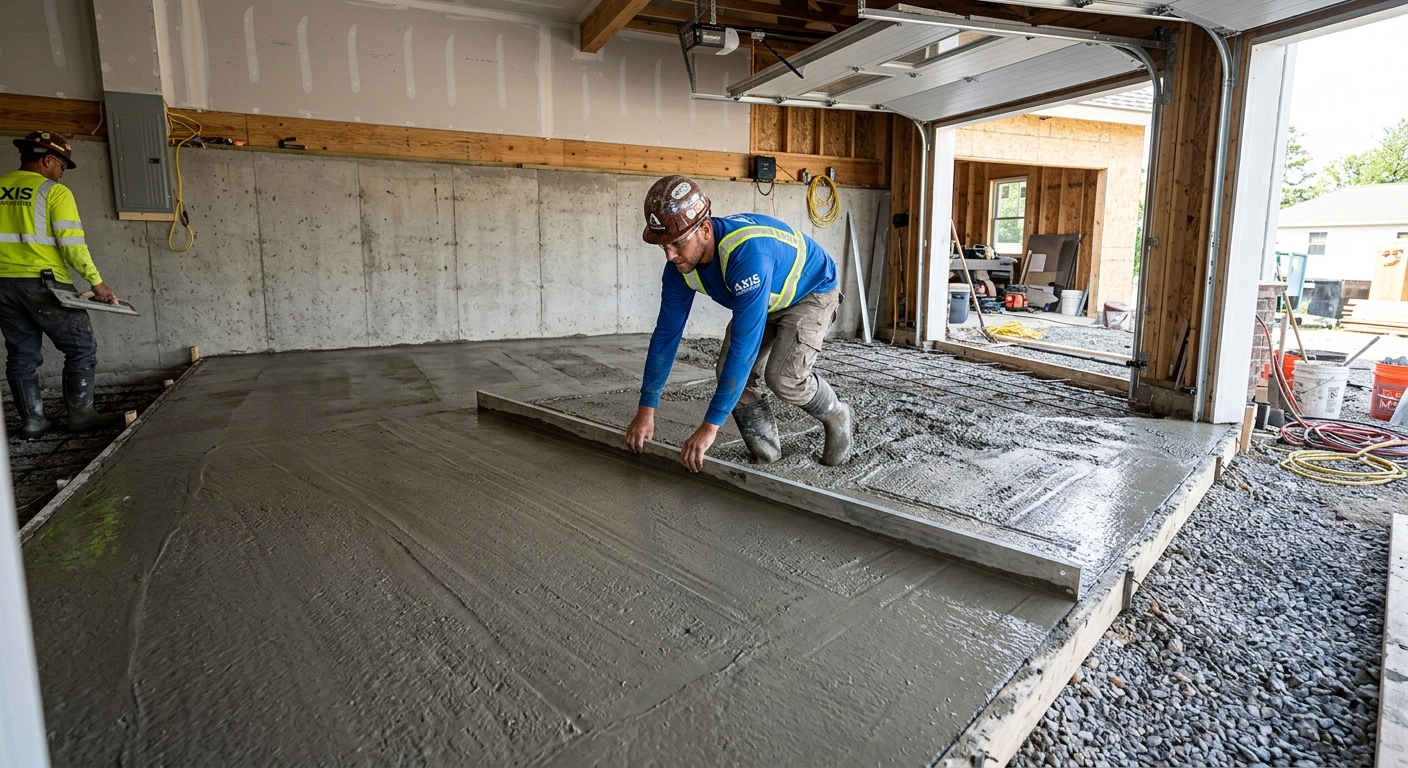
Concrete work options and costs in University Endowment Lands
Concrete work in University Endowment Lands (U.E.L.) is shaped by a market that’s largely built around established neighbourhoods and a housing mix where single-detached homes remain a big driver of driveway and flatwork demand; across the broader local area, Statistics Canada recorded 254,483 residents in the regional economic footprint (Statistics Canada, 2021 Census). With a population of 16,920 inside U.E.L. itself (Statistics Canada, 2021 Census), you’ll also notice steady demand for durable exterior surfaces that can handle coastal-wet conditions and freeze–thaw cycling.
In the Lower Mainland–Southwest, even “mild” winters still matter. Practice is typically designed for a frost depth of about 450 mm / 18", meaning exterior footings, piers, and thickened edges are placed below that line to reduce frost heave risk. Because we can get frequent freeze–thaw cycles and heavy rainfall, contractors budget more for proper drainage, compacted granular base, and air-entrained mixes—especially for driveways, patios, and foundations. Scheduling also affects price: cool nights and high humidity can slow curing, so many crews plan for longer cure times, curing blankets, and post-pour sealing.
Within U.E.L., concrete flatwork tends to be especially in demand around the UBC-adjacent residential areas such as Wesbrook Village, where homeowners frequently upgrade driveways and patios to improve drainage and curb appeal. Those conditions are why your quote can land in different bands depending on finish choice, reinforcement, and how much excavation and base build-up your site requires—so it’s best to compare like-for-like before you decide. The table below shows typical cost ranges for common scopes in U.E.L.
| Application |
Typical Size |
Key Spec |
Finish Option |
Price Range |
| Concrete driveway (standard broom finish) |
400–600 sq. ft. |
Air-entrained exterior mix, compacted granular base, control joints |
Broom finish |
$18,000–$28,000 |
| Exposed aggregate driveway |
400–600 sq. ft. |
Air-entrained exterior mix, proper finishing timing to expose stone |
Exposed aggregate |
$22,000–$34,000 |
| Stamped concrete driveway or patio |
300–500 sq. ft. |
Air-entrained exterior mix, release agent and seal system |
Stamped (with integral/solid color as selected) |
$22,000–$36,000 |
| Plain concrete patio or walkway |
200–400 sq. ft. |
Drainage-aware base prep and control joints |
Plain trowel/broom |
$3,200–$10,400 |
| Garage floor (interior slab) |
400–600 sq. ft. |
Vapour control as needed, properly compacted base, reinforcement |
Plain interior finish |
$10,000–$18,000 |
| Foundation footings (structural, below frost) |
Per linear foot / project-dependent |
Structural concrete, reinforcement, excavation below frost line |
Formed and finished as required by foundation system |
$200–$350 |
Prices are estimates only and vary by project scope, site access and material selection.
What affects the price of concrete work in University Endowment Lands
In University Endowment Lands and across the Lower Mainland–Southwest, it’s common to see quotes for the “same” concrete job vary by 30–50%. The biggest reason is that concrete is a system—excavation, base prep, reinforcement, mix design, finishing, and curing all interact. A contractor can price the surface finish, but if the quote assumes a thinner base, different reinforcement, or a lower-spec mix, the labour and materials can drop on paper while performance suffers in our wet, coastal climate.
Frost line depth and freeze–thaw cycles dictate every spec. Even though coastal BC has a shallower frost depth (often roughly 0.5–1.2 m for typical design conditions in coastal areas, depending on soil and design), contractors still place exterior footings below the design frost and plan thickened edges accordingly to prevent frost heave. For exterior slabs, air-entrained concrete is essential to handle freeze–thaw scaling risk. In colder regions elsewhere in BC, the pour season is shorter, and cold-weather curing precautions (insulation blankets, heaters, longer protection time) add cost; locally, we still budget for prolonged rain, cool nights, and high humidity that slow curing and require tighter scheduling. De-icing salt use in driveways can accelerate spalling if the mix and air system aren’t right—sealing isn’t optional for many homeowners.
Two U.E.L. examples: (1) a driveway replacement on a wet, clay-leaning lot often costs more than the finish upgrade because base drainage and granular thickness drive the excavation and compaction scope; (2) a small patio with easy truck access can land closer to the $16–$26/sq. ft. patio walkway band, while a larger driveway with regrading, removal, and constrained access can push toward the higher end of $18–$28/sq. ft. plus additional costs for reinforcement and curing protection. If your home is older and settlement issues show up (common around established neighbourhoods), expect extra base correction and sometimes steel/additional prep to avoid future differential movement—those adjustments show up in dollars quickly.
| Price Factor |
Why It Matters |
Cost Impact |
| Frost line depth — determines footing depth and form height |
Footings must be placed below the design frost to resist freeze–thaw heave in U.E.L.’s coastal-wet conditions |
Higher excavation depth increases labour, disposal, and forming |
| Site preparation — excavation, grading, compacted granular base |
Drainage and engineered base thickness protect the slab from saturated soils and soft subgrade |
Extra trucking and granular delivery can materially change the quote |
| Reinforcement — rebar or wire mesh requirement |
Controls cracking and distributes loads, especially over expansive or disturbed soils |
Rebar cages, chairs, and placement time add cost |
| Mix design — air-entrainment and compressive strength spec |
Air entrainment reduces freeze–thaw damage and scaling risk on exterior flatwork |
Higher-spec materials can cost more but improve durability |
| Finish type — broom vs. stamped vs. exposed aggregate |
Finish systems change labour time, materials, and sealing workflow |
Stamped/exposed typically adds hours and specialty product costs |
| Pour size and concrete truck access to site |
Access affects pumping, labour, and schedule; narrow lanes increase setup time |
Pump time and extra labour can raise total cost |
| Cold-weather curing precautions — heating and blankets |
Cool nights and damp air slow strength gain and can compromise surface durability |
Blanket/heater rentals and longer protection increase labour |
| Control joint pattern and sealing cost |
Joints reduce random cracking; sealing helps repel moisture and de-icing salt impact |
Additional saw cutting, sealing materials, and cure-timing requirements |
Permits & regulations in British Columbia
In British Columbia, the rules depend on what type of concrete work you’re doing. Structural concrete work—such as foundation walls, grade beams, footings, and other load-bearing elements—requires a building permit and often engineered drawings reviewed through the applicable municipal process. For concrete flatwork (patios, walkways, and most driveways), a permit is frequently not required unless the work affects lot grading, drainage patterns, impervious surface coverage limits, or any municipal right-of-way conditions. Always confirm with the local authority before breaking ground, especially if you’re changing elevations, creating new drainage connections, or modifying access to a driveway.
Before hiring in University Endowment Lands, also verify that your contractor is properly insured and able to work on your property. Confirm they carry liability insurance and have the required workplace coverage (commonly WSBC/WCB coverage depending on their business structure). Then ask for references on similar-scale concrete jobs in the Vancouver–Surrey–Abbotsford corridor.
Step-by-step homeowner checks: (1) Ask for the contractor’s business name and check their licensing/registration details in the relevant provincial online resources; (2) Request a current certificate of insurance—review that it lists your contractor as the insured party and that the coverage is active for the project dates; (3) Ask for proof of workplace coverage/clearance letter and confirm it matches the contractor’s legal entity; (4) Verify the scope aligns with the permit needs—structural items should be clearly separated from flatwork in the quote and work plan.
Getting concrete right in University Endowment Lands's freeze-thaw climate
Concrete failures in University Endowment Lands usually come down to moisture and freeze–thaw movement. When water gets beneath or into the slab, it can saturate the base and intensify damage during cold snaps. If the mix isn’t air-entrained to the correct level, freeze–thaw cycles can cause scaling and spalling; if the base is not properly compacted and graded, the slab can settle and crack, creating pathways for more water infiltration.
To spec your project correctly, insist on five fundamentals. (1) Base preparation: compacted granular sub-base to the right depth for local soils and frost considerations, with drainage attention to prevent saturated conditions. (2) Mix design: exterior flatwork should use air-entrained concrete (commonly 5–7% air content for durability) and meet or exceed a minimum compressive strength of 32 MPa. (3) Control joints: planned joint spacing to limit random cracking—then saw-cut on schedule. (4) Curing: plan for at least 7 days of proper curing conditions; in cool, humid periods, curing blankets or sealers may be required to protect strength gain. (5) Sealing: apply a penetrating sealer after the concrete has cured properly (often around 28 days post-pour) to repel moisture and help manage de-icing salt exposure on driveways.
Here’s a practical price example: if a stamped patio quote is higher because the contractor includes the correct air-entrained mix and scheduled curing protection, you may be paying an extra few thousand dollars versus a “looks-the-same” bid that cuts corners on mix spec. That difference is often justified because the surface colour and pattern won’t last if the slab scales—so the cheapest option can become the most expensive when you’re replacing it. Your technical questions should focus on air-entrainment, base thickness and drainage, joint timing, and curing protection—those are the items that prevent spalling in our Lower Mainland–Southwest climate.
| Spec |
Why It Matters in University Endowment Lands |
What to Ask For |
Impact if Skipped |
| Compacted granular base (depth?) |
Prevents pumping and settlement under freeze–thaw cycling and heavy rainfall |
Granular type and compacted depth, plus drainage plan if soil is wet/soft |
Cracking, voids under slab, faster surface deterioration |
| Air-entrained concrete mix (target air %?) |
Reduces freeze–thaw scaling and spalling on exterior slabs |
Confirm target air content (commonly 5–7% for exterior flatwork) and mix ID on delivery ticket |
Spalling and scaling during cold snaps |
| Compressive strength (MPa rating) |
Ensures durability and adequate strength gain before exposure |
Minimum 32 MPa (or higher if specified) and curing plan |
Surface wear, reduced lifespan, increased cracking risk |
| Control joints (spacing per ACI guidelines) |
Controls where cracks occur in a wet/cold climate |
Planned joint layout and sawing schedule after finishing |
Random cracking and more water ingress |
| Minimum 7-day curing period |
Strength gain and durability depend on proper cure in cool, humid weather |
What protection is used (curing blankets/cover) when nights are cool and damp |
Underdeveloped strength and weaker surface resistance |
| Penetrating sealer (when applied after cure) |
Helps repel moisture and mitigates salt-related surface damage |
Application timing (often around 28 days post-pour) and product type |
Higher absorption, staining, and faster degradation of the surface |
How to choose a concrete work contractor in University Endowment Lands
Choosing the right concrete contractor in University Endowment Lands starts with proof, not promises. In British Columbia, verify (1) licensing/registration where applicable for the contractor’s business activities, (2) liability insurance, and (3) workplace coverage (WSBC/WCB clearance or equivalent proof). How to check: request the certificate of insurance before work starts, confirm the expiry date and that your contractor’s legal business name matches the certificate, and ask for their clearance/proof of coverage letter. If they can’t provide documents promptly, that’s a red flag.
Next, get 2–3 itemised written quotes instead of a single lump sum. You want a breakdown that separates excavation and disposal, granular base and compaction, reinforcement, concrete supply/mix spec, forming, finishing, saw cutting and jointing, curing protection, and sealing (if included). Make sure the quote clarifies what’s excluded: permit pulling (if required for structural work), tree root removal, site regrading, sump tie-ins, and concrete truck/pump fees. For structural concrete, ensure engineered requirements are referenced where applicable.
Warranty matters too. Ask for the workmanship warranty length, whether concrete product/manufacturer warranties apply, and whether any coverage is transferable if you sell the property. For payment, don’t pay more than 10–15% upfront—hold back a portion until the job is complete and housekeeping is done. Finally, get the start date and completion estimate in writing, including how they protect curing when the forecast turns cool or rainy.
- Ask for the exact mix spec (including air-entrainment) and confirm it matches the delivery tickets.
- Confirm granular type, compacted depth, and whether they include drainage corrections for wet soils.
- Require a clear joint layout plan (locations and saw-cut schedule).
- Check whether finishing and curing protection are included for cool nights.
- Make sure reinforcement details are explicit (rebar size, spacing, mesh type, chairs/spacers).
- Request itemised disposal and trucking costs if demolition is included.
- Clarify whether sealing is included and when it will be applied (and by whom).
- Confirm accessibility: will they need a pump, and is pump time included?
- Verify insurance documents are current and tied to the contractor’s legal name.
- Ask for references on similar U.E.L./Lower Mainland exterior flatwork.
- Review the contract for exclusions like rain delays, cold snaps, and schedule adjustments.
- Set milestone payments (10–15% max deposit, holdback until final inspection/clean-up).
Concrete red flags we see in University Endowment Lands include: skipping or delaying air-entrained mix requirements, vague statements about “standard base” without granular depth, no joint plan (or joints cut too late), finishing without a realistic curing schedule for rainy/cool periods, and contractors asking for large upfront payments or refusing to provide itemised breakdowns.
Frequently asked questions — concrete work in University Endowment Lands
What is the difference between concrete and cement?
Concrete is the final building material you see and walk on—it’s a mixture of cement, water, sand, gravel/stone (aggregates), and often additives like air-entrainment for exterior durability. Cement is just one component inside concrete; it’s the binder that hardens when it reacts with water. In British Columbia’s Lower Mainland–Southwest climate, the “concrete” part matters most for performance: exterior driveways and patios typically need air-entrained concrete to handle freeze–thaw cycling. If you’re comparing bids in University Endowment Lands, make sure they talk about the concrete mix (including air content and strength), not just “cement quality,” because the durability comes from the whole mix design and curing process.
How much does concrete work cost in University Endowment Lands?
In University Endowment Lands, typical pricing aligns with Lower Mainland–Southwest bands. For example, concrete driveway and slab projects often land around $18,000–$28,000 depending on area, removal/regrading, reinforcement, and access. Plain patios and walkways usually sit around the $3,200–$10,400 range for smaller footprints (scope-dependent), while stamped & decorative concrete can run higher, commonly $22,000–$36,000 for driveways or patios sized to show the pattern. Foundation/footings are quoted per structural scope, commonly $200–$350 per unit in typical regional pricing references. Your exact cost depends on excavation, compacted granular base, curing protection, and sealing requirements in our coastal-wet freeze–thaw conditions.
How deep must footings be for University Endowment Lands's frost line?
For University Endowment Lands, contractors generally design around a frost depth assumption of about 450 mm / 18" for typical practice in the Lower Mainland–Southwest region, and footings are placed below that to reduce frost heave risk. The final “how deep” depends on your soil conditions, groundwater, and the engineered foundation requirements, but the key point is that exterior structural supports must extend below the design frost depth. If you’re planning a structural pour in British Columbia, your permit/engineered drawings usually confirm the required footing embedment and minimum structural specs. When comparing quotes, ask whether excavation depth is included below the frost line and whether drainage and base prep are included—both influence the amount of concrete and labour you’ll pay for.
Why does concrete crack in University Endowment Lands and how is it prevented?
Concrete cracks for predictable reasons: shrinkage as it cures, temperature movement, and subgrade movement when the base isn’t properly prepared or drainage is poor. In University Endowment Lands, freeze–thaw cycling and saturated soil from coastal rainfall can increase moisture movement, which makes good base prep and correct mix design even more important. Prevention is about controlling where cracking happens. That means properly planning and installing control joints (with correct timing for saw cutting), using the right reinforcement details for your slab thickness and soil conditions, and specifying air-entrained concrete for exterior durability. Also, don’t underestimate curing and sealing—poor curing can worsen shrinkage cracking, while poor sealing can accelerate surface wear. If you ask contractors about air-entrainment and joint spacing up front, you filter out many common failure paths.
Stamped vs broom-finish concrete — cost difference?
Stamped concrete is usually more expensive than broom-finish because it requires extra materials and labour: release agents, stamping mats, colour systems, and more detailed finishing and sealing workflows. In University Endowment Lands and the Lower Mainland–Southwest, broom-finish driveway/surface work typically tracks the lower end of the driveway band (often roughly $18,000–$28,000 for a typical sized project), while stamped options commonly land higher, often around $22,000–$36,000 depending on size and complexity. That doesn’t mean stamped concrete is “always better”—a broom finish can be a smarter choice if you mostly care about durability and minimal maintenance. The cost is justified when you want a decorative look and the contractor still plans for the same durability fundamentals (air-entrained mix, proper joints, and proper curing) that protect any exterior slab from freeze–thaw damage.
When is the best time to pour concrete in University Endowment Lands?
The best time to pour concrete in University Endowment Lands is when the weather supports strong curing conditions: not just mild daytime temperatures, but stable curing through cool nights and damp periods. In the Lower Mainland–Southwest, prolonged rain and high humidity can delay finishing/curing, so crews often schedule earlier in the day, monitor the forecast closely, and plan protection when nights run cool. Winter pours can still work, but they require cold-weather curing precautions—curing blankets, controlled protection, and sometimes heaters—so the protection step is part of the cost and the schedule. If you’re comparing quotes, ask how they handle curing protection and when they apply sealer (typically after proper cure). Pouring at the right time helps reduce surface scaling risk and improves durability in our freeze–thaw climate.