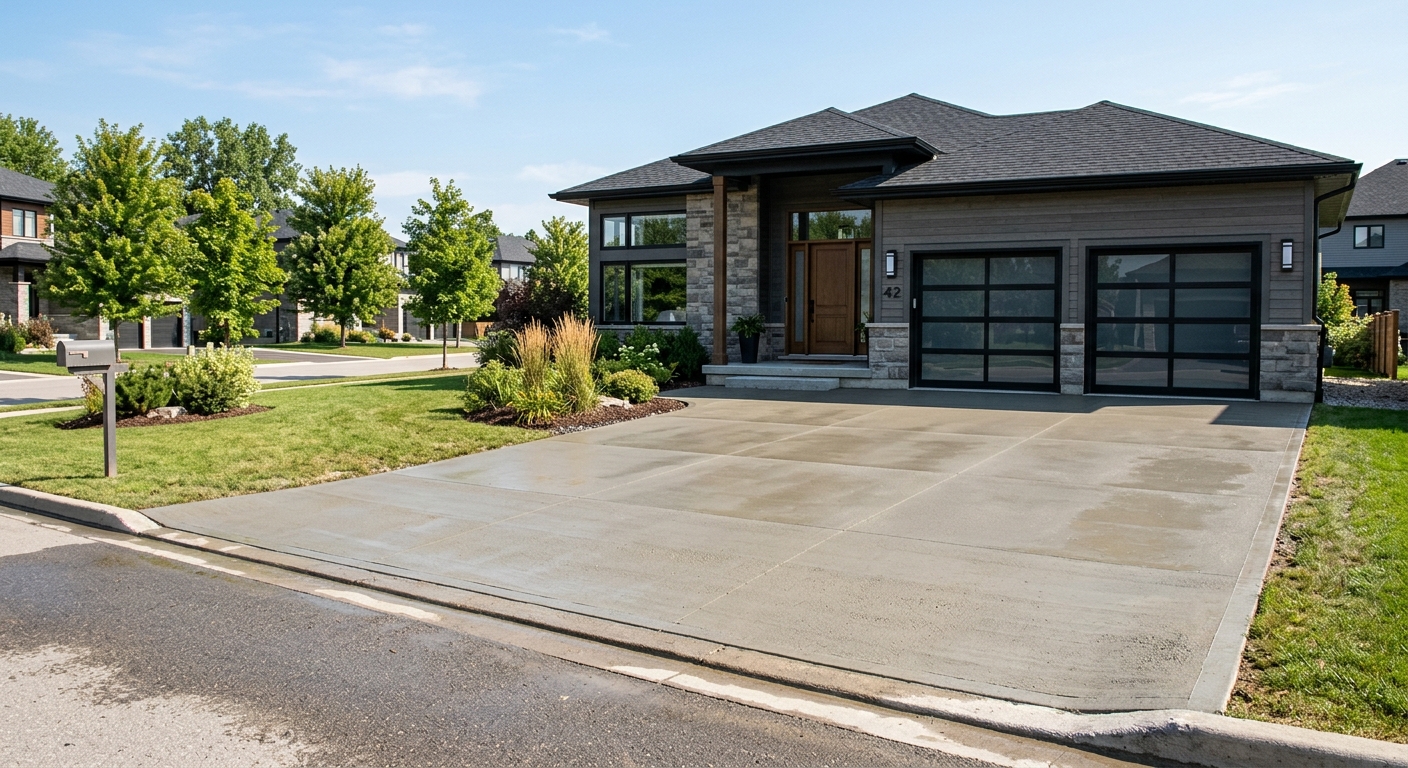
Concrete work options and costs in Oakridge
In Oakridge, concrete is one of the most practical ways to upgrade curb appeal and improve day-to-day use of a home, whether you’re adding a new driveway, renewing a worn patio, or building structural footings. Oakridge has a strong detached-home market—single-detached dwellings are a prominent housing type in the area (Statistics Canada, 2021 Census)—which is one reason concrete flatwork demand stays steady through the year. With a city population of 13,030 (Statistics Canada, 2021 Census), you’ll also find enough local trades to get multiple competitive bids, though scheduling can still tighten around the dry-season window.
In the Lower Mainland–Southwest, mild winters and a shallow frost line still drive concrete design and pricing because freeze–thaw cycles and heavy coastal rainfall can undermine slab and foundation performance. Local practice typically assumes a frost depth around 450 mm / 18", so exterior footings and thickened edges are placed below that level to reduce frost heave risk. Even when temperatures aren’t extreme, saturated soils and recurring cold snaps can still lead to scaling and spalling if the concrete mix and curing aren’t planned correctly. Contractors also price seasonal realities into the quote: rain delays, longer curing/blanket time, and careful drainage work under the slab all affect labour and material handling.
In Oakridge—especially around the Oakridge/Shaughnessy corridor—driveway and patio replacements are common due to aging surfaces and shifting vehicle/utility needs. Below is a practical comparison of typical sizes, specs, finish choices, and price bands to help you align expectations before reviewing quotes.
| Application |
Typical Size |
Key Spec |
Finish Option |
Price Range |
| Concrete driveway (standard broom finish) |
16 m² (approx. 170 ft²) |
Air-entrained mix, compacted granular base, control joints |
Broomed surface, basic sealer recommended |
$4,200–$6,100 |
| Exposed aggregate driveway |
16 m² (approx. 170 ft²) |
Air-entrained mix with wash process, proper base drainage |
Exposed stone/aggregate finish |
$6,000–$8,200 |
| Stamped concrete driveway or patio |
14 m² (approx. 150 ft²) |
Air-entrained mix, release agent, engineered joint layout |
Stamped pattern + colour integral or topical |
$7,000–$10,200 |
| Plain concrete patio or walkway |
18 m² (approx. 190 ft²) |
Air-entrained mix, compacted base, expansion allowance |
Float + light broom/steel-trowel texture |
$3,000–$5,000 |
| Garage floor (interior slab) |
30 m² (approx. 323 ft²) |
Vapour barrier (if required), reinforced slab per plan |
Power trowel or broom finish |
$6,000–$9,000 |
| Foundation footings (structural, below frost) |
Per foundation outline/ongoing metre |
Below design frost; engineered rebar cage; proper formwork |
Structural concrete, tie-in to foundation walls |
$6,500–$12,500 |
Prices are estimates only and vary by project scope, site access and material selection.
What affects the price of concrete work in Oakridge
In the Lower Mainland–Southwest, it’s common to see quotes for the “same” concrete job differ by 30–50% once you compare the hidden drivers—especially base prep, mix design, reinforcement, and curing controls. Even within British Columbia, colder or more exposed locations can add excavation depth and shorten the workable pour season. In Oakridge specifically, the shallow frost depth (local practice often assumes about 450 mm / 18") helps keep footing extensions manageable, but coastal-wet conditions and frequent freeze–thaw cycles still demand tight specifications: air-entrained mixes, drainage attention, and a reliable joint plan to prevent random cracking.
How that changes your cost: exterior slabs must be built to survive saturated subgrades and surface moisture. If the contractor doesn’t include air-entrainment, you can get scaling/spalling during winter temperature swings—so proper mixes and workmanship cost a bit more up front but prevent premature replacement. Curing is another budget lever. Because we can get cool nights and prolonged rain, contractors often plan extra time for blankets and proper curing conditions, which can raise labour and site supervision costs versus “sunny-day” pours.
Two local examples that swing the number: (1) a driveway replacement where removal and regrading are extensive can push you toward higher concrete driveway bands—think the $18–$28 range per square foot equivalent for bigger, more complex prep—while (2) a simple, well-drained backyard patio on stable grade may land nearer the $16–$26 patio/walkway band. If your home is older and the original base is inconsistent, excavation and compacted granular placement can add thousands. On many Oakridge infill/renovation sites, access limits (narrow driveway, trees, or nearby fencing) also increase labour because concrete needs careful placement and smaller equipment planning.
| Price Factor |
Why It Matters |
Cost Impact |
| Frost line depth — determines footing depth and form height |
Footings must extend below design frost to prevent heave and foundation movement |
Higher excavation and formwork if specs require deeper placement |
| Site preparation — excavation, grading, compacted granular base |
Proper base and drainage reduce settlement and moisture-driven deterioration |
More demo/grading time increases cost significantly on older properties |
| Reinforcement — rebar or wire mesh requirement |
Reinforcement controls cracking and improves slab durability |
Material + labour to install rebar/spacers can add mid-thousands |
| Mix design — air-entrainment and compressive strength spec |
Exterior air content supports freeze–thaw resistance and reduces spalling risk |
Right mix usually costs more than basic concrete, but protects surfaces |
| Finish type — broom vs. stamped vs. exposed aggregate |
Finishes require different labour, timing, and finishing/curing workflow |
Stamped/exposed aggregate typically moves you into the upper band |
| Pour size and concrete truck access to site |
Access affects pumping/hand placement time and scheduling |
Limited access can add labour hours and/or pumping costs |
| Cold-weather curing precautions — heating and blankets |
Maintains strength gain when nights cool and weather is damp |
Extra materials and crew time during shoulder season |
| Control joint pattern and sealing cost |
Joints manage shrinkage; sealing helps repel moisture and de-icing salts |
Neglecting joints can cause early cracking; sealing is often a profitable add-on |
Permits & regulations in British Columbia
In British Columbia, structural concrete work—such as footings, foundation walls, and grade beams—typically requires a building permit and usually involves engineered drawings that the municipality reviews. For concrete flatwork like patios, walkways, and driveways, permits often aren’t required unless the work affects lot grading, drainage, or impervious surface coverage, or touches the municipal right-of-way (for example, some changes to curb/sidewalk interfaces). Because rules can vary based on how your driveway connects to drainage and sidewalks, confirm requirements with the local authority before breaking ground.
It’s also important to verify the contractor’s credentials in Oakridge/British Columbia before any excavation. Start by asking for a recent certificate of insurance (liability) and proof of coverage for workplace injuries through the proper program for the province. Then check licensing/registration in the appropriate online registry used in BC for trades. When you receive the certificate of insurance, make sure the job address is listed (or the scope is described) and that the coverage limits are meaningful for your risk exposure.
Finally, request references from similar-scale projects—driveway and footing work are different animals. A strong contractor can also tell you what inspections they expect (and when) for structural elements, and how they manage rain/cure protection in Lower Mainland–Southwest conditions.
Getting concrete right in Oakridge's freeze-thaw climate
Concrete failures in Oakridge usually come down to moisture and temperature cycling. When rain saturates the subgrade and then the weather cycles around freezing, water expands, and weak mixes or poor drainage can lead to scaling and spalling—especially on driveways and patios exposed to tires and de-icing salt. The way to “spec it right” is to treat the job like a system: base, mix, joints, curing, and sealing.
(1) Base preparation: build a compacted granular sub-base to the correct depth for local soil conditions, with drainage considered—not just thickness. (2) Mix design: for exterior flatwork, use air-entrained concrete with a target air content commonly in the 5–7% range for durability and weather resistance, and plan for at least 32 MPa compressive strength (or whatever the engineered/design spec calls for). (3) Control joints: place joints to control cracking and keep them aligned with expected shrinkage. (4) Curing: plan for at least 7 days of curing under proper conditions; in cool, damp Lower Mainland weather, contractors may need curing blankets or protection to reach design strength. (5) Sealing: apply a penetrating sealer about 28 days after the pour to help repel de-icing salts and reduce moisture ingress.
Here’s a practical dollar example: if a standard broom-finish driveway is quoted near the lower end of the local band, say around the $18 per square foot equivalent, the cheaper quote may omit robust base drainage or proper air-entrainment. Paying toward the upper end can be justified when the contractor demonstrates the engineered base plan, correct air-entrained mix, and a joint/sealing package—because repairing spalled surfaces later usually costs more than the difference between compliant and “value” concrete.
| Spec |
Why It Matters in Oakridge |
What to Ask For |
Impact if Skipped |
| Compacted granular base (depth?) |
Stabilizes soil and manages water so freeze–thaw doesn’t pump moisture |
Base thickness and compaction specs; drainage details |
Settling, cracking, and faster surface breakdown |
| Air-entrained concrete mix (target air %?) |
Air voids improve freeze–thaw durability under coastal-wet conditions |
Confirmed air content (commonly 5–7% for exterior flatwork) |
Spalling/scaling risk increases, especially with salt exposure |
| Compressive strength (MPa rating) |
Ensures adequate strength gain despite cool, humid curing windows |
Minimum 32 MPa (or design/engineer requirement) |
Surface wear, increased cracking, and reduced lifespan |
| Control joints (spacing per ACI guidelines) |
Limits random cracking caused by shrinkage and temperature changes |
Planned joint spacing and location; cutting schedule |
Wider random cracks and costly patching or replacement |
| Minimum 7-day curing period |
Strength development is slower in damp/cool weather |
Protection plan for cold snaps (blankets/heaters if needed) |
Weak surface, higher risk of early damage |
| Penetrating sealer (when applied after cure) |
Repels moisture and helps reduce salt-driven deterioration |
Sealer applied about 28 days post-pour (surface prep included) |
More water uptake, staining, and accelerated spalling |
How to choose a concrete work contractor in Oakridge
Choosing the right concrete contractor in Oakridge (and across British Columbia) starts with verifying basic protection and accountability. Ask for proof of liability insurance and the contractor’s workplace coverage for injuries. Your contractor should also provide clear evidence they’re authorized to perform the type of work they’re quoting. In practice, homeowners can check relevant trade/contractor credentials through BC’s online registry systems, then confirm the paperwork matches your project scope and address.
Next, don’t just compare one number. Get 2–3 itemised written quotes that break out labour and materials (excavation, base prep, reinforcement, formwork, concrete supply, finishing, curing protection, disposal, and any sealing). Scope details matter: what’s included in demo and disposal? Is permit pulling included where required? Are you getting rebar/wire mesh, spacers, and the correct joint plan—or a “best guess” layout in the field?
Warranty should be clear and specific. Ask for the workmanship warranty length, what’s covered (cracking, scaling, settlement), and whether product/manufacturer warranties apply to sealers or admixtures. Also ask if warranties are transferable if you sell your home.
On payment, a common safe structure is to keep upfront deposits around 10–15%. Hold back a portion until the surface meets finish quality, joints are complete, and any curing/sealing steps are done as promised. Finally, request a written start date, weather/curing plan, and completion estimate.
- Confirm air-entrained concrete and exterior durability specs in writing
- Request a joint layout plan (spacing and where joints land)
- Ask for base thickness, compaction method, and drainage approach
- Verify rebar/wire mesh type and placement (including spacers)
- Ensure curing protection plan for cool nights/rain (blankets or sealer timing)
- Get disposal/removal included or clearly excluded
- Check who supplies concrete and whether mix tickets/specs are documented
- Review access and placement plan (pumping vs. wheelbarrow/hand placement)
- Demand itemised labour + materials, not a single lump sum
- Confirm finishing requirements (broom vs. steel trowel vs. exposed/stamped workflow)
- Ask for photos/references from similar Oakridge projects and timelines
- Set payment schedule with a holdback until cure and cleanup are complete
In Oakridge, red flags include quotes that don’t mention air-entrainment, skipping drainage or granular base details, vague joint spacing, “we’ll seal whenever” without a cure timeline, and contractors who want large upfront payments before formwork and base prep begin.
Frequently asked questions — concrete work in Oakridge
How long does a concrete driveway last?
A properly built concrete driveway in Oakridge can often last a couple of decades, with service life strongly tied to base prep, air-entrained mix, and joint layout to control freeze–thaw damage. In the Lower Mainland–Southwest, the shallow frost depth (local practice often assumes about 450 mm / 18") reduces footing depth pressure, but the coastal-wet freeze–thaw cycles still attack poorly drained slabs. If a driveway is exposed to de-icing salt, sealing around the 28-day cure mark becomes more important. In terms of budget, a standard broom driveway commonly falls around the $18–$28 concrete driveway price band; paying for correct drainage and specs within that range helps avoid early spalling that can shorten usable life. (Statistics Canada, 2021 Census)
What is air-entrained concrete and why does it matter here?
Air-entrained concrete includes tiny, evenly distributed air bubbles that give freeze–thaw water somewhere to expand. In Oakridge and the wider Lower Mainland–Southwest, this matters because winter temperatures can swing around freezing, and rainfall saturates the surface and subgrade before cold snaps. Without air-entrainment, the paste can deteriorate and you may see scaling and spalling—often the first visible failure on driveways and patios. That’s why credible quotes for exterior work should specify an exterior-rated air-entrained mix (commonly targeting 5–7% air for outdoor flatwork) and confirm joint placement. If you’re comparing finishes, remember that stamped or exposed aggregate isn’t a substitute for durability specs; you still need the same freeze–thaw protection to protect your finish.
How do I prepare the base for a concrete slab?
Base prep is where most failures are prevented. For Oakridge flatwork, the contractor should excavate to stable material, then place and compact a granular base to the depth needed for your soil and drainage conditions. The goal is a firm, uniform subgrade that won’t pump moisture when freeze–thaw cycles occur. Ask what granular material is used, how compaction is measured, and whether the contractor is addressing surface/runoff so water doesn’t sit under the slab. Reinforcement placement also depends on base prep; rebar or mesh should sit at the correct height using spacers, not on the ground. A driveway or patio built on inconsistent fill often costs more later to correct.
How do I compare concrete quotes?
To compare concrete quotes in Oakridge, don’t judge only by the total. Require itemised pricing and confirm that each quote includes the same essentials: excavation and disposal, granular base depth and compaction, reinforcement, air-entrainment for exterior work, control joint plan, and curing/blanket strategy. Ask for the finish-specific steps too—standard broom versus stamped or exposed aggregate can affect labour and timing. Make sure the schedule and weather protection are comparable; a quote that’s cheaper may assume ideal curing conditions. As a quick reference, driveway pricing often sits in a $18–$28 band for local projects, while patios/walkways commonly fall in the $16–$26 range. Differences can be justified when one contractor includes proper drainage, sealing timing, and documentation.
Can concrete be poured in cold weather in Oakridge?
Yes, concrete can be poured in colder weather in Oakridge, but it has to be managed correctly. The risk isn’t only “freezing”; it’s slow strength gain, cool/damp conditions, and surface damage if concrete is exposed too early. A responsible contractor will protect the pour with curing blankets and/or heating where needed, follow cold-weather curing practices, and manage placement so the mix doesn’t lose workability. You should also ask how they plan to protect curing concrete from rain and high humidity that can complicate surface finishing. For exterior work, the durable performance still depends on correct air-entrainment and joint timing—especially through the Lower Mainland freeze–thaw cycles. If a quote doesn’t mention cold-weather curing, it’s worth requesting a specific method statement.
How do I maintain concrete in Oakridge's freeze-thaw climate?
Maintenance is mostly about limiting moisture and salt exposure. In Oakridge, the single biggest improvement you can make after a new pour is to apply a penetrating sealer once curing is complete—commonly around 28 days post-pour—then recoat as recommended by the sealer manufacturer. Keep an eye on drainage so water doesn’t pool near expansion joints or edges, and avoid over-salting in winter; de-icing salts accelerate surface deterioration when they repeatedly soak into unsealed concrete. Regular sweeping reduces grit abrasion on broom-finished surfaces. If you see early hairline cracking, don’t ignore it—cracks can become pathways for water. The better your original base, air-entrained mix, and sealing plan, the less maintenance you should need.