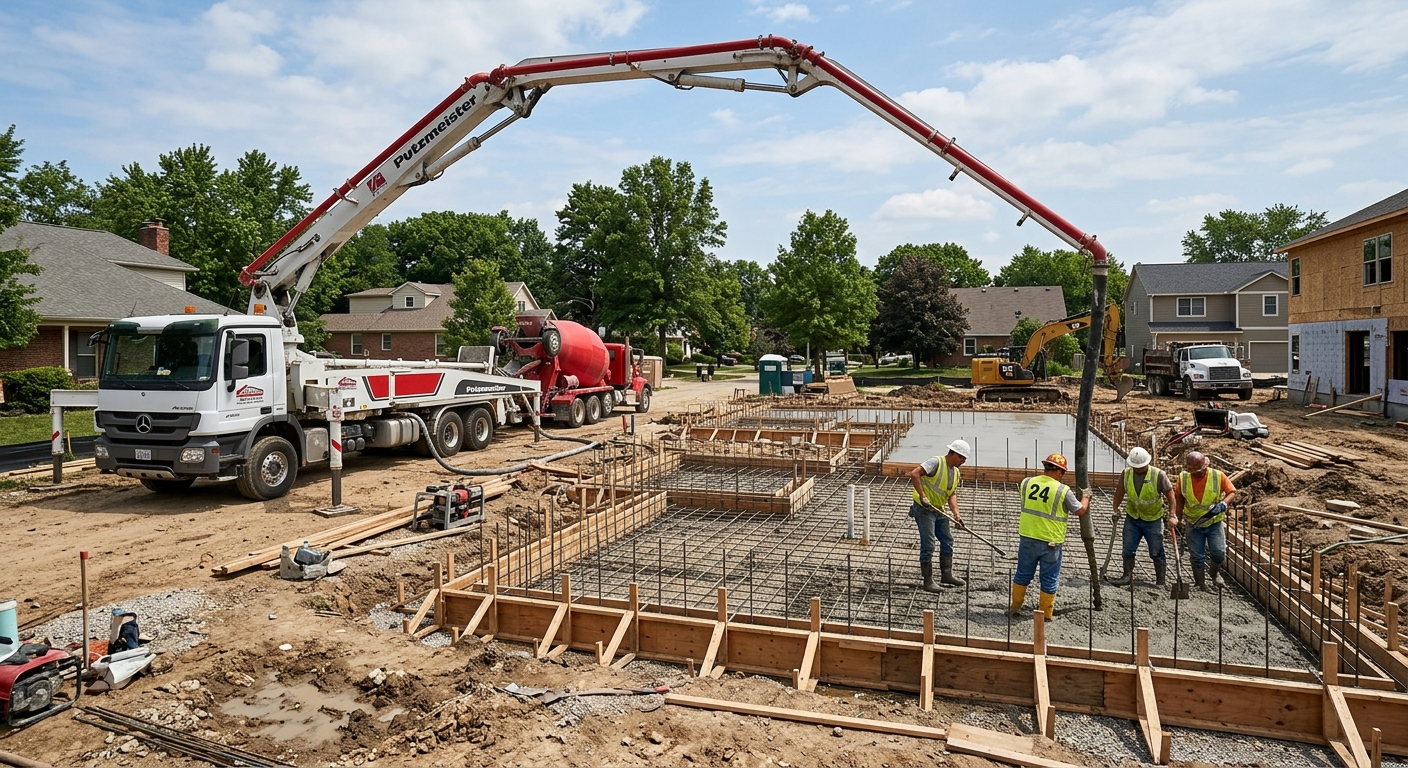
Concrete work options and costs in Musqueam
Concrete work in Musqueam, British Columbia is popular because it suits the way Lower Mainland–Southwest homes are built and maintained. Musqueam has a small population base of 1,646 people (Statistics Canada, 2021 Census), so most concrete contractors focus on a steady flow of residential flatwork and foundation-related jobs tied to the wider Vancouver–Surrey–Abbotsford market. In practice, many homeowners in the area are improving older properties and landscaped frontage—common triggers for new driveways, patios, and steps.
Prices are shaped by the region’s mild winters paired with coastal-wet weather and freeze–thaw cycling. Even though the frost depth used in Lower Mainland–Southwest designs is typically around 450 mm / 18", we still place footings and thickened edges below that level to reduce frost heave risk, and we build exterior slabs with air-entrained mixes plus a control-joint layout that helps manage cracking. Rain and high humidity also affect scheduling and curing: contractors often plan pour dates around prolonged wet periods and may use curing blankets or sealers to protect the surface durability of driveways and patios.
In Musqueam, concrete work tends to be especially in demand around the residential edges near the community and access routes connecting to the broader Fraser corridor. If you’re comparing options, a standard broom-finished driveway usually lands in the $18–$28 range per square-foot classically quoted for Lower Mainland work, while stamped or decorative work typically costs more—often aligned with the region’s $22–$36 band for decorative finishes. Below is a clear comparison to help you benchmark proposals before you request itemised quotes.
| Application |
Typical Size |
Key Spec |
Finish Option |
Price Range |
| Concrete driveway (standard broom finish) |
400–600 sq ft |
Air-entrained exterior mix, compacted granular base, control joints |
Broom finish |
$9,000–$16,000 |
| Exposed aggregate driveway |
400–600 sq ft |
Air-entrained exterior mix, proper curing and wash timing |
Exposed aggregate |
$11,500–$19,500 |
| Stamped concrete driveway or patio |
250–500 sq ft |
Air-entrained mix, integral colour, release agent and sealer |
Stamped (stone/brick patterns) |
$10,000–$22,000 |
| Plain concrete patio or walkway |
200–400 sq ft |
Reinforcement as needed, control joints, drainage-aware base |
Float and broom / light broom |
$3,200–$9,800 |
| Garage floor (interior slab) |
350–600 sq ft |
Vapour barrier (where required), fibre or wire mesh, proper thickness |
Smooth steel trowel or broom edges |
$6,000–$13,500 |
| Foundation footings (structural, below frost) |
Variable linear feet |
Excavation, forms, rebar cage, concrete poured below design frost depth |
Structural concrete |
$8,500–$18,000 |
Prices are estimates only and vary by project scope, site access and material selection.
What affects the price of concrete work in Musqueam
In the Lower Mainland–Southwest, two quotes for what looks like the same concrete job can differ by 30–50% because the “hidden” parts of concrete work—excavation depth, base preparation, reinforcement, mix design, curing strategy, and access—change dramatically from site to site. That spread is amplified in British Columbia by scheduling in a coastal-wet climate, truck logistics in the Vancouver–Surrey–Abbotsford corridor, and the fact that exterior work must be engineered for freeze–thaw durability rather than just poured “to thickness.”
Specifically, frost line depth and freeze–thaw cycles dictate every exterior detail. In coastal BC, design frost depth is often about 0.5–1.2 m, so footings and thickened edges still go below that to prevent frost heave. Every exterior slab benefits from an air-entrained mix, and joints need to be planned so the concrete can crack in controlled locations instead of randomly. When temperatures swing and the ground stays saturated from heavy coastal rainfall, subgrade drainage and compacted granular base become cost drivers. Cold-weather curing precautions—like insulating blankets or temporary heating—can also add cost in shoulder seasons.
Concrete pricing can also change based on finish choice and site constraints. For example, a basic patio at the plain finish level might fit the regional $16–$26 band, while a stamped driveway is commonly higher, aligning with the $22–$36 decorative band due to colour, stamping labour, and sealing. In Musqueam, older lots may require extra base build-up or more granular to achieve proper drainage and compaction, and that added prep can push a “simple” slab closer to the upper end of its band. Conversely, a straightforward, well-accessed site with stable soils can keep costs closer to the low-to-mid range.
| Price Factor |
Why It Matters |
Cost Impact |
| Frost line depth — determines footing depth and form height |
Footings must sit below design frost to limit frost heave. |
Higher excavation and taller forming; can add thousands on foundations. |
| Site preparation — excavation, grading, compacted granular base |
Proper subgrade and drainage prevent settlement and pump-out failures. |
More granular import and compaction time increases cost. |
| Reinforcement — rebar or wire mesh requirement |
Controls cracking and improves slab durability under load. |
Rebar cages cost more than mesh, but may be required for driveways/footings. |
| Mix design — air-entrainment and compressive strength spec |
Air entrainment reduces scaling/spalling risk in freeze–thaw cycles. |
Premium mix costs more and requires careful placement and curing. |
| Finish type — broom vs. stamped vs. exposed aggregate |
More steps, colour work, and sealing labour increase total scope. |
Stamped/exposed typically adds significant labour and consumables. |
| Pour size and concrete truck access to site |
Restricted access may require smaller truck pours or pumping. |
Pumping and extra labour can raise the job total quickly. |
| Cold-weather curing precautions — heating and blankets |
Concrete must reach strength reliably under cool, damp conditions. |
Heaters/blankets and longer schedule add cost. |
| Control joint pattern and sealing cost |
Joints manage cracks; sealers protect surfaces from salts and water. |
Joint saw-cutting and sealer add line-item costs but extend lifespan. |
Permits & regulations in British Columbia
In British Columbia, structural concrete work needs more oversight than typical patio or driveway projects. Footings, foundation walls, and grade beams (the structural foundation system supporting the home) usually require a building permit, and engineered drawings are commonly reviewed by the municipality before construction starts. For that structural work, you should expect inspections at key stages—often after excavation and reinforcement placement, and again after concrete is poured.
Concrete flatwork such as patios, walkways, and driveways usually does not require a permit, unless your project affects lot grading, changes drainage patterns, increases impervious surface coverage beyond what your municipality allows, or ties into municipal right-of-way considerations (for example, work that impacts the boulevard or driveway approach). Because Musqueam is within the Lower Mainland–Southwest operating area, the safest approach is to confirm requirements with the local authority before breaking ground.
Step-by-step, here’s how you verify a contractor in BC:
- Check the contractor’s business and trade licensing details via the online provincial registry (look for the specific licence class relevant to the work).
- Ask for a Certificate of Insurance showing liability coverage—verify the coverage is current and in the correct name.
- Confirm workers’ compensation coverage (WSIB/WCB equivalent) through a clearance certificate or proof of account.
- Request references on similar-scale projects (driveways/patios and, if applicable, foundation work), then call at least two.
- Ensure the permit responsibility is clearly stated in the quote if structural work is involved.
Getting concrete right in Musqueam's freeze-thaw climate
The most common concrete problems in Musqueam and the broader Lower Mainland–Southwest aren’t usually “thin concrete” as much as they are poor base prep, wrong mix design, and inadequate curing. Freeze–thaw cycling plus coastal saturation encourages water to enter small surface pores and around imperfect joints. When temperatures drop, that trapped water expands—leading to surface scaling and spalling, particularly when air-entrainment is missing or under-specified.
To spec concrete correctly, start with base preparation: use compacted granular to the right depth for local soil and the design frost strategy, and ensure drainage so the slab doesn’t sit in standing moisture. Next, specify the mix: for exterior flatwork, target 5–7% air content and a minimum 32 MPa compressive strength (as required by your project spec and local practice). Control joints also matter—place them to limit random cracking and match your panel layout to the slab size. For curing, plan for at least 7 days under appropriate conditions; in cool, damp periods, contractors should use curing blankets or other cold-weather precautions so strength develops before the surface is exposed. Finally, seal the concrete with a penetrating sealer after curing (commonly at 28 days) to help repel de-icing salts and reduce water uptake.
Ask technical questions that catch bad specs early. For example: “What is the target air content and how will you protect the edges during curing?” If a contractor cuts corners on air entrainment, you may save money upfront but pay later for patching—spalling repairs can quickly exceed the original difference between a mid- and higher-spec exterior pour. If you’re choosing between a plain patio in the regional $16–$26 band and stamped decorative work, the price difference is justified when the contractor also nails the air-entrainment, joints, and curing—decorative stamping alone won’t prevent freeze–thaw damage.
| Spec |
Why It Matters in Musqueam |
What to Ask For |
Impact if Skipped |
| Compacted granular base (depth?) |
Stable base reduces settlement and helps manage water under the slab. |
Granular depth and compaction method for your site conditions. |
Low spots, cracking, and premature surface breakdown. |
| Air-entrained concrete mix (target air %?) |
Air voids improve freeze–thaw durability in coastal-wet cycles. |
Target 5–7% air content for exterior flatwork. |
Scaling and spalling within a few winters. |
| Compressive strength (MPa rating) |
Higher strength supports long-term durability and surface wear resistance. |
Minimum 32 MPa compressive strength per your spec. |
Soft surface, dusting, and faster deterioration. |
| Control joints (spacing per ACI guidelines) |
Joints control where cracks form under shrinkage and temperature swings. |
Planned joint spacing and saw-cut timing. |
Random cracking and water paths through the slab. |
| Minimum 7-day curing period |
Strength gain depends on curing—cool, damp weather extends risk. |
How curing will be maintained if nights are cool or rain is expected. |
Reduced strength and higher chance of surface scaling. |
| Penetrating sealer (when applied after cure) |
Helps reduce water absorption and protects against salt and moisture. |
Apply after cure (commonly 28 days) with a specified product. |
Higher water ingress and staining; faster wear on high-traffic areas. |
How to choose a concrete work contractor in Musqueam
To choose the right concrete contractor in Musqueam, focus on verifiable credentials and clear documentation. In British Columbia, you’ll want to confirm licensing details via provincial online registry search and ensure the company can legally perform the scope you’re hiring for (flatwork vs structural foundation work). Next, request liability insurance documentation—then check the certificate is current and covers the work described. Finally, confirm workers’ compensation coverage through an up-to-date clearance certificate or proof of account; it protects you as the homeowner if an incident occurs on site.
When you request quotes, don’t accept a one-number lump sum unless it includes full scope. Ask for 2–3 itemised written quotes that break down labour and materials (excavation/grading, granular base, reinforcement, forms, concrete supply, finishing, saw-cutting, sealing, and disposal). Read exclusions carefully: is disposal included for removed soil? Is a permit included if structural work is required? Are they including curing blankets for cool nights? Ask about warranty too—what is the workmanship warranty length, and does the product/manufacturer warranty apply to the exact materials used? Also, clarify whether warranty transfers if you sell the home.
For payment, never pay more than 10–15% upfront. Use a holdback until key items are complete—especially joint finishing, final grading, and surface cure/sealer steps. Get a start date and completion estimate in writing, then tie it to weather-sensitive activities (curing and finishing days).
- Check licence and insurance dates before you sign.
- Ask for a detailed scope sheet: dimensions, thickness, and reinforcement notes.
- Require itemised labour/materials—not just a total price.
- Confirm whether base preparation includes compaction testing or documented compaction steps.
- Ask what concrete mix design will be used (air content for exterior).
- Require control joint layout and saw-cut schedule.
- Ask how the crew handles rain, cool nights, and curing protection.
- Confirm disposal/haul-away is included or priced separately.
- Verify finishing details (broom direction, exposed aggregate wash timing, stamping pattern quality control).
- Confirm sealing product type and whether it’s included or optional.
- Get a workmanship warranty in writing and understand exclusions.
- Schedule inspections/hold points if structural work is involved.
Concrete contractor red flags in Musqueam include: refusing to discuss air-entrainment and joint layout, quoting without granular base depth details, adding “allowances” for critical items (rebar, disposal, sealing) without clear amounts, demanding large upfront payments, and skipping written curing or weather protection plans for cool, damp conditions.
Frequently asked questions — concrete work in Musqueam
What causes concrete to spall in Musqueam winters?
Spalling in Musqueam is usually a freeze–thaw problem made worse by water movement into the slab. When exterior concrete isn’t properly air-entrained (or the air content is low), freezing water expands inside the paste and along the surface, breaking off small layers. Coastal rainfall also keeps soils and the slab edges saturated, creating more freeze–thaw cycles than you might expect from “mild” winter temperatures. Another common contributor is poor drainage and inadequate base prep, which leaves water under the slab. If control joints are poorly spaced or not sealed where appropriate, water can travel through cracks and accelerate deterioration. A correctly specified exterior mix and a minimum 7-day curing approach dramatically reduce risk. If you’re comparing options, remember that durable exterior work may fall into the regional $18–$28 driveway band, but a cheaper pour without proper freeze–thaw specs can cost far more to patch later.
What is rebar and when is it required in British Columbia?
Rebar (reinforcing steel) is used to strengthen concrete where tension forces or cracking risk are higher, especially in foundations and heavily loaded slabs. In British Columbia, whether rebar is required depends on the engineering design, slab thickness, soil conditions, and the intended use (for example, a driveway, foundation footings, or a garage slab). For structural elements like foundation footings and grade beams, rebar cages are typically part of the engineered system and are installed before pouring. For exterior flatwork, many projects include either wire mesh or rebar in specific areas (like thickened edges or where loads concentrate), but the exact requirement should follow the contractor’s design and the project spec. Because Musqueam’s freeze–thaw climate and saturated conditions increase durability needs, reinforcement and proper joints work together: reinforcement helps control cracking, while air entrainment protects the surface. Always ask your contractor to specify what reinforcement is included and show the plan in writing.
How long does a concrete project take in Musqueam?
For typical residential concrete flatwork in Musqueam, the “active” work is often a day or two, but the overall timeline depends on curing, weather windows, and whether reinforcement and forms are needed. A small patio or walkway might be poured and finished in one day, then needs at least 7 days of proper curing before you should treat it as fully ready for heavy foot traffic (and longer before heavy loads, depending on the thickness and mix). Driveways usually take longer for base prep, forms, and finishing. In the Lower Mainland–Southwest, cool nights and rain can slow finishing and require curing blankets, which may extend the calendar schedule. Foundation work is different: excavation, inspection of reinforcement, then the pour—so it can stretch over weeks due to scheduling and municipal review timelines when permits and engineered drawings are involved. If you’re expecting to use the space right away, ask your contractor to include curing protection and weather contingency in the written schedule.
What is a concrete overlay and is it suited to Musqueam?
A concrete overlay is a new concrete layer applied over an existing slab to restore surface level and appearance without fully replacing the base. It can be suited to Musqueam when the existing concrete is structurally sound and the base can bond properly—meaning there aren’t major lift-offs, widespread settlement, or extensive underlying failures. In a freeze–thaw climate, overlays only work well if water pathways are addressed. If the original slab is already spalling due to moisture ingress, an overlay can trap water and lead to early bond failure. For patios and driveways, you also need the right preparation: grinding, cleaning, and proper bonding methods. If your existing slab is deteriorating, full removal is often the better long-term choice, even if the immediate price feels higher. When you’re budgeting, compare the cost of a decorative stamped finish (often aligned with the $22–$36 decorative band) versus overlay labour and prep; overlays may look cheaper, but the durability comes down to surface condition and moisture management in British Columbia’s coastal-wet conditions.
How do I seal concrete to protect it in Musqueam?
Sealing helps protect concrete by reducing water absorption—important in Musqueam where coastal rainfall and freeze–thaw cycles can accelerate scaling and staining. The key rule is timing: let the concrete cure fully before sealing—commonly around 28 days post-pour for exterior surfaces. Use a penetrating sealer designed for concrete (not just a film-forming coating) and apply it according to the product label and temperature/humidity conditions. Before sealing, the surface should be clean, dry, and free of curing residues, dust, and de-icing salt. If you apply sealer too early, moisture can get trapped and reduce effectiveness. Ask your contractor what sealer they use and whether sealing is included in your quote. Sealing is especially worthwhile for driveways and steps when you expect de-icing salts—though the best protection still starts with correct air-entrainment, control joints, and proper base drainage.
What is the difference between concrete and cement?
Cement is one ingredient inside concrete. Concrete is the full engineered material made by mixing cement with water, fine and coarse aggregates (sand and gravel), and often admixtures. Cement acts like the “glue” that hydrates and binds everything together. The reason this matters in Musqueam is that the freeze–thaw durability of exterior work depends on the entire concrete mix design—especially air entrainment and the chosen water-cement ratio—not just the brand of cement. Contractors specify concrete by performance targets like compressive strength (often at least 32 MPa for many exterior flatwork specs) and by durability requirements such as target air content. So when you hear a quote that sounds vague, ask specifically about the air-entrained mix, curing approach, and whether the finish is designed for exterior service. If your driveway is in the typical $18–$28 range, that difference is often about the overall concrete specification and placement/finishing quality, not simply whether “cement” or “concrete” is mentioned.