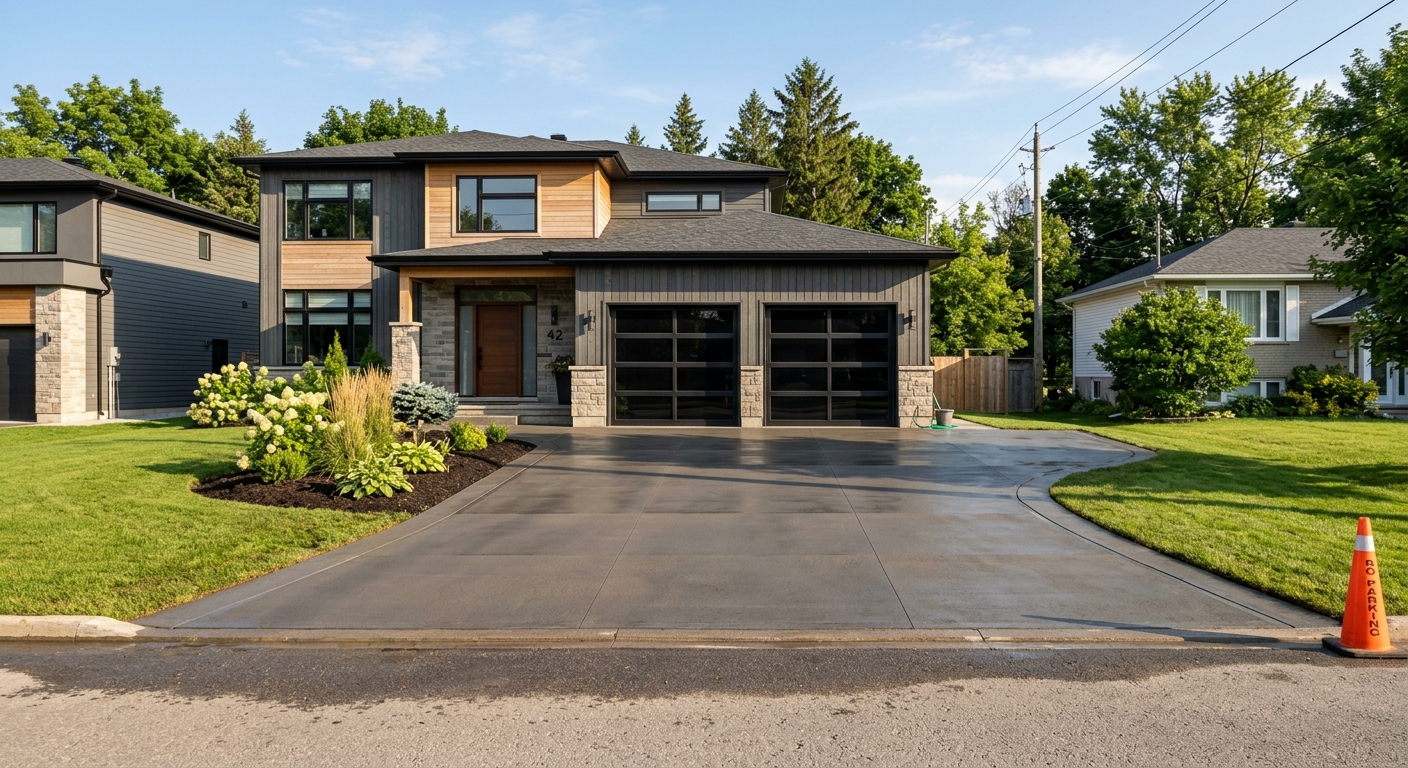
Concrete work options and costs in Six Mile
Concrete contractors in Six Mile typically serve a neighbourhood-style market built around single-family properties, where concrete flatwork is a common upgrade. With a population of 1,031 (Statistics Canada, 2021 Census), projects are usually smaller in number but highly specific in scope—driveway replacements, new patios, and foundation repairs tied to older housing lots in the wider Lower Mainland–Southwest area. The local demand is especially strong around the Lower Mission/Six Mile area and nearby shoreline-adjacent streets, where homeowners are balancing durability for wet, coastal weather with clean curb appeal.
In the Lower Mainland–Southwest, mild winters can be deceptive: concrete still has to survive freeze–thaw cycles, saturated soils, and heavy rainfall. That drives pricing because footings and thickened edges are typically placed below a shallow design frost depth—around 450 mm / 18"—to help prevent frost heave. Contractors also build in time and materials for proper drainage, air-entrained mix design, and longer curing when cool nights and high humidity slow strength gain.
Availability matters too. When multiple crews are lined up for the same season (especially late fall shoulder weather), scheduling and protective measures can affect costs. The result is that two “similar” slabs may land in different price bands depending on base prep, concrete mix spec, reinforcement, and the amount of saw-cutting and sealing needed.
Below is a practical comparison table so you can translate a quote into apples-to-apples scope before calling for an itemised estimate.
| Application |
Typical Size |
Key Spec |
Finish Option |
Price Range |
| Concrete driveway (standard broom finish) |
400–600 sq. ft. |
Compacted granular base; air-entrained exterior mix |
Broom finish + control joints |
$18,000–$28,000 |
| Exposed aggregate driveway |
400–600 sq. ft. |
Engineered base + air-entrained mix; wash timing control |
Exposed aggregate with sealer |
$22,000–$35,000 |
| Stamped concrete driveway or patio |
300–500 sq. ft. |
Integral colour; air-entrained exterior mix |
Stamped with texture mats + release agent |
$25,000–$40,000 |
| Plain concrete patio or walkway |
200–400 sq. ft. |
Proper drainage layer + air-entrained mix |
Steel-trowel or broom finish |
$12,000–$20,000 |
| Garage floor (interior slab) |
350–500 sq. ft. |
Vapour barrier (as required); standard interior mix |
Smooth or broom finish |
$14,000–$24,000 |
| Foundation footings (structural, below frost) |
Varies by house layout |
Excavate to below frost; rebar as engineered |
Structural formwork + concrete placement |
$8,000–$16,000 |
Prices are estimates only and vary by project scope, site access and material selection.
What affects the price of concrete work in Six Mile
In the Lower Mainland–Southwest, it’s common to see the same “driveway replacement” quote swing by 30–50% across British Columbia, even when the slab looks similar from the street. The difference usually isn’t the concrete itself—it’s the unseen specs: excavation depth, subgrade moisture control, drainage details, the required air-entrainment, and the amount of reinforcement and finishing labour needed to produce a durable surface in our coastal-wet, freeze–thaw reality.
Frost line depth and freeze–thaw cycles drive every exterior spec. In coastal BC, the design frost depth is typically shallower (often 0.5–1.2 m depending on conditions), but we still place footings and thickened edges below the design frost depth—practically close to about 450 mm / 18"—to limit frost heave and heaving-related cracking. Every exterior slab needs an air-entrained mix with proper curing and jointing so the surface doesn’t scale or spall. In colder regions farther inland, the pour season can be shorter and cold-weather precautions (heating, blankets, controlled curing) add costs, which is one reason pricing differs from place to place.
Local soil and drainage often raise cost in Six Mile. For example, saturated soils may require additional granular base and improved drainage grading before we can compact for a stable driveway. Conversely, a straightforward tear-out and rebuild on well-drained, accessible lots can keep a driveway closer to the $18–$28 per-sq.-ft. style range referenced for this tier (for typical exterior concrete work). Finishes change the material and labour profile too: a standard broom driveway generally costs less than stamped or exposed aggregate, where you’re paying for colour, textures, and tighter timing—often landing closer to the $22–$36 stamped/decorative band depending on thickness and complexity.
If your home has older drainage patterns—common on lots developed decades ago—the base prep can add days. That’s why a project that “sounds like” a simple 4" slab can price closer to decorative concrete if reinforcement, thicker edges, or enhanced base layers are required to perform through wet winters.
| Price Factor |
Why It Matters |
Cost Impact |
| Frost line depth — determines footing depth and form height |
Footings and thickened edges must sit below design frost to prevent heave. |
Can add significant excavation/formwork cost when deeper digging is required. |
| Site preparation — excavation, grading, compacted granular base |
Stable base supports the slab and reduces settlement cracking. |
Higher soil removal/haul-away and more granular import typically increase cost. |
| Reinforcement — rebar or wire mesh requirement |
Controls cracking and improves load capacity when engineered. |
Rebar cages, chairs, and tying time can move the price upward. |
| Mix design — air-entrainment and compressive strength spec |
Air-entrainment helps manage freeze–thaw scaling and spalling risk. |
Specialty mix and QA testing add material costs. |
| Finish type — broom vs. stamped vs. exposed aggregate |
Decorative finishes require colour control and careful timing. |
Stamped/exposed typically adds labour and consumables. |
| Pour size and concrete truck access to site |
Access affects pumping, line setup, and pour efficiency. |
Poor access can increase equipment time and labour hours. |
| Cold-weather curing precautions — heating and blankets |
Cool nights slow strength gain and can reduce durability. |
Heating blankets and monitoring can add day-rate costs. |
| Control joint pattern and sealing cost |
Joints manage cracking locations; sealing improves resistance to salt and moisture. |
Sealer and additional cutting/finishing steps add to overall cost. |
Permits & regulations in British Columbia
In British Columbia, most structural concrete work—think footings, foundation walls, grade beams, and any engineered foundation elements—requires a building permit and often engineered drawings that a municipality reviews as part of the permit process. Concrete flatwork (like driveways, patios, and walkways) usually does not require a permit unless the work impacts lot grading, triggers municipal requirements related to impervious surface coverage, or affects the municipal right-of-way (for example, curb tie-ins or work near servicing/sidewalk areas). Because rules can vary by lot and scope, confirm with your local authority before breaking ground.
For homeowners in Six Mile, the practical checklist starts with contractor credentials:
- Verify the contractor is licensed/eligible to perform the work they’re advertising in BC (check the relevant online registry used for the trade).
- Ask for a certificate of insurance showing general liability and confirm it aligns with your project dates and scope.
- Confirm coverage for workplace injury protection (WSIB/WCB as applicable for the contractor’s situation in BC). Request proof, not verbal confirmation.
- Request references for similar-scale projects (exterior flatwork in wet climates, and any foundation work like footings below frost).
Then, tie it back to your scope: if the quote includes excavation for footings or foundation modifications, expect permit/engineering involvement. If it’s a driveway or patio only, the focus is usually drainage, slope/grade compliance, and municipal rules regarding surfaces—not structural permits.
Getting concrete right in Six Mile's freeze-thaw climate
Concrete failures in Six Mile aren’t usually “bad concrete”—they’re usually bad conditions and imperfect detailing. In our Lower Mainland–Southwest climate, freeze–thaw cycles combined with saturated soils and coastal rainfall create the perfect setup for surface scaling and spalling if the mix and drainage aren’t correct. The right specs protect both the slab and the foundation: a well-prepared base, air-entrained concrete, correctly spaced control joints, and proper curing time before sealing.
First, base preparation: we compact granular sub-base to the right depth for local soil conditions and frost protection. Second, mix design: exterior slabs should use an air-entrained mix—commonly 5–7% air for exterior flatwork—and a minimum 32 MPa compressive strength so the slab reaches durability targets. Third, control joints: spacing should be planned to limit random cracking (and be supported with saw-cutting at the proper time). Fourth, curing: plan for at least 7 days under good conditions. When the forecast is cool or damp, contractors should protect the pour with curing blankets and appropriate measures to prevent early freezing or moisture loss. Fifth, sealing: a penetrating sealer is typically applied after full cure—often around 28 days—to repel de-icing salts and reduce moisture ingress.
Ask the technical question that prevents the most common failure: “What air content and curing plan are you using for this exterior exposure level?” If someone under-specs air-entrainment or shortcuts curing, you often pay twice—first for the crack repairs and again for surface redo.
On cost: a standard broom driveway is typically in the $18–$28 per-sq.-ft. style tier, while stamped or decorative options often land around the $22–$36 band. The price jump is usually justified for colour, stamps, and increased finishing time—as long as the contractor still meets the same durability specs. If you’re spending more for appearance but skipping the air-entrainment or proper base, you’re not buying longevity—you’re buying premature maintenance.
| Spec |
Why It Matters in Six Mile |
What to Ask For |
Impact if Skipped |
| Compacted granular base (depth?) |
In Six Mile, saturated soils and frost cycles demand a stable, drained base to limit settlement and cracking. |
Ask for the design thickness and compaction testing method; confirm drainage slope and granular gradation. |
Uneven settlement, early cracking, and increased water pooling under edges. |
| Air-entrained concrete mix (target air %?) |
Freeze–thaw scaling risk is high when air void systems aren’t correct in coastal wet weather. |
Ask for the target air content (commonly 5–7%) and proof of air testing on the pour day. |
Surface scaling and spalling, especially on driveways and steps exposed to splash and salts. |
| Compressive strength (MPa rating) |
Durability depends on strength gain under our humidity and cool-night curing conditions. |
Ask for minimum 32 MPa and curing plan to reach the design strength. |
Reduced wear resistance and higher risk of surface deterioration. |
| Control joints (spacing per ACI guidelines) |
Joints manage where cracks form during drying and temperature swings. |
Ask for proposed joint spacing/layout and the saw-cut timing to avoid uncontrolled cracking. |
Random cracking and difficult-to-repair cosmetic damage. |
| Minimum 7-day curing period |
Cold, damp conditions in Six Mile slow strength development and increase durability risk if curing is rushed. |
Ask how they protect the slab in cool/cetain forecast—blankets, covers, and monitoring. |
Lower durability and increased scaling susceptibility during later freeze–thaw cycles. |
| Penetrating sealer (when applied after cure) |
Repels moisture and de-icing exposure that can accelerate spalling and staining. |
Ask for application timing (after full cure, typically around 28 days) and sealer type. |
Higher moisture ingress, quicker deterioration, and more frequent re-sealing. |
How to choose a concrete work contractor in Six Mile
Start with credentials in British Columbia. Ask the contractor for proof of liability insurance (certificate of insurance) and confirm the coverage date range matches your project. For workplace injury protection, request evidence of WSIB/WCB coverage (or the correct applicable coverage situation for the contractor). Then verify their eligibility to perform the work you’re asking for using the relevant BC online registry. If the contractor can’t provide documentation quickly, that’s your first warning sign.
Next, get 2–3 itemised written quotes—not lump-sum-only pricing. You want labour and materials separated so you can compare base prep, reinforcement (if any), concrete mix specs (air-entrained, strength), finishing, joint cutting, and sealing. A proper exterior flatwork quote should spell out excavation limits, granular import/compaction approach, disposal/haul-away, and whether permits are included (if required). Confirm inclusions like concrete saw-cut joints, protective measures during cool weather, and whether cleanup of the site and forms is included.
For warranty, ask for (1) a workmanship warranty length and what it covers, (2) any product/manufacturer warranty, and (3) whether warranties are transferable if you sell the home. Payment schedule matters too: never agree to pay more than about 10–15% upfront. Use a holdback until the job is complete and meets finish and curing expectations.
Finally, insist on a timeline in writing: start date range, pour date (weather-dependent), curing/return-to-traffic plan, and a completion estimate. In Six Mile’s wet, variable shoulder seasons, “exact dates” are unrealistic, but a documented plan is not.
- Ask who supplies and tests the air-entrained mix on pour day.
- Require the base prep thickness and compaction method in writing.
- Confirm reinforcement details (mesh/rebar type, spacing, chairs) if included.
- Ensure joint spacing layout and saw-cut timing are specified.
- Confirm curing protection plan for cool nights and wet forecasts.
- Ask whether protective barriers are used to keep traffic off the slab.
- Get an itemised line for disposal/haul-away of concrete and soil.
- Ask if sealing is included and when it will be applied after cure.
- Review access assumptions (truck reach, pump use, lifting plan).
- Verify insurance certificate and request named insured details where applicable.
- Confirm warranty terms and what triggers service on defects.
- Require a written schedule showing pour, cure period, and final finish.
Concrete red flags in Six Mile: vague “best effort” curing language, no mention of air-entrained mix for exterior work, missing joint plan/saw-cut timing, deposits above 15% without holdback, and quotes that don’t describe base prep depth or drainage around the slab edges.
Frequently asked questions — concrete work in Six Mile
How do I prepare the base for a concrete slab?
Base prep is the foundation of a durable slab in Six Mile. You typically need excavation to the required depth, removal of soft or organic material, and grading to the design slope. Then place a compacted granular base (often crushed stone or similar) in lifts so it can be compacted properly. Because we’re dealing with coastal-wet conditions and freeze–thaw cycles, drainage details matter—standing water under a driveway or patio is a common path to settlement and cracking. For exterior slabs, ask for the base thickness plan and compaction method, and confirm they’re using proper material gradation. A reputable contractor will also describe how they manage water away from the slab edges and how the subgrade is assessed before placing concrete.
How do I compare concrete quotes?
To compare concrete quotes in British Columbia, don’t focus on the total only—compare the included specs line by line. Look for scope items like excavation limits, granular base depth, reinforcement (if required), concrete mix design (specifically air-entrained for exterior), and finishing details. Check whether control joints and sealing are included, and whether curing protection is planned for cool, damp weather. If one quote looks cheaper, it may be under-specifying base prep or skipping sealing—both can increase future maintenance. As a reference point, many standard driveway builds in Six Mile fall within the tiered range similar to $18,000–$28,000 for typical broom-finish projects, while stamped options often sit higher due to labour and consumables. Make sure the finish differences are the only reasons the price changes.
Can concrete be poured in cold weather in Six Mile?
Yes, concrete can be poured in cold weather in Six Mile, but it has to be done with an explicit cold-weather plan. Lower Mainland–Southwest winters are often mild, yet cool nights and damp conditions can still slow strength gain or create temperature problems early in curing. Contractors should protect the pour with curing blankets and manage temperature so the mix doesn’t freeze before it reaches an adequate strength level. Ask how they monitor conditions (air temperature and the slab surface) and what they do if rain or low temperatures appear during the curing window. A quote that doesn’t mention curing protection is risky. Cold-weather precautions add cost, but they help preserve durability, especially for exterior air-entrained work where freeze–thaw exposure will be ongoing after the pour.
How do I maintain concrete in Six Mile's freeze-thaw climate?
Maintenance in Six Mile is mostly about controlling moisture and salts before they can damage the surface. Keep water from pooling by ensuring drainage isn’t blocked and edges aren’t settling. For exterior slabs, sealing after proper cure—commonly around 28 days—helps repel moisture and reduces staining and deterioration when de-icing is used. Use a penetrating sealer appropriate for exterior concrete and reapply when it starts to wear off (your installer can recommend timing). Sweep debris away so water can drain instead of trapping fines. Avoid harsh chemicals that can attack the surface film. If you want maximum longevity, prioritize correct construction first: air-entrainment, control joints, and curing. Repairs tend to be more expensive than prevention, particularly when freeze–thaw cycles expand small issues into bigger spalls.
What causes concrete to spall in Six Mile winters?
Spalling is usually caused by moisture entering the concrete and then expanding during freeze–thaw cycles, which breaks the surface paste. In Six Mile, the coastal-wet weather plus repeated freeze–thaw events makes exterior air-entrainment and curing extremely important. If the concrete mix isn’t air-entrained to the correct target (commonly 5–7% for exterior flatwork) or if curing is rushed, the concrete becomes more vulnerable to scaling and spalling over time. De-icing salt accelerates damage if the surface isn’t sealed or if the paste quality is weak. Drainage issues also contribute: water pooling near expansion points and slab edges increases freeze pressure. If you’re seeing flaking or surface “pop-outs,” ask whether the original mix design and air testing were documented and whether joints and sealing were done as specified.
What is rebar and when is it required in British Columbia?
Rebar (reinforcing bar) is steel used to strengthen concrete and control cracking, especially under loads or where tensile forces exist. In British Columbia, structural concrete elements—like footings and foundation walls—are typically engineered and often require rebar placement based on design loads and soil conditions. Whether rebar is needed in a driveway or patio depends on the thickness, subgrade support, and engineered requirements; some slabs use mesh, while others rely on thicker sections and joints. For projects that involve foundation work, expect engineered drawings and a permit path for structural scope. For exterior flatwork, ask your contractor to explain whether reinforcement is included in your quote and why. On the practical side, if the job is priced close to the standard driveway tier (similar to $18,000–$28,000 for typical broom finishes), confirm that reinforcement and air-entrainment aren’t being omitted to hit the price.