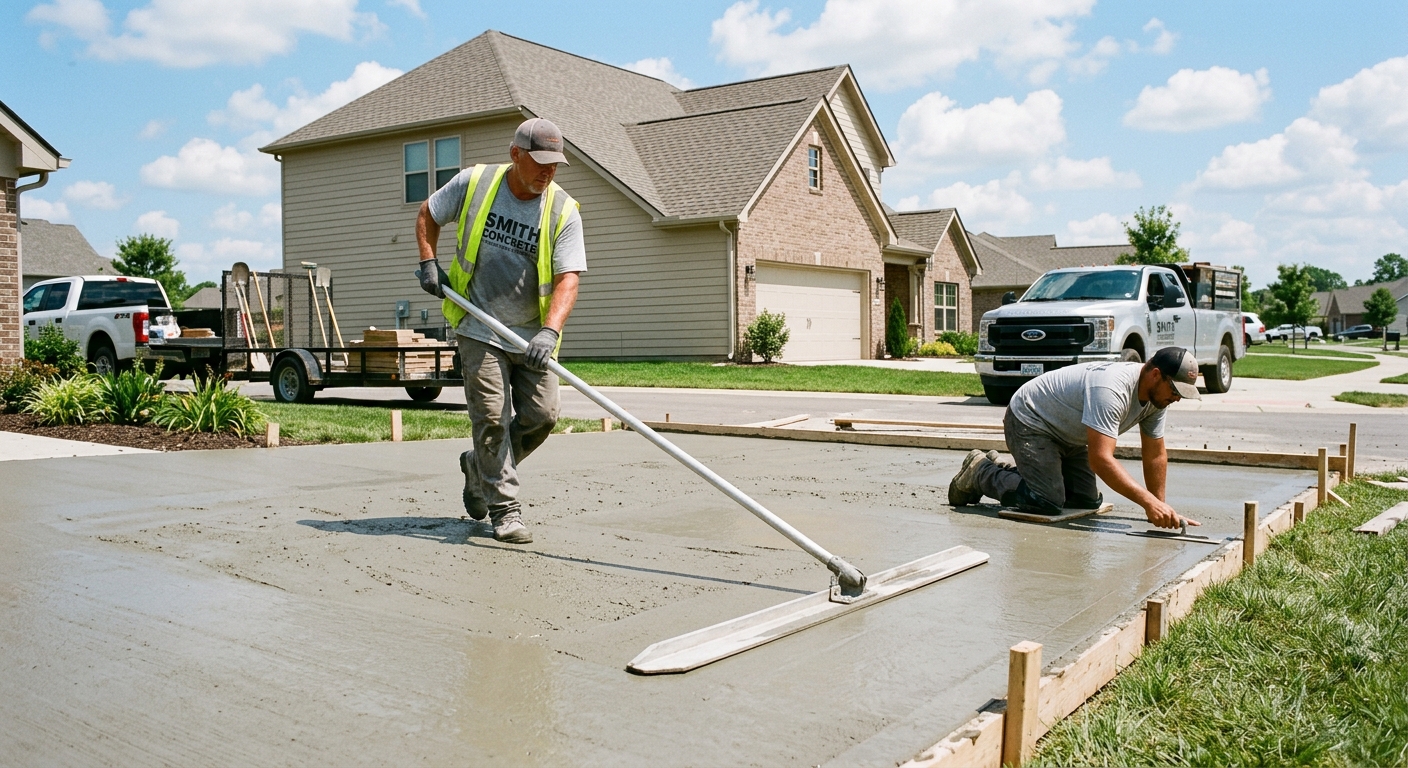
Concrete work options and costs in Tofino
Tofino’s concrete work is all about balancing durability and aesthetics for a small coastal community, where the homeowner market is largely driven by single-detached dwellings (50.8% of homes) and a strong owner-occupier base (52.9% of households own) (Statistics Canada, 2021 Census). In practice, that means driveways, patios, walkways, and occasional interior slabs see steady demand—especially around busy residential areas near the harbour and in the older neighbourhood pockets where repairs and upgrades are common.
On Vancouver Island and the Coast, pricing is influenced by freeze–thaw cycles, frequent wetting, and a relatively shallow frost line. Even with milder coastal winters, the ground can repeatedly freeze and thaw, so our spec relies on proper granular base, air-entrained concrete, and control joints. Contractors also have to schedule around heavy rain and short cold snaps; if weather protection isn’t planned, you’ll see surface scaling or random cracking sooner than expected. That weather-driven risk is part of why quotes can diverge between crews with different experience and crews that budget for curing blankets, drainage attention, and concrete mix upgrades.
In Tofino, I often see concrete work especially in demand around the Tofino townsite and residential streets that are tight to access—where excavation, forms, and truck positioning matter as much as the finish. Below is a practical comparison of typical sizes and finishes so you can translate a quote into scope before you sign.
| Application |
Typical Size |
Key Spec |
Finish Option |
Price Range |
| Concrete driveway (standard broom finish) |
320 sq. ft. (20' x 16') |
Air-entrained mix, compacted base, 6 mil vapour barrier if applicable, control joints |
Broom finish + saw-cut joints |
$16,000 – $25,000 |
| Exposed aggregate driveway |
320 sq. ft. (20' x 16') |
Air-entrained mix, proper curing schedule, surface retardation/bonding prep |
Exposed aggregate (retarder wash) |
$18,000 – $28,000 |
| Stamped concrete driveway or patio |
240 sq. ft. (12' x 20') |
Air-entrained mix, colour hardener/stain system, reinforcement where needed |
Stamp + integral colour |
$14,000 – $35,000 |
| Plain concrete patio or walkway |
160 sq. ft. (8' x 20') |
Air-entrained mix, compacted granular base, edge form and joints |
Light broom or smooth trowel (depending on use) |
$2,200 – $6,000 |
| Garage floor (interior slab) |
420 sq. ft. (22' x 19') |
Minimum 32 MPa, vapour barrier, reinforcement as specified, proper base |
Broom finish |
$11,000 – $21,000 |
| Foundation footings (structural, below frost) |
Per linear foot (typical 80–140 lf) |
Engineered footing size, rebar, below-frost excavation and granular bedding |
Formed concrete footings |
$4,000 – $12,000 |
Prices are estimates only and vary by project scope, site access and material selection.
What affects the price of concrete work in Tofino
In Tofino, you can absolutely see the same general concrete job come in 30–50% apart across Vancouver Island and Coast, especially when crews interpret “concrete” differently. One contractor may price a basic mix and assume ideal site conditions, while another builds the quote around the realities of coastal soils, drainage, freeze–thaw durability, and the protection needed to cure properly. Labour availability also matters: smaller local teams can be booked out during dry windows, and last-minute scheduling can drive costs.
Frost line depth and freeze–thaw cycles dictate the entire spec. For coastal BC, footing depth is typically designed to sit below the design frost depth (often about 0.5–1.2 m in coastal BC), and that changes excavation depth, form height, and rebar quantity. Exterior slabs also require air-entrained concrete to survive repeated wetting and freezing; if the mix doesn’t meet the air content target, you’re setting up the surface for scaling and spalling. Colder regions have shorter pour seasons and often require more aggressive cold-weather curing, and while Tofino’s winters are milder than interior BC, cold snaps still require practical protection—blankets, insulation, and careful temperature management—so strength gain is on track.
Two local examples: (1) a driveway with poor drainage on a sloped site may need additional subgrade remediation and a reworked granular base—cost shifts from finish to earthworks; (2) a stamped patio usually costs more than a broom patio, but the extra line-item work (colour system and seal/topcoat strategy) is justified when you’re trying to match a home’s architectural style. As a reference, broom-finish driveway pricing generally sits around the $16–$25 per sq. ft. band, while stamped & decorative concrete typically runs higher at about $22–$35 per sq. ft.—and you’ll see that reflected when the quote includes the full finishing system, not just “impressing mats.”
Finally, older housing stock can influence scope. With 25.9% of homes built before 1981 (Statistics Canada, 2021 Census), we sometimes deal with compromised subgrades, older drain routing, or settlement issues that trigger extra base prep and reinforcement—often adding real dollars before a single form board is set.
| Price Factor |
Why It Matters |
Cost Impact |
| Frost line depth |
Determines footing depth and form height |
Deeper excavation + more rebar/form labour can add thousands on footing jobs |
| Site preparation |
Excavation, grading, compacted granular base |
Loose soils or saturated subgrade can require import/haul and increases time on site |
| Reinforcement |
Rebar or wire mesh requirement |
Correct reinforcement placement adds material cost and careful labour (especially on drives) |
| Mix design |
Air-entrainment and compressive strength spec |
Air-entrained exterior mixes and specified 32 MPa work can cost more but reduce premature failure |
| Finish type |
Broom vs. stamped vs. exposed aggregate |
Decorative finishes can move pricing toward the $22–$35 sq. ft. decorative band |
| Pour size and concrete truck access to site |
Limits pumping/hand placing and affects scheduling |
Tight access near the townsite can add labour for placement and material staging |
| Cold-weather curing precautions |
Heating and blankets |
Blankets, insulated protection, and monitoring add setup cost but protect strength gain |
| Control joint pattern and sealing cost |
Controls cracking and protects against salts/wetting |
More joint layout and sealer adds line items, reducing long-term surface deterioration |
Permits & regulations in British Columbia
In British Columbia, the permit picture depends on what you’re building. Structural concrete work—such as footings, foundation walls, and grade beams—typically requires a building permit, and many projects also rely on engineered drawings that the municipality reviews. Concrete flatwork (like driveways, patios, and walkways) usually does not require a permit unless it affects lot grading, impervious surface coverage limits, or interacts with municipal right-of-way conditions (for example, where drainage and runoff management are involved). Because Tofino sits in a coastal environment with drainage sensitivity, it’s smart to confirm requirements early—don’t assume flatwork is always “no paperwork.”
Before a contractor starts in Tofino, verify they carry proper coverage and credentials. Step-by-step, here’s how homeowners should check:
- Ask for their certificate of liability insurance and confirm it covers the specific concrete scope (not just general contracting).
- Request proof of WCB coverage (often documented as clearance/coverage letters through the appropriate provincial system) and ensure dates are current.
- Check their business licensing and any trade qualifications that apply for the scope by using the relevant online provincial registry and/or business directory listings.
- Look for references from similar-scale local concrete jobs (coastal drainage + freeze–thaw durability), not just decorative installs.
- Confirm the permit responsibility in writing: who pulls it, what’s included, and whether engineered drawings are required.
If they hesitate to provide certificates promptly, that’s a warning sign—especially in BC where insurance and coverage matter for both liability and jobsite safety.
Getting concrete right in Tofino's freeze-thaw climate
Concrete fails in Tofino most often because water gets into the surface or base and then repeatedly freezes and thaws, expanding stresses and breaking down the top layers. The result shows up as scaling, spalling, and random cracking—especially on exterior flatwork that sees heavy wetting and (at times) de-icing salt. To spec the job correctly for the Vancouver Island and Coast climate band, you need the right combination of base preparation, mix design, joints, curing, and sealing.
1) Base preparation: start with a compacted granular sub-base to the right depth for local soil conditions and frost protection. If the base is thin or not compacted, the slab can settle and crack even if the finish looks good on day one. 2) Mix design: for exterior flatwork, use air-entrained concrete with a target air content of about 5–7% and meet a minimum 32 MPa compressive strength specification. Without adequate air entrainment, freeze–thaw cycles can destroy the surface; this is one of the most common causes of spalling in coastal BC jobs. 3) Control joints: plan joint spacing so shrinkage and thermal movement crack in the intended lines. 4) Curing: protect the pour with proper curing for at least 7 days; in cool, damp conditions you need consistent temperatures and protection so strength gain continues. 5) Sealing: apply a penetrating sealer after curing—typically at 28 days post-pour—so water and salt are less likely to penetrate.
When you compare options, costs should follow performance needs. For example, a broom-finish patio might start near the $14–$22 per sq. ft. band, while stamped concrete is often in the $22–$35 range. The price difference is worth it only if the quote includes the full decorative system, proper subgrade prep, and sealing/curing steps—not just the stamp itself. Ask your contractor how they’ll protect the slab during cold snaps and how they’ll handle drainage at the edges.
| Spec |
Why It Matters in Tofino |
What to Ask For |
Impact if Skipped |
| Compacted granular base (depth?) |
Supports the slab and reduces frost-related movement |
Granular depth and compaction method matched to local soil and drainage |
Settlement and early cracking; joints don’t compensate for weak subgrade |
| Air-entrained concrete mix (target air %?) |
Improves freeze–thaw resistance during wetting/freezing cycles |
Target 5–7% air for exterior flatwork |
Surface scaling/spalling, especially after winter cycles |
| Compressive strength (MPa rating) |
Ensures strength gain for traffic loads and durability |
Minimum 32 MPa at 28 days (or as specified) |
Lower durability and increased risk of surface damage |
| Control joints (spacing per ACI guidelines) |
Controls where cracks form under shrinkage/temperature movement |
Joint spacing plan and saw-cut/formed timing |
Random cracking patterns that are difficult to repair neatly |
| Minimum 7-day curing period |
Cool, wet coastal conditions slow strength gain |
Curing protection details (blankets/insulation if cold) |
Weak early-age concrete; increased surface breakdown |
| Penetrating sealer (when applied after cure) |
Reduces water and salt penetration into the pores |
Penetrating sealer after cure—commonly at 28 days post-pour |
More absorption, faster deterioration, and higher maintenance needs |
How to choose a concrete work contractor in Tofino
Choosing the right contractor in Tofino comes down to proof, process, and clarity—not just the lowest number. First, verify British Columbia coverage and credentials. For licensing, check the relevant provincial business/trade registry listing for the company (and confirm it matches the name on the quote). For liability insurance, request a certificate of insurance and confirm the policy is active and includes the type of work being performed (concrete flatwork or structural concrete scope). For workers, confirm WCB/WCB coverage is current through the appropriate provincial clearance/coverage letter process.
Next, insist on 2–3 itemised written quotes. You want a labour + materials breakdown so you can see what’s included: concrete supply and mix type, reinforcement, rebar mesh placement, base excavation and granular import, forms, finishing labour, saw cutting, and sealing. Avoid lump-sum quotes that don’t mention key items like curing protection and drainage prep.
Read the scope carefully. Ask what’s excluded (site disposal, rock removal, pumping, drainage improvements, permits if required), and whether contractor-side equipment and access costs are included. Confirm the warranty: workmanship warranty length, any product/manufacturer warranty (like decorative colour systems), and whether it’s transferable if you sell the home.
Payment schedule matters. Never pay more than about 10–15% upfront. Hold back a portion until the job is complete, edges are finished clean, joints are sealed as specified, and the site is left in acceptable condition. Get a written start date and completion estimate tied to weather and curing needs.
- They name the specific mix spec for exterior air-entrainment and strength (not “standard concrete”).
- They provide joint spacing and timing details (formed vs. saw-cut).
- They describe base depth, compaction, and drainage handling at edges.
- They include curing protection plans for cold snaps and wet weather.
- They explain how they’ll protect the slab from surface damage during the first week.
- They list reinforcement type and placement method (mesh vs rebar, supports/chairs).
- They identify whether truck access/pumping is required based on your lot layout.
- They show an itemised line for sealing (and when it will be applied).
- They state who pulls any permits, and what’s included in the cost.
- They provide a clear material list for decorative work (colour system, release agent, sealers).
- They give a written schedule with milestones (excavation, pour date, finishing, cure).
- They won’t pressure you for large deposits; they agree to a holdback.
Red flags I see in Tofino: contractors who won’t show air-entrainment and strength specifications, who skip base remediation details, who treat curing as optional, who underdescribe joint spacing and sealing, and who ask for most of the payment upfront before any work is verified on site.
Frequently asked questions — concrete work in Tofino
How much does concrete work cost in Tofino?
In Tofino, concrete pricing depends mainly on access, excavation, and finish level, but you can use local per-area bands to sanity-check quotes. For exterior flatwork, a concrete driveway typically lands around $16,000 – $25,000 for a common mid-size install, while plain patios and walkways often fit the $2,200 – $6,000 range for smaller footprints. Decorative work is higher: stamped & decorative concrete often sits in the $22–$35 per sq. ft. band, which is why stamped driveway/patio options can jump to $14,000 – $35,000 depending on size and colours. Weather risk also matters on Vancouver Island—good contractors price curing protection and drainage prep because Tofino’s wet conditions and freeze–thaw cycles can cause early surface problems if corners are cut (Statistics Canada, 2021 Census).
How deep must footings be for Tofino's frost line?
For Tofino and the Vancouver Island and Coast climate band, footing depth is designed to sit below the local design frost depth—often roughly in the 0.5–1.2 m range in coastal BC, depending on engineering and site soil conditions. The key point is that it’s not “one depth for all lots.” Soil type, drainage, and how the home is built determine excavation and footing geometry. This is why structural concrete (footings, foundation walls, grade beams) typically comes with engineered drawings and a permit pathway. If a contractor quotes shallow footings without discussing frost protection, compaction and granular bedding, that’s a serious concern. Always ask for the engineered footing dimensions and rebar details, and confirm the excavation reaches the required level before forming.
Why does concrete crack in Tofino and how is it prevented?
Concrete cracks in Tofino mainly because shrinkage and temperature movement create stress, and the freeze–thaw/wetting cycles add expansion pressure on the surface and base. If the base isn’t properly prepared and compacted, the slab can settle; if air content is wrong for exterior exposure, water can damage the cement paste and lead to scaling/spalling, which often looks like “cracking.” Prevention starts with a compacted granular base, using air-entrained mix for exterior slabs (commonly 5–7% air), and planning a control joint layout so cracking happens where it’s intended. Curing also matters in British Columbia’s coastal conditions: good contractors protect the pour through cool or damp periods for at least 7 days. Finally, sealing after cure (often around 28 days) helps repel water and salt.
Stamped vs broom-finish concrete — cost difference?
Stamped concrete costs more than broom-finish mainly because it requires a complete decorative system and extra finishing labour. A broom-finish driveway or patio is usually a straightforward placement and finishing process with joints, while stamped work includes surface prep, release agent or retarders, colour application, stamping, and careful timing for cleanup and curing. In Tofino, that difference shows up in the local bands: broom-finish driveway work commonly falls around the $16–$25 range, while stamped & decorative concrete is typically $22–$35 per sq. ft. That’s why a stamped driveway/patio line item can land around $14,000 – $35,000 depending on size—whereas simpler flatwork is more likely to come in at $2,200 – $6,000 for common patio/walkway footprints.
When is the best time to pour concrete in Tofino?
The best time to pour in Tofino is when you can control curing—meaning you have a stable window with manageable rain and temperatures above the thresholds that allow normal strength gain. Even though coastal winters are milder, Vancouver Island and Coast conditions can still include heavy wet weather and cold snaps, which slow curing and raise the risk of surface damage if protection isn’t planned. Many contractors prefer late spring through early fall for outdoor flatwork, but good crews will pour in cooler conditions if they budget for curing blankets, insulation, and monitoring. Ask your contractor to include a weather contingency in writing: what happens if rain delays finishing, when blankets will go on, and how long you’ll protect the surface. That’s often where “cheapest quote” jobs fail.
How long does concrete take to cure?
Concrete curing is often misunderstood. For practical strength and protection, exterior slabs and patios should be protected for at least a 7-day curing period, with temperature and moisture control in mind. In cooler, wet conditions on Vancouver Island, rushing traffic or heavy use before adequate curing increases the chance of surface deterioration. The full design strength is typically considered at 28 days, which is why sealing is usually planned after the cure period. For homeowners, that means: allow at least a week for curing under proper conditions, then plan sealing (commonly around 28 days post-pour) with a penetrating sealer to help repel water and de-icing salt exposure. If your contractor tells you you can seal “right away,” ask how they’re ensuring proper cure depth and strength gain in BC weather.