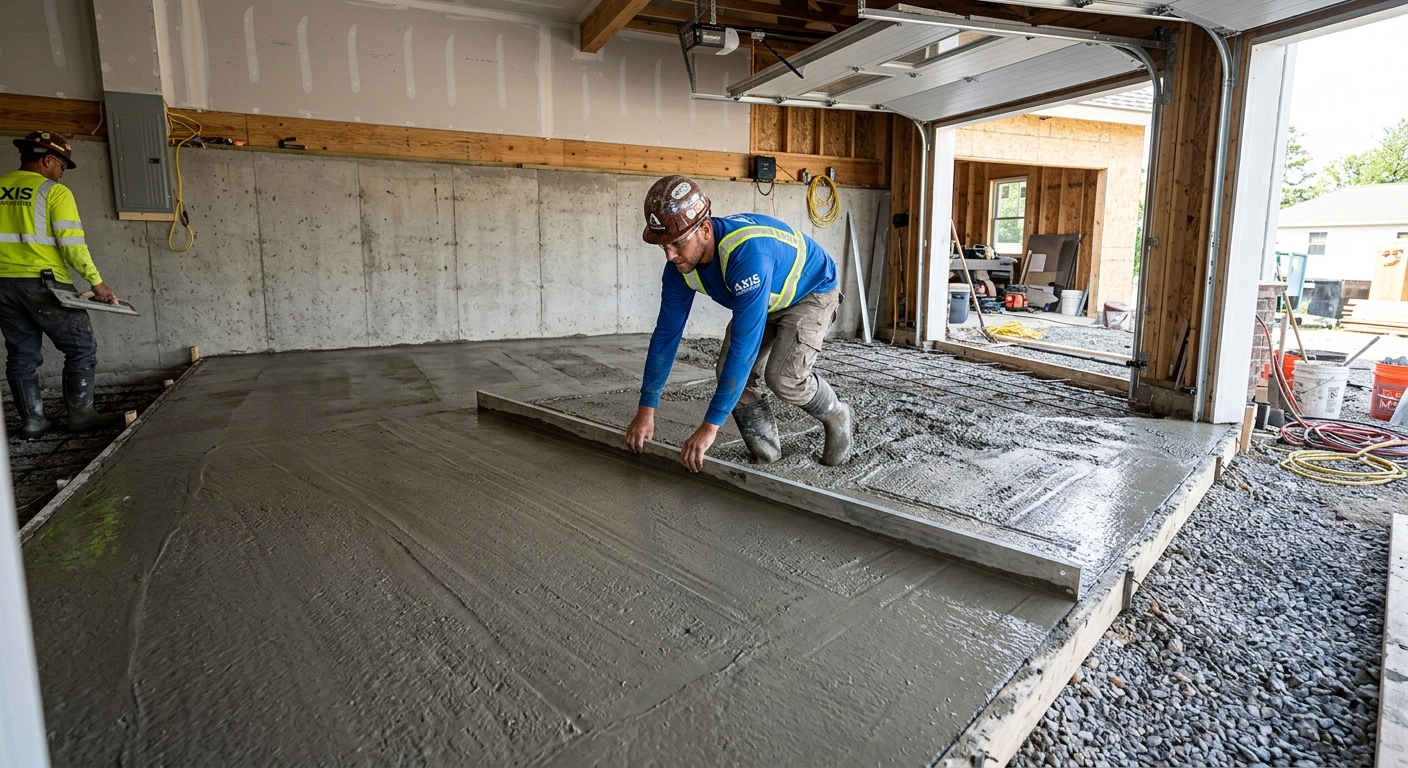
Concrete work options and costs in Second Street
In Second Street, British Columbia, homeowners typically choose concrete for driveways, patios, walkways, and foundations because it’s durable in our Lower Mainland–Southwest climate—yet it still has to withstand coastal-wet weather, cool nights, and plenty of freeze–thaw activity. Second Street is a relatively small community with 5,666 people (Statistics Canada, 2021 Census), and that matters for concrete availability: the same crews often serve the Vancouver–Surrey–Abbotsford corridor, so scheduling can tighten during dry-weather windows. Concrete flatwork is especially in demand in established, older residential pockets around the core streets where renovations and curb appeal upgrades are common (upgrading an existing slab or adding a new driveway is a frequent scope).
Pricing also reflects how we design for frost and drainage. Even with a shallow frost depth assumption of about 450 mm (18"), footings and thickened edges in coastal BC are placed below the frost line to limit frost heave, and exterior slabs are built with air-entrained mixes, proper control joints, and an engineered base. Add in frequent rain during staging and longer curing times in high humidity, and you’ll see why “same-size” jobs can land in different budget bands.
Below are realistic cost ranges homeowners in Second Street typically plan for, based on common scopes and finish choices. Use this table to compare quotes apples-to-apples before you ask your contractor for an itemised breakdown.
| Application |
Typical Size |
Key Spec |
Finish Option |
Price Range |
| Concrete driveway (standard broom finish) |
400–600 sq. ft. |
6" slab, compacted granular base, control joints |
Broom finish, sealer optional |
$18,000–$28,000 |
| Exposed aggregate driveway |
400–600 sq. ft. |
6" slab, vibrated concrete, uniform aggregate reveal |
Exposed aggregate, often with sealer |
$22,000–$35,000 |
| Stamped concrete driveway or patio |
300–500 sq. ft. |
6" slab (or 4" for some patios), integral colour, base engineered |
Stamped pattern + release + seal coat |
$22,000–$36,000 |
| Plain concrete patio or walkway |
200–400 sq. ft. |
4"–5" slab, compacted base, edge forms |
Float finish, light broom on edges |
$3,500–$10,500 |
| Garage floor (interior slab) |
300–600 sq. ft. |
4"–5" slab on vapour barrier (typical), thickened edges as needed |
Float finish, trowel finish not always ideal for exterior drainage |
$7,000–$18,000 |
| Foundation footings (structural, below frost) |
Per linear foot + site conditions |
Excavation to frost depth, rebar, concrete placement below frost line |
Structural concrete, formed/finished as required |
$200–$350 |
Prices are estimates only and vary by project scope, site access and material selection.
What affects the price of concrete work in Second Street
In the Lower Mainland–Southwest region and across British Columbia, even “simple” concrete work can move 30–50% between quotes because the cost drivers aren’t just the concrete—it's what we must do to make it last. One contractor might price a 6" driveway with minimal base prep, while another designs for drainage, correct excavation, and an air-entrained mix appropriate for exterior freeze–thaw. The region’s shallow frost depth (commonly assumed around 450 mm / 18") still requires footings and thickened edges to sit below the design frost line, and our coastal-wet conditions can keep soils saturated—so we prioritize granular base, compaction, and subgrade drainage.
Freeze–thaw cycles dictate mix design and joint detailing. Exterior slabs need air-entrainment and a proper control joint pattern to manage random cracking and scaling. Cold nights and high humidity also extend curing time; when pour schedules land near cool weather, we may use curing blankets or other cold-weather precautions, which raises labour and materials. De-icing salts used by many households after storms can accelerate surface spalling if the concrete mix and finishing/sealer plan aren’t right—sealing is a relatively small added cost compared with redoing a driveway.
Concrete example: if you choose stamped concrete, the finish premium (often aligning with $22,000–$36,000 for a typical driveway/patio size) can be justified when the base and drainage are already being addressed—otherwise you risk paying for decoration on top of a slab that still performs poorly. Another example: swapping from plain broom finish (common $18,000–$28,000 planning range for many driveways) to exposed aggregate usually costs more, but it can better mask minor surface variations in a wet, salt-exposed environment.
| Price Factor |
Why It Matters |
Cost Impact |
| Frost line depth — determines footing depth and form height |
Footings must extend below the design frost depth to prevent frost heave |
Can increase excavation and forming by thousands on structural work |
| Site preparation — excavation, grading, compacted granular base |
Saturated soils and poor grading lead to settlement, scaling, and cracking |
Major swing: time and granular supply vary by site conditions |
| Reinforcement — rebar or wire mesh requirement |
Controls cracking and improves performance under loads and thermal movement |
Material + labour cost increases, especially for larger slabs |
| Mix design — air-entrainment and compressive strength spec |
Air-entrainment helps concrete resist freeze–thaw damage outdoors |
Premium mix and testing/verification add cost per cubic metre |
| Finish type — broom vs. stamped vs. exposed aggregate |
Decorative work adds installation steps and careful workmanship |
Typically the biggest driver for driveways/patios when upgrading appearance |
| Pour size and concrete truck access to site |
Narrow access can require smaller loads, pumping, or more labour |
Can add mobilization and extra manpower for handling |
| Cold-weather curing precautions — heating and blankets |
Maintains adequate strength gain during cool nights |
Adds labour/materials and can affect schedule and crew timing |
| Control joint pattern and sealing cost |
Joints manage cracking; sealers help repel salts and moisture |
Usually modest for most jobs, but critical for long-term durability |
Permits & regulations in British Columbia
In British Columbia, the permit landscape depends on what concrete work you’re doing. Structural concrete work—such as footings, foundation walls, and grade beams—typically requires a building permit, and it often needs engineered drawings reviewed by the municipality. Concrete flatwork (patios, walkways, and most standard driveways) usually does not require a permit, unless it changes lot grading, involves drainage/impervious surface considerations, or affects municipal right-of-way conditions. Always confirm with your local authority before breaking ground, especially if your scope includes regrading, new swales, lowering/raising entrances, or any work near existing utilities.
For Second Street homeowners, verifying contractor credentials is as important as the price. Follow these steps:
- Ask the contractor for their certificate of insurance (liability) and confirm coverage limits are appropriate for concrete work and vehicle access.
- Confirm workers’ compensation coverage (WSIB/WCB in Canada—your contractor should provide proof). If they’re working subcontracted, ask who is insured.
- Check the contractor’s licensing/registration details through the provincial business/contractor registry channels available in BC (and verify the listed trade contact matches the company on the quote).
- Request clear project references: similar-size exterior slabs or foundations, not just decorative sample photos.
- For permitted structural work, ask whether they will coordinate inspection timing with the engineer/municipality and schedule inspections in sequence (excavation/footing placement/any required stages).
Getting concrete right in Second Street's freeze-thaw climate
Concrete failures in Second Street usually come down to water movement and freeze–thaw stress. When base preparation is shallow or poorly compacted, the slab can settle, and standing water can saturate soils beneath it. In our Lower Mainland–Southwest climate, that saturation plus cooling nights leads to repeated expansion and contraction—so the correct spec is what keeps a driveway or walkway from scaling, spalling at the surface, and random cracking that grows over time.
To get the job right, the design should start with compacted granular sub-base sized to the local soil and drainage conditions. Then specify an air-entrained mix (for exterior flatwork, target about 5–7% air) and a minimum 32 MPa compressive strength for durability and strength gain. Next, control joints must be planned to limit crack width and location—don’t rely on random cracking. Finally, curing matters: aim for at least 7 days of proper curing conditions, and in cooler or rainy stretches use curing blankets or protective coverings so strength gain continues. After the slab has cured, apply a penetrating sealer around the 28-day mark to repel moisture and de-icing salts.
As a dollars example, upgrading from broom-finished standard concrete into stamped or exposed aggregate doesn’t inherently fix freeze–thaw performance. If the base, mix air, and joint plan aren’t right, you can still pay top finish pricing without better longevity. Conversely, spending on proper base prep and air-entrained concrete supports both plain broom driveways (often budgeted within $18,000–$28,000) and decorative upgrades (often $22,000–$36,000)—because the real value is durability under local wet/cool conditions.
| Spec |
Why It Matters in Second Street |
What to Ask For |
Impact if Skipped |
| Compacted granular base (depth?) |
Prevents pumping and limits frost-susceptible saturation under the slab |
Confirm excavated depth and compacted granular thickness for your soil |
Settlement, cracking, and premature scaling |
| Air-entrained concrete mix (target air %?) |
Reduces damage from freeze–thaw cycles common in coastal-wet BC |
Ask for 5–7% air content for exterior flatwork |
Spalling and surface scaling, especially with salt exposure |
| Compressive strength (MPa rating) |
Ensures durability and strength gain under cool/high-humidity conditions |
Confirm minimum 32 MPa |
Weaker surface, increased wear and cracking risk |
| Control joints (spacing per ACI guidelines) |
Limits random cracking into predictable, sealed joint lines |
Request joint spacing and layout based on your slab dimensions |
Wider random cracks and harder-to-seal failures |
| Minimum 7-day curing period |
Allows strength development despite cool nights and moisture |
Ask how curing will be protected (blankets/curing compound) if it’s damp/cool |
Surface weakness and reduced long-term durability |
| Penetrating sealer (when applied after cure) |
Helps repel water and de-icing salts that can accelerate spalling |
Confirm sealer type and application timing around 28 days |
More water absorption and faster surface deterioration |
How to choose a concrete work contractor in Second Street
Choosing the right concrete contractor in Second Street is about verifying competence before the pour. Start by confirming British Columbia licensing/registration where applicable for the work they’re performing, then verify liability insurance coverage for property damage and vehicle/pedestrian risk during construction. Ask for proof of WSIB/WCB coverage as well—concrete crews must be properly covered, including subcontractors.
Next, get 2–3 written quotes that are itemised, not just lump sums. The best quotes break out labour and materials (concrete volume, rebar/wire mesh, granular base, forms, finishing, joints, curing/sealing, and disposal). Ask whether a permit is included where required—structural footings and foundation elements usually fall under permit/engineered review—plus confirm who is responsible for calling inspections. Disposal should be explicit: haul-away fees and dump tickets vary a lot with access and local hauling requirements.
Warranty matters: ask for the workmanship warranty length and whether it includes labour to remedy common issues like scaling or joint-related cracking. Clarify product/manufacturer warranties separately, and whether they are transferable to future owners. In terms of payment schedule, never agree to more than 10–15% upfront; hold back a meaningful portion until the job is complete and cured enough for final surface review.
Finally, timeline: insist on a start date and completion estimate in writing, with weather/rain contingency discussed, since our coastal humidity can extend curing and finishing windows.
- Provide insurance certificate and confirm limits before signing.
- Confirm WSIB/WCB coverage and list the actual insured employer(s) on site.
- Use itemised quotes with concrete volume, excavation/base quantities, and reinforcement listed separately.
- Ask for a written scope: what’s included/excluded for removal, disposal, and regrading.
- Confirm whether sealing is included; for exterior slabs, ask about penetrating sealer timing.
- Request mix details: air-entrainment target and minimum compressive strength (e.g., 32 MPa).
- Ask how joints will be laid out and cut (spacing/layout) to control cracking.
- Confirm curing plan (blankets/coverage/compound) if pouring during cool or rainy periods.
- Ask about reinforcement placement and tie-in approach near edges and steps.
- Check for local references in the Lower Mainland corridor with similar finish types.
- Verify the project lead contacts you for scheduling, truck coordination, and weather updates.
- Keep a retention/holdback until finishing, cleanup, and final sealing/cure steps are done as quoted.
Red flags in Second Street concrete contracting: vague scopes that don’t mention base depth/compaction; quotes that omit air-entrainment or minimum strength; “we’ll seal later” without timing (28 days is typical for penetrating sealers); requiring large upfront payments beyond 10–15%; and promising decorative finishes without addressing drainage and control joint layout first.
Frequently asked questions — concrete work in Second Street
How long does a concrete project take in Second Street?
In Second Street, timelines depend on weather, excavation volume, and whether the scope is structural or flatwork. Most exterior slabs (driveways and patios) involve a full day or two for forming and pouring, but the calendar usually stretches longer because of base preparation and curing conditions in the Lower Mainland–Southwest. Plan for excavation and base prep first, then pour and initial finishing. Even after the surface is walkable, curing is a durability requirement—typically at least 7 days under good conditions—so trades often schedule follow-up (like sealing) closer to the 28-day point for penetrating sealers. If you’re comparing budgets, remember that “decorative” work (like stamped concrete, often planned within $22,000–$36,000 ranges for common sizes) can add time for colouring, texturing, and curing protection. In rainy stretches, contractors may adjust the schedule to protect strength gain.
What is a concrete overlay and is it suited to Second Street?
A concrete overlay is a new surface layer installed over an existing slab—commonly used to refresh colour/appearance or cover minor surface defects without full demolition. It can be suited to Second Street in some cases, but it depends on why the original slab failed. If the existing concrete is heaving, settling, or has widespread cracking with water intrusion, an overlay may not fix the underlying movement. For our coastal-wet climate and freeze–thaw cycles, a proper overlay requires cleaning/prep, evaluating bonding conditions, and ensuring drainage is still working. If the slab is structurally sound and only the surface is worn, overlays can be cost-effective versus full replacement. However, many homeowners are surprised that overlays may still need joint strategy and sealing practices to manage moisture and de-icing salt exposure. If your base prep wasn’t right in the first place, a full replacement—often budgeted within typical driveway bands like $18,000–$28,000 for broom-finished slabs—may be the more reliable long-term option.
How do I seal concrete to protect it in Second Street?
Sealing in British Columbia is about repelling water and slowing salt/moisture penetration, especially where driveways see de-icing products. For most exterior slabs, a penetrating sealer is applied after adequate curing—commonly around 28 days after the pour—so the concrete can reach the strength and moisture conditions the sealer needs to perform. In Second Street’s damp conditions, sealing too early can trap excess moisture. Before sealing, the surface should be clean and dry (no puddles, no active algae/mould growth), and your contractor should follow the sealer manufacturer’s prep requirements. A good sealer plan pairs with the right mix (air-entrained exterior concrete) and a controlled joint layout to manage where cracks occur. Sealing is not a substitute for correct air-entrainment and jointing—those specs address freeze–thaw damage at the source.
What is the difference between concrete and cement?
In everyday terms, people say “cement” when they mean concrete, but technically they’re different. Cement is the binding ingredient—powder that reacts with water. Concrete is the full mix: cement plus water, sand, gravel (or crushed stone), and often air-entraining admixtures for exterior durability. In Second Street, the critical part for freeze–thaw performance isn’t the word cement; it’s the complete concrete mix design—especially air-entrainment and the minimum compressive strength (commonly specified as at least 32 MPa for exterior durability). The contractor controls concrete quality through mix selection, batching, and placing/finishing practices. So when you review a quote, ask for the concrete specification (air content and strength) rather than focusing on whether the quote says “cement.” A driveway priced in the $18,000–$28,000 range can vary greatly in longevity depending on that mix design and base prep.
How much does concrete work cost in Second Street?
Concrete costs in Second Street typically track the Lower Mainland–Southwest market rates and the project’s real scope (base depth, access, drainage work, reinforcement, finish complexity, and curing protection). For typical planning, many homeowners budget per these band ranges: concrete driveways on common sizes are often in the $18,000–$28,000 planning range for a standard broom finish, while stamped/decorative upgrades are frequently budgeted within $22,000–$36,000 depending on size and how intricate the finish is. Plain patios/walkways can fall below driveway pricing because they’re smaller and less likely to need heavy thickened-edge detailing—often aligning with the regional patio/walkway band of $16–$26 per sq. ft. depending on scope. Foundation footings are quoted on a structural basis—commonly around $200–$350 depending on excavation, steel, and placement below frost. For an accurate number, request itemised quotes rather than one lump sum so you can compare base prep, mix design, joints, and sealing.
How deep must footings be for Second Street's frost line?
For Second Street in coastal BC, the frost depth assumption commonly used in local design practice is around 450 mm (18"), but footings and thickened edges must be placed below the design frost line to limit frost heave. Because soil conditions and drainage vary, contractors typically base footing depth on the engineered foundation design for your house rather than a single “one-size” number. The important takeaway: exterior structural elements like footings are constructed below frost depth, because freeze–thaw cycles and saturated soils can move frost-susceptible ground. If your contractor only shows shallow excavation without stating that the bottom of footings is below frost, that’s a mismatch for our climate-driven requirements. Also note that cold/wet seasons and prolonged rain affect how long excavations stay open and how the base is protected before placement.