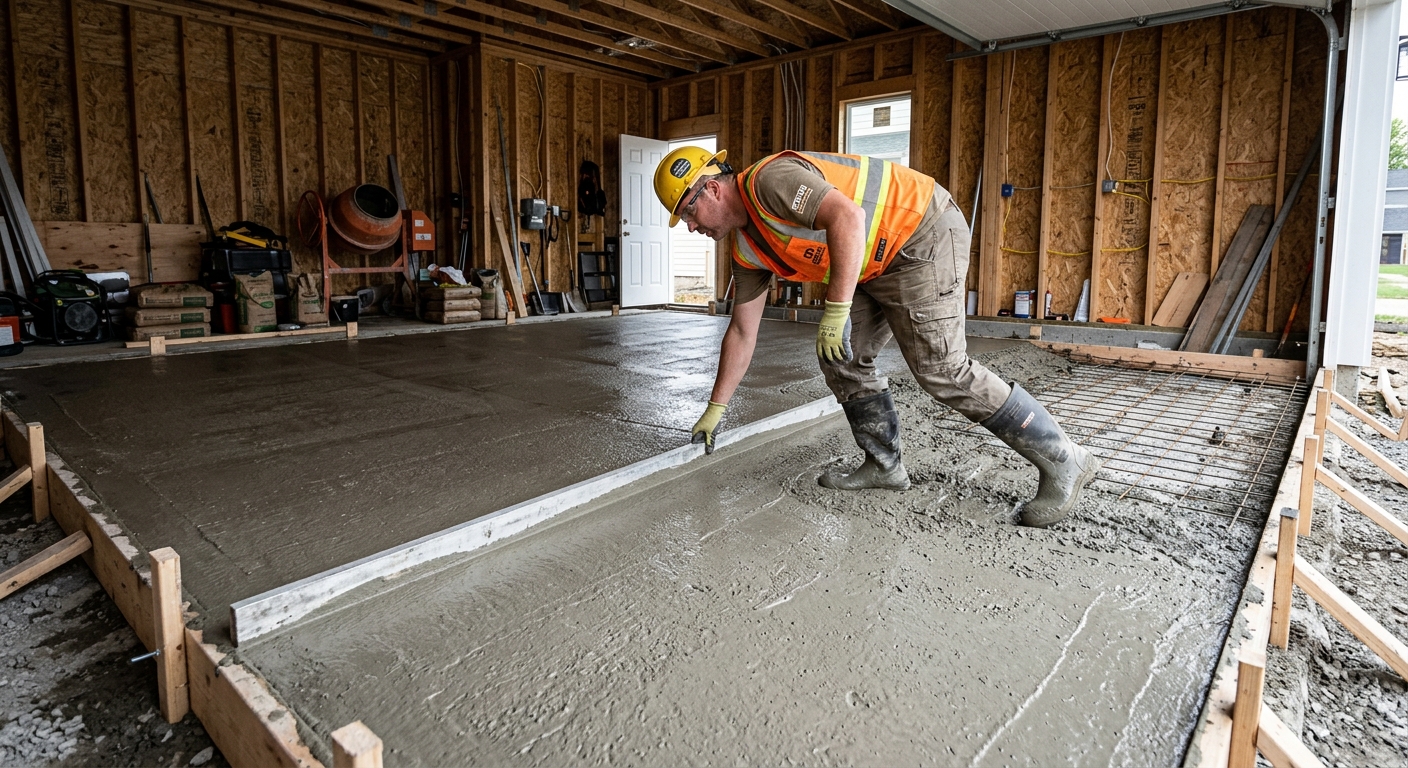
Concrete work options and costs in Gordon Head
In Gordon Head, concrete is a go-to material for driveways, patios and foundations because it handles the Lower Mainland–Southwest’s coastal-wet weather better than many surfaces—provided the base, mix and curing are done correctly. Gordon Head’s housing mix is heavily single-detached, and with a population of (21,270 total residents) (Statistics Canada, 2021 Census), there’s steady demand for exterior flatwork and replacement slabs as homes age. That demand is especially noticeable around older pockets near West Saanich Road and the Gordon Head Road area, where homeowners regularly upgrade driveways and back patios.
In this region, even “standard” concrete costs can move because winter frost depth is typically treated around 450 mm / 18" for design purposes, with exterior footings and thickened edges placed below that to reduce freeze–thaw movement. Add frequent freeze–thaw cycles, saturated soils, and extended rain during shoulder seasons, and you get higher scheduling and base-prep expectations—compact granular, proper drainage, air-entrained mixes, and longer curing plans. Contractor availability also tightens in peak months, and crews may stage work later if rain is persistent.
Below are practical price bands homeowners in Gordon Head can use to compare options before you request itemised quotes. Use them to sanity-check whether a proposal is focusing on the right specs (depth, drainage, air content, reinforcement) rather than just offering a low number.
| Application |
Typical Size |
Key Spec |
Finish Option |
Price Range |
| Concrete driveway (standard broom finish) |
16' x 30' (480 sq. ft.) |
Proper granular base + air-entrained exterior mix |
Broom finish + control joints |
$18,000–$28,000 |
| Exposed aggregate driveway |
16' x 30' (480 sq. ft.) |
Air-entrained mix + exposed surface wear layer |
Exposed aggregate (scrub/washed finish) |
$22,000–$34,000 |
| Stamped concrete driveway or patio |
12' x 24' (288 sq. ft.) |
Air-entrained mix + adequate base thickness |
Stamp pattern + release + optional colour hardener |
$7,000–$14,000 |
| Plain concrete patio or walkway |
10' x 16' (160 sq. ft.) |
Compacted granular base + air-entrained exterior mix |
Steel trowel or broom finish + joints as needed |
$3,000–$6,000 |
| Garage floor (interior slab) |
20' x 22' (440 sq. ft.) |
Vapour barrier + reinforced slab |
Light broom/smooth finish |
$8,000–$16,000 |
| Foundation footings (structural, below frost) |
Per typical house section (allowance) |
Excavation + formwork + rebar + concrete below frost |
Structural grade concrete |
$6,000–$18,000 |
Prices are estimates only and vary by project scope, site access and material selection.
What affects the price of concrete work in Gordon Head
In the Lower Mainland–Southwest (including Gordon Head), two quotes for the same-looking driveway can differ by 30–50% because the real cost drivers are mostly “hidden”: excavation depth, granular base requirements, reinforcement, drainage, mix design, and curing logistics during rain and cool nights. Even within British Columbia, contractor schedules and how they manage cold-weather curing can change labour intensity. When a crew has to protect pours with blankets and potentially add heating, that pushes costs up versus a warm, dry window.
Frost line depth and freeze–thaw cycles dictate key specs. While the region commonly uses a frost depth around 450 mm / 18" for design assumptions, exterior footings and thickened edges must extend below the design frost depth to prevent frost heave. That means deeper excavation than homeowners expect in areas with variable subgrade, and it increases forming and disposal time. All exterior slabs should use air-entrained concrete mixes so the concrete can tolerate freeze–thaw cycling and remain durable during coastal wet winters; without proper air content, scaling and surface deterioration rise quickly. Cold-weather precautions also matter—when temperatures drop, insulation blankets, longer cure protection, and adjusted scheduling add labour and equipment costs.
For example, a “plain” patio might land in the typical band of $16–$26 for concrete patio/walkway work, but upgrading drainage (extra granular depth, slope corrections, and weeping tie-in) can increase your scope and move pricing closer to the upper end. On driveways, a broom finish might fit the $18–$28 concrete driveway/slab band, while stamped or exposed options often run higher due to surface preparation and finishing time. If you’re replacing an older driveway over poor drainage, costs rise because base rehab is rarely optional. Conversely, if your site has good access and stable soils, the premium for high-spec curing can be modest.
| Price Factor |
Why It Matters |
Cost Impact |
| Frost line depth |
Determines footing depth and form height |
Higher excavation and concrete volume when subgrade is weak or variable |
| Site preparation |
Excavation, grading, compacted granular base |
Extra labour and disposal if unsuitable soil is removed |
| Reinforcement |
Rebar or wire mesh requirement |
Material plus placement time; needed for thicker slabs and structural work |
| Mix design |
Air-entrainment and compressive strength spec |
May cost more per yard, but reduces freeze–thaw scaling and repair risk |
| Finish type |
Broom vs. stamped vs. exposed aggregate |
Stamped/exposed need more labour, colour materials, and careful curing |
| Pour size and concrete truck access to site |
Impacts production time and equipment needs |
Long walks, tight lanes, or multiple loads can increase labour |
| Cold-weather curing precautions |
Heating and blankets |
Extra time, blankets, and potentially faster protection steps |
| Control joint pattern and sealing cost |
Controls cracking and protects against de-icing salts |
More layout time and sealing material; often cheaper than repairs later |
Permits & regulations in British Columbia
In British Columbia, how your project is regulated depends on what you’re building. Structural concrete work—such as footings, foundation walls, grade beams, and other load-bearing concrete elements—typically requires a building permit and, in many cases, engineered drawings that the municipality reviews as part of the permit process. That’s the part homeowners should treat as “engineer-led,” especially when you’re adding an addition, changing a foundation, or modifying structural elements.
Concrete flatwork like patios, walkways, and driveways usually does not require a permit by default, unless your work affects lot grading, drainage, or impervious surface coverage limits, or involves municipal right-of-way impacts (for example, tying into or altering a walkway/drive area that interacts with city services). Because rules can vary by site conditions and setbacks, confirm with the local authority before breaking ground.
Before you hire a contractor in Gordon Head, verify insurance and coverage—don’t rely on verbal promises. First, ask for a current certificate of insurance showing liability coverage naming you as a beneficiary where appropriate. Second, confirm they have WCB coverage (or the appropriate provincial coverage documentation used for workers on site). Finally, request references for similar-scale exterior flatwork and any foundation/footing jobs they’ve completed locally.
Step-by-step: (1) ask for contractor business details, (2) check the licensing/registry listing for the specific trade where applicable, (3) review the certificate of insurance dates and coverage limits, and (4) request proof of WCB coverage. If anything is missing, it’s reasonable to pause—concrete failures are expensive, and your documentation matters.
Getting concrete right in Gordon Head's freeze-thaw climate
Concrete failures in Gordon Head usually trace back to water and freeze–thaw. When saturated base materials and surface water can’t drain away, moisture enters the slab edges and micro-cracks. Then, as temperatures swing, repeated freezing causes expansion that leads to spalling, scaling and uncontrolled cracking. The fix is not “more concrete”—it’s correct base preparation, correct mix design, and correct joints and curing.
Start with base prep: compacted granular sub-base to the right depth for local soil conditions, with drainage improvements where needed to reduce standing water. Next, specify air-entrained concrete: a target air content of 5–7% for exterior flatwork is commonly used to manage freeze–thaw durability. Pair that with minimum 32 MPa compressive strength at the proper curing age. Third, plan control joints so the slab cracks in the intended locations—spacing matters more than most homeowners realize.
Fourth is curing. Even in a mild coastal setting, we still protect pours when nights are cool or rainy. A practical standard is minimum 7 days of curing under proper conditions (with blankets or other protection if weather turns). Finally, apply penetrating sealer after the concrete is cured—commonly around 28 days—to help repel de-icing salts and reduce water uptake. Sealing is especially helpful on driveways that see grit, winter traction agents, and heavy splashback.
Ask the contractor about air-entrainment and joint layout upfront; it’s the best way to prevent the classic “spalling after a few winters” complaint. For instance, moving from a basic broom-finish mix to the right air-entrained exterior spec might be a modest increase, but it can easily save thousands in surface repairs.
| Spec |
Why It Matters in Gordon Head |
What to Ask For |
Impact if Skipped |
| Compacted granular base (depth?) |
Reduces pumping and frost-related movement |
Base depth and compaction method matched to subgrade |
Settlement, cracking, and premature edge failure |
| Air-entrained concrete mix (target air %?) |
Durability during freeze–thaw cycling |
Target air content of 5–7% for exterior work |
Scaling/spalling and surface deterioration |
| Compressive strength (MPa rating) |
Helps concrete achieve designed performance |
Minimum 32 MPa rating |
Wear and reduced long-term strength |
| Control joints (spacing per ACI guidelines) |
Controls where cracks occur |
Joint spacing plan and saw-cut/timing schedule |
Random cracking and water infiltration |
| Minimum 7-day curing period |
Builds strength before exposure |
How curing protection is handled in rain/cool nights |
Weak surface, higher cracking risk |
| Penetrating sealer (when applied after cure) |
Repels moisture and traction chemicals |
Penetrating sealer applied around 28 days |
Higher water uptake and faster spalling risk |
How to choose a concrete work contractor in Gordon Head
Choosing the right concrete contractor in Gordon Head is mostly about verifying coverage, insisting on itemised scope, and matching the quote to the specs needed for our coastal-wet freeze–thaw conditions. First, verify British Columbia licensing where applicable to the work your contractor is performing, and confirm they carry liability insurance. Ask for a certificate of insurance and confirm the effective dates, coverage limits, and whether you’re listed appropriately. Next, confirm WSIB/WCB coverage for workers on site; if they sub out crews, ask for proof for those workers as well.
Then get 2–3 itemised written quotes. Don’t accept a single lump sum without a breakdown—insist on labour and materials (concrete type, reinforcement, excavation/disposal, granular base, forms, finishing, and curing/sealing if included). Ask whether permits are included (where required for structural work), and whether disposal, site cleanup, and saw-cutting/joint installation are part of the price. A solid concrete quote will also state concrete thickness allowances, reinforcement assumptions, and drainage expectations.
Warranty should be in writing: workmanship warranty length, how it’s applied (surface scaling vs structural issues), and whether product/manufacturer warranty is included. Also confirm payment scheduling: never pay more than 10–15% upfront, and keep a holdback until the work is complete and accepted. Finally, request a timeline with a start date and estimated completion—rain windows and cold nights can affect curing, so plan for protection steps.
- Ask for proof of liability insurance and review dates before work starts.
- Confirm WCB coverage for workers on site (and any subcontractors).
- Request references for similar Gordon Head exterior flatwork or footings.
- Get quotes broken down by excavation, base prep, reinforcement, concrete, finishing, and joints.
- Confirm the concrete mix is air-entrained for exterior exposure.
- Ask for expected thickness and base depth (not just “standard base”).
- Verify how control joints will be laid out and when they’ll be cut/sawn.
- Ask what curing method will be used in rain/cool nights (blankets/sealers timing).
- Confirm whether penetrating sealer is included or an add-on (often after cure).
- Check who is responsible for permits if structural work is involved.
- Confirm disposal and debris haul-away are included.
- Use a payment schedule with a holdback until final inspection/acceptance.
Concrete contractor red flags in Gordon Head: ignoring air-entrainment for exterior slabs; giving only a “per square foot” number without telling you thickness/base or joint plan; low-balling then changing scope once excavation starts; skipping WCB or insurance paperwork; and promising “instant cure” or omitting curing protection during cool/rain periods.
Frequently asked questions — concrete work in Gordon Head
How do I compare concrete quotes?
Start by comparing quotes on the specs, not just the final price. Ask each contractor to itemise excavation, granular base depth and compaction, reinforcement (if required), concrete mix type (confirm air-entrainment for exterior), finish method, and joint layout/timing. In Gordon Head’s Lower Mainland–Southwest climate, freeze–thaw durability matters: a broom-finish driveway might fall around the regional band of $18–$28 for concrete driveway/slab work, but the real difference is often whether they planned for proper drainage, air content, and curing protection in wet/cool weather. Also confirm whether disposal, saw-cut joints, and penetrating sealer (after cure) are included. If one quote is much lower, look for exclusions in base prep, reinforcement, or curing—those omissions are where repair costs come from.
Can concrete be poured in cold weather in Gordon Head?
Yes, concrete can be poured in cold weather in Gordon Head, but it must be protected and managed correctly to reach strength and durability. The main issue isn’t “cold” alone—it’s whether the concrete freezes before it gains sufficient early strength, and whether wet, cool conditions increase curing delays. Contractors typically use insulation blankets and/or heat to maintain curing temperatures and protect the slab edges. Ask your contractor what they do when night temperatures drop, how long curing protection will run, and how they plan around rain. A good quote will reflect these precautions when pours happen outside ideal conditions. If a contractor says they don’t adjust curing for weather, that’s a concern, especially for exterior slabs that face freeze–thaw cycling and surface wear.
How do I maintain concrete in Gordon Head's freeze-thaw climate?
Maintenance in Gordon Head is mostly about limiting water and preventing surface deterioration. Keep drainage working: clear leaves and debris from weep paths and ensure downspouts discharge away from slab edges. For driveways and patios, use a penetrating sealer once the concrete has cured—often around 28 days—to reduce water uptake. If you use traction products or de-icing salts, apply them with care and avoid soaking the surface for long periods. Clean with methods that won’t damage the surface (avoid harsh chemical stripping that can affect sealer performance). Watch for early signs: hairline cracking with dark staining, rocking slabs from settlement, or small scaling patches. Address minor issues quickly—repairs are far cheaper than letting freeze–thaw cycles expand moisture pathways.
What causes concrete to spall in Gordon Head winters?
Spalling is usually caused by moisture getting into the surface or near-surface pores and then freezing repeatedly. In Gordon Head’s coastal-wet freeze–thaw conditions, this gets worse when concrete isn’t properly air-entrained for exterior exposure, when base prep allows water to pool near edges, or when control joints allow water to travel into cracks. Poor curing in cool/rainy periods can also create a weaker surface that doesn’t tolerate abrasion and freeze–thaw well. Salt and traction chemicals can accelerate surface breakdown when moisture is present. If you’re comparing bids, ask specifically for the air-entrainment target (commonly 5–7% for exterior flatwork) and whether they’ll use correct joints and sealing. Those details are often the difference between a driveway that looks good for years and one that starts scaling within a few winters.
What is rebar and when is it required in British Columbia?
Rebar is reinforcement steel placed within concrete to help control cracking and provide structural capacity where loads are expected. In British Columbia, whether rebar is required depends on the element: structural work like footings, foundation walls, and grade beams almost always involves reinforcement and is designed based on engineering and building code requirements. For concrete flatwork (driveways, patios, garage slabs), reinforcement may be required or recommended based on slab thickness, soil conditions, and design loads (for example, heavy vehicle traffic on a driveway or a thicker garage slab). Your contractor should explain thickness and subgrade assumptions and how they determine reinforcement needs. Don’t accept a plan that “always uses mesh” (or never uses reinforcement) without tying it to your slab design, because inadequate reinforcement paired with freeze–thaw can lead to cracking patterns and edge failure.
How long does a concrete project take in Gordon Head?
Timelines vary with weather, access, and whether it’s structural concrete or exterior flatwork. For typical exterior projects, crews often focus on day-by-day sequencing: site prep and base work may take 1–3 days depending on excavation and drainage; the pour day itself is usually one day (or part of a day) plus finishing; then curing protection may run for several days. While concrete reaches significant early strength relatively quickly, it’s not “fully finished” for durability and surface protection until appropriate cure time—often at least 7 days for strength gain, and sealer typically around 28 days post-pour. Rain delays can add time in Gordon Head due to persistent coastal rainfall. Your contractor should provide a start date, a completion target, and—importantly—what happens if weather disrupts curing.