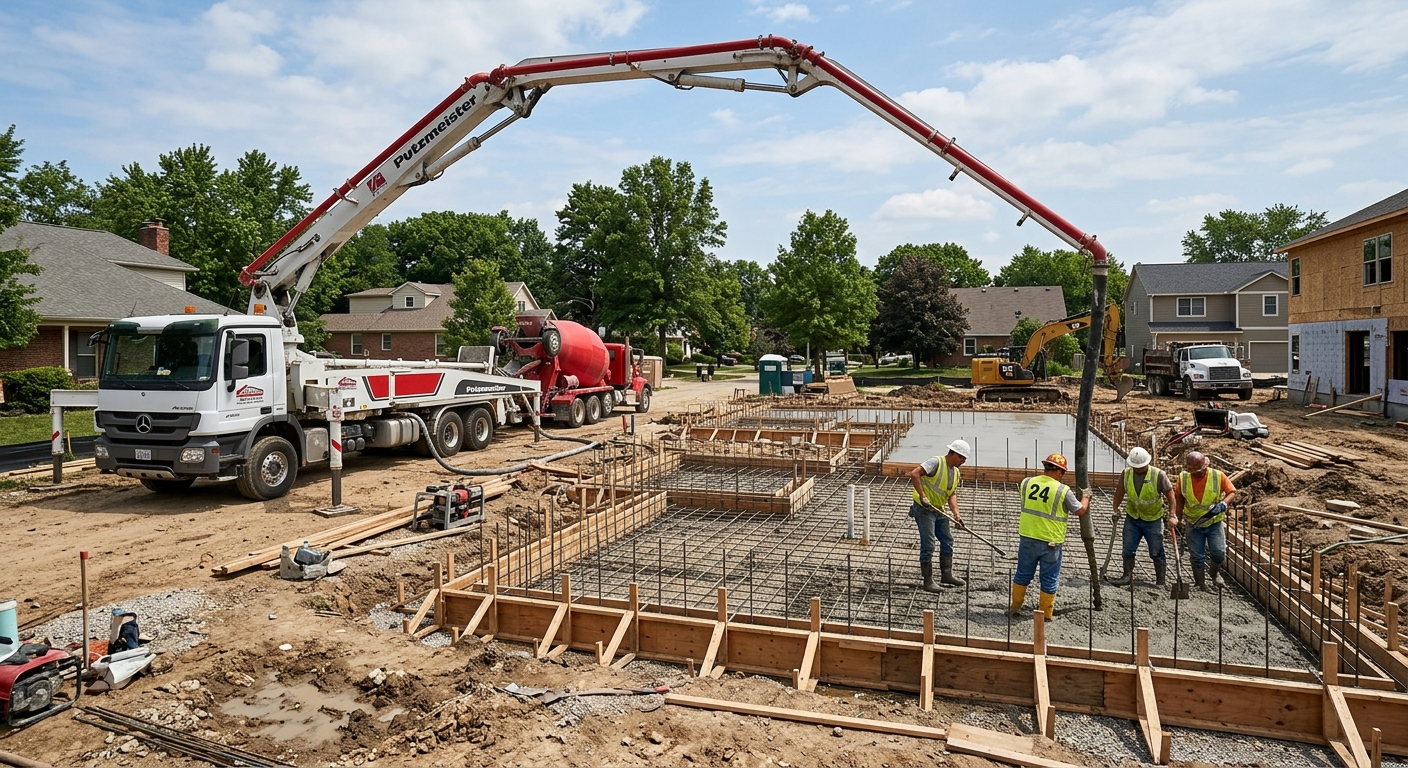
Concrete work options and costs in Brighouse-City Centre
In Brighouse-City Centre, concrete flatwork and foundations are a year-round necessity for homeowners—especially in a built-up pocket where single-detached homes are common, and driveways and patios see heavy use. With a 2021 population of 62,855 in the area (Statistics Canada, 2021 Census), there’s steady demand for concrete contractors, which helps keep pricing competitive, but it also means crew availability can tighten quickly once spring rain eases. In the Lower Mainland–Southwest, we still design around a frost depth of about 450 mm / 18", so exterior footings, piers, and thickened edges are typically placed below that depth to reduce frost heave risk. Even with milder winters, the coastal-wet climate brings frequent freeze–thaw cycles, saturated soils, and high humidity—factors that influence excavation, base prep, mix design, curing methods, and how long we need to protect new concrete from rain and surface scaling.
Concrete work is particularly in demand around the bustling retail-and-housing corridors near Brighouse Station and the adjacent residential blocks, where homeowners regularly upgrade driveway access, front steps, and backyard patios. Compared with colder parts of the province, your Lower Mainland project can be more cost-stable in winter than interior BC, but we still pay attention to proper air-entrainment, drainage, and cold-night curing—because spalling and cracking show up quickly where the mix or base prep is rushed.
Below is a practical cost comparison for common concrete options you’ll see quoted in Brighouse-City Centre. Use it as a baseline, then your contractor can refine it once they measure thickness, reinforcement, and access.
| Application |
Typical Size |
Key Spec |
Finish Option |
Price Range |
| Concrete driveway (standard broom finish) |
320–450 sq. ft. |
4" slab, compacted granular base, control joints |
Broom + saw-cut joints |
$6,000–$12,500 |
| Exposed aggregate driveway |
300–420 sq. ft. |
4" slab, air-entrained mix, proper curing to resist scaling |
Exposed aggregate (wash finish) |
$8,500–$16,500 |
| Stamped concrete driveway or patio |
250–380 sq. ft. |
4" slab, air-entrainment, anti-rain curing plan |
Stamp + release + color hardener |
$9,000–$18,500 |
| Plain concrete patio or walkway |
140–260 sq. ft. |
4" slab (typical), compacted base, thickened edge optional |
Smooth trowel or broom |
$3,000–$6,600 |
| Garage floor (interior slab) |
480–650 sq. ft. |
4" slab, vapor control as needed, interior curing |
Light broom / smooth finish |
$8,500–$15,800 |
| Foundation footings (structural, below frost) |
Per project |
Footings designed below frost (~450 mm depth baseline; local design may vary) |
Structural concrete placement |
$12,000–$28,000 |
Prices are estimates only and vary by project scope, site access and material selection.
What affects the price of concrete work in Brighouse-City Centre
In Brighouse-City Centre and across the Lower Mainland–Southwest, two quotes for what looks like the “same” concrete job can differ by 30–50% because contractors price the risk: base preparation quality, reinforcement decisions, mix requirements, and curing protection all change the labour time and materials. In British Columbia overall, colder or longer shoulder-season work can add cost through extra protection and scheduling, while job complexity and access (tight lanes, tree roots, and limited truck access) can drive up excavation and concrete pumping.
The two biggest regional drivers are frost performance and freeze–thaw durability. Even though the frost line is relatively shallow here (commonly designed around ~450 mm / 18"), exterior slabs and footings still have to resist freeze–thaw cycles and saturated soils. That means footings must extend below the design frost depth to prevent frost heave, and exterior flatwork should be air-entrained to manage freeze–thaw scaling. When a project is scheduled during cool, damp stretches, we often use curing blankets, extend cure protection time, and adjust the work sequence—those precautions add labour and can delay other trades.
Concrete pricing also swings with finish choice: a plain patio or walkway tends to land in the $16–$26 per sq. ft. band, while stamped & decorative concrete often runs closer to $22–$36 per sq. ft. because the process needs extra labour for texture, coloring, and finishing control. In older neighbourhoods with mature landscaping, you may pay more for excavation and haul-away; for example, a backyard patio upgrade in established residential streets can add disposal and regrading costs that aren’t obvious from photos. When homeowners are matching existing elevations from older homes, small thickness changes (and thicker edges) can move the price quickly—especially once steel or thicker base requirements are confirmed.
| Price Factor |
Why It Matters |
Cost Impact |
| Frost line depth |
Determines footing depth and form height to prevent frost heave. |
Higher when geotechnical or design requires deeper excavation. |
| Site preparation |
Excavation, grading, compacted granular base, and drainage control reduce settlement. |
Can swing costs significantly with tree roots, soft subgrade, or import material. |
| Reinforcement |
Rebar or wire mesh increases crack resistance and controls shrinkage cracking. |
Labour and material add cost; may be required for driveways and garage floors. |
| Mix design |
Air-entrainment and specified compressive strength support freeze–thaw durability. |
Air-entrained mixes and higher specs add material cost and testing/QA time. |
| Finish type |
Broom vs. stamped vs. exposed aggregate affects labour time and curing steps. |
Stamped/exposed typically costs more than plain finishing. |
| Pour size and concrete truck access to site |
Smaller access-limited pours may require multiple deliveries or pumping. |
Extra trips, pump rentals, and labour increase the total. |
| Cold-weather curing precautions |
Heating/blankets protect early-age strength in cool, humid conditions. |
Adds daily protection labour and equipment costs during shoulder seasons. |
| Control joint pattern and sealing cost |
Joints control cracking and reduce random failure; sealing protects surfaces. |
More careful saw-cut timing and sealing product/labour increases costs. |
Permits & regulations in British Columbia
In British Columbia, structural concrete work—like footings, foundation walls, and grade beams—generally requires a building permit, and engineered drawings are often reviewed by the municipality before inspections. For concrete flatwork (driveways, patios, walkways), permits are frequently not required unless the work affects lot grading, stormwater management, impervious surface coverage, or a municipal right-of-way. Because requirements can vary by site conditions and how the work ties into existing drainage, it’s smart to confirm with the local authority before breaking ground in Brighouse-City Centre.
Before you sign, verify your contractor is properly covered and accountable. Step-by-step for British Columbia:
- Check the online contractor directory for current licensing status (the goal is to confirm they’re eligible to perform the type of work they’re quoting).
- Request a Certificate of Insurance and confirm it’s active, matches the project address (or scope), and includes liability coverage appropriate for the size of the job.
- Confirm coverage for workplace risk (WSBC/WCB clearance evidence if applicable for the contractor’s workforce).
- Ask for recent references on similar-scale foundation and driveway projects in the Lower Mainland–Southwest area.
- Insist on a written scope and inspection plan for structural pours (footings/walls) so the right hold points are scheduled.
If you’re unsure whether your specific scope triggers permitting, ask for the contractor’s recommended next step in writing—then confirm it with the municipality for your exact lot.
Getting concrete right in Brighouse-City Centre's freeze-thaw climate
Concrete fails in Brighouse-City Centre mainly from water and temperature swings. When rain or meltwater saturates the base and the slab experiences freeze–thaw cycles, the surface can scale and eventually spall—especially if the mix isn’t properly air-entrained or if the base wasn’t compacted to the right depth. The right way to spec a driveway or patio here is to treat the job as an engineered system: base, mix, reinforcement (when needed), joints, curing, and surface protection.
Base preparation comes first: we require a compacted granular sub-base to the correct depth for local soil and frost performance, with drainage and grading that keep water moving away from the slab. Next is mix design: for exterior flatwork, target air-entrainment (typically in the 5–7% range) and use a minimum 32 MPa compressive strength mix appropriate for durability. Control joints should be planned to limit random cracking; in our market, proper saw-cut timing matters just as much as spacing. Curing is critical in the Lower Mainland–Southwest: aim for at least 7 days under proper conditions, and use curing blankets or seal-protection strategies when cool nights and persistent drizzle threaten early strength. Finally, sealing should be scheduled after the cure period—typically 28 days post-pour for penetrating sealers—so the concrete repels de-icing salts and keeps moisture from driving freeze–thaw damage.
When comparing options, the best dollar trade is often “durability over appearance.” For example, if your price difference between a broom-finish driveway and a stamped driveway is about $2,000–$3,500, that extra spend can be justified for texture and curb appeal. But if a quote cuts corners on air-entrainment or base depth, that “savings” is likely to cost far more later through repairs and premature scaling.
| Spec |
Why It Matters in Brighouse-City Centre |
What to Ask For |
Impact if Skipped |
| Compacted granular base (depth?) |
Provides stable support and reduces water saturation under freeze–thaw cycling. |
Granular type, target compacted depth, and drainage/grade plan for your lot. |
Settling, rocking slabs, and faster cracking. |
| Air-entrained concrete mix (target air %?) |
Manages freeze–thaw stress to reduce scaling and spalling risk. |
Target air content in the 5–7% range for exterior flatwork and proof of mix design. |
Surface damage and brittle scaling in winter cycles. |
| Compressive strength (MPa rating) |
Ensures the slab reaches the strength needed for durability and load support. |
Minimum 32 MPa compressive strength and pour-day documentation. |
Lower durability and increased risk of early surface failures. |
| Control joints (spacing per ACI guidelines) |
Limits random cracking by creating planned weak planes. |
Planned joint layout, saw-cut timing, and joint sealing specs. |
Random cracks that can admit water and accelerate deterioration. |
| Minimum 7-day curing period |
Early-age curing is crucial in our cool, humid conditions to develop strength. |
Protection steps (curing blankets/sealer plan) and schedule for inspections if needed. |
Surface weakness, increased scaling risk, and uneven strength gain. |
| Penetrating sealer (when applied after cure) |
Helps repel moisture and salt intrusion in a wet coastal freeze–thaw climate. |
Penetrating sealer application after cure—commonly around 28 days post-pour. |
Higher moisture uptake and faster spalling/scaling over seasons. |
How to choose a concrete work contractor in Brighouse-City Centre
Choosing the right contractor in Brighouse-City Centre is mostly about verification and clarity. Start with British Columbia coverage checks: request their BC licence status (from the relevant online registry), then ask for a Certificate of Insurance showing active liability coverage for your address and scope. For workplace coverage, confirm their WSBC/WCB arrangements with proof or clearance—don’t rely on verbal assurances. A reputable crew won’t hesitate; they’ve got standard documentation ready.
Next, get 2–3 itemised written quotes. You want a labour-and-materials breakdown, not just a single lump sum. Look for line items for excavation and disposal, compacted granular base, reinforcement, concrete supply (including air-entrainment and strength spec), formwork, finishing, joints, curing protection, and sealing. Clarify what’s included: permit pull (if applicable), concrete truck access/pumping, and site restoration.
Warranty matters too. Ask for a workmanship warranty length, what it covers (cracks, scaling, settlement), and whether the product/manufacturer warranty transfers if you sell the home. For payment, never pay the full amount up front—aim for 10–15% max deposit, then hold back the remainder until the job is complete and cleanup is done. Finally, ask for the start date and completion estimate in writing, since weather scheduling in the Lower Mainland–Southwest can affect curing and protection.
- Verify BC licence status via the online registry.
- Confirm liability insurance is current and adequate for the project scope.
- Ask for WSBC/WCB proof or clearance for their workforce.
- Request 2–3 itemised quotes (not just a lump sum).
- Confirm concrete mix spec: air-entrainment and minimum 32 MPa.
- Confirm base prep details: compacted granular depth and drainage/grade plan.
- Require a reinforcement plan (rebar/mesh where needed) and specify lap chairs.
- Ask about control joint layout, saw-cut timing, and whether joints will be sealed.
- Clarify curing protection steps for cool nights and wet spells.
- Confirm finishing requirements: broom vs. stamped/exposed aggregate.
- Review disposal, saw-cutting, haul-away, and reinstatement scope.
- Use a payment schedule with a small deposit and holdback until completion.
Concrete red flags I see in Brighouse-City Centre include: “no need for air-entrainment” talk, skipping granular compaction details, vague thickness promises (e.g., “about 4 inches”), missing jobsite drainage/grading notes, and warranties that don’t address scaling or cracking. Also watch for quotes that don’t explain access/pumping and disposal—those omissions cause the biggest end-of-job surprises.
Frequently asked questions — concrete work in Brighouse-City Centre
What causes concrete to spall in Brighouse-City Centre winters?
Spalling is the flaking or popping off of the concrete surface, and in Brighouse-City Centre it’s usually driven by moisture + freeze–thaw cycling. Rain and coastal humidity saturate the slab and edges; then cold nights let water freeze and expand, stressing the surface. If the concrete mix doesn’t have proper air-entrainment (commonly needed for exterior flatwork), the freeze–thaw damage accelerates and the surface can scale and eventually spall. Poor base prep and drainage can make it worse because water stays under the slab and at joint edges. Finally, rushed curing or missing protection after a pour can reduce early-age strength, which increases surface vulnerability. If you’re comparing bids, look for the air-entrainment and curing steps—not just the final finish price (for instance, plain patios often start in the $16–$26 per sq. ft. band).
What is rebar and when is it required in British Columbia?
Rebar (reinforcing steel) is steel bars embedded in concrete to control cracking and improve structural capacity. In British Columbia, when rebar is required depends on the design loads and the type of concrete work—driveways, garage floors, and structural elements are commonly reinforced, while small interior slabs may be unreinforced depending on engineering and thickness. For exterior flatwork, we often include reinforcement or a wire mesh strategy when it’s needed to control shrinkage and distribute loads, especially on thicker slabs or driveways with turning/loading. For structural concrete like footings and foundation components, reinforcement is typically engineered and inspected. If you’re getting a quote in Brighouse-City Centre, ask whether the slab is reinforced, what size/spacing is planned, and whether chairs/laps are specified so steel sits in the right position.
How long does a concrete project take in Brighouse-City Centre?
Timelines in British Columbia’s Lower Mainland–Southwest are usually measured in workdays plus curing time, not just “pour day.” For small patios or walkways, the active construction period can be 1–3 days (excavation/base, forms, pour, finishing), but you still need proper curing protection. Most crews plan for at least 7 days of cure time before expecting stronger performance for light use, and 28 days before sealing-related work is fully ideal (especially with penetrating sealers). Driveways are often more like 3–7 days of on-site activity depending on access, demolition, and curing protection. Structural work such as footings can be longer because of inspection sequencing and formwork complexity. Weather also matters—cool nights and persistent coastal rain can add protection steps, so ask for a written start and completion estimate that accounts for curing and scheduling.
What is a concrete overlay and is it suited to Brighouse-City Centre?
A concrete overlay is a new layer of concrete placed over an existing slab or surface (sometimes with surface prep like grinding/chipping and a bonding system). In Brighouse-City Centre, overlays can be a smart option when the existing slab is structurally sound and you’re mainly correcting surface issues, but they’re not a fix-all for failed base drainage or significant settlement. Because our climate has freeze–thaw cycling and high moisture exposure, poor drainage under the existing slab can undermine an overlay as well—water still migrates, joints still open and close, and the new layer can fail. Overlays also depend heavily on preparation and bonding method, so the contractor should show you how they assess condition and prepare the surface. If your driveway is in the $18–$28 per sq. ft. style pricing range, compare overlay quotes to replacement carefully—when base problems exist, replacement can cost more upfront but reduce repeat failures.
How do I seal concrete to protect it in Brighouse-City Centre?
In British Columbia’s Lower Mainland–Southwest, sealing is especially about repelling moisture and salt intrusion to reduce scaling and spalling risk during freeze–thaw cycles. The key is timing: most penetrating sealers are applied after the concrete has cured properly, commonly around 28 days post-pour. Before sealing, the slab should be clean and dry—your contractor should wash off contaminants and confirm surface dryness so the sealer can penetrate instead of sitting on residue. For exterior driveways, sealing isn’t a substitute for proper base prep, drainage, and air-entrainment; it’s an added layer of protection. Ask your contractor which sealer they recommend for exterior concrete, whether they include application coverage details, and how they handle joints. If the quote is close to the plain patio/walkway band (like $16–$26 per sq. ft.), ask whether sealing is included or an add-on.
What is the difference between concrete and cement?
Concrete and cement are related but not the same thing. Cement is the fine binder (commonly Portland cement) that reacts chemically with water to form paste. Concrete is the full construction material made by combining cement, water, and aggregates (sand and gravel/crushed stone), plus sometimes admixtures like air-entraining agents and water reducers. That’s why two “concrete” projects can behave very differently in Brighouse-City Centre: air-entrainment and strength specs are controlled at the concrete mix design stage, not by the cement type alone. When you hear contractors talk about freeze–thaw durability, they’re referring to the full concrete formulation—especially the air-entrainment target and curing plan that help manage water expansion in winter cycles. When comparing quotes, ask for the concrete mix design and strength spec (e.g., minimum 32 MPa for exterior work) rather than only referencing cement.