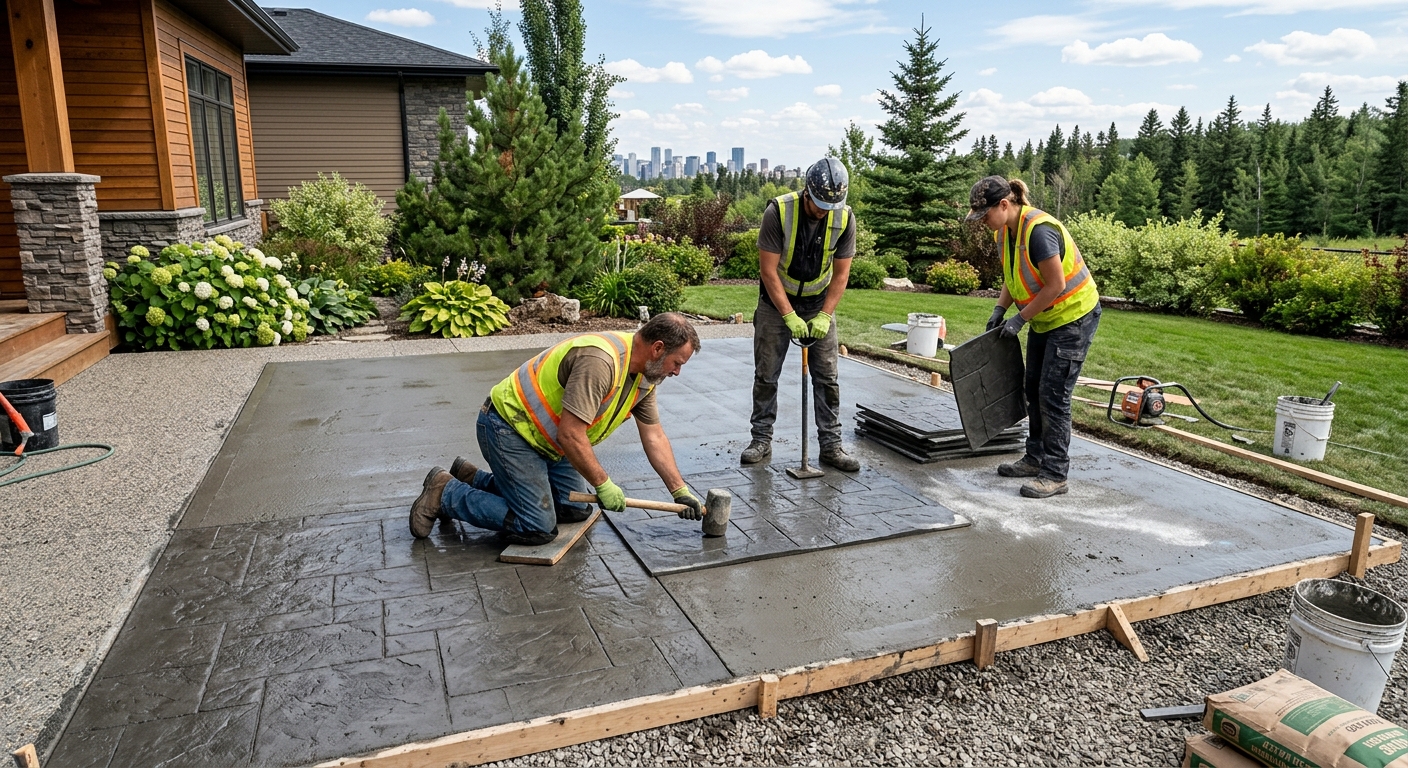
Concrete work options and costs in South Lynnmour
In South Lynnmour, concrete flatwork is a big part of how homeowners handle everything from curb appeal to weatherproofing. With a 2021 population of 1,367 (Statistics Canada, 2021 Census), the local contractor pool is relatively small, so availability can swing during busy spring and early summer. The neighbourhood’s housing stock is dominated by single-detached homes, which typically drive demand for driveways, patios, and walkways that can handle Vancouver’s coastal-wet conditions and the region’s freeze–thaw cycles.
In the Lower Mainland–Southwest, pricing is shaped less by deep frost excavation than by design details that still protect slabs and foundations. Local practice commonly assumes a frost depth around 450 mm / 18", meaning exterior footings and thickened edges are placed below that to reduce frost heave risk. Even with mild winters, we still see freeze–thaw cycles, saturated soils, and heavy rainfall—so base prep usually includes compacted granular and drainage attention, plus air-entrained concrete and properly spaced control joints. Rain, cool nights, and high humidity also affect scheduling and curing; crews often plan around prolonged wet stretches and may use curing blankets, sealers, and longer cure times to reach durability goals for driveways and patios.
Trade activity is especially strong around the South Lynnmour commercial edge and nearby residential corridors where property turnover and renovations are frequent—think of typical driveway and front-patio refreshes tied to landscaping upgrades. Below is a side-by-side estimate to help you compare common options in South Lynnmour before you request a detailed quote.
| Application |
Typical Size |
Key Spec |
Finish Option |
Price Range |
| Concrete driveway (standard broom finish) |
400–600 sq. ft. |
150 mm slab, reinforced with mesh or rebar, air-entrained mix |
Broom finish with control joints |
$18,000–$28,000 |
| Exposed aggregate driveway |
400–600 sq. ft. |
150–175 mm slab, reinforced, broom-free surface with proper curing |
Exposed aggregate with sealer |
$22,000–$34,000 |
| Stamped concrete driveway or patio |
300–500 sq. ft. |
150 mm slab, reinforced, colour hardener and release system |
Stamped pattern + stain/colour (as specified) |
$22,000–$40,000 |
| Plain concrete patio or walkway |
200–400 sq. ft. |
125–150 mm slab, compacted base, control joints |
Smooth or broom finish |
$16,000–$26,000 |
| Garage floor (interior slab) |
300–500 sq. ft. |
100–125 mm slab, vapour barrier, reinforcement as required |
Float/smooth with edging |
$14,000–$24,000 |
| Foundation footings (structural, below frost) |
Varies by plan |
Reinforced footings placed below design frost depth |
Structural concrete only |
$6,500–$12,000 |
Prices are estimates only and vary by project scope, site access and material selection.
What affects the price of concrete work in South Lynnmour
In South Lynnmour and across the Lower Mainland–Southwest, the same “basic” concrete job can come in 30–50% apart between quotes because the price is tied to how each contractor designs for our coastal-wet ground conditions. Two crews may both quote a driveway, but one includes full drainage and granular base rebuild, while another assumes existing base is adequate. Likewise, air-entrainment, reinforcement type, and joint layout aren’t cosmetic—they directly affect durability under freeze–thaw cycles and heavy rainfall. Those differences are exactly what drives the spread you see when you compare labour and materials line-by-line.
Frost depth and freeze–thaw cycles dictate every exterior spec. Even though British Columbia’s coastal frost depth is often shallower (commonly around 0.5–1.2 m in coastal BC depending on local conditions), footings, piers and thickened edges still must be placed below the design frost depth to prevent frost heave. For exterior slabs, contractors should use air-entrained concrete (typically 5–7% air content) plus proper control joints to manage cracking and scaling. Colder regions face shorter pour seasons and higher curing costs due to heating and insulated blankets; that said, in South Lynnmour we still pay for weather planning—rain delays and curing care when nights run cool can add crew days and protective materials.
Two examples of “real-world” cost drivers here: (1) if your soil is saturated or you need regrading and subdrainage, granular and disposal costs jump quickly; and (2) if you’re choosing stamped or exposed aggregate, the extra steps (forms, surface prep, stamping tools, and colour systems) can add labour more than raw concrete volume. A standard broom-finished driveway may land in the $18–$28 band, while stamped & decorative options often sit closer to the $22–$36 band because of the finish system and curing attention.
Finally, housing age matters. Older South Lynnmour properties sometimes have tighter excavations, older drainage connections, or settled ground that require more base reconstruction—meaning you might pay closer to the upper end even before you upgrade the finish.
| Price Factor |
Why It Matters |
Cost Impact |
| Frost line depth — determines footing depth and form height |
Footings and thickened edges must sit below the design frost to avoid heave |
Higher excavation and taller formwork; can move a foundation scope significantly |
| Site preparation — excavation, grading, compacted granular base |
Compacted base and drainage reduce settlement and surface scaling |
More haul-off/disposal and granular supply when soils are wet or unstable |
| Reinforcement — rebar or wire mesh requirement |
Controls crack widths and supports load transfer |
Labour and material cost changes; mesh is often cheaper than rebar assemblies |
| Mix design — air-entrainment and compressive strength spec |
Air-entrainment is key for freeze–thaw durability in exterior slabs |
Usually modest per m³, but impacts total quote due to placement and verification |
| Finish type — broom vs. stamped vs. exposed aggregate |
Finishes change labour steps and curing/protection requirements |
Stamped/exposed typically add higher labour and materials; can raise total by several thousand dollars |
| Pour size and concrete truck access to site |
Smaller access windows require pumping or extra labour for placement |
Truck/pump charges and slower placement can increase costs |
| Cold-weather curing precautions — heating and blankets |
Cool nights and high humidity can delay strength gain |
Additional materials and crew time during marginal pour conditions |
| Control joint pattern and sealing cost |
Joint layout limits random cracking; sealing helps repel salts and water |
Better performance, but adds line-item cost for sawing and sealer materials |
Permits & regulations in British Columbia
In British Columbia, structural concrete work typically needs municipal oversight. That usually includes footings, foundation walls, grade beams, and any structural slab elements tied to the building’s support system. For many projects, a building permit is required and engineered drawings are often reviewed by the municipality, especially for reinforced foundations and any load-bearing concrete components.
Concrete flatwork—patios, walkways, and most driveways—usually does not require a permit unless the work affects lot grading, drainage plans, impervious surface coverage limits, or it touches municipal right-of-way or stormwater issues. Because Vancouver-area properties can have drainage and runoff constraints, it’s smart to confirm whether your driveway replacement changes how water is directed.
Step-by-step, here’s how a South Lynnmour homeowner can verify a contractor in BC before work starts:
- Request a certificate of insurance (liability) and confirm it covers concrete operations and the correct project address.
- Confirm the contractor’s WCB/WSBC coverage status (or proof of clearance where applicable) before crews mobilize.
- Ask for references on similar-scale jobs (driveways with air-entrained mixes, rebar/mesh placement, and proper joint sealing).
- Check the contractor’s business registration and any trade-specific registration required for the scope you’re hiring.
- Make sure the written quote specifies whether permits are included (if your project requires them), and who pulls them.
Getting concrete right in South Lynnmour's freeze-thaw climate
Concrete usually fails in South Lynnmour for a few predictable reasons: water gets under or into the slab, the base isn’t built for our wet conditions, or the mix and curing aren’t matched to freeze–thaw exposure. To spec the job correctly, start with base prep. We aim for a compacted granular sub-base to the right depth for local soils and frost protection needs, with drainage attention so the ground doesn’t stay saturated. Next is mix design: exterior concrete should be air-entrained (commonly 5–7% air content) so the surface survives freeze–thaw cycles without scaling and spalling. A minimum compressive strength of 32 MPa is typical for residential exterior work, but your quote should state the spec.
Control joints are another non-negotiable. The joint pattern should be planned to limit random cracking, with sawing timed properly so the slab cracks where you want it. Curing matters even when the weather feels mild; plan for at least a 7-day curing period under proper conditions, and use curing blankets or protective coverings if nights are cool or rain risk is high. After cure, a penetrating sealer applied after 28 days helps repel de-icing salts and reduce water absorption—important when driveways see winter traffic and maintenance.
When discussing options, ask what you’re really paying for. For example, a standard broom-finished driveway may be closer to the $18–$28 band, while stamped concrete often moves toward the $22–$36 band because colour systems, form-laying, and extra surface prep must be done carefully, and curing/protection typically costs more. If a cheaper quote skips air-entrainment or under-specifies curing, it’s not a real bargain—spalling repair later usually costs far more.
| Spec |
Why It Matters in South Lynnmour |
What to Ask For |
Impact if Skipped |
| Compacted granular base (depth?) |
Reduces settlement and prevents water from pumping up into the slab |
Granular type and compacted depth (mm) to match soil and frost protection needs |
Cracking, uneven surface, and shortened lifespan |
| Air-entrained concrete mix (target air %?) |
Protects against freeze–thaw scaling and spalling in exterior exposure |
Air content target (typically 5–7% for exterior flatwork) |
Spalling and surface deterioration in a few seasons |
| Compressive strength (MPa rating) |
Ensures durability and strength development under local curing conditions |
Minimum 32 MPa (or stated project spec) |
Lower performance and higher risk of early surface damage |
| Control joints (spacing per ACI guidelines) |
Controls crack locations during shrinkage and temperature swings |
Joint spacing range and timing for sawing |
Random cracking and moisture pathways into the slab edges |
| Minimum 7-day curing period |
Helps concrete reach strength despite rain, cool nights, and humidity |
How curing will be maintained (blankets/sealer curing plan) if weather changes |
Weak surface, increased scaling risk, and reduced durability |
| Penetrating sealer (when applied after cure) |
Repels salt water and reduces absorption from wet coastal conditions |
Sealer type and timing (commonly after 28 days) |
Faster staining and more damage from winter de-icing and rainfall |
How to choose a concrete work contractor in South Lynnmour
Choosing the right contractor matters more for concrete than for many other trades, because small differences in prep, mix, and curing show up as cracking or spalling later. In British Columbia, start by verifying licensing/business registration for the scope you’re hiring, then confirm liability insurance and WCB coverage. Ask for a current certificate of insurance naming your property (or jobsite) and confirm the policy includes general liability for your type of work (driveways, patios, foundation-related concrete). For WCB/WSBC coverage, request proof of clearance/status before mobilization—don’t wait until after the first pour.
Next, get 2–3 itemised written quotes, not just a lump sum. You want labour and materials broken out: excavation and disposal, granular base, reinforcement (mesh/rebar), concrete supply (including air-entrained mix and strength spec), forming, finishing, sawing control joints, and sealing. Confirm what’s excluded: permit fees (if required), tree/root cutting, pump rentals, saw cutting for tie-ins, and haul distance. For projects that need a building permit, clarify whether the contractor will pull it or whether you will.
Warranty should be clear: workmanship warranty length (and what it covers), any product/manufacturer warranty on sealers or related systems, and whether it’s transferable if you sell. For payment, never agree to more than 10–15% upfront; hold back a portion until completion and cure milestones are met. Finally, insist on a timeline in writing with a start date and estimated completion window—weather can shift pour days in the Lower Mainland–Southwest.
- Ask for concrete mix documentation: air-entrainment and target strength.
- Confirm the base plan: granular depth, compaction method, and drainage details.
- Get a reinforcement plan: mesh vs rebar, placement depth, and chairing/spacers.
- Require a control joint layout and sawing schedule.
- Ask how rain risk will be managed during the pour and finishing window.
- Confirm curing methods (blankets/sealer curing plan if cool nights occur).
- Clarify whether sealing is included and when it will be applied (after cure).
- Verify disposal and regrading are included if demolition is required.
- Check for pump/telebelt costs if site access is limited.
- Request proof of insurance and WCB/WSBC coverage before work begins.
- Review warranty in writing—no “it’ll be fine” promises.
- Match quote specs: if one bid is “cheaper” but uses a lower mix spec, walk away.
Concrete red flags in South Lynnmour include: refusing to state air-entrainment and curing methods, vague joint spacing with no control joint plan, quotes that don’t include base rebuild or drainage when the subgrade is wet, pushing full payment before completion, and promises to “seal right away” or without waiting for the proper cure period.
Frequently asked questions — concrete work in South Lynnmour
How long does a concrete driveway last?
In South Lynnmour, a properly built driveway often lasts 20–30 years, sometimes longer, when the slab is designed for freeze–thaw exposure and coastal-wet ground conditions. The big drivers are base compaction, drainage, air-entrained concrete, reinforcement placement, and a sensible control joint layout. If the contractor uses an exterior mix without adequate air content, you can see early scaling and spalling even in mild winters—then the driveway may need costly patching much sooner. If you’re budgeting, a standard broom-finished driveway often lands around the $18,000–$28,000 band, but paying for correct base prep and proper curing is what protects your lifespan. Don’t treat “finish” as the only difference—durability details matter more than colour or texture.
What is air-entrained concrete and why does it matter here?
Air-entrained concrete has tiny, intentionally created air bubbles in the mix, which give water a place to expand when temperatures swing and freeze–thaw cycles occur. In British Columbia’s Lower Mainland–Southwest climate, winter nights can still be cold enough for freeze–thaw impacts, especially where slabs stay damp from coastal rainfall and saturated soils. That’s why exterior slabs and driveways should use air-entrained mixes and correct control joints. If air-entrainment is missing or under-specified, the concrete can spall and scale because the surface paste breaks down as freeze expansion repeats. When comparing quotes in South Lynnmour, ask what air content target they plan to use and whether they’ll protect curing during cool, wet weather.
How do I prepare the base for a concrete slab?
Base prep is where quality shows up. In South Lynnmour, contractors typically remove unsuitable material, then place and compact a granular sub-base to the right depth for your soil and frost protection needs. The goal is a stable, well-drained base so water doesn’t remain under the slab and pump up during wet/cold periods. You should expect granular compaction with attention to grading, and reinforcement should sit at the right depth using spacers/chairs. If the subgrade is already saturated or poorly draining, pricing often moves toward the upper end because more granular and better drainage work are required. When you review quotes, confirm the granular depth (mm), what compaction method is used, and whether drainage improvements are included.
How do I compare concrete quotes?
To compare quotes fairly in South Lynnmour, insist on itemised pricing and matched specifications—not just a final number. Look for line items for excavation/disposal, granular base depth and compaction, reinforcement type (mesh vs rebar), concrete mix strength and air-entrainment, forming, finishing, saw-cut control joints, and sealing. Check exclusions: tree/root cutting, pump/telebelt fees, permit pull (if needed), and any site restoration. For finishes, compare “like for like”: stamped work may land around the $22–$36 band because of colour systems and extra labour, while broom-finished driveways are often closer to $18–$28. If a cheaper bid cuts corners on base prep or air-entrainment, it can lead to premature cracking, scaling, and expensive repairs.
Can concrete be poured in cold weather in South Lynnmour?
Yes, concrete can be poured in cold weather in South Lynnmour, but it needs cold-weather curing precautions so it reaches proper strength and doesn’t get damaged during early set. Coastal BC conditions can be cool and wet; rain risk and evening temperatures affect finishing and curing. Contractors may use curing blankets, insulation, and—when necessary—heating strategies to keep the concrete within an acceptable temperature range until strength gain is sufficient. Ask your contractor how they plan to manage cool nights, whether they’ll protect the slab from rain, and what minimum curing plan they follow. A good contractor will also schedule responsibly: if weather delays are expected, they’ll adjust the work window rather than push a pour that risks weak surface performance.
How do I maintain concrete in South Lynnmour's freeze-thaw climate?
Maintenance is mainly about keeping water and salt exposure controlled. After installation, avoid heavy loads until the slab has cured properly and let sealing be applied at the right time—typically after the full cure period (often around 28 days). In South Lynnmour, a penetrating sealer helps repel de-icing salts and reduces water absorption from winter rain. Once sealed, reapply sealing at intervals your contractor recommends based on product performance and wear. For cleaning, use non-damaging methods: avoid aggressive chemicals that can degrade surfaces. Keep drainage directing water away from slab edges where possible. Most importantly, watch for early signs of spalling or cracking and address them quickly—waiting can let water reach deeper layers, accelerating deterioration.