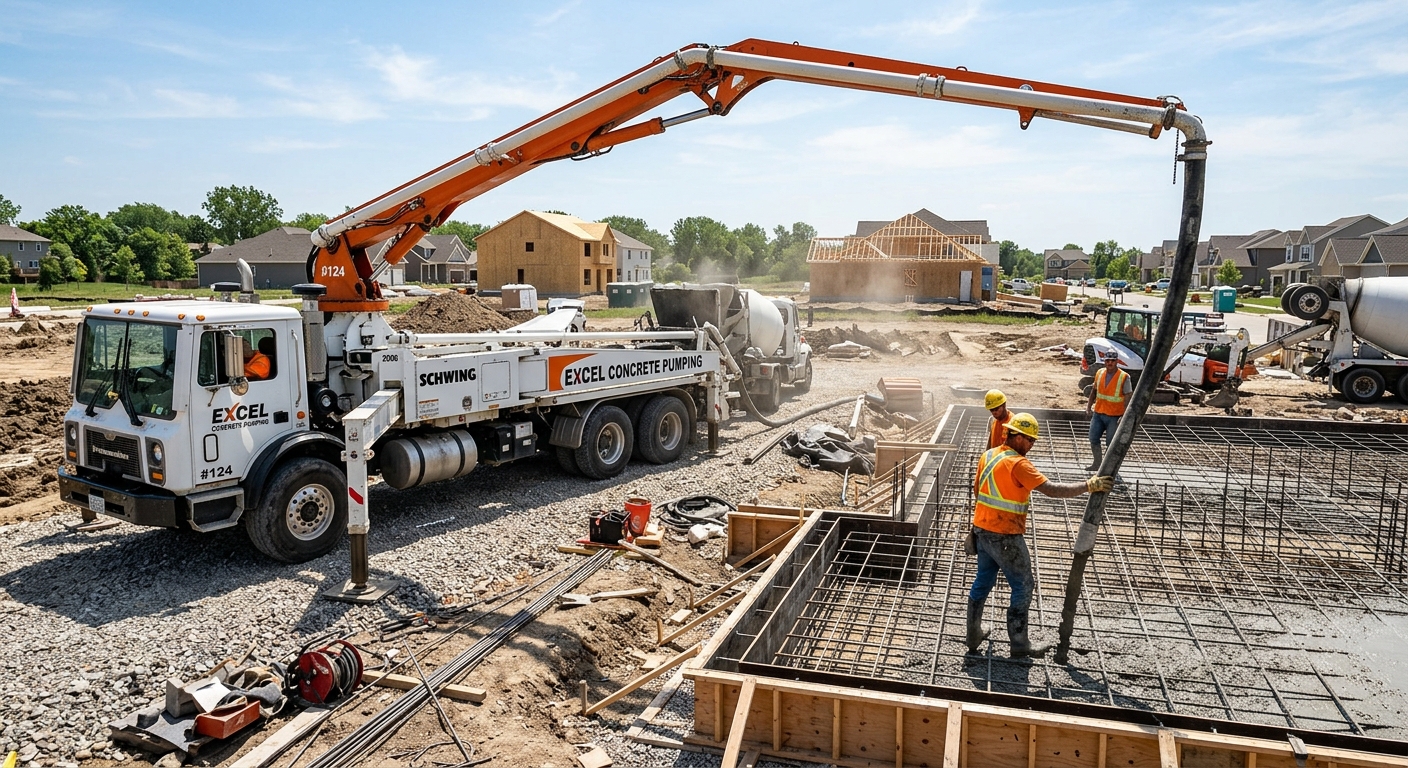
Concrete work options and costs in Victoria
In Victoria, concrete flatwork is one of the most reliable upgrades for homeowners—driveways, patios, and walkways see daily wear, and they also have to survive Vancouver Island’s damp winters and frequent freeze–thaw cycles. That matters because Victoria’s housing stock is still largely older: 63.6% of homes were built before 1981 (Statistics Canada, 2021 Census). Many of those properties were never designed around modern drainage, so new concrete often includes base upgrades and better water control, not just “pour and finish.”
The local market also leans toward classic suburban forms: 13.6% of dwellings are single-detached houses (Statistics Canada, 2021 Census). That’s why standard broom-finished driveways and larger patio slabs are especially common in neighbourhoods like Fairfield and Oak Bay-adjacent pockets, where lots are established and access is often tight but demand is steady.
On Vancouver Island and the Coast, pricing reflects our need for air-entrained mixes, careful control-joint design, and protection during cool, wet weather. Contractors also price in practical constraints: rain events can delay excavation and forming, and saturated soils can require extra granular replacement and compaction. Because frost protection is still taken seriously even with milder coastal temperatures, we design footings to sit below frost where required, with drainage that helps keep the subgrade stable.
Below are typical Victoria cost bands by application, so you can compare options like-for-like before you book site measurements.
| Application |
Typical Size |
Key Spec |
Finish Option |
Price Range |
| Concrete driveway (standard broom finish) |
400–600 sq. ft. |
Air-entrained slab mix, compacted granular base, control joints |
Broom finish, basic edging |
$16,000–$25,000 |
| Exposed aggregate driveway |
400–650 sq. ft. |
Air-entrained mix, proper curing, surface retard/exposure process |
Exposed aggregate with slip-resistant texture |
$19,000–$30,000 |
| Stamped concrete driveway or patio |
300–600 sq. ft. |
Air-entrained mix, color hardeners, sealer, joint detailing |
Stamp + color (flagstone/brick/granite styles) |
$22,000–$35,000 |
| Plain concrete patio or walkway |
150–350 sq. ft. |
Air-entrained mix, compacted base, expansion/control joints |
Float/steel finish with broom edge (or light broom) |
$14,000–$22,000 |
| Garage floor (interior slab) |
350–500 sq. ft. |
Interior slab mix, vapour considerations as needed, jointing |
Steel trowel finish (light broom at transitions as needed) |
$10,000–$18,000 |
| Foundation footings (structural, below frost) |
Varies by design |
Engineered design, below frost bearing, drainage provisions |
Formed/structural concrete |
$50,000–$90,000 |
Prices are estimates only and vary by project scope, site access and material selection.
What affects the price of concrete work in Victoria
In Victoria and across Vancouver Island and the Coast, the same “concrete driveway” can land on very different budgets—commonly 30–50% when you compare projects across timelines, soil conditions, and finishing choices, and that’s also why quotes can diverge versus other parts of British Columbia. The main driver is frost and freeze–thaw performance: Vancouver Island’s coastal climate is milder than interior BC, but repeated wetting and freezing still punishes poorly prepared bases. That’s why exterior footings and foundations are designed to sit below the regional design frost depth band, and exterior slabs use air-entrained concrete to reduce scaling and random cracking.
When contractors price the job, cold snaps and wet weather scheduling matter even here. A “quick pour” can become a higher-cost operation if we need to improve subgrade, rebuild base thickness, add protection/insulation during cool curing, or adjust pour timing around heavy rain. Sealing also affects long-term appearance: de-icing salts can accelerate surface deterioration, so proper sealing is often priced in for driveways and steps.
Two practical Victoria examples: (1) an inland/higher-elevation pocket with heavier clay or poor drainage often requires more granular replacement and longer compaction time, pushing the project closer to the upper end of $16,000–$25,000 for driveways; (2) a decorative stamped patio may look “just cosmetic,” but color and stamp labour plus joint discipline can justify moving toward $22,000–$35,000 when the design includes multiple colors and a complex pattern.
Finally, older properties (63.6% built before 1981) frequently have drainage issues and settlement risks that force extra excavation and drainage work. On these sites, the concrete price isn’t just concrete—it’s the prep and protection needed for the finish to last.
| Price Factor |
Why It Matters |
Cost Impact |
| Frost line depth |
Determines footing depth and form height to reduce heave |
Can significantly change excavation, concrete volume and forming labour; biggest swing on foundation work |
| Site preparation |
Excavation, grading, and compacted granular base control settlement and cracking |
Higher if soils are saturated, soft, or need granular replacement and re-compaction |
| Reinforcement |
Rebar or wire mesh helps control shrinkage cracking and supports load requirements |
Adds material and labour; cost is higher for thicker slabs and reinforced details |
| Mix design |
Air-entrainment supports durability through freeze–thaw cycles; strength spec affects mix cost |
Typically moderate increase, but essential for exterior performance in Victoria winters |
| Finish type |
Broom finish is straightforward; stamped/exposed requires more steps and careful curing |
Stamped/exposed often costs more than plain slab finishes |
| Pour size and concrete truck access to site |
Access affects pumping/placing time and the number of loads |
Tighter sites can add mobilization, wheelbarrowing/pump fees, and scheduling changes |
| Cold-weather curing precautions |
Cool temps and saturation slow strength gain and increase surface risk without protection |
Heating blankets, insulating measures, and longer scheduling can add cost |
| Control joint pattern and sealing cost |
Joint spacing limits random cracking; sealing helps repel salts and water intrusion |
Skimping often saves money short-term but increases likelihood of surface issues |
Permits & regulations in British Columbia
In British Columbia, structural concrete work typically needs a building permit, and municipalities often require engineered drawings for items like footings, foundation walls, and grade beams. That includes any structural portion of a foundation system where concrete is part of the load-bearing design. Concrete flatwork—such as patios, walkways, and driveways—usually does not require a permit by default, unless the work affects lot grading, drainage, or impervious surface coverage limits, or it touches municipal right-of-way requirements (for example, certain driveway approaches or work near curb/sidewalk).
For Victoria homeowners, the safest approach is to confirm in writing with your local authority before excavation. Also verify your contractor: they should carry liability insurance and proper workers’ compensation coverage (WSIB/WCB). Ask for references on comparable Victoria-sized projects so you can see how they handle base prep, joints, and winter scheduling.
To verify coverage step-by-step, start by requesting the contractor’s certificate of insurance and a clearance letter showing active workers’ compensation coverage. Then confirm their licence/registration details through the relevant online professional registry (based on the contractor’s business type) and match the name on the insurance paperwork to the company quoting you. Finally, ask the contractor to list the permit responsibility clearly—whether they pull the permit and engineering documents (for structural work) or whether you’re responsible for approvals tied to grading and drainage.
Getting concrete right in Victoria's freeze-thaw climate
Concrete fails in Victoria most often when the slab or foundation can’t handle repeated wetting and freezing. The symptoms—surface scaling, small cracks that grow, and occasional spalling at edges—usually trace back to predictable causes: inadequate base prep, poor mix design (especially insufficient air-entrainment), missing or poorly spaced control joints, and curing/protection problems. In our Vancouver Island and Coast climate, cool temperatures and saturated soils slow strength gain, so “average” cold-season practices can still lead to damage before the concrete reaches full durability.
To spec the job correctly, focus on five areas. (1) Base preparation: compacted granular sub-base to the right depth for local soil and frost protection needs; if the subgrade is soft or stays wet, you may need granular replacement and drainage improvements. (2) Mix design: air-entrained concrete with a target 5–7% air content for exterior flatwork and a minimum 32 MPa compressive strength (typical durability spec). (3) Control joints: spacing designed to limit random cracking—then followed consistently. (4) Curing: minimum 7 days under suitable conditions, with blankets or protection in cool weather. (5) Sealing: apply a penetrating sealer after the concrete cures (often 28 days post-pour) to help repel de-icing salt and water.
Here’s where pricing makes sense. If a plain patio quote is, say, near the lower $14,000–$22,000 range but leaves out air-entrainment or jointing detail, it may look cheaper—yet you’re gambling on premature spalling in Victoria winters. Conversely, choosing a decorative finish is often a justified upgrade when joints, base prep, and sealing are still done as carefully as a broom-finish slab.
| Spec |
Why It Matters in Victoria |
What to Ask For |
Impact if Skipped |
| Compacted granular base (depth?) |
Stabilizes the subgrade so water doesn’t hold and freeze–thaw doesn’t heave the slab |
Base thickness and compaction method for your soil, plus drainage notes |
Settlement, cracking and “hollow” areas that accelerate surface damage |
| Air-entrained concrete mix (target air %?) |
Creates tolerance for freeze–thaw cycles by protecting paste during freezing |
Target air content (typically 5–7% for exterior flatwork) and confirm air-entrainment use |
Higher risk of scaling and spalling at edges and exposed surfaces |
| Compressive strength (MPa rating) |
Strength gain supports durability and limits long-term surface wear |
Minimum 32 MPa compressive strength (or your engineered minimum) and test/cert documentation |
Surface deterioration and increased cracking risk under load and water exposure |
| Control joints (spacing per ACI guidelines) |
Controls where cracks form so they’re predictable and less visible |
Joint layout plan, spacing range, and sealant approach if applicable |
Random cracking and reduced lifespan of the finish |
| Minimum 7-day curing period |
Ensures strength development before the slab is exposed to rain/cold snaps |
Curing plan (including protection in cool/rainy weather) and when you can drive on it |
Weaker surfaces that scuff, pit, or scale quickly |
| Penetrating sealer (when applied after cure) |
Helps repel water and de-icing salts so freeze–thaw doesn’t break down the surface |
Application timing (often after full cure, commonly around 28 days) and product type |
Faster staining, salt damage, and higher likelihood of spalling |
How to choose a concrete work contractor in Victoria
Choosing the right contractor in Victoria starts with verification. First, confirm the contractor is properly licensed/registered for the work they’re performing and that their business information matches your quote documents. Next, request a certificate of liability insurance showing active coverage during the project period. For workers’ compensation, ask for proof of clearance for workers’ compensation coverage (WSIB/WCB depending on the coverage type). A legitimate contractor should provide these quickly—no vague “it’s in the mail” responses.
When you request quotes, ask for 2–3 itemised written estimates rather than a lump sum. You want labour and materials breakdowns that show base prep, excavation, rebar/wire mesh, concrete supply, finishing, and any sealing. Confirm whether disposal is included (spoils haul-away, dump fees), whether the contractor allows for weather delays, and who is responsible for permits if structural elements are involved.
Pay attention to warranty details: workmanship warranty length, what the warranty covers (cracking vs spalling vs surface scaling), whether it applies to the finish, and whether it’s transferable to future owners. For payment schedule, avoid paying large upfront amounts—keep deposits around 10–15% and hold back a portion until completion and final inspection.
Finally, insist on a start date and a completion estimate in writing. With Victoria’s rain patterns, the best quotes also describe how the crew protects curing concrete and manages cool-weather work so you don’t end up paying for repairs later.
- Request insurance certificate and confirm effective dates align with your pour schedule.
- Ask for workers’ compensation clearance and confirm the company name matches the quote.
- Verify licence/registration information online and match it to the contract holder.
- Get itemised labour + materials (base prep, reinforcement, concrete, finishing, sealing).
- Confirm disposal/haul-away is included if excavation spoils are generated.
- Ask whether permit pulling is included for structural concrete (footings/foundation walls/grade beams).
- Confirm mix spec: air-entrainment for exterior and minimum strength rating.
- Review joint plan: control joint spacing and where expansion joints are placed.
- Ask curing details: blankets/protection plan if cool nights are forecast.
- Confirm sealing plan and timing (often ~28 days after pour) for driveways/steps.
- Clarify warranty: workmanship terms, duration, and whether it covers surface spalling/scaling.
- Set payment milestones: 10–15% max upfront; holdback until cleanup and final pass.
Victoria red flags to watch for: quotes that don’t mention air-entrainment or joint spacing, crews that pour over poor base without describing compaction depth, contractors who ask for most payment upfront, vague timelines without weather-curing protection, and warranties that exclude workmanship or don’t define what “fixing” includes.
Frequently asked questions — concrete work in Victoria
What is air-entrained concrete and why does it matter here?
Air-entrained concrete is made with a specific admixture that creates tiny, well-distributed air bubbles in the mix. Those bubbles act like pressure relief during freezing, which helps prevent the paste from cracking and flaking apart. In Victoria and across British Columbia’s coastal freeze–thaw conditions, wet surfaces repeatedly freeze and thaw around edges, steps, and sunken areas—especially when drainage is poor. That’s why exterior flatwork (driveways, patios, walkways) should use air-entrained concrete, typically targeting 5–7% air content for exterior work. If a contractor offers “cheaper concrete” without confirming air-entrainment, you can see premature scaling and spalling, even if the slab looks fine at first. For a typical broom-finished driveway in the $16,000–$25,000 band, the mix spec is a major part of what you’re paying for.
How do I prepare the base for a concrete slab?
Base preparation starts with assessing the existing subgrade—soil type, moisture, and how water behaves on your property. In Victoria, saturated or soft areas are common, so the contractor should excavate to a depth that allows for a compacted granular base engineered for frost and drainage stability. The goal is uniform support: granular material placed in lifts, compacted to the specified density, and graded so surface water doesn’t pond against the slab. If unsuitable soils are found, you may need granular replacement and sometimes drainage improvements before the forms go up. Ask your contractor what the base depth will be, whether they’ll provide compaction details, and how they’ll handle rain delays. A well-prepared base is what separates a durable slab from one that cracks early, regardless of whether you choose plain concrete, exposed aggregate, or stamped work.
How do I compare concrete quotes?
Compare quotes the way you’d compare vehicle repairs: break them down by scope, not just total price. Ask for itemised labour and materials, including excavation depth, granular base thickness, reinforcement (rebar or wire mesh), concrete mix details, finishing method, and sealing. Confirm whether each quote includes air-entrainment for exterior work and lists a minimum strength rating (commonly 32 MPa for typical specs). Check the control joint plan and curing/protection approach—Victoria weather can include cool nights and heavy rain that affect early strength. Also ask about exclusions: disposal/haul-away, permit responsibility (especially for structural footings), and weather contingency. If one quote is dramatically cheaper than others, it’s often missing essentials like base prep depth, air-entrainment, or curing protection. For context, exterior driveway projects commonly fall near the $16,000–$25,000 range for standard broom finishes, while stamped finishes can move toward $22,000–$35,000.
Can concrete be poured in cold weather in Victoria?
Yes, concrete can be poured in Victoria in cool weather, but it needs a controlled curing plan. The risk isn’t that the slab “can’t be poured”—it’s that strength gain slows and surface damage can occur if water freezes on or near the surface before the concrete reaches early strength. A good contractor will monitor temperatures, protect the pour with insulation blankets and/or approved curing measures, and schedule around cold snaps and heavy rain. Ask specifically what they do for curing protection, how long they’ll maintain coverings, and how they’ll limit traffic/load placement before the slab is ready. They should also confirm the mix is appropriate for the conditions (including air-entrainment for exterior durability). If your quote doesn’t mention curing protection or minimum curing time, ask questions before signing.
How do I maintain concrete in Victoria's freeze-thaw climate?
Maintenance in Victoria is mainly about keeping water and salts from breaking down the surface. Start by sweeping debris off driveways and walkways so water isn’t trapped in organic material. If you use de-icing, use it sparingly—salt can increase risk of surface scaling and spalling over time. That’s why sealing matters: a penetrating sealer applied after the concrete is properly cured (often around 28 days post-pour) helps repel water and salts. Inspect annually for small cracks, pop-outs, or edge deterioration; early patching costs far less than full replacement. Also make sure downspouts and site drainage don’t discharge directly onto the slab. Many older homes (63.6% built before 1981) have drainage patterns that were common at the time—addressing those with proper grading and downspout routing is often the biggest “maintenance win.”
What causes concrete to spall in Victoria winters?
Spalling is the breaking or flaking of the concrete surface, and in Victoria it’s commonly tied to freeze–thaw stress plus moisture movement. The top causes are inadequate air-entrainment, poor base drainage (water saturates the slab), and insufficient curing/protection during cool, wet conditions. If control joints are missing or poorly spaced, cracking can allow water pathways to develop. Edges and corners are especially vulnerable because water gathers there and freezes during cold snaps. De-icing salts can further accelerate surface breakdown by increasing chemical exposure at the surface. To reduce risk, make sure exterior slabs specify air-entrained concrete and proper curing, and confirm a sealing plan for driveways and steps. When you’re comparing bids, treat mix specs and curing details as essential line items—not optional upgrades—particularly if your budget is in the standard driveway band of $16,000–$25,000.