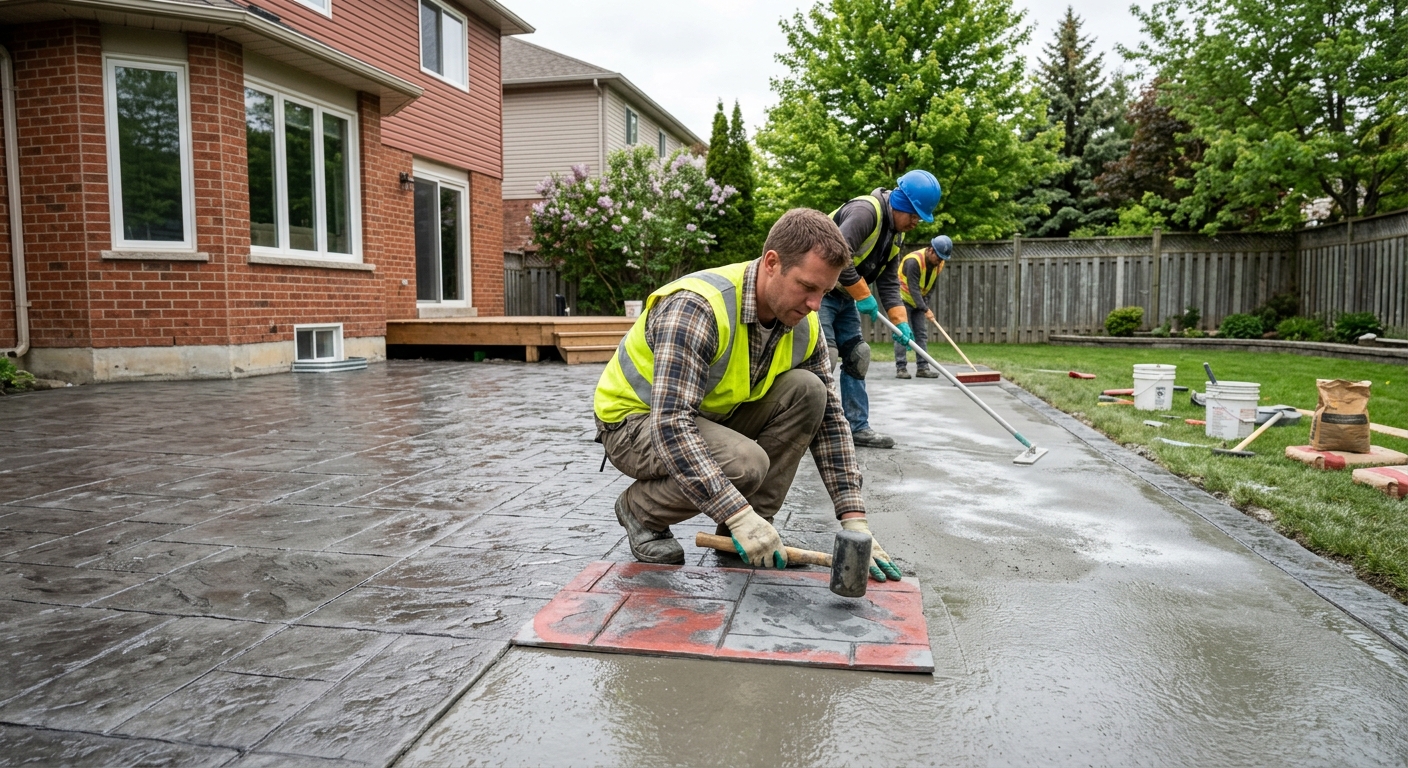
Concrete work options and costs in Mount Pleasant
Concrete work is a steady trade in Mount Pleasant, British Columbia, especially as the neighbourhood’s housing stock keeps turning over and homeowners refresh outdoor living spaces. Mount Pleasant sits within the Lower Mainland–Southwest, where the population is about 33,000 (Statistics Canada, 2021 Census), and the area has a lot of single-detached and townhouse-style properties that commonly call for driveways, patios, and walkways. In this market, the most requested concrete flatwork is exterior: it has to handle damp ground, frequent freeze–thaw cycles, and coastal rain that can slow curing.
Even though our winters are milder than much of Canada, the shallow frost environment still matters. Local practice typically assumes a frost depth around 450 mm / 18", so footings and thickened edges are built below that line to reduce frost heave risk. Pricing is shaped by how contractors manage saturated subgrades, ensure proper drainage, and place air-entrained mixes with control joints to limit cracking and surface scaling. Scheduling also affects cost: rain, cool nights, and high humidity can extend cure times, which means crews may need longer on-site hours and curing protection to hit design strength.
Concrete is especially in demand around the Mount Pleasant Village area and the surrounding retail corridor, where homeowners often upgrade curb appeal and add parking pads for visiting/second vehicles. With that in mind, here are realistic price bands for common options, so you can compare quotes before you choose finishes or scope.
| Application |
Typical Size |
Key Spec |
Finish Option |
Price Range |
| Concrete driveway (standard broom finish) |
400–500 sq. ft. |
Air-entrained mix, control joints, compacted base |
Broom finish |
$18,500–$28,000 |
| Exposed aggregate driveway |
400–500 sq. ft. |
Air-entrained mix, retarder wash, sealed surface system |
Exposed aggregate |
$22,000–$33,000 |
| Stamped concrete driveway or patio |
300–450 sq. ft. |
Air-entrained mix, textured finish, release agent |
Stamped & patterned |
$24,000–$41,000 |
| Plain concrete patio or walkway |
200–350 sq. ft. |
Compact base, drainage slope, control joints |
Steel trowel/hand finish |
$12,500–$25,000 |
| Garage floor (interior slab) |
300–500 sq. ft. |
Vapour barrier, fibre or mesh, saw cuts |
Plain broom or trowel-finish |
$15,000–$28,000 |
| Foundation footings (structural, below frost) |
Per project: ~1,000–2,000 lin. ft. |
Engineered layout, excavation to frost, rebar & formwork |
Structural concrete |
$35,000–$70,000 |
Prices are estimates only and vary by project scope, site access and material selection.
What affects the price of concrete work in Mount Pleasant
In Mount Pleasant and across the Lower Mainland–Southwest, it’s common to see wide quote swings—often 30–50%—for what sounds like the “same” concrete job. The difference usually isn’t just concrete cost; it’s site conditions, how deeply the crew has to prep and excavate, the reinforcement and mix design, and whether the contractor can schedule work around weather. Labour rates and truck logistics in the Vancouver–Surrey–Abbotsford corridor also influence pricing, especially when access is tight or when multiple pours are needed to manage a wet site.
Two local drivers control most of the specification and therefore much of the cost. First, the shallow frost line still requires exterior foundations and footings to extend below the design frost depth (about 0.5–1.2 m in coastal BC) to prevent frost heave. Second, Lower Mainland–Southwest freeze–thaw cycling and saturated soils mean exterior slabs need air-entrained concrete and proper drainage beneath the slab. Where crews can’t keep the subgrade dry, they may need deeper granular replacement or additional base thickness.
Cold-weather curing precautions also matter for our climate. Even when temperatures rarely match interior BC or Alberta, cool nights and rain can slow set and raise the risk of weak surface layers—so contractors may use curing blankets or temporary protection. Salt on driveways in winter accelerates spalling risk if the surface isn’t sealed, which is why sealing is often scheduled after cure (typically at 28 days post-pour) rather than skipped.
Here are a few Mount Pleasant examples that routinely change cost: replacing soft topsoil with compacted granular can add days; widening a driveway or adding a thicker edge can require extra forming; and switching from a plain patio in the $16–$26 patio band to stamped work in the $22–$36 stamped band is usually justified only when you’re adding form-and-pattern labour and colour/texture materials—not when the slab thickness is the same.
| Price Factor |
Why It Matters |
Cost Impact |
| Frost line depth — determines footing depth and form height |
Exterior concrete must sit below the design frost depth to prevent heave |
Higher excavation, more forming and rebar |
| Site preparation — excavation, grading, compacted granular base |
Wet or loose subgrade causes settlement and cracking |
More labour days, granular and disposal |
| Reinforcement — rebar or wire mesh requirement |
Controls cracking and provides structural capacity where required |
Material + placement labour increase |
| Mix design — air-entrainment and compressive strength spec |
Air entrainment helps resist freeze–thaw scaling/spalling |
Higher-spec concrete and batching charges |
| Finish type — broom vs. stamped vs. exposed aggregate |
Finishes require additional tools, labour steps and curing/texture timing |
Stamped/exposed typically higher per sq. ft. |
| Pour size and concrete truck access to site |
Large or hard-to-reach sites may need line pumps or multiple loads |
Truck time, pump fees and extra crew time |
| Cold-weather curing precautions — heating and blankets |
Protects early-age strength gain and surface durability |
Additional labour + blankets/heaters rentals |
| Control joint pattern and sealing cost |
Joints manage cracking; sealer reduces salt and moisture penetration |
Small up-front cost that prevents expensive rework |
Permits & regulations in British Columbia
In British Columbia, how you classify the concrete work matters for permits and approvals. Structural concrete work—such as footings, foundation walls, and grade beams—typically requires a building permit and often engineered drawings reviewed through the municipality. If the work changes load paths, foundation geometry, or involves a new structural element, you should plan for the permit process.
Concrete flatwork (like driveways, patios, and walkways) usually does not require a permit on its own, unless it affects lot grading, drainage, impervious surface coverage limits, or the municipal right-of-way (for example, if the work ties into a curb, boulevard, or changes stormwater discharge). In Mount Pleasant, it’s smart to confirm these details before breaking ground, because a small grade change can create big drainage problems in our wet/cool season.
Before hiring, verify three things step-by-step. First, confirm the contractor’s business details and any applicable registration/licensing info using the appropriate provincial listings and company profile online. Second, request a Certificate of Liability Insurance naming you properly as required, and ensure the coverage is current. Third, ask for proof of WSIB/WCB coverage (or the contractor’s appropriate coverage status) and a clearance letter if they provide one. Finally, review references on similar-scale projects in the Lower Mainland–Southwest—because a correct drainage and curing method is what holds up in our freeze–thaw climate.
Getting concrete right in Mount Pleasant's freeze-thaw climate
Concrete fails in Mount Pleasant mainly when moisture and freezing get into the slab system—through poor base prep, weak surface curing, or the wrong mix. The fix is not just “more concrete”; it’s a complete spec. Start with base preparation: we excavate to the right depth and install a compacted granular sub-base that supports the slab and drains water away from the underside. Next comes mix design. For exterior flatwork, specify air-entrainment (typically 5–7% air for exterior exposure) and a minimum design compressive strength (often 32 MPa for many common flatwork specifications). Then design control joints so cracking happens where it’s planned—not randomly across the driveway or patio. Finally, manage curing and sealing. With our cool nights and rainy stretches, you need minimum curing time and protection so you reach design strength before the slab is hit by freeze–thaw.
Sealing is critical where de-icing is used. In practice, we plan for a penetrating sealer applied after the slab has properly cured (commonly around 28 days post-pour). That timing is part of why good contractors avoid early sealing that traps moisture.
Ask technical questions to avoid the biggest local failure: spalling from inadequate air-entrainment. For a typical driveway priced around the $18–$28 driveway band, it can be tempting to choose a lower-cost option that cuts mix-spec or base prep. The risk is that you’ll spend far more later on patching and replacement—often negating the “savings” within a few winters.
| Spec |
Why It Matters in Mount Pleasant |
What to Ask For |
Impact if Skipped |
| Compacted granular base (depth?) |
Supports the slab and reduces moisture pumping and settlement in wet soils |
Granular depth and compaction method (and drainage slope plan) |
Early cracking, uneven settling, spalling accelerates |
| Air-entrained concrete mix (target air %?) |
Helps resist freeze–thaw scaling and spalling in exterior exposure |
Target air content and that the mix is designed for exterior exposure |
Surface scaling/spalling within winters |
| Compressive strength (MPa rating) |
Ensures design strength under local cool/variable curing conditions |
Minimum 32 MPa (or project-specific rating) on the ticket |
Soft surface, increased wear and patch failure |
| Control joints (spacing per ACI guidelines) |
Controls where shrinkage/temperature cracks form in our freeze–thaw cycle |
Joint spacing plan and saw-cut timing |
Random cracking, water infiltration, freeze damage |
| Minimum 7-day curing period |
Cool nights and humidity can slow strength gain |
What curing protection is used when temperatures drop or it rains |
Weak early-age concrete and durability loss |
| Penetrating sealer (when applied after cure) |
Repels moisture and de-icing salts used during Lower Mainland winters |
Application around 28 days post-pour and which product is used |
Faster scaling and spalling, higher maintenance costs |
How to choose a concrete work contractor in Mount Pleasant
Choosing a contractor is as important as choosing the mix. In British Columbia, start by verifying licensing/registration information that applies to the contractor’s business activities and confirm the company is active and in good standing. Next, request a current Certificate of Liability Insurance before work starts, and make sure the project address is covered if your insurer requires it. For work coverage, ask for documentation showing WSIB/WCB coverage (or their applicable coverage status) so you’re not left holding the risk if a worker is injured. A reliable contractor should provide these items quickly without pushing you into signing an agreement first.
Then collect 2–3 itemised written quotes that break down labour and materials rather than giving a single lump sum. You want to see the excavation/removal, base prep, reinforcement, concrete mix spec, finish labour, and any disposal and protection included (especially when rain is likely). Read the scope line-by-line: confirm whether a permit pull is included if required, whether saw-cutting and joint sealing are included, and what happens if the schedule is impacted by weather.
Warranty should be clear and practical. Ask for the workmanship warranty length, whether it covers rework for cracking/spalling, and whether any manufacturer warranty for sealers or admixtures is included and transferable. For payment, plan a schedule that never pushes you beyond 10–15% upfront; use a holdback until the job is complete and final cleanup is done. Finally, get a start date and completion estimate in writing, with allowances for curing and weather windows.
- Ask for proof of insurance and WSIB/WCB coverage before signing
- Request itemised quotes (base prep, rebar/mesh, mix ticket spec, finish labour)
- Confirm the drainage plan and base thickness for your soil conditions
- Ask what air content and compressive strength they’re placing (for exterior)
- Verify control joint spacing and saw-cut timing
- Confirm curing method for cool nights and rainy stretches (blankets/sealer timing)
- Check whether disposal, hauling, and concrete washout are included
- Clarify access limits for concrete trucks and whether line pumping is needed
- Get a written timeline with weather contingencies
- Review warranty details in writing (workmanship and product)
- Avoid quotes that exclude sealing for exterior driveways
- Ask for recent references in the Lower Mainland–Southwest (similar finishes and exposure)
In Mount Pleasant, common concrete red flags include: skipping or undersizing compacted granular base, refusing to name the air-entrainment target on exterior work, adding joints “later” or inconsistently, applying sealer too early (trapping moisture), and using vague warranties or only “best effort” weather language instead of a concrete schedule.
Frequently asked questions — concrete work in Mount Pleasant
What causes concrete to spall in Mount Pleasant winters?
In Mount Pleasant and across coastal BC, spalling usually comes from a moisture + freeze–thaw problem. Water gets into the slab surface or near-surface paste through hairline cracking, poor joint design, or inadequate base drainage. Then during cold snaps, freeze–thaw cycles expand trapped water, breaking the surface. The biggest preventable cause is insufficient air-entrainment for exterior exposure; without the right air void system, concrete can scale and spall faster. Another contributor is rushing curing or skipping proper curing protection during cool nights, which can leave the surface less durable.
Salt from winter de-icing compounds the issue. That’s why contractors in the Lower Mainland–Southwest often recommend a penetrating sealer around 28 days post-pour. If you compare quotes, even when the driveway price band looks similar (for example, $18–$28 per sq. ft. range depends on scope), make sure the mix spec and air-entrainment aren’t being compromised.
What is rebar and when is it required in British Columbia?
Rebar (reinforcing steel) is steel bar used to provide tensile strength and control cracking in structural concrete members. In British Columbia, whether rebar is required depends on the engineering design and the type of concrete work. Structural elements such as foundation walls, grade beams, and engineered footings are commonly designed with reinforcement because they must carry loads and resist movement. For many typical exterior flatwork slabs (driveways/patios), reinforcement may be specified based on slab thickness, subgrade conditions, and loading (like vehicle traffic), but it isn’t always as extensive as structural foundation work.
The safest approach in Mount Pleasant is to require the contractor to reference the project’s engineered drawings (when applicable) and to explain what reinforcement they’re installing—rebar size, spacing, or whether they’re using mesh/fibre for the slab. Also ask whether the reinforcement is supported at the correct height in the slab so it actually works as designed.
How long does a concrete project take in Mount Pleasant?
Project duration in Mount Pleasant depends on size, access, site prep, weather, and curing requirements. Typical exterior flatwork is often staged: excavation and base prep may take a day or more, then forms and reinforcing (if included) add time, and the pour itself is usually a short, scheduled window. The longer part is curing and protection—especially during cool, rainy periods common in the Lower Mainland–Southwest.
While the concrete can be walked on sooner, contractors still plan for proper curing before heavy use. Many schedules build around a minimum curing period (commonly 7 days for strength development) and then additional time for finishing steps like sealing (often at 28 days post-pour if you’re using a penetrating sealer). If you’re considering higher-complexity work like stamped concrete (often within the $22–$36 stamped/decorative band), plan for extra steps in placement, texture timing, and curing consistency.
Always ask for a written start date and an estimated completion date that accounts for weather contingencies.
What is a concrete overlay and is it suited to Mount Pleasant?
A concrete overlay is an added layer placed on top of existing concrete to restore surface condition, change elevation slightly, or improve appearance without fully removing the original slab. Overlays can be suited to Mount Pleasant when the existing concrete is structurally sound—meaning it isn’t badly cracked, heavily spalled, or lifting due to frost heave, settlement, or drainage failures. If the original slab has active problems (water pooling, repeating freeze–thaw deterioration, or deep delamination), an overlay can look good initially but may fail sooner because the underlying moisture problem continues.
Overlay suitability also depends on preparation requirements: existing concrete must be properly cleaned, profiled, and bonded using the correct bonding agent and overlay mix. In our coastal-wet conditions, drainage and curing still matter. If you’re dealing with salt damage or surface scaling, sealing and correct joint spacing on the new work remain important.
If you’re trying to keep costs down versus a full replacement, overlay can be an option—but ask the contractor to evaluate cracking patterns and base conditions first.
How do I seal concrete to protect it in Mount Pleasant?
Sealing is one of the best defences for concrete exposed to Lower Mainland winters, because it helps repel moisture and de-icing salts. For most exterior slabs, we recommend applying a penetrating sealer after the concrete has cured properly—commonly around 28 days post-pour. Sealing too early can trap moisture and increase the risk of surface damage. Before sealing, the slab should be clean, dry, and free of contaminants like curing compounds, laitance, or efflorescence.
In Mount Pleasant, focus on exterior areas subject to freeze–thaw and salt: driveways, garage approaches, patios, and steps. Ask your contractor what product they use and whether it’s intended for exterior, de-icing exposure, and how many coats are required. The goal is to maintain surface durability without sealing over active moisture issues.
As a rule of thumb, sealing is an addition that protects the more expensive parts of the job—base prep, mix design (including air entrainment), and control joints—so it’s rarely worth skipping when you’re paying for a driveway in the $18–$28 band.
What is the difference between concrete and cement?
Cement and concrete are related, but they’re not the same thing. Cement is a binder—typically Portland cement—that reacts with water to form a paste. Concrete is the final construction material made by combining cement with water, sand (fine aggregate), gravel or crushed stone (coarse aggregate), and sometimes admixtures like air-entrainment, plasticizers, or accelerators. In other words, cement is one component inside concrete.
In Mount Pleasant’s climate, what matters for durability is the engineered concrete mix: for exterior slabs, air-entrainment is critical to handle freeze–thaw cycles and reduce scaling/spalling. The contractor should be able to explain the mix design on the ticket—compressive strength target (commonly around 32 MPa for many flatwork specs) and the air content for exterior exposure.
So when comparing quotes, don’t just look at “cement cost”—ask about the concrete specifications and curing plan, because that’s what controls whether your driveway or patio holds up through British Columbia winters.