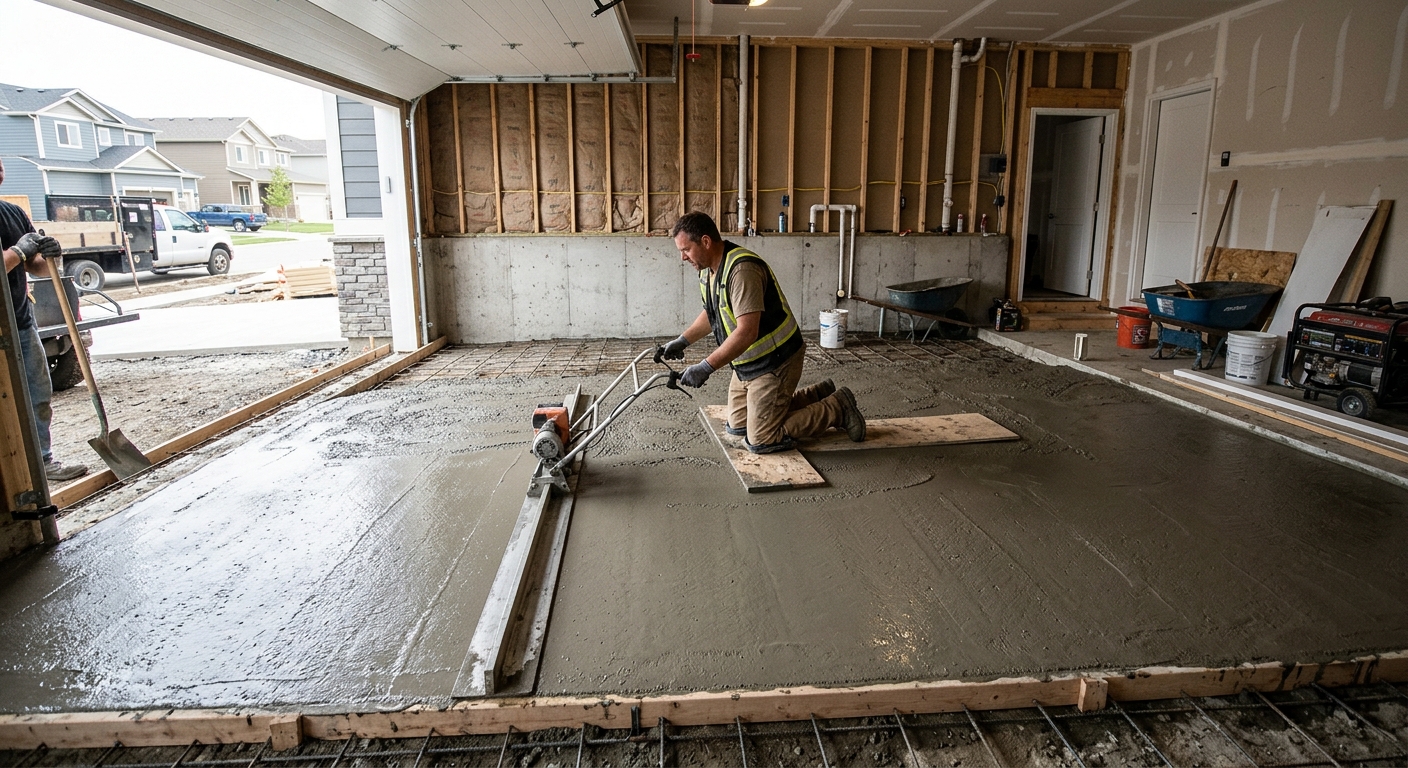
Concrete work options and costs in Scott Creek
Concrete work in Scott Creek is mostly about building durable flatwork and foundations that can handle Lower Mainland–Southwest wet winters and the repeated freeze–thaw cycles that still sneak in along the coast. With a population of 2,828 people (Statistics Canada, 2021 Census), the local market is smaller than Vancouver, so crews who do foundations and flatwork reliably can be in demand around the same limited pour windows. In nearby Lower Mainland communities, a big share of householders live in single-detached homes, and that drives steady demand for driveways, patios, and walkways—typical starter jobs for many homeowners planning renovations or aging-home upgrades.
In Scott Creek, contractors design around a frost depth concept of roughly 450 mm (18"), then place footings and thickened edges below that to reduce frost heave. Even though winters are mild, saturated soils and coastal rainfall mean base prep, drainage, and air-entrained concrete are not optional. Scheduling also affects pricing: prolonged rain, cool nights, and high humidity can extend cure times and push labour into warmer-weather windows, which is why similar scopes can land at different price points.
If you’re comparing options, you’ll usually see the sharpest differences between standard broom-finish slabs, decorative finishes, and structural foundation work. In Scott Creek, trades often get especially busy around the Scott Creek Valley and nearby upland lots where access and drainage planning can take extra time. Use the table below to quickly compare typical project sizes and finish specs before you request itemised quotes.
| Application |
Typical Size |
Key Spec |
Finish Option |
Price Range |
| Concrete driveway (standard broom finish) |
400 sq ft (approx. 20' x 20') |
4" slab, compacted granular base, air-entrained mix, control joints |
Broom finished, 1–2 expansion/control areas |
$7,200–$11,200 |
| Exposed aggregate driveway |
400 sq ft (approx. 20' x 20') |
Air-entrained mix, proper curing, aggregate exposure process |
Exposed aggregate surface with sealer |
$9,600–$14,400 |
| Stamped concrete driveway or patio |
350 sq ft (approx. 17' x 20') |
Air-entrained mix, release agent, saw-cut control joints |
Stamp pattern + integral colouring |
$10,500–$16,000 |
| Plain concrete patio or walkway |
200 sq ft (approx. 10' x 20') |
4" slab (or per design), compacted base, joints as needed |
Broom or smooth trowel, light salt-ready finish |
$3,200–$5,200 |
| Garage floor (interior slab) |
480 sq ft (approx. 20' x 24') |
Vapour barrier, compacted base, reinforcement per spec |
Steel trowel finish or light broom texture |
$8,800–$13,700 |
| Foundation footings (structural, below frost) |
Typical semi-detached/added section |
Below design frost depth (often deeper below ~450 mm concept), rebar, engineered dimensions |
Standard structural concrete to drawings |
$6,000–$10,500 |
Prices are estimates only and vary by project scope, site access and material selection.
What affects the price of concrete work in Scott Creek
In the Lower Mainland–Southwest, you can see the same “concrete driveway” scope come back 30–50% apart between quotes. The difference usually isn’t the concrete itself—it’s the hidden work: excavation depth, how granular base is built and compacted, whether reinforcement is included correctly, and how well contractors plan around weather windows. In Scott Creek and the wider Vancouver–Surrey–Abbotsford corridor, the mild winter isn’t an excuse to shortcut specs; we still manage freeze–thaw cycles and persistent moisture, which directly affects mix design and curing practices.
Frost line depth and freeze–thaw cycles dictate design every time. Footings and thickened edges must extend below the design frost depth to prevent frost heave, and exterior slabs need air-entrained concrete to survive repeated wetting, cooling, and thawing. Colder regions reduce pour flexibility and require more cold-weather precautions; in coastal BC, the timing is different (more rain, higher humidity), but cure management still costs money because we may need curing blankets and longer protection to reach strength. De-icing salt also accelerates surface spalling on underprotected slabs—so sealing becomes a practical “durability line item” for driveways and patios.
Here’s how that shows up in Scott Creek pricing: a standard broom driveway might land closer to the $18–$28 per sq ft band when access is straightforward and base prep is typical. Stamped and decorative work can move you toward the $22–$36 per sq ft band because of labour-heavy forming, stamping, colour, and extra finishing time. On a sloped lot near the Scott Creek area, extra drainage and haul distance can add both excavation and disposal costs, while very small patios sometimes cost proportionally more because mobilisation and forming won’t scale down.
| Price Factor |
Why It Matters |
Cost Impact |
| Frost line depth — determines footing depth and form height |
Below frost, the foundation resists freeze–thaw heave; shallow forms risk movement |
Higher excavation and forming; can push foundation pricing upward |
| Site preparation — excavation, grading, compacted granular base |
Compaction and drainage control settlement and cracking |
More granular, more labour, and sometimes more disposal fees |
| Reinforcement — rebar or wire mesh requirement |
Controls cracking and improves performance under loads |
Material + tying/lifting time; often noticeable on slabs and garage floors |
| Mix design — air-entrainment and compressive strength spec |
Air entrainment helps resist freeze–thaw scaling and spalling |
Cost increase versus “basic” mix; protects the surface long-term |
| Finish type — broom vs. stamped vs. exposed aggregate |
Complex finishes need tighter timing, more finishing labour, and extra materials |
Often the biggest jump in driveway and patio options |
| Pour size and concrete truck access to site |
Access affects pump needs, hose time, and placement efficiency |
Longer placement time and equipment charges |
| Cold-weather curing precautions — heating and blankets |
Ensures adequate strength gain when nights are cool and humidity stays high |
Blankets, heaters, labour monitoring, and longer scheduling |
| Control joint pattern and sealing cost |
Joints steer cracking and sealing reduces salt-driven surface damage |
More saw-cut labour plus sealer as a durability add-on |
Permits & regulations in British Columbia
In British Columbia, the rule of thumb is that structural concrete work is the part that triggers permitting and engineering review. Concrete flatwork (like driveways, patios, and walkways) often does not require a building permit, unless it impacts lot grading, ties into permitted drainage/retaining structures, or you’re changing the driveway/approach in a way that affects municipal requirements (for example, impervious surface coverage or right-of-way considerations). Structural work that typically does require a permit includes: footings and foundation walls, grade beams, foundation underpinning, and any other structural elements that support the building.
For a homeowner in Scott Creek, the safest approach is step-by-step verification before you sign: (1) ask the contractor for their certificate of insurance (liability coverage) and confirm the dates cover the entire project window; (2) confirm they have the correct provincial coverage paperwork for jobsite workers (WSBC/WCB coverage, depending on their business status); (3) request references from similar-scope projects—ideally with comparable slab size and site conditions; and (4) verify that the contractor’s workers are properly covered for the work they will perform.
For licence verification, start with the contractor’s legal entity and business details, then check the relevant online registry or credential listing used in British Columbia for the trade. If they won’t provide documentation quickly, that’s a practical red flag—especially for foundation and below-grade work where inspections and engineered specs matter.
Getting concrete right in Scott Creek's freeze-thaw climate
Scott Creek concrete doesn’t fail like it does in far-northern BC—it usually fails from a different mix of moisture, salt exposure, and repeated temperature swings. The most common complaint we see is spalling (surface scaling and chipping), often tied to insufficient air-entrainment, poor base drainage, and curing shortcuts. In the Lower Mainland–Southwest, the fix isn’t “thicker concrete” alone; it’s correct base preparation, correct mix design, a joint plan that controls where cracks go, and curing/sealing that lets the slab reach strength and resist winter damage.
To spec the job correctly, start with base: excavate to the right depth for compacted granular sub-base and keep drainage in mind so water doesn’t sit under the slab. Next, specify air-entrainment for exterior flatwork—commonly 5–7% air content—plus a minimum 32 MPa compressive strength mix. Then require control joints spaced to manage shrinkage and thermal movement. Curing should be protected for at least 7 days under suitable conditions; in cool, wet stretches, contractors may need curing blankets or other cold-weather precautions to maintain curing conditions. Finally, plan sealing: a penetrating sealer is typically applied after cure (often around 28 days post-pour) to repel de-icing salts and reduce scaling risk.
When you ask questions, tie them directly to performance. For example, if a quote for a driveway only mentions “standard concrete” without air entrainment or joint detailing, that’s a shortcut that can cost far more later. A decorative stamped patio might be justified—sometimes several thousand dollars more—because it includes additional finishing and colour steps, but the durability requirements (air entrainment, base, joints, and sealing) should be consistent across both basic and decorative options.
| Spec |
Why It Matters in Scott Creek |
What to Ask For |
Impact if Skipped |
| Compacted granular base (depth?) |
Stable base reduces settlement and keeps moisture from pumping upward |
State excavated depth and granular base thickness; confirm compaction method |
Cracking, uneven surface, and faster deterioration in wet seasons |
| Air-entrained concrete mix (target air %?) |
Air voids help resist freeze–thaw scaling and spalling during winter cycles |
Confirm 5–7% air content for exterior flatwork |
Spalling and surface loss—especially when salt meets winter moisture |
| Compressive strength (MPa rating) |
Adequate strength supports durability and reduces surface wear |
Minimum 32 MPa at design age per project spec |
Reduced performance under freeze–thaw and traffic loads |
| Control joints (spacing per ACI guidelines) |
Joints control where cracks form as the slab shrinks and expands |
Provide joint layout drawings or spacing plan and saw-cut timing |
Random cracking and ugly repairs that can’t be “hidden” |
| Minimum 7-day curing period |
Cold nights and coastal humidity slow curing; strength gain must still happen |
Confirm curing protection plan, especially if nights are cool or rain is forecast |
Weak surface, increased scaling risk, and reduced bond to sealers |
| Penetrating sealer (when applied after cure) |
Helps repel de-icing salts and reduces water penetration |
Confirm application timing (typically after full cure; often around 28 days) |
Faster spalling and staining, with more maintenance cycles |
How to choose a concrete work contractor in Scott Creek
Start by verifying the contractor’s British Columbia credentials and coverage. Ask for a recent certificate of insurance showing liability coverage for the project duration. Then confirm they have current worker coverage paperwork through the appropriate BC system (WSBC/WCB coverage, based on their status). You should also request proof of any required trade qualifications for concrete work in BC, then confirm the business is in good standing.
For quotes, get 2–3 itemised written estimates—not lump sums. The breakdown should show excavation and disposal, granular base and compaction, reinforcement (if required), formwork, concrete supply, finish labour, joints, curing method, and sealing (if included). Pay attention to exclusions: is the contractor including saw-cutting, reinstatement of landscaping, and any temporary protection from rain? Ask whether permits are included where required, and whether municipal inspections or engineered design work are covered in their scope.
Warranty matters. Look for a workmanship warranty length that’s clearly defined, plus any product/manufacturer warranty on specialty items (like sealers or admixtures). Ask if warranties are transferable to future owners. Payment scheduling should be cautious: never pay more than about 10–15% upfront, and use a holdback until the job is fully completed and cleaned. Finally, request a start date and completion timeline in writing so you’re not left waiting through weather delays.
- Ask for itemised quotes: base, reinforcement, forms, concrete supply, finish labour, joints, curing, sealing.
- Confirm air-entrained mix for exterior slabs and note target air content in writing.
- Require joint layout (spacing and timing for saw-cut) to avoid random cracking.
- Ask about drainage: how water will be managed at the edges and low points.
- Verify truck/pump access plan—especially on narrow Scott Creek lots or drive approaches.
- Confirm how rain and cool nights are handled during the pour and curing window.
- Get the exact reinforcement plan: mesh vs rebar and where each is used.
- Request a written warranty statement for workmanship and workmanship-only scope.
- Ensure insurance and (where applicable) worker coverage documents match project dates.
- Avoid “cash discount” contracts with vague scopes or no proof of materials.
- Use a payment schedule with holdback until cleanup, joints, and (if chosen) sealing are complete.
- Ask who pulls permits for structural work and who schedules required inspections.
Red flags in Scott Creek: contractors who won’t specify air content for exterior slabs, quotes that omit control joint timing, foundation pricing that doesn’t reference below-frost excavation to engineered dimensions, “guarantees” that don’t describe warranty terms in writing, and crews that ask for large upfront payments without a signed, detailed scope.
Frequently asked questions — concrete work in Scott Creek
What causes concrete to spall in Scott Creek winters?
Spalling in Scott Creek is usually a freeze–thaw durability issue made worse by moisture and de-icing salts. When concrete doesn’t have the right air-entrainment, water that enters the surface can freeze, expanding and breaking tiny sections off. Coastal-wet seasons add another challenge: saturated base conditions can keep moisture present under and within the slab. If curing was rushed or didn’t reach adequate strength during cool, humid stretches, the surface can be weaker and more prone to scaling. A driveway that is sealed (after proper cure) usually performs better against salt than one that isn’t. If you’re comparing quotes, ensure the mix is air-entrained and that the contractor includes a realistic curing plan—not just “pour and finish.”
What is rebar and when is it required in British Columbia?
Rebar is steel reinforcement bars used in concrete to help control cracking and add strength where concrete alone isn’t enough—especially in foundation elements and slabs subject to bending or heavier loads. In British Columbia, whether rebar is required depends on the structural design and the loads from your specific project. For foundation footings, rebar is typically part of the engineered requirements, along with concrete placed to below-frost depth. For driveways, garage floors, and patios, reinforcement might be wire mesh, rebar, or a combination, based on slab thickness, soil conditions, and expected loads. The best practice is to have reinforcement specified on the drawings or by a contractor who can explain why it’s included for your use case. Always request the reinforcement plan in writing.
How long does a concrete project take in Scott Creek?
The timeline depends on whether you’re pouring flatwork or structural concrete, plus site access and weather. For a typical driveway or patio in Scott Creek, concrete placement is fast (often just hours), but the job spans several days including form setting, base prep, curing protection, and finishing. You should plan for at least 1–2 weeks from start to “fully usable” conditions, especially if there’s rain or cool nights that extend curing. Foundation footings or below-grade work can be longer because excavation, forms, inspection scheduling, and engineered steps often stretch out the schedule. If you’re adding sealing on a walkway or driveway, ask about timing—sealers are usually applied after proper cure, commonly around 28 days after the pour. Good contractors schedule around the weather window, not only the pour day.
What is a concrete overlay and is it suited to Scott Creek?
A concrete overlay is a new layer placed over an existing slab to restore appearance and smoothness without removing everything. It can be suited to Scott Creek when the existing concrete is still structurally sound and well-bonded—no major sub-base failure, deep spalling, or widespread heaving. Overlays won’t fix foundational movement; if the original slab is already cracked from freeze–thaw movement or drainage issues, an overlay can fail or delaminate. In a coastal-wet freeze–thaw climate, proper surface prep (including cleaning and profiling) and correct bonding materials are critical. Cost varies, and sometimes a full replacement is more reliable if the substrate is compromised. If you’re considering an overlay, ask for an inspection of the existing slab, moisture condition, and the bonding system details—so you’re not paying to cover a problem.
How do I seal concrete to protect it in Scott Creek?
Sealing is about reducing water penetration and helping the surface resist de-icing salt damage. For Scott Creek, use a penetrating sealer suitable for exterior flatwork rather than just a surface film. Timing is important: most sealers perform best when applied after the concrete has cured properly—commonly around 28 days post-pour—so moisture is no longer trapped inside. Before sealing, the surface should be clean, dry, and free of dust or curing compounds. A good contractor will also recommend reapplication intervals based on exposure and salt use. If you’re comparing costs, note that sealing may be an add-on and can shift the total price away from the lower end of the driveway/patio bands. For example, stamped concrete may be priced around $22–$36 per sq ft, and sealing should still be included if you want durability alongside the look.
What is the difference between concrete and cement?
Cement is one ingredient in concrete, not the finished product. Concrete is the full mix: cement plus water, fine and coarse aggregates (sand and gravel), and often admixtures such as air-entrainment agents for exterior durability. In Scott Creek’s freeze–thaw environment, the “concrete” part that matters is the entire mix design—especially air-entrainment and the strength specification—because these govern freeze–thaw scaling and spalling resistance. Cement alone doesn’t tell you whether the job will last; two concretes with different air contents can behave very differently in a wet coastal winter. When contractors quote, ask what the mix is designed to achieve (target air content and compressive strength). That’s the information that ties directly to long-term performance and the reason quotes can vary even when finish type looks similar.