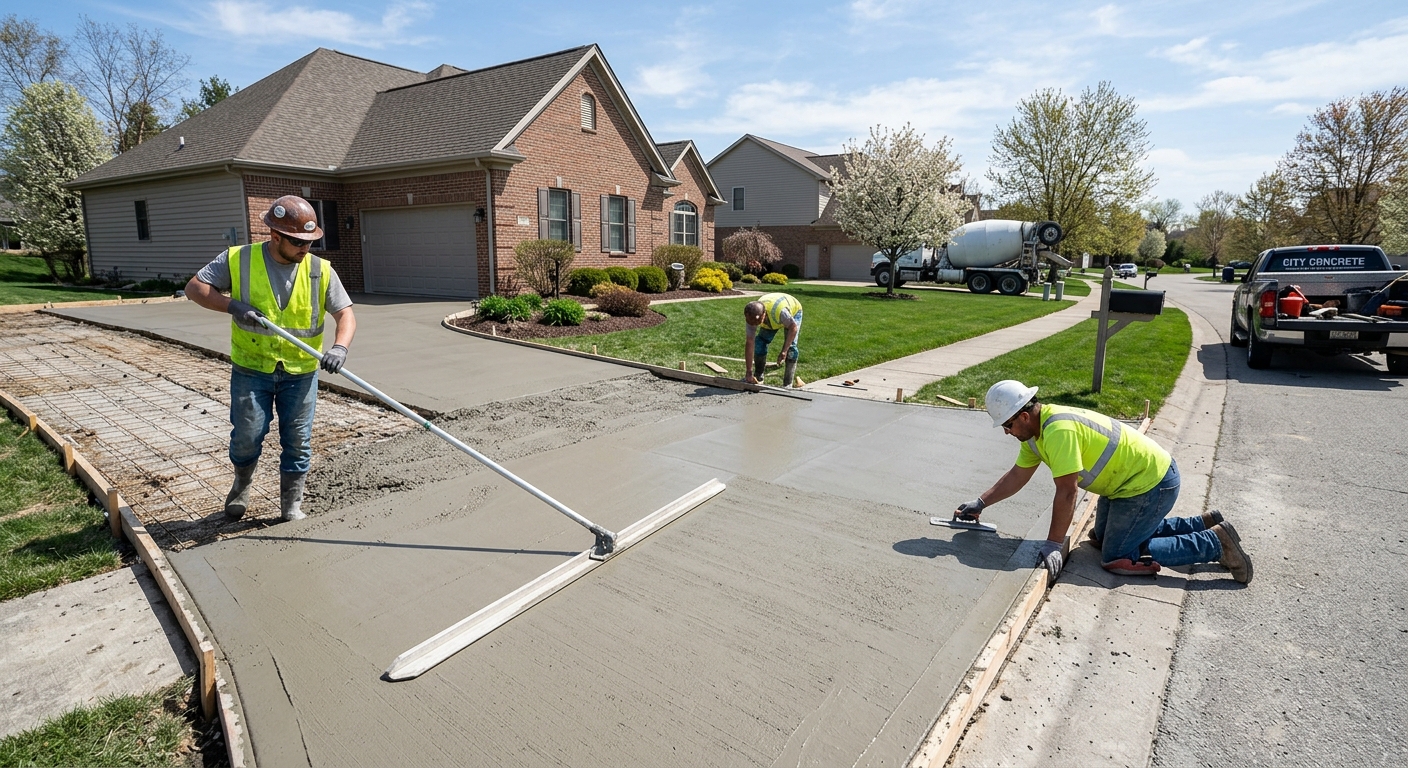
Concrete work options and costs in Victory Heights
In Victory Heights, British Columbia, homeowners typically choose concrete for driveways, patios, walkways, and structural foundations because it’s durable in our coastal-wet conditions and tolerant of the region’s freeze–thaw cycles when the mix and base are specified correctly. Victory Heights has a steady stream of single-detached homes, which is a major driver of demand for exterior flatwork and foundation work (Statistics Canada, 2021 Census). With a population of 4,186 (Statistics Canada, 2021 Census), the local contractor pool is smaller than the larger Vancouver markets—so scheduling and site access can affect turnaround times and labour pricing, especially when multiple crews are chasing the same “good weather” weeks.
In the Lower Mainland–Southwest, mild winters and a shallow frost line still matter. Local practice typically assumes frost depth around 450 mm / 18", so footings, piers, and thickened edges are set below frost to help prevent frost heave. At the same time, frequent freeze–thaw cycles, saturated soils, and heavy rainfall drive the cost of proper base prep, drainage detailing, and air-entrained mixes. You’ll often see these choices reflected in quotes for concrete driveway slabs (including control joints and curing time) versus decorative options like stamped or exposed aggregate. If you’re near the active residential pocket of the city—where people commonly add driveways, side-yard walkways, and patio extensions—concrete crews are particularly in demand during spring site prep and early fall scheduling.
Below is a realistic comparison of common options so you can benchmark quotes before you add specs, adjust sizing, or change finishes.
| Application |
Typical Size |
Key Spec |
Finish Option |
Price Range |
| Concrete driveway (standard broom finish) |
400–500 sq. ft. |
6" slab, compacted granular base, air-entrained concrete |
Broomed surface + control joints |
$7,200–$11,500 |
| Exposed aggregate driveway |
400–500 sq. ft. |
6" slab, polished/washed exposure, air-entrained concrete |
Exposed aggregate with curing plan |
$9,500–$15,500 |
| Stamped concrete driveway or patio |
300–450 sq. ft. |
4"–6" slab (as required), base prep + reinforcement, air-entrained mix |
Stamp pattern + release + sealer |
$8,000–$16,500 |
| Plain concrete patio or walkway |
200–350 sq. ft. |
4" slab, compacted granular base, control joints |
Float-and-trowel or broom finish |
$3,400–$8,900 |
| Garage floor (interior slab) |
450–650 sq. ft. |
4" slab, vapour/insulation as needed, reinforcement if specified |
Smooth trowel (light broom optional) |
$10,000–$18,500 |
| Foundation footings (structural, below frost) |
Varies by plan |
Footings below frost depth, excavation + forming + rebar |
Structural concrete (no decorative finish) |
$9,000–$19,500 |
Prices are estimates only and vary by project scope, site access and material selection.
What affects the price of concrete work in Victory Heights
In the Lower Mainland–Southwest, two quotes for the same-looking concrete job can differ by 30–50% because the “invisible” items—base prep, drainage, reinforcement, mix design, curing protection, and scheduling—are where costs really live. Concrete pricing is also seasonal. Even with milder winters, Victory Heights still sees freeze–thaw cycles that force contractors to build for durability. Local practice typically assumes a frost depth around 450 mm / 18", so footings and thickened edges must sit below design frost to avoid frost heave. That spec alone impacts excavation depth, forming height, and rebar placement.
Exterior slabs require air-entrained concrete so the mix can withstand repeated cycles and saturated soils without scaling and spalling. In colder regions of Canada, crews need a shorter pour season and sometimes cold-weather curing (heating, insulating blankets), which adds labour and equipment cost. De-icing salt in winter also speeds up surface wear, so sealing and proper cure timing matter for driveways and steps. In Victory Heights, the coastal-wet climate also means schedule risk: prolonged rain and high humidity can delay pours and extend curing protection—often translating into higher labour hours and overhead.
Here’s how local conditions move the numbers. A properly drained, compacted base can keep a plain patio near the patio band of $16–$26, while poor drainage or shallow subgrade often leads to thicker sections, extra reinforcement, or rework allowances. Likewise, upgrading from a standard broom driveway to exposed aggregate can land you closer to the $22–$36 stamped/decorative band because of extra material, finishing time, and sealer/curing attention. Finally, many Victory Heights homes are older renovations; when you tie new concrete into existing slopes or foundations, the demolition and disposal can swing costs by thousands.
| Price Factor |
Why It Matters |
Cost Impact |
| Frost line depth — determines footing depth and form height |
Footings must be placed below design frost to prevent frost heave. |
Higher excavation and forming cost if deeper digs are required by site soil. |
| Site preparation — excavation, grading, compacted granular base |
Drainage and compaction control settlement and cracking risk. |
Loose or wet subgrade increases time, granular import, and labour. |
| Reinforcement — rebar or wire mesh requirement |
Helps control cracking and improves slab performance under loads. |
Additional material and labour can add a notable premium, especially on driveways. |
| Mix design — air-entrainment and compressive strength spec |
Exterior air-entrainment supports freeze–thaw durability. |
Spec changes can raise material cost and may require more careful batching and placement. |
| Finish type — broom vs. stamped vs. exposed aggregate |
Decorative finishes add steps: stamps, washes/exposure, and colour/sealer systems. |
Stamped and exposed work typically costs materially more than broom-finished concrete. |
| Pour size and concrete truck access to site |
Access affects batching method and crew efficiency. |
Long driveway runs, tight gates, or hose placement can increase labour and risk. |
| Cold-weather curing precautions — heating and blankets |
Protects early strength gain during cool nights. |
Extra equipment and labour time during shoulder seasons. |
| Control joint pattern and sealing cost |
Joints direct shrinkage cracking; sealing helps repel de-icing salts. |
Better crack control and durability, but it adds materials and scheduled follow-up time. |
Permits & regulations in British Columbia
In British Columbia, structural concrete work—such as footings, foundation walls, grade beams, and any work that supports the building—generally requires a building permit. Municipalities often expect engineered drawings for foundation elements, and those details are reviewed before construction. For concrete flatwork like patios, walkways, and most driveways, permits are usually not required, unless the project affects lot grading, connects to the municipal right-of-way, or triggers impervious surface/servicing requirements. Because rules can vary by how your project impacts drainage and site servicing, it’s smart to confirm before breaking ground.
When hiring in Victory Heights (and across BC), verify three essentials: (1) contractor licensing/eligibility for the work, (2) liability insurance, and (3) workers’ coverage (WSIB/WCB or a valid equivalent arrangement, depending on the contractor’s structure). Step-by-step, you can check:
- Licence/qualification: search the BC contractor/registration information relevant to the business type and review the status.
- Certificate of Insurance (COI): request a current COI and confirm the stated coverage limits are appropriate for concrete and excavation activities.
- Workers’ coverage: ask for WSIB/WCB clearance/coverage documentation (or proof of comparable coverage where applicable).
- References: request recent photos or references for similar-sized driveways/patios in wet/coastal conditions and ask about finish and cracking performance after winter.
If structural work is proposed, ask for permit numbers and the engineered drawings scope—so your contractor isn’t guessing at frost-depth or reinforcement requirements.
Getting concrete right in Victory Heights's freeze-thaw climate
In Victory Heights, concrete failures most often come from insufficient base preparation, poor drainage, and—and this is the big one—concrete that isn’t properly air-entrained. With our coastal-wet conditions and freeze–thaw cycles, water gets into small voids and pores, then expands when temperatures dip. That pressure leads to scaling and spalling, especially on exterior slabs like driveways, steps, and patio edges. To spec the job correctly, treat the project like a system: base, mix, joints, cure, and protection.
(1) Base preparation: plan compacted granular sub-base to the right depth for the local soil and frost exposure. In practice, that means keeping the bottom of footings and thickened edges below the ~450 mm / 18" local frost depth assumption (with design adjustments based on your site). (2) Mix design: require air-entrained concrete—typically 5–7% air content for exterior flatwork—and a minimum 32 MPa compressive strength for the slab/application. (3) Control joints: install a deliberate joint spacing plan so shrinkage cracking happens where it’s intended, not randomly. (4) Curing: plan for at least 7 days of curing under proper conditions; in cool, humid weather, cure protection can extend the timeline. (5) Sealing: apply a penetrating sealer after the slab has cured (commonly after 28 days) to help repel de-icing salt.
Ask contractors how they’ll manage rain and cool nights during curing. As a dollar example: choosing a correctly air-entrained mix and proper base drainage can add a few hundred to $1,500 to a driveway estimate, but it’s usually justified compared with the cost of premature surface scaling or re-leveling within a few winters—costs that can easily exceed the upfront savings. Decorative finishes (like stamped or exposed aggregate) add more labour, but durability still depends on the same core specs.
| Spec |
Why It Matters in Victory Heights |
What to Ask For |
Impact if Skipped |
| Compacted granular base (depth?) |
Controls settlement and supports drainage against freeze–thaw pressure. |
Specify compacted granular thickness and grading/drainage approach for your soil conditions. |
Voids and pumping lead to cracking, rocking slabs, and faster deterioration. |
| Air-entrained concrete mix (target air %?) |
Provides durability when water repeatedly freezes in exterior slabs. |
Request air-entrainment target (commonly 5–7% for exterior flatwork) and confirm it in the mix design. |
Spalling and scaling increase significantly in wet, freeze–thaw climates. |
| Compressive strength (MPa rating) |
Ensures enough strength development for service loads and surface performance. |
Specify minimum 32 MPa compressive strength for the slab/application. |
Reduced strength gain increases surface wear and early cracking risk. |
| Control joints (spacing per ACI guidelines) |
Limits random cracking caused by shrinkage and temperature changes. |
Ask for the control joint spacing plan and alignment with slab geometry. |
Random cracks can reduce traction, invite water ingress, and shorten lifespan. |
| Minimum 7-day curing period |
Cool nights and high humidity make early curing conditions critical. |
Confirm curing method and weather allowances; protect the slab during cold/cool periods. |
Surface weakness, dusting, and poor durability are more likely. |
| Penetrating sealer (when applied after cure) |
Helps repel salt and water that accelerate surface breakdown. |
Ask when sealer is applied (often after full cure window, commonly 28 days) and product type. |
Faster deterioration, staining, and higher maintenance costs. |
How to choose a concrete work contractor in Victory Heights
Choosing the right contractor in Victory Heights is mostly about verification and clarity. In British Columbia, start by checking the contractor’s eligibility for the work, then confirm insurance and workers’ coverage before you sign anything. For licensing/qualification, use the relevant BC registry/search tools for the company and verify they are in good standing. For liability insurance, ask for a current certificate of insurance and ensure the COI reflects job-related risks (concrete work often involves excavation, saw-cutting, and heavy equipment). For workers’ coverage, request proof of WSIB/WCB coverage or a clearance document where applicable.
Next, get 2–3 itemised written quotes rather than a lump sum. You want a labour/materials split that shows what’s included: excavation and disposal, granular base thickness, reinforcement (if any), concrete mix spec (air-entrainment and strength), finishing steps, joint layout, curing/protection plan, and sealing. Also ask about exclusions like site access charges, removal of trees/roots, or reinstatement of damaged sod/landscaping.
Finally, treat warranty and schedule as deliverables. Ask for a workmanship warranty length and whether it covers cracking, spalling, or joint-related issues. Clarify manufacturer product warranties (for sealers/adhesives) and whether they’re transferable. Payment should be conservative: never pay more than 10–15% upfront; hold back a meaningful portion until forms are removed, surfaces are cured, and final cleanup is complete. Get the start date and an estimated completion window in writing—especially in the Lower Mainland–Southwest where rain can impact curing and re-scheduling can change labour availability.
- Verify BC eligibility/status for the company before signing.
- Confirm liability insurance with adequate limits (request the COI).
- Confirm WSIB/WCB or equivalent workers’ coverage documentation.
- Ask for a mix design summary: air-entrainment and target compressive strength.
- Insist on base prep details: granular depth, grading, and compaction method.
- Get reinforcement specifics: rebar size/pattern or mesh type, if required.
- Review joint plan: spacing, layout, and saw-cut timing.
- Confirm curing plan for cool nights/high humidity (blankets/sealer timeline).
- Ask whether sealing is included and exactly when it’s applied (after cure).
- Ensure disposal/haul-away is included (or clearly excluded).
- Confirm truck access strategy and any added costs for hose placement.
- Clarify warranty terms in writing, including what’s covered and how claims are handled.
Concrete red flags in Victory Heights include quotes that omit air-entrainment details, “thin slab” pricing that ignores frost exposure and base depth, no mention of control joints, contractors asking for large upfront payments, and schedules that don’t account for rain/curing protection in the Lower Mainland–Southwest.
Frequently asked questions — concrete work in Victory Heights
When is the best time to pour concrete in Victory Heights?
In Victory Heights, the best results usually come during late spring through early fall when temperatures stay more consistent and crews can control curing conditions. Even though we have milder winters than much of BC’s interior, the Lower Mainland–Southwest still sees freeze–thaw cycles, plus frequent rain that can delay placement and slow early strength gain. That’s why contractors often target forecasted dry windows and plan curing protection for cool nights. If you’re comparing quotes, ask whether the contractor includes curing blankets and weather contingency. For budgeting, timing matters because shoulder-season pours can push labour and equipment costs up—while a well-planned summer pour may keep your project closer to typical driveway bands like $18–$28 per square foot.
How long does concrete take to cure?
Concrete curing is not just one date. For most flatwork in British Columbia, crews plan at least 7 days of curing under proper conditions for early strength, but surface and durability performance improves as the concrete continues to cure. Many contractors schedule sealing (especially for exterior slabs) after a full cure window, commonly around 28 days, so the sealer bonds properly and helps repel de-icing salts. If your project is in Victory Heights and is exposed to wet coastal humidity, curing may require additional protection to keep temperatures and moisture stable. When you request your quote, ask for the curing method, what weather triggers extra protection, and whether the plan includes blankets, covers, or curing compound.
Do I need a permit for concrete work in British Columbia?
In British Columbia, permits are commonly required for structural concrete such as footings, foundation walls, and grade beams because these elements support the building. For concrete flatwork—like patios, walkways, and most driveways—permits are often not required unless your work affects lot grading, impervious surface coverage limits, drainage servicing, or impacts municipal right-of-way areas. In Victory Heights, drainage and how your slab ties into existing grades are key considerations, so confirm with the local authority if your scope changes slopes or directs water. Before work starts, ask your contractor what parts of the project require permits, whether they will handle the paperwork, and request the permit number/clear confirmation in writing.
Concrete vs pavers for a patio in Victory Heights?
Concrete often wins when you want a smooth, consistent surface with fewer joints and faster installation, while pavers can be attractive when you need easier future repairs or want a more “modular” look. In Victory Heights’ freeze–thaw and wet climate, pavers can shift if the base isn’t compacted correctly, and weeds/infiltration can appear around joints over time. Concrete with proper base prep, air-entrained mix, and correctly planned control joints typically performs well when sealed after cure. Cost-wise, plain patio concrete often fits within the $16–$26 band, while decorative concrete (stamped) tends to cost more—sometimes closer to $22–$36—yet it provides a uniform surface. For an accurate comparison, insist both options include the same base thickness, drainage plan, and joint/sealing strategy.
How long does a concrete driveway last?
A well-built concrete driveway in Victory Heights can last decades, but lifespan depends heavily on specs and maintenance. In our Lower Mainland–Southwest freeze–thaw environment, air-entrainment, proper base compaction, drainage, and correct joint layout are what keep the surface from scaling and spalling. Sealing after the curing period (often around 28 days) helps repel de-icing salts and reduces water absorption. If you’re budgeting, decorative work is priced higher—stamped concrete may fall into the $22–$36 range—so discuss durability and sealing schedules rather than just appearance. If a contractor is vague about mix design or control joints, treat it as a risk signal because those items directly affect how long the driveway stays strong through repeated wet/cold cycles.
What is air-entrained concrete and why does it matter here?
Air-entrained concrete is a mix designed to include tiny, evenly distributed air bubbles that act like pressure relief valves when water freezes inside the concrete. In Victory Heights and across the Lower Mainland–Southwest, exterior slabs are regularly exposed to saturation from coastal rain and then freezing temperatures during cold spells. That freeze–thaw cycling can damage concrete that isn’t air-entrained. When the air system is correct, the concrete is far more resistant to scaling and spalling, which are common exterior surface failures. In practical terms, ask your contractor to confirm a target air content (often 5–7% for exterior flatwork) and a minimum compressive strength (commonly 32 MPa for many slabs). This is one of the biggest differences between an “acceptable” quote and a driveway that holds up after several winters.