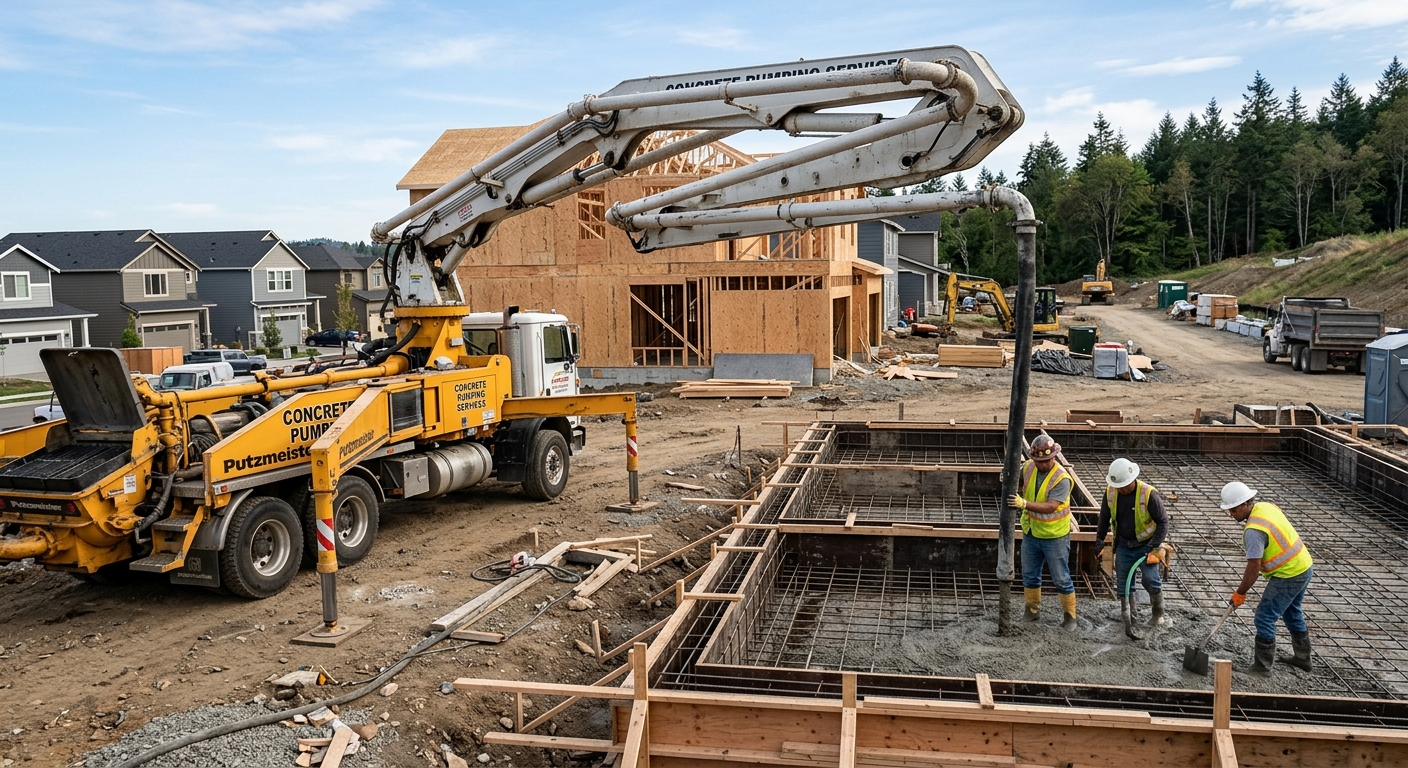
Concrete work options and costs in Cariboo
Concrete work in Cariboo is a practical choice because it’s durable, low-maintenance, and it holds up well when it’s built to manage freeze–thaw cycles and wet soil conditions. The local housing mix matters too: in the Cariboo area, a large share of households live in single-detached homes, which drives steady demand for driveways, patios, walkways, and garage slabs. With a population of 22,780 (Statistics Canada, 2021 Census), the market is not “big city fast,” so scheduling and crew availability can affect lead times and pricing—especially during spring work windows.
In the Lower Mainland–Southwest, pricing is shaped by a shallow but meaningful frost depth (commonly planned around about 450 mm / 18") and by how often we get freeze–thaw transitions plus long rainy stretches. Even when winters feel mild, saturated base soils and curb/edge details still need proper drainage, air-entrained concrete, and control joints to control cracking and prevent scaling. That’s why a driveway built for Vancouver–Surrey–Abbotsford practices often costs differently than one done with minimal base prep. If you’re in a high-demand area like 100 Mile House, schedules can tighten in peak pour season, and site access (driveway width, slope, and how far trucks must travel) can move your estimate.
To compare apples to apples, use the table below as a starting point for typical sizes and specs—then refine with an on-site measure and your finish preference.
| Application |
Typical Size |
Key Spec |
Finish Option |
Price Range |
| Concrete driveway (standard broom finish) |
300 sq ft (about 28' x 10') |
Air-entrained exterior mix, reinforced base, control joints |
Broom finish |
$18,000–$28,000 |
| Exposed aggregate driveway |
300 sq ft (about 28' x 10') |
Air-entrained mix, proper curing and sealing readiness |
Exposed aggregate |
$22,000–$32,000 |
| Stamped concrete driveway or patio |
250 sq ft (about 25' x 10') |
Air-entrained mix, integral colour or stain-ready system |
Stamped (wood/stone pattern) |
$22,000–$36,000 |
| Plain concrete patio or walkway |
200 sq ft (about 20' x 10') |
Compact base, control joints, exterior air-entrained mix |
Float & broom (or broom-free options) |
$3,200–$5,200 |
| Garage floor (interior slab) |
480 sq ft (about 24' x 20') |
Reinforced slab, vapour considerations, mixed for strength |
Float finish (optional sealer) |
$10,500–$16,500 |
| Foundation footings (structural, below frost) |
Varies by house |
Excavation, formwork, rebar cage, pour below design frost |
Structural concrete |
$200–$350 |
Prices are estimates only and vary by project scope, site access and material selection.
What affects the price of concrete work in Cariboo
In Cariboo (and across British Columbia), you can see the same “size” concrete project priced 30–50% apart because the quoted scope often changes: excavation depth, granular base thickness, reinforcement type, concrete mix design, curing measures, and even how far the crew must haul materials. In the Lower Mainland–Southwest, contractors are used to planning around freeze–thaw cycles and frequent rainfall, so exterior concrete typically includes air-entrained mixes, correct jointing, and curing steps that protect surface durability. Inland or colder-season jobs can push costs higher by shortening the pour season and requiring cold-weather precautions like insulation blankets and mix temperature controls.
Frost depth matters because footings and thickened edges must extend below the design frost line to prevent frost heave. In coastal BC, the typical design frost depth is often around 0.5–1.2 m, but in practice we still design below that zone—meaning excavation, form height, and rebar tying can be non-trivial. Exterior slabs also need air-entrained concrete to handle repeated freeze–thaw events; without it, you’ll often see spalling and surface scaling. De-icing salt adds another layer: it accelerates deterioration, so sealing is commonly scheduled for driveways and patios (usually after full cure).
In Cariboo, two common cost drivers that raise your estimate are wet subgrade (requiring extra drainage/granular build-up) and constrained access (more labour and time for moving forms and pump/finish tools). Conversely, projects with straightforward, level sites and simpler finishes can land closer to the lower end of the bands—like a plain patio that stays nearer the $16–$26/sq ft concept—while stamped or exposed options climb because colour systems, texturing, and extra finishing time are baked into the labour and materials. If your home is older and has settled or previously cracked concrete, removal and disposal can also add real dollars before we even start building the new slab.
| Price Factor |
Why It Matters |
Cost Impact |
| Frost line depth — determines footing depth and form height |
Footings must sit below the frost zone to prevent heave |
Higher excavation and taller forms can add significant labour |
| Site preparation — excavation, grading, compacted granular base |
Proper base compaction reduces settlement and pumping |
Wet or soft soils increase granular depth and equipment time |
| Reinforcement — rebar or wire mesh requirement |
Controls cracking and supports slab performance |
More steel, chairs, and placement labour increases cost |
| Mix design — air-entrainment and compressive strength spec |
Exterior freeze–thaw durability depends on correct air content |
Higher-spec mix and batching can raise material costs |
| Finish type — broom vs. stamped vs. exposed aggregate |
Finishes require different timing, tools, and labour |
Stamped/exposed typically adds days of extra finishing work |
| Pour size and concrete truck access to site |
Smaller access or long carries slow crews and add handling |
May require pump/extra labour or reduce pour efficiency |
| Cold-weather curing precautions — heating and blankets |
Concrete strength gain must be protected early |
Blankets/heating and schedule holds add overhead |
| Control joint pattern and sealing cost |
Joints manage cracking; sealing protects from salt and scaling |
Joint layout and sealer materials add line-item cost |
Permits & regulations in British Columbia
In British Columbia, the rule of thumb is: structural concrete work usually needs more oversight than flatwork. Concrete flatwork like patios, walkways, and driveways often does not require a permit, as long as it doesn’t materially change lot grading, affect drainage, or increase impervious surface coverage beyond municipal limits. However, concrete that forms part of a foundation system—such as footings, foundation walls, and grade beams—typically requires a building permit and, in many cases, engineered drawings reviewed by the municipality.
Step one for a homeowner in Cariboo is to call or check your municipality’s building department before excavation. Ask specifically whether your proposal triggers a permit for “foundation/structural” or “grading/drainage” impacts. Step two is to verify the contractor: confirm they carry current general liability insurance and provide a certificate of insurance showing your job location. Step three is worker coverage: ensure they have the required provincial coverage for workers (commonly referred to as WCB/Workers’ Compensation coverage). Step four is experience matching scope—ask for references on similar-size driveways, patios, and any recent foundation work in your region.
For licence verification, use the appropriate online resources provided for trades in BC and compare the contractor’s listed business name to the invoice and contract. A reputable contractor will provide proof documents up front, not after work begins.
Getting concrete right in Cariboo's freeze-thaw climate
Concrete fails in Cariboo when the base isn’t built to handle moisture and freeze–thaw movement, when the mix isn’t designed for exterior durability, or when curing is rushed during cool, wet periods. In the Lower Mainland–Southwest market, we plan for freeze–thaw cycles plus saturated soils, and we treat edges, joints, and drainage as “structural,” not cosmetic. The correct spec starts with a compacted granular sub-base sized to local soil conditions and frost considerations, so the slab doesn’t pump or settle.
Next is mix design. For exterior flatwork, air-entrainment is critical—commonly targeting about 5–7% air content—and the mix should meet at least 32 MPa compressive strength for durability and strength gain. Control joints then guide cracking to predictable lines. Spacing depends on slab geometry and thickness, but the goal is to avoid random cracks that allow water into the slab and worsen freeze–thaw damage. Curing should be protected for at least 7 days under appropriate conditions; when the weather is cool or damp, we use curing blankets and careful scheduling so the surface doesn’t dry too fast or freeze early. Finally, apply a penetrating sealer after the slab cures (often around 28 days) so de-icing salts and moisture are less able to attack the surface.
Here’s a practical dollar example: if one quote is $1,000–$2,000 cheaper because it “skips” proper air-entrainment or reduces base thickness, the savings often doesn’t cover the cost of replacement when spalling and scaling appear the first winter or two. A correctly air-entrained broom-finished driveway may start around the driveway price band, while failures create a much more expensive do-over.
| Spec |
Why It Matters in Cariboo |
What to Ask For |
Impact if Skipped |
| Compacted granular base (depth?) |
Manages moisture and reduces frost-related movement under the slab |
Confirm granular thickness, compaction method, and drainage provisions |
Settlement, cracking, and pumping; faster deterioration of the surface |
| Air-entrained concrete mix (target air %?) |
Provides freeze–thaw durability and reduces scaling/spalling risk |
Ask for air content target (typically 5–7% for exterior flatwork) |
Spalling and scaling, especially on driveways exposed to salt |
| Compressive strength (MPa rating) |
Ensures strength gain for structural performance and surface durability |
Ask for minimum 32 MPa (or project-specific specification) |
Lower durability and weaker early strength leading to surface damage |
| Control joints (spacing per ACI guidelines) |
Controls where cracks develop so they don’t become random pathways |
Ask for planned joint spacing based on slab size/thickness |
Random cracking, water ingress, and accelerated freeze–thaw damage |
| Minimum 7-day curing period |
Cold/wet periods can slow strength gain and weaken the surface |
Ask how they’ll protect curing (blankets, temperature management) |
Surface softening, reduced durability, and higher risk of scaling |
| Penetrating sealer (when applied after cure) |
Repels moisture and de-icing salt to protect from scaling |
Ask for sealer type and timing (commonly after 28 days cure) |
Faster surface wear and staining; salt accelerates deterioration |
How to choose a concrete work contractor in Cariboo
Choosing a concrete contractor in Cariboo is mostly about proof, process, and clarity—not just price. First, verify the contractor’s British Columbia coverage and documentation. Ask for a certificate of insurance for general liability and ensure the certificate lists the correct legal business name and project address. Next, confirm worker coverage for the company’s employees (WCB coverage). Then, check contractor licensing status using the correct provincial online registry tools for the trade/business type—match the name on the quote, invoice, and insurance to what’s registered.
Second, request 2–3 itemised written quotes. You want a breakdown that separates labour and materials (concrete supply, rebar/wire mesh, forms, excavation/granular, disposal, and finishes). Avoid “one-line” quotes that don’t specify air-entrained mix, jointing, or curing steps. Third, read the scope carefully: what’s excluded (removal of old concrete, hauling/disposal, saw-cutting, permit pulls, drainage repairs)? For many driveways in this region, drainage changes are what make or break the slab longevity.
Fourth, check warranty. Ask for workmanship warranty length, whether the warranty covers labour only or labour plus materials, and whether it’s transferable if you sell the home. Fifth, payment schedule matters: never pay more than about 10–15% upfront. Hold back funds until the job is complete and the finish and sealing responsibilities are addressed. Finally, insist on a start date and completion estimate in writing, since rain and cool nights can shift pour/curing timing in British Columbia.
- Provide proof of general liability insurance (certificate of insurance) before signing.
- Provide proof of worker coverage (WCB) for employees.
- Confirm the trade/business name on the quote matches the insured company.
- Request a written scope listing excavation depth, granular base, and compaction method.
- Ask for confirmation that the mix is air-entrained for exterior work.
- Ask what reinforcement is used (rebar size/layout, wire mesh grade) and why.
- Get the control joint plan (spacing and where they’ll cut).
- Ask how curing will be protected for at least 7 days (blankets/sealer timing).
- Confirm whether disposal/hauling of old concrete is included or extra.
- Confirm whether sealing is included and when it will be applied (after cure).
- Get pricing itemised by labour vs materials (not just a total).
- Use a contract with a payment schedule (limit upfront; hold back until acceptance).
Concrete red flags in Cariboo: contractors who won’t state the air-entrainment and jointing plan, quotes that reduce base thickness “to save money,” no discussion of curing protection in cool/rainy periods, missing insurance/WCB documents, and vague warranties that don’t specify what’s covered.
Frequently asked questions — concrete work in Cariboo
Do I need a permit for concrete work in British Columbia?
In British Columbia, it depends on what you’re building. Concrete flatwork such as patios, walkways, and many standard driveways often does not require a permit if it doesn’t change lot grading, drainage, or exceed municipal impervious surface limits. In Cariboo, the key is whether your project impacts runoff direction, soil settlement, or any right-of-way concerns—those are the situations that can trigger review. Structural concrete work—think footings, foundation walls, and grade beams—typically does require a building permit and may need engineered drawings reviewed by the municipality. The safest approach is to call your local building department before excavation and ask what applies to your exact scope (including any drainage modifications).
Concrete vs pavers for a patio in Cariboo?
Concrete and pavers can both work in Cariboo, but concrete usually wins on longevity when it’s built for freeze–thaw and wet soil conditions. With concrete, the slab needs air-entrained mix, proper granular base, and control joints so cracking is controlled rather than random. Pavers can be excellent too, but they rely heavily on base compaction, sand bedding consistency, and drainage—if water collects under the system, freeze–thaw can lift or shift units. Pricing often reflects build quality: a plain concrete patio may land in the $16–$26/sq ft concept, while pavers can vary widely based on thickness, pattern, and the amount of leveling work required. If your site is sloped or has drainage challenges, ask both bidders how they will address water management before choosing.
How long does a concrete driveway last?
A well-built concrete driveway in British Columbia often lasts 20–30 years, sometimes longer, but it depends on the details. In Cariboo’s freeze–thaw climate, longevity hinges on a properly compacted base, correct air-entrainment for exterior durability, adequate control joints, and curing that reaches design strength under safe temperatures. If the driveway is exposed to de-icing salt, sealing can matter—typically done after full cure (commonly around 28 days) so moisture and salts are repelled rather than absorbed. Budget drives the decision: you might see standard broom-finish driveway work priced in the $18–$28 band concept; if the low end comes from cutting base depth or skipping air-entrainment, you may pay earlier through cracking, scaling, or spalling. The cheapest short-term option often becomes the most expensive replacement.
What is air-entrained concrete and why does it matter here?
Air-entrained concrete is mixed with tiny, stable air bubbles that provide room for water to expand when it freezes. That’s exactly what you want in Cariboo and throughout British Columbia where freeze–thaw cycles and wet soils can repeatedly saturate concrete surfaces and edges. Without adequate air, water freezing inside the paste can cause spalling and scaling, especially on exterior slabs and driveways where de-icing salts are used. For exterior flatwork, ask specifically for air content (often targeted at about 5–7%) and that the mix meets the required compressive strength for durability. This is a spec detail—not a finish—and it’s one of the most common reasons homeowners see early damage even when the surface initially looks fine.
How do I prepare the base for a concrete slab?
Base preparation is where concrete projects are won or lost in Cariboo. The contractor should excavate to the required depth, remove unsuitable material, and shape the grade so water drains properly. Then they place compacted granular—graded stone—and compact it in lifts to achieve the density needed to support the slab without settlement or pumping. For exterior work, drainage and moisture control matter as much as frost protection; saturated subgrade can lead to freeze–thaw movement at slab edges and under thickened sections. When reviewing quotes, ask for the granular base depth, the compaction method, and whether they’re adding drainage provisions for your soil conditions. Also ask how they handle existing material—topsoil and soft spots must be addressed, not simply covered.
How do I compare concrete quotes?
To compare concrete quotes in Cariboo, don’t compare totals alone—compare scope. Ask for itemised written quotes that separate labour and materials, and confirm what’s included for excavation, granular base, reinforcement (rebar or mesh), concrete mix design (including air-entrainment for exterior), control joints, curing protection, and sealing. Ensure the quote specifies finish type (broom vs stamped vs exposed aggregate) because labour and timing vary a lot. Look for allowances: is disposal included if there’s old concrete removal? Is permit pulling included if your scope is structural? A driveway quote that lands at the low end of the $18–$28 band concept may still be reasonable if it’s built to spec, but it becomes risky if air-entrainment, base prep, or curing are not clearly addressed. When in doubt, ask for a written schedule and the exact thicknesses and joint spacing.