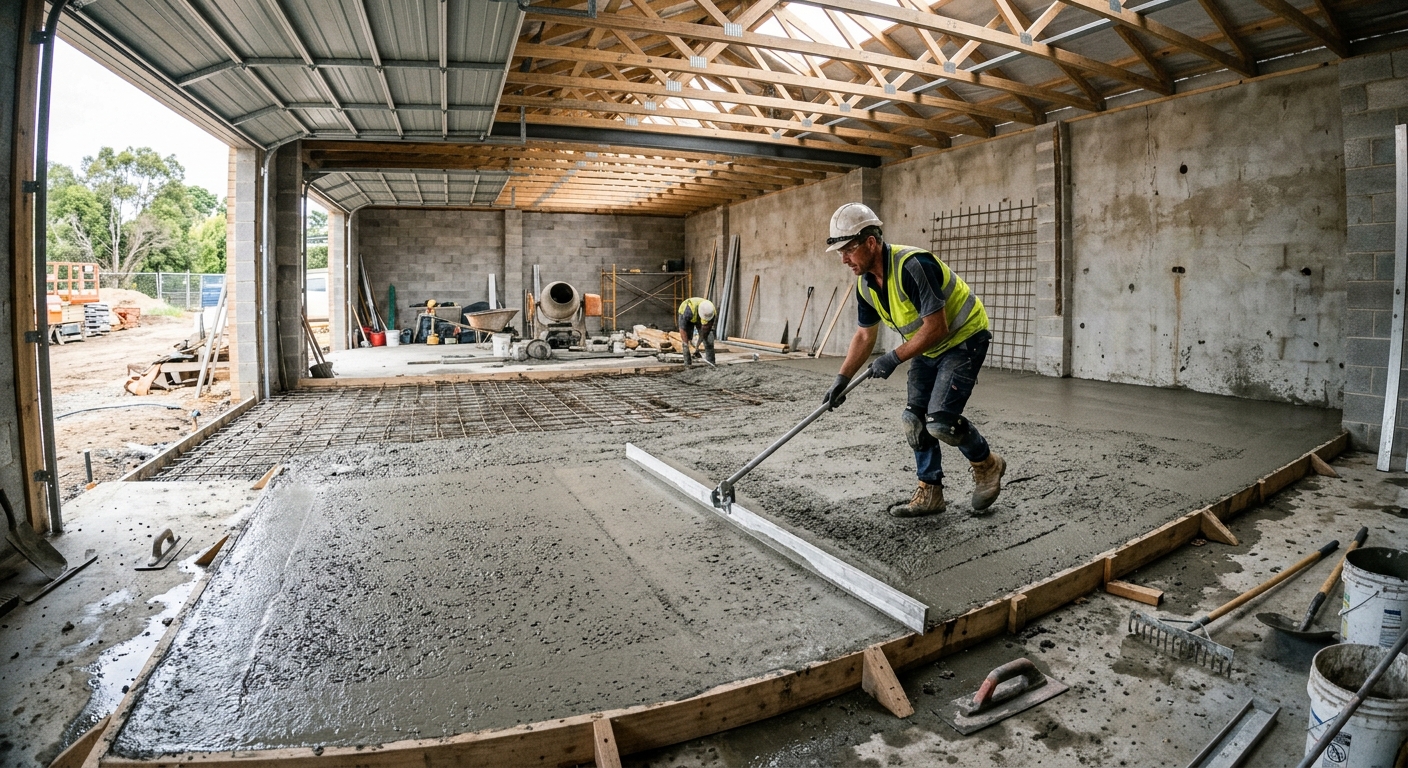
Concrete work options and costs in Coquitlam
Concrete work in Coquitlam ranges from practical, everyday flatwork to high-end finishes that can significantly change curb appeal. In a city where single-detached houses account for 35.2% of dwellings and homeowner households make up 69.3% of households (Statistics Canada, 2021 Census), demand for driveways, patios, and garage slabs is steady year-round. The Lower Mainland–Southwest market also has a strong “replacement” cycle—many older homes (29.6% built before 1981) are due for upgraded walkways, reworked edges, and resurfacing-style replacements.
Pricing is shaped less by “how mild it feels” and more by the realities of our coastal-wet conditions: frequent freeze–thaw cycles, saturated soils, and heavy rainfall that can delay excavation and slow curing. Even though the design frost depth used by local practice is typically around 450 mm / 18", footings and thickened edges still need to sit below that frost zone to manage heave risk. That drives base prep requirements, drainage detailing, and the need for air-entrained mixes for exterior slabs.
Labour availability also matters. In busy pockets such as Central Coquitlam, trades often get scheduled ahead of routine residential projects because tight access (driveways, slopes, retaining walls, and tree protection) increases setup time. If you’re comparing options, it helps to look at finish complexity and structural requirements side-by-side, which is what the table below summarizes for common Coquitlam applications.
| Application |
Typical Size |
Key Spec |
Finish Option |
Price Range |
| Concrete driveway (standard broom finish) |
300–400 sq. ft. |
Air-entrained exterior mix, granular base, control joints |
Broom finish |
$6,500 – $11,000 |
| Exposed aggregate driveway |
300–400 sq. ft. |
Air-entrained exterior mix, specialty surface retarding/wash |
Exposed aggregate |
$8,500 – $13,500 |
| Stamped concrete driveway or patio |
250–450 sq. ft. |
Stamped system, proper base and release, jointing plan |
Stamped (pattern + colour) |
$9,000 – $16,000 |
| Plain concrete patio or walkway |
200–350 sq. ft. |
Air-entrained exterior mix, compacted granular base |
Plain broom/smooth trowel edge |
$3,500 – $7,500 |
| Garage floor (interior slab) |
400–700 sq. ft. |
Vapour barrier (if required), base prep, thickened edges as needed |
Plain trowel/finish |
$6,500 – $14,000 |
| Foundation footings (structural, below frost) |
Varies by design |
Concrete below design frost, formed excavation, rebar per engineer |
Structural concrete |
$200 – $350 |
Prices are estimates only and vary by project scope, site access and material selection.
What affects the price of concrete work in Coquitlam
The same concrete “look” can cost very different totals across the Lower Mainland–Southwest region because our site work and durability specifications are driven by climate and soil, not just the thickness of concrete. It’s common to see a 30–50% spread between quotes for what homeowners describe as “the same driveway,” especially when one bid includes proper drainage and frost-aware base preparation and another does not. In British Columbia, contractors also price risk: rain delays, truck access, and how long we can safely cure to achieve durability.
Frost line depth and freeze–thaw cycles dictate every exterior spec in this region. In colder provinces, footings are typically set deeper and crews need cold-weather methods; in coastal BC we still plan around a frost depth of about 450 mm / 18", but footings and thickened edges must extend below that frost zone to prevent freeze–thaw heave. Exterior slabs also require air-entrained concrete so the paste can tolerate cycling. If de-icing salts later hit the surface (common on driveways), sealing becomes important; poorly sealed concrete tends to spall sooner, which can shorten the useful life and create early replacement costs.
Here in Coquitlam, pricing can move up or down based on a few real-world examples. A sloped lot near Prairie Avenue area often needs more excavation and retaining edging, which pushes totals toward the higher end of patio-style pricing (for example, plain patios commonly land around $16–$26 per sq. ft. in this market band). Conversely, a flat, well-draining site with straightforward access can keep standard work closer to the lower end of the concrete driveway band ($18–$28 per sq. ft.). If your home is older (built before 1981), you’ll often see undersized drainage or older base—those repairs can add thousands even if the concrete thickness stays the same.
| Price Factor |
Why It Matters |
Cost Impact |
| Frost line depth — determines footing depth and form height |
Exterior stability depends on concrete sitting below the frost-affected zone |
Higher excavation and concrete volume for below-frost work |
| Site preparation — excavation, grading, compacted granular base |
Proper base reduces settlement and controls moisture around the slab |
Can add or subtract major labour days depending on soil/grade |
| Reinforcement — rebar or wire mesh requirement |
Helps control cracking and improves load capacity for driveways/garage slabs |
Material cost plus additional labour for tying/chairs |
| Mix design — air-entrainment and compressive strength spec |
Air-entrainment helps concrete resist freeze–thaw damage |
Often modest per-yard change, but required for exterior durability |
| Finish type — broom vs. stamped vs. exposed aggregate |
Complex finishes require extra labour, timing, and sometimes specialized materials |
Stamped/exposed typically increases cost materially |
| Pour size and concrete truck access to site |
Long hose runs, tight turns, and staging constraints slow production |
Extra crew time and sometimes extra equipment |
| Cold-weather curing precautions — heating and blankets |
Cool nights and high humidity can slow strength gain |
Heating/blankets and extended schedule increase labour and overhead |
| Control joint pattern and sealing cost |
Jointing manages shrinkage cracks; sealing improves resistance to salts and water |
Added material and labour; can reduce early surface failure |
Permits & regulations in British Columbia
In British Columbia, whether you need a permit depends on what concrete work you’re doing. Structural concrete work—such as footings, foundation walls, grade beams, and other load-bearing elements—requires a building permit and is often tied to engineered drawings that the municipality reviews. For these, the permit helps ensure the structural sizing, reinforcement, and construction details match the design and local requirements.
Concrete flatwork (driveways, patios, and walkways) typically does not require a permit unless it affects lot grading, drainage, or triggers municipal review related to impervious surface coverage limits or right-of-way conditions. Even when a permit isn’t required for the slab itself, your project may still require approvals if it changes how water flows to the street, impacts existing drainage, or alters access within a municipal area.
For any Coquitlam project, verify your contractor is properly covered before breaking ground. Step-by-step:
- Ask for their certificate of insurance (liability) and confirm the coverage limits and effective dates.
- Request evidence of worker coverage (WSIB/WCB) where applicable and confirm it matches the contractor’s legal name.
- Check their professional licence/registration status through the appropriate BC registry/channel they provide (and verify it aligns with the company name on the quote).
- Confirm they have experience with similar-scale exterior work (air-entrained mixes, jointing, drainage base), not just interior slabs.
- Look for references from projects completed within the last few seasons in the Lower Mainland–Southwest area.
When in doubt, ask the municipality directly or have your contractor confirm the permit path in writing.
Getting concrete right in Coquitlam's freeze-thaw climate
Concrete problems in Coquitlam usually start long before the surface looks “wrong.” In our Lower Mainland–Southwest climate, the failure mode homeowners notice most is spalling—small pops and scaling—driven by freeze–thaw cycling, water infiltration, and de-icing salts. The fix is correct specification: build a stable, well-drained base; use the right mix; design jointing; and give the concrete time to cure.
1) Base preparation: use compacted granular sub-base to the correct depth for local soil conditions and frost-aware design. If the base is soft or waterlogged, concrete can settle or pump fines, creating pathways for moisture.
2) Mix design: for exterior flatwork, require air-entrained concrete (commonly 5–7% air content) and a minimum 32 MPa compressive strength specification for durability.
3) Control joints: plan joint spacing so shrinkage cracks form where you want them, not randomly. (Typical industry guidance for slabs is based on thickness and restraint conditions.)
4) Curing: protect and cure for a minimum 7 days under appropriate conditions. In cool, humid weather, curing blankets or supplemental measures may be necessary so you reach strength safely.
5) Sealing: apply a penetrating sealer after the cure period—often around 28 days—to help repel salt and reduce water uptake.
Ask bidders specifically how they’ll address air-entrainment and drainage. For example, a broom-finished driveway might land in the $18–$28 per sq. ft. band; upgrading to exposed aggregate or adding a higher-spec base and sealing plan can cost more, but that spend is justified if it prevents early spalling and edge deterioration.
| Spec |
Why It Matters in Coquitlam |
What to Ask For |
Impact if Skipped |
| Compacted granular base (depth?) |
Reduces settlement and limits water pooling under the slab during wet periods |
Granular type, compacted lifts, and target base depth for your soil/grade |
Uneven surface, cracking at weak spots, and faster freeze–thaw damage |
| Air-entrained concrete mix (target air %?) |
Air voids help concrete tolerate freeze–thaw cycling common in the Lower Mainland |
Documented air content (ask for target range like 5–7% for exterior) |
Higher risk of surface scaling and spalling after winters |
| Compressive strength (MPa rating) |
Strength gain supports durability and resistance to wear |
Minimum 32 MPa specification and how curing is protected |
Surface wear, poor long-term performance, and reduced durability |
| Control joints (spacing per ACI guidelines) |
Jointing controls shrinkage cracking and helps manage moisture entry points |
Planned joint layout, saw-cut timing, and spacing based on slab thickness |
Random cracks, widened joints, and more water infiltration |
| Minimum 7-day curing period |
Curing is slowed by cool nights and high humidity; strength needs time |
Protection plan (blankets/sealer-curing method) and curing duration |
Lower strength at early exposure and higher cracking risk |
| Penetrating sealer (when applied after cure) |
Repels de-icing salts and reduces water uptake in exterior use |
Confirm sealer type and timing (commonly after about 28 days) |
Faster scaling/spalling and more staining |
How to choose a concrete work contractor in Coquitlam
Choosing a concrete contractor in Coquitlam is mostly about verifying coverage, confirming the scope is durable-focused, and keeping payment risk controlled. Start with licensing and insurance: ask whether the contractor is properly registered for their work type in British Columbia and request a current liability insurance certificate. Then ask about WSIB/WCB coverage for workers (as applicable) and make sure it matches the company you’re hiring. A reputable contractor will provide documentation quickly and will not pressure you to rush the decision.
Next, get 2–3 itemised written quotes that separate labour from materials where possible—especially for base prep, reinforcement, mix type, and finishing. Look closely for what’s excluded: permit pull (if required), site drainage repairs, disposal/hauling, saw-cutting and joint sealing, and any extra charges for difficult access or short pour windows.
Warranty should be explicit. Ask about the workmanship warranty length, whether it covers cracking/spalling issues attributable to materials and installation, and whether there’s a separate manufacturer warranty for specialty products (like stamp systems or sealers). Also confirm whether warranties are transferable if you sell the property.
For payment, avoid large upfront deposits—keep it to 10–15% max. Hold back the remainder until the job is complete, cleaned, and meets grade/finish expectations. Finally, get the start date and completion estimate in writing, including how rain delays or cold nights will be handled.
- Ask for documented mix details: air-entrainment and compressive strength (MPa).
- Confirm base prep depth, granular material type, and compaction method.
- Require a jointing plan (control joints) and saw-cut timing.
- Ask who performs reinforcement placement (rebar/wire mesh) and how it’s supported.
- Confirm drainage tie-ins: catch basins, weeping tile connections, or slope direction.
- Review curing approach for cool, humid coastal conditions.
- Get details on finishing: broom type, edge treatment, and stamp/exposure process.
- Clarify whether sealing is included and when it’s applied after cure.
- Check inclusions for disposal/hauling and any required removals.
- Look for a clear access plan for concrete trucks (hose length, staging).
- Request references from similar Lower Mainland residential jobs.
- Ensure the contract lists a change-order process for extras and extra labour.
Concrete red flags I see in Coquitlam include: no clear mention of air-entrained mix for exterior work, vague base prep depth, skipping control joints or joint sealing, weak curing practices in cool/wet periods, and contractors asking for a large upfront payment before any measurable materials or prep work starts.
Frequently asked questions — concrete work in Coquitlam
When is the best time to pour concrete in Coquitlam?
In Coquitlam, the “best” season is usually late spring through early fall, when temperatures are more stable and rain planning is easier. That said, mild coastal winters don’t eliminate freeze–thaw risk—cool nights and wet weather can still slow curing and increase surface vulnerability. For driveway and patio work, crews typically prefer windows when the concrete can be finished and cured without freezing, and when the ground can be excavated and compacted properly. If you must pour near colder weeks, you want a contractor who actively manages curing (blankets/heating as needed) rather than assuming “it’s BC, so it’s fine.” Your quote should reflect the curing plan and schedule based on site conditions in the Lower Mainland–Southwest.
How long does concrete take to cure?
Concrete curing has two timelines to think about: early strength (when it can be walked on or driven on) and design/durability strength. In practice for exterior flatwork in Coquitlam, you should expect a minimum of about 7 days of curing under proper conditions before treating the slab as fully protected. Strength continues developing beyond that, and surface durability—especially for salt resistance—improves as hydration completes. Many installers plan sealing around 28 days post-pour, which is a key step if you expect de-icing salts on driveways. Your contractor should document curing methods (protection from rain, blankets if cool nights happen) because coastal humidity can keep surfaces damp longer and change finish timing.
Do I need a permit for concrete work in British Columbia?
In British Columbia, structural concrete work like footings, foundation walls, and grade beams generally requires a building permit and often engineered drawings reviewed through the municipal process. Concrete flatwork—driveways, patios, and walkways—often does not require a permit by itself, but it can if it affects lot grading, drainage, impervious surface rules, or involves changes near municipal right-of-way. For a Coquitlam homeowner, the safest approach is to confirm with the municipality before demolition or excavation. Also ask your contractor whether they handle permit steps if required, and have them include it (or state clearly it’s not included). A good scope review prevents “surprise” delays that can happen when the weather turns wet mid-project.
Concrete vs pavers for a patio in Coquitlam?
Concrete and pavers both work well for patios in Coquitlam, but they fail differently. Concrete is typically faster to construct, and when specified correctly (air-entrained mix, proper base, and well-planned joints), it performs strongly through freeze–thaw cycles. Pavers can be attractive and allow localized repair if a section settles, but the overall cost can rise when you account for a deep base, edging, and careful drainage. In the Lower Mainland–Southwest, plain patios usually price around $16–$26 per sq. ft. for concrete—stamped or upgraded options can move higher. If your patio sees standing water or drainage issues, a contractor who can prove the base and slope are right is the deciding factor, regardless of material.
How long does a concrete driveway last?
A well-built concrete driveway in Coquitlam commonly lasts decades, but the “lifespan” depends on specifications that match our climate: air-entrained mix, correct base compaction, control joints, and curing. The biggest early-life risk is spalling from freeze–thaw combined with water and de-icing salts. Sealing (often after about 28 days) can help repel salts, and drainage details help keep moisture from saturating under edges. If a driveway is replaced or poured with minimal base preparation, it may crack earlier even if the finish looks fine. When comparing quotes, don’t just compare per-square-foot numbers—ask what’s included for base depth, joints, reinforcement, curing protection, and sealing. That’s where long-term performance is won.
What is air-entrained concrete and why does it matter here?
Air-entrained concrete is a mix designed to include tiny, evenly distributed air bubbles. Those bubbles provide space for freezing water to expand, reducing damage during freeze–thaw cycles. In Coquitlam and the wider Lower Mainland–Southwest, exterior slabs are repeatedly exposed to cool temperatures, heavy rain, and wet soil conditions. Even though our frost depth is relatively shallow compared to colder provinces, freeze–thaw action near the surface is still a durability concern. That’s why reputable contractors specify air-entrainment for exterior flatwork and foundations and control joints to manage cracking patterns. If a contractor skips air-entrainment or can’t specify the target air content, you’re at higher risk of scaling and spalling within the first few winters—often a reason homeowners end up paying again for repairs.