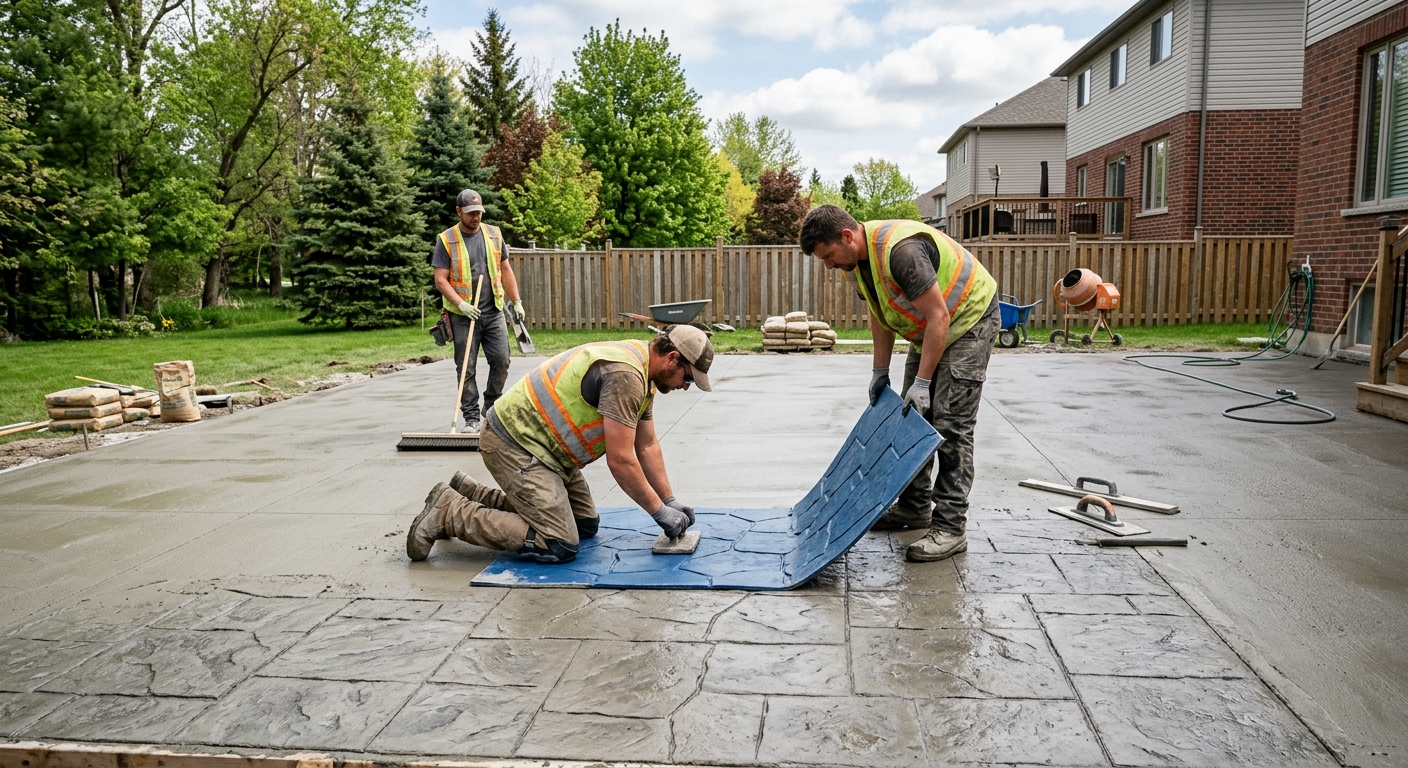
Concrete work options and costs in Shaughnessy
Concrete work in Shaughnessy is all about getting the details right for a coastal-wet, freeze–thaw climate where driveways, patios and foundation slabs are constantly challenged by moisture, cool nights and repeated temperature swings. Shaughnessy is a neighbourhood with a strong base of single-detached homes, which tends to drive demand for exterior flatwork like driveways and backyard patios. In 2021, the population of 8,430 shows a relatively established, established-owner market (Statistics Canada, 2021 Census), meaning many projects are renovations, infill upgrades, and expansions—often on older lots where drainage and subgrade conditions need more attention.
In the Lower Mainland–Southwest, our frost depth is typically assumed around 450 mm / 18", but contractors still build below that frost influence with proper footing placement and engineered thickened edges to prevent freeze heave. That frost-and-drainage reality shapes pricing: base preparation usually includes compacted granular and drainage consideration, and exterior slabs typically use air-entrained concrete with control joints to manage cracking and scaling. Scheduling and curing also affect costs because prolonged rain and high humidity can slow strength gain; we often plan around rain days and use curing blankets or sealers for durability.
From a market standpoint, labour availability is usually strongest in the Vancouver–Surrey corridor, so sites near the Kingsway/Marine Drive area feel the most competitive—when access is straightforward. When access is tight or excavation is deeper due to soil conditions, labour and equipment time increase.
Below is a realistic comparison of common concrete options homeowners request in Shaughnessy, with price bands aligned to the local market.
| Application |
Typical Size |
Key Spec |
Finish Option |
Price Range |
| Concrete driveway (standard broom finish) |
400–600 sq. ft. |
Air-entrained exterior mix, compacted granular base, control joints |
Broom finish |
$18,000–$28,000 |
| Exposed aggregate driveway |
400–650 sq. ft. |
Air-entrained mix, proper curing to achieve clean aggregate exposure |
Exposed aggregate |
$22,000–$33,000 |
| Stamped concrete driveway or patio |
300–600 sq. ft. |
Air-entrained mix, release agent system, saw-cut control joints |
Stamped (wood/stone patterns) |
$22,000–$36,000 |
| Plain concrete patio or walkway |
150–350 sq. ft. |
Proper base prep and slope, air-entrained mix for exterior durability |
Float/smooth + broom texture as needed |
$4,500–$10,000 |
| Garage floor (interior slab) |
400–650 sq. ft. |
Vapour barrier (as required), compacted base, mesh or rebar depending on use |
Smooth trowel + saw-cut joints |
$9,000–$18,000 |
| Foundation footings (structural, below frost) |
Varies by house footprint |
Excavate to below design frost influence, engineered rebar and forms |
Structural concrete |
$200,000–$350,000 |
Prices are estimates only and vary by project scope, site access and material selection.
What affects the price of concrete work in Shaughnessy
In the Lower Mainland–Southwest, two quotes for the same “driveway size” can still vary by 30–50% because the real drivers aren’t just square footage—they’re excavation depth, drainage, reinforcement, mix design, finishing complexity, and how long the crew has to protect and cure concrete through our cool, wet stretches. In British Columbia overall, the cost curve can climb faster than in some interior or northern markets when access is tight or when seasonal conditions force more downtime and more careful curing setups.
The frost line depth and freeze–thaw cycles dictate every exterior specification. Even though our coastal BC frost influence is comparatively shallow, crews generally place footings below about 450 mm / 18" frost depth and manage thickened edges and base thickness to prevent freeze heave. Exterior slabs are built with air-entrained concrete so water that enters and freezes can expand without spalling the surface. In colder regions you also see shorter pour windows and costlier cold-weather measures—here in Shaughnessy, we don’t heat the slab like the interior, but we still pay for curing blankets, extended cure time, and weather planning when nights get cool or rain persists. De-icing salt in winter is another big cost driver: it accelerates surface scaling if the mix and curing aren’t right, which is why sealing is often recommended after cure.
Locally, a driveway that requires extra base work (soft spots, high water table, or poor drainage) can push costs upward compared to a clean, well-draining lot. Conversely, a small patio close to an accessible truck route can land closer to the patio band of $16–$26 per sq. ft. set by the regional market, while decorative work like stamped concrete or exposed aggregate often justifies the higher end because of specialized finishing and longer labour hours—commonly aligning with the $22–$36 per sq. ft. decorative band.
| Price Factor |
Why It Matters |
Cost Impact |
| Frost line depth |
Determines footing depth and form height to prevent frost heave |
Higher excavation and deeper subbase increases labour and equipment time |
| Site preparation |
Excavation, grading and compacted granular base quality affect long-term settlement |
Extra haul-off, re-grade and added base materials raise costs significantly |
| Reinforcement |
Rebar or mesh helps control cracking under loads and temperature movement |
More steel and installation labour adds cost, especially for heavier use slabs |
| Mix design |
Air-entrainment and strength requirements improve freeze–thaw durability |
Better mix spec may cost more per yard but reduces scaling risk |
| Finish type |
Broom vs. stamped vs. exposed aggregate changes labour time and materials |
Decorative finishes typically increase per-sq.-ft. pricing |
| Pour size and concrete truck access to site |
Access affects how much concrete can be placed quickly and safely |
Long wheelbarrow paths, pump needs or waiting time can add labour charges |
| Cold-weather curing precautions |
Protects strength gain and reduces surface defects in cool, damp conditions |
Blankets/heating and longer scheduling can increase total cost |
| Control joint pattern and sealing cost |
Joints manage cracking; sealing improves surface durability against salt and moisture |
Proper saw cuts and sealer add line-item cost but reduce future maintenance |
Permits & regulations in British Columbia
In British Columbia, the biggest misconception is that all concrete work requires the same approval. Structural concrete work—footings, foundation walls, grade beams, and other elements that affect a building’s structural system—typically needs a building permit and often engineered drawings that the municipality reviews. Concrete flatwork (patios, walkways, and driveways) usually does not require a permit when it doesn’t materially alter lot grading, doesn’t affect impervious surface coverage rules, and doesn’t interfere with municipal right-of-way or drainage requirements. That said, in Shaughnessy and across the Lower Mainland, any project that changes drainage patterns (for example, tying into or redirecting downspouts, altering swales, or modifying surface runoff routes) may trigger additional review. Always confirm with the local authority before breaking ground.
Step-by-step: when you hire a contractor, verify the licence status first through the provincial registry listings for the relevant trade(s) (and confirm they’re allowed to do the scope they’re quoting). Next, request a certificate of insurance showing general liability coverage and any required endorsements for concrete operations. For worker protection, ask for proof of WSBC/WCB coverage or the appropriate clearance status for their workforce. Finally, ask for 2–3 references on similar-scale work in British Columbia (driveways, walkways, and any foundation-related pours), and confirm the contractor’s past projects match the freeze–thaw conditions of our coastal climate. If they won’t provide documents or references, it’s a red flag.
Getting concrete right in Shaughnessy's freeze-thaw climate
Concrete in Shaughnessy fails most often for avoidable reasons: inadequate base preparation, concrete that isn’t properly air-entrained for freeze–thaw exposure, weak curing, and control joints that don’t match the slab’s movement. Our Lower Mainland–Southwest climate is mild compared with inland BC, but it’s still wet and temperature-fluctuating—so water gets into the slab edge details, then freezes and expands. When that cycle repeats, the result is scaling and spalling.
To spec the job correctly, start with base preparation: compacted granular to the correct depth for the local soil and drainage situation, with the right slope so water doesn’t pond. Second, insist on an air-entrained exterior mix—typically 5–7% air content for freeze–thaw durability—paired with a minimum compressive strength such as 32 MPa for exterior flatwork. Third, design control joints to limit random cracking (spacing that matches slab thickness and expected movement). Fourth, curing matters: plan for at least 7 days of proper curing conditions, and in cool, damp weather, use curing blankets and protect the surface from premature freezing or excessive rain. Fifth, plan sealing: a penetrating sealer is often applied after the slab fully cures (commonly around 28 days) to repel moisture and reduce salt-driven surface wear.
Ask these technical questions before the pour: “What air content will you target for this exterior slab?” “How deep is the compacted granular base on my site?” “How will you place and protect the concrete during the first 24–48 hours in wet/cool conditions?” A common failure scenario is spalling from inadequate air-entrainment or rushing curing.
Where dollars are justified: if your choice is plain broom-finish driveway versus decorative stamped concrete, you may see the decorative option priced closer to the $22–$36 per sq. ft. decorative band, but the trade-off is longer labour and finishing materials. If you’re simply trying to improve durability, the best value is often getting the base, mix and joints right first—those choices protect regardless of finish.
| Spec |
Why It Matters in Shaughnessy |
What to Ask For |
Impact if Skipped |
| Compacted granular base (depth?) |
Controls settlement and supports the slab through wet winters and freeze–thaw movement |
Base thickness and compaction testing (or method) based on site soil |
Low areas, cracking and early surface breakdown |
| Air-entrained concrete mix (target air %?) |
Prevents freeze–thaw scaling and spalling in Shaughnessy’s exterior exposure |
Target air content typically 5–7% for exterior flatwork |
Higher risk of scaling after winter de-icing cycles |
| Compressive strength (MPa rating) |
Ensures durability and strength gain for load and surface wear |
Minimum 32 MPa (or higher if engineered for the use) |
Surface damage, raveling and reduced service life |
| Control joints (spacing per ACI guidelines) |
Controls where cracks form as the slab moves with temperature and moisture |
Joint spacing plan and sawing timeline |
Random cracking and unsightly repairs |
| Minimum 7-day curing period |
Supports cement hydration despite cool nights and coastal humidity |
How curing will be protected (blankets/sealer timing) during wet weather |
Weak surface, higher permeability and early deterioration |
| Penetrating sealer (when applied after cure) |
Reduces moisture and salt penetration during winter freeze–thaw cycles |
Penetrating sealer application after cure (commonly around 28 days) |
Faster staining, scaling and salt-related surface wear |
How to choose a concrete work contractor in Shaughnessy
Start with verification. In British Columbia, ask the contractor for documentation for three things: licensing/eligibility for the trade scope they’ll perform, liability insurance, and WSBC/WCB coverage for their workers. To check: (1) look up the relevant trade information through provincial registry resources; (2) request a certificate of insurance and confirm coverage limits are current and specifically include general liability for construction activities; and (3) request WSBC/WCB clearance details or proof of coverage. If they’re reluctant to share certificates, get your request in writing and move on.
Next, get 2–3 itemised written quotes, not just a single lump sum. A good quote separates labour and materials, and it clearly lists key items like excavation and disposal, compacted granular base, reinforcement (mesh/rebar type and amount), air-entrained mix spec, finishing inclusions, saw-cut timing, curing/blanket protection, and whether sealing is included. Pay attention to exclusions such as permit fees (if applicable), landscaping restoration, or concrete removal from previous slabs.
Warranty matters. Ask for a workmanship warranty length, what it covers (usually cracking due to workmanship vs. structural movement), and whether it’s from the contractor or backed by a manufacturer/product warranty. Confirm whether the warranty is transferable if you sell your home.
For payments, don’t front-load the project. In Shaughnessy, a fair schedule is typically 10–15% maximum upfront, with progress payments tied to measurable milestones (base complete, rebar placed, pour completed). Holdback until the job is finished and site cleanup is complete. Also request the start date and completion estimate in writing so you’re not guessing around rain days.
- Confirm their insurance certificate is current and ask to see the expiry dates.
- Verify WSBC/WCB coverage or clearance for workers before the pour.
- Ask for references on similar-size driveways or exterior flatwork in British Columbia.
- Require an itemised quote: base, reinforcement, mix spec, finishing, curing, sealing.
- Ask who supplies the concrete and what mix design will be used (air content and strength).
- Confirm excavation and disposal are included (and what “disposal” means).
- Check whether reinforcement is included or “as required”—make it specific.
- Ask how long the concrete will be protected during the first 24–48 hours.
- Require a jointing plan (where joints go and when they’ll be cut).
- Discuss sealing timing—often around 28 days after pour for proper cure.
- Get a pump vs. truck access plan if the site is tight (avoid surprises).
- Ensure the contract includes start/completion dates and weather contingency.
Concrete contractor red flags in Shaughnessy: no written mix spec or no mention of air-entrainment; vague “we’ll figure it out” jointing plans; refusing to provide insurance/WSBC/WCB proof; offering a low price that omits base depth, reinforcement, curing protection, or saw-cut timing; and asking for large upfront payments beyond 10–15%.
Frequently asked questions — concrete work in Shaughnessy
What is rebar and when is it required in British Columbia?
Rebar is steel reinforcement embedded in concrete to help control cracking and add tensile strength, especially where slabs experience bending or heavier loads. In British Columbia, whether rebar is “required” depends on the engineered design, slab thickness, reinforcement spacing, and the intended use (for example, a residential driveway, a garage floor, or a foundation element). For exterior flatwork, many contractors use wire mesh or rebar depending on thickness and load, while structural systems like footings and grade beams commonly require reinforcement sized and placed per engineered drawings. In Shaughnessy, where freeze–thaw cycling and moisture exposure are common, reinforcement doesn’t replace the need for proper air-entrained mix, base compaction and correct control joints—those still drive long-term durability. Ask your contractor to identify the reinforcement type, placement, and coverage area in the quote.
How long does a concrete project take in Shaughnessy?
For most residential concrete projects in Shaughnessy, the “active” pour day is often just one day, but the total timeline includes preparation and curing. Driveways and patios typically take several days from site prep through finishing, with cure time built in before you can apply heavy loads or seal properly. A standard exterior slab may be ready for light foot traffic within a couple of days, while full strength and best sealing readiness usually take longer—commonly around 7 days for curing to design strength and about 28 days before sealer for the most durable results. Weather changes the schedule: cool nights, coastal rain and high humidity can extend timelines because concrete needs protection and controlled curing. If your decorative option is stamped or exposed aggregate, finishing and curing steps also add time. For budgeting, it helps to plan for the project to land in a workable window rather than assuming one quick weekend.
What is a concrete overlay and is it suited to Shaughnessy?
A concrete overlay is a thin new concrete layer placed over an existing slab to improve appearance and extend service life without removing everything. It can be suited to Shaughnessy when the original slab is structurally sound—meaning minimal heaving, no major settlement, and no widespread delamination. The key is surface preparation: the existing concrete must be cleaned, profiled, and prepared so the overlay bonds properly. Overlays can be less suitable if the old slab has significant cracking, poor drainage, or freeze–thaw damage that has already compromised the base—bonding over moving or failing concrete usually leads to faster issues. In a freeze–thaw, salt-exposed climate like coastal BC, overlay performance depends on moisture control and jointing. If you’re choosing between starting fresh (often within the $18–$28 band for standard driveways) and an overlay, we’d typically recommend evaluation on-site to determine whether the base is capable of carrying an overlay long-term.
How do I seal concrete to protect it in Shaughnessy?
Sealing protects concrete by reducing moisture and salt penetration that can drive scaling during winter freeze–thaw cycles in Shaughnessy. The most durable approach is usually a penetrating sealer applied after the slab is fully cured—commonly around 28 days post-pour—so the concrete has time to complete hydration. Before sealing, the slab must be clean and dry; power washing alone isn’t enough if moisture remains trapped. Ask your contractor what product they use (penetrating vs. film-forming) and whether they recommend any pre-treatment. In our coastal-wet climate, proper timing matters: sealing too early can trap moisture, and sealing during persistent rain can affect adhesion. If your driveway is exposed to de-icing salts, sealing becomes even more important for surface longevity. Many homeowners also choose sealing as part of the overall package when decorative finishes (like stamped concrete) are involved to help maintain appearance.
What is the difference between concrete and cement?
Concrete and cement are related but not the same. Cement is the binder—powdered material (like Portland cement) that reacts with water to create strength. Concrete is the final building material: cement plus water, fine and coarse aggregates (sand and stone), and sometimes additives such as air-entrainment for freeze–thaw durability. In Shaughnessy and across British Columbia, your quote is about the performance of the concrete mix: air content for exterior durability, minimum compressive strength (often 32 MPa for many flatwork specs), and the curing plan. Contractors may mention “cement” in conversation, but what matters to you is the delivered concrete mix design and how it’s placed and cured in our Lower Mainland–Southwest weather. If someone sells you on a price without specifying the concrete mix characteristics—especially air-entrainment for exterior work—that’s a quality issue, not a “cement” issue.
How much does concrete work cost in Shaughnessy?
Concrete costs in Shaughnessy depend on finish level, access, and how much prep is required for drainage and freeze–thaw durability. For exterior driveways, the regional market pricing typically lands around $18–$28 per sq. ft. for standard broom finish concrete, while stamped and decorative concrete often runs higher, around $22–$36 per sq. ft. For patios and walkways, plain concrete commonly sits around $16–$26 per sq. ft. depending on thickness, base work, and reinforcement needs. If you’re comparing two quotes, the spread is often explained by excavation and base prep scope, reinforcement inclusion, and curing/sealing protection. Foundation footings are priced differently than flatwork—structural footing work is often quoted with a dedicated scope because it’s engineered and excavation-intensive. If your project is a 500 sq. ft. driveway, you’re often in the neighbourhood of $18,000–$28,000 for a standard broom finish, but site conditions can push that higher when drainage and base depth require extra work.