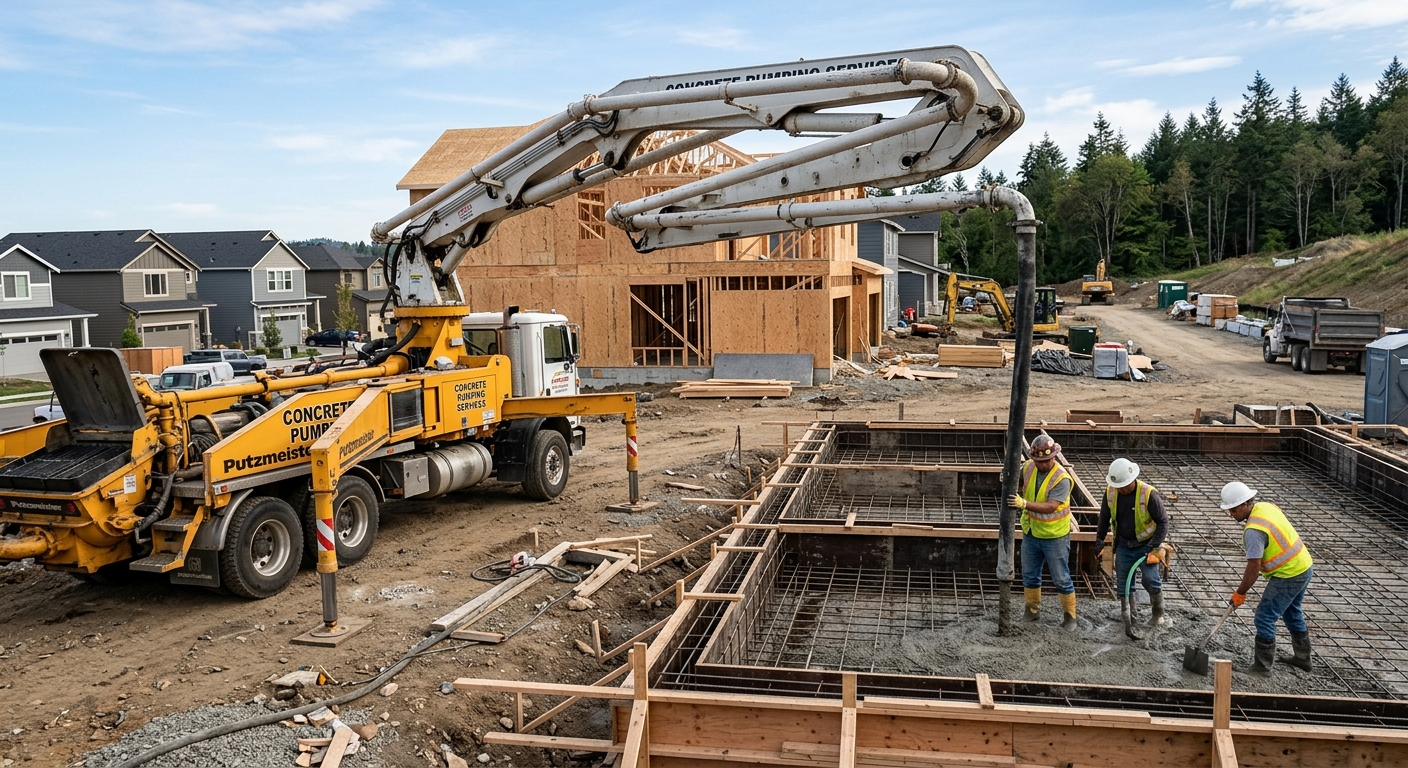
Concrete work options and costs in Denman Island Trust Area
Concrete work on Denman Island Trust Area homes is usually discussed in terms of durability and curb appeal, because salt air, coastal rain, and winter freeze–thaw cycles are hard on untreated surfaces. With a population of 1,165 (Statistics Canada, 2021 Census), projects here are small compared with the Vancouver–Surrey–Abbotsford corridor, which means less contractor volume and sometimes higher mobilisation costs per job. This matters most for exterior flatwork—driveways, patios, and walkways—where many properties rely on concrete to handle the wet season and protect underlying soil. The Lower Mainland–Southwest market also tends to prioritize engineered specs (footings and drainage) and weather-aware scheduling, so similar scopes can price differently even when the finish looks “the same”. Local practice commonly assumes a frost depth around 450 mm (about 18"), and we still detail footings, thickened edges, and slab base prep to sit below the influence of frost heave. Add prolonged rainfall, cool night curing, and the need for air-entrained mixes, and you end up with pricing that reflects both materials and careful field methods—not just the concrete.
Demand is especially steady around the Denman Island core near the main services, where homeowners upgrade entries for year-round access and safer footing after rain events. Below is a practical way to compare the most common options, from standard broom finishes to decorative stamped work and structural foundation footings.
| Application |
Typical Size |
Key Spec |
Finish Option |
Price Range |
| Concrete driveway (standard broom finish) |
10 m x 3 m (30 m²) |
Air-entrained mix, compacted granular base, control joints |
Broom finish, light broom texture |
$18,000 – $28,000 |
| Exposed aggregate driveway |
10 m x 3 m (30 m²) |
Air-entrained mix, proper base drainage, controlled jointing |
Exposed stone aggregate, sealed surface |
$22,000 – $34,000 |
| Stamped concrete driveway or patio |
8 m x 4 m (32 m²) |
Air-entrained mix, reinforcement where specified, colour hardener |
Stamp pattern + release + sealer |
$2 8,000 – $4 0,000 |
| Plain concrete patio or walkway |
4 m x 3 m (12 m²) |
Air-entrained mix, compacted base, expansion allowance |
Smooth or broom finish (project-dependent) |
$3,000 – $6,000 |
| Garage floor (interior slab) |
6 m x 6 m (36 m²) |
Vapour barrier, mesh/rebar as required, minimum 32 MPa |
Steel trowelled finish, optional densifier |
$6,500 – $11,000 |
| Foundation footings (structural, below frost) |
Per project (typical 60–120 linear m) |
Engineered dimensions, excavate below frost influence |
Formed and poured concrete footings |
$12,000 – $28,000 |
Prices are estimates only and vary by project scope, site access and material selection.
What affects the price of concrete work in Denman Island Trust Area
In Denman Island Trust Area, it’s common to see quotes for the “same” driveway or patio differ by 30–50% across the Lower Mainland–Southwest region and the broader British Columbia market. The gap usually comes from what’s happening under the surface: base preparation, frost-proof detailing, drainage, reinforcement requirements, and the realities of scheduling in wet, cool conditions. Even though the frost depth target in our region is often treated as roughly 450 mm / 18", every excavation and form setup still has to respect below-frost placement and a drainage strategy to manage freeze–thaw and saturation. Cold-season curing precautions can also raise costs—heating blankets, insulated protection, and longer cure management aren’t optional when night temperatures drop and humidity stays high.
Concrete performance also depends on the mix. For exterior slabs and driveways, exterior air-entrainment is a must to survive the freeze–thaw cycle, and it affects both materials and how the crew times finishing and joints. De-icing salts in winter accelerate surface spalling when the slab surface isn’t protected, so sealing is often recommended as part of a durability plan. For example, an exposed aggregate driveway might price higher than a broom-finish driveway (often within the $18–$28 per m² backbone for standard concrete flatwork, versus more labour and finishing for decorative work), but you’re paying for additional steps like surface exposure control and sealing. On the foundation side, the below-frost structural work is priced in a different tier because engineering, excavation depth, and forming time drive the cost (foundation/footings often land in the $200–$350 backbone per unit depending on the actual scope).
Local examples that raise or lower costs here include: (1) steep or limited access that slows down equipment and concrete truck placement, (2) soil that needs deeper or wider granular base and more grading, and (3) projects in older housing pockets that require careful tie-ins to existing slabs and services. In many cases, where existing grades are poor or drainage is unclear, a “cheap” price can become expensive later—cracking and scaling typically point back to base thickness, air-entrainment, and joint/curing execution.
| Price Factor |
Why It Matters |
Cost Impact |
| Frost line depth — determines footing depth and form height |
Footings and thickened edges must sit below frost influence to reduce heave |
Higher excavation and forming time; can significantly increase structural scope costs |
| Site preparation — excavation, grading, compacted granular base |
Correct subgrade drainage and base thickness prevent settlement and pumping |
More granular, more labour, and longer machine time on challenging soils |
| Reinforcement — rebar or wire mesh requirement |
Controls cracking and supports load transfer in driveways and thicker slabs |
Cost rises with steel, ties, chairs, and inspection complexity |
| Mix design — air-entrainment and compressive strength spec |
Exterior slabs need air-entrainment to resist freeze–thaw scaling/spalling |
Materials cost changes and affects finishing plan; reduces future repairs |
| Finish type — broom vs. stamped vs. exposed aggregate |
Decorative surfaces require colour hardener, exposure control, and sealing |
Higher labour time, crew size, and materials like release agents/sealers |
| Pour size and concrete truck access to site |
Distance to chute, rehandling, and placement speed affects schedule and cost |
Limited access can increase labour and pump/rigging needs |
| Cold-weather curing precautions — heating and blankets |
Proper curing under cool, wet conditions protects strength gain |
Blankets, thermal protection, and longer job timelines can add cost |
| Control joint pattern and sealing cost |
Joints manage shrinkage cracks; sealing protects against rain and de-icers |
Added layout, cutting, and product cost; lowers maintenance risk |
Permits & regulations in British Columbia
In British Columbia, structural concrete work generally requires a building permit and, in many cases, engineered drawings that the municipality reviews. That includes footings, foundation walls, grade beams, and other elements that support or retain loads. Concrete flatwork—like patios, walkways, and driveways—usually does not require a permit unless it impacts lot grading, affects stormwater/lot drainage plans, changes impervious surface coverage limits, or touches municipal right-of-way matters. Because rules can vary based on the exact site and how the work affects drainage, access, and nearby structures, you should always confirm with the local authority before you break ground in Denman Island Trust Area.
Before hiring, verify three basics: (1) contractor liability insurance, (2) WSIB/WCB coverage, and (3) any licensing/registrations that apply to the work the crew will perform. Step-by-step, here’s how a homeowner should check:
- Ask for the contractor’s certificate of insurance (liability) and ensure the policy is current and matches the job location.
- Request proof of WSIB/WCB coverage (or the appropriate provincial coverage form for your contractor type).
- Check references on similar exterior and below-frost projects in British Columbia, not just general renovation work.
- If the job is structural, confirm your permit package includes the correct engineered drawings for the footings/foundation elements.
- Get clarification in writing on what the contractor handles: permit pull (if required), inspections, and site drainage plan approvals.
When in doubt, ask the contractor to point to the permit requirement in writing for your specific scope.
Getting concrete right in Denman Island Trust Area's freeze-thaw climate
Concrete failures in Denman Island Trust Area usually trace back to water and expansion—freeze–thaw cycles, saturated soils, and weak surfaces. If base prep is shallow or drainage is neglected, water loads the slab edges, and that movement turns small defects into cracking and scaling. To spec the job correctly, focus on the full system, not just the visible finish. First is base preparation: we excavate to the right depth and build a compacted granular sub-base sized for local soils, then ensure positive drainage so water doesn’t sit under the slab. Second is mix design: exterior flatwork should be air-entrained, commonly targeting about 5–7% air content for durable freeze–thaw performance, with a minimum 32 MPa compressive strength typical for quality exterior work. Third is control joints: they must be cut or formed with a layout that limits random shrinkage cracking. Fourth is curing: plan for at least 7 days of curing under proper conditions—cool nights and high humidity in coastal BC mean we don’t rush strength gain. Fifth is sealing: apply a penetrating sealer after the slab has cured (often around 28 days post-pour) to help repel de-icing salts and reduce surface absorption.
Ask pointed questions like: “What air-entrainment target are you batching to?” and “When do you plan to place joints, and what’s your curing protection plan if it’s cool or rainy?” A common spall issue is a slab without adequate air-entrainment combined with poor jointing and rushing curing—water gets in, freezes, and pushes material off the surface.
On pricing: if you’re choosing between a plain broom-finished patio and stamped concrete, the extra cost is usually justified by labour and materials for stamping, colour, and sealing. For example, a broom-finished patio often falls within the $16–$26 per m² backbone, while stamped decorative work typically increases labour time and costs (often $22–$36 per m² for decorative concrete). You’re paying for an aesthetic system that still must meet freeze–thaw specs; the cheapest-looking option is only “cheap” if it’s built to last.
| Spec |
Why It Matters in Denman Island Trust Area |
What to Ask For |
Impact if Skipped |
| Compacted granular base (depth?) |
Controls settlement and helps manage water under the slab |
Base thickness suited to soil and drainage, with compaction testing/verification |
Settlement, cracking, and premature surface breakdown in wet seasons |
| Air-entrained concrete mix (target air %?) |
Resists freeze–thaw scaling and spalling in exterior exposure |
Confirm air target for exterior flatwork (commonly 5–7% air) |
Water damage accelerates; spalling becomes likely after repeated winters |
| Compressive strength (MPa rating) |
Strength gain supports long-term durability |
Minimum 32 MPa (or higher if engineered for the use) |
Surface wears faster and may crack earlier under traffic |
| Control joints (spacing per ACI guidelines) |
Limits random shrinkage cracking paths |
Joint layout spacing and timing (planned before pour) |
Random cracks, water intrusion, and freeze–thaw expansion at edges |
| Minimum 7-day curing period |
Ensures strength development before weather exposure |
How curing protection will be handled in cool/wet conditions |
Weaker surface, higher risk of scaling and early failure |
| Penetrating sealer (when applied after cure) |
Repels water and slows de-icer salt penetration |
Product type and timing (often around 28 days post-pour) |
Higher absorption leads to more staining, scaling, and spalling risk |
How to choose a concrete work contractor in Denman Island Trust Area
Choosing a concrete contractor in Denman Island Trust Area is mostly about verifying capability and accountability, not just price. In British Columbia, you should verify the contractor carries liability insurance and has the correct WSIB/WCB coverage for their workers. To check each item: request a current certificate of insurance (liability) and confirm it lists your project location as the risk address; ask for WSIB/WCB proof and match the coverage to the type of work being done; and confirm they have references for projects close in scale and exposure level—exterior flatwork and below-frost work need different field discipline than interior-only slabs.
Next, get 2–3 itemised written quotes rather than one lump sum. You want a breakdown that separates excavation/grading, granular base, reinforcement, concrete supply, finish labour, and sealing (if included). Read the scope carefully: what’s excluded for disposal, tree/root removal, pumping, saw cutting, reinforcement upgrades, permit pull (if required), and any rework if weather interrupts curing? A proper warranty should be in writing—workmanship warranty length, whether it covers cracking/spalling issues that result from poor prep/mix, and what manufacturer warranty applies to sealer or decorative systems. Ask whether warranty terms are transferable if you sell the home.
On payment, never pay more than 10–15% upfront; keep a holdback until the job is complete and protective steps (like curing and sealing timing) are done. Finally, demand a timeline in writing with a start date, pour date range, and completion estimate—coastal rain and cool nights affect curing and surface readiness.
- Ask for the exact finish plan: broom, exposed aggregate, or stamped pattern and sealer system.
- Confirm exterior air-entrainment is included for driveways and patios.
- Ask how base thickness and compaction will be verified.
- Confirm joint spacing and whether joints are saw-cut or formed.
- Request curing protection details for cool, wet weather.
- Make sure reinforcement (mesh/rebar) is included where required by design and use.
- Clarify concrete truck access and whether pumping is needed.
- Check whether disposal of excavated material is included or an extra charge.
- Ask if sealers are included and when they will be applied.
- Verify the warranty is specific (what it covers and for how long).
- Require an itemised quote with line items for labour and materials.
- Confirm the quote includes layout/marking, protection of landscaping, and cleanup.
Concrete contractor red flags in Denman Island Trust Area: vague scopes that omit air-entrainment or jointing details, “we’ve always done it this way” explanations for exterior curing in cold/wet weather, quotes that don’t itemise excavation/base/finishing, refusing to provide insurance/coverage documents, and promising decorative results without naming the sealer and application timing.
Frequently asked questions — concrete work in Denman Island Trust Area
How do I compare concrete quotes?
Start by comparing apples-to-apples for scope and specs, not just totals. In Denman Island Trust Area and across British Columbia, the biggest differences usually hide in base prep, reinforcement, and mix design—especially air-entrainment for exterior flatwork. Ask each contractor: what air-entrained mix and minimum strength are you using for the driveway or patio, what’s the granular base thickness and compaction method, and how are control joints spaced and finished? Also compare inclusions: disposal of excavated material, curing protection, and whether sealing is included after cure. If one quote offers a standard driveway around the $18–$28 pricing backbone while another comes closer to decorative rates, it may simply be missing finishing steps or durability provisions. Make sure the decorative contractor still meets freeze–thaw requirements, not just looks good on day one.
Can concrete be poured in cold weather in Denman Island Trust Area?
Yes, concrete can be poured in colder periods in Denman Island Trust Area, but it must be managed to reach proper strength gain and durability. In the Lower Mainland–Southwest region, the frost line influence and freeze–thaw cycles still require correct detailing, and cold snaps can slow curing—especially with cool nights and high humidity. A reputable crew will use temperature/curing controls like insulating blankets, careful scheduling, and in some cases concrete heating methods, then protect the slab during the minimum 7-day curing period. The key is planning: don’t rely on “it’s only chilly” estimates. Ask each contractor what their cold-weather curing plan is, what temperatures trigger extra protection, and how they prevent the slab surface from freezing during early set. This is also where a lot of the real cost difference in quotes comes from.
How do I maintain concrete in Denman Island Trust Area's freeze-thaw climate?
Maintenance in British Columbia’s coastal freeze–thaw conditions is about keeping water and de-icers from getting into the surface. For exterior driveways and patios, cleaning should be gentle: rinse regularly and remove debris that holds moisture. Use de-icers sparingly—if you must use them, choose products that are less harsh when possible, because frequent salt exposure increases the risk of scaling or spalling on poorly protected surfaces. Sealing matters: a penetrating sealer applied after the slab has cured (often around 28 days post-pour) helps repel moisture and reduces absorption. Maintain joint integrity too—if joints crack open or edges deteriorate, fix them promptly so water doesn’t migrate underneath. When you’re budgeting, it’s normal for decorative work to cost more up front (stamped decorative often falls into the $22–$36 backbone range), but long-term maintenance should still follow the same freeze–thaw durability steps.
What causes concrete to spall in Denman Island Trust Area winters?
Spalling typically happens when water gets into the concrete and then freezes, expanding and breaking off the surface layers. In Denman Island Trust Area and the wider Lower Mainland–Southwest region, the most common causes are inadequate air-entrainment, poor curing, and water management issues like weak base prep or drainage that lets the slab edge stay saturated. If control joints aren’t cut/spaced correctly, shrinkage cracks can become water pathways, accelerating freeze–thaw damage at vulnerable locations. De-icing salt can intensify the problem by increasing surface deterioration when the slab isn’t protected. The best prevention is “spec discipline”: air-entrained exterior concrete (often targeting about 5–7% air), proper base and drainage, and a curing plan that ensures strength development before weather stresses the slab. If you suspect spalling, get photos and ask a contractor to assess mix/air records and construction sequence—not just to patch the surface.
What is rebar and when is it required in British Columbia?
Rebar (reinforcing steel) is used to strengthen concrete elements and control cracking by providing tensile resistance, particularly in areas with load or movement. Whether rebar is required depends on engineered design, slab thickness, soil conditions, and the expected loading (for example, vehicle traffic on a driveway versus an interior garage floor). In British Columbia, concrete footings and many foundation elements are typically engineered, and reinforcement is included as part of that design. For exterior slabs, contractors may use wire mesh, rebar, or both, depending on thickness and design requirements. Rebar alone doesn’t guarantee durability—exterior freeze–thaw performance still depends on air-entrainment, correct joints, base prep, and curing. When you receive quotes, ask: “Is reinforcement included, what type (mesh vs. rebar), and what embedment/placement method will you use?” This helps you compare whether the structure can handle Denman Island’s wet seasons and winter temperature swings.
How long does a concrete project take in Denman Island Trust Area?
Timing varies by scope and site conditions, but you can expect two separate timelines: the construction timeline (excavation, base prep, pour, finishing, and jointing) and the curing timeline (strength gain before you load or treat the surface). For a small patio or walkway, the work may happen within a few days, but full durability and sealing readiness typically relies on curing duration—minimum 7 days for strength development under good conditions, and often longer for best results. Driveways generally take longer because of base prep and finishing sequence, especially if decorative options are chosen (stamped/exposed aggregate adds extra steps and crew coordination). Weather can extend schedules in coastal BC because rain and cool nights affect surface finishing and curing protection. Always ask your contractor for a written start date and completion estimate, including what happens if it rains during the cure window—this is where scheduling discipline affects real-world timelines.