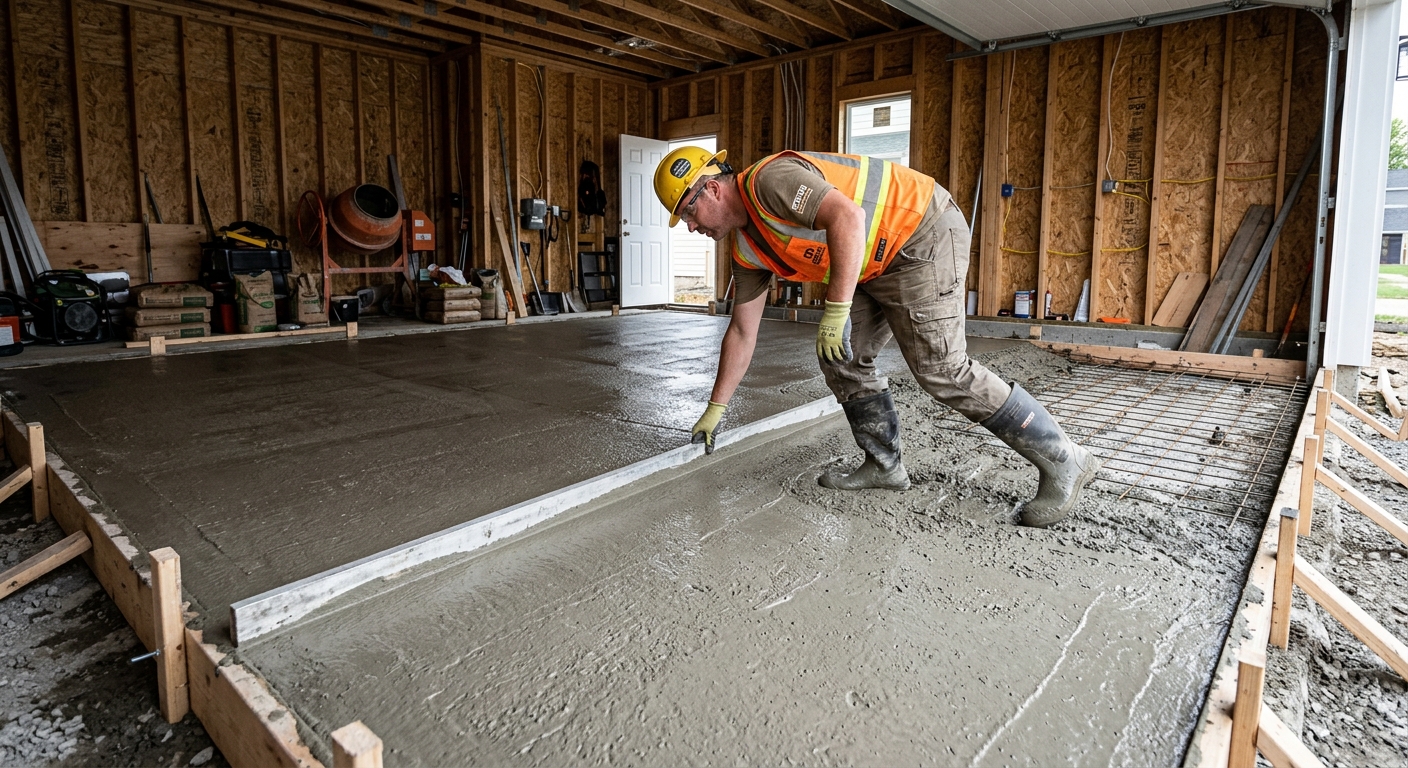
Concrete work options and costs in Koksilah
In Koksilah, British Columbia, concrete is one of the most reliable ways to add curb appeal and durable surfaces—especially for the homes around town where a lot of the market is made up of single-detached houses (Statistics Canada, 2021 Census). With a small community population of 4,000 (Statistics Canada, 2021 Census), the local trade tends to run on-season schedules, and competition for crews can spike when the drier weather window opens. That directly affects turnarounds and—on tight weeks—can slightly move pricing upward.
Lower Mainland–Southwest conditions are mild compared with interior and northern BC, but the shallow frost depth (commonly planned around 450 mm / 18") doesn’t mean “no frost.” We still protect exterior slabs and footings from freeze–thaw cycles and saturated soils, which is why base preparation, drainage, air-entrained concrete, and proper control joints are treated as non-negotiables. On top of that, frequent coastal rainfall and cool nights mean curing often needs extra attention to reach design strength for driveways, patios and even foundation work.
Contractors are especially busy in the areas of Koksilah with older streetscapes and frequent driveway refresh projects—typically around the core neighbourhoods where homeowners want faster, clean-edged upgrades that also handle winter moisture. If you’re comparing options, the right choice often comes down to finish level and how much premium you’re willing to pay for longevity and aesthetics, so the table below shows typical cost bands.
| Application |
Typical Size |
Key Spec |
Finish Option |
Price Range |
| Concrete driveway (standard broom finish) |
400–600 sq ft |
4" slab on compacted granular base; air-entrained concrete; control joints |
Broomed surface |
$7,200 – $14,500 |
| Exposed aggregate driveway |
400–600 sq ft |
4" slab; air-entrained mix; exposed-aggregate recipe; edge detail |
Washed/exposed aggregate |
$10,000 – $18,000 |
| Stamped concrete driveway or patio |
250–500 sq ft |
4" slab; air-entrained concrete; integral colour |
Stamp + release + border |
$8,500 – $22,000 |
| Plain concrete patio or walkway |
200–400 sq ft |
4" slab; compacted base; fibre or mesh as specified; control joints |
Wood-trowel + broom/skate texture |
$3,600 – $10,000 |
| Garage floor (interior slab) |
300–500 sq ft |
4" slab; vapour considerations for some homes; crack control |
Float + light broom (optional) |
$6,500 – $12,500 |
| Foundation footings (structural, below frost) |
Per project/house plan |
Footings below design frost depth; engineered reinforcement; site drainage |
Reinforced concrete |
$12,000 – $35,000 |
Prices are estimates only and vary by project scope, site access and material selection.
What affects the price of concrete work in Koksilah
The same “basic concrete” job can land 30–50% apart across the Lower Mainland–Southwest region and the rest of British Columbia because concrete price isn’t just cement—it’s excavation, engineered specs, labour scheduling, and how long the job must wait for workable curing conditions. In Koksilah, mild winters don’t remove the need to plan around freeze–thaw cycles; it changes how we manage them. Contractors also run fewer long-duration pour windows when prolonged rain and cold nights show up, and that can increase standby time and coordination costs.
Lower Mainland–Southwest pricing is heavily shaped by frost-depth planning and drainage. Local practice typically assumes a frost depth around 450 mm / 18", so exterior footings, piers and thickened edges are set below that to reduce frost heave. Exterior slabs also require air-entrained mixes (commonly 5–7% air) to resist scaling and surface damage. Colder regions often need deeper excavations and cold-weather curing (heating, insulated blankets), which is why prices can be higher farther from the Lower Mainland. Even with our shallower frost line, we still protect slabs with the right base build-up and curing approach to avoid weak, vulnerable concrete.
In practical terms: a broom-finish driveway may sit closer to the $18–$28/sq ft band, while stamped and decorative work can jump into the $22–$36/sq ft band because of formwork detailing, colour, stamping labour, and finishing time. A driveway where the subgrade is soft or saturated can also require extra granular, grading corrections and drainage—often pushing the job toward the high end.
Because Koksilah’s housing stock spans newer builds and older lots on variable soils, I frequently see cost differences driven by how much base correction is needed before a slab can be poured—and that’s where most quote gaps start.
| Price Factor |
Why It Matters |
Cost Impact |
| Frost line depth — determines footing depth and form height |
Footings and thickened edges must sit below design frost depth to prevent frost heave |
Higher excavation/form height increases labour and disposal; moderate in coastal BC but still material |
| Site preparation — excavation, grading, compacted granular base |
Wet or unstable soils require thicker engineered base and better drainage |
Can add days; often the biggest swing factor on residential lots |
| Reinforcement — rebar or wire mesh requirement |
Controls cracking and supports structural loads where required by design |
Adds material and tying/setup labour; increases cost more on larger slabs |
| Mix design — air-entrainment and compressive strength spec |
Air-entrainment improves freeze–thaw durability for exterior exposure |
Small material premium, but critical for long-term surface performance |
| Finish type — broom vs. stamped vs. exposed aggregate |
Finish methods take longer and require extra products and labour |
Stamped/exposed generally moves you into the higher $22–$36/sq ft style band |
| Pour size and concrete truck access to site |
Limited access increases labour for chutes/telebelts and can require smaller pours |
Higher crew hours and scheduling costs; sometimes rework planning |
| Cold-weather curing precautions — heating and blankets |
Cool nights and high humidity slow strength gain and increase risk if curing is rushed |
Extra materials and labour; increases costs in cooler stretches of the season |
| Control joint pattern and sealing cost |
Joints manage where cracks form; sealing reduces water/ice intrusion at edges |
Cost is modest for sealing but improves durability significantly |
Permits & regulations in British Columbia
In British Columbia, structural concrete work typically needs a building permit—especially anything tied to the building’s load path and foundation system, such as footings, foundation walls, grade beams, and structural slab elements. In many cases, municipalities also expect engineered drawings or design confirmation before those permits are approved. Concrete flatwork (patios, walkways and most driveways) usually does not require a permit when it’s simply improving a surface within existing grades and it doesn’t trigger drainage/lot-grading changes or impervious surface restrictions. That said, if your driveway affects lot grading, redirects surface water, or changes how runoff reaches ditches or swales, you may need municipal review. Always confirm with the local authority before breaking ground in Koksilah.
Here’s a practical step-by-step way to verify a contractor in British Columbia:
- Check the contractor’s licensing status using the appropriate provincial online registry (search the contractor name and company).
- Request a current certificate of insurance (liability) and confirm the coverage limits match the project risk.
- Ask whether they carry worker coverage through WSBC/WCB (coverage should be valid for active work crews).
- Download/collect proof documents before work starts, then keep copies for your records.
- Verify references for similar-scale concrete jobs in the Lower Mainland–Southwest, ideally with photos of cured exterior surfaces.
Getting concrete right in Koksilah's freeze-thaw climate
Concrete fails in Koksilah mainly when water moves in and then freezes, or when the slab doesn’t gain sufficient early strength under our cool, wet swings. The most common homeowner-visible problem is spalling and surface scaling—usually tied to inadequate air-entrainment, poor curing, or a base that allows water to sit under the slab. In the Lower Mainland–Southwest, our shallow frost depth (often planned around 450 mm / 18") helps, but it doesn’t eliminate freeze–thaw stresses at the slab edge, joints, and low spots where water collects.
To spec the job correctly, start from the ground up:
(1) Base preparation: build a compacted granular sub-base to the right depth for your soils and drainage, and shape the base to shed water. (2) Mix design: specify air-entrainment for exterior flatwork—commonly 5–7% air content—along with a minimum 32 MPa compressive strength. (3) Control joints: plan joint spacing so cracking is predictable and doesn’t wander randomly. (4) Curing: plan at least 7 days of proper curing conditions; in cold/cool, damp weather, curing blankets and disciplined protection matter. (5) Sealing: apply a penetrating sealer after the slab has cured (often at 28 days) to help repel de-icing salts and incidental water.
If you’re deciding between a broom-finish driveway and stamped concrete, remember that the finish price jump is justified when you want aesthetics plus meticulous finishing. For example, moving from a standard broom driveway that fits the $18–$28/sq ft style range into stamped work (often $22–$36/sq ft for decorative scopes) can be worth it—but only if the contractor protects the slab with proper air-entrainment, joints, drainage and curing. A cheaper finish without the durability steps still costs more later when patching or scaling shows up.
| Spec |
Why It Matters in Koksilah |
What to Ask For |
Impact if Skipped |
| Compacted granular base (depth?) |
Wet subgrade leads to pumping and water entry at edges during freeze–thaw |
Granular base type + target compacted depth and compaction method |
Uneven settlement, early cracking, and accelerated scaling |
| Air-entrained concrete mix (target air %?) |
Freeze–thaw resistance depends on correct air void system for exterior exposure |
Air content target (commonly 5–7% for exterior flatwork) and documented mix design |
Spalling and surface scaling, especially around joints and edges |
| Compressive strength (MPa rating) |
Cold, damp curing slows strength gain; specified strength protects durability |
Minimum 32 MPa and how they protect concrete in cool nights/rain |
Lower long-term performance and poor resistance to abrasion and water |
| Control joints (spacing per ACI guidelines) |
Controls where shrinkage cracks occur to limit water pathways |
Joint layout plan, sawcut timing, and finish around joints |
Random cracking, increased water intrusion, and faster deterioration |
| Minimum 7-day curing period |
Strength development is critical under Koksilah’s cool, humid conditions |
Protection plan for curing (covers/blankets), especially for cold or wet days |
Weaker surface and higher cracking/spalling risk |
| Penetrating sealer (when applied after cure) |
Helps repel water/ice and de-icing salt exposure that can attack surfaces |
Sealer type and confirm it’s applied after full cure (often 28 days) |
Faster surface wear, staining, and premature scaling near edges |
How to choose a concrete work contractor in Koksilah
Choosing the right contractor in Koksilah (and across British Columbia) is less about ads and more about proof and process. Start with licensing and coverage. Ask for their current British Columbia business/licensing information, a certificate of liability insurance, and proof they carry WSBC/WCB coverage for workers. To check: look for the contractor’s listing in the provincial online registry, verify the insurance certificate is current and matches the legal business name, and confirm worker coverage is active for the dates they’ll be working on your site. Don’t accept “it’s coming” — ask for documentation before signing.
Next, get 2–3 itemised written quotes. The best quotes break out labour and materials (excavation, granular, rebar/mesh, concrete supply, finishing, sawcutting, sealing, and site cleanup). Avoid lump sums that don’t say what’s included. Read exclusions carefully: is permit pull included (if needed), is disposal of unsuitable soil included, and what’s the allowance for truck access constraints? Ask who supplies curing blankets and how they protect concrete during cold or wet periods.
For warranty, separate workmanship warranty from product/manufacturer coverage and confirm the length and what defects are covered. Payment schedule matters too: never pay more than 10–15% upfront; hold back a portion until the job is complete and surfaces are accepted. Finally, insist on a written timeline with a start date and realistic completion estimate, especially because rain and cool nights can shift curing windows in the Lower Mainland–Southwest.
- Request recent photos of exterior slabs from similar Koksilah-style freeze–thaw conditions.
- Confirm they will design/control base prep and drainage, not just “pour concrete.”
- Ask for the air-entrainment target and minimum 32 MPa strength.
- Check that control joints will be sawcut/finished correctly on schedule.
- Verify sealing is included (or offered) and when it will be applied after cure.
- Ask how they handle prolonged rain and cool nights during curing.
- Ensure rebar/mesh (if specified) is correctly supported (no floating in the slab).
- Confirm access logistics (concrete truck path, washout plan, disposal site).
- Make sure the quote includes surface protection and final cleaning.
- Require a clear warranty term for workmanship and a contact for warranty service.
- Keep payment tied to milestones, not vague “progress.”
- Get everything in writing: scope, inclusions/exclusions, schedule, and warranty.
Concrete red flags I see in Koksilah include: quotes that don’t mention air-entrainment for exterior work, skipping or under-specifying control joints, trying to pour on frozen/wet subgrade without stabilization, finishing too soon without adequate curing protection in cool damp weather, and vague warranties paired with “pay the rest before we schedule the next step.”
Frequently asked questions — concrete work in Koksilah
What is air-entrained concrete and why does it matter here?
Air-entrained concrete is mixed with tiny, evenly distributed air bubbles that give water a place to expand when it freezes. In Koksilah and the Lower Mainland–Southwest, the risk isn’t constant deep freezing like inland BC—it’s repeated freeze–thaw at the surface and along joints/edges, especially during wet coastal cycles. That’s why exterior slabs (driveways, patios, walkways and exterior steps) are typically specified as air-entrained. If a contractor uses a non-air-entrained mix, the concrete can scale and spall sooner, even if the slab initially looks fine. When you’re budgeting, the finish cost (for example, stamped work often sits in the $22–$36/sq ft band) is only “worth it” if the durability spec is right—air content and curing must be included, not assumed.
How do I prepare the base for a concrete slab?
Base prep is where most long-term failures start. For Koksilah projects, the contractor should excavate to the correct subgrade level, remove soft/organic material, and then place compacted granular fill in lifts. The goal is a stable, well-drained base that doesn’t hold standing water under the slab. Because our exterior slabs face wet weather and freeze–thaw cycles, drainage shaping and proper granular compaction are as important as the concrete itself. Ask your contractor what granular material they use, what compacted depth they’re building to, and how they verify compaction. If access is tight, ask how they’ll manage grading and placement without leaving voids or over-wetting the sub-base.
How do I compare concrete quotes?
To compare quotes fairly in Koksilah, don’t focus only on the total. Compare what’s included: excavation depth, granular base thickness, drainage measures, reinforcement (mesh or rebar), concrete mix design (air-entrainment and strength), finish method, joint spacing, curing protection, and whether sealing is included. A broom-finish driveway may land around the $18–$28/sq ft style range, while stamped or decorative concrete often costs more, commonly within the $22–$36/sq ft band due to colour, stamping labour, and finishing time. If one quote is dramatically lower, ask what they’re omitting—often it’s base correction, air-entrainment, control joints, or curing steps. Request itemised labour/materials breakdown so you can spot differences quickly.
Can concrete be poured in cold weather in Koksilah?
Yes, concrete can be poured during cold periods in British Columbia, but the contractor must manage curing and protection. The main concern is strength gain: cool nights and rainy, high-humidity conditions slow hydration, and freezing at early ages can damage concrete. In Koksilah, a shallow frost line helps compared to colder provinces, but it doesn’t remove the need for cold-weather precautions. Ask how they will protect the pour: curing blankets, insulating covers, scheduling to avoid the coldest periods, and monitoring conditions. Also ask whether they’ll adjust the mix delivery plan and curing time to reach design strength before exposing the slab to freeze–thaw cycles and de-icing salt contact.
How do I maintain concrete in Koksilah's freeze-thaw climate?
Maintenance in Koksilah is mostly about keeping water out and reducing salt damage. After installation, avoid heavy loads and protect the surface during the early cure window (the “minimum 7 days” is critical, and sealing is typically done after full cure—often around 28 days). Once sealed, reapply sealant as recommended by the product (it’s not forever). During winter, use de-icing materials that are recommended by the sealer manufacturer where possible, and avoid over-salting. Keep joints clean so water doesn’t sit and refreeze. If you see early hairline cracks, don’t ignore them—address them according to your contractor’s guidance to prevent water pathways from expanding.
What causes concrete to spall in Koksilah winters?
Spalling usually happens when water enters the surface or edges and then freezes, expanding and breaking off small pieces. In Koksilah’s coastal-wet freeze–thaw cycles, the most common triggers are poor air-entrainment, inadequate curing, and insufficient control joints/drainage. For example, if the mix isn’t properly air-entrained, freeze–thaw stresses can cause scaling and spalling even if the slab was finished nicely. Another frequent cause is water trapped under or beside the slab because base prep and drainage weren’t done to spec. Lastly, rushing the cure or exposing immature concrete to cool, wet conditions raises risk. If you’re budgeting, choose durability specs first; a driveway that “looks good” but misses air content can fail faster than a mid-range job built correctly.