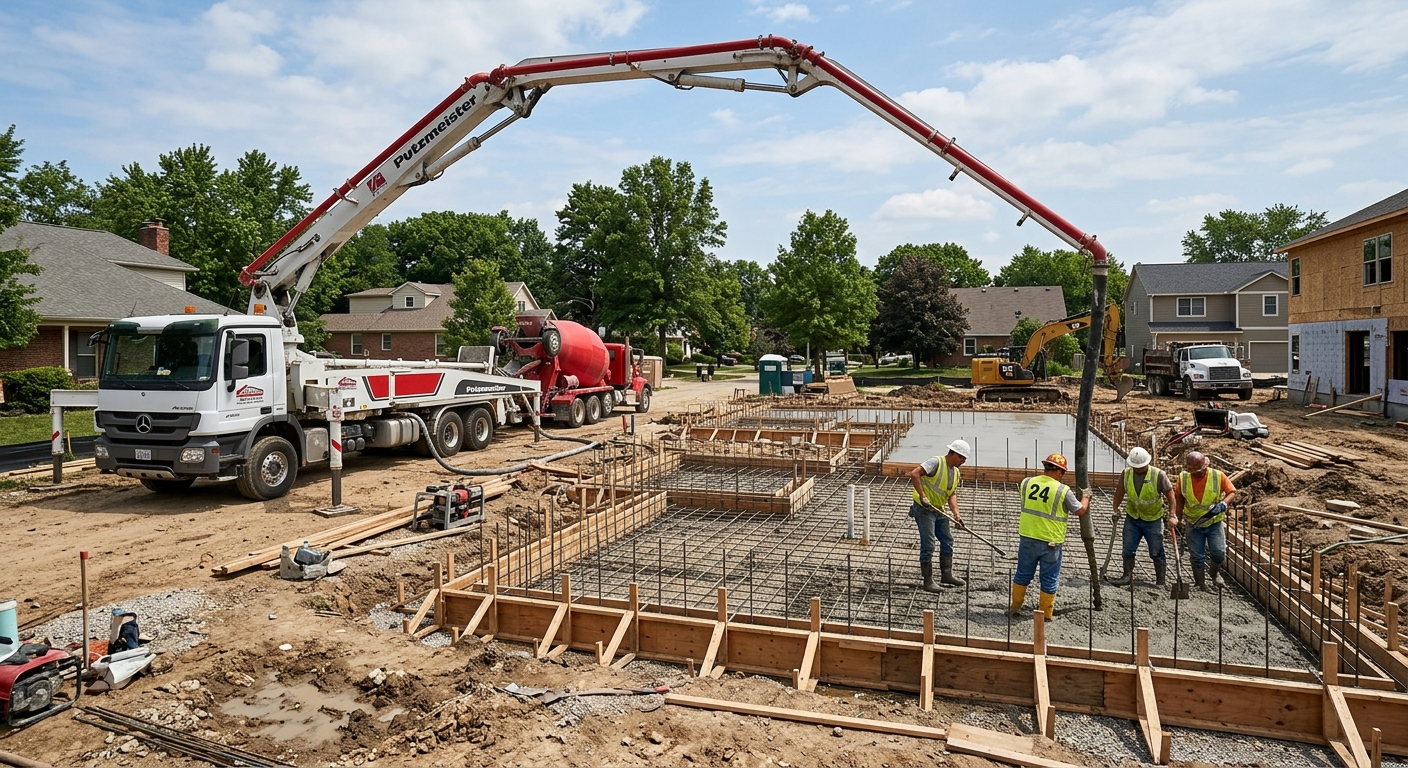
Concrete work options and costs in Sardis
Sardis, British Columbia is a great place for concrete flatwork—but the cost can move a lot depending on frost protection, drainage, and how we cure through cool, wet weather. With a 2021 population of 10,010 in the area (Statistics Canada, 2021 Census), the market is steady, and most driveways and patios are for single-detached homes and small-lot properties where access and excavation matter. In Lower Mainland–Southwest, mild winters can be deceptive: we still design for a shallow but real frost depth (commonly around 450 mm / 18"), and the frequent freeze–thaw cycles plus saturated soils mean the base prep, air-entrained mix, and joint layout have to be right to prevent scaling and cracking.
Concrete contractors are especially busy around the Abbotsford countryside edge and established neighbourhoods like the Greendale area, where homeowners often upgrade older driveways and add patios close to the home. Pricing in the Vancouver–Surrey–Abbotsford corridor reflects the engineered specs we use (footings and thickened edges below frost, compacted granular base, and controlled drainage) and the scheduling constraints from coastal rain, high humidity, and short windows when a pour can be done cleanly and finished without surface defects.
Below is a practical cost comparison for common concrete options in Sardis, with typical sizes so you can benchmark quotes before you ask for a detailed scope and breakdown.
| Application |
Typical Size |
Key Spec |
Finish Option |
Price Range |
| Concrete driveway (standard broom finish) |
400–600 sq. ft. |
Air-entrained exterior mix, compacted granular base, control joints |
Broom finish, standard edging |
$18,000 – $28,000 |
| Exposed aggregate driveway |
400–600 sq. ft. |
Air-entrained exterior mix, proper curing, textured surface |
Exposed aggregate (wash finish) |
$22,000 – $34,000 |
| Stamped concrete driveway or patio |
300–500 sq. ft. |
Air-entrained exterior mix, integral colour, sealer-ready surface |
Stamped pattern with release and sealer |
$22,000 – $36,000 |
| Plain concrete patio or walkway |
200–450 sq. ft. |
Compacted granular base, air-entrained mix, joints as required |
Light broom or smooth trowel (with proper finishing) |
$16,000 – $26,000 |
| Garage floor (interior slab) |
300–600 sq. ft. |
Vapour control where required, fibre or mesh as specified, joints |
Steel trowel + sealer optional |
$6,000 – $14,000 |
| Foundation footings (structural, below frost) |
Per project/formal allowance |
Excavation to frost depth, reinforced footing concrete |
Structural pour (not decorative) |
$25,000 – $45,000 |
Prices are estimates only and vary by project scope, site access and material selection.
What affects the price of concrete work in Sardis
In Sardis and across the Lower Mainland–Southwest, quotes for the “same” concrete job can differ by 30–50% because contractors price risk: excavation quality, drainage performance, engineered frost protection, and how long the crew can realistically work before rain and cool nights interfere with finishing and curing. Labour and truck logistics also vary across the corridor, especially when a job needs careful protection of slabs during prolonged wet weather. When you move outside the Lower Mainland to other parts of BC and back, scheduling and curing precautions can change enough to shift total cost.
The biggest spec driver is frost and freeze–thaw cycling. Even though the Lower Mainland frost line is shallower (often designed around 450 mm / 18"), footings, piers, and thickened edges must extend below the design frost depth to prevent frost heave and movement. Exterior slabs also require air-entrained concrete mixes to handle the repeated wet/dry and freeze–thaw cycles without scaling. In colder regions, the shorter pour season and cold-weather curing precautions (heating, insulating blankets) raise costs; in Sardis, we still plan for cool nights and high humidity, which can extend cure/holdback time and affect surface durability. De-icing salts used in the winter can accelerate surface wear and spalling if the mix and sealing aren’t done properly—this is why sealer and proper jointing are part of many driveway quotes.
For example, one homeowner may choose a standard broom driveway around the $18,000 – $28,000 band, while another upgrades to stamped work around $22,000 – $36,000—the price jump is justified when the base prep and reinforcement/joint layout are also being upgraded (not just adding colour and stamps). In older Sardis neighbourhoods with established drainage routes, correcting subgrade saturation (extra granular and drainage attention) can add cost, but it often prevents the “new slab over failing soil” problem that shows up within a few winters.
| Price Factor |
Why It Matters |
Cost Impact |
| Frost line depth |
Determines footing depth and form height |
Higher excavation and deeper reinforcement placement can raise costs substantially on structural work and thickened edges. |
| Site preparation |
Excavation, grading, compacted granular base |
More demo/haul, better base thickness, and drainage improvements increase labour, equipment time, and disposal. |
| Reinforcement |
Rebar or wire mesh requirement |
Mesh/rebar materials and placement time can add cost, but they reduce cracking risk on driveways and garage slabs. |
| Mix design |
Air-entrainment and compressive strength spec |
Air-entrained and properly designed mixes cost a bit more but reduce surface scaling and spalling failures. |
| Finish type |
Broom vs. stamped vs. exposed aggregate |
Decorative finishes add labour for forming, stamping steps, or exposed aggregate wash and finishing. |
| Pour size and concrete truck access to site |
Impacts delivery efficiency and crew productivity |
Tighter access can increase pumping/placement time and labour, and may limit achievable pour size per day. |
| Cold-weather curing precautions |
Heating and blankets |
Protective measures can add materials and labour when nights are cool or weather is unpredictable. |
| Control joint pattern and sealing cost |
Manages cracking and repels de-icing salt exposure |
Proper jointing and a penetrating sealer after cure can add line-item cost but improves long-term durability. |
Permits & regulations in British Columbia
In British Columbia, structural concrete work usually needs a building permit and is commonly reviewed through engineered drawings. That typically includes footings, foundation walls, grade beams, and other load-bearing foundation elements. If your project involves new or modified foundation support, you should expect a permit requirement and a design/engineer review pathway before concrete is poured.
Concrete flatwork—like driveways, patios, and walkways—often does not require a permit by default. However, it can trigger municipal review if it affects lot grading, drainage, or impervious surface coverage limits, or if work touches the municipal right-of-way (for example, sidewalk/curb apron interfaces). Because rules can vary by situation, it’s smart to confirm with the local authority before breaking ground.
Step-by-step, here’s how a Sardis homeowner should verify a contractor’s compliance in BC:
- Ask for a copy of the contractor’s current liability insurance certificate and confirm it matches the project address.
- Request proof of coverage for workers (commonly WSBC in BC). If they can’t provide it, pause and keep shopping.
- Check licensing/registration using the appropriate provincial contractor listing for the business (your contractor can provide their exact registration name and number).
- Look for clear references on similar concrete jobs (especially exterior flatwork with proper base drainage).
- Make sure the quote clarifies permit pulls (if required), inspections timing, and who’s responsible for compliance.
Getting concrete right in Sardis's freeze-thaw climate
Sardis concrete failures usually start long before the cracks show—most are linked to freeze–thaw action, saturated base soils, and inadequate air-entrainment. To spec the job correctly, begin with base preparation. We excavate and place a compacted granular sub-base to the right depth for the local soil and frost protection needs; a weak or wet base means the slab settles or heaves with moisture changes. Next is mix design: for exterior flatwork, we target 5–7% air content (depending on the product and conditions) and specify a minimum of 32 MPa compressive strength so the concrete can resist repeated freezing and thawing without scaling.
Control joints are the “planned crack.” We lay them out to limit random cracking in driveways and patios, and then we focus on curing: minimum 7-day curing under proper conditions is critical, especially when cool nights slow strength gain. Finally, apply a penetrating sealer about 28 days post-pour when the slab is properly cured—this helps repel de-icing salts and reduces moisture intrusion.
Use this to guide your technical questions. If a contractor wants to “skip” air-entrainment or treats curing like an afterthought, that’s where spalling risk comes from. The goal isn’t just aesthetics; it’s durability in our Lower Mainland–Southwest climate where rain and freeze–thaw cycles are routine.
As a dollar example: if you’re choosing between a plain broom-finish patio around the $16,000 – $26,000 band and decorative stamped work around $22,000 – $36,000, you should be confident the base, joints, and mix design are equally robust. Stamps are only “worth it” if the underlying durability steps are completed to the same standard.
| Spec |
Why It Matters in Sardis |
What to Ask For |
Impact if Skipped |
| Compacted granular base (depth?) |
Supports the slab through wet weather and frost activity |
Granular base thickness and compaction method tied to site conditions |
Settling, cracking, and voids that invite freeze–thaw movement |
| Air-entrained concrete mix (target air %?) |
Helps resist freeze–thaw scaling and scaling-related spalling |
Exterior mix air content (commonly 5–7% for flatwork) confirmed on spec |
Higher risk of surface deterioration within 1–3 winters |
| Compressive strength (MPa rating) |
Ensures durability in cool, damp curing conditions |
Minimum 32 MPa compressive strength |
Lower strength gain, increased early-age damage and wear |
| Control joints (spacing per ACI guidelines) |
Controls crack locations during shrinkage and temperature swings |
Joint layout and spacing plan before the pour |
Random cracking and wider, uneven fractures |
| Minimum 7-day curing period |
Cold nights and high humidity slow strength development |
Protected curing plan and when the slab can be used |
Reduced strength and higher vulnerability to early weather cycles |
| Penetrating sealer (when applied after cure) |
Repels moisture and de-icing salt exposure |
Penetrating sealer application after curing (about 28 days) |
Faster salt/ice damage and increased scaling over time |
How to choose a concrete work contractor in Sardis
Choosing a contractor in Sardis is less about flashy photos and more about verifying that the company builds for Lower Mainland–Southwest durability. Start with British Columbia coverage. Ask for a copy of their liability insurance certificate (and check the limits and effective dates). Then request confirmation of WSBC/WCB coverage for workers—if they can’t provide it, keep moving. Licensing/registration should also be verifiable: ask for their exact registration name and number and check using the appropriate provincial search tool. A legitimate contractor won’t mind this; “we don’t do that” is a red flag.
Next, get 2–3 itemised written quotes. You want a breakdown that separates excavation/site prep, base materials, concrete supply, reinforcement (mesh/rebar where needed), forming, finishing, curing/protection, and sealing. Avoid lump sums that don’t explain what’s included. Carefully check exclusions: is disposal included, is permit pulling included if required, and is the site restored (topsoil/landscaping and grading) covered?
For warranty, ask for the length of workmanship coverage and whether it’s tied to maintenance requirements (like sealing). Clarify whether the warranty is from the contractor only or includes manufacturer/product warranties, and whether it’s transferable to future owners.
Finally, discuss payment. Never pay more than about 10–15% upfront. Hold back a portion until the job is complete and the final cleanup is done. Get a written start date and completion estimate—concrete scheduling in our rainy, cool conditions often depends on curing and protection time.
- Provide certificate of insurance with matching project address.
- Provide proof of WSBC/WCB coverage for workers.
- Confirm licensing/registration details and business name for search verification.
- Quote is itemised (labour + materials + equipment + disposal).
- Quote names the mix type as “air-entrained exterior mix” for exterior work.
- Quote includes base prep thickness and compaction expectations.
- Specifies reinforcement: mesh/rebar where required by design.
- Includes joint plan (control joints) and finishing method.
- Includes curing method and minimum protection window.
- Includes whether and when penetrating sealer is included (and who applies it).
- Payment schedule: small deposit, holdback until final inspection/cleanup.
- Written timeline and weather/rain contingency plan for Sardis scheduling.
Concrete contractor red flags in Sardis include: skipping discussion of air-entrainment for exterior slabs, refusing to describe curing and weather protection (blankets/heaters), pricing that ignores site drainage and base compaction, vague quotes that don’t include joint layout and sealing, and asking for a large upfront payment before any measurable prep work is completed.
Frequently asked questions — concrete work in Sardis
How do I compare concrete quotes?
To compare concrete quotes in Sardis, start by ensuring the scope matches: ask whether each quote includes the same base prep thickness, compaction method, reinforcement (mesh/rebar where required), and the same finish system. Exterior work should be described as an air-entrained mix for freeze–thaw durability, and the quote should mention control joints and curing protection. Compare apples-to-apples on price per finished area where possible, but use the included spec details to catch “cheap swaps.” If one contractor’s numbers land near the standard driveway band (for example, roughly $18,000 – $28,000 for broom-finished driveway work) while another quotes similar scope higher, ask what they improved—often it’s drainage/base compaction, reinforcement, curing approach, or better finishing prep. Lastly, confirm whether disposal and site restoration are included, and whether a sealer is part of the plan for exterior slabs.
Can concrete be poured in cold weather in Sardis?
Yes, concrete can be poured in cold weather in the Sardis area, but you have to protect curing so the slab reaches design strength. In the Lower Mainland–Southwest, we still see cool nights and rain, and that slows early-age strength gain. A reputable crew will plan for curing conditions and may use curing blankets and temperature protection if the forecast suggests prolonged cool periods. The key is not just “pouring”; it’s maintaining the right conditions until strength builds—this is why many contractors schedule around rain events and night temperatures. Ask the contractor how they handle cold weather curing precautions: what blankets/heating are used, how long the protection stays on, and how traffic or construction access is managed. If they can’t explain their method, you risk early surface damage and long-term durability issues.
How do I maintain concrete in Sardis's freeze-thaw climate?
Maintenance in Sardis focuses on moisture and salt control. Use a penetrating sealer applied after proper cure (commonly about 28 days post-pour) to reduce water and de-icing salt penetration. Keep an eye on drainage: if water pools next to your driveway or patio, correct grading or downspout discharge locations so the base stays drier. For cleaning, avoid harsh chemicals that can break down surface coatings. During winter, use de-icing products carefully—especially where salt sits in the same spot repeatedly—since salt and freeze–thaw together can worsen scaling and spalling. Also, don’t ignore small issues: if you see minor spalls or widening cracks around joints, ask about early joint maintenance rather than waiting for full surface failure. Well-jointed and properly sealed exterior concrete generally holds up far better through the region’s wet/dry cycles.
What causes concrete to spall in Sardis winters?
Spalling in Sardis winters is most commonly linked to freeze–thaw stress plus moisture inside the concrete. If the exterior slab isn’t air-entrained to handle freezing temperatures, water can freeze within the paste and create internal pressure that breaks down the surface. Another common contributor is curing problems—if the slab doesn’t cure properly due to cool conditions or early rain exposure, strength gain can be lower and the surface becomes less durable. Poor base preparation and inadequate drainage also increase saturation, feeding the freeze–thaw cycle from the ground up. De-icing salts then accelerate surface wear at joint edges and traffic zones. To prevent this, make sure your contractor specifies an exterior air-entrained mix, includes control joints, and plans proper curing and a penetrating sealer after cure.
What is rebar and when is it required in British Columbia?
Rebar is reinforcing steel bars placed within concrete to improve tensile strength and reduce cracking from movement, shrinkage, and load. In British Columbia, whether rebar (or mesh) is required depends on the engineering/design and the type of concrete element. For example, driveways and garage slabs often include reinforcement strategies based on thickness, soil conditions, and loads, while foundation footings and foundation elements typically require reinforced structural concrete designed for frost and load resistance. Exterior flatwork durability in the Lower Mainland–Southwest is also influenced by base compaction and joints, but reinforcement is part of the overall crack-control plan. Ask your contractor what reinforcement is specified for your slab/footings and whether it’s based on engineer requirements or local design practice. If your work involves foundation elements, permit and engineered drawings are more likely to be part of the process in BC.
How long does a concrete project take in Sardis?
Timelines in Sardis depend on the project size, access, weather, and—most importantly—curing and protection requirements. A typical patio or walkway might be a short schedule for excavation and forming, followed by finishing, with curing time that restricts use until sufficient strength is achieved (often at least a week before regular foot traffic, longer for heavier loads). A driveway usually takes longer due to base preparation, drainage attention, and finishing/jointing; decorative finishes (like stamped work) add extra steps and can require careful weather timing to avoid defects. Even if the “pour day” is only hours, you should plan for additional days for prep and equipment setup, then time for curing. If a quote only talks about the pour date and not the curing/protection plan, ask for a written start and completion estimate—especially in the rainy, cool Lower Mainland–Southwest climate.