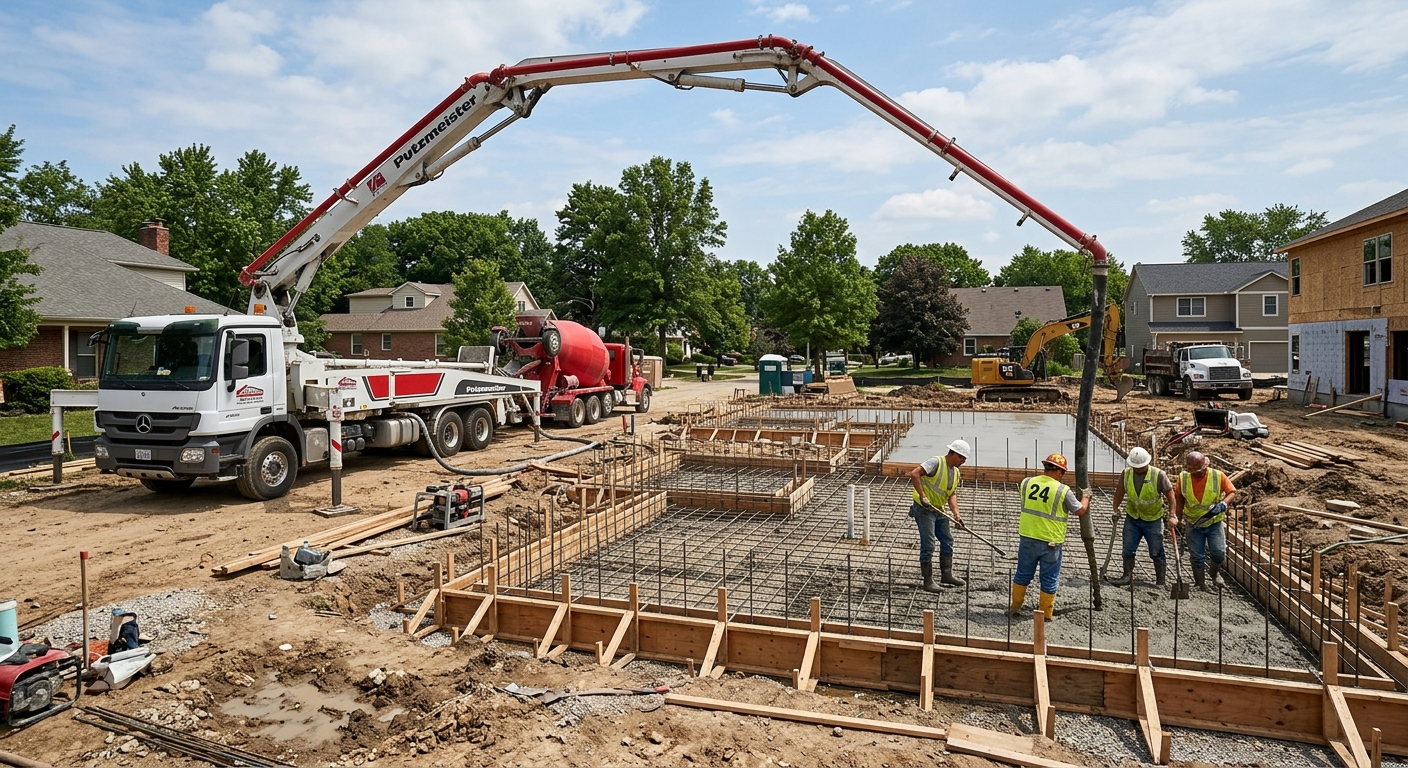
Concrete work options and costs in Oak Bay
Concrete work in Oak Bay is a bit different from other parts of British Columbia because we get a coastal blend of wet winters and frequent freeze–thaw cycles, even when overnight lows aren’t as extreme as inland. That means contractors have to build durability into every step—especially for exterior flatwork like driveways, patios and walkways. Oak Bay’s housing stock is also very concrete-friendly: single-detached homes make up 63.0% of dwellings, and a large majority of households are homeowners (74.5% of households own). In practice, that’s why you’ll see steady demand around older neighbourhoods with many pre-1981 homes (83.2% of housing built before 1981), where driveway and walkway renewals are common as properties are upgraded.
On Vancouver Island and the Coast, costs are influenced by a relatively shallow design frost line compared with colder provinces, but it’s still deep enough that footings must sit below frost to prevent heave and cracking. Water management matters just as much as the concrete itself—good granular base, drainage, and properly placed control joints help reduce scaling and random cracking. Weather timing also affects pricing: cool, damp periods slow curing and increase the contractor’s cost for protection (tarps, blankets, scheduling around heavy rain), while jobsite access on Peninsula properties can add labour for excavation and hauling.
If you’re planning work near the Fairfield/Ingleside area (or anywhere with tight access), it’s smart to compare finish options side-by-side before you book estimates. Use the ranges below as a planning baseline, then we’ll talk about what pushes quotes up or down.
| Application |
Typical Size |
Key Spec |
Finish Option |
Price Range |
| Concrete driveway (standard broom finish) |
400–600 sq. ft. |
Air-entrained mix; compacted granular base; control joints |
Broom finish with sealer-ready surface |
$16,000–$25,000 |
| Exposed aggregate driveway |
400–600 sq. ft. |
Air-entrained mix; proper finishing timing to expose stone; joints sealed |
Exposed aggregate (brush/vac finish) |
$20,000–$30,000 |
| Stamped concrete driveway or patio |
300–500 sq. ft. |
Air-entrained mix; integral colour; sawcut pattern; release agent |
Stamped pattern with colour hardener |
$22,000–$35,000 |
| Plain concrete patio or walkway |
200–350 sq. ft. |
Compact base; drainage slope; control joints as needed |
Broom or smooth trowel with light texturing |
$14,000–$22,000 |
| Garage floor (interior slab) |
400–650 sq. ft. |
Vapour barrier; reinforced slab; proper curing |
Broom finish or smooth-finish light texture |
$18,000–$30,000 |
| Foundation footings (structural, below frost) |
Varies by foundation plan |
Engineered dimensions; below-frost bearing; rebar as designed |
Structural concrete (formed and reinforced) |
$50,000–$90,000 |
Prices are estimates only and vary by project scope, site access and material selection.
What affects the price of concrete work in Oak Bay
Two homeowners can receive quotes that are surprisingly different for the same driveway or patio in Oak Bay—often 30–50%—because concrete pricing isn’t just “concrete per yard.” It’s the total package: excavation and hauling, base preparation, reinforcement decisions, mix design to match freeze–thaw durability needs, forming time, and how much protection is required for proper curing in cool, damp weather. On Vancouver Island and the Coast, labour and scheduling are also influenced by how frequently crews can access sites safely when rain turns soil to mud or when delays push work into colder stretches.
Frost line depth and freeze–thaw cycles drive spec changes. Even though coastal BC can be less severe than interior regions, exterior footings must still extend below the design frost depth to control heave and cracking. All exterior slabs should use air-entrained concrete to withstand freeze–thaw cycling; for that reason, contractors often specify air content and minimum compressive strength rather than “whatever is cheapest.” When cold snaps arrive, cold-weather curing precautions—insulating blankets, wind protection, sometimes temporary heat—can add cost, but skipping them can mean slower strength gain and weaker surfaces. Finally, de-icing salts (common on driveways) can accelerate spalling when surfaces aren’t properly finished and sealed; sealing is not optional if you want a long service life.
In Oak Bay, older properties with 1980s-and-earlier layouts can increase costs because of tight excavation, buried service surprises, and the need for thicker granular base in weaker subgrade. A practical example: upgrading from a plain broom-finish patio to a stamped finish can move you from the $14,000–$22,000 band toward the $22,000–$35,000 band. That jump is usually justified by formwork complexity, integral colour, stamp labour, and extra finishing time—rather than “more concrete.”
| Price Factor |
Why It Matters |
Cost Impact |
| Frost line depth — determines footing depth and form height |
Footings must sit below frost to reduce heave and long-term cracking |
More excavation and forming can add substantial labour and concrete volume |
| Site preparation — excavation, grading, compacted granular base |
Good base controls settlement and helps manage water |
Unstable subgrade or poor drainage increases hauling, base thickness, and downtime |
| Reinforcement — rebar or wire mesh requirement |
Reinforcement improves slab performance and crack resistance |
Added material + placement time; may require chairs/tie wire and tighter schedules |
| Mix design — air-entrainment and compressive strength spec |
Durability in freeze–thaw conditions depends on air entrainment |
Specified mix can cost more, but it’s cheaper than premature surface failure |
| Finish type — broom vs. stamped vs. exposed aggregate |
Finish systems require different labour, timing, and materials |
Stamped and exposed aggregate usually add labour and process steps |
| Pour size and concrete truck access to site |
Smaller access routes can force pump use or additional staging time |
Truck/pump time, traffic control, and extra crew hours increase costs |
| Cold-weather curing precautions — heating and blankets |
Cool temperatures slow strength gain and increase risk to the surface |
Protection materials and labour can add a noticeable contingency |
| Control joint pattern and sealing cost |
Joints guide cracking and sealing helps repel de-icing salt and water |
Correct sawcut spacing reduces random cracking; sealing adds cost but extends life |
Permits & regulations in British Columbia
In British Columbia, structural concrete work—typically anything that forms part of the building’s support system—generally requires a building permit. That includes footings, foundation walls, grade beams, and any engineered structural elements that affect load paths. For these projects, it’s common to see engineered drawings reviewed through the municipal process, and the inspector wants to verify dimensions, reinforcement placement, and pour steps.
Concrete flatwork like patios, walkways and driveways often does not require a permit by default, especially when it’s a like-for-like replacement that doesn’t change lot grading or increase impervious surface coverage beyond local requirements. However, permits can be triggered if your project changes drainage patterns, alters lot grading, connects to services, or affects municipal right-of-way conditions. The safest move is to check with the City of Oak Bay (or its permitting office) before excavation.
For contractor compliance, start by verifying three things: (1) licence/registration where applicable for the type of work, (2) liability insurance, and (3) the right worker coverage through WCB (and/or WSIB equivalents as required for your contractor category). In practice, you’ll verify licence/registry online via the province’s contractor registry resources, then request a certificate of insurance showing you’re covered as the client/owner. For WCB/WCB coverage, ask for a clearance letter or proof document before work starts. Finally, ask for references on similar Oak Bay-scale flatwork or foundation work so you can judge finish quality and jobsite controls.
Getting concrete right in Oak Bay's freeze-thaw climate
Concrete failures in Oak Bay are rarely “bad concrete”—they’re usually the result of the wrong specs for our freeze–thaw conditions, or the job being rushed through prep and curing. In this coastal climate on Vancouver Island, the most common issues I see are surface scaling and spalling (especially on driveways and steps) when air entrainment isn’t correct, when the base isn’t compacted and drained properly, or when curing is compromised by cool, wet weather.
To spec the job correctly, focus on five areas. First is base preparation: compacted granular sub-base at the correct depth for local soil and frost considerations, plus proper slope and drainage so water doesn’t sit beneath slabs. Second is mix design: exterior flatwork should use air-entrained concrete—targeting about 5–7% air for freeze–thaw durability—and a minimum 32 MPa compressive strength (or higher if required by your design). Third is control joints: use a joint spacing plan that guides cracking to predictable lines rather than random fractures. Fourth is curing: plan for at least 7 days of curing under proper conditions, and add protection (insulating blankets/wind cover) if temperatures drop—cold weather slows strength gain. Fifth is sealing: apply a penetrating sealer after cure, typically around 28 days post-pour, to help repel de-icing salts and moisture.
If you’re comparing options, this is where costs make sense. For example, paying for stamped concrete may add labour and materials, but you should still budget for the durability fundamentals. Cutting corners on air entrainment or base prep is never “worth it,” because it can cost you again sooner. The premium is for finish detail; the durability is for surviving Oak Bay’s wetting/freezing cycles.
| Spec |
Why It Matters in Oak Bay |
What to Ask For |
Impact if Skipped |
| Compacted granular base (depth?) |
Prevents settlement and manages water beneath the slab in freeze–thaw conditions |
Granular base thickness and compaction test/verification plan |
Uneven support leads to early cracking and pumping at weak spots |
| Air-entrained concrete mix (target air %?) |
Protects against scaling/spalling from repeated freezing and thawing |
Air content spec (commonly 5–7% for exterior flatwork) |
Accelerated surface deterioration, especially where salts are used |
| Compressive strength (MPa rating) |
Ensures strength gain under local curing conditions and load needs |
Minimum 32 MPa (or higher if specified for your use) |
Lower durability and reduced performance under traffic and weather |
| Control joints (spacing per ACI guidelines) |
Controls where cracks occur as the slab shrinks and moves |
Sawcut timing and joint spacing plan |
Random cracking and cosmetic failure that can allow water ingress |
| Minimum 7-day curing period |
Cool, damp weather can slow strength gain and increase early damage risk |
Curing method and protection plan during cold snaps |
Surface weakness, increased scaling, and patchy wear |
| Penetrating sealer (when applied after cure) |
Helps repel moisture and de-icing salt exposure |
Application around 28 days post-pour (after cure requirements) |
Higher moisture uptake and faster deterioration of the surface finish |
How to choose a concrete work contractor in Oak Bay
Choosing the right contractor for concrete in Oak Bay starts with verification—not just a nice presentation. In British Columbia, first confirm the contractor is properly authorized for the type of work they’re doing (and that the company name matches the permit/accounting you’ll use, if one is required). Next, request a certificate of liability insurance and make sure it’s current and adequate for the project size. For worker coverage, ask for proof of WCB coverage (or the applicable provincial worker coverage documentation) before work begins. If they can’t provide documentation quickly, that’s a practical red flag.
Then get 2–3 itemised written quotes. Ideally, each quote breaks out labour and materials separately and lists items like excavation, disposal/haul-away, granular base, reinforcement, mesh/rebar supply and install, formwork, concrete supply, finishing, and sealing. Don’t accept a one-line lump sum without exclusions: ask what’s included for permit pulls (if structural), weekend work, traffic control, site protection, and surface restoration for lawn/landscaping.
Warranty matters for concrete. Ask for a workmanship warranty length and whether manufacturer warranties apply to sealers or specialty admixtures. Also confirm whether the warranty is transferable if you sell your home.
For payment, keep it conservative: never pay more than about 10–15% upfront. Hold back a portion until completion and final cleanup (and, where applicable, after the cure/sealer schedule is met). Finally, get a start date and completion estimate in writing, including weather contingencies.
- Provide proof of liability insurance before you sign anything.
- Provide WCB coverage documentation (request it up front).
- Give an itemised quote (labour + materials), not just a single total.
- List granular base depth and compaction plan, not vague “proper base.”
- Specify air-entrained mix requirements for exterior work.
- Confirm rebar/mesh placement details (and chairing/tie wire if used).
- Describe control joint spacing and sawcut timing.
- Clarify curing method and protection in cool/wet weather.
- Confirm whether de-icing salt exposure is considered (sealer plan).
- State disposal/haul-away inclusion for excavated material.
- State protection of landscaping/driveway access during the pour.
- Provide a written schedule with weather contingency call-outs.
In Oak Bay, watch for red flags like “we use standard mix for everything,” no mention of air entrainment, vague joint spacing (“we’ll do joints where needed”), unwillingness to show insurance/WCB proof, and missing details on curing/sealing timing.
Frequently asked questions — concrete work in Oak Bay
How do I seal concrete to protect it in Oak Bay?
In Oak Bay, sealing helps because the surface sees repeated wetting, coastal moisture, and exposure to de-icing salt on driveways and steps. The key is timing: wait until the concrete has properly cured, typically around 28 days post-pour for penetrating sealers, so you don’t trap moisture inside the slab. Ask your contractor for the specific sealer type (penetrating vs. film-forming) and coverage rate, and confirm the surface prep—cleaning and drying—so the sealer can actually soak in. Plan for one application at install plus periodic re-sealing based on wear. If your driveway is in a high-salt area, sealing is a practical way to slow spalling and surface scaling compared with leaving it unprotected.
What is the difference between concrete and cement?
Concrete is the full material system—cement plus water plus sand and gravel (and sometimes admixtures like air-entrainment for freeze–thaw durability). Cement is only one component: the binding powder that reacts with water to form paste. In British Columbia, for exterior flatwork in freeze–thaw conditions, the details matter more than the name. That’s why reputable contractors specify an air-entrained mix and a minimum compressive strength requirement for durability. Even if the cement type sounds “high quality,” what determines performance for Oak Bay conditions is the whole mix design (including air content), correct base prep, finishing, jointing, and curing. A good quote should talk about these specs, not just “cement brand.”
How much does concrete work cost in Oak Bay?
Concrete work in Oak Bay is typically priced by application and finish level. As a planning baseline, driveway and slab flatwork can fall around the $16,000–$25,000 band for a standard concrete driveway and around $14,000–$22,000 for a plain patio or walkway, depending on size and site access. Stamped concrete often moves higher—often near the $22,000–$35,000 range—because it adds labour steps like integral colouring, stamping, and more finishing time. Foundation/footings (below frost) can be in the $50,000–$90,000 ballpark depending on engineered dimensions. Because Oak Bay has many older homes (83.2% built before 1981), excavation and site conditions can make your actual costs vary—so the best way is to get itemised quotes that spell out base depth, reinforcement, and curing/sealing.
How deep must footings be for Oak Bay's frost line?
For Oak Bay and the wider Vancouver Island and Coast climate, frost protection is designed to sit below the local frost depth assumptions used in building codes and engineering. While exact footing depth should follow your engineered drawings and local design requirements for your site, coastal BC commonly uses a frost depth window roughly around 0.5–1.2 m to manage frost-related heave. The practical takeaway for homeowners is that footings aren’t “one size fits all.” Soil type, drainage, and foundation design influence the final depth and bearing conditions. If someone quotes shallow footings without discussing frost considerations or engineered requirements, that’s a concern. For accurate depth, confirm the footing elevations and sizes with the engineer and ensure the excavation is inspected before concrete placement.
Why does concrete crack in Oak Bay and how is it prevented?
Concrete cracks in Oak Bay largely due to shrinkage, temperature changes, and movement caused by water and freeze–thaw cycling. In a coastal environment, wetting and freezing can expand and contract soils under slabs, and that’s why proper base preparation and drainage are as important as the mix. The most common prevention tools are (1) correct sub-base compaction, (2) air-entrained concrete for freeze–thaw durability, (3) reinforcement where required, and (4) a control joint plan that guides cracking to predictable locations. Joints need correct spacing and timely sawcutting so the slab can relieve stress. Finally, curing matters—cool, damp conditions slow strength gain, increasing early surface vulnerability. If a contractor doesn’t discuss joints, air content, and curing protection, you’re taking an avoidable risk.
Stamped vs broom-finish concrete — cost difference?
Stamped concrete costs more than broom-finish because it involves extra labour and materials. A broom-finish driveway or walkway is usually the most straightforward finish—think the $16,000–$25,000 planning range for a standard driveway—while stamped work often lands closer to the $22,000–$35,000 range for driveways or patios. The premium is usually justified by integral colour or colouring components, release agents, stamp application labour, and more careful finishing/curing so the pattern stays crisp and uniform. What many people miss is that stamped concrete still needs the same durability fundamentals for Oak Bay: air entrainment for freeze–thaw exposure, proper granular base, jointing, and cure protection. If a quote increases price for stamps but doesn’t upgrade the mix or joint plan, it’s not the finish you should be worried about—it’s the durability.