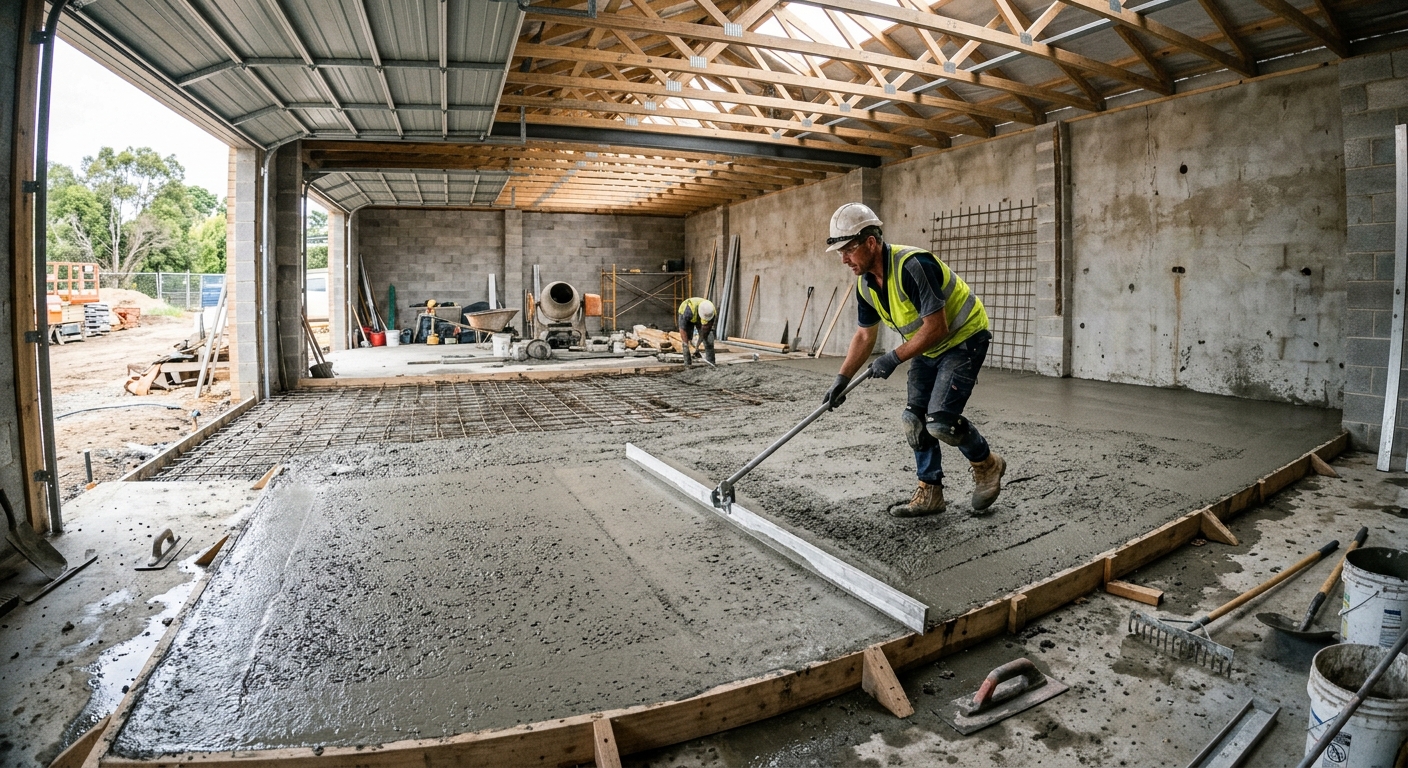
Concrete work options and costs in Mount Lehman
In Mount Lehman, concrete flatwork and structural pours are a practical, long-lasting choice—but the cost can shift a lot depending on frost protection, drainage, and finish level. With a population of 1,558 (Statistics Canada, 2021 Census), Mount Lehman is a small community within the Lower Mainland–Southwest, where demand concentrates around newer neighbourhood build-outs and infill around the greater Abbotsford corridor. Many homeowners are in a typical Lower Mainland housing pattern dominated by single-detached homes, which is exactly where driveways, patios, walkways, and garage slabs are most common. That steady demand is why you’ll find concrete crews especially busy for exterior projects near high-traffic residential streets and newer developments.
Lower Mainland–Southwest pricing is shaped by mild winters overall, yet a shallow frost line still means we must place footings and thickened edges below the design frost depth (commonly around 450 mm / 18" for planning). At the same time, our coastal-wet conditions bring frequent freeze–thaw cycles, heavy rainfall, and high humidity that slow curing and affect surface durability—so base prep, air-entrained concrete, control joints, and curing practices aren’t “extras,” they’re the foundation of the final price. Contractors also schedule around prolonged rain and cool nights, so work windows can tighten even when temperatures aren’t extreme. This is especially true for driveways and patios in wetter pockets of the area where runoff and saturated soils require more thorough granular drainage.
Below is a clear comparison of typical applications and what you can expect for pricing in Mount Lehman, before you request a detailed quote.
| Application |
Typical Size |
Key Spec |
Finish Option |
Price Range |
| Concrete driveway (standard broom finish) |
320–480 sq. ft. |
Air-entrained exterior mix, compacted granular base, control joints |
Broomed surface, saw-cut joints |
$18,000 – $28,000 |
| Exposed aggregate driveway |
320–480 sq. ft. |
Air-entrained exterior mix, proper curing, joint layout for cracking control |
Exposed/washed aggregate look |
$22,000 – $34,000 |
| Stamped concrete driveway or patio |
250–400 sq. ft. |
Air-entrained mix, thicker slab for stamp detailing, strengthened base |
Stamp mats + colour hardener/sealer |
$22,000 – $36,000 |
| Plain concrete patio or walkway |
120–240 sq. ft. |
Compacted base, air-entrained mix, edge forms, joints |
Float + light broom finish |
$4,000 – $8,000 |
| Garage floor (interior slab) |
400–600 sq. ft. |
Standard interior mix, vapour control where needed, joints where required |
Broom finish, common jointing |
$6,500 – $12,500 |
| Foundation footings (structural, below frost) |
Per linear foot / typical home: 200–360 lin. ft. |
Excavation, forming, rebar per engineer, pour below design frost depth |
Structural concrete (no decorative finish) |
$40,000 – $105,000 |
Prices are estimates only and vary by project scope, site access and material selection.
What affects the price of concrete work in Mount Lehman
In the Lower Mainland–Southwest, two quotes for the “same” concrete job can differ by 30–50% once you account for frost-depth requirements, base prep, drainage, mix design, and finish complexity. That spread is even larger across British Columbia because colder regions typically need deeper excavations, different scheduling windows, and more expensive cold-weather curing measures. In Mount Lehman, we still plan around a design frost depth around 450 mm / 18", meaning footings, thickened edges, and properly sized piers need form height and excavation depth that directly drives labour and disposal. Meanwhile, our frequent freeze–thaw cycles and saturated soils push us toward air-entrained mixes and careful jointing to reduce scaling and freeze-related surface damage.
Concrete prices also swing with scheduling and curing. Prolonged rain, cool nights, and high humidity can slow concrete gain of strength, so crews often use curing blankets and longer cure times on exterior flatwork. De-icing salts in winter accelerate spalling when the mix, air content, and curing weren’t done correctly—so sealing becomes part of the durability equation, not an afterthought. If your plan is “standard broom at the driveway,” you’ll typically land closer to the $18–$28 concrete driveway/slab band. If you want stamped work, plan for the higher stamped & decorative band—often around $22–$36—because of labour-intensive colour work, stamp mats, and added finishing time.
Two local examples that commonly raise cost in Mount Lehman: (1) saturated, poorly draining subgrade that requires additional compacted granular and drainage attention before any slab is formed; and (2) sites with limited concrete truck access, where smaller pours, more labour, or staged logistics are needed. Conversely, projects can come in lower when excavation is modest, the subbase is already well-prepared, and the design is simple with straightforward truck access and standard broom finish.
| Price Factor |
Why It Matters |
Cost Impact |
| Frost line depth — determines footing depth and form height |
Footings must sit below the design frost zone to prevent heave |
Higher excavation and forming; can materially change the structural scope |
| Site preparation — excavation, grading, compacted granular base |
Drainage control and base compaction prevent settlement and cracking |
More granular, labour, and equipment time if soils are wet/variable |
| Reinforcement — rebar or wire mesh requirement |
Reinforcement supports slab performance under loads and movement |
Added material + tie-in labour; may also require thicker sections |
| Mix design — air-entrainment and compressive strength spec |
Air voids help concrete survive freeze–thaw exposure |
Material cost increase; incorrect specs can lead to early failure |
| Finish type — broom vs. stamped vs. exposed aggregate |
Surface systems require different labour and curing/colour steps |
Stamped/exposed typically increase labour and material handling |
| Pour size and concrete truck access to site |
Small access issues can require staging or extra crew time |
May increase labour and delay scheduling during peak seasons |
| Cold-weather curing precautions — heating and blankets |
Cold slows strength gain; controlled curing protects durability |
Blankets/heaters + longer protection time add costs |
| Control joint pattern and sealing cost |
Joints guide cracking and sealing protects from de-icing salts |
More saw cutting and sealer materials; typically worth it for exterior slabs |
Permits & regulations in British Columbia
In British Columbia, structural concrete work typically needs a building permit. That includes concrete footings, foundation walls, grade beams, and any structural elements that affect load-bearing capacity and the building envelope. In many cases, engineered drawings are required and reviewed through the municipal permit process. For concrete flatwork—patios, walkways, sidewalks, and most driveways—permits are usually not required unless the project affects lot grading, drainage patterns, impervious surface coverage limits, or impacts municipal right-of-way features (for example, ties into a lane approach or changes to curb/sidewalk areas). Because rules can vary based on how your driveway interfaces with drainage and sidewalks, confirm with the local authority before breaking ground.
Before signing a contract in Mount Lehman, verify three things: (1) the contractor has the right business registration and any applicable trade licensing for the scope, (2) liability insurance is current and adequate for the work, and (3) the contractor has WSIB/WCB coverage where required for their employees. Step-by-step, you can check: start with the contractor’s posted contact and business details; then ask for a current Certificate of Insurance (COI) naming you or showing coverage limits; and request a WSIB/WCB clearance letter or proof of coverage. For licensing verification, use the provincial online registry tools (search the contractor name/business number and confirm that the registration matches the entity on the quote and invoice). Also, ask for references on similar Mount Lehman projects—driveway and foundation crews that handle wet-site base prep will usually have solid local examples.
Quick rule of thumb: structural concrete = permit/engineer/inspection focus; decorative or flatwork = often no permit, unless grading, drainage, or municipal interfaces are affected.
Getting concrete right in Mount Lehman's freeze-thaw climate
Concrete failures in Mount Lehman usually come down to freeze–thaw stress on the surface, moisture movement through the slab, and inadequate base drainage. When concrete can’t shed water and the mix isn’t properly air-entrained, it can scale and spall—especially after winter cycles and when de-icing salts are used. Specifying the job correctly starts with base preparation: excavate to the right depth for your local soil and frost requirements, then install a compacted granular sub-base with proper drainage consideration. Next is mix design—our exterior conditions require air-entrainment (commonly 5–7% air content for exterior flatwork) and a minimum compressive strength of 32 MPa so the concrete can handle repeated wetting and freezing. Control joints should be planned and cut to limit random cracking, and curing matters: plan for at least 7 days of curing under suitable conditions. In cool or rainy periods, we often extend protection using curing blankets and proper surface protection until strength and durability targets are reached. Finally, consider a penetrating sealer after the cure—typically applied about 28 days post-pour—to help repel de-icing salts and water intrusion.
When you’re comparing options, ask how the contractor will prevent spalling. If someone promises a low bid by skipping air-entrainment checks, shortening curing time, or delaying joint sealing, that’s where you’ll pay later. For example, upgrading from a standard broom driveway to stamped concrete is often justified by added colour and finish labour; that price gap can be roughly aligned with the move from the $18–$28 driveway/slab band into the $22–$36 stamped & decorative band. But if both options still use the same air-entrained mix, correct joints, and proper base drainage, the durability should be comparable—finish complexity is where the real cost difference should live, not in cutting corners on structural quality.
| Spec |
Why It Matters in Mount Lehman |
What to Ask For |
Impact if Skipped |
| Compacted granular base (depth?) |
Controls settlement and moisture movement before frost affects the slab |
Confirm granular thickness, compaction method, and drainage plan for your soil |
Uneven cracking, pumping, and accelerated deterioration in wet winters |
| Air-entrained concrete mix (target air %?) |
Helps concrete resist freeze–thaw scaling and spalling in the Lower Mainland–Southwest |
Ask for the mix design and target air content (typically 5–7% for exterior flatwork) |
Surface scaling/spalling, rough texture, premature failure |
| Compressive strength (MPa rating) |
Strength supports durability and resistance to wear and moisture cycles |
Confirm minimum 32 MPa specification and protection timeline |
Reduced strength gain leads to weaker, more damage-prone concrete |
| Control joints (spacing per ACI guidelines) |
Limits random shrinkage cracks that become water pathways |
Ask for joint spacing, layout, and saw-cut timing for your slab size |
Uncontrolled cracking and faster water/ice ingress |
| Minimum 7-day curing period |
Ensures proper strength development despite cool nights and humidity |
Ask how curing will be maintained (curing blankets, protection from rain) |
Lower strength, higher cracking risk, durability problems |
| Penetrating sealer (when applied after cure) |
Reduces salt and water penetration during winter cycles |
Confirm sealer type and timing—typically about 28 days after pour |
Faster salt damage, staining, and increased surface deterioration |
How to choose a concrete work contractor in Mount Lehman
Choosing the right contractor in Mount Lehman starts with verifying the basics and then reading the details in the quote. In British Columbia, don’t assume coverage—ask. To check licensing and business legitimacy, look for the contractor’s legal business name matching the quote and invoice, then verify the registration through the provincial online registry tools (use their business number or exact legal name). For insurance, request a current Certificate of Insurance (COI) showing liability coverage and that it’s effective for the project dates. For workers’ coverage, ask for WSIB/WCB proof or a clearance letter (where required), and confirm it covers their employees assigned to your jobsite.
Next, get 2–3 itemised written quotes—not just a lump sum. You want labour and materials broken out (excavation/grading, granular base, reinforcement, concrete supply, forming, finishing, sealing, and any disposal). Read what’s excluded: is old concrete removal included or is it “by others”? Is permit support included (if required for structural work)? Is site protection included? Will they supply curing blankets if nights are cool or rain is expected? Also ask about warranty terms: the workmanship warranty length (often 1–2 years for flats, but varies), whether product/manufacturer warranties apply to products like sealers, and whether warranties are transferable if you sell your home.
For payment, keep it reasonable: never pay more than 10–15% upfront, and hold back a final portion until the job is complete, cleaned, and accepted. Finally, lock in a timeline in writing with a start date and completion estimate, and ask how they handle weather delays common in the Lower Mainland–Southwest.
- Confirm concrete mix design details for exterior air-entrainment and strength spec
- Ask for a site-prep plan: excavation depth, granular thickness, and compaction method
- Get joint layout and saw-cut schedule in writing (control joints prevent random cracking)
- Request proof of liability insurance and current coverage dates
- Request WSIB/WCB clearance/proof for employees assigned to your project
- Make sure the quote includes haul/disposal if required for your site
- Verify truck access plan (staging, pump use if necessary, and pour logistics)
- Clarify whether reinforcement is included and the placement plan (chairs/ties)
- Confirm curing method (blankets/sealer timing, especially during cool or wet spells)
- Ask what finish is being provided (exact broom profile, stamp/aggregate process)
- Check warranty language: workmanship + exclusions for salt/maintenance
- Use milestone payments with a holdback until final grading, cleanup, and touch-ups are done
Concrete red flags in Mount Lehman: (1) skipping or downplaying air-entrainment for exterior slabs; (2) refusing to put curing and joint timing in writing; (3) quoting a “standard mix” with no mix design details; (4) demanding large upfront deposits before site protection and base prep start; and (5) no documented insurance/coverage or vague warranty terms tied to “normal wear.”
Frequently asked questions — concrete work in Mount Lehman
How do I compare concrete quotes?
In Mount Lehman (Lower Mainland–Southwest), comparing quotes is less about the total number and more about what’s included. Ask each contractor to itemise the same scope: excavation depth, granular base thickness and compaction, reinforcement type (if any), concrete mix design (especially air-entrainment for exterior), forming, finishing, control joints, and curing protection. Then compare finish specs and sealing—stamped/sealed work will cost more, but the base quality should not be reduced. Use the local price bands as a reality check: a typical driveway/sub-base broom finish often lands near the $18,000–$28,000 band, while stamped & decorative can move toward the $22,000–$36,000 band depending on surface area and complexity. Finally, confirm truck access, disposal, and whether any weather delays trigger extra protection costs.
Can concrete be poured in cold weather in Mount Lehman?
Yes, concrete can be poured in British Columbia during cool weather, but the contractor must control curing and strength gain—especially in Mount Lehman where cool nights and wet conditions can slow set. If temperatures drop near freezing, you’ll typically need cold-weather curing precautions like insulating blankets and sometimes temporary heating, plus tighter control of protection time. The key is that cold pours aren’t just “pour and hope”; they require a plan that maintains proper curing conditions long enough to reach safe strength. When comparing quotes, ask how they’ll protect the slab during the first days, how long blankets will stay on, and whether rain exposure will be prevented. A well-prepared crew protects durability in the same freeze–thaw climate that can otherwise lead to scaling and early spalling.
How do I maintain concrete in Mount Lehman's freeze-thaw climate?
Maintenance in Mount Lehman is mostly about moisture control and salt management. Keep surface drainage working: ensure the driveway slopes away from the house and that downspouts aren’t dumping water onto the slab. After the concrete has cured (commonly 28 days for many sealers), use a penetrating sealer if your contractor recommends it; this helps repel water and de-icing salts. During winter, use de-icing products thoughtfully—excessive salt and coarse ice melt can accelerate surface wear if the concrete isn’t properly air-entrained and sealed. Also, don’t ignore small joint problems: if caulking or joint sealing was part of the design, check annually and patch where needed so water can’t infiltrate cracks. With proper specs, exterior slabs typically stay serviceable for many years even through frequent freeze–thaw cycles in the Lower Mainland–Southwest.
What causes concrete to spall in Mount Lehman winters?
Spalling in Mount Lehman is usually a freeze–thaw and moisture problem. Water enters the concrete through shrinkage cracks or poorly sealed joints, then freezes and expands. If the concrete mix wasn’t properly air-entrained for exterior exposure, freeze-related pressure can disrupt the surface paste and create scaling and spalling. It can also be worsened by inadequate curing, which reduces durability, and by poor base preparation that allows settlement and moisture movement under the slab. To avoid it, require air-entrained concrete (commonly 5–7% air for exterior flatwork) and proper control joint spacing, plus sufficient curing time under protection during cool or rainy periods. Sealing after cure—often around 28 days post-pour—adds another layer of protection against salt and water intrusion.
What is rebar and when is it required in British Columbia?
Rebar is steel reinforcement placed inside concrete to strengthen it against cracking and structural movement. In British Columbia, when it comes to structural concrete—like foundation footings, foundation walls, and grade beams—engineered designs often specify rebar quantity, diameter, spacing, and cover requirements. For concrete flatwork such as typical patios or driveways, rebar may or may not be required depending on thickness, soil conditions, spans, loads (like heavy vehicles), and the contractor’s design approach. In Mount Lehman, wet soils and freeze–thaw exposure make base prep and mix design critical either way, but reinforcement can become more important when slabs are thicker, have higher loading, or when the plan includes engineered structural expectations. When you get quotes, ask whether rebar or wire mesh is included, and request the placement plan and thickness assumptions so you’re comparing apples to apples.
How long does a concrete project take in Mount Lehman?
Timelines in Mount Lehman depend on the scope, site access, and weather. Typical exterior projects follow a practical sequence: prep and forms, then the pour, then curing and protection. For many patios and walkways, you might see a faster turnaround once base prep is completed, but the slab still needs proper curing time before full use. Driveways often take longer due to excavation, base grading, drainage attention, and the wider area involved. Structural foundation work (like footings) usually takes longer because of excavation, forming, reinforcement placement, and potential inspections tied to the engineered plan. Weather can extend schedules—prolonged rain and cool nights can delay pour timing or require additional curing blankets, and contractors need time to reach strength safely. When you request a quote, ask for the start date, pour date, curing/protection duration, and the expected completion window in writing.