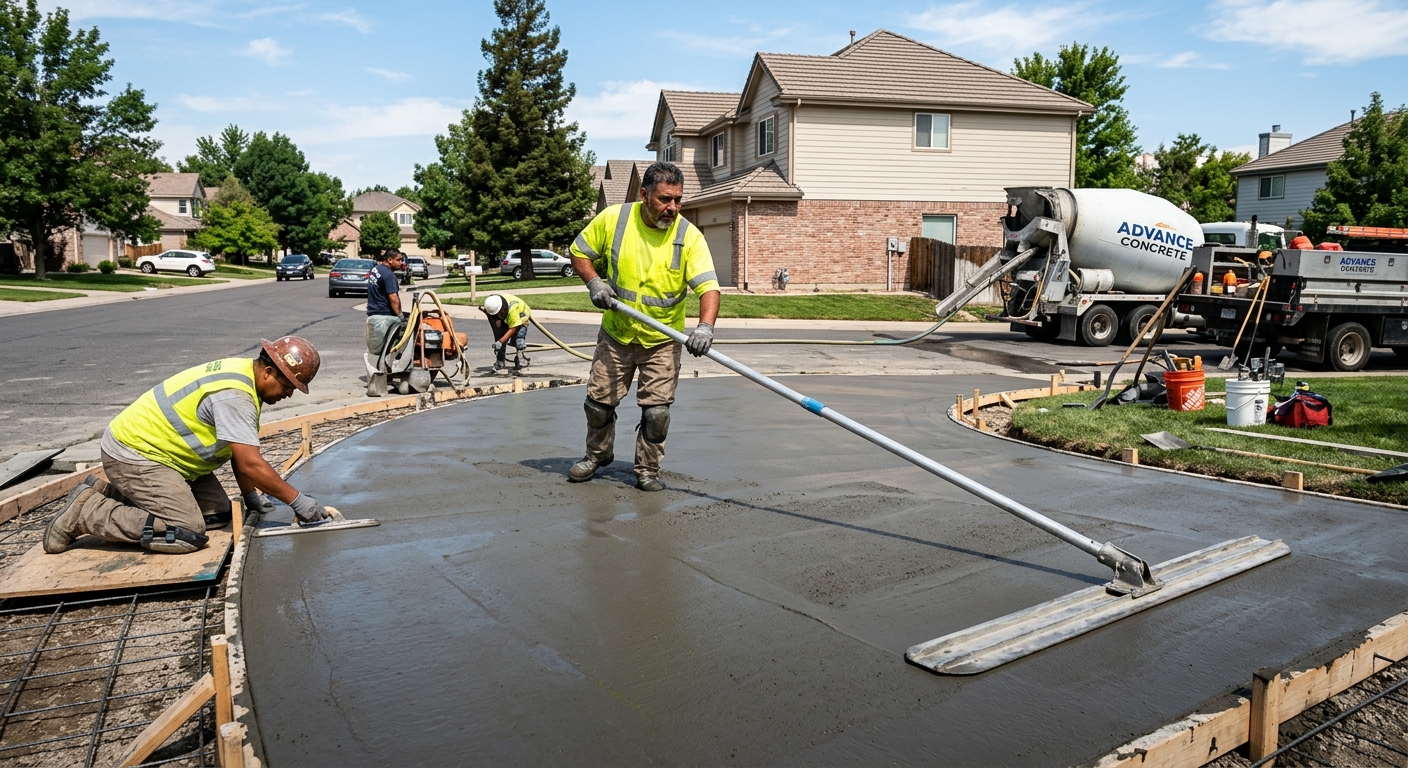
Concrete work options and costs in Gibsons
Concrete work in Gibsons is a practical, year-round service for a waterfront community where many homes see wet subgrade and freeze–thaw cycles that punish weak mixes and poor drainage. With single-detached houses making up 55.6% of dwellings, the most common concrete flatwork projects are driveways, patios and walkways—especially on well-established residential streets around Gibsons Landing and the West Sechelt neighbourhood edge. Homeownership is also high (75.2% of households own), which typically translates into more renovation work such as slab replacements and refreshed patio finishes.
Lower Mainland–Southwest pricing is shaped by a shallow but meaningful design frost depth (often treated around 450 mm / 18" in local practice) and the need to place footings, thickened edges, and engineered base prep below frost to reduce frost heave risk. Even in a milder coastal climate, we still see saturated soils and freeze–thaw action, so contractors must build in subgrade drainage, use air-entrained mixes, and control cracking with proper joints. Coastal rain and cool nights also affect scheduling and curing—driveways and patios may require blankets and longer protection windows to hit design strength and surface durability. Availability can vary during busy spring-to-fall weeks, which is why solid scheduling and a complete spec matter as much as unit pricing.
Below are typical price ranges for common concrete options in Gibsons, so you can compare like-for-like scopes before you request a detailed estimate.
| Application |
Typical Size |
Key Spec |
Finish Option |
Price Range |
| Concrete driveway (standard broom finish) |
400 sq. ft. (approx. 20' x 20') |
Air-entrained exterior mix, compacted granular base, control joints |
Broom finish, saw-cut joints |
$9,000–$11,200 |
| Exposed aggregate driveway |
400 sq. ft. (approx. 20' x 20') |
Air-entrained exterior mix, proper curing protection |
Exposed aggregate with retarder and polish-ready finish |
$11,000–$14,800 |
| Stamped concrete driveway or patio |
300 sq. ft. (approx. 15' x 20') |
Air-entrained exterior mix, integral colour, joints planned to control cracking |
Stamp pattern + integral colour (1–2 colours typical) |
$8,500–$13,800 |
| Plain concrete patio or walkway |
200 sq. ft. (approx. 10' x 20') |
Air-entrained exterior mix, compacted base, edging |
Float + broom or light broom texture |
$3,200–$5,200 |
| Garage floor (interior slab) |
520 sq. ft. (approx. 20' x 26') |
Vapour control as needed, compacted base, mesh or fibres (as specified) |
Standard broom, sealed option available |
$8,500–$13,000 |
| Foundation footings (structural, below frost) |
Typical 1,000 linear ft. over a full crawl/foundation plan varies |
Excavation, forming, rebar cage, placement below frost line |
Structural concrete with engineered reinforcement |
$20,000–$28,000 |
Prices are estimates only and vary by project scope, site access and material selection.
What affects the price of concrete work in Gibsons
In the Lower Mainland–Southwest, it’s not unusual to see quotes for the “same” concrete job vary by 30–50% once you compare the details. Two contractors can both say “new driveway,” but one might include excavation to frost-appropriate depth, granular base compaction, and proper drainage, while another may price a thinner build-up or assume easy access. Labour availability also fluctuates with seasonal demand—spring and early summer pours can bring premium schedules in a coastal community.
Frost line depth and freeze–thaw cycles dictate almost every spec. Exterior footings and thickened edges must extend below the design frost depth (in coastal BC, commonly around 0.5–1.2 m depending on soil and design assumptions) to help prevent frost heave. Exterior slabs should be placed with air-entrained concrete to handle repeated wetting and cooling, and the control joint plan needs to manage cracking before it becomes a moisture path. Colder regions often have deeper excavations and shorter pour seasons—driving cost—but in Gibsons the cost drivers show up differently: prolonged rain and high humidity can slow curing, so contractors may use curing blankets and longer protection windows to reliably reach design strength.
Local examples in Gibsons: (1) If your driveway area has saturated soils or poor slope-to-drain, base prep and drainage can add cost compared with a dry lot—often the difference between a standard broom driveway versus a more engineered, reinforced build. (2) Older homes built before 1981 (37.3% of homes) frequently have tight access, existing crumbling edges, and unknown drainage conditions around foundations, which can raise excavation and disposal costs. (3) If you want stamped concrete, you pay more than plain patio work, but that added cost can be justified when you’re replacing worn surfaces—an estimated stamped option in many projects lands within the $22–$36 per sq. ft. band compared to simpler flatwork.
When you compare options, use the unit price bands to sanity-check the scope: standard exterior flatwork typically sits around the $18–$28 per sq. ft. range for driveways, while more decorative finishes run higher. The goal is to ensure you’re comparing engineering, not just appearance.
| Price Factor |
Why It Matters |
Cost Impact |
| Frost line depth — determines footing depth and form height |
Footings must sit below the design frost depth to prevent frost heave. |
Can add significant excavation/forming; higher depth increases time and labour. |
| Site preparation — excavation, grading, compacted granular base |
Compacted base and correct slope protect against settlement and water pooling. |
More cut/fill and extra granular often increases cost materially. |
| Reinforcement — rebar or wire mesh requirement |
Improves crack resistance, especially under driveways, garage slabs and footings. |
Material + labour; can be a moderate-to-large line item depending on spec. |
| Mix design — air-entrainment and compressive strength spec |
Exterior performance depends on air content and minimum strength. |
Air-entrained mixes and higher-strength requirements increase concrete costs. |
| Finish type — broom vs. stamped vs. exposed aggregate |
Decorative finishes require additional steps, timing and crew experience. |
Stamped/exposed can lift pricing above standard broom flatwork. |
| Pour size and concrete truck access to site |
Narrow access can force smaller loads, pump use, or repositioning. |
Pumping/wait time and limited access can add labour and equipment charges. |
| Cold-weather curing precautions — heating and blankets |
Cool nights and damp conditions slow strength gain and can cause surface issues. |
Blankets, monitoring, and added protection time increase costs. |
| Control joint pattern and sealing cost |
Joints reduce random cracking; sealing helps with moisture and de-icing abrasion. |
Proper sawing layout and sealers add cost, but prevent costly replacements. |
Permits & regulations in British Columbia
In British Columbia, structural concrete work—such as footings, foundation walls, grade beams and other load-bearing elements—typically requires a building permit and often engineered drawings reviewed as part of the permit process. Concrete flatwork like patios, walkways and driveways usually does not require a permit by default, unless it changes lot grading, triggers stormwater/lot drainage requirements, affects impervious surface coverage limits, or involves work near municipal right-of-way rules (for example, driveway tie-ins or changes that affect drainage). Because requirements can vary by the exact site and municipality, confirm with the local authority before breaking ground.
Before hiring, verify your contractor carries the right coverage and paperwork. For homeowners in Gibsons, you should ask for: a current certificate of liability insurance, proof of worker coverage under the appropriate provincial system (commonly referred to as WCB), and references on similar-scale concrete work in the Lower Mainland–Southwest. Licence and registration requirements can differ by trade and the scope of work, so don’t assume—ask directly.
Step-by-step checklist for Gibsons:
- Request the contractor’s name and legal business details.
- Ask for a certificate of liability insurance and confirm it covers the project site.
- Ask for proof of WCB coverage (clear, current document).
- Look up any relevant trade registry online using the business name and licence number (if provided).
- Ask for two recent references on similar flatwork or structural pours, then confirm they completed work to schedule and spec.
Getting concrete right in Gibsons's freeze-thaw climate
Concrete failures in Gibsons are usually not “bad concrete”—they’re spec and workmanship gaps that let water move into the slab. In the Lower Mainland–Southwest, the combination of heavy coastal rainfall, saturated subgrades and recurring freeze–thaw cycles means the two biggest threats are (1) frost-related movement from inadequate base or footing depth and (2) surface spalling and scaling from inadequate air-entrainment. If the mix doesn’t have the right air content, water can freeze in the paste and pop the surface over time, especially where driveways are stressed by vehicles and exposed to de-icing abrasion.
To spec your job correctly, focus on five building blocks. (1) Base preparation: compacted granular sub-base to the correct depth for your soil conditions, with drainage that prevents standing water. (2) Mix design: for exterior flatwork, air-entrainment around 5–7% and minimum 32 MPa compressive strength for durability targets used in common practice. (3) Control joints: a planned spacing and saw-cut timing to limit random cracking. (4) Curing: protect and cure for at least 7 days under appropriate conditions—cool nights and high humidity are common here, so blankets/sealers may be needed to prevent premature drying or cold-weather issues. (5) Sealing: apply a penetrating sealer after the slab has cured (commonly around 28 days) to repel moisture and reduce abrasion effects.
When you compare options, the price gap can be real but it should be tied to durability. For example, moving from plain broom-finish patio work to stamped concrete costs more, but it’s justified when the scope includes the same engineered base, correct air-entrained mix, and proper joints. Paying extra for finish without paying for the base and mix is where projects often disappoint later. If your quote is close, ask what exactly changes—mix spec, base depth, reinforcement, curing protection and joint layout.
| Spec |
Why It Matters in Gibsons |
What to Ask For |
Impact if Skipped |
| Compacted granular base (depth?) |
Reduces settlement and helps manage moisture under slabs in coastal-wet soils. |
State base thickness, subgrade prep method, and compaction standard. |
Uneven support leads to cracking, joint failure and water pooling. |
| Air-entrained concrete mix (target air %?) |
Helps the concrete survive freeze–thaw cycles by providing freeze tolerance. |
Confirm air content target (typically 5–7% for exterior flatwork). |
Spalling/scaling risk increases, especially on exterior surfaces. |
| Compressive strength (MPa rating) |
Adequate strength supports durability and surface wear under traffic. |
Specify minimum 32 MPa (or higher if required) and testing/proof method. |
Lower strength can mean faster surface deterioration. |
| Control joints (spacing per ACI guidelines) |
Prevents random cracking from shrinkage and thermal movement. |
Ask for planned joint spacing, saw-cut timing, and repair approach. |
Random cracks become moisture pathways and widen over freeze–thaw cycles. |
| Minimum 7-day curing period |
Ensures strength gain and surface durability in cool, damp periods. |
Ask about curing method, blankets/sealers, and temperature protection plans. |
Premature exposure can cause weak surface and increased scaling risk. |
| Penetrating sealer (when applied after cure) |
Moisture repellence helps reduce freeze–thaw driven deterioration. |
Ask for product type and timing (commonly after ~28 days cure). |
Higher water absorption and faster wear in wet coastal conditions. |
How to choose a concrete work contractor in Gibsons
Choosing the right contractor in Gibsons starts with verifying credentials and building trust through paperwork. In British Columbia, structural and excavation-related scopes often trigger permit and compliance requirements, so you should ask for proof of liability insurance and worker coverage (commonly WCB) before work begins. To check: (1) request a certificate of insurance and confirm the project is covered, (2) ask for the current WCB clearance/document number or proof of coverage, and (3) verify any relevant trade registration or licensing information through the appropriate online registry using the business name and any licence number they provide.
Then get 2–3 itemised written quotes—broken down into excavation/site prep, base material and compaction, reinforcement, concrete supply and placement, forming, finishing, joints, curing protection, sealing, and disposal. Avoid lump sums without line items; a low number often means exclusions like drainage, proper base thickness, saw-cut joints, or curing blankets.
Read the scope carefully. Confirm what’s included for haul-off, concrete truck access, saw-cut timing, patching of existing edges, and whether permits and inspections (if required) are included or handled by you. Ask about warranty: workmanship warranty length, product/manufacturer warranty details, and whether warranties are transferable if you sell your home.
On payment, never agree to pay more than 10–15% upfront. Use a holdback until the job is substantially complete and you’ve received final documents. Also lock the schedule in writing—start date, weather contingency plan, and completion estimate.
- Insurance certificate dated and covering your address/project.
- Proof of WCB coverage (not just an explanation).
- Written quote with itemised labour + materials breakdown.
- Base depth and compaction method clearly stated.
- Mix spec noted: air-entrainment and minimum strength.
- Reinforcement type and location identified (mesh/rebar, chairs/ties).
- Control joint spacing and timing included.
- Curing method and minimum protection window specified.
- Sealing included (if desired) with timing around cure period.
- Disposal/haul-off included or priced separately.
- Concrete truck access plan and allowance for pumping/extra time.
- Workmanship warranty in writing with scope of coverage.
Concrete contractor red flags in Gibsons: vague “we’ll pour to code” language with no mix/joint/spec details; quotes that omit base prep depth and drainage treatment; no proof of WCB coverage or current liability insurance; pushing for large upfront payments; and refusing to put the curing protection plan and schedule in writing—especially important in our coastal-wet freeze–thaw conditions.
Frequently asked questions — concrete work in Gibsons
What is rebar and when is it required in British Columbia?
Rebar (reinforcing steel) is used to help concrete handle tensile stresses and limit cracking, especially in structural elements. In British Columbia, whether rebar is required depends on engineering and the type of concrete work: structural footings, foundation walls, grade beams and many load-bearing applications typically need reinforcement designed to the building plan. For exterior flatwork, some scopes use welded wire mesh or fibres, while others still call for rebar based on slab thickness and expected loads (for example, heavier vehicle traffic on a driveway). In Gibsons, even for non-structural slabs, the practical goal is crack control and durable support in freeze–thaw conditions. Ask your contractor to name the reinforcement type, bar size/spacing (or mesh gauge), and how it’s supported (e.g., on chairs) so it’s positioned in the slab—not sitting on the base. (Ask for the engineered spec where permits require it.)
How long does a concrete project take in Gibsons?
Timelines in Gibsons depend on access, site prep, pour size, and weather. For many patios and walkways, you can often see excavation and forms in one day, a same-day pour, and then a protective cure period before you can use the surface. The visible timeline can be quick, but durability depends on curing: even if the slab is “walkable” sooner, exterior concrete performance is driven by reaching strength and appropriate curing conditions. In cool, damp Lower Mainland–Southwest weather, contractors may extend protection with blankets or longer cure windows, which can shift completion by a few days. If you’re doing a driveway replacement, allow time for demolition, haul-off, base reconstruction and compaction before the pour. As a planning guide, small flatwork might take under a week end-to-end, while larger slabs or foundation-related work can take longer depending on engineering and inspections.
What is a concrete overlay and is it suited to Gibsons?
A concrete overlay is a new top layer applied over an existing slab to improve appearance and level out minor surface issues. It can be suited to Gibsons when the original slab is sound—meaning it has good structural support, minimal cracking that isn’t actively moving, and a solid base underneath. Overlays are less effective when the old slab has severe structural cracking, widespread base failure, or significant lifting from drainage problems or frost heave. In our coastal-wet, freeze–thaw environment, moisture management is critical: if water continues to enter the slab system, an overlay can fail prematurely. If you’re considering an overlay, ask for a proper assessment: crack mapping, checking for delamination or hollow spots, and confirming how drainage and sealing will be addressed. If the base is compromised, full replacement is usually the more durable—and often more cost-effective—long-term option.
How do I seal concrete to protect it in Gibsons?
Sealing helps protect concrete from moisture absorption and can reduce the impact of abrasion from wet conditions and occasional de-icing use. In Gibsons, the typical approach is to apply a penetrating sealer after the slab has fully cured—commonly around 28 days post-pour—so the concrete is stable and able to accept the sealer. Before sealing, the surface should be clean, dry, and free of paint, laitance, and curing residue. Ask your contractor what product type they use (penetrating vs. topical film) and whether they prep the surface appropriately (light cleaning, etching if required by the manufacturer). Also confirm whether sealing is included in your quote. If your driveway or patio is exposed to heavy rainfall, sealing is a practical add-on, especially when paired with proper air-entrained mix, joints, and curing—otherwise sealing can’t fix a mix or drainage problem. For many homeowners, this is a small cost compared to replacing a damaged surface.
What is the difference between concrete and cement?
Cement and concrete aren’t the same thing. Cement is the binder ingredient (a powder) that reacts chemically with water to create strength. Concrete is the full mixture—cement plus water plus aggregates (sand and gravel) and, for exterior work, often admixtures like air-entrainment agents to help concrete survive freeze–thaw cycles. In British Columbia’s coastal climate, the cement content and overall mix design matter because they control durability, workability, strength gain and freeze tolerance. When you request quotes in Gibsons, you’ll typically hear the conversation around “the mix” rather than just cement. A good contractor will specify that the concrete is air-entrained for exterior slabs and meet minimum compressive strength targets (commonly 32 MPa in practical scopes). The difference helps you evaluate quotes: two contractors may both use cement, but only one may be specifying the right air-entrainment and curing/protection details for our wet-cool conditions.
How much does concrete work cost in Gibsons?
Concrete costs in Gibsons vary by scope, access and finish, but you can use regional unit pricing as a baseline. For example, a concrete driveway typically falls around the $18–$28 per sq. ft. band for standard exterior flatwork, with decorative stamped concrete generally costing more—often in the $22–$36 per sq. ft. range depending on pattern and complexity. Plain patio or walkway work is commonly in the $16–$26 per sq. ft. band, while stamped options can justify the premium if the quote also includes proper base prep, air-entrained mix, control joints and curing protection. For a feel of total project pricing, a 400 sq. ft. driveway in Gibsons often lands around several thousand dollars, and decorative work increases that accordingly. If your home has older drainage or tight access issues (37.3% of homes were built before 1981), excavation and disposal can push costs upward. The best way to nail your number is to request an itemised quote with line items for base depth, reinforcement and curing—those are the parts that most affect durability.