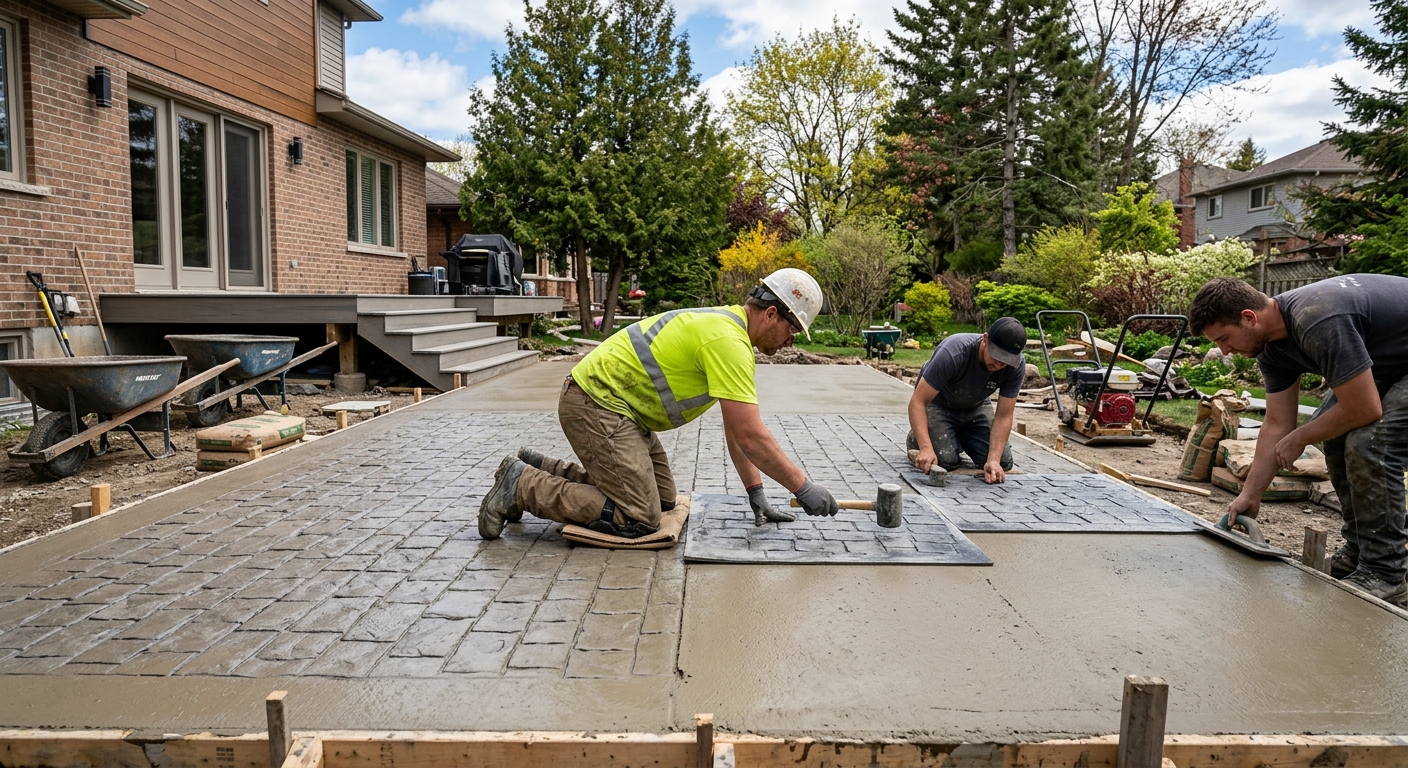
Concrete work options and costs in Osoyoos
Concrete work in Osoyoos is shaped by the Thompson–Okanagan freeze–thaw rhythm: even though summers are warm, the shoulder-season temperature swings are where driveways, patios and walkways get stress. That matters here because most homeowners—about 80.9% of households—own their homes, and roughly 58.7% of dwellings are single-detached houses, the most common foundation for exterior flatwork upgrades. You’ll typically see concrete demand around the town core and along the quieter residential pockets off the main thoroughfares; many homeowners schedule work in spring through early fall when excavation and curing conditions are most reliable.
Across the Thompson–Okanagan, pricing tends to run above generic “BC averages” because we design for frost-depth performance rather than the minimum footing depth you may see in generic guides. Contractors account for deeper excavation, better drainage, air-entrained mixes, and control joints to manage movement and reduce surface scaling. We also plan around a shorter practical pour season, so curing protection (insulating blankets or controlled temperature where needed) can add cost in cool nights.
Below is a practical cost comparison for the most-requested concrete projects in Osoyoos. Use it to sanity-check your quote before you get into details like thickness, reinforcement, and finish selection.
| Application |
Typical Size |
Key Spec |
Finish Option |
Price Range |
| Concrete driveway (standard broom finish) |
400–600 sq. ft. |
4 in slab, reinforced where required, granular base |
Broom finish + control joints |
$6,800–$13,500 |
| Exposed aggregate driveway |
400–600 sq. ft. |
Air-entrained mix, proper cure and surface exposure |
Exposed aggregate with sealant |
$9,500–$17,800 |
| Stamped concrete driveway or patio |
250–500 sq. ft. |
Air-entrained mix, release agent, saw-cut pattern |
Stamp texture + color |
$7,900–$18,500 |
| Plain concrete patio or walkway |
200–400 sq. ft. |
4 in thickness on compacted granular base |
Broom finish + edges |
$2,900–$7,800 |
| Garage floor (interior slab) |
300–600 sq. ft. |
6 in slab (typical), vapour considerations where needed |
Float finish (optional sealer) |
$6,000–$16,800 |
| Foundation footings (structural, below frost) |
Varies by home |
Engineered size, rebar cage, below design frost depth |
Structural concrete (no decorative finish) |
$3,500–$8,200 |
Prices are estimates only and vary by project scope, site access and material selection.
What affects the price of concrete work in Osoyoos
In Osoyoos and the broader Thompson–Okanagan, you can see the same general concrete job land 30–50% apart between quotes. The gap usually isn’t because contractors are “guessing”—it’s because the cheaper quote often under-specs what matters for frost performance, drainage, and durability. In this region, the design frost depth approach drives footing and foundation work, and the freeze–thaw cycles dictate how the slab is built and finished. Even small differences like thickness, base preparation quality, air entrainment, and reinforcement placement can change labour hours, materials, and truck counts.
Specifically, exterior concrete must be built to survive repeated freeze–thaw cycles. Footings and foundations must extend below the design frost depth to prevent heave and cracking; all exterior slabs also rely on air-entrained concrete so freeze–thaw doesn’t scale or spall the surface. Colder interior conditions also shorten the pour season and raise the cost of cold-weather curing precautions—heating, insulating blankets and longer protection time can add real dollars. Finally, de-icing salt accelerates surface damage, so sealing and proper mix selection become more important than in milder areas.
Here are a few Osoyoos examples that commonly move the needle: (1) driveways on poorly drained soils may require additional granular regrading and subdrain work; (2) an exposed aggregate or stamped finish requires extra labour and tighter curing control—often pushing projects toward the $24–$38 per sq. ft. stamped band; and (3) if your driveway footprint is large (or needs forms extended for slopes), excavation and forming can push you beyond the simpler $18–$28 concrete driveway band. Homes built before 1981 make this especially noticeable—retrofits may involve thicker repairs, removal of older base/subgrade, and added disposal costs.
| Price Factor |
Why It Matters |
Cost Impact |
| Frost line depth |
Determines footing depth and form height |
Higher excavation and concrete volume can raise cost 10–25% |
| Site preparation |
Excavation, grading, compacted granular base |
Poor base prep adds rework; proper base can add material/labour 5–20% |
| Reinforcement |
Rebar or wire mesh requirement |
Steel, ties, and placement time can increase cost 5–15% |
| Mix design |
Air-entrainment and compressive strength spec |
Higher-spec mix may cost more upfront but reduces scaling and repairs |
| Finish type |
Broom vs. stamped vs. exposed aggregate |
Decorative finishes add labour, colour, and tooling (often 30–80% over broom) |
| Pour size and concrete truck access to site |
Distance from road affects equipment and labour |
Long carries or tight access can add 10–30% |
| Cold-weather curing precautions |
Heating and blankets |
Can increase cost significantly in shoulder months (commonly 5–25%) |
| Control joint pattern and sealing cost |
Limits random cracking; sealing helps resist salt damage |
Skipping/underpricing joints or sealant often leads to early surface deterioration |
Permits & regulations in British Columbia
In British Columbia, the rule of thumb is: if the concrete is part of the structural system, expect permitting and engineering involvement. For Osoyoos homeowners, concrete that typically does require a building permit includes footings, foundation walls, and grade beams—anything that supports loads or forms part of the foundation structure. Municipal review often includes confirmation that the foundation design is engineered for local soil and frost considerations.
Concrete flatwork—such as patios, walkways, driveways and garage slabs—usually does not require a permit, unless the work affects lot drainage, lot grading, impervious surface requirements, or proximity to municipal right-of-way conditions. Even when a permit isn’t always required, it’s still smart to confirm before you break ground.
Step-by-step, here’s how to verify a contractor in BC for a project in Osoyoos: (1) request their certificate of insurance and confirm liability coverage matches the project type and value; (2) ask for confirmation of WSBC/WCB coverage and get documentation—don’t rely on verbal assurance; (3) check their business details and contractor credentials through publicly available provincial or registry listings where applicable; (4) ask for references from similar scope work locally (same slab size and exterior exposure). If the contractor can’t provide paperwork promptly, it’s a red flag—especially for foundation and footing scopes.
Getting concrete right in Osoyoos's freeze-thaw climate
Concrete fails in Osoyoos mostly due to freeze–thaw stress combined with inadequate protection. The two biggest culprits are water management and insufficient air in the mix. If surface water gets trapped under or within the slab, it expands when temperatures drop and drives scaling and spalling—particularly where de-icing salt is used. The correct spec starts with base preparation: build a compacted granular sub-base to the right depth for your site and local frost conditions, then grade for drainage so water doesn’t pond. Next, mix design should include air-entrainment (commonly 5–7% air for exterior flatwork) so the cement paste has tolerance for freeze–thaw cycles. Add a minimum 32 MPa compressive strength spec so the slab develops sufficient durability.
Control joints matter because the slab will crack somewhere—your goal is to direct where it cracks. Use a planned joint layout and cut timing so random cracking is minimized. Curing is equally important: plan for at least 7 days of curing under appropriate conditions; in cooler evenings, protection (insulating blankets or other cold-weather curing measures) helps avoid surface weakness. Finally, apply a penetrating sealer at about 28 days post-pour to help repel moisture and reduce damage from de-icing salts.
As you talk options, make the price difference make sense. For example, switching from a broom-finished driveway in the $18–$28 band to stamped or decorative finishes in the $24–$38 band can be justified when you want upgraded appearance and can still keep the same frost-appropriate spec (air content, base, joints). If a quote includes “nice finish” but doesn’t detail air-entrainment or base depth, don’t pay the premium.
| Spec |
Why It Matters in Osoyoos |
What to Ask For |
Impact if Skipped |
| Compacted granular base (depth?) |
Prevents pumping and reduces water near the slab during freeze–thaw |
Granular type, compacted depth, compaction method, and drainage grade details |
Settlement, uneven cracking, faster surface deterioration |
| Air-entrained concrete mix (target air %?) |
Reduces freeze–thaw scaling/spalling in exterior exposure |
Confirm air content target (commonly 5–7%) and mix design sheet |
Higher risk of spalling in winter cycles |
| Compressive strength (MPa rating) |
Durability and load performance through temperature changes |
Minimum 32 MPa at specified curing age |
Weak surface layer, premature wear and cracking |
| Control joints (spacing per ACI guidelines) |
Controls where cracking happens, reducing random cracks |
Joint spacing plan and saw-cut timing; seal joint design if required |
Random cracking and water infiltration into cracks |
| Minimum 7-day curing period |
Ensures strength gain before freeze risk and de-icing cycles |
Protection plan if nights are cool; temperature/curing method |
Surface weakness, reduced durability |
| Penetrating sealer (when applied after cure) |
Helps repel moisture and reduces salt-driven damage |
Sealer type and timing (around 28 days post-pour) |
Faster moisture absorption and surface breakdown |
How to choose a concrete work contractor in Osoyoos
Choosing the right concrete contractor in Osoyoos starts with documentation. In British Columbia, verify licensing/credential status where applicable for their trade category, and insist on proof of liability insurance and WSBC/WCB coverage. Ask for a current certificate of insurance (showing dates and project coverage) and confirmation of coverage for workers—then match the information to your project scope. For accountability, request references for similar concrete work: exterior slabs with air-entrainment specs, not just basic interior pours.
Next, get 2–3 itemised written quotes instead of one lump-sum number. You want a breakdown that separates excavation/grading and base materials, reinforcement, concrete supply (including mix spec), forming, finishing, joint cutting, and any sealing. Check what’s excluded: disposal of concrete, removal of existing asphalt/concrete, any permit pull, saw-cut time, and reinstatement of landscaping or drainage. If the quote is missing base prep details, air-entrainment wording, or joint/sealer timing, you can’t compare properly.
Warranty should be clear: workmanship coverage length, what it applies to (cracks vs. spalling vs. settlement), and whether the warranty transfers if you sell. Payment terms should be conservative—never more than 10–15% upfront—and use holdback until the job is complete and surfaces are sealed/cured as agreed. Finally, require a written timeline with the start date and completion estimate, especially because cold nights can change curing protection requirements in the Thompson–Okanagan.
- Ask for their air-entrainment and compressive strength spec in writing for exterior work.
- Confirm base preparation depth, granular type, and compaction method.
- Require joint layout drawings or spacing notes before pricing.
- Check that decorative work includes curing/finish steps (stamp/exposure can’t be rushed).
- Get a written allowance for reinforcement (rebar size, spacing, or mesh spec) if applicable.
- Verify liability insurance limits and that the certificate matches your address/jobsite.
- Confirm WSBC/WCB coverage for the crew; don’t accept “we’ll be fine” answers.
- Require disposal and haul-away costs to be stated (often excluded from low quotes).
- Ask how they handle cold-weather curing in shoulder seasons (blankets/heating plan).
- Clarify whether sealing is included and the timing target (around 28 days post-pour).
- Use holdback: retain payment until final finishing, cleaning, and documentation are complete.
- Make sure the quote includes traffic control and site protection (especially in residential streets).
Concrete red flags in Osoyoos include: quotes that promise a low price without naming air-entrained concrete; vague wording like “we’ll do the base” without depth/compaction; no mention of control joints or sealing for de-icing salt; fast timelines with no cold-weather curing plan; and contractors who won’t provide insurance/WSBC/WCB documentation or detailed itemization.
Frequently asked questions — concrete work in Osoyoos
What is air-entrained concrete and why does it matter here?
Air-entrained concrete is mixed with tiny, evenly distributed air bubbles that give freezing water space to expand without destroying the paste. In Osoyoos and the Thompson–Okanagan, freeze–thaw cycles and winter de-icing mean exterior slabs are repeatedly stressed; without the right air content, surface scaling and spalling can show up sooner. A proper exterior spec often targets about 5–7% air for flatwork and pairs that with a minimum compressive strength such as 32 MPa. When you compare quotes, look for the mix design or at least clear wording that the concrete is air-entrained for exterior use—not just “standard concrete.” If you’re pricing a driveway in the $18–$28 band, the low end is only reasonable if the contractor still meets the durability spec.
How do I prepare the base for a concrete slab?
Base preparation is what prevents many Osoyoos problems like settlement and early cracking. The contractor should excavate to the planned elevation, place well-graded granular material in lifts, and compact it to an engineered or code-appropriate standard. The granular depth and thickness tie back to your soil conditions and the frost strategy for exterior work; in this region we don’t treat “minimum footing depth” as sufficient for slabs and we design for moisture control and frost performance. A good quote will include grading for drainage (so water flows away) and a note on sub-base thickness. If you’re replacing older concrete on a home built before 1981, expect the contractor may need additional prep and haul-away, which affects price. For a patio or walkway in the $14–$24 range, base prep still matters because the finish can’t hide movement later.
How do I compare concrete quotes?
Start by comparing like-for-like specs, not just totals. Ask each contractor for an itemized breakdown: excavation, compacted granular base, reinforcement, concrete mix design (including air-entrainment for exterior), forming, finishing, joint cutting, curing/protection steps, and sealing (if included). For Osoyoos, you should also compare cold-weather curing measures—blankets or heat plans in shoulder seasons can change labour and material costs. Look at finish scope: stamped and exposed aggregate aren’t just “a different colour,” they require extra tooling steps and careful curing. If one quote is much lower but lacks air-entrainment wording, doesn’t detail joint placement, or doesn’t state sealer timing, it’s likely under-spec’d. Finally, check payment schedule and exclusions: disposal and permit involvement (for structural foundation work) should be written clearly.
Can concrete be poured in cold weather in Osoyoos?
Concrete can be poured in cooler periods, but the “how” matters. In Osoyoos and the interior Thompson–Okanagan, nights can drop quickly in shoulder seasons, and freezing conditions can stall strength gain. A contractor should plan cold-weather protection: insulating blankets, controlled curing, and sometimes heating methods so the concrete remains within an acceptable temperature range during the critical early period. That’s why quotes may change seasonally—protection costs are real. For most residential flatwork, you should still require a minimum curing period (often at least 7 days under proper conditions) before the surface is exposed to heavy stress or de-icing cycles. If your contractor won’t explain their curing protection plan, it’s a risk. For example, a broom-finished driveway targeting the $18–$28 band still needs durability protection—otherwise you may pay twice through early repairs.
How do I maintain concrete in Osoyoos's freeze-thaw climate?
Maintenance is mainly about moisture management and protecting the surface from salt and repeated freeze–thaw. After a pour, sealing is important: a penetrating sealer applied about 28 days after the pour helps repel moisture and slows salt-driven damage. In winter, use de-icing carefully—avoid over-salting, and try to remove excess meltwater where possible. Keep drainage pathways clear so water doesn’t pond at the slab edges. Recheck control joints if your driveway or walkway has them; joints are designed to crack and be sealed where appropriate—if joints open and water gets in, freeze–thaw accelerates deterioration. On older homes (especially those built before 1981), monitor for unevenness around repaired areas because underlying base changes can show up over a few winters. Maintenance won’t make a poorly specified mix last longer, but it can significantly extend service life.
What causes concrete to spall in Osoyoos winters?
Spalling is the breaking or flaking of the concrete surface, and in Osoyoos winters the main causes are freeze–thaw damage plus moisture and de-icing exposure. When concrete isn’t properly air-entrained, water inside the paste freezes and expands, which breaks down the surface layer. Inadequate base prep or drainage can also create water pockets beneath the slab, raising the risk of freeze–thaw expansion. Another contributor is insufficient curing or rushed early drying/temperature stress, leaving a weaker surface. Finally, heavy, repeated use of de-icing salts without proper sealing accelerates deterioration. If a quote for a driveway in the $18–$28 band doesn’t clearly specify air-entrained mix for exterior exposure and doesn’t mention sealing, you should ask direct questions. Getting those specs right is usually far cheaper than repairing spalled areas later.