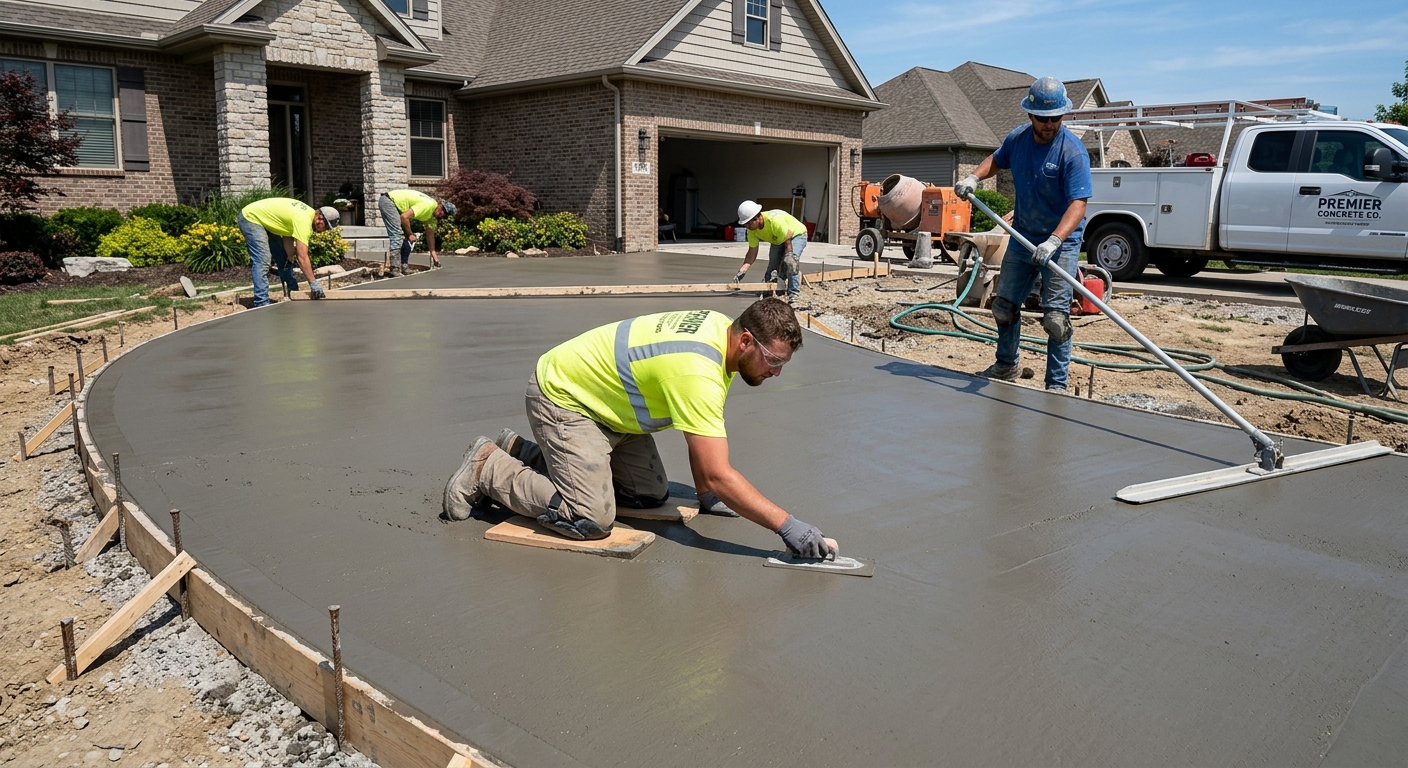
Concrete work options and costs in Highlands
In Highlands, concrete flatwork is one of those “set it once” improvements that homeowners actually feel every day—getting shoes out the door, walking to the mailbox, and using the driveway through wet weather and coastal freeze–thaw cycles. This neighbourhood is primarily a single-detached market: 94.5% of dwellings are single-detached homes, and 88.5% of households own their properties (Statistics Canada, 2021 Census). That mix drives steady demand for driveways, patios, walkways and garage slabs, plus occasional foundation repairs tied to older housing stock—25.0% of homes were built before 1981 (Statistics Canada, 2021 Census).
On Vancouver Island and the Coast, we don’t price concrete like interior BC. Frost lines are typically shallower than the prairies, but freeze–thaw happens often enough to make design details non-negotiable: footings need to sit below the design frost depth, exterior slabs should be air-entrained, and drainage under slabs matters for durability. Also, weather can shift quickly—heavy rain and cool snaps slow cure and can force resequencing—so the “same driveway” can land at different totals depending on access, base remediation, and whether the contractor can protect the pour for consistent curing.
In Highlands, concrete demand is especially strong around the more established residential pockets where infill and renovations are common—think reworks tied to older sidewalks/drive approaches and backyard patio expansions. From there, it’s easiest to compare options side by side, including how finish choices affect both price and long-term appearance.
| Application |
Typical Size |
Key Spec |
Finish Option |
Price Range |
| Concrete driveway (standard broom finish) |
400–550 sq. ft. |
Air-entrained exterior mix; compacted granular base; control joints |
Broom finish |
$16,000–$25,000 |
| Exposed aggregate driveway |
400–550 sq. ft. |
Air-entrained exterior mix; robust base; finishing timing control |
Exposed aggregate |
$20,000–$32,000 |
| Stamped concrete driveway or patio |
300–450 sq. ft. |
Air-entrained mix; integral color; strengthened base |
Stamped pattern |
$22,000–$35,000 |
| Plain concrete patio or walkway |
150–300 sq. ft. |
Air-entrained exterior mix; proper drainage plane |
Broom or smooth trowel (light texture) |
$14,000–$22,000 |
| Garage floor (interior slab) |
400–600 sq. ft. |
Vapour barrier (when required); mesh/rebar as specified; proper cure |
Standard interior finish |
$18,000–$28,000 |
| Foundation footings (structural, below frost) |
Per house/engineered plan |
Engineered rebar; excavation to frost line; drainage around foundation |
Structural concrete |
$50,000–$90,000 |
Prices are estimates only and vary by project scope, site access and material selection.
What affects the price of concrete work in Highlands
In Highlands, the same concrete project can quote 30–50% differently across Vancouver Island and Coast and the broader BC market because the price is less about “concrete” and more about what has to be done around it. Contractors price for frost-related depth planning, base preparation, reinforcement, and weather protection so the slab or footing actually performs years later. In practice, that means labour and equipment time often changes more than material cost.
First, frost line depth and freeze–thaw cycles dictate the design. Exterior work must be built to prevent frost heave and surface deterioration, so footings are typically set below the local design frost depth (in coastal BC bands commonly around 0.5–1.2 m). Every exterior slab should also use air-entrained concrete to survive repeated wetting and freezing, especially where yards are low-lying or drainage is inconsistent. Second, colder snaps and saturated soils can slow strength gain. Colder regions face shorter pour seasons and often need extra cold-weather curing precautions (insulating blankets, sometimes heat), which is a cost driver here even though winters are milder than interior BC.
Concrete and de-icing salt don’t get along: salt can accelerate spalling and surface scaling. That’s why sealing is often recommended for driveways and walkways, particularly where residents use winter traction products. In Highlands specifically, older homes (25.0% built before 1981) can come with non-ideal soil conditions or past drainage issues, leading to more subgrade remediation before we can even pour. That kind of prep can push you toward the upper end of typical bands—for example, a simple patio may land closer to $14,000–$22,000 if the base is straightforward, but can approach the higher end when drainage, haul-off, or reinforcement is needed. Similarly, stamped work often costs more than broom-finished flatwork; the labour and finishing time behind stamped concrete is usually where the jump to $22,000–$35,000 is justified.
| Price Factor |
Why It Matters |
Cost Impact |
| Frost line depth — determines footing depth and form height |
Footings must sit below the design frost depth to prevent heave |
More excavation and form lumber; higher labour time |
| Site preparation — excavation, grading, compacted granular base |
Weak subgrade and poor drainage cause settlement and cracking |
Can add haul-off, imported base and compaction time |
| Reinforcement — rebar or wire mesh requirement |
Controls cracking; supports structural requirements |
Material + placement labour; sometimes thicker slab |
| Mix design — air-entrainment and compressive strength spec |
Air entrainment improves freeze–thaw durability outdoors |
Upgraded mix can be modest per cubic yard but affects totals |
| Finish type — broom vs. stamped vs. exposed aggregate |
Finish affects labour intensity and scheduling |
Stamped/exposed typically costs more due to extra steps |
| Pour size and concrete truck access to site |
Access limits how far concrete can be placed without delays |
Extra pumping/mini-placements can increase labour |
| Cold-weather curing precautions — heating and blankets |
Cool, wet conditions slow strength gain and raise surface risk |
Protection and monitoring labour; potential material upgrades |
| Control joint pattern and sealing cost |
Joints manage shrinkage cracking; sealing reduces salt damage |
Joint sawing and sealer materials add cost but reduce failures |
Permits & regulations in British Columbia
In British Columbia, the rule of thumb is: structural concrete typically requires a building permit, while most simple decorative flatwork usually does not. For Highlands homeowners, permit needs usually come down to whether the concrete work changes structural elements or site drainage/coverage requirements.
Work that typically DOES require a permit (confirm with your municipality): new foundation footings, foundation walls, grade beams, structural repairs tied to the foundation, and any engineered concrete work that affects how the building carries loads.
Work that typically DOES NOT require a permit: standard concrete patios, walkways, and driveways in many cases—unless they require lot grading changes, affect stormwater management, or trigger municipal impervious surface/coverage limits or right-of-way constraints.
Step-by-step: how to verify a contractor in British Columbia
- Check the contractor’s licence/registration status through the province’s online directories (use their legal business name).
- Request a current certificate of insurance showing liability coverage appropriate for the job size.
- Confirm workplace coverage (WSIB/WCB) for their workers—ask for a clearance letter or proof of coverage.
- Ask for references on similar-scale projects in the region (Vancouver Island and Coast) and photos of finished work.
- Make sure the quote references who pulls any required permits and what documentation is included.
If you’re unsure whether your scope affects grading or drainage, ask before work starts—municipal requirements can change based on how close the concrete is to drainage features and how the site is currently graded.
Getting concrete right in Highlands's freeze-thaw climate
Concrete failures in Highlands usually trace back to five things: weak base, the wrong mix, poor joint planning, inadequate curing, and insufficient protection from salt and moisture. Coastal BC may not be as brutally cold as interior regions, but Highlands still sees repeated wetting and freeze–thaw in the shoulder seasons. That’s why exterior pours should be engineered around durability, not just appearance.
1) Base preparation: we start with a compacted granular sub-base to the correct depth for your soil conditions and expected frost effects. If the base is under-compacted or too thin, the slab can settle and crack—even if the finish looks great on day one.
2) Mix design: specify air-entrainment for exterior flatwork. A typical target for air content is about 5–7% for exterior exposure. Pair that with a minimum 32 MPa compressive strength to meet durability expectations for residential slabs and exterior approaches.
3) Control joints: joints are what manage shrinkage and movement so you don’t get random cracking. We lay out spacing to limit visible stress cracks.
4) Curing: allow at least 7 days of proper curing conditions. Pouring through cool weather without protection can rob the slab of early strength and increase surface scaling risk.
5) Sealing: apply a penetrating sealer after the concrete has cured—commonly around 28 days—so water and de-icing chemicals don’t quickly penetrate and damage the surface.
When you ask the right questions, you reduce the most common failure: spalling from inadequate air-entrainment. For example, if a contractor quotes a broom-finished patio on the low end (near $14,000–$22,000 typical for a standard scope) but won’t commit to air-entrainment and curing protection, that “savings” often turns into higher future repair costs. A careful spec is what keeps the slab serviceable through Highlands winters.
| Spec |
Why It Matters in Highlands |
What to Ask For |
Impact if Skipped |
| Compacted granular base (depth?) |
Supports the slab and reduces settlement during freeze–thaw movement |
Granular depth in inches/cm and compaction method to spec |
Settlement cracking and uneven surface after a few seasons |
| Air-entrained concrete mix (target air %?) |
Improves freeze–thaw durability by allowing controlled expansion |
Confirm target air content: typically 5–7% for exterior flatwork |
Spalling and surface scaling with repeated wetting/freezing |
| Compressive strength (MPa rating) |
Ensures strength gain and long-term performance for slabs |
Minimum 32 MPa (or higher if required by your spec) |
Premature deterioration and easier surface damage |
| Control joints (spacing per ACI guidelines) |
Manages shrinkage cracking pattern |
Joint spacing plan matched to slab dimensions and exposure |
Random cracks that are more visible and harder to repair |
| Minimum 7-day curing period |
Cold snaps and rain slow strength development in coastal conditions |
How the contractor protects the pour and curing timeline |
Lower early strength and increased scaling risk |
| Penetrating sealer (when applied after cure) |
Helps repel moisture and de-icing salt exposure |
Application timing around after cure (commonly ~28 days) and product type |
Faster water ingress, salt damage and reduced lifespan |
How to choose a concrete work contractor in Highlands
Choosing the right concrete contractor in Highlands comes down to proof: proof they’re insured, proof they understand freeze–thaw durability, and proof the scope matches your site conditions. In British Columbia, verify the contractor’s licence/registration status through the province’s online resources using their legal business name. Then request a certificate of insurance showing current liability coverage for the project. Finally, confirm worker coverage through WSIB/WCB—ask for a clearance letter or proof of coverage dated recently.
Get 2–3 itemised written quotes rather than a lump sum. You want a breakdown that clearly lists concrete supply, granular base and compaction, reinforcement (if required), forms, finishing, control joints, saw-cut timing, sealing (if included), and disposal/haul-off. Ask whether permits are included (or who is responsible for pulling them) and what’s explicitly excluded (tree roots, subgrade remediation, drainage improvements, uneven haul distances, or pump requirements).
Warranty matters: ask for a workmanship warranty length and what it covers (cracks due to shrinkage management versus settlement issues, for example), plus the product/manufacturer warranty for sealers or special admixtures. If they offer warranty documentation, confirm whether it’s transferable if you sell.
For payment, avoid large upfront payments—holdback until completion is a smart move. As a rule, never pay more than 10–15% upfront, and schedule remaining payments tied to milestones. Also insist on a written timeline with a start date window and a completion estimate, because Highlands pours often depend on rain timing and curing protection.
- Licence/registration verification (BC online directory) using the legal business name
- Certificate of insurance and verify coverage limits match your project scope
- WSIB/WCB clearance letter or proof of coverage for workers
- Itemised quote: base, reinforcement, concrete mix, joints, finishing, and sealing
- Clear scope on demolition, disposal/haul-off, and site grading
- Written plan for air-entrained mix on exterior work
- Control joint layout and saw-cut timing included in the scope
- Curing protection plan for cool/wet weather (blankets/sealer schedule)
- Confirm who pulls permits if structural or grading triggers apply
- Warranty terms in writing (workmanship + product/manufacturer details)
- Payment schedule: limit upfront to 10–15% and include a completion holdback
- Reference photos from similar Highlands exposure (salt, driveway usage, slope/grade)
Concrete contractor red flags in Highlands: they won’t commit to air-entrainment for exterior slabs, they skip or vaguely describe joint spacing, they dismiss curing protection during cool snaps, they quote without itemising base prep and reinforcement, or they ask for heavy upfront payment before any site prep is done.
Frequently asked questions — concrete work in Highlands
When is the best time to pour concrete in Highlands?
The best time to pour concrete in Highlands is typically when the forecast supports steady curing for at least the first several days. On Vancouver Island and the Coast, we often aim for periods with low rain risk and daytime temperatures that won’t repeatedly dip near freezing during early curing. Because freeze–thaw cycling and saturated soils can stress fresh concrete, contractors may adjust schedules around heavy rain events and cold snaps rather than pouring on the “calendar day.” If you’re choosing between a late fall pour and a spring pour, a spring window with stable temperatures usually reduces curing complications. When you book, ask the contractor how they protect the pour (covering/insulation if needed) and whether they’ll reschedule if conditions threaten proper curing.
How long does concrete take to cure?
Concrete curing is a two-part timeline: strength gain and durability. Practically, most concrete work relies on a minimum of about 7 days of proper curing conditions before you should treat the slab as reliable for regular use, especially for exterior flatwork. However, full durability and performance (including how well sealing bonds and how the surface resists moisture) develops over a longer window—commonly around 28 days for sealer timing. In Highlands, cool, damp weather can slow strength gain, so good contractors build weather contingencies into the schedule. If the contractor plans to seal, they should coordinate the sealer after adequate curing rather than immediately after finishing. Ask what temperature/conditions they’re curing under and what steps they take when the weather shifts.
Do I need a permit for concrete work in British Columbia?
In British Columbia, permits depend on whether the work is structural or affects site drainage/coverage. Generally, structural concrete such as foundation footings, foundation walls, and grade beams usually requires a building permit and often engineered details reviewed by the municipality. Standard decorative flatwork—patios, walkways, and many driveways—often does not require a permit unless it changes lot grading, influences stormwater management, or falls under municipal impervious surface/right-of-way constraints. For Highlands homeowners, the safe approach is to ask your contractor to confirm whether your scope triggers permitting before demolition begins. Also, request that your quote states whether permits are included or excluded. If in doubt, verify with the local authority—especially if you’re altering drainage patterns around an older home.
Concrete vs pavers for a patio in Highlands?
Both options can look great, but concrete usually wins when you want long-term continuity, fewer joints, and a price that’s easier to budget. For a typical plain patio in Highlands, you’ll often see concrete in the $14,000–$22,000 range depending on size, base prep, and finish. Pavers can be attractive for design flexibility and easier localized repairs, but they still require a properly compacted base and correct edging and drainage. The trade-off is that pavers can shift if the base or slope isn’t right, while concrete—when correctly air-entrained, jointed, and cured—tends to handle freeze–thaw more uniformly. If you often use de-icing or expect salty runoff, ask how each option manages moisture and sealing/protection. In most freeze–thaw exposed areas, the right concrete spec (air content, joints, curing, sealer timing) is what makes the difference.
How long does a concrete driveway last?
A well-built concrete driveway in Highlands commonly lasts for decades, but “how long” depends heavily on base preparation, air-entrainment, and joint/sealing strategy. Driveways face constant moisture, traction products, and thermal movement, so the freeze–thaw cycle is the real durability test rather than the initial look. If the contractor uses an exterior-rated air-entrained mix, installs proper granular base and drainage, includes correct control joint planning, and applies a penetrating sealer after cure (commonly after about 28 days), you reduce the risk of surface scaling and spalling. If those steps are skipped or rushed—especially curing protection during cool wet spells—surface damage can show up early and spread. For budgeting, driveway options often start around the $16,000–$25,000 band for standard broom finish and go higher for decorative work.
What is air-entrained concrete and why does it matter here?
Air-entrained concrete is mixed with microscopic air bubbles (not “extra water bubbles”) that give freezing water space to expand without cracking the paste. In Highlands and across the Vancouver Island and Coast climate band, repeated wetting and freeze–thaw cycles can stress exterior concrete surfaces. That’s why reputable contractors specify air entrainment—typically around 5–7% air content for exterior flatwork—and pair it with adequate curing and joint control. Without proper air entrainment, concrete can be more prone to surface scaling and spalling, particularly where de-icing salts or salty runoff contact the slab. When you’re reviewing quotes, ask for the mix design details and whether it’s specifically intended for exterior freeze–thaw exposure. It’s one of the clearest “durability levers” that separates a long-lasting driveway from a short-lived one.