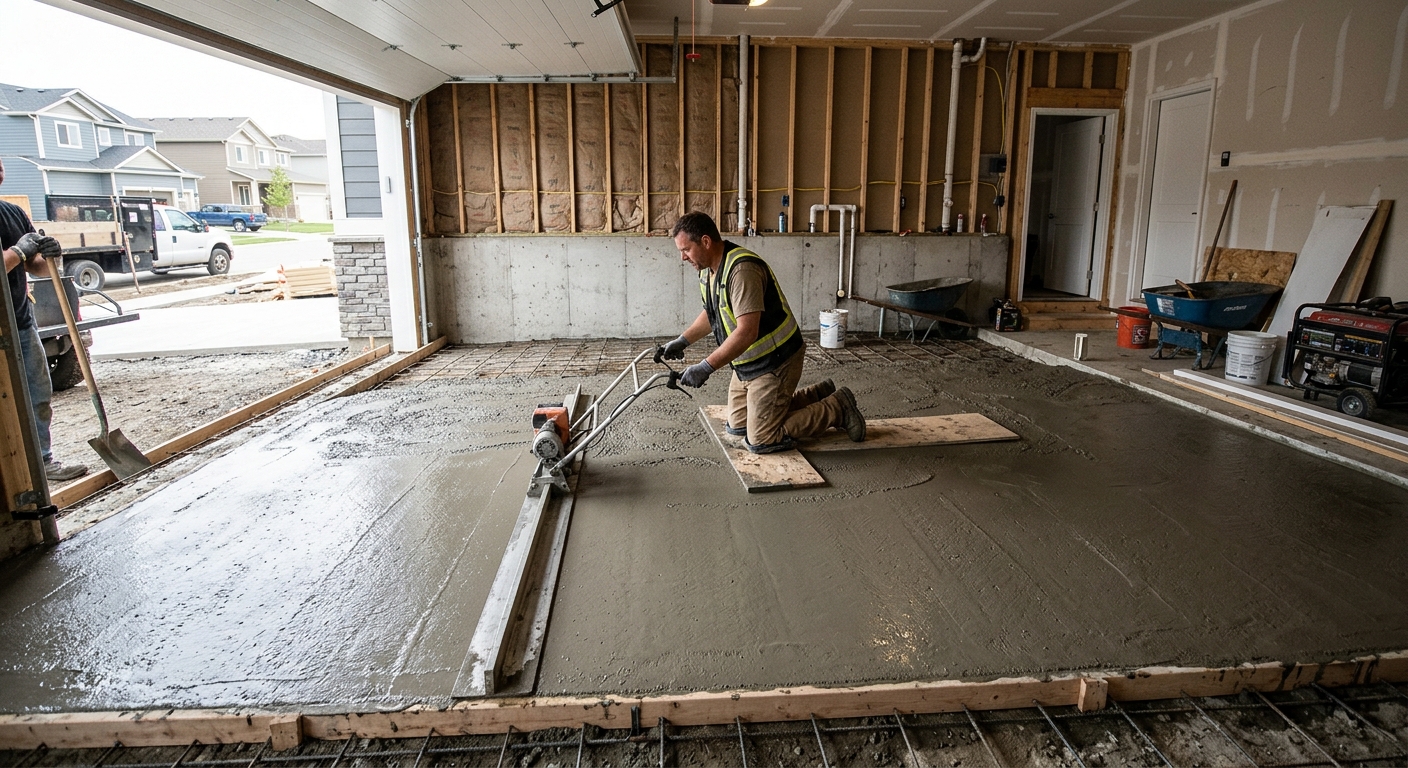
Concrete work options and costs in Big Bend
In Big Bend, British Columbia, concrete is a year-round need for driveways, patios, walkways and the foundations that keep homes square through our wet, coastal winters. With a population of 1,651 residents (Statistics Canada, 2021 Census), the market is small, so crews can be selective about job size and scheduling. At the same time, Big Bend’s housing stock tends to be a mix of older lots and newer infill—meaning you’ll see everything from long-standing slabs that need repairs to freshly built foundations that demand tight base prep and dependable curing. Concrete flatwork is especially common around Marine Drive and the nearby residential pockets, where homeowners often upgrade curb appeal and create safer walk and driveway surfaces.
In the Lower Mainland–Southwest, mild winters and a shallow frost line still require precision: local practice typically assumes a frost depth around 450 mm / 18", so exterior footings and thickened edges are placed below that to reduce freeze–thaw heave. Frequent freeze–thaw cycles, saturated soils, and coastal rainfall raise the cost of base prep and drainage, and we protect slabs with air-entrained mixes, proper control joints, and longer cure planning. Because of this, two quotes for the “same” driveway can differ significantly—especially when one contractor includes engineered base details, correct mix design, and curing/sealer steps that match our conditions.
Below are typical Big Bend price ranges by application; use them to compare what’s included in each scope before you sign.
| Application |
Typical Size |
Key Spec |
Finish Option |
Price Range |
| Concrete driveway (standard broom finish) |
400–600 sq. ft. |
Air-entrained exterior mix; compacted granular base; control joints |
Broom finish |
$18,000–$28,000 |
| Exposed aggregate driveway |
400–600 sq. ft. |
Air-entrained mix; consistent base; proper curing to hold texture |
Exposed aggregate finish |
$22,000–$34,000 |
| Stamped concrete driveway or patio |
300–500 sq. ft. |
Air-entrained mix; adequate thickness; integral or color hardener option |
Stamped patterns |
$26,000–$44,000 |
| Plain concrete patio or walkway |
200–400 sq. ft. |
Compacted granular base; control joints; exterior air content |
Broom or smooth trowel with light broom texture |
$16,000–$26,000 |
| Garage floor (interior slab) |
300–500 sq. ft. |
Vapour barrier; rebar or mesh per thickness; flatness finishing |
Steel trowel / broom touch-up |
$20,000–$33,000 |
| Foundation footings (structural, below frost) |
Per project; common spans vary |
Excavate below design frost; reinforced footing concrete |
Structural finish |
$200–$350 |
Prices are estimates only and vary by project scope, site access and material selection.
What affects the price of concrete work in Big Bend
In the Lower Mainland–Southwest region, the same concrete type can price 30–50% differently because the “hidden” parts of the work—base engineering, drainage, mix design, and curing—vary between contractors. In British Columbia, crews also price labour and scheduling based on wet-weather windows, truck access, and how much time they plan for curing when nights are cool and humidity stays high. In short: you’re not just paying for concrete; you’re paying for the system that keeps it durable.
Two factors drive most Big Bend pricing differences. First, frost depth and freeze–thaw cycles dictate every exterior spec. Footings must be set below the design frost depth (practice typically targets around 450 mm / 18" here), and exterior slabs should use air-entrained concrete to resist scaling and micro-damage during repeated wetting and freezing. Second, cold-weather precautions—like insulating blankets or temporary heating during shoulder-season pours—can add cost where a contractor has to maintain curing conditions long enough to achieve design strength.
Concrete examples that commonly raise or lower cost in Big Bend: (1) a driveway over soft, saturated fill often needs deeper excavation and more granular base, which increases excavation and forming time; (2) complicated tie-ins (stairs, slopes, or splitting existing slabs) can add labour and rebar detailing; (3) seal-and-cure planning affects long-term durability, especially when de-icing salt is used. If one quote is closer to the lower end of the slab bands (e.g., about $18–$28 per typical driveway scope) but excludes proper base prep and curing, you often pay later in patching. If you compare to stamped/decorative options (commonly $22–$36 in the region’s decorative band), the premium is justified when the contractor includes proper reinforcement, color consistency steps, and correct jointing—not when it’s just “more texture.”
| Price Factor |
Why It Matters |
Cost Impact |
| Frost line depth — determines footing depth and form height |
Footings and thickened edges must be placed below design frost to prevent heave |
Can increase excavation and forming time substantially |
| Site preparation — excavation, grading, compacted granular base |
Compacted base and correct drainage control settlement and surface cracking |
Higher if soils are wet/soft or if regrading is needed |
| Reinforcement — rebar or wire mesh requirement |
Supports slab performance and reduces cracking propagation |
Varies with thickness and structural requirements |
| Mix design — air-entrainment and compressive strength spec |
Air-entrainment improves freeze–thaw durability in exterior exposure |
Often a moderate increase, but critical for longevity |
| Finish type — broom vs. stamped vs. exposed aggregate |
Labour time, materials, and curing/handling differ by finish system |
Stamped/exposed typically adds more labour and product |
| Pour size and concrete truck access to site |
Access affects pumping, line pumps, labour, and pour logistics |
Can add transport and equipment costs |
| Cold-weather curing precautions — heating and blankets |
Maintains strength gain during cool, damp conditions |
Adds material and crew time in shoulder-season pours |
| Control joint pattern and sealing cost |
Proper jointing manages cracking; sealing reduces salt and water ingress |
Small line-item, but skipped steps can raise failure risk |
Permits & regulations in British Columbia
In British Columbia, homeowners in Big Bend should expect that structural concrete work typically needs municipal oversight. That includes footings, foundation walls, grade beams, and other structural elements that affect the building’s support system. In most cases, you’ll need a building permit, and engineered drawings (or equivalent documentation) are reviewed by the municipality before work starts.
Concrete flatwork—such as driveways, patios, sidewalks, and walkways—often does not require a separate permit when it’s like-for-like replacement and doesn’t alter lot grading, drainage patterns, or impervious surface limits. However, it may require approval if it changes surface water flow, impacts property drainage, encroaches into setbacks, or affects municipal right-of-way areas. Always confirm with the local authority before breaking ground.
Step-by-step, verify a contractor properly in B.C.:
- Ask for their certificate of insurance: request liability coverage and confirm it’s current for your project.
- For work coverage, confirm WCB coverage (Workers’ Compensation Board) if the contractor employs workers.
- Check licensing/registration requirements through the appropriate online registry listings used in B.C. (your contractor should be able to provide identifiers that you can cross-reference).
- Request clearance/confirmations where applicable and read them carefully for job address and effective dates.
- Ask for 2–3 references on similar-scale projects in the Vancouver–Surrey–Abbotsford area so you can gauge their process in wet weather.
If they can’t provide documentation promptly, treat it as a red flag for timing and workmanship risk.
Getting concrete right in Big Bend's freeze-thaw climate
Concrete in Big Bend fails most often when the job is treated like “just pour and finish,” but our Lower Mainland–Southwest climate punishes weak preparation. The main causes are (1) inadequate base preparation leading to settlement, (2) missing or incorrect air-entrainment leading to freeze–thaw scaling and spalling, and (3) curing that’s too short in cool, humid conditions. Even with a shallow frost line, repeated wetting from rainfall and occasional freeze–thaw cycles can stress the slab surface and edges.
To spec the job correctly, start with base preparation: use compacted granular sub-base at the right depth for the soil and local frost exposure, and ensure drainage pathways are not blocked. Next, specify mix design: for exterior flatwork, request air-entrainment typically in the 5–7% air range and a minimum 32 MPa compressive strength plan. Then lock in cracking control with properly planned control joints (so cracking is predictable, not random). For curing, require minimum 7 days under proper conditions; when temps are cool or rain persists, ask whether curing blankets and scheduling adjustments are included. Finally, sealing matters: apply a penetrating sealer after full cure (commonly at 28 days) so de-icing salts and water don’t saturate the surface.
Here’s a practical cost example: if a stamped patio quote is near $22–$36 per typical decorative band pricing, it’s justified when the scope includes correct air-entrainment, joint layout, and a proper curing/sealer plan. If that same price is offered but curing and sealing are vague or excluded, you’re likely buying short-term cosmetics rather than long-term performance—exactly the scenario that leads to spalling patches after a few winters in British Columbia.
| Spec |
Why It Matters in Big Bend |
What to Ask For |
Impact if Skipped |
| Compacted granular base (depth?) |
Controls settlement and helps water drain away from the slab |
Base depth tied to your soil and design; compacted in lifts |
Uneven settling, cracking, and faster surface breakdown |
| Air-entrained concrete mix (target air %?) |
Reduces damage from freeze–thaw scaling and spalling |
Target 5–7% air for exterior flatwork (confirm on mix ticket) |
Scaling and spalling, especially at edges and joints |
| Compressive strength (MPa rating) |
Strength gain ensures the slab meets durability and structural expectations |
Minimum plan of 32 MPa (or higher per design) |
Weak surface, raveling, and early cracking |
| Control joints (spacing per ACI guidelines) |
Manages shrinkage cracking under wet/dry swings |
Joint spacing/layout approved for your slab thickness and exposure |
Random cracks that invite water and freeze damage |
| Minimum 7-day curing period |
Cool nights and coastal humidity can slow strength gain |
7 days curing plan; blankets/seal methods in cool periods |
Reduced strength, more micro-cracking, poorer durability |
| Penetrating sealer (when applied after cure) |
Repels water and limits salt intrusion in exterior use |
Confirm application after cure (commonly at 28 days) |
Faster absorption, staining, and spalling risk |
How to choose a concrete work contractor in Big Bend
Choosing the right concrete contractor in Big Bend comes down to proof: proof they understand freeze–thaw durability, proof they carry the right coverage, and proof they’re detailed enough to give you a quote you can compare apples-to-apples. Start by verifying British Columbia requirements. Ask for their liability insurance certificate (and check dates and project name/address when available). For labour coverage, confirm WCB status if they employ workers. Then ask for their business identifiers and confirm that they’re eligible to do the work being quoted in B.C.—a reputable contractor will provide what you need without hesitation.
Next, get 2–3 itemised written quotes rather than one lump sum. You want a labour + materials breakdown, including sub-base/granular, reinforcement details (mesh vs rebar, and spacing), concrete mix requirements, and whether curing blankets or cold-weather procedures are included. Confirm what’s excluded: disposal of old concrete, saw-cutting existing slabs, removing landscaping, forming costs at edges, permit handling (if applicable for structural work), and any drainage corrections.
Use a clear warranty check: ask about the workmanship warranty length, product/manufacturer warranties, and whether warranties are transferable to a new homeowner. For payments, a safe structure is to avoid more than 10–15% upfront, then hold back until you see completion, final grading verification, and the finish cure plan is met. Finally, demand timeline clarity—start date and an estimated completion date in writing—since rain windows in the Lower Mainland can affect when they can pour and cure properly.
- Request a copy of the concrete mix ticket details (air content and strength intent).
- Confirm exterior work includes air-entrainment and control joints.
- Ask for their approach to wet weather scheduling and curing blankets/sealers.
- Get proof of liability insurance and confirm coverage limits match your project risk.
- Verify WCB coverage if they use employees/subcontract labour.
- Ask whether they compact granular base in lifts and what depth they plan.
- Confirm reinforcement type (mesh vs rebar) and where it’s placed.
- Read scope exclusions: old slab removal, disposal, excavation overage, and regrading.
- Ask for concrete thickness and sub-base thickness in writing, not just “standard”.
- Clarify finishing method: broom direction, edges, and protection during cure.
- Confirm sealing plan timing for exterior slabs (typically after cure, e.g., 28 days).
- Use a payment schedule with a meaningful holdback until quality checks are complete.
Big Bend-specific red flags: (1) they can’t explain air-entrainment or joint spacing; (2) they want large deposits before sub-base and forms are inspected; (3) they downplay cold nights and don’t discuss curing blankets; (4) they quote decorative work without detailing reinforcement and crack control; (5) they provide a vague scope that doesn’t mention drainage/base prep or sealing.
Frequently asked questions — concrete work in Big Bend
How do I maintain concrete in Big Bend's freeze-thaw climate?
In Big Bend and across British Columbia’s Lower Mainland–Southwest, maintenance is mostly about reducing water and salt intrusion. Sweep debris so puddles don’t sit at low points, and avoid scraping aggressively with metal tools that can chip edges. If you use de-icing salt, keep application light and consistent—then rely on a penetrating sealer applied after proper cure (often around 28 days) to repel moisture. After storms, check joints and edges for small openings; if you see widening at control joints, address it promptly so water doesn’t freeze inside. For driveways, a simple wash with clean water in early spring helps remove salt residue before the next wet/cold swings.
What causes concrete to spall in Big Bend winters?
Spalling in Big Bend usually comes from freeze–thaw damage made worse by saturation and poor mix design. When exterior concrete isn’t air-entrained correctly, internal moisture expands during freezes, breaking the surface and lifting flakes—especially near joints and exposed edges. Another common contributor is water getting under or into the slab because base drainage was inadequate or the slab settled unevenly. If curing was rushed in cool, humid weather, the surface can be weaker and more vulnerable to scaling. In our wet coastal conditions, spalling prevention isn’t “optional”—it’s tied to correct air-entrainment, a good granular base, proper jointing, and sealing after cure. If your quote seemed “low” compared with typical driveway bands (like $18,000–$28,000 for standard exterior scopes), verify the scope includes air-entrainment and curing/sealer steps.
What is rebar and when is it required in British Columbia?
Rebar is steel reinforcement bars used to improve concrete’s crack control and structural capacity. In British Columbia, when rebar is “required” depends on the slab thickness, structural design, and exposure conditions—some projects need engineered layouts. For example, structural footings and grade beams for foundations are reinforced, and that’s typically tied to a building permit and engineered requirements. For flatwork like patios and driveways, some scopes require rebar or wire mesh depending on thickness, whether it’s a load-bearing area (like a driveway) and the base preparation plan. A reliable contractor should specify the reinforcement type and placement—bottom mat, mid-depth, or supported spacers—and show how it supports the thickness you’re paying for. Ask for their reinforcement plan in writing so you can compare quotes fairly.
How long does a concrete project take in Big Bend?
Duration depends on weather windows and the complexity of forms and sub-base prep. For many Big Bend flatwork jobs, the timeline is measured in phases: excavation/grading and granular base prep (often 1–3 days), inspection and form setup (often 1 day), then the pour itself is usually a day or less. Finishing and curing protection follow immediately. The big timing driver is cure: exterior slabs should sit for at least 7 days under appropriate conditions before normal heavy use, and sealers are typically applied after full cure (commonly around 28 days) for best performance. If cold nights or persistent rain occur, crews may add curing blankets or adjust the schedule to hit strength targets, which can extend calendar time even if “hands-on” time stays similar. Always request a start date and estimated completion date in writing, not just a verbal timeframe.
What is a concrete overlay and is it suited to Big Bend?
A concrete overlay is a new concrete layer placed over an existing slab after preparation (often including surface grinding, crack repair, and sometimes bonding agents). In Big Bend, an overlay can be suitable when the existing slab is generally sound—meaning it’s not severely settled, broken at the edges, or extensively delaminated. Overlays can be a cost-effective way to restore surface appearance and fix minor deterioration. But if the old slab has major movement or drainage problems, the overlay may fail early because it inherits the original issues. Given our freeze–thaw cycles and wet conditions, successful overlays still need correct base moisture management, proper joint approach, and air-entrained mix design for exterior exposure. Compare this option only after a contractor evaluates slab stability; otherwise, a full replacement may be the safer long-term play.
How do I seal concrete to protect it in Big Bend?
Sealing in Big Bend is about repelling water and limiting salt intrusion, especially during our wet/coastal winters and freeze–thaw swings. For exterior slabs, the usual approach is to let the concrete cure fully first—commonly around 28 days—then clean the surface and apply a penetrating sealer designed for concrete. Penetrating sealers help reduce moisture movement rather than simply adding a film. Before sealing, confirm joint spacing and crack-control details are correct; sealing can’t fix structural or base issues. Also, keep your salt use reasonable so the surface can perform as intended. When comparing quotes, look for whether sealing is explicitly included and who supplies it—decorative work or driveway scopes that include sealing usually command pricing closer to the upper end of typical bands rather than the low end.