Concrete work options and costs in Rural Saanich
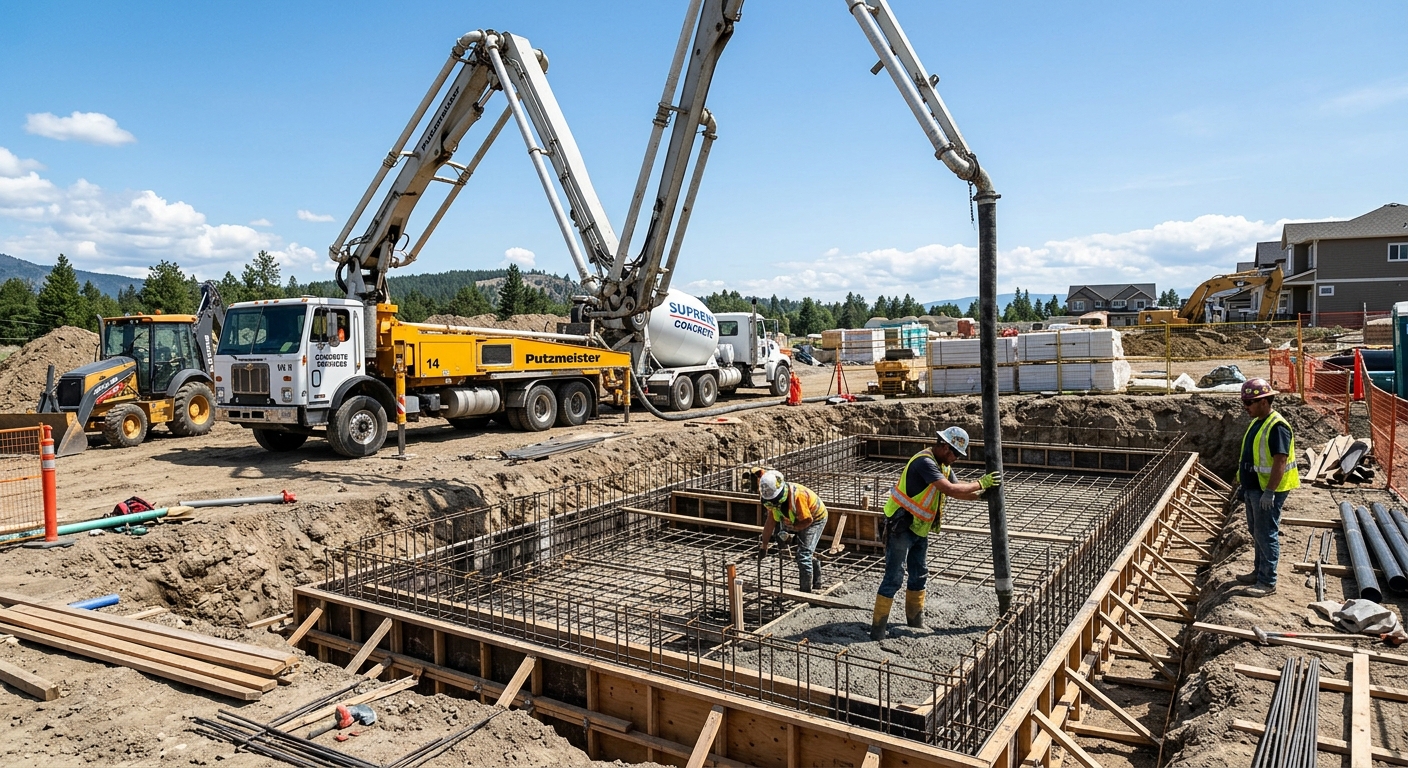
Concrete work in Rural Saanich is a common upgrade for homeowners, especially in a market where single-detached housing remains a major part of the local landscape (Statistics Canada, 2021 Census). With a small local population of 5,025 (Statistics Canada, 2021 Census), most quotes come from a relatively limited pool of experienced crews that can mobilize quickly to Saanich Peninsula neighbourhoods like Brentwood Bay and nearby parts of North Saanich. That matters because Vancouver Island and the Coast see frequent wetting and freeze–thaw cycles in higher or inland pockets, which pushes contractors to use air-entrained mixes, plan control joints carefully, and protect curing surfaces. These climate-driven choices can change pricing even when the “look” of the finished slab seems similar.
On the cost side, exterior concrete is priced by thickness, base preparation, reinforcement, finish complexity, and site access. Interior slabs (like garage floors) are usually more straightforward, while driveways and patios need additional attention to drainage and de-icing salt durability. Stamped and exposed aggregate options cost more due to formwork, finishing labour, and additional steps (like release agents and surface profiling), but they can be a strong value if you want a long-lasting finish that still performs in our coastal freeze–thaw conditions.
Below is a practical comparison of typical applications you’ll see around Rural Saanich, followed by a notes section to help you interpret your quote.
| Application |
Typical Size |
Key Spec |
Finish Option |
Price Range |
| Concrete driveway (standard broom finish) |
10 m x 3 m (approx. 30 m²) |
4 in (100 mm) slab, compacted granular base, air-entrained concrete |
Broom finish with control joints |
$6,500–$9,500 |
| Exposed aggregate driveway |
10 m x 3 m (approx. 30 m²) |
4 in (100 mm) slab, air-entrained mix, proper drainage/base |
Exposed aggregate (wash/vacuum) |
$7,500–$12,500 |
| Stamped concrete driveway or patio |
25 m² (typical patio) or 30 m² (smaller driveway) |
4 in (100 mm) slab, air-entrained mix, integral color or surface color |
Stamp mat pattern with sealer |
$7,000–$14,000 |
| Plain concrete patio or walkway |
15 m² walkway/patio (example) |
4 in (100 mm) slab, compacted granular sub-base |
Broom or smooth trowel (non-slip texture on exterior) |
$3,500–$6,800 |
| Garage floor (interior slab) |
20 m² (example: 10 m x 2 m) |
4–5 in (100–125 mm), reinforcement as required, vapour/under-slab prep if needed |
Float finish with control joints |
$4,000–$8,500 |
| Foundation footings (structural, below frost) |
Varies by design; typical home perimeter |
Excavation, formwork, rebar cage (if designed), concrete below frost line |
Structural concrete (engineered) |
$12,000–$25,000 |
Prices are estimates only and vary by project scope, site access and material selection.
What affects the price of concrete work in Rural Saanich
Even for the same-looking project, concrete quotes in Rural Saanich can swing by 30–50% across Vancouver Island and Coast and across British Columbia. The “why” usually comes down to frost protection requirements, freeze–thaw durability specs, and how a contractor handles site conditions and weather windows. In our area, frost line depth and the number of freeze–thaw events drive design and materials: exterior slabs need air-entrained concrete, and footings must sit below the design frost depth to prevent frost heave and cracking. While deeper inland regions often require more excavation and longer heating/blanket time during pours, coastal BC still demands careful scheduling around rain and cold snaps so strength gain isn’t compromised.
On Vancouver Island, pricing is also affected by contractor availability and mobilization. Small towns and rural lots can mean extra time for material staging, truck access, and disposal. For example, a standard driveway built around the $16–$25 per square foot (backbone band) will often cost less than a stamped driveway because stamped work adds steps like integral colour, release agents, careful curing discipline, and extra finishing labour. Conversely, a well-prepared site can reduce cost because you avoid undercutting surprises and expensive rework.
In practice, a few local conditions raise or lower cost: (1) soft or saturated subgrade after winter storms can force additional granular base; (2) steep grades or narrow access around properties near roads and waterfront lots can increase forming and bar placement labour; (3) if homeowners plan sealing and control joint sealing correctly, they may reduce long-term surface scaling and spalling risks. As a dollar example, moving from a plain patio/walkway band ($14–$22) to stamped decorative concrete ($22–$35) is often justified when you’re adding curb appeal, colour stability, and a finish that still holds up to our wetting/freezing cycle—provided the base and joints are built correctly.
| Price Factor |
Why It Matters |
Cost Impact |
| Frost line depth — determines footing depth and form height |
Footings must extend below the design frost depth to prevent heave |
Higher excavation and concrete volume if frost depth is greater |
| Site preparation — excavation, grading, compacted granular base |
Weak subgrade leads to settlement and surface cracking |
More base and haul-disposal can add significant labour/material costs |
| Reinforcement — rebar or wire mesh requirement |
Controls cracking on slabs and improves capacity where needed |
Material and labour for chairs/tie-in increases scope |
| Mix design — air-entrainment and compressive strength spec |
Air-entrainment protects exterior concrete through freeze–thaw cycles |
Premium mix and QA testing; critical for durability so it’s rarely “optional” |
| Finish type — broom vs. stamped vs. exposed aggregate |
Finish complexity affects labour, curing discipline, and sealer needs |
Stamped/exposed aggregate typically increases cost per square metre |
| Pour size and concrete truck access to site |
Smaller access windows can force pumping or multiple loads |
Mobilization and equipment time can add line-items to the quote |
| Cold-weather curing precautions — heating and blankets |
Cool, wet conditions slow strength gain and raise surface damage risk |
Blankets/heaters and labour to monitor curing add cost |
| Control joint pattern and sealing cost |
Joints control where cracks occur; sealing helps repel water/salts |
Labour for saw-cut timing and sealant materials |
Permits & regulations in British Columbia
In British Columbia, structural concrete work—typically including footings, foundation walls, and grade beams—requires a building permit, and engineered drawings are often reviewed by the municipality to confirm dimensions, reinforcement, and load requirements. Concrete flatwork (driveways, patios, and walkways) usually does not require a permit on its own, unless the project affects lot grading, stormwater drainage, impervious surface coverage limits, or impacts municipal right-of-way areas (for example, work near a lane or driveway approach). The practical takeaway for Rural Saanich homeowners: confirm with the local authority before breaking ground, especially if you’re changing drainage routes, raising a driveway noticeably, or altering how water flows onto the road or neighbouring properties.
Before you sign, verify your contractor is insured and qualified. Concrete in BC is “real work” with real risk—forms, rebar, excavations, and heavy trucks. Step-by-step, ask for three things:
- Licence/registration (BC contractor status as applicable) and proof the company is in good standing.
- Certificate of liability insurance showing adequate coverage for the project value and site operations.
- Coverage evidence for workplace protection (WSB/WCB coverage as applicable in BC).
Where to look: start with the contractor’s public information listing online, then request a fresh insurance certificate directly from the contractor (you want current dates and the jobsite named if possible). If you can’t get clear documentation promptly, that’s a strong signal to keep shopping.
Getting concrete right in Rural Saanich's freeze-thaw climate
Concrete failures in Rural Saanich are usually preventable, and most come back to how the base is prepared, how the mix is designed, and whether curing/protection was followed during and after the pour. In our Vancouver Island and Coast freeze–thaw reality, the most common homeowner-visible issues are surface scaling and spalling—often from inadequate air-entrainment and poor finishing/curing discipline. The fix starts with spec’ing the basics, not just choosing a finish.
First, base preparation: you need a compacted granular sub-base to the right depth for the frost-protection strategy and your site soil, with drainage so water doesn’t sit under or beside the slab. Second, mix design: exterior flatwork should use air-entrained concrete with a target air content of about 5–7% and a minimum 32 MPa compressive strength (with the correct exposure class for exterior work). Third, control joints: plan saw-cut or formed joints so cracks occur in the joints, not randomly. Fourth, curing: allow a minimum 7-day curing period under proper conditions; in cool weather, contractors should protect the slab with insulating blankets or curing measures so strength gain happens properly. Fifth, sealing: apply a penetrating sealer after curing (typically around 28 days post-pour) to help repel de-icing salts and reduce water ingress.
When you’re comparing options, the price difference can be justified—if the durability spec is the same. For instance, a stamped driveway (often priced higher, consistent with the $22–$35 band for decorative concrete) may cost more than a broom-finish driveway, but you’re not paying for looks alone; you’re paying for extra labour and curing attention that—done right—still respects freeze–thaw performance.
| Spec |
Why It Matters in Rural Saanich |
What to Ask For |
Impact if Skipped |
| Compacted granular base (depth?) |
Controls settlement and helps manage frost and drainage around the slab |
Proposed granular base depth and compaction method for your soil condition |
Settlement cracking, dip lines, and accelerated surface deterioration |
| Air-entrained concrete mix (target air %?) |
Reduces damage from freeze–thaw cycling and wetting in coastal winters |
Target air content (about 5–7% for exterior flatwork) and mix certification |
Higher risk of scaling and spalling |
| Compressive strength (MPa rating) |
Ensures adequate strength gain for the traffic and exposure conditions |
Minimum 32 MPa and confirmation it meets exterior exposure requirements |
Surface weakness and early failure under loads or weather stress |
| Control joints (spacing per ACI guidelines) |
Controls where cracking happens and limits random shrinkage cracks |
Joint spacing plan matched to slab thickness and dimensions |
Random cracking, water intrusion, and appearance issues |
| Minimum 7-day curing period |
Strength gain is slower in cool, damp conditions on the coast |
How curing is protected if temperatures drop (blankets/heating if needed) |
Surface damage, reduced durability, and cracking risk |
| Penetrating sealer (when applied after cure) |
Helps repel water and de-icing salts that can worsen scaling |
Sealer type and schedule (often around 28 days post-pour) |
Faster water absorption, scaling, and shorter service life |
How to choose a concrete work contractor in Rural Saanich
Choosing the right concrete contractor in Rural Saanich comes down to proof, paperwork, and clarity in the scope—not just the lowest number. In British Columbia, always verify licensing/registration status for the contractor as applicable, and confirm they carry current liability insurance and workplace coverage (WSB/WCB coverage as applicable). To check: (1) ask for their certificate of insurance and verify dates and coverage limits; (2) check online business/registry information for status; (3) request documentation of workplace coverage directly from them, not from a third-party text message.
Then get 2–3 itemised written quotes. You want a breakdown that shows labour, excavation/granular base, reinforcement (rebar mesh, tie-in, chairs), forms, concrete supply, finishing, saw-cutting for control joints, curing protection, and sealing. Avoid quotes that only state a single lump-sum without telling you what’s included or excluded (for example: permit pull, concrete cutting/haul-away, disposal, pump charges, or additional base if unsuitable soil is discovered). Scope clarity is what keeps your final cost from drifting.
Warranty matters too. Ask for the workmanship warranty length and whether any product/manufacturer warranty applies, and whether it’s transferable to future owners. For payment, a safe approach is to never pay more than 10–15% upfront, and hold back the remainder until the job is complete and defects are corrected. Finally, demand a timeline in writing: start date and estimated completion date.
- Provide a project schedule and weather contingency plan for freeze–thaw interruptions.
- List who supplies concrete, and confirm air-entrainment for exterior work.
- Show reinforcement details (rebar size, mesh type, and placement elevation) where required.
- Confirm granular base depth and compaction method (not just “we prep the sub-base”).
- Specify control joint pattern and saw-cut timing.
- Clarify if disposal/hauling is included for excavated material.
- Confirm whether pumping is included if truck access is limited.
- Detail curing protection plans for cold snaps (blankets/heaters if needed).
- Confirm sealer is included or excluded, and the target application date after cure.
- Provide references for similar-size driveways/patios in Saanich Peninsula conditions.
- Use an itemised quote (labour + materials + equipment line-items) rather than a bare number.
- Explain how changes are priced (change-order process in writing).
In Rural Saanich, red flags include contractors who won’t discuss air-entrainment for exterior slabs, quotes that omit base depth/compaction details, no clear joint spacing plan, vague curing statements, and payment terms that ask for most of the money upfront before work starts.
Frequently asked questions — concrete work in Rural Saanich
What is rebar and when is it required in British Columbia?
Rebar (reinforcing steel) is steel used inside concrete to help control cracking and add strength in areas where loads and shrinkage stresses are higher. In British Columbia, whether rebar is required depends on the engineering design and the specific application—especially for structural concrete like foundations, grade beams, and some footing systems. For exterior flatwork (driveways, patios, walkways), many projects use wire mesh or rebar in specific locations, but the decision is typically based on slab thickness, soil support, expected loads, and local design standards. In Rural Saanich, rebar placement details matter because freeze–thaw stresses can expose weak bonding or poor base support over time. When in doubt, ask your contractor to reference the slab design and explain how the steel will be positioned (not just “we add mesh”).
How long does a concrete project take in Rural Saanich?
Timelines in Rural Saanich usually depend on weather windows, site access, and whether curing protection is needed during cool or wet periods. For typical exterior flatwork, you can often expect excavation and forming within a day or two, concrete placement on a scheduled pour day, and finishing the same day. However, actual “ready for use” time depends on curing—at minimum, crews should plan for proper curing for at least 7 days before heavy use, with surface sealing often later (commonly around 28 days). Driveways and patios can take longer if access is tight near slopes or if granular base remediation is required. If your project is within a decorative band (for example, stamped work priced in the $22–$35 range per square foot equivalent), allow extra time for colour work and finishing steps. If temperatures drop after the pour, contractors may extend curing with blankets/heating, which can add days.
What is a concrete overlay and is it suited to Rural Saanich?
A concrete overlay is a new concrete layer placed over an existing slab to refresh the surface without full demolition. It can be an economical solution when the old slab is structurally sound (not severely settled, with major scaling or widespread cracking). In British Columbia’s Vancouver Island and Coast freeze–thaw climate, overlays can still work well, but surface preparation is everything: the old concrete must be properly cleaned, prepared to develop bond, and any drainage issues must be addressed. If the original slab is already failing because of poor base support or water intrusion, overlay alone won’t stop the movement below. For Rural Saanich homeowners, overlays are often considered when the cost of complete replacement is high, but you should ask for a condition assessment and a clear plan for bonding and joint management. If your goal is durability and long service life through wetting/freezing cycles, a full replacement with correct air-entrained mix and control joints may cost more but can prevent repeat repairs.
How do I seal concrete to protect it in Rural Saanich?
Sealing helps reduce water ingress and can improve resistance to staining and the kind of surface scaling that worsens when de-icing salts and freeze–thaw cycles are present. For Rural Saanich, you generally want a penetrating sealer applied after the concrete has cured—commonly around 28 days post-pour—so the concrete can reach adequate strength and allow the sealer to work properly. Before sealing, the surface should be clean and dry; heavy debris, curing compounds, or moisture trapped under residue can reduce performance. Ask your contractor for the sealer type (penetrating vs film-forming) and the expected coverage method. Also discuss whether your project includes joint sealing, since control joints are where water can enter if not properly maintained. If your project is in the driveway or walkway range (often around $16–$25 for standard driveway work), sealing is a relatively small line-item compared to the cost of repairs later—especially in areas that experience repeated freeze–thaw events.
What is the difference between concrete and cement?
Concrete is the finished building material you see in driveways and foundations. Cement is only one ingredient inside concrete—typically Portland cement—used to bind sand and gravel (and water) together. In practice, homeowners don’t “buy cement” for slab work; they pay for the concrete mix design delivered to site. The mix design is where durability is engineered: for exterior work in British Columbia’s freeze–thaw conditions, the contractor specifies air-entrainment and appropriate strength (for example, a minimum 32 MPa for exterior slabs as a common target). That’s why two quotes that both say “concrete” can vary—air-entrainment and exposure specs affect performance in our Vancouver Island climate where wetting and freezing can repeatedly stress the surface. When comparing quotes, ask about the mix (air content and strength), not just the finish (broom, stamped, or exposed aggregate).
How much does concrete work cost in Rural Saanich?
Concrete costs in Rural Saanich typically depend on thickness, base prep, reinforcement, finish complexity, and access. As a ballpark, concrete driveway and slab work is commonly priced in the $16–$25 range (your project may still land above or below that based on excavation, truck access, and durability specs). Patios and walkways often fall in the $14–$22 range, while stamped and decorative concrete is commonly $22–$35 depending on the design and labour intensity. For a typical 30 m² driveway, that translates roughly into the mid-thousands to low teens once base prep and finishes are included. If you’re comparing options, remember that the cheapest bid sometimes has fewer protection steps—like insufficient air-entrainment or limited curing protection—both of which matter in our freeze–thaw cycle. Always ask for itemised quotes so you can confirm what’s included before deciding.