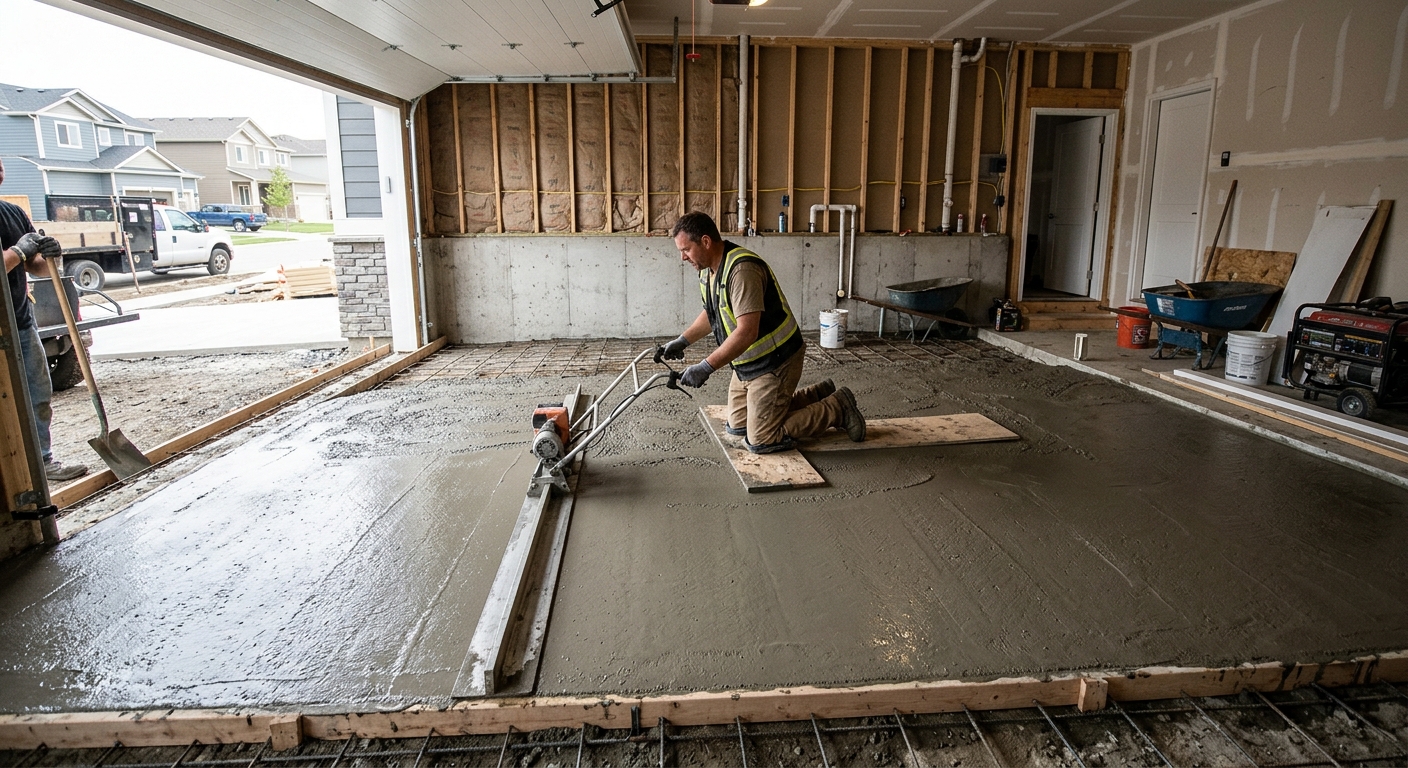
Concrete work options and costs in Windsor Park
In Windsor Park, British Columbia, homeowners typically choose concrete for driveways, patios and walkways because it’s durable in a coastal-wet, freeze–thaw climate. Windsor Park’s population is 1,729 (Statistics Canada, 2021 Census), and the area’s housing stock largely revolves around single-detached neighbourhood living where curb appeal matters. While that lifestyle supports steady demand for concrete flatwork, the Lower Mainland–Southwest market adds cost pressure in less obvious ways: a frost depth around 450 mm / 18" still influences design, and contractors must place footings and thickened edges below the active freeze–thaw zone to reduce frost heave risk. At the same time, frequent rain, cool nights and high humidity can slow curing schedules, so crews often plan around weather windows, use curing blankets, and sometimes extend cure/finish timing to hit strength targets.
Concrete availability is generally good in the Vancouver–Surrey–Abbotsford corridor, but labour demand can tighten during spring replacement season, especially for driveway work in high-traffic areas like the Windsor Park/adjacent residential blocks near local arterials where site access is limited. That mix of seasonal scheduling, engineering requirements below frost for structural work, and durable finishing specifications (air-entrainment, joints, and sealing) explains why two “similar” jobs can quote differently.
Below are realistic price bands you can use to compare options, then we’ll break down what drives those differences in the region and how to write a spec that holds up in Windsor Park.
| Application |
Typical Size |
Key Spec |
Finish Option |
Price Range |
| Concrete driveway (standard broom finish) |
400–520 sq. ft. (about 20’×20’) |
Air-entrained mix, control joints, compacted granular base |
Broom finish + curing + seal (optional) |
$8,000–$12,500 |
| Exposed aggregate driveway |
400–520 sq. ft. (about 20’×20’) |
Proper curing window for wash/expose; air-entrained mix |
Exposed aggregate (sculpted/washed look) |
$10,500–$15,800 |
| Stamped concrete driveway or patio |
300–450 sq. ft. (typical patio or single-car pad) |
Release agent, colour hardeners, control joints |
Stamped pattern + integral colour (or overlay) |
$11,000–$17,200 |
| Plain concrete patio or walkway |
200–320 sq. ft. |
Air-entrained mix for exterior exposure |
Float/screed + light broom or smooth trowel |
$3,200–$6,900 |
| Garage floor (interior slab) |
300–520 sq. ft. |
Vapour barrier/insulation as needed, steel reinforcement (project dependent) |
Plain finish (trowel) or broom if required |
$7,000–$13,200 |
| Foundation footings (structural, below frost) |
Per linear foot (typical design varies) |
Excavation below design frost, reinforcement, concrete placement |
Structural concrete (no cosmetic finish) |
$200–$350 |
Prices are estimates only and vary by project scope, site access and material selection.
What affects the price of concrete work in Windsor Park
Concrete quotes in Windsor Park can vary by 30–50% for the “same” looking project because the labour and materials are only part of the equation—site conditions, engineering requirements and weather-driven curing time often change the actual work effort. In the Lower Mainland–Southwest region, mild winters and a shallow frost line help compared with interior/northern BC, but we still design around a frost depth around 450 mm / 18" and then protect critical structural elements below frost. That means footings and thickened edges need to be placed deeper than many homeowners expect, and saturated coastal soils increase the work in subgrade drainage, grading and compacted granular base prep.
Freeze–thaw cycling is a major spec driver: exterior slabs generally need air-entrained concrete (typically 5–7% air for durability) and a correct control-joint layout. When air-entrainment or joint spacing is off, surface scaling and spalling risk increases, and that’s when repairs become far more expensive than doing it right the first time. Cold-weather curing precautions can also add cost when pour days are cool or damp—crews may use curing blankets and extended protection to support strength gain.
Two Windsor Park examples: (1) A driveway with tight access or limited truck turning can push labour and equipment costs up, even if the square footage stays the same; (2) A patio on clay-like soils that hold water will often require extra drainage and deeper granular base to prevent settlement and frost-related movement. Those are the jobs that can move you from a plain patio band closer to the lower end (for example, around $16–$26 per sq. ft. for basic work) toward higher-cost decorative scopes like stamped concrete (often closer to $22–$36 per sq. ft.).
| Price Factor |
Why It Matters |
Cost Impact |
| Frost line depth — determines footing depth and form height |
Footings and thickened edges must extend below the active freeze–thaw zone to prevent frost heave |
Higher excavation and forming; can move structural pours materially upward |
| Site preparation — excavation, grading, compacted granular base |
Saturated soils and subgrade irregularities need engineered base prep and drainage |
Extra trucking, granular material and labour; common source of large quote gaps |
| Reinforcement — rebar or wire mesh requirement |
Distribution of loads and crack control for slabs and thicker edges |
Material + labour adders; may be required based on slab thickness and use |
| Mix design — air-entrainment and compressive strength spec |
Durability in coastal freeze–thaw depends on correct air content and strength |
Higher material cost, plus batching/QA time; avoids premature scaling/spalling |
| Finish type — broom vs. stamped vs. exposed aggregate |
Decorative systems require more steps, timing control and skilled finishing |
May add significant labour and finishing materials (release agents, colours) |
| Pour size and concrete truck access to site |
Access affects pump vs. wheelbarrow handling and overall crew productivity |
Scheduling and equipment costs; tight lanes can be a major swing factor |
| Cold-weather curing precautions — heating and blankets |
Strength gain slows in cool weather; protection supports minimum performance |
Extra labour supplies and longer staging time |
| Control joint pattern and sealing cost |
Joint spacing limits random cracking; sealing helps repel de-icing salts and moisture |
Small line items that can prevent big later repairs |
Permits & regulations in British Columbia
In British Columbia, how you handle permits depends on what portion of the concrete work you’re doing. Structural concrete work—typically concrete footings, foundation walls, grade beams and other elements that support the building—requires a building permit, and engineered drawings are often reviewed by the municipality or building authority. For exterior flatwork (driveways, patios and walkways), a permit is usually not required unless the work affects lot grading, stormwater/lot drainage, impervious surface coverage limits, or it involves municipal right-of-way, sidewalks, or tie-ins that change how water is managed. Because local requirements can be specific, it’s smart to confirm with the local authority before breaking ground.
Homeowner verification is also practical risk management. First, ask for the contractor’s liability insurance certificate and confirm the policy covers the scope of concrete flatwork or foundation work being quoted. Second, confirm they carry the required workplace coverage (WCB/WSBC for worker protection in BC). Third, request their permit/clearance approach: who pulls permits (the builder/contractor vs. you), and how inspections are handled if the job is structural. Finally, ask for references on similar-scale work in the Lower Mainland–Southwest—especially projects that involved exterior exposure where freeze–thaw and curing conditions matter.
Steps to check before signing: (1) Find the contractor online registry entry (trade/business listing) to confirm they’re active; (2) request and review the certificate of insurance (ensure dates are current and scope matches); (3) ask for proof of WCB/WSBC coverage; (4) verify their past jobs in your area and confirm they followed BC inspection steps where required.
Getting concrete right in Windsor Park's freeze-thaw climate
Concrete failures in Windsor Park usually come from the basics: inadequate base prep, the wrong mix for freeze–thaw exposure, poor joint planning, or curing that’s rushed because the weather “seems fine.” In the Lower Mainland–Southwest, we still design around a frost depth of about 450 mm / 18", and exterior slabs experience repeated wetting and cooling. The right specs protect against settlement and movement, while the right curing and sealing protect the surface.
Spec the job with five core pieces. (1) Base preparation: use compacted granular sub-base to the depth required for your soil and frost protection strategy, then verify grading so water doesn’t pond. (2) Mix design: request air-entrainment (commonly 5–7% air content for exterior flatwork) and minimum 32 MPa compressive strength, with proper batching/QA for consistent results. (3) Control joints: set a joint pattern that limits uncontrolled cracking; don’t rely on “it’ll be fine” spacing—your crack control depends on timing and layout. (4) Curing: plan for a minimum 7-day curing period under suitable conditions; in cold nights or high humidity, crews should protect the slab with blankets or curing aids as needed. (5) Sealing: apply a penetrating sealer after the appropriate cure window (often around 28 days) to repel moisture and help reduce surface damage from de-icing salts.
A dollar example: if you’re choosing between plain broom-finish patio work and stamped concrete, the decorative option often costs more because it requires extra colour/finishing steps and higher finish-touch time. But paying the premium can be justified if you want long-term curb appeal and the same durability fundamentals (air-entrainment, joints, curing) are still included. The key is that the “nice finish” shouldn’t come at the expense of drainage, joints, and correct mix—those are the items that most reduce spalling risk.
| Spec |
Why It Matters in Windsor Park |
What to Ask For |
Impact if Skipped |
| Compacted granular base (depth?) |
Prevents movement and helps frost protection; manages water in saturated soils |
State the engineered base thickness and compaction method |
Settlement, rocking, and premature cracking |
| Air-entrained concrete mix (target air %?) |
Freeze–thaw durability depends on protected internal air bubbles |
Confirm air target (commonly 5–7% for exterior flatwork) |
Surface scaling and spalling over the first few winters |
| Compressive strength (MPa rating) |
Strength gain supports long-term performance under loads and moisture cycling |
Minimum 32 MPa (or higher if your design specifies) |
Soft/weak concrete, increased cracking and durability loss |
| Control joints (spacing per ACI guidelines) |
Limits random cracks when shrinkage and temperature changes occur |
Joint spacing, saw-cut timing, and layout plan |
Wider uncontrolled cracks and a rough patchwork repair timeline |
| Minimum 7-day curing period |
Cold nights and coastal humidity slow strength development if not protected |
Curing method and protection requirements (blankets/sealers/cover) |
Reduced strength and higher risk of surface damage |
| Penetrating sealer (when applied after cure) |
Helps repel moisture and reduce deterioration from salt and wet cycles |
Application timing (often about 28 days post-pour for exterior durability) |
Faster wear, staining, and more vulnerable surfaces |
How to choose a concrete work contractor in Windsor Park
Choosing a contractor in Windsor Park is mostly about verification and clarity. In British Columbia, ask for their current trade registration/business listing (where applicable), then verify liability insurance and the proper worker protection coverage (WCB/WSBC). How to check: (1) request a certificate of insurance—confirm it’s not expired and that it names you/your property as a certificate holder if appropriate; (2) request proof of WCB/WSBC coverage for their workers; (3) confirm their job references are similar in scope (driveway thickness, decorative finish complexity, and exterior exposure requirements); (4) ask who pulls permits if structural concrete is included.
When you request quotes, insist on 2–3 itemised written estimates instead of a single lump-sum number. You want a labour + materials breakdown such as excavation, granular base, forms, reinforcement, concrete supply, finishing, curing/sealer, and disposal. Read the scope carefully: what is excluded (tree roots, unforeseen subgrade issues, upgrading drainage), is permit work included, and is concrete washout/disposal covered? Also confirm the protection plan—rain schedules matter here.
Warranty matters too: ask for the workmanship warranty length, whether the manufacturer’s warranty on concrete products is included, and whether any warranty is transferable to future owners. Payment schedule should be conservative: never more than 10–15% upfront, and hold back the remainder until the job is complete and inspected. Finally, get a written start date and completion estimate tied to weather conditions.
- Ask for the exact mix spec: air-entrainment and minimum compressive strength (MPa)
- Confirm air content target for exterior flatwork
- Request reinforcement details (mesh vs. rebar, and slab thickness basis)
- Verify joint plan: control joint timing and spacing
- Ask how they manage curing in cool nights and rainy windows
- Clarify whether penetrating sealer is included, and when it’s applied
- Get excavation/base thickness and compaction method stated in writing
- Confirm concrete truck access and whether they’ll use a pump or chutes
- Check what disposal is included (spoils, forms, washout)
- Require a detailed scope and exclusions list—no “allowances” without definitions
- Request proof of liability insurance and WCB/WSBC coverage before work starts
- Ensure the warranty is in writing, including workmanship and any limits
Concrete red flags in Windsor Park include contractors who (1) skip or “approximate” the base thickness and compaction, (2) refuse to discuss air-entrainment or joint placement, (3) offer a decorative finish without explaining curing and durability steps, (4) want large upfront deposits beyond about 10–15%, or (5) provide a verbal estimate only—especially when excavation conditions are unknown.
Frequently asked questions — concrete work in Windsor Park
What is the difference between concrete and cement?
In everyday talk, people use “cement” and “concrete” interchangeably, but they’re not the same. Cement is one ingredient: the powdered binder (typically Portland cement) that reacts with water. Concrete is the full mix—cement plus water, sand and gravel (and sometimes additives like air-entrainers for durability). In Windsor Park, British Columbia, that distinction matters because the quality and design of the concrete mix is what protects your slab during the freeze–thaw and wet weather cycle. For exterior flatwork, the contractor should be able to tell you the air-entrainment target and strength spec. A broom-finish driveway priced in the typical region bands (like $18–$28 per sq. ft.) depends heavily on the actual mix design, not just the surface finish.
How much does concrete work cost in Windsor Park?
Concrete pricing in Windsor Park is usually driven by square footage, thickness, access, and the level of finish and site prep. For a homeowner-friendly comparison, plain concrete patio and walkway work typically lands around $16–$26 per sq. ft. in the Lower Mainland–Southwest pricing band, while stamped concrete driveway or patio scopes often fall in the $22–$36 per sq. ft. range because of extra finishing steps and timing control. Driveways can be more variable than patios due to excavation, reinforcement, and truck access. Foundation footings are priced differently (commonly discussed per linear foot), and for structural footing work you’ll often see bands around $200–$350 per linear foot depending on the design. The key is to get itemised quotes that separate base prep, reinforcement, mix spec, and curing—those line items typically explain why quotes differ by 30–50% for similar-looking projects.
How deep must footings be for Windsor Park's frost line?
For Windsor Park in coastal BC, practice typically assumes a frost depth around 450 mm / 18" as a starting point for exterior frost protection details, but structural footings are designed to extend below the active freeze–thaw zone to reduce frost heave. The exact depth can vary based on soil conditions, drainage, and engineering requirements for the foundation system, so the safe answer is: follow the design for your specific site and soil, and ensure the contractor places footings below the design frost depth. In Lower Mainland–Southwest work, builders still plan for freeze–thaw cycling and water saturation, so base prep and proper drainage around the foundation are part of the “depth story,” not an afterthought. If you’re budgeting, note that structural footing work commonly falls within the regional band around $200–$350, and deeper excavations and more forming can increase costs.
Why does concrete crack in Windsor Park and how is it prevented?
Concrete cracking in Windsor Park is usually not because “concrete is bad”—it’s because shrinkage, temperature changes, and moisture movement create predictable stress. In a coastal-wet climate with freeze–thaw cycles, those stresses are intensified if the base isn’t well compacted or if joints aren’t planned to control where cracking happens. Prevention starts with compacted granular base prep so the slab can’t settle, using air-entrained concrete for freeze–thaw durability, and designing control joints with the right spacing and saw-cut timing. Proper curing is also critical: if the slab dries or chills too quickly, you increase the chance of early cracking and surface damage. Finally, sealing (after the cure window) helps limit moisture penetration from rain and de-icing salts. If your contractor can’t explain joint pattern and air-entrainment, that’s a warning sign—repairs later are almost always more costly than the preventive steps.
Stamped vs broom-finish concrete — cost difference?
Stamped concrete typically costs more than broom-finish because it’s not just the concrete—it’s the system: release agents, pattern tools, colour application, careful finishing timing, and extra labour to maintain crisp edges and textures. In the Lower Mainland–Southwest band, broom-finish driveway or slab work is often budgeted around $18–$28 per sq. ft., while stamped concrete driveway or patio work frequently sits around $22–$36 per sq. ft. That gap isn’t only decorative; it also means the contractor needs to manage weather windows for curing and finishing. A good way to compare quotes is to look for line items that show the decorative scope includes the same durability fundamentals (air-entrainment, reinforcement if required, control joints, and curing). If one quote is “much cheaper” on stamped work, ask whether it’s cutting corners on joints, mix design, curing protection, or base prep—those are the items that protect the slab in Windsor Park’s freeze–thaw and rainy conditions.
When is the best time to pour concrete in Windsor Park?
In Windsor Park, the best time to pour concrete is when temperatures stay within workable ranges and you can reliably protect the slab while it gains strength. The Lower Mainland–Southwest still has cool nights and prolonged rain at times, so contractors plan around forecast windows and often use curing blankets or protective measures when conditions are borderline. Spring and early summer typically offer more consistent weather and better finishing conditions for driveways and patios, especially decorative finishes like stamped or exposed aggregate where timing matters. That said, many crews can pour in shoulder seasons if the plan includes protection for curing and adequate temperature management. Ask your contractor what the weather protection plan is (blankets, covers, curing aids) and how they’ll confirm minimum cure requirements. Even if the calendar “looks okay,” the spec still has to meet durability needs for freeze–thaw and moisture exposure in British Columbia.