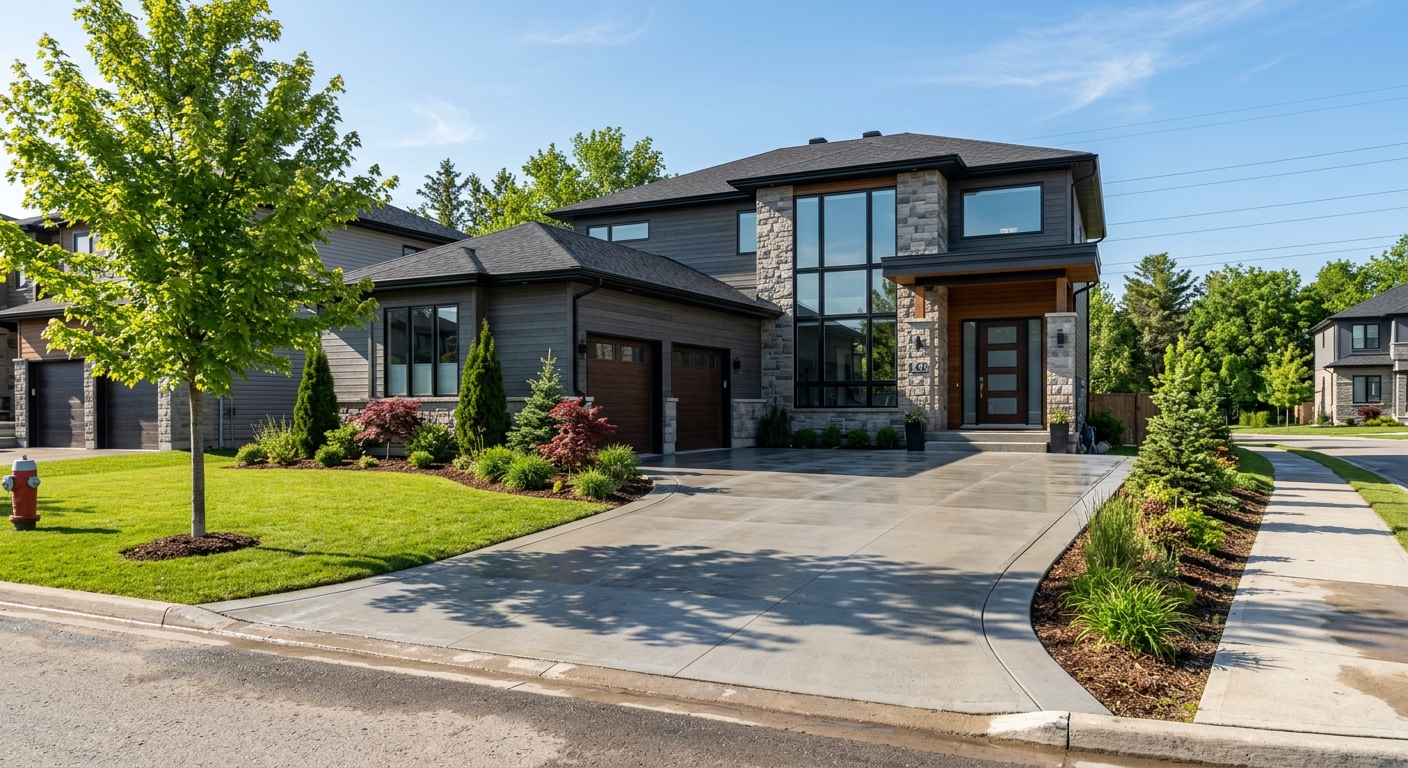
Concrete work options and costs in Surrey City Centre
Concrete work in Surrey City Centre is a practical choice for homeowners who want durable, low-maintenance surfaces in a coastal-wet climate. With a population of 33,520 in the 2021 Census profile for the city centre area (Statistics Canada, 2021 Census), demand is steady—especially in established pockets where renovations are common. Surrey City Centre also has a housing mix dominated by single-detached and small-lot development patterns, which typically drive the need for driveway and patio flatwork more often than larger commercial pours.
Pricing here is shaped by the Lower Mainland–Southwest climate: winters are mild, but we still see enough freeze–thaw cycling to protect exterior slabs and foundation elements from moisture movement. Local codes and practice typically assume a frost depth around 450 mm / 18", so contractors place footings and thickened edges below that to reduce freeze heave risk. Wet weather and cool, humid curing conditions can also slow schedules—meaning more labour coordination for subgrade prep, longer cure management, and sometimes curing blankets or sealers for durability.
In neighbourhoods near City Centre / Guildford-adjacent corridors, concrete contractors are especially busy when homeowners replace older asphalt with a new driveway or add stamped patios for backyard living. Because scope details matter, the most reliable way to compare bids is through consistent specs—then line up costs by application. Use the table below as a quick budgeting baseline before you ask your contractor for an itemised quote.
| Application |
Typical Size |
Key Spec |
Finish Option |
Price Range |
| Concrete driveway (standard broom finish) |
400–600 sq. ft. |
4" slab, compacted granular base, air-entrained mix |
Broom finish + control joints |
$18,000–$28,000 |
| Exposed aggregate driveway |
400–600 sq. ft. |
4" slab, proper base drainage, air-entrained mix |
Exposed aggregate with sealer |
$22,000–$34,000 |
| Stamped concrete driveway or patio |
250–450 sq. ft. |
4" slab, rebar or mesh where required |
Stamp + release + colour hardener (optional) |
$25,000–$45,000 |
| Plain concrete patio or walkway |
150–300 sq. ft. |
4" slab, compacted base |
Float + light broom or trowel-textured finish |
$2,400–$7,800 |
| Garage floor (interior slab) |
350–650 sq. ft. |
4" slab, vapour barrier (typical), reinforced where needed |
Standard trowel-finish (non-slip optional) |
$7,000–$16,000 |
| Foundation footings (structural, below frost) |
Varies by foundation design |
Below frost depth; formwork, embedments, reinforcement as engineered |
Structural concrete (no decorative finish) |
$200,000–$350,000 |
Prices are estimates only and vary by project scope, site access and material selection.
What affects the price of concrete work in Surrey City Centre
In Surrey City Centre and across the Lower Mainland–Southwest, you can see quote differences of 30–50% for what looks like “the same” concrete job. The main reason is that the concrete itself is only part of the total cost—site conditions (excavation, drainage, and trucking), the base build-up, reinforcement, and the curing and finishing plan are often where projects diverge. British Columbia jobs can also price differently than other parts of the province because coastal-wet conditions create schedule risk, while the shallow-but-real frost depth still drives footing and edge specs.
For exterior work in this region, frost line depth and freeze–thaw cycles dictate design details. Even with a frost depth commonly assumed around 450 mm / 18", footings and thickened edges must extend below the design frost depth to reduce frost heave. Every exterior slab should use an air-entrained mix to handle freeze–thaw scaling risk, and the mix design is part of what you’re paying for—not just “pouring concrete.” Colder regions typically see shorter pour seasons and more heating/blanket costs, but here we still manage cool nights and prolonged rain with careful scheduling and curing control.
Two examples from typical Surrey City Centre scopes: (1) a driveway with poor drainage or clay subgrade often needs extra excavation and granular replacement, which can push you toward the higher end of the $18–$28 range for standard broom finishes; (2) switching from a plain patio to stamped concrete is usually worth the cost when you want curb appeal—stamped work in this tier commonly moves into the $22–$36 / sq. ft. band depending on complexity and colour system. Housing age also matters: older lots often have unseen fill or deteriorated base material that adds excavation dollars.
| Price Factor |
Why It Matters |
Cost Impact |
| Frost line depth — determines footing depth and form height |
Footings and thickened edges must sit below design frost to resist heave. |
Higher excavation and forming; can add major structural cost. |
| Site preparation — excavation, grading, compacted granular base |
Concrete failures frequently start with weak or saturated subgrade. |
More granular haul/placement; increases labour and equipment time. |
| Reinforcement — rebar or wire mesh requirement |
Controls cracking in slabs and supports engineered foundation requirements. |
Materials + tying/install time; increases total spend. |
| Mix design — air-entrainment and compressive strength spec |
Air content and strength help prevent freeze–thaw damage and scaling. |
Usually modest material premium but reduces long-term repairs. |
| Finish type — broom vs. stamped vs. exposed aggregate |
Finishes affect materials, set-time control, and crew skill. |
Stamped/exposed typically adds labour and product costs. |
| Pour size and concrete truck access to site |
Limited access may require multiple loads, pump use, or extra labour. |
Can raise overall cost quickly on tight Surrey lots. |
| Cold-weather curing precautions — heating and blankets |
Cool, damp weather can slow strength gain if not managed. |
Heaters/blankets and longer protection time add labour cost. |
| Control joint pattern and sealing cost |
Joints steer cracking; sealing improves durability under de-icing and rain. |
Additional materials and labour; small cost that prevents big failures. |
Permits & regulations in British Columbia
In British Columbia, the rules depend on what you’re pouring. Structural concrete work—such as footings, foundation walls, and grade beams—typically requires a building permit, and engineered drawings are often reviewed by the municipality. For many homeowners, that means your foundation scope is not just “a concrete job”; it’s part of the overall structural permit package. Concrete flatwork—such as driveways, patios, and walkways—often does not require a permit by default, unless the work changes lot grading, triggers impervious surface coverage limitations, or affects municipal right-of-way or drainage requirements. Always confirm with the local authority before breaking ground.
No matter what, verify your contractor is properly set up to do the work safely and legally in Surrey City Centre. Ask for their liability insurance and proof of workers’ coverage (WSBC/WCB coverage) and confirm they can provide references for similar-scale projects (driveways and exterior slabs are a good match). A good step-by-step homeowner checklist is: (1) check the contractor’s licence/registration status using the appropriate online registry for their trade; (2) request a certificate of insurance showing the valid policy dates and that Surrey-area work is covered; (3) ask for clearance documentation or confirmation of workers’ coverage; (4) confirm in writing who is pulling any required permits for the scope that needs them.
Getting concrete right in Surrey City Centre's freeze-thaw climate
Concrete failures in Surrey City Centre usually trace back to moisture management and mix performance during our freeze–thaw cycles. Water in the slab or base expands when temperatures drop, which can cause surface scaling and eventually spalling if the concrete wasn’t designed for exterior exposure. The spec that matters most is usually air-entrainment and proper base prep.
To spec the job correctly: (1) plan compacted granular sub-base to the right depth for local soil and drainage conditions so the slab can shed water rather than hold it; (2) require an air-entrained mix—for exterior flatwork a target around 5–7% air is typical practice—and specify minimum 32 MPa compressive strength depending on the application; (3) include control joints at a spacing that matches slab dimensions so cracking is controlled where you can maintain it; (4) protect the pour with proper curing—minimum 7 days, and extra measures in cool or damp weather; (5) schedule sealing after cure (commonly after 28 days) so de-icing salts and coastal rainfall don’t accelerate deterioration.
A concrete example of value: upgrading from a plain broom-finish patio to an exposed aggregate surface may move you toward the higher driveway/patio tiers, but it can be justified if you’re dealing with a high-traffic entrance where rain tracking and salt exposure are constant. If the base and air content are weak, however, paying for decorative finish won’t prevent spalling.
Ask technical questions that force the right answers: “What air content will you target and how do you verify it?”, “What’s the granular base depth and compaction method?”, and “What curing and sealing timeline do you use for Lower Mainland–Southwest humidity and cool nights?”
| Spec |
Why It Matters in Surrey City Centre |
What to Ask For |
Impact if Skipped |
| Compacted granular base (depth?) |
Stops pumping and keeps moisture from saturating under the slab. |
Base thickness plan and compaction method/targets. |
Settling and cracking; increased freeze–thaw damage. |
| Air-entrained concrete mix (target air %?) |
Improves resistance to freeze–thaw scaling in coastal-wet conditions. |
Target air content (typically ~5–7% for exterior flatwork). |
Higher risk of spalling and surface scaling within a few winters. |
| Compressive strength (MPa rating) |
Supports durability under traffic, moisture and winter stress. |
Minimum MPa requirement (commonly 32 MPa or per engineered spec). |
Slower strength gain; surface weakness and premature wear. |
| Control joints (spacing per ACI guidelines) |
Controls where cracking occurs so it doesn’t become random. |
Joint spacing for your slab dimensions and layout. |
Random cracking and higher maintenance costs. |
| Minimum 7-day curing period |
Cold nights and humidity can slow strength development. |
How curing will be protected (blankets/curing compound as needed). |
Weak surface that deteriorates faster during winter cycles. |
| Penetrating sealer (when applied after cure) |
Repels salts and water that drive scaling and spalling. |
Sealer type and application date after cure (often ~28 days). |
Faster surface breakdown from rain and de-icing exposure. |
How to choose a concrete work contractor in Surrey City Centre
Choosing the right contractor matters because concrete performance hinges on base prep, air content, curing, and finish workmanship. In British Columbia, start by verifying licensing/registration for the trade your contractor operates under, then confirm insurance. Ask for a current certificate of liability insurance (make sure it’s active for the job dates) and request proof of WSBC/WCB coverage for workers. Where to look: use the appropriate online registry for contractor/trade status, then review the insurance documents your contractor emails you—check dates, policy limits, and that the scope aligns with “driveways/patios/foundation work” you’re hiring for.
Get 2–3 itemised written quotes so you can compare apples to apples. The best quotes break down labour and materials (excavation, granular base, steel/rebar or mesh, vapour barrier if interior, concrete supply, forming, finish, curing/blankets, and sealing if included). Scrutinize exclusions: is permit pulling included for foundation work, is disposal of excess material included, and is you how much trucking/access cost assumed? Warranty also matters—ask for the length of workmanship coverage and what it covers, plus whether any manufacturer warranty (for sealers or admixtures, if used) is transferable.
For payment, avoid large upfront deposits—never more than 10–15% is a good rule of thumb. Hold back a portion until the job is fully complete, cleaned up, and any deficiencies are corrected. Also get start date and completion estimate in writing, because rain scheduling and curing protection in the Lower Mainland can affect timelines.
- Confirm the exact frost/protection approach for exterior slabs in your scope.
- Request the base thickness and compaction plan (not just “we prep the base”).
- Ask for the target air content and compressive strength for exterior work.
- Get an itemised list of reinforcement: rebar size/spacing or mesh specification.
- Verify finish type: broom, trowel, stamped system, or exposed aggregate process.
- Check whether control joints and sealing are included.
- Ask how curing will be protected in cool/wet weather (blankets/curing compound).
- Confirm concrete truck access plan and whether pumping is required.
- Ensure permit responsibility is clear (especially for foundation/structural work).
- Require a workmanship warranty in writing and ask for clarity on coverage limits.
- Use a payment schedule: 10–15% upfront maximum, then milestones with a holdback.
- Get start and completion dates (or a scheduling window) in the contract.
Concrete red flags in Surrey City Centre: contractors who won’t specify mix requirements (air-entrainment/MPa), quotes that ignore granular base depth and drainage, inconsistent joint spacing plans, no written curing/sealing timeline, or pressure to pay large deposits before excavation and reinforcement are verified.
Frequently asked questions — concrete work in Surrey City Centre
How do I prepare the base for a concrete slab?
Base prep is the foundation of a durable slab in Surrey City Centre. In the Lower Mainland–Southwest, moisture control and freeze–thaw resistance matter, even though the frost line is relatively shallow (commonly assumed around 450 mm / 18"). A contractor should excavate to the designed subgrade level, remove unsuitable fill/organic material, and build up a compacted granular base to the correct depth for your soil conditions. They should also confirm drainage paths so water doesn’t pool under the slab. For exterior patios or walkways, ask for air-entrained concrete and control joint planning, because even a small base issue can turn into cracking and scaling over winters. If you want a budgeting reference, a plain concrete patio often lands in the $16–$26 band per sq. ft. tier depending on scope, and cutting corners on base prep is a common reason bids vary.
How do I compare concrete quotes?
When you compare quotes in British Columbia, don’t start with the total price—start with the scope and specs. Ask each contractor for the same deliverables: slab thickness, granular base depth and compaction, reinforcement (rebar size/spacing or mesh), the finish type (broom vs stamped vs exposed aggregate), and the curing and sealing plan. Quotes can differ by 30–50% because one may include air-entrained mix design, joint layout, or extended curing protection while another lists “concrete supply” only. For example, standard driveway work is commonly budgeted around the $18–$28 tier, while stamped concrete typically costs more (often within the $22–$36 tier depending on design complexity). Ensure permits, disposal, and access/pumping are either included or clearly excluded. The best quote is the one that’s consistent on technical details—not just the lowest number.
Can concrete be poured in cold weather in Surrey City Centre?
Yes, concrete can be poured in cold weather in Surrey City Centre, but it must be managed correctly. The risk isn’t that it’s “cold” so much as that curing can slow down when nights are cool and humidity is high, which is common in the Lower Mainland. Contractors typically protect the slab with insulating blankets and sometimes heating to keep the concrete within safe temperature ranges so it reaches strength development on schedule. You’ll also want the mix plan to account for exposure to freeze–thaw cycles; exterior work still needs air-entrainment for durability. Ask what their minimum temperature thresholds are, how they’ll protect the pour for at least the minimum curing period (commonly 7 days for proper early protection), and whether they use curing blankets or other cold-weather precautions. If you’re comparing bids, make sure “cold-weather curing precautions” is explicitly included where applicable.
How do I maintain concrete in Surrey City Centre's freeze-thaw climate?
Concrete maintenance in Surrey City Centre is mostly about keeping water out and reducing surface damage from de-icing and winter tracking. Start with sealing: many exterior slabs benefit from a penetrating sealer applied after proper cure (often around 28 days post-pour). This helps repel water and salts that can drive scaling and spalling. Regularly clear debris and sand/grit from joints and edges so water doesn’t sit in cracks. Use de-icing materials carefully—harsh salt exposure accelerates surface breakdown if the concrete surface isn’t well-sealed and air-entrained. If you notice minor spalling or joint gaps, repair sooner rather than waiting; small defects expand when freeze–thaw keeps pushing moisture into micro-cracks. Most importantly, maintenance works best when the original job included the right air-entrained mix, adequate granular base, and correctly spaced control joints.
What causes concrete to spall in Surrey City Centre winters?
Spalling in Surrey City Centre is commonly linked to freeze–thaw damage plus moisture and de-icing salts. Water enters the concrete pores or along weak areas near the surface; when temperatures drop, expansion stresses the surface layer. If the concrete wasn’t air-entrained correctly, there’s less room for freezing water to expand safely, and the surface can scale first and then spall. Poor base prep can also contribute by keeping the slab wetter than it should be, increasing the amount of moisture available during cold snaps. Another common contributor is inadequate curing—if the slab is protected too briefly, the surface may not gain the needed strength and durability. A good job will specify air content (often 5–7% air for exterior flatwork), control joints to manage cracking, and a curing and sealing plan to repel salts and rainfall. That’s why “cheapest concrete” can cost more over a few winters.
What is rebar and when is it required in British Columbia?
Rebar is reinforcing steel bars placed in concrete to improve tensile strength and control cracking in slabs and structural elements. In British Columbia, whether rebar is required depends on the engineered design and the type of concrete work. For structural foundations—like footings and foundation walls—reinforcement is typically required by the engineering and permit documents. For exterior flatwork like driveways and patios, reinforcement may be specified based on slab thickness, reinforcement strategy (rebar vs wire mesh), soil conditions, and expected loads. A properly scoped quote should spell out what reinforcement is being used (including placement and spacing) rather than saying “we reinforce it.” Because Surrey City Centre sees freeze–thaw cycles and wet periods, reinforcement alone isn’t enough; the mix design (air-entrainment), base preparation, joints, and curing still have to match exterior exposure requirements.