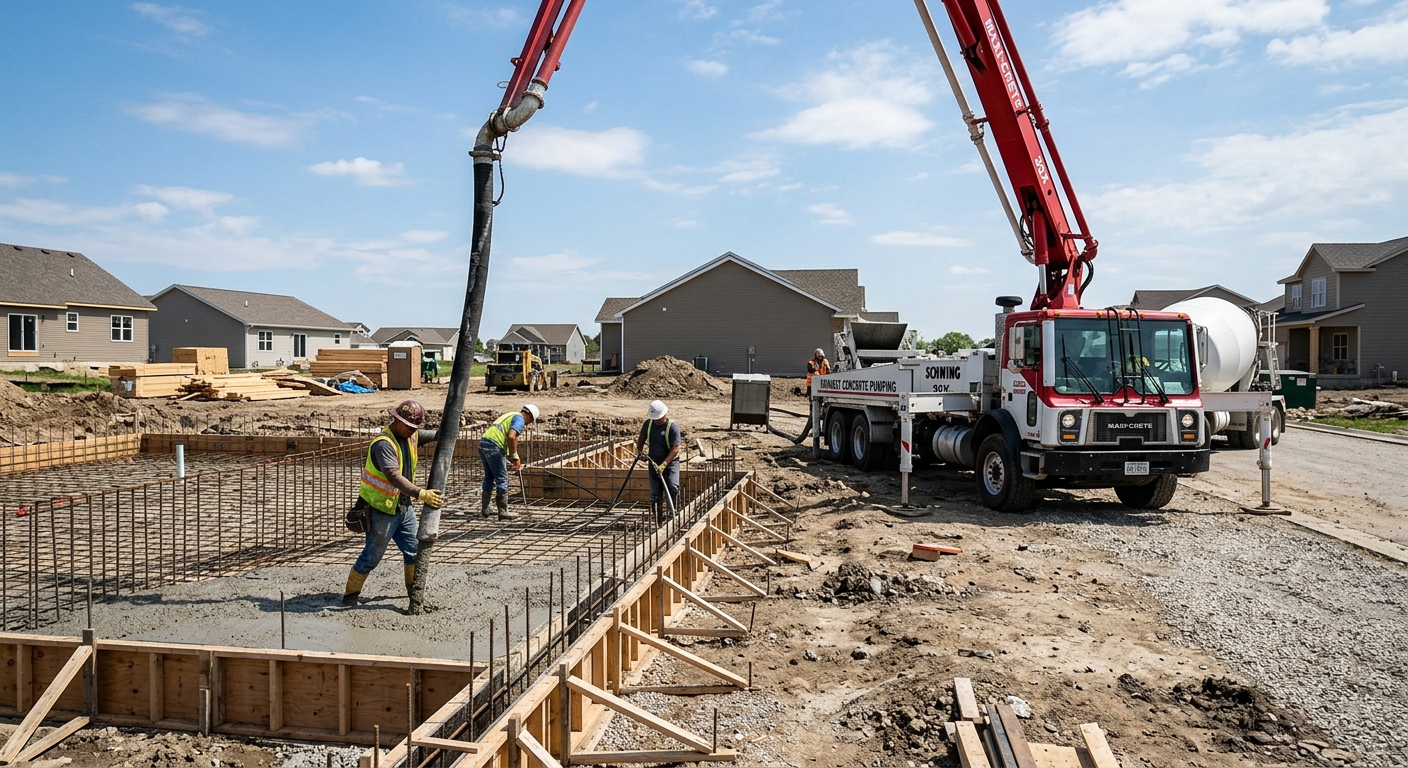
Concrete work options and costs in Kaslo
Concrete work in Kaslo is a big quality-of-life upgrade, especially for the many single-detached homes that make up 84.9% of the housing stock. With 380 homeowner households (72.4% of households own), there’s steady demand for driveways, patios, walkways and garage floors—flatwork that sees snow, ice and de-icing every winter. In the Kootenay region around Kaslo, pricing is shaped by cold continental winters, freeze–thaw cycles, and short pour seasons. Practically, that means contractors price in deeper frost protection, careful base compaction and drainage, and the cost of air-entrained mixes plus cold-weather curing measures when temperatures drop. It’s also why jobs around waterfront lots and areas with tricky runoff tend to cost more; water management and surface protection aren’t optional here. In Kaslo, we commonly see high-season scheduling pressure around Cedar Street and the downtown core where access is tight and there’s less room for equipment and concrete staging. When access is limited, the “same” slab can require more labour time and tighter coordination with the concrete truck and finishing crew.
Below are realistic local ranges for common projects in Kaslo, including typical specification choices homeowners request in this climate. Use these as a budgeting backbone, then your contractor can tighten the numbers after they measure your site and confirm finish, drainage and curing approach.
| Application |
Typical Size |
Key Spec |
Finish Option |
Price Range |
| Concrete driveway (standard broom finish) |
10 m x 4.5 m (45 m²) |
Air-entrained, compacted base, control joints |
Broom finish |
$18,000–$27,000 |
| Exposed aggregate driveway |
10 m x 4.5 m (45 m²) |
Air-entrained, good grading, sealed system recommended |
Exposed aggregate |
$24,000–$36,000 |
| Stamped concrete driveway or patio |
8 m x 4 m (32 m²) |
Air-entrained, integral colour or stain, joints maintained |
Stamped (pattern + colour) |
$11,500–$18,500 |
| Plain concrete patio or walkway |
6 m x 3 m (18 m²) |
Compacted base, drainage plan, control joints |
Float + light broom |
$2,500–$4,300 |
| Garage floor (interior slab) |
7 m x 6 m (42 m²) |
Vapour barrier, mesh/rebar, proper curing |
Power-trowel or broom |
$4,900–$8,000 |
| Foundation footings (structural, below frost) |
1 foundation (typical single-detached) |
Excavation, rebar, below-frost depth, formwork |
Structural concrete |
$9,000–$16,000 |
Prices are estimates only and vary by project scope, site access and material selection.
What affects the price of concrete work in Kaslo
It’s common to see quotes for the “same” driveway or patio vary by 30–50% across the Kootenay region and wider British Columbia. The biggest drivers are how deeply we must build below frost, how much rework we prevent with drainage and base preparation, and the cold-weather steps needed to protect the concrete during curing. In Kaslo, freeze–thaw cycles don’t just crack slabs—they expose weak specs. Footings must extend below the design frost depth to prevent frost heave, and exterior flatwork should be air-entrained so the concrete can tolerate repeated expansion and contraction. When colder temperatures shorten the pour season, contractors often need insulating blankets, heated enclosures, and more careful scheduling; those labour and fuel costs add up quickly. Even de-icing salt matters: without sealing, surface scaling can progress and you end up paying for patching sooner.
Local conditions also push prices up or down. A sloped lot near the water can require more over-excavation and drainage work, while a flat backyard with good access may reduce excavation time. Homes built before 1981 (58.1% in Kaslo) can mean older drainage patterns and different subgrade conditions—sometimes requiring added granular base thickness and extra waterproofing attention. If you’re choosing between a standard broom finish driveway (often aligned with the regional $18–$28 per square foot equivalent budgeting mindset) and a stamped or decorative option (typically higher, aligned with $25–$40 for stamped & decorative), the difference is justified when you want aesthetics plus extra time for colour, stamping, and joint detailing. In the Kootenays, that “time + spec” premium usually costs more than mild areas of BC because curing protection isn’t optional.
| Price Factor |
Why It Matters |
Cost Impact |
| Frost line depth — determines footing depth and form height |
Controls how far down we excavate and how tall formwork must be |
Higher excavation and forming can raise structural pricing substantially |
| Site preparation — excavation, grading, compacted granular base |
Most long-term cracking is prevented here |
Extra haul/offhaul and base depth can add notable cost |
| Reinforcement — rebar or wire mesh requirement |
Improves load capacity and limits settlement cracking |
Material and labour increases, especially for thicker slabs |
| Mix design — air-entrainment and compressive strength spec |
Air entrainment is critical for freeze–thaw durability |
Higher-spec mix usually costs more per cubic metre |
| Finish type — broom vs. stamped vs. exposed aggregate |
Finish labour and material systems differ |
Decorative finishes can add a meaningful premium |
| Pour size and concrete truck access to site |
Access affects pumping, staging, and crew time |
Pumping or extra labour can swing cost quickly |
| Cold-weather curing precautions — heating and blankets |
Protects strength gain and prevents surface defects |
Can add cost during shoulder and winter pours |
| Control joint pattern and sealing cost |
Joints manage cracking and sealing reduces salt scaling |
Better detailing and sealing add upfront cost but reduce failures |
Permits & regulations in British Columbia
In British Columbia, structural concrete work generally needs a building permit. That includes footings, foundation walls, grade beams and any structural elements tied to a foundation design. Municipal review may also involve engineered drawings depending on the scope and soil conditions, especially where excavation and below-grade work are substantial. For concrete flatwork—driveways, patios, walkways—the work often does not require a permit on its own, but you still may need approval if the project affects lot grading, changes stormwater drainage, or triggers municipal rules around impervious surface coverage or any work near a municipal right-of-way. Because rules can vary by situation, always confirm with the local authority before breaking ground.
Before hiring a contractor in Kaslo, make sure they can document coverage and credentials. Step-by-step: (1) verify the contractor’s business registration and check their standing on the relevant provincial licence/registry using their company name; (2) ask for a certificate of insurance showing general liability (and any additional coverage if they do excavation or elevated work); (3) request confirmation of WSIB/WCB coverage (Workers’ Compensation coverage) for workers involved on your site; (4) ask for a clearance letter or proof document that lists the coverage status; and (5) confirm references for similar-scale concrete jobs in cold-weather conditions. A reputable contractor will provide this paperwork quickly and will match the scope in writing to what the municipality expects.
Getting concrete right in Kaslo's freeze-thaw climate
Concrete failure in Kaslo is usually a chain of small misses that show up during freeze–thaw: weak or poorly compacted base, lack of air-entrainment, inadequate curing in cold conditions, and joints that don’t control cracking. The fix is to spec the job so it can handle expansion and contraction. First, base preparation: excavate to the right depth for your local soil and frost protection, then place compacted granular sub-base with proper drainage so water doesn’t stay under the slab. Second, mix design: for exterior flatwork, use air-entrained concrete (commonly in the 5%–7% air range) and spec a minimum 32 MPa compressive strength so the mix achieves durability in this temperature swing environment. Third, control joints: plan joint spacing and finish timing so cracks, if they happen, happen where you planned. Fourth, curing: concrete needs at least 7 days to cure under suitable conditions; if you’re pouring in cooler weather, insulation and curing blankets or heated enclosures protect strength gain and reduce surface scaling risk. Fifth, sealing: apply a penetrating sealer about 28 days post-pour to repel moisture and de-icing salts—this is a major defence in Kaslo winters.
Ask direct questions to avoid the most expensive common failure—spalling caused by inadequate air entrainment. For example, if a decorative driveway quote is lower by about 10–15% than another proposal, that difference is often explained by skipping proper curing protection or reducing air content and joint detailing. In our market, it’s rarely worth cutting corners: spending more on the right air-entrained mix and curing steps is usually less than paying to remove and replace scaled or spalled sections after the first winter.
| Spec |
Why It Matters in Kaslo |
What to Ask For |
Impact if Skipped |
| Compacted granular base (depth?) |
Reduces settlement and keeps frost heave from lifting slab edges |
Base depth in metres, compaction method, and drainage/grading plan |
Uneven cracking, pumping fines, and early spalling |
| Air-entrained concrete mix (target air %?) |
Protects against freeze–thaw scaling in Kaslo winters |
Air content target (typically 5–7% for exterior flatwork) and mix design confirmation |
Scaling and spalling after repeated freeze–thaw cycles |
| Compressive strength (MPa rating) |
Ensures strength gain for durability and load performance |
Minimum 32 MPa rating for the specified mix |
Surface wear, cracking, and reduced service life |
| Control joints (spacing per ACI guidelines) |
Controls where shrinkage and thermal cracks occur |
Planned joint spacing, sawcut timing, and alignment with expansion movement points |
Random cracking and water infiltration under slab |
| Minimum 7-day curing period |
Cold nights can slow strength gain and increase surface defects |
Curing plan for cool weather (blankets/insulation/heating if needed) |
Lower strength, dusting, scaling, and premature deterioration |
| Penetrating sealer (when applied after cure) |
Helps resist moisture and de-icing salt intrusion |
Sealer type and application timing (about 28 days after pour) |
Faster salt damage and higher patching cost |
How to choose a concrete work contractor in Kaslo
Choosing the right concrete contractor in Kaslo is less about flashy photos and more about paperwork, process, and how they protect concrete during our freeze–thaw seasons. Start by verifying their British Columbia credentials: ask for their business licence/registration details, and confirm liability insurance (so you’re not exposed if there’s property damage). For worker coverage, request proof of WSIB/WCB coverage status and look for a clearance letter or coverage confirmation document. Don’t accept “we’re covered” verbally—get the certificate and expiry date.
Next, request 2–3 itemised written quotes instead of a single lump sum. You want a breakdown that separates labour, concrete supply, excavation/haul, reinforcement, forms, finishing, and sealing (if included). Clarify what’s excluded: permit pull responsibility, disposal/hauling, demolition of existing concrete, snow removal on site, and whether traffic control is included. A proper warranty should state workmanship coverage length and what it covers (for example, cracking that results from installation defects, not normal wear). Also ask about product/manufacturer warranty for any admixtures or sealers and whether the warranty transfers to future owners if you sell.
For payment, never start by paying the majority up front. In practice, limit upfront payments to about 10–15%, then use a holdback until completion and any finishing steps (including sealing where specified). Finally, put the timeline in writing—start date, cure/finish constraints for cold or wet weather, and a realistic completion estimate.
- Provide certificate of insurance (general liability) with policy number and dates
- Show WSIB/WCB clearance/coverage confirmation for workers on your site
- Give a job-specific schedule that accounts for cold nights and curing
- Include mix design details (air-entrainment and strength), not just “concrete”
- List base thickness and compaction method
- State reinforcement plan (mesh vs rebar, chairing, and coverage)
- Describe joint layout and sawcut timing
- Confirm whether de-icing salt sealing is included (and when it’s applied)
- Clarify disposal/haulaway for removed concrete and excess soil
- Identify whether pumping is required or if truck access is adequate
- Set payment milestones tied to measurable steps (forms, pour, finish, cure, final clean)
- Include warranty terms in writing before work begins
Concrete red flags in Kaslo: (1) a quote that’s unusually low without explaining air-entrainment, curing blankets, or base depth; (2) no written scope for excavation, drainage, or reinforcement; (3) willingness to pour on freezing nights without a cold-weather curing plan; (4) “we’ll seal later” with no date or product named; (5) vague warranty language or pressure for large upfront payments.
Frequently asked questions — concrete work in Kaslo
Stamped vs broom-finish concrete — cost difference?
In Kaslo, the cost difference is mostly labour and finish-system complexity. A broom-finish driveway is usually the budget-friendly option, while stamped concrete adds colour (integral or surface colour), release agents, and careful pattern stamping plus extra finishing time to keep texture consistent around joints. If you’re comparing typical local ranges, stamped driveway or patio work often lands in the $25–$40 decorative band, while standard driveways are commonly budgeted closer to the $18–$28 backbone band. In a freeze–thaw climate like ours, both options should be air-entrained and jointed correctly—if a “cheap stamped” quote cuts corners on curing or air content, you’ll risk scaling and spalling sooner than you expect. Ask your contractor to itemise mix design, joints, and sealing timing so the comparison is fair. (Statistics Canada, 2021 Census)
When is the best time to pour concrete in Kaslo?
For Kaslo, the best time is typically late spring through early fall, when day temperatures stay above recommended thresholds and you can cure without expensive heating or blanket systems. Even then, you need a plan for cold snaps and overnight lows because Kaslo winters and valley conditions can drop quickly. Contractors often schedule flatwork first because it’s easier to stage and protect; larger pours like driveways still need good access and proper curing controls. If you’re determined to pour in shoulder season, expect a cost adjustment for insulation blankets, enclosures, and tighter scheduling. A realistic approach is to talk through your target dates and ask what the crew does if temperatures fall during the first 7 days of curing. This protects strength gain and reduces surface scaling risk from freeze–thaw cycling.
How long does concrete take to cure?
Concrete curing has two timelines: strength gain and full readiness. In practical homeowner terms for Kaslo, you should plan for at least 7 days of proper curing before expecting heavier use, especially for exterior slabs exposed to freeze–thaw. If cold weather slows curing, contractors may use heated enclosures or curing blankets to maintain conditions. Full durability development continues beyond the first week, which is why sealing is typically scheduled about 28 days after the pour—around the time the concrete has matured enough to accept sealer consistently. For a standard patio or walkway, you’ll still want to treat it gently during the first week and avoid heavy point loads and rushing finishing steps. Ask your contractor to confirm curing measures in writing; it’s one of the biggest differences between a long-lasting slab and one that scales after the first winter.
Do I need a permit for concrete work in British Columbia?
In British Columbia, structural concrete work such as footings, foundation walls and grade beams generally requires a building permit, and engineered drawings may be reviewed depending on the project. For concrete flatwork—like patios, walkways and driveways—permits are often not required by default, but you should confirm if the work affects lot grading, drainage, or impervious surface coverage rules, or if it touches any municipal right-of-way concerns. For a homeowner in Kaslo, the safe path is to ask the contractor to clarify the permit responsibility before demolition and excavation. Also confirm the contractor’s liability insurance and coverage paperwork, because permit status doesn’t replace safety and coverage due diligence. If your job involves foundation work tied to the building structure, don’t start without the permit—structural elements must be done to spec and inspected as required.
Concrete vs pavers for a patio in Kaslo?
Concrete and pavers can both look great, but freeze–thaw tends to favour the right concrete spec when you want a smooth, low-maintenance surface. A plain concrete patio in Kaslo commonly falls around the $14–$24 band in the regional backbone, depending on size and site prep; pavers can vary more because labour, base build-up, edge restraints and settlement control are extensive. Concrete can be more cost-predictable when the base is properly excavated and compacted, and when control joints are planned to manage cracking. Pavers can be flexible for minor movement and easier localized repair, but poor base prep is still the #1 failure cause for either system. If you expect drainage issues near the house or want the ability to adjust sections, pavers might fit. If you want one monolithic surface with sealing and durable air-entrained mix practices, concrete often makes more sense in Kaslo’s winter conditions.
How long does a concrete driveway last?
With good base preparation, air-entrained concrete, correct jointing, and curing protection, a concrete driveway in Kaslo can last decades. In cold-weather climates with freeze–thaw, the driveway’s lifespan depends on whether water gets underneath, whether de-icing salt causes surface scaling, and how well the slab was detailed at joints and edges. Sealing after proper cure (commonly around 28 days) helps repel moisture and salt intrusion, which is important for winter longevity. A driveway built for service—compacted base, proper slope, drainage, and a controlled joint pattern—typically performs far better than a “fast pour” with minimal protection. If you choose decorative finishes like exposed aggregate or stamped concrete, the aesthetic can last well too, but you should still insist on the same durability specs. If you’re budgeting, a standard broom-finish driveway often aligns with the $18–$28 backbone, while decorative options carry a higher premium because they’re more labour-intensive and need careful finishing.