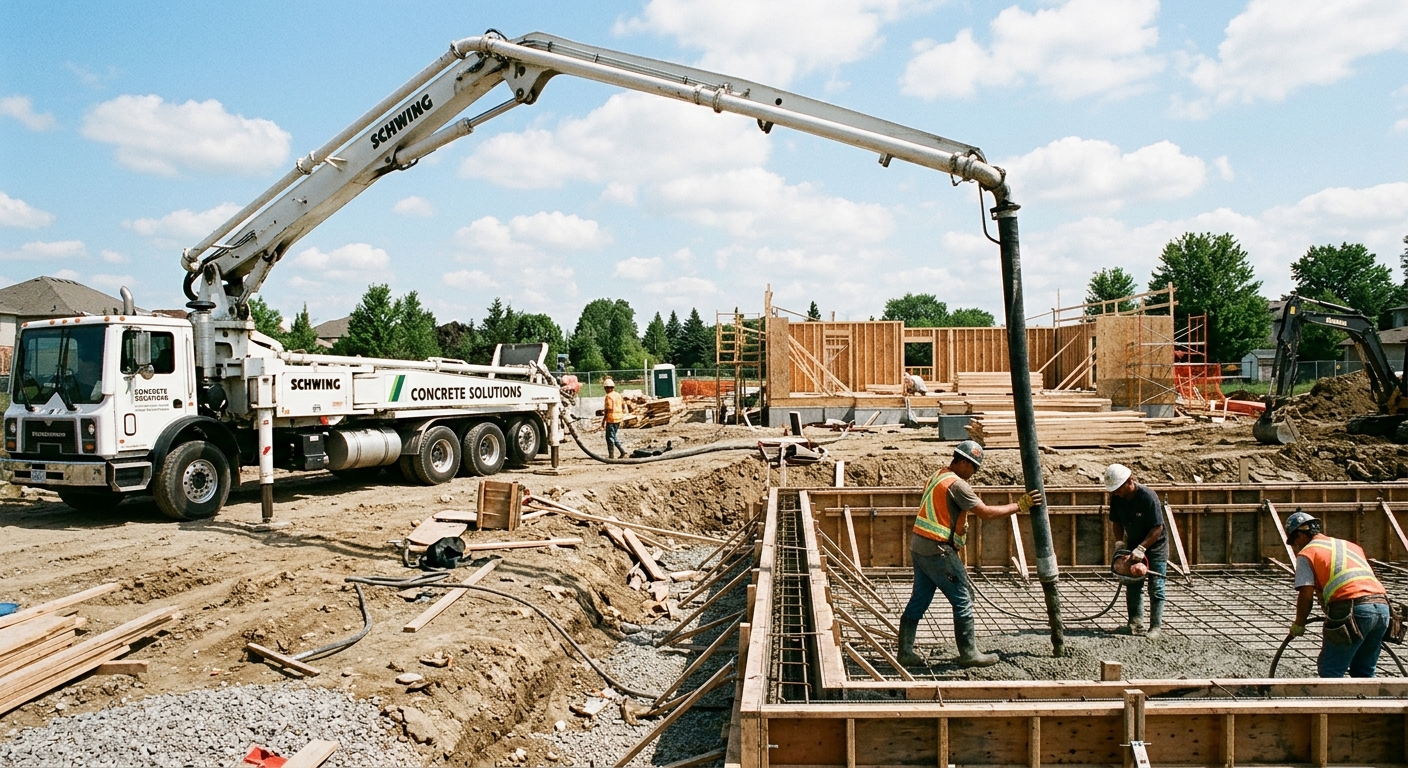
Concrete work options and costs in Smooth Rock Falls
Smooth Rock Falls is a small Northern Ontario community where homeowners rely on durable concrete for driveways, patios, walkways and foundation work. With about 86.2% of local dwellings being single-detached homes, the market for concrete flatwork is steady year-round, and many properties were built before 1981 (87.1%), which is when wear-and-tear on older slabs and steps becomes noticeable. (Statistics Canada, 2021 Census). That older housing stock often means contractors are doing more than “just pouring”—they’re replacing failing edges, fixing drainage, and bringing surfaces back to safe, level grades.
Pricing in Smooth Rock Falls is also shaped by the Northeast cold snap and freeze–thaw swings. Even though you’re in Ontario (not coastal), the same fundamental concrete challenges show up here: frost can push on weak sub-bases, de-icing salts can accelerate surface deterioration, and winter weather can shorten the practical pour window. In practice, that pushes costs toward the higher end of typical bands because contractors spend more time on excavation, granular base prep, air-entrained mix design, and protected curing. Availability can tighten in peak months, so scheduling is part of the real-world cost.
You’ll generally see the highest demand for driveways and small front-porch pads in older, well-established neighbourhood pockets near the downtown core, where lot sizes are tight and access affects excavation and finishing time. From there, the best way to compare quotes is through typical scopes—so the table below lines up common options with realistic specs and price ranges for Smooth Rock Falls.
| Application |
Typical Size |
Key Spec |
Finish Option |
Price Range |
| Concrete driveway (standard broom finish) |
400–600 sq. ft. |
Air-entrained exterior mix; compacted granular base |
Broomed surface |
$8,000 – $16,000 |
| Exposed aggregate driveway |
400–600 sq. ft. |
Air-entrained mix; retarder + washing plan |
Exposed aggregate |
$12,000 – $22,000 |
| Stamped concrete driveway or patio |
250–500 sq. ft. |
Air-entrained mix; integral colour or stain plan |
Stamped pattern + release agent |
$10,000 – $20,000 |
| Plain concrete patio or walkway |
120–300 sq. ft. |
Air-entrained mix; proper slope and base |
Float/screed + light broom |
$2,500 – $7,500 |
| Garage floor (interior slab) |
300–600 sq. ft. |
Vapour barrier; wire mesh/rebar as required |
Light trowel or broom finish |
$7,000 – $16,000 |
| Foundation footings (structural, below frost) |
Varies (typ. 24–36 in. wide) |
Engineered footing design; depth below frost |
Typically formed and finished for walls |
$10,000 – $18,000 |
Prices are estimates only and vary by project scope, site access and material selection.
What affects the price of concrete work in Smooth Rock Falls
In Smooth Rock Falls, it’s common to see quotes for the “same” concrete driveway swing by 30–50%. The reason usually isn’t the concrete alone—it’s the supporting work around it: excavation, drainage, frost protection, reinforcement decisions, and how the contractor manages cold-weather curing. Two crews can both pour a 500 sq. ft. driveway, but one may include deeper excavation, more granular base, and proper air-entrainment verification—while the other bills those items as extras after the fact.
Frost line depth and freeze–thaw cycles dictate the whole specification in Ontario. Footings must extend below the design frost depth (typically 1.5–2.4 m in Ontario, depending on local soil and design) to prevent frost heave and slab cracking. Exterior slabs also need air-entrained concrete to survive freeze–thaw cycling, and colder regions generally have a shorter, tighter pour season. When temps drop, contractors must use cold-weather procedures—insulated blankets, wind protection, and sometimes temporary heating—which adds labour and materials. De-icing salt is another durability driver; if the mix, finishing, and sealing aren’t planned, spalling and scaling can show up earlier.
Here’s how that plays out in Smooth Rock Falls with real cost drivers. If your soil is frost-susceptible and the contractor needs extra granular replacement and better drainage, you’ll lean toward the higher end of driveway pricing—closer to the $18–$28 band for thicker, better-prepped slabs. If the project is a small sidewalk tie-in with easy access and minimal grading, you can often land closer to the lower $15–$25 patio/walkway band. Housing age also matters: with 87.1% of homes built before 1981, many properties have older grading patterns, buried drainage issues, or deteriorated base layers that require more prep before you ever pour.
| Price Factor |
Why It Matters |
Cost Impact |
| Frost line depth — determines footing depth and form height |
Deeper excavation and higher forms are required to prevent frost heave. |
Can add a large portion of foundation cost due to labour, equipment, and backfill. |
| Site preparation — excavation, grading, compacted granular base |
Concrete performance starts under the slab; weak base leads to settlement and cracking. |
Moderate to high impact depending on excavation depth and how much base replacement is needed. |
| Reinforcement — rebar or wire mesh requirement |
Helps control cracking and improves durability, especially in exterior slabs and garage floors. |
Material cost is usually smaller than labour; overall impact is moderate. |
| Mix design — air-entrainment and compressive strength spec |
Air-entrainment and strength targets reduce freeze–thaw damage and surface scaling. |
Generally moderate; can be the difference between near-low and near-high pricing. |
| Finish type — broom vs. stamped vs. exposed aggregate |
Decorative systems take more steps, timing control, and careful curing. |
High for stamped/exposed options; typically shifts you toward the upper end of $25–$40 decorative pricing. |
| Pour size and concrete truck access to site |
Smaller access-limited pours require more labour for placement and finishing time. |
Moderate; can become high if you need extra handling or multiple pours. |
| Cold-weather curing precautions — heating and blankets |
Early freezing can weaken concrete; protecting the cure improves final strength. |
Moderate to high depending on timing and exposure (wind, shade, wet ground). |
| Control joint pattern and sealing cost |
Jointing reduces random cracking and sealing repels moisture/de-icers. |
Small to moderate per project, but it’s a key longevity cost. |
Permits & regulations in Ontario
In Ontario, structural concrete work generally requires more oversight than typical flatwork. If you’re building or modifying structural elements—such as footings, foundation walls, grade beams, or other load-bearing foundation components—you typically need a building permit, and engineered drawings are often required or reviewed by the municipality. Concrete flatwork like patios, sidewalks, and driveways usually does not require a permit, provided it doesn’t meaningfully change lot grading, drainage patterns, or impervious surface limits, and it doesn’t impact the municipal right-of-way. That said, I strongly recommend confirming with the local authority before breaking ground because one drainage change can trigger a review.
For a homeowner in Smooth Rock Falls, verifying contractor readiness is step-by-step and should be done before any excavation starts. First, confirm the contractor is properly licensed for the type of work they’re proposing (ask for their business registration details and any trade licensing they carry). Second, request a certificate of insurance showing general liability coverage for the project. Third, ask for confirmation of WSIB/WCB coverage and look for the clearance letter or account confirmation; contractors who cannot provide this are a major risk. Finally, ask for references with similar-scope work—especially exterior cold-climate pours and foundation-related site work—and verify photos match the stated depth, reinforcement, and base prep.
If the quote includes foundation or underpinning work, assume permits and engineering checks will be part of the schedule and cost—even if they’re not always line-itemed.
Getting concrete right in Smooth Rock Falls's freeze-thaw climate
Concrete fails in Smooth Rock Falls when the slab is treated like an indoor material. In freeze–thaw conditions, the most common failures we see are spalling (surface scaling), cracking from poor sub-base support, and joint deterioration from trapped meltwater and de-icers. The fix is not “more concrete”—it’s correct specification: base preparation, air-entrained mix design, disciplined jointing, and protected curing.
Start with base prep. You need a compacted granular sub-base to the right depth for your soil and frost exposure so the slab doesn’t heave or settle. Next is the mix: for exterior flatwork, target about 5–7% air content (air-entrained concrete) to resist freeze–thaw damage, and specify a minimum 32 MPa compressive strength for durability. Then control cracking with a proper control joint pattern—spacing should limit random cracks, especially for driveways and longer walkways. Curing matters as much as the pour: aim for at least 7 days of adequate curing conditions, and when weather turns cold quickly, plan for blankets or other cold-weather protection so concrete doesn’t freeze early. Finally, sealing is a practical Ontario durability step: apply a penetrating sealer after the slab has cured (often around 28 days) to repel moisture and de-icing salts.
If you’re comparing options, consider where the price difference is justified. A stamped driveway typically costs more than a broom finish because it requires integral colour or tint/stain systems and careful timing. If a broom driveway is close to your budget, it’s often the better longevity value—assuming the base and air-entrainment are correct. The higher cost is worth it when you also confirm drainage, jointing, and curing are included—not when those fundamentals are treated as extras.
| Spec |
Why It Matters in Smooth Rock Falls |
What to Ask For |
Impact if Skipped |
| Compacted granular base (depth?) |
Prevents settlement and reduces frost-related movement under exterior slabs. |
State excavation depth, granular replacement thickness, and compaction testing method. |
Cracking, uneven slabs, and premature edge failure. |
| Air-entrained concrete mix (target air %?) |
Air voids allow water expansion during freeze–thaw without destroying the paste. |
Confirm air-entrainment target (about 5–7% for exterior flatwork) and mix delivery specs. |
Spalling and scaling, especially after seasons of de-icers. |
| Compressive strength (MPa rating) |
Ensures structural and surface durability in a cold climate. |
Ask for minimum 32 MPa and where it’s measured/confirmed. |
Reduced strength development and higher long-term wear. |
| Control joints (spacing per ACI guidelines) |
Controls where cracks occur to keep them tight and manageable. |
Ask for planned joint locations, sawcut timing, and approximate spacing. |
Random cracking and water infiltration at stress points. |
| Minimum 7-day curing period |
Cold conditions can slow strength gain or cause early freezing damage. |
Ask how they protect curing (blankets/insulation) if daytime temps drop. |
Weak surface, higher cracking risk, and poor bond at edges. |
| Penetrating sealer (when applied after cure) |
Repels moisture and de-icing salts to slow surface deterioration. |
Confirm product type and timing (often after the full cure window, such as ~28 days). |
Faster scaling and shortened service life. |
How to choose a concrete work contractor in Smooth Rock Falls
Choosing the right contractor is where many homeowners in Smooth Rock Falls win (or lose) money. Start with Ontario compliance and proof. Ask for the contractor’s business registration details and any relevant trade licensing for the scope they’re doing. Next, request a certificate of insurance showing general liability for your project and confirm that the policy includes work at your address. Then ask for WSIB/WCB coverage confirmation—look for an up-to-date clearance letter or account status documentation. If they can’t provide this up front, treat it as a red flag.
Next, don’t accept a “lump sum without detail.” Get 2–3 itemised written quotes that separate excavation/grading, granular base, reinforcement, concrete supply, finish work, curing protection, and sealing (if included). Verify what’s excluded: removal/disposal of existing concrete, forms, drainage adjustments, sawcutting timeline, and whether a permit is included (or the homeowner is responsible). A good warranty is also practical—ask for the workmanship warranty length and whether the product/manufacturer warranty applies to the materials used. If the contractor uses integral colour or decorative systems, confirm who warrants the finish.
On payment, never pay more than 10–15% upfront. Hold back a portion until completion and final clean-up are verified. Finally, get a written start date and completion estimate that accounts for weather risk in Northern Ontario.
- Ask if they will provide a written scope with base depth, reinforcement type, and finishing method.
- Confirm whether compaction and grade checks are included (and how they document it).
- Verify air-entrained mix is included for exterior work.
- Ask how they protect curing if temperatures drop near pour day.
- Check whether sawcut timing and joint layout are specified.
- Get disposal/removal costs listed separately if you’re replacing existing slabs.
- Confirm truck access plan (pump vs. wheelbarrow handling) and whether it affects labour.
- Clarify whether sealing is included and when it will be applied.
- Ensure warranty covers cracking attributable to workmanship (and what “exclusions” are).
- Require proof of general liability insurance before any work starts.
- Confirm WSIB/WCB clearance documentation for the crew doing the concrete work.
- Request references from nearby projects with similar scope and finish type.
Concrete red flags I see in Smooth Rock Falls include: no mention of air-entrainment for exterior slabs, joint plans left “to the finisher,” curing blankets/heating treated as optional, vague quotes that don’t separate base prep and reinforcement, and contractors who ask for most payment upfront or won’t share proof of insurance and WSIB/WCB coverage.
Frequently asked questions — concrete work in Smooth Rock Falls
How long does a concrete project take in Smooth Rock Falls?
In Smooth Rock Falls, timelines depend heavily on weather and curing protection, not just pour day. For typical flatwork, you’ll often see: 1–3 days for site prep (excavation, base prep, forms), 1 day for the actual pour and finishing, then additional days for protective curing and weather management. Realistically, patios and walkways are often ready to use in about 1–2 weeks (with traffic managed), but full durability takes longer. Driveways can take 2–4 weeks total due to curing, jointing/sawcut timing, and drainage adjustments. If temperatures threaten early freezing, contractors may need blankets or delayed schedules, which can add time.
What is a concrete overlay and is it suited to Smooth Rock Falls?
A concrete overlay is a newer concrete layer placed over an existing slab to restore surface condition without full removal—often used when the original concrete is stable but worn. In Ontario’s freeze–thaw cycle, overlays can work well if the existing slab is structurally sound, the old concrete isn’t actively moving, and prep is thorough (chipping/scarification, bonding plan, and correct drainage). If the base has failed or the slab is already heaving, an overlay usually traps problems and cracks telegraph quickly. For many older homes built before 1981 (Statistics Canada, 2021 Census), I recommend a careful inspection first. Pricing varies, but homeowners should expect overlays to be closer to the mid-to-upper end of concrete work once surface prep and bonding are included; sometimes a full replacement ends up more cost-effective.
How do I seal concrete to protect it in Smooth Rock Falls?
Sealing is one of the simplest durability steps for Smooth Rock Falls because de-icing salts and meltwater drive surface deterioration during winter cycles. The key is timing and product choice: use a penetrating sealer rather than a film-forming coating when your goal is to repel moisture while letting the concrete breathe. Wait until the slab has cured properly—often around 28 days—then clean thoroughly so the sealer penetrates instead of sitting on dust or salts. Apply in dry conditions with appropriate temperature range as the product label requires, and avoid sealing too soon after snowmelt. A properly sealed exterior slab can hold up better against scaling and minor spalling, especially for driveways that are salted regularly. If your contractor quoted a broom driveway in the $18–$28 band, ask whether sealing is included or listed as a separate line item.
What is the difference between concrete and cement?
Concrete and cement aren’t the same thing. Cement is one ingredient—an engineered powder that, when mixed with water, forms the paste that binds everything together. Concrete is the finished construction material: cement plus water, sand, gravel/stone, and often admixtures (including air-entrainment for freeze–thaw durability). In Smooth Rock Falls, the “right mix” matters more than the name on the bag because exterior concrete needs air-entrainment and proper strength development. Contractors should specify the design mix (including air content targets) and the strength (for example, minimum 32 MPa for many exterior applications). So when you get a quote, don’t just ask for “concrete”—ask for the mix specs, whether it’s air-entrained, and what curing protection they’ll use if conditions get cold fast.
How much does concrete work cost in Smooth Rock Falls?
Concrete pricing in Smooth Rock Falls depends on scope, excavation and access, thickness, reinforcement, finish, and how much cold-weather curing protection is required. As a planning reference, driveway concrete typically lands around $18–$28 per square foot, while patios and walkways are often $15–$25 per square foot. Decorative options cost more: stamped & decorative concrete commonly falls in the $25–$40 per square foot band. For context, if you’re looking at a standard broom driveway, many homeowners fall into the lower portion of the driveway band when base prep is straightforward. If the job includes deeper excavation for poor soils, drainage work, or decorative finishes like stamping/exposed aggregate, the price tends to move toward the upper end. Since 87.1% of area homes were built before 1981 (Statistics Canada, 2021 Census), older grading and base issues can push projects upward even when the square footage looks similar.
How deep must footings be for Smooth Rock Falls's frost line?
Footing depth should be determined by the design frost depth for your location and soil conditions, and it’s typically set by a structural engineer for new work or when required by the building permit process. In Ontario, that design frost depth is commonly in the range of 1.5–2.4 m, depending on location and site specifics. In practical terms, that means contractors must excavate below the frost line to reduce the risk of frost heave and cracking. Because your soil and drainage conditions can change how frost acts, I recommend not guessing. Instead, verify the engineer’s footing elevation and confirm the quote includes the correct depth, excavation, forms, and engineered reinforcement. If you’re comparing foundation quotes, ask for the footing width, depth-to-bottom, and whether the permit/engineering documentation is referenced in the scope.