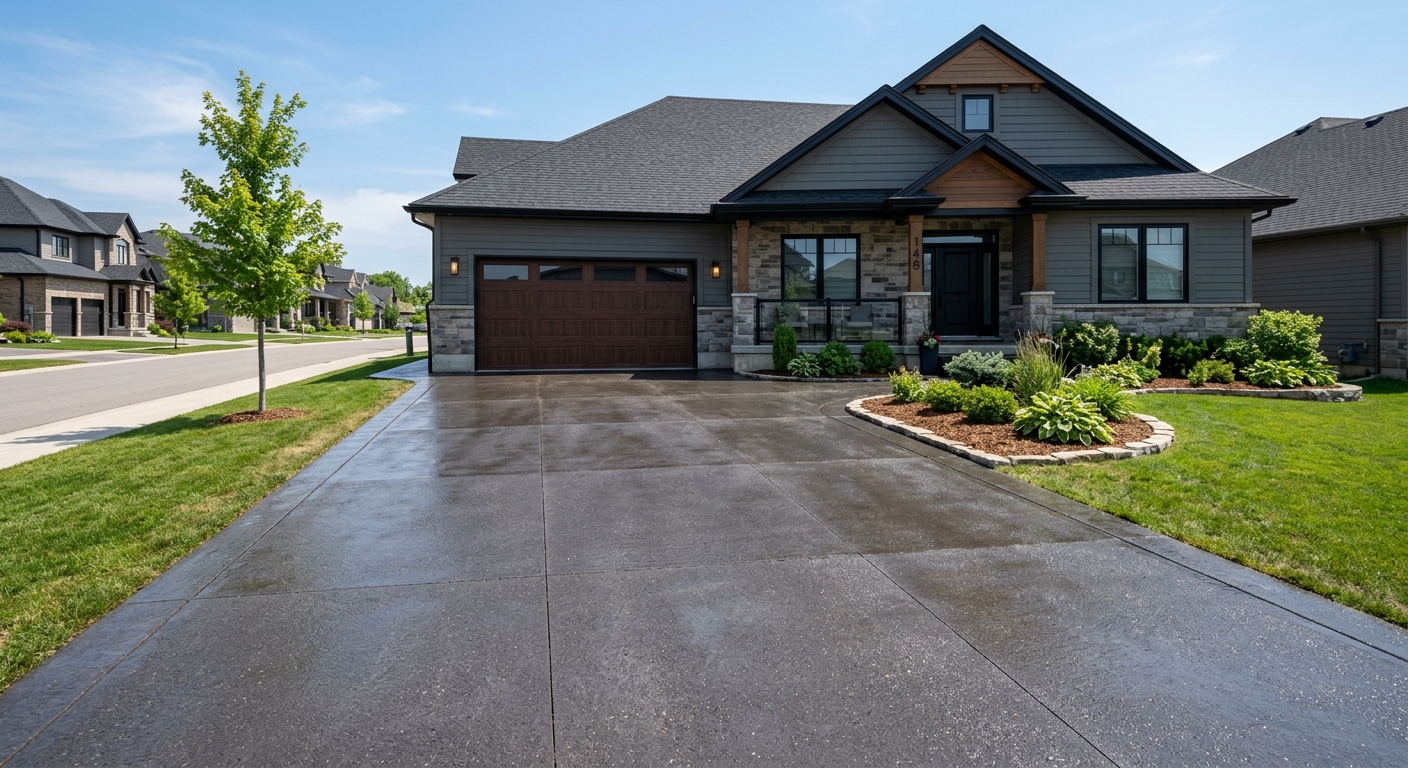
Concrete work options and costs in Guildwood
In Guildwood, Ontario, concrete work is most often about flatwork that has to survive Toronto’s freeze–thaw swings: driveways, patios, walkways, and the slab-on-grade and foundation components that support many homes in the neighbourhood. Guildwood’s housing stock is largely family-oriented, and the market demand for exterior concrete is closely tied to the prevalence of single-detached homes—many of which were built or upgraded over decades as the community grew (Statistics Canada, 2021 Census). With a local population of 9,917 people (Statistics Canada, 2021 Census), you’ll typically find fewer crews than in the densest core of the GTA, so scheduling can matter as much as price.
In the Toronto economic region, costs are driven by frost depth requirements and how often contractor crews must manage curing during variable shoulder-season temperatures. Ontario building practice generally requires exterior structural footings to extend below design frost depth (commonly at least 1.2 m below grade for many foundations), and exterior slabs need air-entrained concrete plus proper drainage. On top of that, repeated wet conditions in fall and spring can saturate subgrades, and if the granular base and thickness aren’t right, freeze–thaw can push the concrete and accelerate cracking and surface scaling.
If you’re planning work in an area like the Guildwood Village / Scarborough corridor, you’ll often see the highest demand in spring when homeowners are lining up repairs and replacements before summer. The sections below compare realistic options and typical pricing so you can budget confidently before you request quotes.
| Application |
Typical Size |
Key Spec |
Finish Option |
Price Range |
| Concrete driveway (standard broom finish) |
400–500 sq ft |
Air-entrained mix, control joints, granular base |
Broom finish |
$18,000–$28,000 |
| Exposed aggregate driveway |
400–500 sq ft |
Air-entrained mix, proper drainage, reveal curing |
Exposed aggregate |
$22,000–$34,000 |
| Stamped concrete driveway or patio |
300–450 sq ft |
Air-entrained mix, thicker slab as needed for durability |
Stamped (decorative release & finish) |
$24,000–$40,000 |
| Plain concrete patio or walkway |
200–350 sq ft |
Granular base, slope to drain, joints where needed |
Plain broom or light trowel |
$16,000–$26,000 |
| Garage floor (interior slab) |
400–600 sq ft |
Vapour control as required, reinforcement where specified |
Float-finish with edges |
$20,000–$32,000 |
| Foundation footings (structural, below frost) |
Approx. 120–250 linear ft |
Engineered footing size, below frost depth |
Structural concrete pour |
$10,000–$25,000 |
Prices are estimates only and vary by project scope, site access and material selection.
What affects the price of concrete work in Guildwood
In Toronto and across Ontario, it’s common to see quotes for what looks like the “same” concrete project vary by 30–50%. That gap usually comes down to the specs behind the scenes: footing depth and formwork, excavation and base prep, reinforcement, and the concrete mix design required to handle freeze–thaw. Two contractors might both quote a driveway, but one may price a properly engineered base and air-entrained mix while another cuts corners on thickness, drainage, or curing protection—those choices show up fast in cracking and scaling.
For Guildwood, frost depth and freeze–thaw cycles dictate every structural decision. Footings must extend below design frost depth to prevent frost heave and differential movement; when you see pricing differences, form height, excavation depth, and disposal of unsuitable soil are often the drivers. Exterior slabs also need air-entrained concrete so moisture doesn’t expand and spall the surface every winter. Toronto crews typically concentrate exterior pours in warmer months, and when temperatures trend toward 10 °C or below, contractors add curing protection (blankets, insulated enclosures, or controlled temperature strategies) to protect early strength gain. Sealing is another cost item that becomes more valuable when de-icing salt is used, because salt accelerates surface deterioration if the concrete isn’t properly finished and sealed.
Concrete examples in Guildwood: (1) If your driveway includes heavy vehicle turning and a longer approach, thicker edges and better base compaction often add cost, but they reduce rutting. (2) If the soil is saturated after spring rains, contractors may need additional excavation and granular replacement before pouring—this can push a standard driveway near the high end of the $18–$28 per sq ft band. (3) Decorative work—like stamped or exposed aggregate—can be justified when you want curb appeal, but the jump from a plain patio in the $16–$26 band to stamped in the $24–$40 range is mainly labour and finishing complexity, not “more concrete.”
| Price Factor |
Why It Matters |
Cost Impact |
| Frost line depth |
Determines footing depth and excavation volume/form height |
Can add significant labour and disposal costs if deeper excavation is required |
| Site preparation |
Excavation, grading, compacted granular base to prevent settlement |
More base replacement or regrading typically increases cost |
| Reinforcement |
Rebar or wire mesh to control cracking in slabs/footings |
Extra material and tying labour increases the price |
| Mix design |
Air-entrainment and minimum compressive strength for freeze–thaw durability |
Higher-spec concrete costs more but improves service life |
| Finish type |
Broom vs. stamped vs. exposed aggregate impacts labour time and materials |
Stamped/exposed typically pushes pricing toward the higher bands |
| Pour size and concrete truck access to site |
Large pours need efficient pumping/placement; access affects logistics |
Pump/extra labour can add hundreds to thousands |
| Cold-weather curing precautions |
Heating and insulating blankets protect early strength gain |
Winter protection measures add direct material and labour |
| Control joint pattern and sealing cost |
Joints manage shrinkage cracking; sealing repels salt and water |
Good jointing plus sealing usually increases cost modestly, but reduces rework risk |
Permits & regulations in Ontario
In Ontario, the permit and design requirements depend on what concrete you’re building. Structural concrete work—such as footing and foundation construction (footings, foundation walls, grade beams)—requires a building permit and often engineered drawings that the municipality reviews as part of compliance. That’s because the concrete supports the building’s structural system and must meet safety and load requirements. For example, if you’re underpinning, replacing foundation walls, or changing beam/column support, plan for permits and engineered specs.
Concrete flatwork (patios, walkways, driveways) typically does not require a building permit, provided it doesn’t affect lot grading, right-of-way requirements, or impervious surface and drainage rules. However, municipalities can require approvals if your project changes how stormwater drains, alters slope away from the foundation, or impacts municipal areas. Always confirm with the local authority before breaking ground.
For contractor verification in Guildwood, start with three items: (1) Ontario licence/registration (where applicable for the scope and trade involvement), (2) liability insurance, and (3) WSIB/WCB coverage. Ask the contractor to provide certificates of insurance naming you (or your property) as additionally insured where appropriate, and a clearance letter for WSIB/WCB. If they can’t produce current documentation, treat it as a risk indicator. Then ask for references on similar-scale work in the Toronto area so you can confirm they’ve handled frost-depth excavation, base prep, and sealing—common points where shortcuts create long-term issues.
Getting concrete right in Guildwood's freeze-thaw climate
Concrete failure in Guildwood is usually preventable, but it’s rarely “just one thing.” In the Toronto area, the biggest culprits are (1) inadequate base preparation leading to settlement, (2) insufficient air-entrainment leading to freeze–thaw damage, (3) poor control joint planning that lets shrinkage cracks become random, and (4) curing problems when cooler weather slows early strength gain. Spec the job like you’re building for multiple winters, not just the pour day.
Base preparation is the foundation of durability: compacted granular sub-base to the required depth for local soil and drainage conditions is what stops the slab from moving. Next, mix design: for exterior flatwork, use air-entrained concrete with a target air content around 5–7% for freeze–thaw resistance, and ensure minimum compressive strength of about 32 MPa unless the engineer specifies otherwise. Control joints should be planned so cracking happens where you want it—at set intervals—rather than randomly. Curing matters more in spring/fall; the concrete needs at least 7 days under proper conditions, and if temperatures are low, contractors must protect the slab so it achieves early strength safely. Finally, plan for sealing: a penetrating sealer applied about 28 days after the pour helps repel de-icing salts and water.
Ask the right question to avoid the most expensive failure mode: spalling from inadequate air-entrainment. If a contractor tries to reduce cost by using an overly low-spec mix, you might “save” on the quote but pay later for patching and replacement. A realistic example: moving from a plain broom-finished patio in the $16–$26 range to a stamped finish in the $24–$40 range is often justified by extra labour for form work, stamping, and detailing, not by structural changes. Don’t confuse decorative upgrades with durability upgrades—they’re separate line items.
| Spec |
Why It Matters in Guildwood |
What to Ask For |
Impact if Skipped |
| Compacted granular base (depth?) |
Prevents settlement and reduces moisture pumping in freeze–thaw |
Base depth by soil condition + compaction testing/acceptance method |
Premature cracking, uneven surface, and debonding |
| Air-entrained concrete mix (target air %?) |
Protects against freeze–thaw and surface scaling/spalling |
Confirm air content target around 5–7% for exterior flatwork |
Spalling and flaking within a few winters |
| Compressive strength (MPa rating) |
Ensures the slab achieves designed early and long-term strength |
Minimum 32 MPa (or engineer-specified rating) |
Reduced durability and increased cracking risk |
| Control joints (spacing per ACI guidelines) |
Controls where shrinkage cracks form under temperature swings |
Joint spacing and saw-cut timing plan |
Random cracking and difficult-to-repair defects |
| Minimum 7-day curing period |
Early strength development is critical during cooler Toronto nights |
Curing method/protection plan, especially when temperatures are low |
Surface weakness and reduced weather resistance |
| Penetrating sealer (when applied after cure) |
Improves resistance to water and de-icing salts |
Sealer type and timing (about 28 days post-pour) |
Faster deterioration, staining, and salt-related scaling |
How to choose a concrete work contractor in Guildwood
Choosing the right contractor in Guildwood is mostly about verifying paperwork, matching the quote to your technical needs, and controlling risk in the payment and schedule. For Ontario compliance, confirm the contractor carries liability insurance appropriate to concrete work and provides current WSIB/WCB clearance (or coverage proof where applicable). How to check each: request certificates of insurance and confirm policy status and coverage limits; for WSIB/WCB, ask for a clearance letter or evidence that accounts are in good standing. If they won’t provide documents up front, move on.
Next, get 2–3 itemised written quotes rather than a single lump sum. Ask for a breakdown that separates excavation and granular base, reinforcement (if any), concrete supply and air-entrainment mix spec, forming/shaping, finishing labour (broom vs. stamped vs. exposed), joints and sealing, and any pumping. Make sure the quote states what’s excluded: disposal of excess soil, removal of old concrete, tree root pruning, sump discharge, and whether a permit (when required for structural work) is handled by the contractor.
Warranty should be explicit: workmanship warranty length and whether it covers joint failures, scaling, or settlement. Product/manufacturer warranties (for sealer or admixtures) should be documented and you should ask if the warranty is transferable to you as the homeowner. Keep the payment schedule sensible—never pay more than 10–15% upfront. Use a holdback until the final inspection items are complete (sealing applied where included, joints finished, cleanup done). Finally, request a written start date and completion estimate; in the GTA, winter curing and schedule compression can affect quality, so insist the crew won’t rush cure times.
- Verify liability insurance with current dates and coverage limits
- Confirm WSIB/WCB clearance or proof of coverage before work begins
- Request an itemised quote (materials + labour lines), not a lump sum only
- Ask for the concrete mix spec: air-entrainment target for exterior work
- Confirm base prep scope: excavation, granular depth, and compaction expectations
- Check reinforcement plan (wire mesh/rebar) for slabs/areas that need it
- Ensure joint layout and saw-cut timing are included
- Confirm curing method and what happens in cool or rainy weather
- Ask if penetrating sealer is included and when it’s applied (around 28 days post-pour)
- Clarify disposal: what gets hauled away and whether dump fees are included
- Get a written start/completion timeline and who protects the slab during cure
- Review warranty details in writing, including what failures are covered
Concrete red flags I see too often in the Guildwood area: (1) contractors who refuse to discuss air-entrainment and joint spacing, (2) quotes that don’t mention base thickness/compaction, (3) no mention of curing protection in cool weather, (4) asking for large upfront payments, and (5) vague scopes that omit sealing and disposal details.
Frequently asked questions — concrete work in Guildwood
How long does a concrete project take in Guildwood?
In Guildwood, the timeline depends on whether you’re doing exterior flatwork (driveways, patios, walkways) or structural concrete (footings/foundation elements). For most exterior slab jobs, you can often expect: demo and excavation 1–3 days, base prep and forms 1–2 days, the pour day (plus finishing) 1 day, and then curing time before you can safely use the area. Even though concrete gains strength quickly, contractors typically plan around at least 7 days for early curing, then schedule traffic and final landscaping around the cure and weather. Decorative work like stamped finishes can add a day for finishing details. If temperatures drop toward 10 °C or below, curing protection can extend the “usable” timeline, even if the physical work is done on schedule (Ontario freeze–thaw climate effect).
What is a concrete overlay and is it suited to Guildwood?
A concrete overlay is typically a new bonded layer placed over an existing slab to improve appearance and smoothness without fully removing the old concrete. In Guildwood, it can be suited to the right conditions—mostly when the existing slab is still structurally sound, not heavily spalled, and can be properly prepared (often including grinding, cleaning, and crack treatment). The freeze–thaw factor is crucial: if the existing slab is already failing from moisture movement or inadequate air-entrainment, an overlay may only mask the problem temporarily. Cost-wise, overlays can sometimes land in a similar or slightly lower range than a full replacement depending on prep scope, but the value depends on how much demolition and remediation is required. If your current slab is scaling from de-icing salts, a proper drainage and sealing plan becomes even more important.
How do I seal concrete to protect it in Guildwood?
To protect concrete in Guildwood, sealing should be part of a full durability plan: correct base prep, air-entrained exterior concrete, proper jointing, and then a sealer after cure. Typically, contractors apply a penetrating sealer after the concrete has cured—often about 28 days post-pour—so the surface is ready to absorb and perform. For exterior driveways and patios, sealing helps repel water and de-icing salts that can accelerate surface breakdown during Ontario winters. Before sealing, the surface must be clean and dry (pressure washing and neutralizing if needed), and the contractor should avoid sealing over dust, paint residue, or curing compounds. Ask your contractor what sealer they use, what it’s designed to do (water repellence vs. colour), and whether they provide a recoat recommendation based on traffic and weather exposure in the Toronto area.
What is the difference between concrete and cement?
In everyday language, people say “concrete” when they mean the finished slab, but cement is actually one ingredient inside concrete. Cement is a binder (typically Portland cement) that reacts with water to form paste and help the mix harden. Concrete is the full engineered mixture: cement plus water, fine and coarse aggregates (sand and stone), and often additives like air-entrainment admixtures for exterior freeze–thaw performance. In Ontario, exterior flatwork that needs to handle winter conditions is usually specified with air-entrainment and appropriate strength. So if you’re comparing quotes for a driveway in the $18–$28 band or a patio in the $16–$26 band, the “cement vs concrete” wording should translate into actual mix requirements—especially air content, strength rating, and curing steps—not just a vague reference to materials.
How much does concrete work cost in Guildwood?
Concrete costs in Guildwood generally fall within GTA pricing bands, but your total depends heavily on base prep, access, and finish. For planning, a concrete driveway or slab is commonly budgeted in the $18–$28 range, while plain patios and walkways are often $16–$26. Stamped decorative work usually costs more—often $24–$40—because labour and detailing are higher. Structural elements are a different category: foundation/footings are commonly estimated using per-linear-foot or per-scope pricing and can land in the $180–$300 range in many project estimates, depending on engineered requirements and excavation depth below grade. In the Toronto freeze–thaw climate, deeper excavation below design frost depth and additional curing protection in cooler periods are common cost drivers, and they’re why two quotes can differ by 30–50% even for similar-looking work.
How deep must footings be for Guildwood's frost line?
For Guildwood (Ontario/Greater Toronto area), footing depth is governed by design frost depth and the Ontario Building Code approach used for the project—so it should be based on the specific engineering and local conditions of your lot, not just a blanket guess. In practice, many structural footings extend at least about 1.2 m below grade to manage frost heave and differential movement; deeper depths may be required depending on soil conditions and design. The key homeowner takeaway is that footing depth impacts excavation volume, formwork height, disposal of unsuitable soil, and schedule—so it can significantly change your concrete budget. Because Toronto’s freeze–thaw cycles are frequent and moisture matters, reputable contractors will align footing depth and concrete specs with the engineered plan and the frost protection requirements rather than treating footing depth as a “nice to have.”