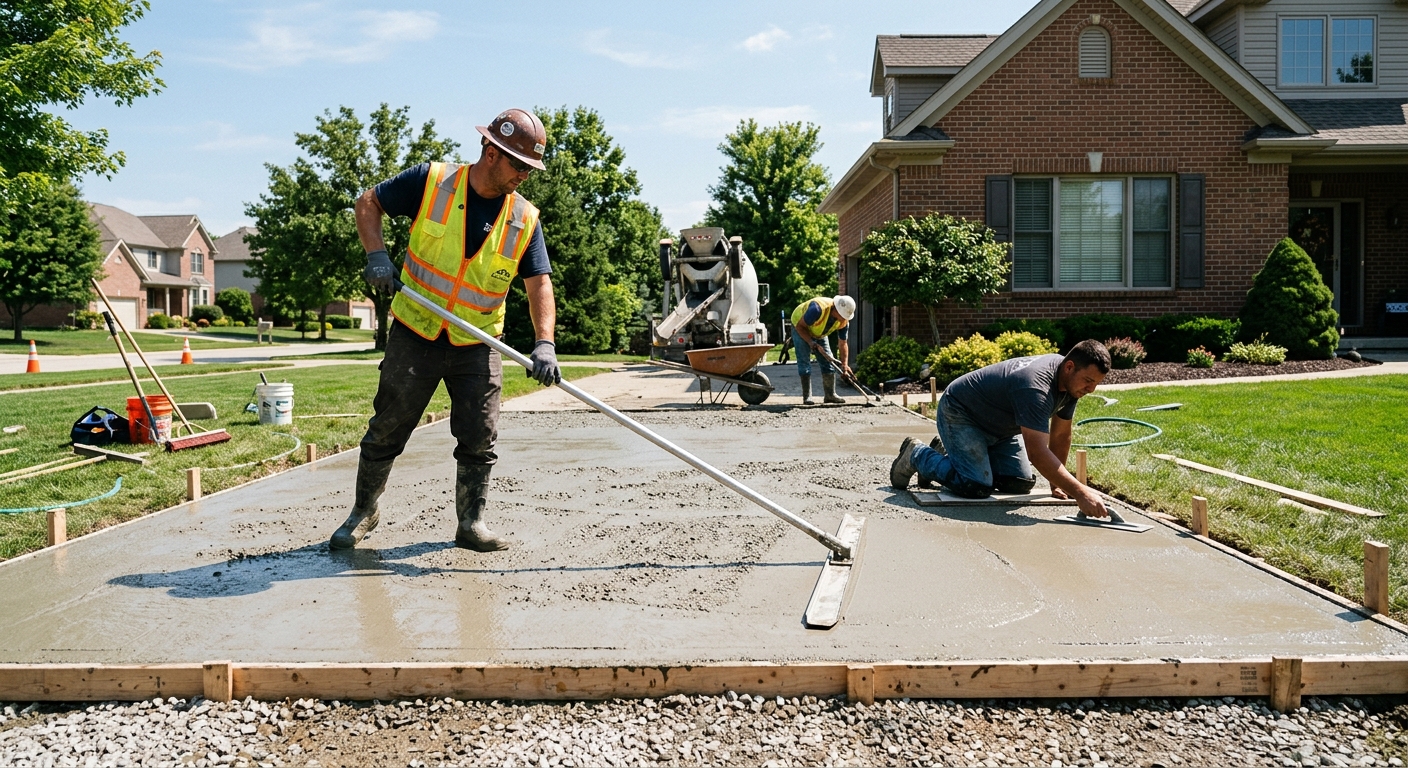
Concrete work options and costs in Centretown
In Centretown, concrete projects are a common part of home maintenance and upgrades, whether you’re planning a new driveway, fresh patio, or structural foundation work. Centretown’s housing stock is a mix of older neighbourhood streets and denser areas—so demand tends to cluster where homeowners are actively renovating, repairing trip hazards, and updating curb appeal. In the City of Toronto’s housing mix, many single-detached and semi-detached properties support regular flatwork replacement, and Centretown’s population was 25,687 in 2021 (Statistics Canada, 2021 Census). That level of activity helps explain why you’ll find several reputable contractors in the area, especially around the ByWard Market and adjacent low-rise streets where lots have access constraints and limited staging space.
Pricing here isn’t just about concrete—it’s about how Toronto deals with frost depth and repeated freeze–thaw cycles. Local specs typically require structural footings to extend well below grade, and exterior slabs are commonly built with air-entrained concrete, proper thickness, and control joints to manage cracking. Also, in the Toronto market, most exterior pours are timed for the warmer months for reliable curing. When crews pour as temperatures drop toward around 10 °C or below, they may need extra protection and longer cure management, which can raise total costs. In short: the better prepared the base and the more carefully the mix and curing are handled, the longer the concrete tends to last in Centretown winters.
Below is a realistic comparison of common options and what homeowners in Centretown typically budget for, before you start comparing quote line-by-line.
| Application |
Typical Size |
Key Spec |
Finish Option |
Price Range |
| Concrete driveway (standard broom finish) |
300–500 sq. ft. |
6 in (150 mm) slab, reinforced as required, compacted granular base |
Broomed, saw-cut control joints |
$18,500–$27,500 |
| Exposed aggregate driveway |
300–500 sq. ft. |
Air-entrained exterior mix, proper drainage and jointing |
Exposed aggregate surface finish |
$23,000–$33,500 |
| Stamped concrete driveway or patio |
200–450 sq. ft. |
Air-entrained mix, thicker wearing surface, textured pattern system |
Stamps and release, colour hardeners |
$24,000–$40,000 |
| Plain concrete patio or walkway |
150–400 sq. ft. |
4–5 in (100–125 mm) slab, compacted base, slope for drainage |
Broom finish or light broom, simple joints |
$12,000–$21,000 |
| Garage floor (interior slab) |
300–600 sq. ft. |
Minimum thickness and vapour/under-slab prep as needed |
Broom finish, optional densifier/seal |
$18,000–$30,000 |
| Foundation footings (structural, below frost) |
Typical partial or new section |
Below-frost depth placement, engineered rebar, approved formwork |
Structural concrete only |
$6,000–$12,000 |
Prices are estimates only and vary by project scope, site access and material selection.
What affects the price of concrete work in Centretown
In Centretown, quotes for what looks like the “same” concrete job can swing by 30–50% once you add the real drivers—base excavation, reinforcement needs, concrete mix requirements for freeze–thaw, access constraints, and curing protections. Two contractors can both quote “a driveway,” but one may include proper excavation to reliable bearing, correct granular base compaction, air-entrained mix, and a joint plan that reduces random cracking, while another may assume simpler prep or a less robust pour schedule. That difference shows up as dollars quickly.
The biggest reason is frost depth and freeze–thaw cycling across the Ontario climate. Local building practice expects structural footings to extend at least 1.2 m (about 4 ft) below grade to reduce frost heave and differential movement, with exterior flatwork built using air-entrained concrete. Because freeze–thaw is repeatable every winter, exterior slabs also need the right thickness and control joints, not just “good concrete.” If the pour happens when night temperatures drift toward 10 °C or below, crews must manage curing with protection (insulating blankets, heaters where appropriate) and extended protection time—labour and materials add up. Finally, GTA winters include de-icing salt use; inadequate sealing can increase surface spalling over time, pushing future repair costs.
In Centretown, costs often rise when your site has limited truck access (tight laneways near the core), when soils are saturated and need more granular base build-up, or when we must remove existing slab/aggregate with proper disposal. Costs can also be lower on small walkway jobs where the base is already sound, especially if you’re staying in the mid-range of patio/walkway pricing like $16,000–$26,000 for typical scopes—while higher-end stamped work may justify the premium because decorative systems add material and labour, often aligning with ranges like $24,000–$40,000.
| Price Factor |
Why It Matters |
Cost Impact |
| Frost line depth — determines footing depth and form height |
Footings must sit below design frost depth to prevent frost heave and movement. |
Can materially increase excavation and concrete volume for structural work. |
| Site preparation — excavation, grading, compacted granular base |
Bad base prep leads to settlement, cracking, and premature failure. |
Raises cost when soils are wet/soft or when hauling and backfill are extensive. |
| Reinforcement — rebar or wire mesh requirement |
Reinforcement controls cracking in restrained slabs and heavier load areas. |
Increases material and tying labour on driveways and garage floors. |
| Mix design — air-entrainment and compressive strength spec |
Air-entrainment helps exterior concrete survive freeze–thaw cycles. |
Usually adds some material cost but reduces long-term spalling risk. |
| Finish type — broom vs. stamped vs. exposed aggregate |
Decorative finishes require specialized systems and additional labour steps. |
Can be the main driver of the gap between plain and decorative pricing. |
| Pour size and concrete truck access to site |
Limited access can require smaller loads, more labour, or pump/placement tools. |
Increases labour time and may add equipment charges. |
| Cold-weather curing precautions — heating and blankets |
Curing must proceed correctly even when temperatures drop. |
Adds protective materials, labour monitoring, and sometimes rescheduling. |
| Control joint pattern and sealing cost |
Joints manage cracking locations; sealing helps resist de-icing salt damage. |
Skips can lead to early repairs; including them typically increases but protects value. |
Permits & regulations in Ontario
In Ontario, structural concrete work generally needs a building permit, and municipalities often expect engineered drawings or stamped details for foundation components. Concrete flatwork—like patios, walkways, and typical driveway replacements—usually does not require a permit by default. However, permits can become necessary when the work affects lot grading, changes drainage patterns, triggers impervious surface coverage considerations, or involves work near municipal right-of-way or required egress/yard-grading constraints. The safe approach in Centretown is to confirm with the City of Ottawa?—sorry, with your local municipality—before you break ground, especially if you’re lowering/raising grade or modifying drainage.
Here’s what typically requires a permit in Ontario: foundation footings, foundation walls, grade beams, underpinning, and any structural repair that changes load paths (not just patching a surface). What typically does NOT: routine replacement of existing driveway or patio slabs, provided you maintain proper drainage and don’t change the grading plan or create compliance issues.
Step-by-step for verifying a contractor in Ontario: (1) Ask for the contractor’s business details and verify licensing where applicable via the province’s online registry resources (your contractor should be able to provide their registration information). (2) Request a Certificate of Insurance showing current liability coverage with adequate limits. (3) Ask for WSIB/WCB clearance or proof of coverage (or comparable status if they’re exempt). (4) Confirm their reference list includes similar-size projects in your area so you can judge workmanship in freeze–thaw conditions.
Getting concrete right in Centretown's freeze-thaw climate
Concrete fails in Centretown when the slab and base can’t handle Toronto’s freeze–thaw cycles. The most common failure homeowners see is surface spalling and scaling—often caused by inadequate air-entrainment or poor curing management, then made worse by de-icing salts. Another frequent issue is cracking that becomes a trip hazard because the slab moves or settles on an inconsistent base, or because the control joint pattern wasn’t planned for how the slab will shrink and expand.
To spec the job correctly for Centretown, start with base preparation. Build a compacted granular sub-base to the required depth for your soil conditions so water can drain and freeze doesn’t lift the slab. Next, focus on mix design: for exterior flatwork, use air-entrained concrete with a target air content of about 5–7% and a minimum 32 MPa compressive strength spec. Plan control joints early so cracking happens where you want it, not randomly across the panel. For curing, aim for at least 7 days under proper conditions; if temperatures fall, the contractor should protect the pour with curing blankets or heaters where appropriate. Then seal: apply a penetrating sealer after full cure (commonly at 28 days post-pour) to help repel de-icing salts.
If you’re comparing options, a dollar example helps: upgrading from a basic broom-finish patio to a decorative stamped surface may run closer to the $24,000–$40,000 band depending on size and pattern work. That premium is justified when the contractor also nails the base, joint plan, and sealing schedule—because the decorative finish won’t last if the underlying freeze–thaw durability details are missing.
| Spec |
Why It Matters in Centretown |
What to Ask For |
Impact if Skipped |
| Compacted granular base (depth?) |
In freeze–thaw, a stable, well-draining base reduces settlement and heave. |
Confirm excavation depth, base thickness, and compaction testing/verification. |
Cracking, uneven slab movement, and early edge failure. |
| Air-entrained concrete mix (target air %?) |
Air-entrainment improves freeze–thaw resistance and reduces scaling/spalling. |
Ask for mix design showing air content in the 5–7% range for exterior. |
More spalling and scaling after winter de-icing exposure. |
| Compressive strength (MPa rating) |
Sufficient strength supports traffic load and surface durability. |
Confirm minimum 32 MPa compressive strength spec for exterior pours. |
Surface wear, cracking, and reduced long-term performance. |
| Control joints (spacing per ACI guidelines) |
Joints control shrinkage cracking and panel movement. |
Request the proposed joint layout and spacing plan. |
Random cracking and wider repairs that cost more later. |
| Minimum 7-day curing period |
Proper curing builds strength and reduces early defects. |
Confirm curing protection plan when temperatures drop. |
Lower strength gain and more cracking during first freeze cycles. |
| Penetrating sealer (when applied after cure) |
Repels de-icing salt water and helps protect against scaling. |
Ask for product type and application timing after full cure (often at 28 days). |
Faster deterioration, especially on driveways and steps. |
How to choose a concrete work contractor in Centretown
Choosing the right concrete contractor in Centretown is mostly about verification and clarity. First, confirm Ontario compliance: ask for proof of liability insurance (you want current coverage and proper limits) and WSIB/WCB clearance so you’re not exposed if a worker is injured. For licensing, request their registration details and business documentation; a professional contractor should provide this without hesitation. If anything is unclear—especially insurance documents—don’t assume it’s fine.
Next, get 2–3 itemised written quotes. You want a labour + materials breakdown, not a single “lump sum” that hides what’s included. Specifically compare excavation depth, granular base thickness, reinforcement type (rebar vs. wire mesh), concrete mix specs (including air-entrainment for exterior), finish steps (broom vs. stamped), and whether disposal and site protection are included. If one quote excludes saw-cut joints or sealing, the price will look lower—but the risk is higher in freeze–thaw conditions.
Review warranty terms. A solid workmanship warranty should be in writing, including length and what’s covered (cracking, spalling, surface defects) and whether there are exclusions related to improper de-icing or maintenance. Also clarify any product/manufacturer warranty and whether it transfers if you sell the home.
Payment schedule matters: avoid paying more than 10–15% upfront. Use a holdback until key milestones are complete, such as final finishing, jointing, and cleanup. Finally, ask for a written timeline with a start date and completion estimate; in Centretown, spring rain and early frosts can shift pour dates, so schedule flexibility is important.
- Confirm liability insurance is current and provides proof via certificate.
- Verify WSIB/WCB clearance before work starts.
- Ask who supplies the concrete and confirm air-entrainment for exterior work.
- Get compaction and base prep details in writing (depth, granular type, slope).
- Request reinforcement spec (rebar size/spacing or mesh type) for the slab.
- Ensure joint layout and sealing plan are included in the scope.
- Make disposal/haul-away explicit (old concrete removal, debris transport).
- Confirm truck access and placement method (standard pour vs. pumping/mini-loads).
- Ask about cold-weather procedures if the pour window is near 10 °C.
- Require the warranty terms in writing, including length and coverage limits.
- Set payment milestones; don’t exceed 10–15% upfront and use holdback.
- Get start date, completion date, and weather-related contingencies in writing.
Concrete red flags in Centretown include: quoting exterior flatwork without mentioning air-entrainment; skipping or vaguely describing base prep and drainage; offering sealing “later” with no date or product commitment; demanding full payment upfront; and failing to provide insurance/WSIB documentation or a clear, itemised scope.
Frequently asked questions — concrete work in Centretown
What is rebar and when is it required in Ontario?
Rebar is short for reinforcing steel bars used to strengthen concrete and control cracking in areas that experience tension. In Ontario, whether rebar is required depends on the structure and the engineered design (for foundations and load-bearing components) or the slab’s use (for driveways, garage floors, and sections exposed to heavier loads). For typical exterior flatwork in Centretown, reinforcement may be specified to manage shrinkage cracking and help the slab resist movement over time—especially with freeze–thaw cycles and traffic loading. Your best approach is to ask your contractor to state what reinforcement they’re using (rebar size, spacing, or mesh type) and why it applies to your slab thickness and soil conditions. If you’re doing foundation footings or any structural work, expect permits and engineered requirements to govern reinforcement details.
How long does a concrete project take in Centretown?
In Centretown, timelines depend more on prep and curing management than on the pour day itself. For a standard driveway or walkway replacement, demolition and excavation can take 1–3 days depending on access and how much base work is needed, then finishing and formwork follow. The pour itself is usually one day, but curing and protection are what control when you can use the area. Concrete flatwork typically needs protection for at least 7 days for initial strength and stability, and many contractors advise waiting roughly 28 days before committing to full long-term wear or applying penetrating sealers (sealer timing often matters in freeze–thaw and with de-icing salt use). If your project is near the end of the pour season, crews may extend the schedule with blankets/heaters to protect the concrete as temperatures approach colder nighttime periods.
What is a concrete overlay and is it suited to Centretown?
A concrete overlay is a new concrete layer placed on top of an existing slab, often used to renew appearance and improve surface durability without full demolition. In Centretown, overlays can be a good option when the existing base is stable and sound—no major settlement, no deep spalling, and minimal structural movement. However, if the original slab has significant cracking, pumping, or a failing base that lets water collect, an overlay may not solve the root cause and can crack again as freeze–thaw cycles continue. Before choosing an overlay, ask for a condition assessment: soundness of the existing slab, drainage path, and whether doweling/patching is needed. Cost can be less than full replacement, but you still need proper bonding preparation and jointing strategy for Ontario winters.
How do I seal concrete to protect it in Centretown?
Sealing helps protect concrete from water intrusion and de-icing salt exposure, which is important in Centretown because freeze–thaw cycles can turn absorbed moisture into scaling and spalling over time. The key is timing and product choice. Most penetrating sealers are applied after the concrete fully cures—commonly around 28 days post-pour for exterior work—so the sealer can perform instead of trapping moisture. Ask your contractor for the sealer type, coverage rate, and whether the surface will be cleaned/prepped before application. Plan to use sealing as part of an overall system: proper base drainage, air-entrained mix, and control joints. Skipping sealing after a winter can shorten the life of exterior flatwork even if the concrete was placed correctly.
What is the difference between concrete and cement?
Concrete is the final construction material—typically a mixture of cement, water, and aggregates (sand and gravel), plus sometimes admixtures like air-entraining agents for durability. Cement is only one ingredient inside concrete, generally responsible for binding the mix together when water hydrates it. In Ontario, the concrete specification matters most for performance in Centretown’s climate. For exterior flatwork exposed to freeze–thaw, contractors specify an air-entrained concrete mix and a minimum compressive strength, rather than talking only about cement content. That’s why you’ll see quotes referencing air content and strength ratings. When you compare bids, ask what the contractor is specifying for the concrete mix design, including air-entrainment, not just the “cement brand.”
How much does concrete work cost in Centretown?
Concrete pricing in Centretown depends on thickness, base prep, reinforcement, and—most importantly—durability specs for Ontario freeze–thaw. For budgeting, many homeowners look at common bands: a concrete patio or walkway typically falls around $16,000–$26,000, while stamped concrete driveway or patio projects often align with $24,000–$40,000 depending on size and finish complexity. Standard broom-finish driveways often land in the lower portion of the driveway range, while exposed aggregate usually costs more due to additional surface processes. Structural foundation footings are priced differently from flatwork because of excavation depth and engineered requirements. For any quote, focus on scope: if sealing, proper jointing, and air-entrained mix are included, you’re more likely to get a durable result that holds up through winter.