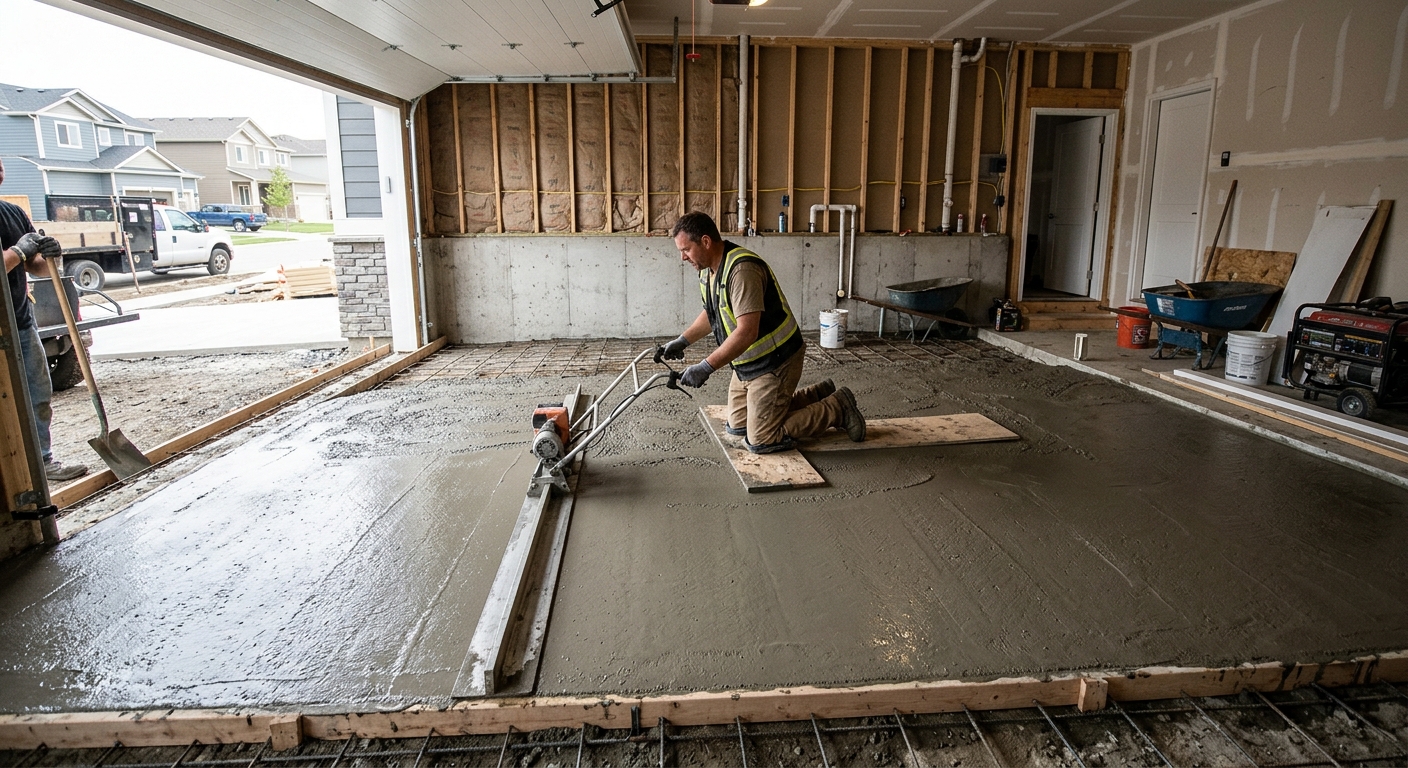
Concrete work options and costs in Greater Sudbury
Concrete work in Greater Sudbury typically comes down to three things: the surface you want (driveway, patio, walkway, or floors), the durability specs you need for our freeze–thaw climate, and how much site work is required to get the base right. With Greater Sudbury’s population at 166,004 (Statistics Canada, 2021 Census), you’ll see steady demand for exterior flatwork and foundations—especially in established neighbourhoods with older housing stock. You’ll also notice a lot of single-detached homes across the city; that style of property is where driveways, patios, and garage slabs are most often upgraded.
Even when two homeowners choose the same “size” of concrete, prices can move because Northeast Ontario winters are hard on exterior surfaces. You need air-entrained concrete, correct base preparation, and a tight control-joint plan to manage cracking from freeze–thaw movement and moisture cycling. In practice, that also means more labour time on excavation, compacted granular base, and finishing, plus care with cold-weather curing so the slab reaches design strength. Contractor availability can tighten during the short window when weather allows clean pours and finishing.
In Sudbury’s busy areas like Walford and the growing corridors near South End, we often see driveways and porch upgrades tied to curb appeal work. From there, the best way to compare options is by typical project scope and finish level—see the pricing table below.
| Application |
Typical Size |
Key Spec |
Finish Option |
Price Range |
| Concrete driveway (standard broom finish) |
10 ft x 20 ft (200 sq. ft.) |
Reinforced slab, compacted granular base |
Broom finish, light sealer optional |
$18,000–$28,000 |
| Exposed aggregate driveway |
10 ft x 20 ft (200 sq. ft.) |
Reinforced slab, proper base and drainage |
Exposed aggregate, enhanced texture |
$22,000–$35,000 |
| Stamped concrete driveway or patio |
10 ft x 20 ft (200 sq. ft.) |
Reinforced slab, control joints aligned to pattern |
Stamped ashlar/stone look |
$25,000–$40,000 |
| Plain concrete patio or walkway |
12 ft x 16 ft (192 sq. ft.) |
Proper slope, compacted granular base |
Float & broom or light broom finish |
$2,900–$4,800 |
| Garage floor (interior slab) |
22 ft x 20 ft (440 sq. ft.) |
Thickness matched to vehicle loads |
Plain trowel-finish with optional sealer |
$24,000–$38,000 |
| Foundation footings (structural, below frost) |
Per linear foot equivalent |
Excavation to design frost depth, reinforced concrete |
Structural placement only |
$55–$90 |
Prices are estimates only and vary by project scope, site access and material selection.
What affects the price of concrete work in Greater Sudbury
In Greater Sudbury, the same “driveway size” can come in 30–50% apart across Northeast Ontario and the wider provincial market because concrete pricing is heavily tied to site conditions and winter-proofing requirements—not just the volume of concrete. A small increase in excavation depth, poor soil conditions, or a difficult access route for the truck and forms can add labour, equipment, and backfill costs quickly. On the finish side, stamped or decorative systems add labour steps and materials that aren’t required for plain broom-finished work.
Specifically, frost line depth and freeze–thaw cycles dictate every exterior spec: footings must extend below the design frost depth to prevent frost heave and slab movement. Exterior slabs also need air-entrained concrete to survive the freeze–thaw cycle, and colder regions require cold-weather curing precautions (like insulating blankets and controlled curing conditions) to reach design strength. Because de-icing salts accelerate surface wear and spalling, sealing is an important durability step—especially on driveways that see heavy winter traction.
Two common Sudbury scenarios that shift the price: (1) If your soil is frost-susceptible or poorly compacted, contractors often have to remove more material and increase the granular base, pushing driveway costs toward the higher end of the $18–$28 driveway band. (2) If you’re replacing and rebuilding a foundation system, excavation and reinforcement drive the foundation/footings band, often landing in the $55–$90 range depending on depth, steel requirements, and disposal needs. In older neighbourhoods with established grading—think areas with matured trees and tighter service access—those site realities can add hundreds of dollars in small line items that add up.
| Price Factor |
Why It Matters |
Cost Impact |
| Frost line depth — determines footing depth and form height |
Deeper footings require more excavation and taller formwork |
Higher excavation and concrete volume; labour increases |
| Site preparation — excavation, grading, compacted granular base |
Base quality controls settlement and cracking risk |
More trucking/disposal and hours of compaction and rework |
| Reinforcement — rebar or wire mesh requirement |
Rebar spacing and correct cover improve durability and load capacity |
Steel and tying time; may require chairs/spacers |
| Mix design — air-entrainment and compressive strength spec |
Air-entrainment reduces freeze–thaw damage and surface scaling |
Premium materials and tighter batching controls |
| Finish type — broom vs. stamped vs. exposed aggregate |
Decorative systems add specialized forming, stamping, and curing time |
Typically moves the project into higher price bands |
| Pour size and concrete truck access to site |
Distance, grade, and access affect pumping and crew planning |
Pumping fees, extra labour, and potential schedule changes |
| Cold-weather curing precautions — heating and blankets |
Prevents early freezing that can reduce slab strength |
Additional blankets, heaters, and monitoring time |
| Control joint pattern and sealing cost |
Joints manage cracking; sealing improves resistance to salt scaling |
Labour to cut/finish plus product and curing schedule |
Permits & regulations in Ontario
In Ontario, structural concrete work—such as footings, foundation walls, grade beams, and other elements that support a building—typically requires a building permit and, in many cases, engineered drawings reviewed by the municipality. Even when the concrete itself is straightforward, municipalities want the foundation system designed for loads and local conditions. For concrete flatwork like patios, walkways, driveways, and garage floor slabs, permits are often not required, unless the work affects lot grading, impervious surface coverage limits, drainage away from the foundation, or the municipal right-of-way. When in doubt, confirm with the City of Greater Sudbury before breaking ground.
For contractor compliance, verify three items before signing: (1) liability insurance (so you’re protected if there’s damage), (2) WSIB coverage for workers (or WCB equivalents, depending on the employer’s coverage type), and (3) that the contractor is properly set up for the scope they’re performing. Step-by-step: ask for a current certificate of insurance and ensure it matches the work location, request WSIB clearance documentation (if provided), and confirm their business registration and any applicable trade eligibility through Ontario’s available online resources. Then, ask for references on projects with similar freeze–thaw exposure (driveways and exterior slabs). That’s where Sudbury customers feel the difference.
Getting concrete right in Greater Sudbury's freeze-thaw climate
Concrete failures in Greater Sudbury are usually repeatable and preventable. The biggest driver is freeze–thaw action on exterior surfaces: water enters small pores and joints, freezes, expands, and gradually spalls the surface. If the base wasn’t prepared correctly, the slab also moves, creating wider cracks that let more water in. A durable specification starts with base prep (proper compacted granular sub-base to suit your soil and frost conditions), then air-entrained concrete, then a cracking control plan.
For a correct exterior mix design, we target 5–7% air content for air-entrained exterior flatwork and a minimum 32 MPa compressive strength. Next, use control joints with spacing intended to limit random cracking and seal joints after the concrete has cured. Curing is critical: plan on minimum 7 days under proper conditions, and if cold weather is near, the contractor should use protective measures so the slab doesn’t freeze early. Finally, apply a penetrating sealer after cure (typically around 28 days) to help repel de-icing salts.
Here’s an example of where price differences are justified: upgrading from broom-finish plain concrete to stamped can add meaningful cost, but if the contractor also includes the right base, air-entrainment, and sealing, you’re paying mainly for durability and labour—not just looks. If someone offers stamped at the bottom of the $25–$40 decorative band without the right mix or curing plan, that’s often where premature scaling and cracking show up later.
| Spec |
Why It Matters in Greater Sudbury |
What to Ask For |
Impact if Skipped |
| Compacted granular base (depth?) |
Reduces settlement and movement from frost-related soil expansion |
Confirm the granular base thickness and compaction method |
Cracking, uneven surfaces, and shortened service life |
| Air-entrained concrete mix (target air %?) |
Protects against freeze–thaw scaling and spalling |
Target 5–7% air for exterior flatwork |
Surface flaking and potholing in 1–3 winters |
| Compressive strength (MPa rating) |
Ensures the slab reaches design strength for loads and wear |
Minimum 32 MPa (or per engineer/spec) |
Premature wear, increased cracking, reduced durability |
| Control joints (spacing per ACI guidelines) |
Directs cracking to predictable locations |
Planned joint spacing, layout, and sealing details |
Random cracking and water intrusion through uncontrolled cracks |
| Minimum 7-day curing period |
Curing affects strength development during Sudbury cold snaps |
Protect curing with blankets/heating if temperatures drop |
Weaker concrete and increased scaling/spalling risk |
| Penetrating sealer (when applied after cure) |
Helps resist salt damage on exterior surfaces |
Sealer applied around 28 days after pour |
Faster salt wear and higher maintenance costs |
How to choose a concrete work contractor in Greater Sudbury
To choose a contractor you can trust in Ontario and Greater Sudbury, verify licensing and coverage first, then verify the scope in writing. Start with liability insurance: ask for a current certificate of insurance and confirm the job site address is listed (or that the certificate covers the work location). Next check WSIB coverage for the contractor’s workers; you should receive documentation or a clearance letter as part of their normal process. Then ask for any required business registration information and confirm they’re set up to do the specific type of concrete work you’re hiring for—flatwork versus structural foundation work.
Get 2–3 itemised written quotes rather than a single lump sum. Look for a breakdown covering excavation, granular base, reinforcement, concrete supply, finish labour, joints/cut schedule, and—if you want it—sealing. Make sure the quote clearly states what’s included: disposal, trucking distance, protection of landscaping, permit responsibility (if applicable), and whether snow/ice protection measures are included for cold-weather pours.
Warranty matters: ask for the length of the workmanship warranty and whether it covers labour for repairs. Also ask about the product/manufacturer warranty for sealer or specialized materials, and whether that warranty is transferable to you. For payment, don’t pay more than about 10–15% upfront; hold back the remainder until the job is complete, cleaned up, and any finishing items are verified. Finally, insist on a written timeline: a start date, weather contingencies, and an estimated completion date.
- Confirm insurance certificates before signing
- Verify WSIB clearance/documentation for workers
- Request labour + materials line items (not just totals)
- Check whether disposal and haul-away are included
- Ask for the proposed thickness for slabs and correct base depth
- Confirm air-entrainment and minimum compressive strength
- Require a joint layout plan (spacing and alignment)
- Ask how curing will be protected if temperatures drop
- Clarify whether sealing is included and when it will be applied
- Get start/completion dates and weather contingency notes in writing
- Review warranty length and what it covers (labour vs materials)
- Pay small deposit; avoid large upfront payments
Concrete red flags in Greater Sudbury include contractors who (1) won’t discuss air-entrainment or curing practices, (2) provide only lump-sum pricing with no base thickness or joint plan, (3) start work without clear evidence of WSIB/insurance, (4) promise decorative finishes without addressing drainage and control joints, and (5) ask for a large deposit before any measurements or site verification.
Frequently asked questions — concrete work in Greater Sudbury
How much does concrete work cost in Greater Sudbury?
In Greater Sudbury, pricing depends on finish type, thickness, and how much excavation and base work your site needs. For a typical concrete driveway, homeowners often see estimates in the $18,000–$28,000 range for broom-finish work (size variations apply). Patios and walkways commonly fall around $15–$25 per square foot in many bids, depending on thickness and reinforcement. If you’re considering decorative upgrades, stamped concrete driveways or patios usually price higher—often landing in the $25,000–$40,000 band for a typical residential scope. Foundation footings are priced differently (often per linear foot equivalent) and commonly land in the $55–$90 range based on excavation depth, steel requirements, and site access. Quotes can swing 30–50% when sites have poor drainage, extra haul-away, or limited truck access, so it’s worth requesting an itemised breakdown.
How deep must footings be for Greater Sudbury's frost line?
Footings must be placed below the local design frost depth so the soil below doesn’t lift with freeze–thaw movement. Exact frost depth requirements depend on the Ontario building code design assumptions for your building and soil conditions, which is why engineers and foundation drawings matter. In practice, contractors plan excavation to a depth that protects against frost heave, then build forms and reinforcing accordingly. If your soil is frost-susceptible or if drainage is poor, the excavation and granular backfill scope can increase even further. If you’re building or altering a structure in Greater Sudbury, treat footing depth as a design-and-permit item: your permit drawings and engineer’s foundation plan should specify the depth and reinforcing schedule. Don’t rely on “what worked for a neighbour” if drainage, soil, and building loads differ—those differences show up as settlement and cracking in winter.
Why does concrete crack in Greater Sudbury and how is it prevented?
Concrete cracks for a few predictable reasons in Greater Sudbury: shrinkage during curing, movement from freeze–thaw cycling, and settlement when the granular base isn’t properly prepared. The most common prevention measures are base preparation, correct mix design, and a deliberate control joint plan. Exterior slabs should use air-entrained concrete to resist freeze–thaw scaling and spalling; without it, small surface pores and hairline cracks can worsen each winter. Joints then help control where cracks appear—ideally at planned locations—so they don’t form randomly through the whole slab. Sealing after cure helps keep moisture and de-icing salts from penetrating joints and surface micro-cracks. If you’re getting a quote, ask about base compaction method, the proposed joint spacing/layout, and whether the contractor includes sealing and proper cold-weather curing precautions to reduce stress on the slab.
Stamped vs broom-finish concrete — cost difference?
Stamped concrete typically costs more than broom-finish because it adds labour steps and specialized materials (moulds/pressing tools, release agents, and more detailed finishing work). For Greater Sudbury homeowners, broom-finished driveway estimates often start in the $18,000–$28,000 range depending on size and site prep, while stamped driveways or patios commonly fall into the $25,000–$40,000 band for a typical residential scope. Exposed aggregate is also usually higher than broom, but less labour-intensive than full stamping. The important point isn’t just aesthetics: ask whether the contractor is keeping the same durability specs (air-entrainment, minimum strength, base depth, and control joints). If someone prices stamped “too low” but cuts corners on curing or air content, the surface can fail faster in our winter conditions.
When is the best time to pour concrete in Greater Sudbury?
The best time to pour concrete in Greater Sudbury is during consistent warm conditions when air and slab temperatures support proper finishing and curing. Contractors generally prefer late spring through summer, avoiding nights where freezing temperatures can occur. If cold weather is approaching, you’ll need cold-weather curing precautions—insulation blankets, heating where appropriate, and careful monitoring—because early freezing can significantly weaken slabs and increase spalling risk. This is especially critical for driveways, patios, and other exterior flatwork that will face repeated freeze–thaw and de-icing salt exposure. If you’re planning a foundation or structural pour, scheduling should also align with permit and engineered drawing requirements. When you request a quote, ask for the proposed pour date range, weather contingencies, and whether protection measures are included.
How long does concrete take to cure?
Concrete curing happens in stages. You generally need at least 7 days of proper curing conditions for early strength development, but full design strength is typically achieved over a longer period (often around 28 days depending on mix, temperature, and exposure). For exterior flatwork in Greater Sudbury, curing protection is crucial—if the concrete freezes early, strength gain can be compromised and surface durability drops. For sealing, most penetrating sealers are applied after the concrete has cured sufficiently—commonly around 28 days post-pour—so the sealer can bond and perform as intended against moisture and de-icing salts. If you’re comparing quotes, don’t just ask “how soon can I use it?” Ask how they’ll protect the pour for the first week, what conditions trigger additional blanket/heating, and whether the timeline includes the full cure window for sealing if you want maximum winter performance.