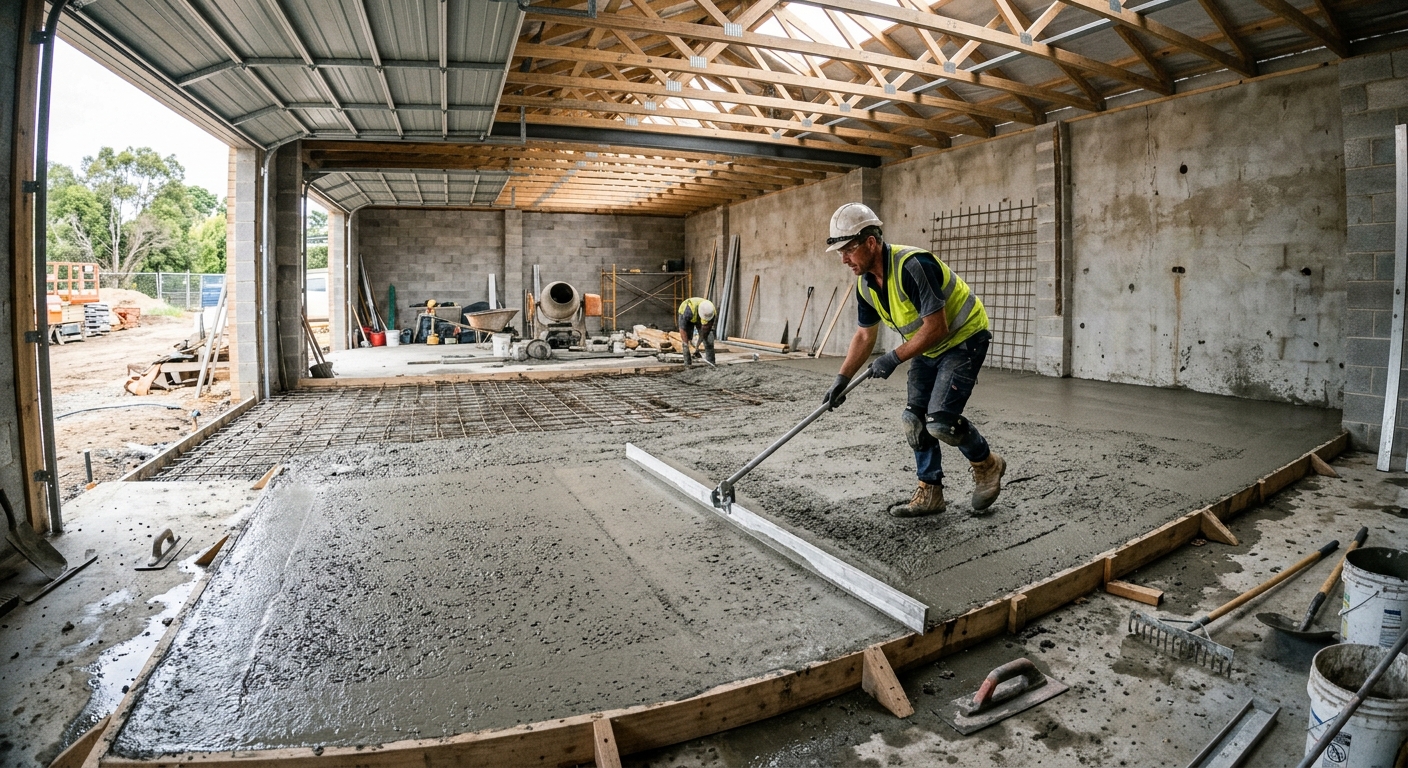
Concrete work options and costs in Lucan
Concrete work in Lucan, Ontario typically centers on practical flatwork—driveways, patios, walkways, and garage slabs—plus the structural concrete that supports homes built on basements or crawlspaces. In a community of about 2,541 people (Statistics Canada, 2021 Census), the market is smaller than the GTA core, so scheduling can be tighter when multiple crews are booked for exterior pours. Most homeowners are working with housing stock that includes a mix of older lots and newer builds, and concrete flatwork is especially in demand in areas like the Lambeth Road–Strathroy corridor where families frequently upgrade drive access and front entries.
In the Toronto economic region, concrete costs are strongly shaped by frost depth and freeze–thaw cycles. Structural footings generally need to be placed below grade at least about 1.2 m (roughly 4 ft) in Ontario to reduce frost heave and differential movement. That requirement alone increases excavation, forming, and concrete volume for foundations. Exterior slabs also need air-entrained concrete, good drainage, and control joints to manage winter cycling and limit cracking. Because crews aim for warmer, steadier curing conditions, Ontario’s shorter reliable pour season can raise labour costs versus regions that can pour year-round. The result: two homeowners in Lucan can receive bids that differ materially depending on soil conditions, truck access, and how much base prep and reinforcement are required.
Below are common Lucan scope types and realistic budget ranges. Use these to compare quotes before you get into the details of thickness, reinforcement, and finish.
| Application |
Typical Size |
Key Spec |
Finish Option |
Price Range |
| Concrete driveway (standard broom finish) |
400 sq. ft. (e.g., 20' x 20') |
Air-entrained mix; typical 4"–5" thickness; compacted granular base |
Broom finished; light edge forms |
$7,200 – $11,200 |
| Exposed aggregate driveway |
400 sq. ft. |
Air-entrained mix; polished aggregate look; curing plan |
Exposed aggregate (light wash) |
$9,600 – $15,600 |
| Stamped concrete driveway or patio |
300 sq. ft. (e.g., 15' x 20') |
Air-entrained mix; proper base and jointing to control cracking |
Stamped pattern + release + sealer |
$8,500 – $14,000 |
| Plain concrete patio or walkway |
200 sq. ft. (e.g., 10' x 20') |
Air-entrained mix; 4"–5" thickness; slope and drainage |
Float/trowel or broom finish |
$3,200 – $5,400 |
| Garage floor (interior slab) |
480 sq. ft. (e.g., 24' x 20') |
Minimum vapour/grade prep; proper slab thickness; control joints |
Plain trowel + light broom on edges |
$8,600 – $14,000 |
| Foundation footings (structural, below frost) |
Example: 250 linear ft. |
Engineered dimensions as required; placed below frost depth; forming & rebar |
Reinforced concrete footings |
$45,000 – $75,000 |
Prices are estimates only and vary by project scope, site access and material selection.
What affects the price of concrete work in Lucan
In Lucan and across the broader Toronto economic region, quotes for the “same” concrete job can easily swing by 30–50%—not because contractors are padding numbers, but because the real drivers (soil, frost depth requirements, base prep, reinforcement, and finish detailing) are often different once a site is assessed. A homeowner may assume they’re buying “a concrete pad,” but what they’re actually buying is excavation, granular base, proper slopes, a suitable mix design, and—on exterior work—air-entrainment plus control joints to manage freeze–thaw cracking.
Ontario’s frost-protection approach matters. Footings are typically required to extend at least around 1.2 m below grade (about 4 ft) to reduce frost heave risk. That governs excavation depth, backfill, and forming height, which affects both material and labour. Exterior slabs also need air-entrained concrete mixes to survive the freeze–thaw cycle, and colder periods mean more careful curing. When temperatures drop toward 10 °C or below, contractors may need insulating blankets, heaters, or extended protection for curing—costs that show up in the labour and staging budget. Finally, de-icing salt can accelerate surface spalling if the mix and sealing plan aren’t properly matched to exposure.
In practical Lucan terms, cost can move up or down with details like: (1) if the soil is clayey and holds water, base prep and drainage (sometimes including thicker granular layers) becomes more labour-intensive; (2) limited truck access along a narrow lane or steep driveway can add equipment and extra labour; and (3) the finish you select—like stamped concrete versus plain patio work—changes both materials and workmanship time. As a reference point, typical plain patio/walkway scopes often land around the $16–$26 per sq. ft. band, while stamped work commonly runs higher in the $24–$40 per sq. ft. range due to pattern setup and finishing.
| Price Factor |
Why It Matters |
Cost Impact |
| Frost line depth |
Determines footing depth and form height |
More excavation and concrete volume; can materially raise foundation and structural work |
| Site preparation |
Excavation, grading, compacted granular base |
Impacts labour hours and granular material cost; poor drainage drives up base thickness |
| Reinforcement |
Rebar or wire mesh requirement |
Higher materials and placement labour; reduces cracking risk in heavier-use slabs |
| Mix design |
Air-entrainment and compressive strength spec |
Air-entrained mix adds cost but is crucial for freeze–thaw durability; strength spec affects mix pricing |
| Finish type |
Broom vs. stamped vs. exposed aggregate |
Stamped/exposed finishes add labour time, labour skill, and sealer/finishing materials |
| Pour size and concrete truck access to site |
Placement efficiency and equipment needs |
Long carries, steep grades, or access limits increase labour and may require pumping |
| Cold-weather curing precautions |
Heating and blankets |
Can add setup and labour costs when night temps drop |
| Control joint pattern and sealing cost |
Manages cracking and protects against de-icing salts |
Proper jointing plus sealing increases scope but improves long-term appearance and durability |
Permits & regulations in Ontario
In Ontario, structural concrete work typically requires permits and often engineered drawings that are reviewed by the municipality. Specifically, work such as foundation footings, foundation walls, and grade beams generally falls under the structural permit/approval process. If you’re changing how the structure supports the home—adding an underpinning, replacing footings, or altering load paths—plan on permits and inspection requirements.
Concrete flatwork—patios, walkways, and driveways—often does not require a building permit on its own. However, it can trigger reviews when it affects lot grading, impacts impervious surface coverage limits, involves drainage changes, or alters the municipal right-of-way area. In Lucan, the practical takeaway is: confirm with the local authority before breaking ground, especially if you’re regrading a slope, raising a walkway close to a foundation, or changing how water leaves the property.
Before hiring a contractor, verify they carry liability insurance and WSIB/WCB coverage (as applicable), and ask for references on similar-scale projects. Step-by-step, a homeowner should: (1) request a certificate of insurance and check the coverage dates and project name/scope; (2) confirm WSIB/WCB status with the contractor’s clearance proof (or equivalent documentation they provide); (3) check whether the contractor is properly registered for the work they’re doing through Ontario’s online listings; and (4) ask who pulls the permit (if one is required) and whether inspections are included in the quoted scope. This reduces surprises when inspectors look at footing depth, reinforcement placement, and curing/protection measures.
Getting concrete right in Lucan's freeze-thaw climate
Concrete doesn’t fail because it “isn’t strong enough” in Lucan; it fails when it’s exposed to freeze–thaw while either the base isn’t stable, the mix isn’t properly air-entrained, or joints and curing are handled too loosely. The most common problem homeowners notice is spalling and scaling—small surface flakes that worsen after winter and salt exposure—often tied to inadequate air content or inadequate protection during cold nights. The fix is specification, not guesswork.
To spec the job correctly, start with base preparation: compacted granular sub-base to the required depth for your soil and drainage conditions, with proper slope away from the house. Then require an air-entrained exterior mix (commonly in the 5–7% air range) and a minimum compressive strength (commonly 32 MPa for many residential exterior slabs, depending on design requirements and exposure). Control joints matter too: they should be planned to “tell the concrete where to crack,” typically using a regular spacing approach so random cracking is reduced. Curing is another critical step—proper curing should last at least 7 days under suitable conditions, and in cold snaps contractors may need insulating blankets or curing protection. Finally, plan penetrating sealer after the concrete has cured—often at 28 days—so water and de-icing salts don’t penetrate quickly.
One example of where pricing makes sense: if a contractor offers a lower quote that skips air-entrainment details or reduces base depth, the savings might look small up front (for a plain patio you may be near the $16–$26 per sq. ft. band), but the risk of early surface damage can be far more expensive than paying for the right mix and base. If you’re investing in stamped concrete, which typically sits higher in the $24–$40 per sq. ft. range, protect that finish with the right joints, curing protection, and sealing—otherwise the surface won’t last as intended.
| Spec |
Why It Matters in Lucan |
What to Ask For |
Impact if Skipped |
| Compacted granular base (depth?) |
Stable base reduces movement during freeze–thaw |
Granular sub-base thickness and compaction method tailored to your soil |
Settlement and slab cracking; higher failure risk around edges |
| Air-entrained concrete mix (target air %?) |
Air voids help concrete survive repeated freezing and thawing |
Confirm air content targets for exterior work (commonly 5–7% air) |
Scaling/spalling increases after winter and salt exposure |
| Compressive strength (MPa rating) |
Affects durability and long-term performance |
Minimum 32 MPa (or higher if specified for your exposure/design) |
Surface wear and premature degradation |
| Control joints (spacing per ACI guidelines) |
Guides cracking locations to reduce random cracks |
Planned joint spacing and saw-cut timing to match slab dimensions |
Random cracking and wider repairs later |
| Minimum 7-day curing period |
Proper strength gain supports freeze–thaw resistance |
How curing will be protected, especially during cold nights |
Weaker concrete and higher early-life surface damage |
| Penetrating sealer (when applied after cure) |
Repels moisture and helps limit salt intrusion |
Sealer applied after full cure—often around 28 days—plus product type details |
Faster moisture penetration and more spalling risk in winter |
How to choose a concrete work contractor in Lucan
Choosing a concrete contractor in Lucan comes down to verification, scope clarity, and how well they manage freeze–thaw risk. Start by verifying Ontario licensing/registration for the trade and confirming liability insurance is active for the project period. Then request proof of WSIB/WCB coverage (where applicable) and check that documentation is current. Don’t rely on verbal assurances—ask for the certificate of insurance and clearance letter, and ensure they match the job location and dates. If something isn’t clear, reputable contractors will explain it without pressure.
Next, get 2–3 itemised written quotes—not just a lump sum. A good quote lists labour and materials separately (concrete, rebar/wire mesh, base material, forms, saw cutting, sealer, disposal, and any pumping equipment). Read the scope carefully for exclusions: What’s included in excavation and disposal? Is permit pulling included where needed? Are you paying extra for cold-weather curing protection if the schedule slips? Clarify thickness, reinforcement, and whether they’ll use air-entrained mix for exterior work.
Warranty matters, too. Ask for the workmanship warranty length (and what it covers), plus the product/manufacturer warranty if they’re providing sealing products or systems. Confirm whether warranties are transferable if you sell the home. For payment, never pay more than about 10–15% upfront; use holdback until completion and final walkthrough. Finally, insist on a written timeline with a start date window and a completion estimate—schedule certainty is especially important in Ontario because the reliable pour season can tighten when conditions change.
- Request proof of current liability insurance and confirm the certificate dates match your project.
- Verify WSIB/WCB clearance documentation is provided before work begins.
- Get a written, itemised quote (labour + materials), not a single lump-sum number.
- Confirm exterior mixes are air-entrained and specifically stated in the contract/spec sheet.
- Ask for slab thickness and base depth—no “allowance only” language for key structural items.
- Ensure reinforcement needs (mesh/rebar) are spelled out for your use case.
- Ask how control joints will be cut (timing, spacing approach, and where joints land).
- Confirm curing and protection plan for cold nights (blankets/heating if needed).
- Ask whether disposal of excess soil and old concrete is included.
- Clarify site access and equipment: will they use pumping, wheelbarrows, or extra labour hours.
- Get sealer details if sealing is part of the scope (product type and when it’s applied).
- Use payment milestones with a holdback—retain funds until clean-up and final grade are verified.
Concrete red flags in Lucan include: (1) quotes that omit air-entrainment specifics for exterior slabs; (2) vague wording like “standard thickness” without stating actual inches and base depth; (3) skipping documented jointing plans; (4) no explanation of curing protection when temperatures run cool; and (5) asking for large upfront payments with no detailed scope or schedule in writing.
Frequently asked questions — concrete work in Lucan
What is a concrete overlay and is it suited to Lucan?
A concrete overlay is a topping placed over an existing slab—either a bonded overlay designed to connect to sound concrete, or a resurfacing system that creates a fresh top surface. In Lucan and Ontario’s freeze–thaw climate, overlays can be a good fit only when the original concrete is still structurally sound (minimal cracking, no major spalling, and good sub-base support). If the slab is moving or the base is failing, an overlay can look good for a short period but will often telegraph cracks and deteriorate faster once winter cycles intensify.
For budget context, a plain patio/walkway pour in the $16–$26 per sq. ft. range is often simpler and more durable than trying to resurface an unknown slab. Overlay projects can sometimes pencil out if the driveway is in generally good shape and the goal is mainly appearance and smoothness. In any case, ask the contractor how they prep the surface (shot blasting/scarifying), what bonding method they use, and what thickness they plan—those details matter as much as the price.
How do I seal concrete to protect it in Lucan?
Sealing helps protect concrete from moisture and de-icing salt exposure, which is important in Lucan because repeated freeze–thaw can drive salt intrusion into the surface. The basic rule is timing: let the concrete cure fully before sealing—commonly about 28 days for exterior work—unless the product manufacturer specifies otherwise. Use a penetrating sealer (often preferred for exterior flatwork) that reduces water absorption without creating a thick coating that can peel.
Before sealing, the concrete should be clean and dry. Any contaminants—paint overspray, grease, or heavy dirt—can block proper penetration. Also, plan your winter strategy: sealing doesn’t make concrete “salt-proof,” but it can slow down water and chloride movement. If you’re pricing a new slab, sealing is sometimes added to the cost, but it’s usually far less than early repairs after scaling begins.
If you chose stamped concrete, which typically sits in the $24–$40 per sq. ft. range, sealing is even more valuable to keep the surface looking consistent through Ontario seasons.
What is the difference between concrete and cement?
In everyday talk, people use “cement” and “concrete” interchangeably, but they’re not the same. Cement is one ingredient—a binder powder—while concrete is cement plus aggregates (sand and stone), water, and often admixtures like air-entrainment for freeze–thaw durability. In Ontario’s exterior applications, contractors specify concrete that includes air-entrainment so the material can better withstand repeated freezing and thawing.
Why this matters for homeowners in Lucan: when you request a quote, you’re really buying a concrete mix design, not just “cement.” A lower price might still use cement, but it could be missing the key performance elements such as target air content or the right strength requirement. Always ask whether the quote includes an air-entrained mix for exterior slabs and what compressive strength is specified (commonly 32 MPa for many typical residential exterior pours, depending on exposure).
How much does concrete work cost in Lucan?
Concrete pricing in Lucan follows regional Ontario rates and is shaped by frost depth requirements, freeze–thaw exposure, and the amount of prep needed. For budgeting, typical exterior flatwork often lands in the following bands: concrete patios/walkways commonly come in around $16–$26 per sq. ft., while stamped concrete usually runs about $24–$40 per sq. ft. Driveways made of standard broom-finished concrete commonly fall in the $18–$28 per sq. ft. range.
Foundation work is different and tends to be quoted as structural scope. Structural footings are often priced on a per-footing basis, commonly landing around $180–$300 depending on the engineered design and site conditions. Your final total depends heavily on excavation depth, base compaction, reinforcement needs, and concrete truck access.
Because Lucan is smaller than the GTA core, availability can also affect schedule and mobilization costs—especially during peak pour windows. If you want a more accurate figure, compare bids that spell out thickness, air-entrainment for exterior work, jointing, curing protection, and disposal.
How deep must footings be for Lucan's frost line?
Footing depth is determined by Ontario requirements and local site conditions. In Ontario, structural footings for many residential applications are commonly placed at least about 1.2 m (roughly 4 ft) below grade to reduce frost heave risk, which is essential in a region with repeated freeze–thaw cycles. The “right” depth can vary with soil conditions, drainage, and the building’s design requirements, so engineered drawings are important for structural portions of the foundation.
If you’re having foundation footings or grade beams done, ask your contractor to confirm the excavation depth they’re planning and to reference the engineered plan (or municipal/structural requirement). A major cost driver in Lucan is that deeper frost protection increases excavation, forming, rebar placement, and the amount of concrete used—so you should see those items reflected in a proper quote rather than as vague allowances.
Why does concrete crack in Lucan and how is it prevented?
Concrete can crack in Lucan for several reasons, and most aren’t signs of a “bad” pour—especially in exterior flatwork exposed to Ontario’s freeze–thaw cycles. Concrete naturally shrinks as it cures and expands/contracts as temperatures change. Without control joints, cracking often becomes random. If the base isn’t properly compacted and drained, movement can also cause cracks to appear sooner.
Prevention is about planning the slab so it cracks where you expect, not where it wants to. Ask whether the contractor includes an air-entrained mix for exterior slabs (important to reduce spalling under winter conditions), specifies control joints with an appropriate spacing approach, and details curing and protection for at least 7 days. Sealing later—often around 28 days—can also help protect against moisture and salt intrusion that can worsen surface deterioration.
When quoting, insist on the technical items: joint pattern, curing plan, and the mix spec. That’s where long-term performance is won or lost in Ontario’s winters.