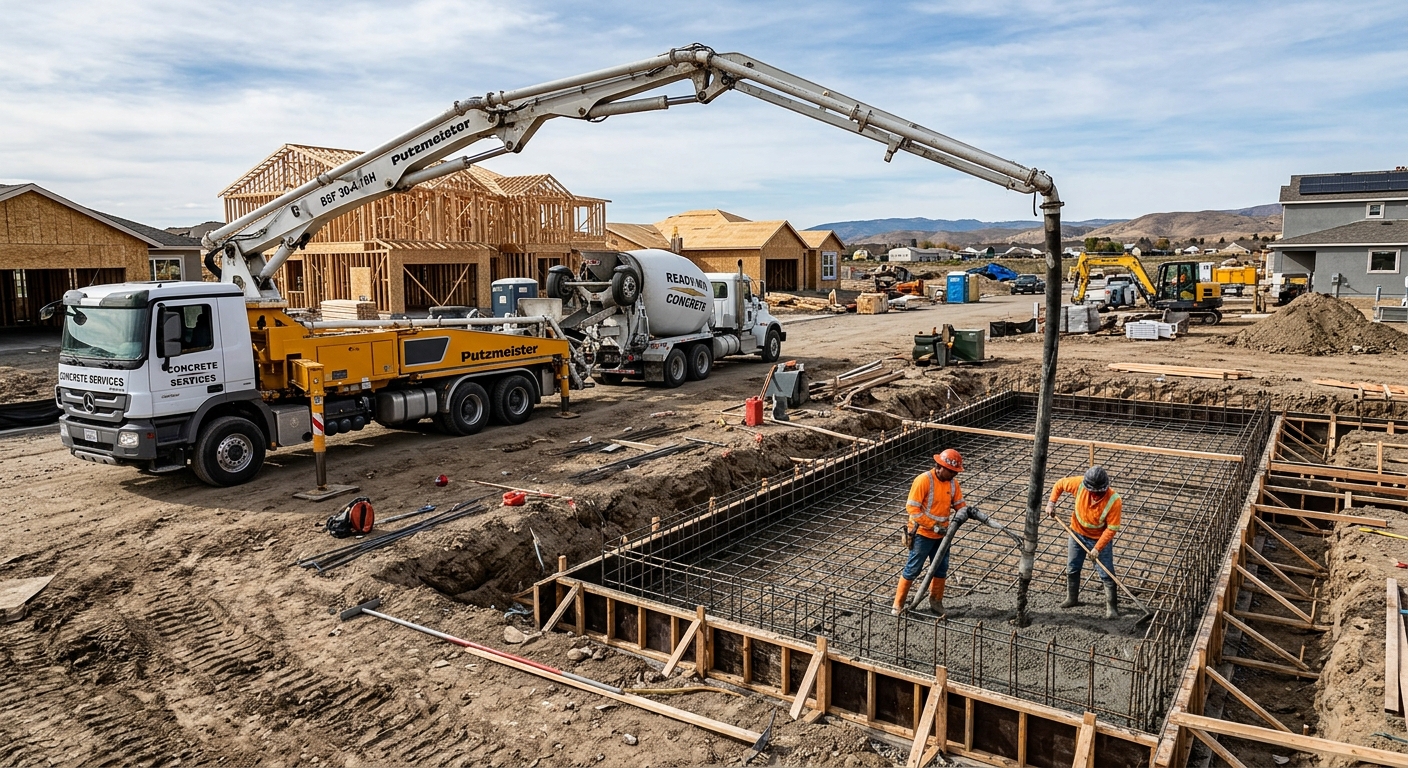
Concrete work options and costs in Little Portugal
In Little Portugal, concrete work is a year-round need for homeowners, but the pricing and methods depend heavily on Toronto’s freeze–thaw reality. The neighbourhood sits in the Toronto economic region, and the market here is driven by households that often want long-lasting exterior surfaces—especially because the area’s housing stock includes a substantial number of single-detached homes (Statistics Canada, 2021 Census). With a population of 15,559 in 2021 (Statistics Canada, 2021 Census), there’s steady demand for driveways, patios and walkways—particularly in the busy corridors near Dundas St W and the nearby commercial strip where homeowners commonly upgrade curb appeal.
In the GTA, concrete costs aren’t just “material vs labour.” Local contractors build around frost depth and movement: structural footings typically need to extend at least 1.2 m below grade to reduce frost heave and differential settlement. Exterior flatwork also needs air-entrained concrete and a well-compacted granular base, because saturated soils can expand and contract through repeated winter cycles. That means the quote often includes more prep time, better mix specs, and careful scheduling for curing—especially when temperatures drop toward 10 °C or below in fall and early spring.
Availability matters too: when pour season tightens, skilled crews and concrete trucks get scheduled out farther, which can raise labour and coordination costs. If you’re planning work in Little Portugal—like around the Christie/College area vibe—getting multiple itemized quotes will usually show you where the savings or added value is coming from. Below is a side-by-side look at typical options and realistic price ranges for this market, then we’ll break down what drives those numbers.
| Application |
Typical Size |
Key Spec |
Finish Option |
Price Range |
| Concrete driveway (standard broom finish) |
400–600 sq. ft. |
Air-entrained, reinforced edges; control joints |
Broom finish, sealed (optional) |
$18,000–$28,000 |
| Exposed aggregate driveway |
400–600 sq. ft. |
Air-entrained; proper base and drainage |
Exposed stone texture |
$22,000–$34,000 |
| Stamped concrete driveway or patio |
300–500 sq. ft. |
Air-entrained; thicker slab for stamping detail |
Stamped pattern + colour hardener |
$24,000–$40,000 |
| Plain concrete patio or walkway |
200–400 sq. ft. |
Air-entrained; compacted granular base |
Float + broom finish |
$16,000–$26,000 |
| Garage floor (interior slab) |
300–600 sq. ft. |
Vapour barrier; reinforcement as required |
Smoothed finish (sealed optional) |
$18,000–$32,000 |
| Foundation footings (structural, below frost) |
Per linear foot equivalent |
Designed footing depth; rebar per engineer |
Structural concrete work |
$180,000–$300,000 |
Prices are estimates only and vary by project scope, site access and material selection.
What affects the price of concrete work in Little Portugal
In Toronto and the wider Ontario market, it’s common for the same concrete scope to land 30–50% apart between quotes. The biggest reason isn’t “contractor greed”—it’s differences in base prep, mix design, reinforcement, and whether the contractor is pricing for the conditions that cause failure in a freeze–thaw climate. For exterior work, spec changes are non-negotiable: footings must extend below the design frost depth (typically at least 1.2 m in Ontario) to reduce frost heave and differential movement. Exterior slabs also need air-entrained concrete mixes to survive repeated freeze–thaw cycles, and colder nights require cold-weather curing precautions—often insulated blankets and temperature management when pours are near or below 10 °C. Add de-icing salt in winter, and sealing becomes a practical insurance step against surface deterioration.
In Little Portugal, two local examples show how costs move up or down. First, constrained access near older streets and laneways can make concrete delivery and finishing slower; even with the same driveway size, truck placement can add labour and delays. Second, soil and drainage vary lot-to-lot—if your site has higher moisture or weaker subgrade, contractors may need thicker granular base and improved drainage, pushing costs toward the top end of the exterior price bands (for example, concrete patios/walkways often fall around $16,000–$26,000, while stamped work is usually closer to $24,000–$40,000 once thickness and finishing time are included).
Housing age matters too. Older properties may have buried drainage routes, uneven elevations, or previous concrete removal that increases excavation depth. If you’re paying extra hours for demo, haul-off, and re-grading, you’ll feel it in the quote—especially where a contractor must rebuild the granular base to support the slab through Ontario winters.
| Price Factor |
Why It Matters |
Cost Impact |
| Frost line depth |
Determines footing depth and form height |
Higher depth/formwork increases concrete volume and labour |
| Site preparation |
Excavation, grading, compacted granular base |
Poor soils mean thicker base and more compaction time |
| Reinforcement |
Rebar or wire mesh requirement |
Rebar placement and chairs add labour; under-reinforcement risks cracking |
| Mix design |
Air-entrainment and compressive strength spec |
Better durability specs cost more but reduce freeze–thaw failure risk |
| Finish type |
Broom vs. stamped vs. exposed aggregate |
Stamps and textures add materials, labour, and curing/colour steps |
| Pour size and concrete truck access to site |
Line-of-sight for placement affects labour time and logistics |
Hard access can increase finishing time and coordination costs |
| Cold-weather curing precautions |
Heating and blankets |
Shorter pour season pushes scheduling and adds protection costs |
| Control joint pattern and sealing cost |
Manages cracking and protects against de-icing salt |
Proper jointing reduces random cracking; sealing adds a defined materials line |
Permits & regulations in Ontario
In Ontario, structural concrete work typically needs a building permit because it affects the load-bearing parts of your home. That includes footings, foundation walls, and grade beams. In many cases, engineered drawings are also required, then reviewed through the municipality’s permitting process. For concrete flatwork—driveways, patios, walkways and garage slabs—a permit is usually not required by default, unless the work changes lot grading, triggers impervious surface limits, or involves municipal right-of-way impacts (for example, modifications near a curb/sidewalk line). Always confirm with the local authority before breaking ground, especially if you’re lowering/raising grade, rerouting drainage, or extending toward a property line.
From a homeowner’s perspective in Little Portugal, verify three basics before any concrete is poured: contractor licensing (where applicable), liability insurance, and coverage for workers. Then ask for a current clearance letter or proof of WSIB/WCB coverage documentation (the contractor should be willing to provide this up front). For insurance, request a certificate of insurance showing adequate liability limits and confirm the named insured matches the contracting company.
How to check: (1) look up the contractor’s business information and registration through Ontario’s relevant online contractor tools; (2) review the certificate of insurance directly for expiry dates and coverage limits; (3) request WSIB/WCB documentation and confirm it’s current; and (4) ask for references on similar-scale work in the GTA, especially exterior pours where air-entrainment and jointing matter. If the contractor can’t provide these, pause the project—concrete is unforgiving when it’s installed incorrectly.
Getting concrete right in Little Portugal's freeze-thaw climate
Concrete fails in Little Portugal mainly because of repeated freeze–thaw, moisture movement, and salt exposure—processes that can be brutal on poorly prepped bases or non-air-entrained mixes. The fix is not “better finishing,” it’s a correct build-up: start with a properly compacted granular base to the right depth for your soil and frost conditions, then use an air-entrained concrete mix designed for exterior exposure (target 5–7% air), and finally control cracking with a sensible joint pattern and correct curing. With Toronto-area weather, you also need to plan around temperature drops; if you pour when nights are near cold, the contractor should protect the slab and extend curing protection until concrete has achieved strength under safe conditions.
When you skip any one item, you usually don’t see issues right away. In the spring you may notice surface scaling, small cracks that widen, or early spalling—often tied to inadequate air entrainment or trapped water at the surface. That’s why sealing is so important here: a penetrating sealer applied after cure helps repel de-icing salts and limits water absorption.
As a practical cost example: a basic broom-finished walkway might be priced in the $16,000–$26,000 band depending on size and access. If you’re tempted to “save” by reducing base thickness or using the cheapest mix, you may end up paying again for early repairs. On the other hand, stamped concrete at $24,000–$40,000 can be worth it when you’re investing in proper thickness and jointing—because more finishing steps don’t fix a weak base. Ask for the technical specs and hold the crew to them.
| Spec |
Why It Matters in Little Portugal |
What to Ask For |
Impact if Skipped |
| Compacted granular base (depth?) |
Reduces pumping and moisture movement through freeze–thaw |
Base type and depth, compaction method, drainage plan |
Settlement, cracking, and premature scaling |
| Air-entrained concrete mix (target air %?) |
Protects concrete from freeze–thaw scaling/spalling |
Specified air content (5–7% for exterior flatwork) |
Surface scaling and spalling, especially with salt |
| Compressive strength (MPa rating) |
Ensures durability and strength gain for exterior exposure |
Minimum 32 MPa (verify spec on proposal) |
Lower strength increases cracking and abrasion damage |
| Control joints (spacing per ACI guidelines) |
Controls where cracks form to protect edges and appearance |
Joint spacing, saw-cut timing, and sealant plan |
Random cracking and wider gaps that trap water |
| Minimum 7-day curing period |
Cold nights slow strength gain in Toronto-area winters |
Curing protection plan; confirm slab temperature targets if cold |
Weak surface, increased cracking risk, reduced durability |
| Penetrating sealer (when applied after cure) |
Repels water and de-icing salts through winter |
Sealer type and application timing (about 28 days post-pour) |
Higher water absorption leading to early scaling and spalling |
How to choose a concrete work contractor in Little Portugal
Choosing the right concrete contractor in Little Portugal comes down to proof, not promises. First, verify Ontario coverage documents. Ask for a certificate of insurance showing liability coverage and confirm it’s current (expiry date) and issued to the contracting business you’re hiring. Next, request proof of WSIB/WCB coverage (and the correct “clearance letter” paperwork if applicable). If a contractor can’t provide these quickly, it’s a major risk—concrete jobs involve heavy equipment, saw cutting, and working around existing utilities.
Then get 2–3 itemised written quotes that separate labour, concrete supply, excavation/grading, reinforcement, forms, finishing, curing protection, and disposal. Be wary of a single lump sum where the scope is fuzzy. Confirm whether the permit is included (where required for structural work), whether surface restoration is included, and whether waste/haul-off is included. A good quote also lists concrete mix design basics—air-entrainment and intended strength—so you know the contractor is spec’ing for freeze–thaw.
Warranty matters in concrete. Ask for the workmanship warranty length and what it covers (cracks, spalling, uneven settlement) and whether any product warranty is separate from labour coverage. Finally, watch payment schedules: never pay more than 10–15% upfront. Use a holdback tied to completion and final cleanup/inspection. Ask for a start date and completion estimate in writing, and confirm how they handle late-season temperature drops with protection plans.
- Ask for air-entrained mix confirmation (target 5–7% for exterior flatwork)
- Confirm footing depth and how they comply with frost conditions
- Request itemized base prep scope and disposal/haul-off
- Verify reinforcement type (rebar vs mesh) and placement method
- Check curing plan for cold nights (blankets/heating if needed)
- Confirm control joint spacing and saw-cut timing
- Ask whether sealing is included and when it’s applied (after cure)
- Review insurance certificate limits and WSIB/WCB proof/clearance letter
- Confirm references on similar-driveway or patio projects in the GTA
- Ensure the quote states what’s excluded (old concrete removal limits, regrading, drainage work)
- Keep payments tied to milestones; use a holdback until acceptance
- Get start date, pour window, and completion estimate in writing
Concrete red flags in Little Portugal include: skipping air-entrainment “to save money,” vague base depth (“we’ll level it”), no mention of frost conditions for footings, promises of “no cracks” without a joint plan, and quotes that don’t clearly list disposal, reinforcement, or curing protection.
Frequently asked questions — concrete work in Little Portugal
How deep must footings be for Little Portugal's frost line?
In Ontario, structural footings are generally required to extend at least 1.2 m below grade (often matching design frost depth requirements) to reduce frost heave and prevent differential movement. In Little Portugal, the practical takeaway is that your contractor should determine the correct footing depth for your specific foundation design, soil conditions, and engineered drawings. If you’re planning new foundation work or replacing footings, don’t accept a “typical depth” without tying it to your permit/engineering. Also, confirm the contractor is using structural concrete requirements, reinforcement placement, and formwork details that match the drawings. If the scope is structural, expect permitting and engineered review as part of the process. For cost context, structural work pricing can vary widely, but footings are usually in the $180–$300 range per appropriate measure depending on design and quantity.
Why does concrete crack in Little Portugal and how is it prevented?
Concrete cracking is common because it shrinks as it cures and it moves with moisture and temperature changes. In Little Portugal, freeze–thaw and winter salt exposure increase the consequences of small cracks—water gets in, then expands when it freezes, which can worsen surface scaling or spalling. The prevention strategy is spec-driven: use the right air-entrained mix for exterior exposure, build a properly compacted granular base, and install control joints to direct cracking into predictable locations. A contractor should also plan joint timing and depth so joints work as intended. Curing is equally important; if concrete isn’t protected long enough, you can get early surface weakness. When you compare quotes, ask specifically about joint spacing, air content, and curing protection—these are where a 30–50% quote gap is usually hiding.
Stamped vs broom-finish concrete — cost difference?
Stamped and broom-finished concrete differ mostly in labour, materials, and finishing time. Broom finish is a straightforward surface texture, while stamped work uses forms/mats, colour hardener or integral colouring, and additional steps to achieve clean pattern edges around borders. In Little Portugal, stamped exterior work also benefits from a careful slab build-up because the decorative surface doesn’t “hide” structural issues—cracking and unevenness will still show. As a price reference for this Toronto market, broom-finished patios/walkways typically fall in the $16,000–$26,000 range depending on size and access, while stamped concrete driveway or patio projects are commonly closer to $24,000–$40,000. The best value usually comes from paying for correct base prep and air-entrained mix in both options, then choosing the finish based on your aesthetic goals.
When is the best time to pour concrete in Little Portugal?
For Little Portugal and the broader Toronto area, the best time to pour is typically during the warmer months when crews can maintain good curing conditions and avoid freezing. Practically, many contractors focus on spring and summer schedules, then plan carefully for early fall work—because curing slows when temperatures drop toward about 10 °C or below. If you pour later in the season, a reputable contractor should have cold-weather curing precautions ready (often insulated blankets, heating where needed, and protected curing windows). Also, weather affects drainage during excavation and base preparation—wet sites can require extra drying time or additional granular corrections before placing concrete. When you’re scheduling, ask your contractor for the pour window in writing and the plan for overnight temperatures. Concrete durability depends more on the curing management and base prep than on the exact day on the calendar.
How long does concrete take to cure?
Concrete cure time has two parts: strength gain and surface readiness. For typical exterior flatwork in Ontario, a contractor should plan for at least a 7-day curing period under proper conditions before you expect meaningful early strength, with extra protection if temperatures are cool. Sealing is typically scheduled later—often around 28 days post-pour—because many sealers require the slab to fully cure to perform as intended against moisture and de-icing salts. In Little Portugal’s freeze–thaw climate, rushing curing is a common reason for early scaling and cracking that shows up after winter. When you compare quotes, ask what curing protection is included (especially for late-season pours) and whether sealing is included or separate. Good contractors also explain how they manage traffic and load limits while the slab continues to gain strength.
Do I need a permit for concrete work in Ontario?
In Ontario, the permit requirement depends on what concrete work you’re doing. Structural concrete work—like footings, foundation walls, and grade beams—typically requires a building permit and often engineered drawings reviewed by the municipality. Concrete flatwork—like driveways, patios, and walkways—usually does not require a permit unless it affects lot grading, impervious surface coverage limits, or the municipal right-of-way. For homeowner projects in Little Portugal, the safest approach is to confirm with the local authority before starting excavation, especially if you’re changing elevations or drainage. Also, verify your contractor’s paperwork: they should have liability insurance and current WSIB/WCB coverage. Ask for these documents before the first pour so you’re protected if something goes wrong during demolition, excavation, or finishing.