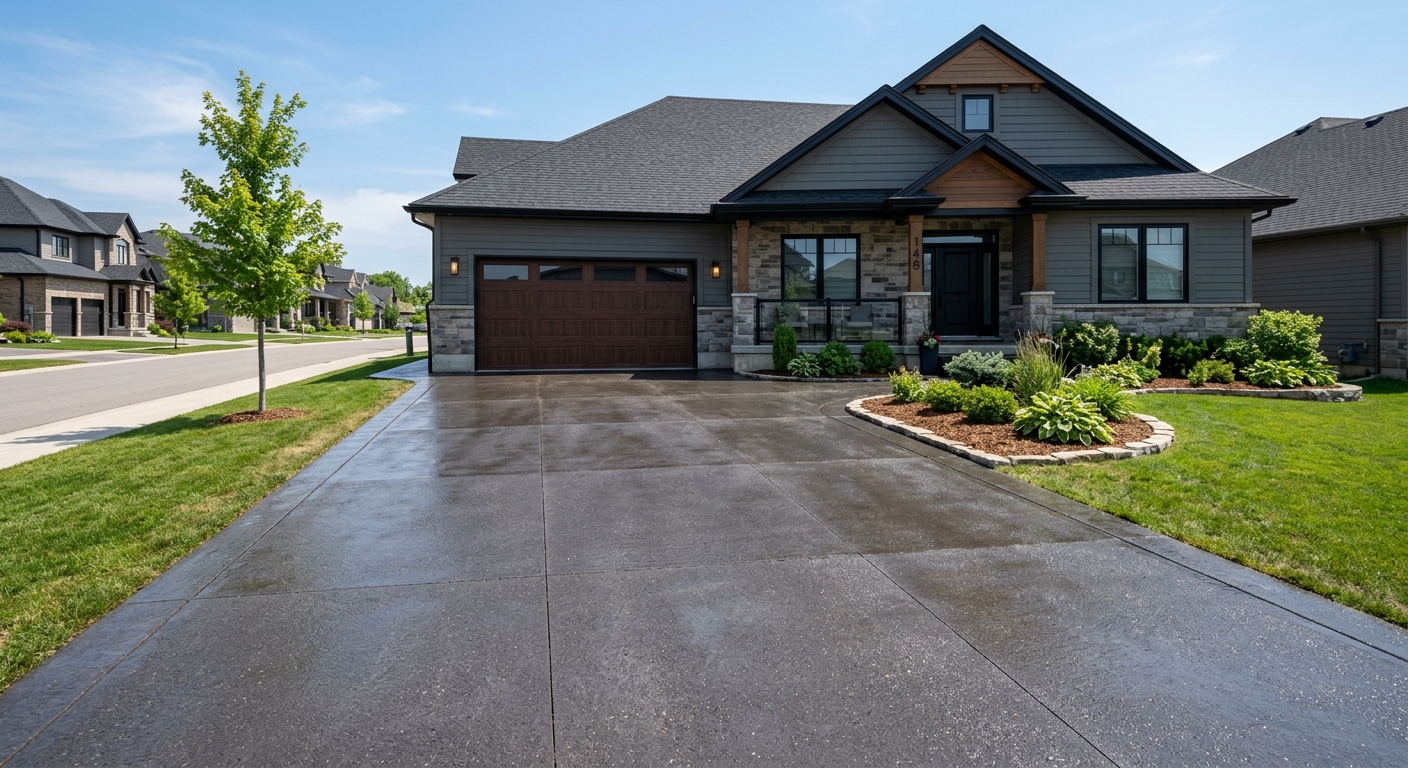
Concrete work options and costs in Highland West
In Highland West, Ontario, concrete work is a year-round need for homeowners, but pricing and schedules still swing with weather and how your soil behaves under freeze–thaw. Highland West sits within the Toronto economic region, where many homes are set up for long driveways, side yards, and walkouts—typical concrete flatwork for a neighbourhood that’s built around family lots. With a population of 13,066 (Statistics Canada, 2021 Census), trades availability and demand are strong enough that you’ll often see multiple crews booking the same month, especially around the spring thaw. The area’s housing mix also matters: where single-detached and family homes dominate lot sizes, driveways and patios are more common “must-haves” than in denser communities.
Toronto-area concrete pricing is driven by frost depth requirements and repeated freeze–thaw cycles. Structural footings typically need to sit below frost to reduce heave and differential movement, and exterior flatwork is usually poured with air-entrained concrete plus proper base drainage. That’s why two driveways can look similar yet land 20% apart once you factor in excavation depth, granular base quantity, reinforcement, and finishing level—standard broom versus stamped or exposed aggregate. In areas where saturated soils are common after wet springs, contractors spend more time on grading and base prep to keep water from sitting under your slab. You’ll usually notice the highest demand in the Highland West residential pockets near the main arterial routes where access is easiest for concrete trucks and forms can be set efficiently.
Below is a practical cost comparison to help you match the scope to the finish you want—then we’ll break down what makes estimates vary across the Toronto region.
| Application |
Typical Size |
Key Spec |
Finish Option |
Price Range |
| Concrete driveway (standard broom finish) |
10 ft x 20 ft (200 sq. ft.) |
Air-entrained mix, compacted granular base, control joints |
Broom finish, sealed (optional) |
$18,000–$28,000 |
| Exposed aggregate driveway |
10 ft x 20 ft (200 sq. ft.) |
Proper base prep, wash timing, air-entrained mix |
Exposed aggregate (slip-resistant) |
$22,000–$34,000 |
| Stamped concrete driveway or patio |
10 ft x 20 ft (200 sq. ft.) |
Air-entrained mix, adequate thickness, joint pattern planning |
Stamp texture + colour integral |
$24,000–$40,000 |
| Plain concrete patio or walkway |
12 ft x 12 ft (144 sq. ft.) |
Compact base, drainage slope, control joints |
Float/finish with broom or light trowel |
$16,000–$26,000 |
| Garage floor (interior slab) |
20 ft x 20 ft (400 sq. ft.) |
Vapour barrier (when specified), proper sub-base, reinforcement if needed |
Broom finish |
$24,000–$40,000 |
| Foundation footings (structural, below frost) |
Typical re-footing varies by home |
Below frost bearing, engineered rebar cage (as required) |
Structural concrete |
$180,000–$300,000 |
Prices are estimates only and vary by project scope, site access and material selection.
What affects the price of concrete work in Highland West
In Highland West and the broader Toronto region, it’s common to see quotes for the “same” concrete job land 30–50% apart once you compare what’s actually included. Contractors price differences come from frost-depth excavation needs, how saturated the subsoil is after wet periods, the reinforcement schedule, and how detailed the finishing and joint layout is. In addition, Toronto-area schedules can tighten during warm spells, and that affects labour availability and crew planning—especially when multiple homes need exterior pours around similar dates.
Here’s the big driver you can’t ignore: frost depth and freeze–thaw cycles. Ontario frost protection requirements mean structural footings must extend to at least 1.2 m (about 4 ft) below grade, which pushes formwork height and excavation volume. Exterior slabs and walkways are also typically specified with air-entrained mixes to survive repeated freezing and thawing. When temperatures drift down toward 10 °C or below, contractors must manage curing with protection and sometimes supplemental heating/blankets, which adds labour and materials. De-icing salt use then becomes a long-term durability factor—surface sealing is often recommended because it helps reduce moisture and scaling risk.
Two examples of how this plays out locally: a driveway poured on well-drained granular base can price closer to the lower end of concrete driveway/ slab rates (often near the $18–$28 band), while a driveway over heavy clay that requires deeper excavation and more granular replacement tends to move toward the higher side. Similarly, a simple plain patio can stay near $16–$26 when the base is straightforward, but stamped concrete often requires extra coordination for joint placement and finishing labour, pushing costs into the $24–$40 range for decorative work.
Even the age of the home matters. Older lots frequently have settled grading, tree roots, or inconsistent subgrade—costing more to re-grade and compact before you ever place concrete. With Highland West’s year-to-year weather swings, that first step (site prep) often decides whether your slab ends up looking great for years or cracking sooner than expected.
| Price Factor |
Why It Matters |
Cost Impact |
| Frost line depth |
Determines footing depth and form height |
Higher excavation and concrete volume for deeper placements |
| Site preparation |
Excavation, grading, compacted granular base |
Can swing the job by large amounts when soils are wet or unstable |
| Reinforcement |
Rebar or wire mesh requirement |
Materials + labour time increase when reinforcement is required |
| Mix design |
Air-entrainment and compressive strength spec |
Air-entrained and spec-strength mixes add material cost but reduce failure risk |
| Finish type |
Broom vs. stamped vs. exposed aggregate |
Decorative work increases labour, tooling, and surface prep time |
| Pour size and concrete truck access to site |
Access affects pumping, staging and labour setup |
Hard access often means extra equipment and longer install time |
| Cold-weather curing precautions |
Heating and blankets |
More crew time, blankets/heaters and monitoring when temps drop |
| Control joint pattern and sealing cost |
Manages cracking and moisture resistance |
Correct joints + sealing reduce early scaling and spalling risk |
Permits & regulations in Ontario
In Ontario, structural concrete work typically needs a building permit. That includes footings, foundation walls, and grade beams—anything that supports the building’s load path. In many cases, engineered drawings are required and reviewed through the permit process by the municipality. By contrast, most concrete flatwork like patios, walkways, and driveways typically does not require a permit unless it affects lot grading, changes drainage patterns, or impacts impervious surface coverage and municipal right-of-way requirements. The practical takeaway for homeowners in Highland West: confirm requirements with your local authority before breaking ground, especially if your job ties into existing drainage, changes elevations, or involves work near a driveway/sidewalk boundary.
To verify your contractor in Ontario step-by-step, start with three documents: (1) the contractor licence/registration applicable to their trade activities, (2) liability insurance, and (3) WSIB (or WCB) clearance. Ask for a current certificate of insurance before any excavation. For coverage, the key is that the policy is active and lists the work location; also request the clearance letter or account verification for WSIB/WCB. Then check references: ask for similar-scale projects completed recently in conditions comparable to Highland West (freeze–thaw exposure, exterior flatwork, and base prep). If a contractor won’t provide documents or pushes back on verification, that’s a warning sign.
Getting concrete right in Highland West's freeze-thaw climate
Concrete failures in Highland West are usually predictable: inadequate drainage or base compaction leads to water pooling, freeze–thaw expands and contracts the subgrade, and the slab loses support. Another common issue is insufficient air-entrainment, which can trigger surface scaling and spalling when ice forms inside the concrete during Ontario winters. The way to spec the job correctly is to control five things from base to finish.
First, base preparation: contractors should compact a granular sub-base to the required thickness for local soil conditions and to achieve stable support below frost influence. In a Toronto-area market, drainage matters as much as depth—exterior slabs should be sloped properly so water moves away from the home. Second, mix design: specify air-entrained concrete with a typical exterior target air content of 5–7% and confirm the minimum 32 MPa compressive strength unless your engineer specifies more for structural work. Third, control joints: plan joint spacing so cracking happens in the joints, not randomly across the panel. Fourth, curing: plan for at least 7 days of curing under proper conditions; cold weather means more protection (blankets/heating) and careful monitoring so strength gain isn’t compromised. Fifth, sealing: apply a penetrating sealer after the concrete has properly cured—commonly at 28 days—to repel moisture and reduce the impact of de-icing salts.
To help you judge value, here’s where the price difference is often justified: stamped concrete typically costs more than plain flatwork because it demands extra labour, timing, and joint planning. If a plain patio is priced near the $16–$26 band but a stamped patio lands closer to $24–$40, that premium is usually paying for craftsmanship that reduces visible cracking risk and ensures the texture survives Toronto freeze–thaw. Skip those specs, and you often end up paying twice for patching and rework.
| Spec |
Why It Matters in Highland West |
What to Ask For |
Impact if Skipped |
| Compacted granular base (depth?) |
Provides stable support and drainage so water doesn’t sit under the slab |
Granular base thickness for your soil + compaction test method (where available) |
Settlement, pumping, and faster cracking |
| Air-entrained concrete mix (target air %?) |
Improves freeze–thaw durability in Ontario winters |
Confirm target air content for exterior flatwork (typically 5–7%) |
Scaling and spalling risk increases, especially near edges |
| Compressive strength (MPa rating) |
Strength gain supports long-term performance under loads and temperature cycling |
Minimum 32 MPa (or higher if engineered) |
Reduced durability and poor early strength |
| Control joints (spacing per ACI guidelines) |
Controls where shrinkage and temperature cracks form |
Joint layout plan and spacing tied to slab dimensions |
Random cracking and difficult-to-repair surface damage |
| Minimum 7-day curing period |
Ensures proper strength development before freeze–thaw stresses the surface |
How they protect concrete during cold snaps and confirm curing duration |
Lower strength and higher surface wear |
| Penetrating sealer (when applied after cure) |
Repels moisture and helps protect against salt exposure |
Penetrating sealer applied after proper cure (commonly after 28 days) |
More scaling and faster edge deterioration |
How to choose a concrete work contractor in Highland West
Choosing a concrete contractor in Highland West comes down to proof and process. First, verify Ontario licensing/registration relevant to the work they do, then check liability insurance and WSIB/WCB coverage before any demolition or excavation. Don’t rely on “we’re covered” answers—ask for the certificate of insurance and a current clearance letter for WSIB/WCB. For insurance, confirm the policy is active and that it covers the type of work being performed. For clearance, the key is the letter/date being recent enough for your project window.
Next, get 2–3 itemised written quotes. You want labour + materials broken out (not just a single lump sum), including excavation, disposal, granular base, reinforcement, the concrete mix specs (including air-entrainment), finishing, joints, and whether sealing is included. Also ask if a permit pull is included where required—especially for structural footing/foundation work—since in Ontario the requirements can differ based on scope.
Warranty is another big differentiator. Ask for the workmanship warranty length, what it covers (cracks due to shrinkage vs structural movement), and whether the product/manufacturer warranty transfers to the next owner. Finally, payment schedule matters: a responsible contractor keeps deposits reasonable—generally not more than 10–15% upfront—and uses a holdback until the job is complete and cleaned up.
For timing, get the start date and completion estimate in writing, along with what happens if weather forces a delay. In Toronto’s freeze–thaw season, a crew’s curing plan is just as important as the pour day.
- Ask for concrete mix documentation showing air-entrainment for exterior work.
- Request written scope: excavation depth, granular base thickness, and compaction expectations.
- Confirm reinforcement details (mesh/rebar) and where it’s placed.
- Verify joint pattern, spacing, and saw-cut timing.
- Ask whether sealing is included and when it will be applied.
- Confirm disposal and hauling are included (no surprise truck count).
- Review access plan for concrete trucks, pumps, and staging space.
- Get permit responsibility stated in writing (who applies, who pays).
- Require WSIB/WCB clearance and recent certificate of insurance before work starts.
- Check references for exterior flatwork in similar winter conditions.
- Use a payment schedule with a holdback until the final walkthrough.
- Ensure timeline includes curing/protection if temperatures drop toward 10 °C or below.
Concrete red flags in Highland West: contractors who won’t show proof of WSIB/WCB clearance, vague mix details (no mention of air-entrainment for exterior), pricing that’s far below market for the same spec, refusal to discuss control joints and curing, and “we’ll deal with it later” attitudes about sealing and drainage.
Frequently asked questions — concrete work in Highland West
When is the best time to pour concrete in Highland West?
The best time for most concrete flatwork in Highland West is late spring through early fall, when daytime temperatures support proper curing and the ground isn’t waterlogged. In the Toronto economic region, freeze–thaw cycles start stressing poorly cured concrete as temperatures swing in fall and spring, so crews often concentrate pours in warmer stretches. If you’re aiming for a driveway, patio, or walkway, schedule it when the contractor can control curing conditions for at least 7 days and ensure the base is properly compacted—not frozen, not saturated. If weather drops toward 10 °C or below, ask how they’ll protect the pour (blankets/heating) and how they’ll prevent rapid surface drying. For budgets, that timing can affect price and availability; if you miss the window and pour later, expect more curing precautions and tighter scheduling.
How long does concrete take to cure?
Concrete develops strength over time. For most exterior slabs in Ontario, contractors plan for a minimum 7-day curing period under proper conditions, because early-age strength is when freeze–thaw damage risk is highest. Full design strength generally takes longer (often around 28 days), which is why many teams schedule sealing after the concrete has properly cured—commonly at the 28-day mark. If the weather is cold during the first week, you may see extra steps like insulating blankets or low heat to keep the slab from cooling too quickly. Ask your contractor how they’ll monitor curing conditions and whether they’re specifying an air-entrained mix for exterior durability. If sealing is part of your plan, it’s typically coordinated after curing so moisture resistance is maximized in a Toronto winter.
Do I need a permit for concrete work in Ontario?
In Ontario, structural concrete work such as footings, foundation walls, and grade beams typically requires a building permit and often engineered drawings reviewed by the municipality. For concrete flatwork—patios, walkways, and driveways—the permit requirement is usually not automatic, but it can apply if your project affects lot grading, drainage, impervious surface coverage limits, or the municipal right-of-way. For Highland West homeowners, the safe approach is to confirm with your local authority before excavation, especially if you’re changing elevations, replacing a walkway with a wider slab, or tying into existing drainage. Also verify the contractor’s administrative readiness: ask who pulls the permit (if needed) and confirm the contractor carries liability insurance and WSIB/WCB coverage.
Concrete vs pavers for a patio in Highland West?
Pavers and concrete both work well for patios in Highland West, but they fail differently in freeze–thaw. Concrete patios—when done with proper base compaction, air-entrained mix, control joints, and adequate curing—tend to be durable and easier to maintain as a continuous surface. Stamped concrete adds more cost but can better match your home’s landscaping. Pavers can be a great choice for DIY-friendly areas or when you expect future access to underground utilities because individual stones can be reset. However, pavers rely heavily on drainage and base stability; if the bedding layer gets saturated, you can see shifting over winters. If you’re comparing prices, a plain concrete patio often falls near the $16–$26 band, while stamped decorative work commonly trends toward $24–$40 depending on size and complexity.
How long does a concrete driveway last?
With correct construction in the Toronto region—proper granular base drainage, air-entrained concrete, correct thickness, and a sensible joint pattern—a concrete driveway can last decades. Most early failures happen from water issues (saturated soil under the slab), missing or poor reinforcement, insufficient air-entrainment, or joints that don’t guide cracking. Highland West is prone to the kind of seasonal moisture that makes base prep and drainage planning critical. Sealing helps protect against de-icing salts, and it’s especially valuable when your driveway edges are exposed to winter chemical use. While exact lifespan depends on soil conditions and traffic loads, a well-built driveway is typically expected to hold up long-term—whereas a cheaper, under-specified pour often shows cracking or scaling sooner, sometimes within a few winters.
What is air-entrained concrete and why does it matter here?
Air-entrained concrete is mixed with tiny microscopic air bubbles designed to give freeze–thaw ice expansion a place to go. That matters in Highland West because Ontario’s repeated winter cycling can turn water trapped in concrete into internal pressure, leading to scaling and spalling at the surface. For exterior flatwork, contractors typically target around 5–7% air content and use an exterior-suitable mix design so durability is built in from day one. It’s also one reason concrete quotes vary: a contractor who specifies the right air-entrainment and protects curing will cost more than one who uses a generic mix. If you’re budgeting, an exterior driveway in the $18–$28 band can still be durable when the mix and base prep are right; ignoring air-entrainment usually shifts risk to you—cracks, spalling, and earlier repairs.