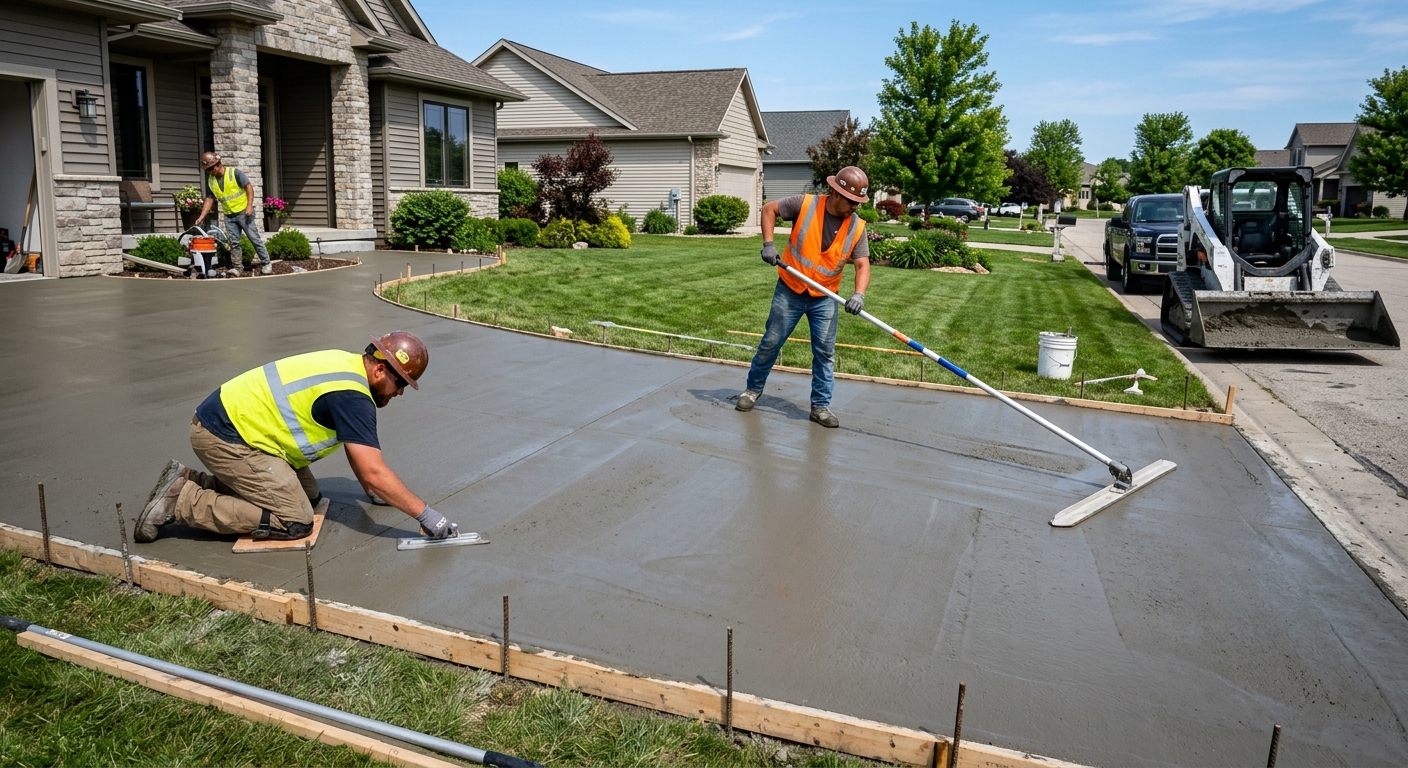
Concrete work options and costs in Forest Hill North
In Forest Hill North, concrete work is a major part of maintaining driveways, walkways, patios and foundations for the neighbourhood’s established homes. With a 2021 population of 12,806 in the area (Statistics Canada, 2021 Census), the market is busy, and the work is often concentrated around the older residential streets where slabs and driveways see more salt and more freeze–thaw stress each winter. A large share of housing stock in this part of Toronto consists of family homes, and that translates into strong demand for exterior flatwork—especially in and around the Forest Hill Village / Bathurst–St. Clair corridor where homeowners commonly upgrade entries, add garage slabs, or replace deteriorating walkways.
Concrete pricing in the Toronto economic region tends to move with frost depth requirements, freeze–thaw cycling, and the availability of experienced crews during the short reliable pour season. Ontario typically requires most structural footings to extend at least about 1.2 m (roughly 4 ft) below grade to reduce frost heave risk, and exterior flatwork is built with air-entrained mixes, reinforced bases, and control joints to manage cracking. When temperatures drop toward 10 °C or below, contractors may need additional curing protection (insulating blankets and/or heating) to protect early strength gain—this can add cost even if the final concrete quantity looks similar. Sealing and drainage design matter in GTA wet fall and spring conditions because saturated soils can drive movement against slabs every winter.
Below is a practical comparison of common options and typical ranges you’ll see in Forest Hill North, so you can budget confidently before you request quotes.
| Application |
Typical Size |
Key Spec |
Finish Option |
Price Range |
| Concrete driveway (standard broom finish) |
16 ft x 24 ft (384 sq. ft.) |
Air-entrained mix; compacted base; control joints |
Broom finish |
$18,000–$28,000 |
| Exposed aggregate driveway |
16 ft x 24 ft (384 sq. ft.) |
Air-entrained mix; proper finishing timing; seal-ready surface |
Exposed aggregate |
$22,000–$34,000 |
| Stamped concrete driveway or patio |
12 ft x 18 ft (216 sq. ft.) |
Air-entrained mix; integral base; colour hardener |
Stamped pattern |
$5,000–$9,000 |
| Plain concrete patio or walkway |
10 ft x 16 ft (160 sq. ft.) |
Compacted granular base; air-entrained mix; drainage slope |
Plain/straight trowel or broom |
$2,500–$5,500 |
| Garage floor (interior slab) |
20 ft x 20 ft (400 sq. ft.) |
Slab thickness per design; vapour considerations; joints as needed |
Standard power float |
$12,000–$20,000 |
| Foundation footings (structural, below frost) |
Per linear foot basis varies by design |
Excavate to design depth; structural concrete; rebar per engineered plan |
Structural concrete |
$180–$300 |
Prices are estimates only and vary by project scope, site access and material selection.
What affects the price of concrete work in Forest Hill North
In Forest Hill North and across the Toronto economic region, you can see the same basic concrete scope come in 30–50% apart from one quote to the next. The biggest drivers are frost-depth excavation realities, how the contractor builds the base and drainage, and how robust the concrete mix and jointing plan is for freeze–thaw cycles. In Ontario, exterior slabs are typically detailed with air-entrained concrete so the surface and edges don’t deteriorate rapidly as water expands during freezing. Structural footings also have to reach below design frost depth to reduce frost heave and differential settlement—often meaning deeper excavation than homeowners expect.
Cold-weather curing precautions also affect labour and schedule. Even when the overall calendar season looks “long enough,” Toronto’s humid, wet shoulder seasons and the temperature swings in spring and late fall can slow proper curing. Contractors may need insulating blankets, internal temperature control, or schedule changes to protect early strength development, which adds cost. De-icing salts then accelerate surface spalling if the slab is under-specified or not sealed; sealing and preparation are often where costs rise—but durability improves.
Two examples from Forest Hill North: (1) replacing a plain walkway with an upgraded, well-drained base and proper air-entrainment can shift a “typical” patio/walkway budget toward the higher end of the $16,000–$26,000 band for larger areas and heavier prep, but it reduces winter surface breakdown; (2) adding decorative stamped work can justify moving toward $24,000–$40,000 pricing for driveways where colour, release agents, and labour time are higher, especially when crews must protect the finish during curing. Housing age matters too: older sites often need regrading and deeper base correction, which can add thousands even when the concrete area is unchanged.
| Price Factor |
Why It Matters |
Cost Impact |
| Frost line depth — determines footing depth and form height |
Deeper excavation reduces frost heave and settlement |
Higher excavation and concrete volume; can move totals by several thousand dollars |
| Site preparation — excavation, grading, compacted granular base |
Base thickness and compaction control movement under freeze–thaw |
More base work and disposal can noticeably increase labour costs |
| Reinforcement — rebar or wire mesh requirement |
Helps control cracking and supports structural design |
Material and placement labour add cost, especially on footings and thick slabs |
| Mix design — air-entrainment and compressive strength spec |
Improves freeze–thaw durability and early strength gain |
Air-entrained specs and higher-strength designs generally cost more per yard |
| Finish type — broom vs. stamped vs. exposed aggregate |
Labour time, colour materials, and finishing complexity |
Decorative work often pushes pricing toward the higher end of local bands |
| Pour size and concrete truck access to site |
Smaller pours still need setup; poor access increases labour and hauling |
Traffic control, pump costs, and extra labour can add significant overhead |
| Cold-weather curing precautions — heating and blankets |
Protects strength development below about 10 °C |
Schedule control and protection materials can increase the job total |
| Control joint pattern and sealing cost |
Manages cracking and reduces water/road-salt penetration |
Proper jointing and sealer typically cost more upfront but reduce long-term failure |
Permits & regulations in Ontario
In Ontario, structural concrete work typically needs a building permit—particularly when you’re changing a foundation system. Work that commonly does require a permit includes foundation footings, foundation walls, grade beams, structural underpinning, and any concrete that is part of the building’s load-bearing system. In many cases, engineered drawings are required and reviewed by the municipality (or the applicable building authority) because the design must account for soil conditions, loads, and frost considerations.
Concrete flatwork such as patios, walkways, driveways and garage slabs usually does not require a building permit unless it affects lot grading, drainage, impervious surface coverage limits, or involves excavation near municipal right-of-way or services. That said, homeowners should always confirm before breaking ground, especially in mature neighbourhoods where utilities, drainage patterns, and lot lines can complicate the work.
Step-by-step: to verify a contractor in Forest Hill North, first ask for their liability insurance certificate—make sure it lists your address as an additional insured where applicable. Next, confirm WSIB coverage (or the contractor’s exemption/clearance where allowed) by requesting the WSIB account clearance or related proof. Then, verify their Ontario licence/registration using the provincial contractor registry the business claims to be registered under. Finally, ask for references on similar-size structural and exterior concrete jobs, and ensure the written scope matches the permit-required scope if a permit is necessary.
Getting concrete right in Forest Hill North's freeze-thaw climate
Concrete failure in Forest Hill North winters usually starts with water and weak resistance to freeze–thaw. If the base isn’t compacted to the right depth, water can migrate into voids. If the mix isn’t air-entrained, freeze expansion can damage the paste and lead to scaling and spalling at the surface and edges—often first showing up around joints and along the driveway perimeter where salt accumulates. Toronto’s humid, wet fall and spring can also keep soils saturated, increasing the risk of movement against the slab.
To spec the job correctly, start with (1) base preparation: compacted granular sub-base to the appropriate depth for local soil and frost conditions, with proper grading and drainage so water doesn’t sit under the slab; (2) mix design: air-entrainment typically in the 5–7% air range for exterior flatwork, and a minimum 32 MPa compressive strength unless engineered drawings require more; (3) control joints: spacing planned to limit random cracking and to keep cracks in predictable lines; (4) curing: minimum 7 days curing under proper conditions, and extra protection when temps trend low; (5) sealing: apply a penetrating sealer after cure (commonly around 28 days post-pour) to repel moisture and de-icing salt intrusion.
Here’s where pricing becomes sensible: if you’re deciding between plain broom-finish concrete and a decorative option, a well-detailed broom-finished driveway can land in the typical driveway band around $18,000–$28,000 for a standard size. If you jump to stamped concrete, you might be closer to $24,000–$40,000 depending on area and site access. That extra spend is justified when you’re also getting the same freeze–thaw durability details—air entrainment, base prep, jointing, and sealing—rather than paying only for appearance.
Use your quote comparisons to ask technical questions about air content, base depth, joint spacing, curing protection, and sealer timing—because spalling caused by inadequate air-entrainment is one of the most expensive problems to fix later.
| Spec |
Why It Matters in Forest Hill North |
What to Ask For |
Impact if Skipped |
| Compacted granular base (depth?) |
Reduces pumping and movement under repeated freeze–thaw |
Confirm base thickness and compaction method; include drainage slope |
Settlement, cracking, and early edge failure |
| Air-entrained concrete mix (target air %?) |
Provides freeze–thaw durability for Ontario winters |
Ask for air content target (typically 5–7% for exterior flatwork) |
Scaling and spalling from salt and freezing water |
| Compressive strength (MPa rating) |
Ensures early and long-term strength development |
Confirm minimum 32 MPa (or engineered spec if structural) |
Surface wear, reduced performance, and premature deterioration |
| Control joints (spacing per ACI guidelines) |
Limits random cracking in freeze–thaw conditions |
Get planned joint spacing and sawcut timing |
Uncontrolled cracks and water pathways under the slab |
| Minimum 7-day curing period |
Strength gain is temperature-sensitive during cool periods |
Ask how curing will be protected if temps drop |
Weak concrete surface and increased risk of scaling/spalling |
| Penetrating sealer (when applied after cure) |
Repels moisture and de-icing salt penetration |
Confirm sealer type and timing (commonly after ~28 days) |
Faster surface deterioration and salt damage |
How to choose a concrete work contractor in Forest Hill North
Choosing the right contractor in Forest Hill North starts with verification. In Ontario, ask for proof of liability insurance and WSIB coverage (or the contractor’s exemption/clearance where applicable). To check insurance, request a current certificate of insurance and verify it’s not expired, and that it covers the work being proposed. For WSIB/WCB, ask for the WSIB clearance letter or proof of coverage, and confirm the company name matches the quote. Then, verify the contractor’s Ontario registration/licence status using the provincial registry they provide—don’t rely only on a business card or a website footer.
Next, get 2–3 itemised written quotes. You want labour and materials broken down: excavation and disposal, base prep, reinforcement, concrete mix type, finishing, joints, curing protection, and sealing (if included). Avoid comparing quotes that only list “concrete supply and install” because that hides the real durability variables like air-entrainment, base depth, and jointing. Confirm what’s excluded: permit pull responsibility, sawcutting method, patching tie-ins to existing slabs, and concrete truck access and protection of sidewalks.
Warranty matters. Ask for a workmanship warranty length and what it covers (cracking, settlement, spalling) and whether product/manufacturer warranties apply. For payments, never pay more than about 10–15% upfront; hold back a portion until the work is complete and cleaned up. Get a written start date and an estimated completion window that accounts for freeze–thaw weather protection measures.
- Request WSIB coverage proof (clearance letter) before scheduling
- Verify liability insurance is current and matches the legal business name
- Confirm their Ontario registration/licence information in writing
- Get quotes with labour/material line items (not a single lump sum)
- Ask for base thickness and compaction requirements in the scope
- Confirm air-entrainment and minimum compressive strength for exterior work
- Require a jointing plan (where joints go and when they’ll be cut/sawcut)
- Clarify curing protection if temps are near or below 10 °C
- Ask whether sealing is included and the timing (after cure, commonly ~28 days)
- Confirm excavation/disposal and any tie-in to existing concrete
- Check site access assumptions: truck reach, pumping needs, and protection of landscaping
- Review warranty terms and any exclusions for de-icing salts or maintenance
Concrete contractor red flags in Forest Hill North: quotes that don’t mention air-entrainment for exterior slabs, refusing to explain base depth/compaction, lowball pricing that omits reinforcement or proper jointing, vague warranties with no workmanship details, and schedules that ignore curing/weather protection during cool periods.
Frequently asked questions — concrete work in Forest Hill North
What causes concrete to spall in Forest Hill North winters?
Spalling is the flaking or scaling of the concrete surface, and in Forest Hill North it’s usually tied to water plus freeze–thaw pressure and de-icing salt exposure. When water gets into the concrete pores or reaches the surface through hairline cracks, freezing expands it. If the concrete mix isn’t air-entrained to the right target, freeze–thaw damage concentrates near the surface and edges, and salt accelerates the breakdown. Poor base drainage can also keep moisture in contact with the slab. Another common contributor is insufficient curing protection after a pour, especially when temperatures fall toward or below 10 °C. If you’re comparing quotes for a driveway or walkway, ask whether they specify an air-entrained mix and a jointing and sealing plan—because skipping those durability details is often why one contractor can deliver a driveway in the lower end of the local range while another is priced higher (for example, driveway work often runs around $18,000–$28,000 depending on size and prep).
What is rebar and when is it required in Ontario?
Rebar is reinforcing steel bar used to strengthen concrete and help control cracking and movement, especially in structural elements like footings, foundation walls, and grade beams. In Ontario, whether rebar is required depends on the structural design and engineered drawings—particularly where loads, soil conditions, and frost considerations demand it. For many foundation and footing applications, reinforcement is integral to meeting building performance and structural requirements. For exterior flatwork, some projects use wire mesh or rebar for added stiffness, but the key is that reinforcement alone won’t compensate for weak base preparation or missing air-entrainment. If you’re doing foundation/footings, you should expect engineered specs and rebar placement details as part of the permit package. For driveways and patios, ask your contractor what reinforcement strategy they’re using and where it’s placed, and confirm it matches the thickness and loading expectations in your scope.
How long does a concrete project take in Forest Hill North?
Timelines in Forest Hill North depend on concrete type, site access, and curing/weather protection needs. A typical driveway or walkway replacement usually involves prep and formwork first, then a single-day pour, followed by a curing period before you can use it normally. Even after the pour, concrete needs adequate curing—often at least 7 days for early handling and strength gain under good conditions—so practical usability may extend beyond that if temperatures are cool. Decorative work like stamped concrete can require extra finishing time and careful protection during cure. If cold conditions require blankets or heating, add days to the schedule to protect early strength development. For context, homeowners sometimes plan around the “pour season,” because GTA contractors often schedule exterior work in warmer months to reduce curing complications. Your best protection against delays is to require a written start date and completion estimate that explicitly mentions weather contingencies and cure-time expectations in the contract.
What is a concrete overlay and is it suited to Forest Hill North?
A concrete overlay is a bonded layer placed on top of an existing slab to refresh the look and level minor surface defects—commonly used when the original concrete is still mostly sound. In Forest Hill North, overlays can be suitable if the existing slab is structurally stable (no major settling, widespread failure, or deep voids) and if the contractor properly prepares the surface so the overlay bonds. Overlays don’t “fix” failing base drainage or severe freeze–thaw deterioration under the slab; if moisture pathways remain, the new layer can fail or crack in line with the original problem. Salt-damaged surfaces may need thorough cleaning and preparation to achieve bond. In many cases, if spalling or cracking has spread, full replacement is more durable than an overlay. When you compare options, ask whether the contractor is sealing and managing freeze–thaw durability details, not just applying a surface coat. Depending on scope, resurfacing may cost less than full replacement, but durability hinges on whether the underlying cause has been addressed.
How do I seal concrete to protect it in Forest Hill North?
Sealing helps protect concrete from moisture penetration and de-icing salt exposure—important for Forest Hill North winters. The usual approach is to apply a penetrating sealer after the concrete has cured sufficiently, commonly around 28 days after the pour, so the sealer can soak in rather than trap excess moisture. Before sealing, the slab must be clean, dry, and free of curing compounds, debris, and loose surface material. Many failures happen when homeowners seal too early or skip cleaning, which prevents proper penetration. Also confirm the sealer type: for exterior freeze–thaw exposure, penetrating sealers are typically chosen to reduce water absorption. If your plan includes sealing, ask your contractor if sealing is included in the quote and what timing they will follow. Even with good pricing—like exterior flatwork often landing in bands around $16–$26 per sq. ft.-style budgeting depending on size—skipping sealing often shortens the life of the surface where salt sits.
What is the difference between concrete and cement?
Concrete and cement are related, but they’re not the same thing. Cement is the binder—an ingredient used to create concrete. Concrete is the full mixture that includes cement, water, sand, and gravel (aggregate), and it may include additives such as air-entrainment for exterior durability. In Ontario’s freeze–thaw climate, contractors specify the concrete mix design (including air content and compressive strength), not just the cement type. That’s why two projects can use “similar cement” yet perform very differently: the concrete recipe determines how it handles freezing water and salt exposure. For example, exterior flatwork typically needs air-entrained concrete to reduce spalling risk, which affects both performance and material cost. When you’re reading quotes, ask for the mix design spec—air-entrainment target and strength rating—especially if you’re budgeting in the driveway or patio ranges (such as driveways often quoted around $18,000–$28,000 for standard scopes in this market tier).