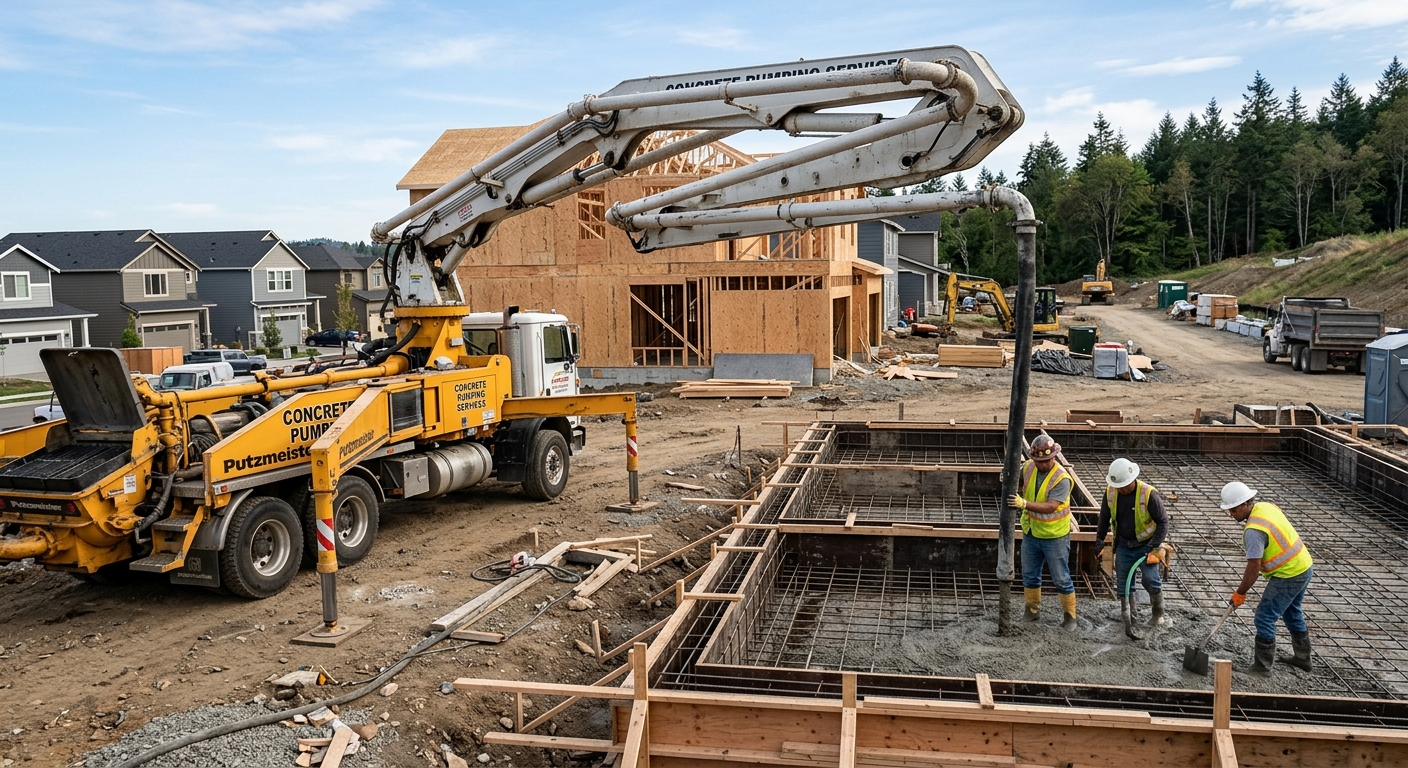
Concrete work options and costs in Norfolk County
Concrete work in Norfolk County is popular because most homes here are built for real-season wear—especially with 82.7% of local dwellings being single-detached houses, which is where driveways, patios and walkways get installed most often. Norfolk County also has a sizeable older housing stock, with 62.0% of homes built before 1981, so many projects are upgrades: re-pouring cracked slabs, replacing settled steps, and renewing drainage to reduce freeze-thaw damage. With a population of 67,490 (Statistics Canada, 2021 Census), the contractor pool is strong enough to get competitive bids, but the seasonal schedule is still tight in the Hamilton–Niagara Peninsula.
In this cold, wet Great Lakes corridor, pricing is shaped by deeper-than-average frost protection and the need for proper drainage and air-entrained concrete for exterior flatwork. Local frost depth typically pushes footings to about 4 ft or deeper, and flatwork mixes are designed to survive repeated freeze-thaw cycles off Lake Ontario and Lake Erie. Because the pour season is roughly May to October for most exterior work, jobs scheduled in colder months require hoarding, heating, and often accelerators—adding cost and reducing availability. That’s why two quotes for the “same” driveway can differ: one contractor may include the granular base, reinforcing, air entrainment and curing protection you need, while another may not.
Demand is especially noticeable around Port Dover and Simcoe where older driveways and coastal exposure increase moisture-related deterioration. Below is a practical comparison of typical options and price ranges so you can read quotes more confidently.
| Application |
Typical Size |
Key Spec |
Finish Option |
Price Range |
| Concrete driveway (standard broom finish) |
24 ft x 10 ft (240 sq ft) |
Air-entrained exterior mix, granular base, control joints |
Broom finish, simple edges |
$14,000–$22,000 |
| Exposed aggregate driveway |
24 ft x 10 ft (240 sq ft) |
Air-entrained mix, proper base, tight joint layout |
Exposed stone finish, 1–2 color options |
$18,000–$28,000 |
| Stamped concrete driveway or patio |
16 ft x 20 ft (320 sq ft) |
Air-entrained mix, release agent, sealer system |
Stamps + color hardener/accent |
$22,000–$35,000 |
| Plain concrete patio or walkway |
10 ft x 12 ft (120 sq ft) |
Air-entrained mix, compacted base, control joints |
Smooth trowel or broom, simple edging |
$12,000–$20,000 |
| Garage floor (interior slab) |
20 ft x 20 ft (400 sq ft) |
Vapour barrier, reinforced slab design, saw cuts |
Steel trowel, optional densifier |
$8,000–$15,000 |
| Foundation footings (structural, below frost) |
Per linear foot for typical footing widths |
Excavation, granular wrap, rebar, below-frost depth |
Steel-reinforced concrete |
$60–$120 |
Prices are estimates only and vary by project scope, site access and material selection.
What affects the price of concrete work in Norfolk County
In the Hamilton–Niagara Peninsula, two bids for the same concrete job can differ by 30–50% because the “scope” isn’t always identical—especially around base prep, reinforcement, mix design and curing protection. Even within Norfolk County, a driveway on a flat in-town lot often costs less than a driveway on a sloped or wet site where we need extra granular depth, sub-drainage, or longer access paths for the concrete truck and forms.
Frost depth and freeze-thaw cycles dictate every key spec in this region. Footings must extend below the design frost depth to prevent frost heave and cracking. Ontario projects commonly need footings around 1.5–2.4 m deep depending on design and soil conditions, and exterior slabs should be made with air-entrained concrete so the mix can tolerate repeated freezing and thawing. Cold-season work also requires tighter curing control: heating, insulated blankets, and sometimes accelerators extend the labour and material cost. De-icing salt is another reality here—without a proper sealing plan, surfaces are more prone to scaling and spalling.
Here are a few local examples of cost drivers. If a driveway needs deeper granular base to correct poor drainage, that’s labour + aggregate you can’t avoid. Adding rebar or mesh for thicker slabs in high-load areas increases material and time, but it can reduce future patching. On the finish side, going from a broom finish to exposed aggregate or stamped work is often a direct price jump—those premium finishes typically land in ranges like $22–$35 per sq ft for stamped & decorative work (as a finishing band), while a standard driveway pour is usually closer to $14–$22 per sq ft depending on thickness and site prep.
Finally, because many homes in Norfolk County were built before 1981 (Statistics Canada, 2021 Census), you’ll often see older weeping tiles, changed grades, or settled walkways that force added excavation and regrading—work that can swing a quote by thousands even before decorative upgrades are considered.
| Price Factor |
Why It Matters | Why It Matters |
Cost Impact |
| Frost line depth |
Determines footing depth and form height |
More excavation and concrete increases foundation/footing cost substantially |
| Site preparation |
Excavation, grading, compacted granular base |
Wet, soft or sloped sites require extra stone and labour for proper drainage |
| Reinforcement |
Rebar or wire mesh requirement |
Costs more material and placement time but improves performance and reduces cracking |
| Mix design |
Air-entrainment and compressive strength spec |
Exterior air-entrained mixes and higher specs usually cost more than basic mixes |
| Finish type |
Broom vs. stamped vs. exposed aggregate |
Decorative finishes add labour for tools, color, and surface curing/sealing |
| Pour size and concrete truck access to site |
Production speed and pumping/placement difficulty |
Limited access can require smaller loads, more labour, or pump rentals |
| Cold-weather curing precautions |
Heating and blankets |
Seasonal premiums for insulation/heat and scheduling around temperature |
| Control joint pattern and sealing cost |
Manages shrinkage and limits water/ice penetration |
Correct jointing reduces random cracking; sealing adds materials but protects surfaces |
Permits & regulations in Ontario
In Ontario, most structural concrete work in Norfolk County requires a building permit—particularly work that supports the house structure. That includes footings, foundation walls, grade beams, and other foundation-related concrete elements. Municipal review often involves engineered drawings, and that’s because foundations must be designed for load, soil conditions and frost protection. For homeowners, the key practical difference is this: structural foundation concrete typically needs a permit; concrete flatwork usually does not, unless it affects lot grading, drainage, impervious surface rules, or the municipal right-of-way (for example, work close to a driveway apron or sidewalk area).
Step-by-step, here’s how to protect yourself before you sign:
- Ask the contractor which items require a permit for your exact scope and whether they will pull it (or provide a permit-ready package).
- Verify liability insurance: request a current certificate of insurance naming the property/owner as required and confirm coverage is active for the job dates.
- Confirm WSIB coverage (WCB): ask for the clearance letter or proof of account status.
- Check online licensing and contractor status through Ontario’s public registries where applicable, then match the company name on the quote to the proof of coverage.
- Request references on similar-scale concrete projects in this region (driveways, patios, and below-frost footings).
When in doubt, call the local municipality before breaking ground—changing grades or adding drainage can trigger requirements even when the concrete slab itself seems “minor.”
Getting concrete right in Norfolk County's freeze-thaw climate
Concrete fails in Norfolk County when water gets under or into the slab/foundation and then freezes repeatedly. Over time, that freeze-thaw action can cause heaving, settlement-related cracking, and surface spalling—especially when contractors shortcut air-entrainment, compacted base depth, jointing, or curing. In the Hamilton–Niagara Peninsula, the cure period also matters because temperature swings and moisture are common in shoulder seasons. If the mix isn’t protected and allowed to cure properly, you can end up with weaker surface strength even if the colour looks fine.
To spec the job correctly, insist on five core items. First, base preparation: we excavate to the frost-protected design depth and place a properly graded, well-compacted granular sub-base so the slab drains and doesn’t pump fines. Second, mix design: for exterior flatwork, use air-entrained concrete—typically targeting 5–7% air content—along with a minimum 32 MPa compressive strength so the material can resist freeze-thaw stress. Third, control joints: they must be placed to limit random cracking. Fourth, curing: plan for at least 7 days of proper curing conditions; if it’s cold or windy, curing blankets or temporary heat are often necessary. Fifth, sealing: apply a penetrating sealer after the concrete has cured (commonly at 28 days) to repel de-icing salts and reduce scaling.
Asking the right questions prevents the most common complaint: flaking/spalling on the first winter. For example, a homeowner choosing only a plain broom finish but skipping air-entrainment and correct curing may save money upfront, but the repair can cost far more than doing the right spec the first time. A decorative step-up is sometimes worth it: stamped work often costs in the $22–$35 decorative band, but if you’re matching a driveway and patio look for years of winters, the extra finishing and sealing attention can be justified—provided the base and freeze-thaw specs are already correct.
| Spec |
Why It Matters in Norfolk County |
What to Ask For |
Impact if Skipped |
| Compacted granular base (depth?) |
Reduces water intrusion and frost-related heave in Norfolk County’s wet freeze-thaw conditions |
Granular base thickness and compaction method (with stone type), plus drainage plan if needed |
Settlement, pumping, and early cracking or scaling |
| Air-entrained concrete mix (target air %?) |
Improves freeze-thaw durability for exterior slabs in the Great Lakes corridor |
Air content target (typically 5–7%) and exterior exposure mix design |
Spalling and surface deterioration after winter freeze-thaw cycles |
| Compressive strength (MPa rating) |
Higher strength helps the slab resist wear from salt and vehicle loads |
Minimum 32 MPa for exterior flatwork (confirm in writing) |
Surface wear, dusting, and faster deterioration |
| Control joints (spacing per ACI guidelines) |
Controls where cracking happens as the slab shrinks and expands |
Joint spacing plan and sawing/timing schedule |
Random cracking patterns and water pathways into base |
| Minimum 7-day curing period |
Ensures strength gain through fluctuating Norfolk County temperatures |
Curing method (blankets/heating if required) and timeline |
Weak surface, reduced durability and increased cracking risk |
| Penetrating sealer (when applied after cure) |
Helps repel de-icing salts common in local winters |
Confirm sealer type and application after cure (commonly at 28 days) |
More scaling/spalling and faster discoloration |
How to choose a concrete work contractor in Norfolk County
When you’re hiring in Norfolk County, verify three things before any work starts: Ontario licensing status (where applicable), liability insurance, and WSIB/WCB coverage. Ask for a certificate of insurance showing coverage is active and request the WSIB clearance letter (or proof of account status) for the job period. A reputable contractor should provide these documents quickly and match the company name on your contract and quote.
Then get 2–3 itemised written quotes. You want a breakdown that shows labour and materials separately (excavation, granular base, reinforcement, concrete supply, forms, finishing, joints and sealing). Avoid bids that only give a single lump sum without explaining key inclusions—especially control joints, curing methods and disposal.
Read the scope line by line for exclusions. Is permit pulling included if structural work is involved? Who handles topsoil replacement? Is waste/disposal included if they excavate old fill? Will they protect landscaping during the pour? Ask how they’ll manage drainage and whether they’re addressing ponding or soft spots.
For warranty, look for workmanship warranty length and clarity on what’s covered (cracking related to shrinkage/joints and finish defects should be addressed). Also confirm whether the manufacturer’s product warranty for sealer or admixtures applies and whether it’s transferable.
For payment schedule, never pay more than 10–15% upfront. Hold back a portion until the work is complete and sealed/finished as specified. Finally, demand a start date and completion estimate in writing, since weather impacts the May–October window in this region.
- Confirm insurance coverage amount and job dates on the certificate.
- Get WSIB/WCB clearance letter before work begins.
- Ensure the quote lists air-entrainment and minimum strength (not just “concrete”).
- Ask whether control joints and sealing are included, and when they’ll be done.
- Verify granular base thickness and compaction requirements.
- Request reinforcement details (rebar size/spacing or mesh type) for the slab thickness.
- Check whether disposal of old concrete/excavated material is included.
- Confirm concrete access plan (forms, staging, and truck/pump requirements).
- Ask how they protect curing if temperatures drop (blankets/heating plan).
- Get a written warranty for workmanship and clarity on exclusions.
- Review the payment schedule and keep a holdback until completion.
- Make sure the schedule accounts for curing/sealing time (especially with cold snaps).
Red flags I see in Norfolk County include: quotes that skip air-entrainment, “no need for joints” assurances, refusing to provide proof of insurance/WSIB clearance, vague base depth descriptions (“we’ll level it”), and contractors pushing decorative upgrades before confirming drainage and frost-safe base prep.
Frequently asked questions — concrete work in Norfolk County
Do I need a permit for concrete work in Ontario?
In Norfolk County and across Ontario, permits depend on what you’re building. Structural concrete work—such as footings, foundation walls, and grade beams—typically requires a building permit and often engineered drawings for municipal review. Concrete flatwork (driveways, patios, and walkways) usually doesn’t require a permit, but it can if it changes lot grading, affects drainage, or relates to lot coverage/impervious surface limits. If your driveway is close to a sidewalk or right-of-way area, the municipality may have specific requirements. Before you break ground, ask the contractor to confirm whether a permit is needed for your exact scope and whether they’ll pull it. Also verify the contractor has liability insurance and WSIB coverage, so you’re protected if something goes wrong.
Concrete vs pavers for a patio in Norfolk County?
For patios in Norfolk County, concrete is often the better value when you want a smooth, easy-to-maintain surface with fewer maintenance tasks than pavers. With pavers, you’re dealing with more jointing lines and a more complex base build to prevent shifting during freeze-thaw cycles. That said, concrete can be vulnerable to cracking if the base and jointing aren’t right—but in Ontario, a properly specified air-entrained mix plus correct control joint layout makes a big difference. In practical terms, a plain concrete patio or walkway often lands in the $12–$20 band, while decorative concrete options (including stamped) can move higher into the $22–$35 range. If you like a premium look and want colour consistency, stamped concrete can compete well, as long as drainage and curing are done correctly.
How long does a concrete driveway last?
A well-built concrete driveway in Norfolk County commonly lasts 25 to 40 years, but the climate and execution matter. The freeze-thaw cycle off the Great Lakes corridor punishes slabs that have poor drainage or inadequate frost protection. If a driveway is put on weak base material or without air-entrained concrete, surface scaling and cracking can show up much sooner—often within a few winters. The biggest performance levers are a properly compacted granular base, air-entrained exterior mix, adequate slab thickness for vehicle loads, and control joints placed to manage shrinkage. Sealing after curing (and using the right de-icing approach) helps reduce salt-related surface wear. If your current driveway is from the pre-1981 era, you may be seeing typical issues from older drainage and materials—upgrades today are usually focused on base and frost-safe design.
What is air-entrained concrete and why does it matter here?
Air-entrained concrete is mixed with microscopic air bubbles designed to give expanding ice a place to expand, reducing internal pressure during freeze-thaw cycles. In Norfolk County’s cold, wet Great Lakes corridor, that durability is essential for exterior flatwork. Without proper air entrainment, the cement paste can deteriorate and you’ll see spalling or flaking, especially after winters with frequent temperature swings and de-icing salt. That’s why reputable Ontario contractors specify an exterior mix with target air content (commonly 5–7%) and confirm the mix design in the quote. It’s also why curing matters: even the right mix can underperform if it’s not protected long enough—minimum 7 days under proper conditions is a common baseline, with additional protection when it’s cold.
How do I prepare the base for a concrete slab?
Proper base preparation is the foundation of long-lasting concrete in Norfolk County. The process starts with excavation to the required depth for frost-safe performance and grading to ensure drainage. Then a compacted granular sub-base is placed in layers (not dumped in one thick layer) and compacted to the right density. If your site is wet or soft, the base may need additional stone and sometimes a drainage plan. For exterior slabs like patios and driveways, base and drainage help keep water from getting under the slab—where it freezes and causes movement. Your contractor should be able to describe the base thickness, granular material type, and compaction method in writing. If a quote doesn’t talk about base depth, compaction, or drainage, ask directly—this is where many failures start.
How do I compare concrete quotes?
To compare concrete quotes in Norfolk County, don’t just look at the final number—compare what’s included. Ask each contractor for an itemised breakdown covering excavation, granular base depth, reinforcement (rebar/mesh), concrete mix specs (including air entrainment and strength), finishing, jointing, and curing/curing protection. Confirm whether sealing is included and when it will be applied (often after curing; 28 days is common for penetrating sealers). Make sure disposal and site access are addressed. A driveway quote that lands at the $14–$22 band might be missing granular depth, reinforcement, or air-entrained mix, while a decorative quote around the $22–$35 band may include more labour and materials for stamps and colour. Finally, verify liability insurance and WSIB clearance and insist on a written start date, timeline, and warranty terms.