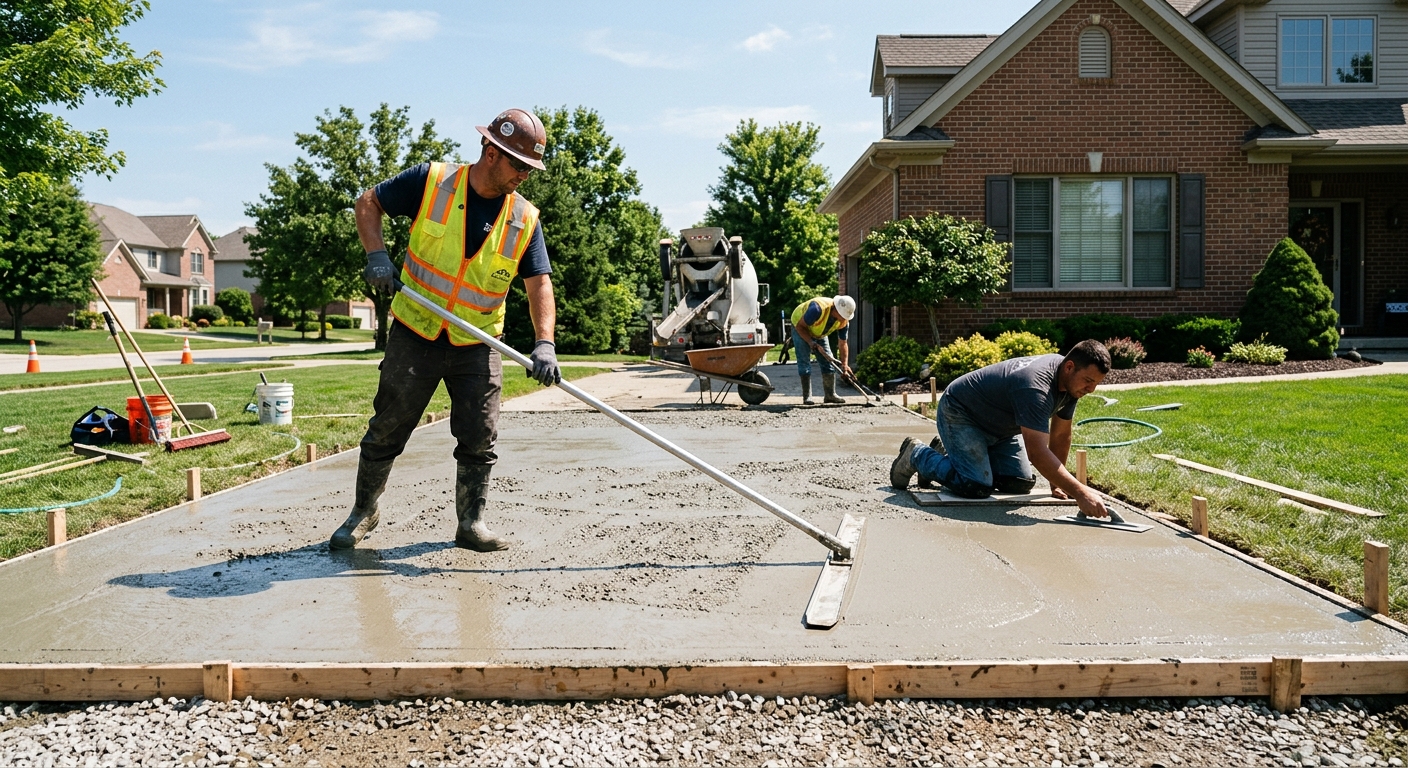
Concrete work options and costs in Attawapiskat
In Attawapiskat, concrete projects are judged harshly by our freeze–thaw swing: even small defects in base prep or curing can show up as cracks or surface scaling a season or two later. With a 2021 population of 1,501 (Statistics Canada, 2021 Census), the pace of construction is modest, so when a crew is booked for a pour season, scheduling can affect price and availability. Most homeowners are building around established lots and drive lanes, and the local housing stock tends to favour practical, durable upgrades—especially for walkways, patios, and driveways—where concrete’s long-term performance matters.
In the Toronto economic region, contractor specs are shaped by Ontario’s frost-depth requirements and repeated freeze–thaw cycles. For structural work, that typically means footings extending about 1.2 m (roughly 4 ft) below grade or deeper to limit frost heave and differential movement. For exterior flatwork like driveways and patios, Ontario contractors usually use air-entrained concrete, adequate thickness, and control joints to manage cracking risk. Because pours are concentrated in warmer months to support proper curing, cold snaps can add labour for insulating blankets, heaters, and longer curing protection when temperatures drop toward 10 °C or below.
Where you see the biggest cost differences in Attawapiskat is usually between standard broom-finished concrete and higher-spec options like exposed aggregate or stamped work—those add time, materials, and labour detail. If you’re comparing quotes, use the table below as a baseline for typical scopes and specs.
| Application |
Typical Size |
Key Spec |
Finish Option |
Price Range |
| Concrete driveway (standard broom finish) |
300–400 sq ft |
4 in thickness, compacted granular base, air-entrained mix |
Broom finish + control joints |
$18,000–$28,000 |
| Exposed aggregate driveway |
300–400 sq ft |
Air-entrained mix, proper surface retarder/cleaning, reinforced edge |
Exposed aggregate + jointing plan |
$24,000–$36,000 |
| Stamped concrete driveway or patio |
250–350 sq ft |
Air-entrained mix, reinforced base, release agent and stamping |
Stamped pattern with sealer |
$24,000–$40,000 |
| Plain concrete patio or walkway |
150–250 sq ft |
4 in thickness, compacted granular base, drainage slope |
Broom finish or smooth trowel (chosen per use) |
$16,000–$26,000 |
| Garage floor (interior slab) |
400–600 sq ft |
Vapour barrier, reinforcing, proper thickness |
Light broom or smooth finish |
$18,000–$30,000 |
| Foundation footings (structural, below frost) |
Per linear foot equivalent |
Below-grade, structural rebar, engineered requirements |
Unfinished concrete |
$180–$300 |
Prices are estimates only and vary by project scope, site access and material selection.
What affects the price of concrete work in Attawapiskat
In the Toronto economic region, two quotes for what looks like the same concrete job can easily differ by 30–50%—mostly because the “hidden” items are different: excavation depth, base materials, reinforcement, mix design, and how the contractor protects curing when temperatures fall. Contractors also price risk—Ontario freeze–thaw cycles mean poor air-entrainment or weak base prep can mean premature scaling and callbacks, so the better firms build those costs into the bid rather than cut corners.
First, frost depth and freeze–thaw dictate the structure. Ontario requirements typically push structural footings to extend at least about 1.2 m below grade (often more depending on site conditions and design), which increases formwork, concrete volume, and labour for excavation and backfill. Second, all exterior slabs need air-entrained concrete to survive repeated freezing and thawing. Third, colder conditions shorten the reliable pour season; if a project hits a cold-weather window, contractors may add cold-weather curing precautions such as insulated blankets or temporary heating, and they often plan longer protection and cure time.
De-icing salt is another cost driver: once salts soak into microcracks, surface spalling risk rises. That’s why contractors recommend sealing for exterior flatwork—especially patios and driveways you’ll treat with salt in winter. In Attawapiskat, the practical difference you’ll notice is that saturated subgrades take extra effort to stabilize; if the soil can’t drain properly, expect more base and more labour. Conversely, if your site already has good drainage and stable soil, a standard broom-finish driveway can land near the lower end of regional pricing (for example the $18–$28 band), while upgrades like stamped work ($24–$40) are justified by the extra steps, finishing time, and material detailing required.
| Price Factor |
Why It Matters |
Cost Impact |
| Frost line depth — determines footing depth and form height |
Deeper footings reduce frost heave and movement |
Higher excavation and formwork; can raise costs materially |
| Site preparation — excavation, grading, compacted granular base |
Proper base prevents pumping and settlement |
More granular and labour increases bid; poor access adds time |
| Reinforcement — rebar or wire mesh requirement |
Controls cracking and supports slabs under load |
Material cost + placement labour; often essential for driveways |
| Mix design — air-entrainment and compressive strength spec |
Improves freeze–thaw durability in exterior exposure |
Better mix costs more but reduces spalling risk |
| Finish type — broom vs. stamped vs. exposed aggregate |
Surface texture affects appearance and durability |
Stamped/exposed add labour time, materials, and sealer steps |
| Pour size and concrete truck access to site |
Shorter delivery windows and less waste improve efficiency |
Poor access can require pumps or more labour per truck |
| Cold-weather curing precautions — heating and blankets |
Protects strength gain when temperatures drop |
Equipment and extra protection days can increase price |
| Control joint pattern and sealing cost |
Joints manage shrinkage; sealing helps resist salts |
Sealer and saw-cut timing add cost but reduce long-term damage |
Permits & regulations in Ontario
In Ontario, structural concrete work—think foundation footings, foundation walls, and grade beams—normally requires a building permit, and many projects involve engineered drawings that the municipality reviews. Concrete flatwork such as patios, walkways, and driveways often does not require a permit on its own, unless it impacts lot grading, drainage, or impervious surface coverage limits, or touches municipal right-of-way conditions. Before you break ground in Attawapiskat, it’s worth confirming the local requirements with your municipality or building department so your project doesn’t stall mid-schedule.
For contractor compliance, verify three things before signing: (1) liability insurance, (2) proof of WSIB (or WCB clearance where applicable), and (3) references for similar-scale concrete work in Ontario conditions. A reputable contractor will provide certificates and will tell you exactly which items are included in the bid—especially cold-weather protection and disposal.
Step-by-step, here’s how homeowners can check eligibility:
- Search the province’s online contractor licence/registry information using the company name to confirm licensing status where required.
- Ask for a current certificate of insurance showing liability coverage; confirm it names you properly as an additional insured where offered.
- Request a WSIB/WCB clearance letter (not just a worksheet or outdated document) and verify it matches the contractor’s legal business name.
- Confirm they have experience with exterior air-entrained concrete and jointing—critical for freeze–thaw durability.
- Ask for at least two references with similar scope (e.g., a driveway or patio with comparable thickness and base).
Getting concrete right in Attawapiskat's freeze-thaw climate
Concrete fails in Attawapiskat’s Ontario climate mainly when freeze–thaw damage gets a head start: water gets into the slab or base, then repeated cycling expands it, lifting edges and widening cracks until spalling and scaling appear. The cure is spec-driven workmanship. For base prep, require a compacted granular sub-base to the correct depth for local soil stability and frost considerations; don’t “make up” thickness with more cement. For mix design, specify air-entrainment (commonly aiming for 5–7% air content for exterior flatwork) and minimum 32 MPa compressive strength so the concrete has resilience against freeze–thaw cycles. Control joints are also essential in flatwork; correct spacing limits random cracking, which is what lets water penetrate.
Curing is where many budget pours lose durability. Plan for a minimum 7-day curing period under proper conditions, and in cold weather, ask about heated/blanket curing to keep temperature and moisture within acceptable ranges. Finally, sealing should be planned after full cure—typically about 28 days post-pour for a penetrating sealer—so the surface is more resistant to de-icing salts and rain-driven saturation.
If you want a concrete example for budgeting: a plain broom-finished patio may come in near the $16–$26 band, while adding stamped detailing pushes you toward the $24–$40 band. That extra cost can be justified when the contractor also meets the freeze–thaw essentials—correct air content, proper jointing, and correct cure/protection—because decorative surfaces highlight defects faster than plain finish. Ask questions early so the “cheap” quote doesn’t mean “thin base, under-specified air, and rushed curing.”
| Spec |
Why It Matters in Attawapiskat |
What to Ask For |
Impact if Skipped |
| Compacted granular base (depth?) |
Prevents settlement and water pooling under slab |
Granular depth and compaction method for your soil |
Early cracking, pumping, uneven surface |
| Air-entrained concrete mix (target air %?) |
Helps resist freeze–thaw scaling and spalling |
Target air content (commonly 5–7%) documented on ticket |
Spalling and flaking in a few winters |
| Compressive strength (MPa rating) |
Supports strength gain and slab durability |
Minimum 32 MPa specified for exterior exposure |
Reduced performance under freeze–thaw and loads |
| Control joints (spacing per ACI guidelines) |
Manages shrinkage cracking locations |
Joint layout drawing and saw-cut timing |
Random cracks that allow water ingress |
| Minimum 7-day curing period |
Strength gain depends on temperature and moisture |
Protection plan for 7 days (blankets/heaters if needed) |
Surface weakness, dusting, reduced durability |
| Penetrating sealer (when applied after cure) |
Repels de-icing salts and moisture |
Sealer application about 28 days after pour (after cure) |
More scaling risk and faster surface deterioration |
How to choose a concrete work contractor in Attawapiskat
Choosing the right concrete contractor matters in Ontario because the job is a system: excavation, granular base, mix design, air-entrainment, reinforcement, jointing, curing, and sealing. Start by verifying Ontario licensing where applicable, then confirm insurance and workplace coverage. Ask for (a) a certificate of liability insurance, (b) WSIB clearance or WCB documentation, and (c) a list of recent, similar Ontario concrete projects. For concrete flatwork, you want proof they build exterior-grade specs—especially air-entrained mixes and a jointing plan suited to freeze–thaw.
Next, get 2–3 itemised written quotes. Each quote should break down labour and materials separately (excavation, base materials, rebar/wire mesh, concrete mix, finishing, saw-cutting, sealing, and any disposal). Avoid “lump sum” pricing where the exclusions are vague—those are the quotes most likely to change after the pour. Confirm whether permits (if required) are included, whether cold-weather curing precautions are included, and how delays due to weather will be handled.
Warranty is also practical: ask for the workmanship warranty length, who pays for product-related defects (if any), and whether the warranty is transferable if you sell the property. Payment matters too—never pay more than 10–15% upfront. Hold back progress payments until key milestones (base inspection, reinforcement inspection, final finishing) are complete. Finally, require a written start date and completion estimate.
- Ask for concrete mix specifications: air-entrainment and minimum 32 MPa.
- Request documentation/ticket information for air content on exterior pours.
- Confirm base depth, compaction method, and drainage slope plan.
- Require a joint layout showing spacing and edging approach.
- Ask when saw cuts will be made relative to finishing.
- Confirm cold-weather protection plan (blankets/heaters) if temps drop.
- Get sealer type and timing: penetrating sealer after proper cure.
- Require an itemised quote with disposal and clean-up included.
- Check liability insurance certificate validity and coverage amount.
- Verify WSIB/WCB clearance matches the contractor’s legal name.
- Review past photos from similar projects in Ontario conditions.
- Use a written schedule with milestones, not just a single estimate date.
Concrete red flags in Attawapiskat: (1) no clear plan for frost-protective base prep, (2) refusing to discuss air-entrainment or joint spacing, (3) rushing curing and removing protection too soon, (4) vague quotes that don’t itemise disposal or sealing, and (5) requiring large upfront payments without a written milestone schedule.
Frequently asked questions — concrete work in Attawapiskat
When is the best time to pour concrete in Attawapiskat?
In Ontario, the best time to pour exterior concrete is during the warmer part of the year when temperatures stay steady enough for proper curing. In the Toronto economic region, crews typically schedule driveways, patios, and walkways for spring through early fall to avoid cold snaps that can push you below effective curing temperatures (often when conditions move toward 10 °C or below). If you must pour near the edge of the season, ask the contractor how they’ll protect the slab with heating or insulated blankets and how long they’ll hold protection—curing is part of the price and part of the warranty. For homeowners, planning matters: a stamped patio quote priced near the $24–$40 band can become more expensive if winter protection is required.
How long does concrete take to cure?
Concrete cures in stages. For practical durability, most contractors in Ontario plan at least a 7-day curing period with the right temperature and moisture conditions before expecting normal early use, especially for exterior flatwork exposed to rain and freeze–thaw cycles. Full strength development continues beyond that, which is why you should treat the job like it’s still “working” for a few weeks. For sealing, ask for a penetrating sealer application after the concrete has fully cured—commonly around 28 days post-pour—so the sealer can penetrate instead of trapping moisture. If a contractor says they’ll start heavy traffic sooner without adequate curing protection, that’s a durability risk in Attawapiskat’s freeze–thaw climate.
Do I need a permit for concrete work in Ontario?
In Ontario, it depends on what you’re building. Structural concrete work—such as foundation footings, foundation walls, and grade beams—typically requires a building permit and often engineered drawings reviewed by the municipality. Concrete flatwork like patios, walkways, and driveways often does not require a permit by default, but it can if it affects lot grading, drainage, impervious surface coverage limits, or municipal right-of-way considerations. For Attawapiskat homeowners, the best approach is simple: ask your contractor to confirm whether a permit is expected for your scope before starting. Also verify insurance and WSIB/WCB coverage; reputable Ontario crews can usually explain their permit/inspection process clearly.
Concrete vs pavers for a patio in Attawapiskat?
For patios in Attawapiskat, both concrete and pavers can perform well, but they handle Ontario freeze–thaw differently. Concrete patios rely on air-entrainment, correct base compaction, and control joints to manage shrinkage cracking; if the contractor does that properly, a plain broom-finished patio is often a straightforward choice, with many projects falling near the $16–$26 band. Pavers can be more forgiving if individual units settle—repairs can be localized—but they require excellent base prep and proper edge restraint to prevent shifting. If you’re expecting heavy foot traffic and want a lower maintenance profile, ask how each option handles drainage and how joints (or paver lines) align with freeze–thaw behaviour.
How long does a concrete driveway last?
A well-built concrete driveway in Ontario commonly lasts decades, but “how long” depends on what matters most for this climate: air-entrainment, slab thickness, a well-compacted granular base, and a joint pattern that manages cracking before water gets in. In the Toronto region, contractors plan for freeze–thaw cycles by using exterior-grade mixes and managing curing—rushed curing is a common reason for early scaling and spalling. If you’re comparing finishes, standard driveways often price within the $18–$28 band, while upgraded finishes like exposed aggregate or decorative work cost more, but the long-term life still hinges on the base and curing quality. Sealing after proper cure can also help with de-icing salt exposure.
What is air-entrained concrete and why does it matter here?
Air-entrained concrete is a mix designed to include tiny, evenly distributed air bubbles. Those bubbles provide room for water to expand when it freezes, reducing the risk of internal damage that leads to scaling and spalling. In Ontario, freeze–thaw cycles are the reason most exterior concrete needs air-entrainment and why contractors are careful about mix tickets and curing protection. For exterior flatwork in Attawapiskat, air content is commonly targeted around 5–7% for freeze–thaw durability, paired with a minimum 32 MPa compressive strength and correct control joints. If a contractor can’t explain the air-entrainment spec or can’t provide documentation, that’s a serious red flag—especially for driveways and patios where de-icing salt accelerates surface deterioration.