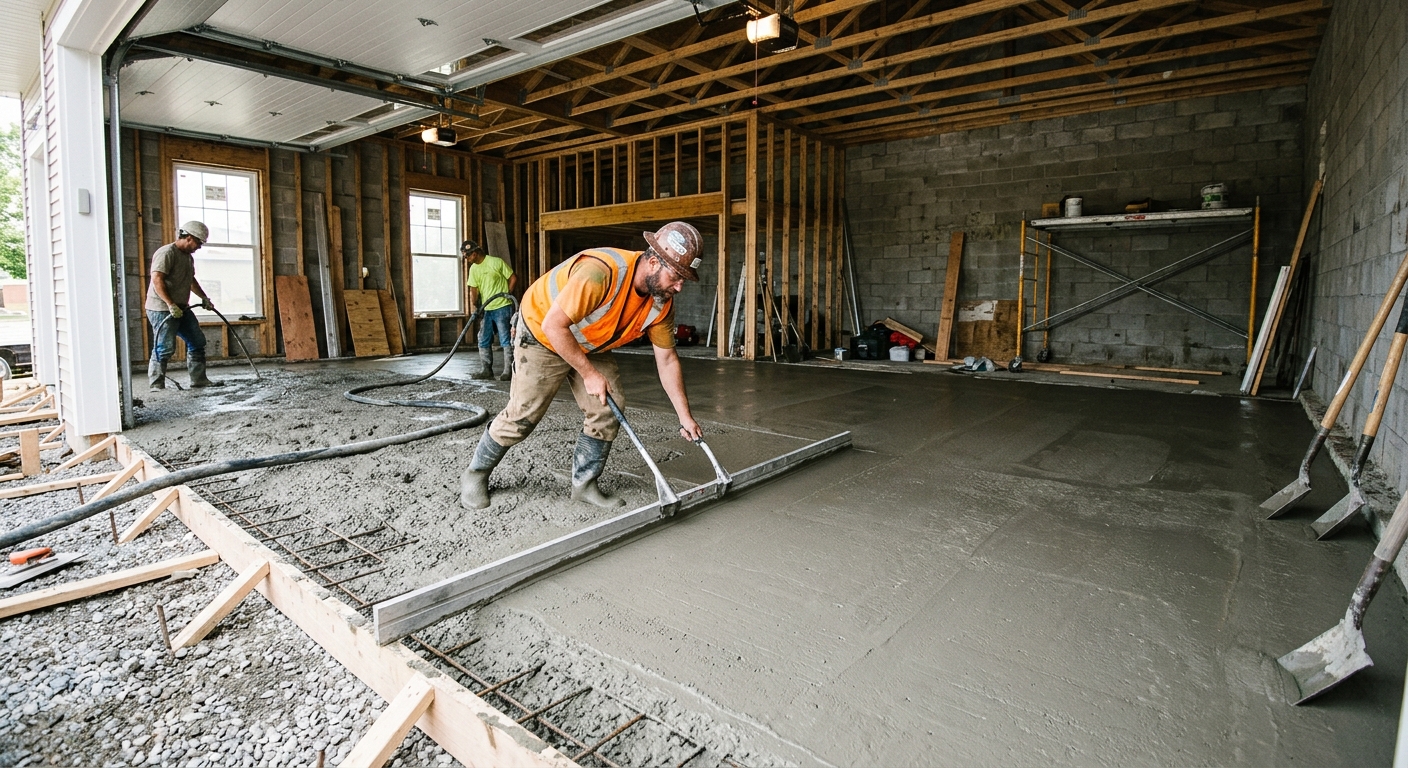
Concrete work options and costs in Broadview North
In Broadview North, concrete contractors are busy because homeowners rely on durable flatwork for driveways, patios, walkways and—on many older and mid-age homes—fresh concrete around foundations. With a 2021 population of 11,499 (Statistics Canada, 2021 Census), there’s steady demand across the Toronto economic region, where thousands of properties are updated each year. In this area, detached and semi-detached neighbourhoods make up much of the recurring work, especially along Bathurst Street and the surrounding residential streets where access is tight and drainage details matter.
Toronto-region pricing is shaped by frost depth, freeze–thaw cycles and how long crews can reliably pour and cure. Ontario building requirements typically push structural footings to extend at least 1.2 m (about 4 ft) below grade to reduce frost heave and differential movement, which directly affects excavation, formwork and labour. Exterior flatwork also needs air-entrained concrete and a plan for control joints because repeated winter cycles can drive cracking and surface spalling if the mix or curing is off. In the humid, often wet spring and fall, contractors also emphasize proper drainage and well-compacted granular base so saturated soils don’t expand and contract against the slab every winter.
You’ll usually see quotes vary by finish and site conditions: a standard broom driveway can be a straightforward replacement, while stamped or exposed aggregate requires more labour, forms/overlays and curing protection. The table below compares typical Broadview North pricing ranges so you can quickly match contractor options to your project.
| Application |
Typical Size |
Key Spec |
Finish Option |
Price Range |
| Concrete driveway (standard broom finish) |
400 sq. ft. (approx. 18' x 22') |
Air-entrained exterior mix, control joints, compacted granular base |
Broom finish + edge forms |
$7,200 – $11,200 |
| Exposed aggregate driveway |
400 sq. ft. (approx. 18' x 22') |
Proper mix design, exposure timing, seal-ready surface |
Exposed aggregate with sealer |
$9,000 – $14,000 |
| Stamped concrete driveway or patio |
300 sq. ft. (approx. 15' x 20') |
Air-entrained mix, integral colour, joint pattern planning |
Stamp + colour hardener/sealer |
$7,200 – $12,000 |
| Plain concrete patio or walkway |
200 sq. ft. (approx. 10' x 20') |
Compacted base, minimum thickness, proper drainage slope |
Light broom or float finish |
$3,200 – $5,200 |
| Garage floor (interior slab) |
400 sq. ft. (approx. 20' x 20') |
Vapour barrier, proper base, reinforcement as required |
Float finish (option for colour/topcoat) |
$6,800 – $10,800 |
| Foundation footings (structural, below frost) |
Typical small underpin/partial foundation |
Engineered layout; excavation to frost depth; formwork + rebar |
Unfinished structural concrete |
$2,000 – $6,000 |
Prices are estimates only and vary by project scope, site access and material selection.
What affects the price of concrete work in Broadview North
In Broadview North (and across the Toronto economic region), it’s normal to see quotes for the “same” concrete job swing by about 30–50%. The big reason is that Toronto crews price concrete around the building science: frost depth, base prep, freeze–thaw exposure, and how much labour it takes to get the slab or footing built correctly on your specific property. A contractor who includes proper excavation to grade, compacted granular base, air-entrained mix, reinforcement where required, and sealing won’t look cheap—but they’re often the quote that performs after the second winter.
Frost depth and freeze–thaw cycles dictate nearly every spec in this region. Footings must extend below the design frost depth to prevent frost heave and differential movement; that usually means deeper excavation and more form height. All exterior slabs require air-entrained concrete to survive freeze–thaw cycling. In colder stretches, contractors also plan for cold-weather curing (insulating blankets, heating enclosures or longer protection windows) because you can’t treat fall and early winter like summer. Finally, Ontario’s use of de-icing salt increases surface wear and can accelerate spalling, which is why sealing is commonly recommended.
Two examples show how site conditions move cost. If your driveway needs full-depth rebuild and the base is soft or poorly drained, you may end up closer to the $18–$28/sq. ft. driveway band once excavation, granular base, and haul/disposal are accounted for. If you keep the base sound and choose a plain patio instead of stamped work, pricing typically stays nearer the $16–$26/sq. ft. band for concrete flatwork. On the other hand, stamped and decorative styles tend to cost more because the finishing process and curing protection take longer; that’s where you commonly see budget creep toward the $24–$40/sq. ft. range.
| Price Factor |
Why It Matters |
Cost Impact |
| Frost line depth — determines footing depth and form height |
Deeper frost protection increases excavation volume and labour |
Higher mobilization and more concrete/formwork; can add thousands on footing-heavy scope |
| Site preparation — excavation, grading, compacted granular base |
Base compaction controls settlement and cracking risk |
Well-priced jobs include granular supply, regrading and compaction testing; omission lowers cost short-term |
| Reinforcement — rebar or wire mesh requirement |
Controls cracking and helps carry loads for certain slab types |
Material and placement labour; can shift pricing noticeably for garage slabs and footings |
| Mix design — air-entrainment and compressive strength spec |
Freeze–thaw survival depends on air content and strength targets |
Premium mix and QA checks; critical for exterior durability |
| Finish type — broom vs. stamped vs. exposed aggregate |
Decorative finishes add forming/texture/extra finishing steps |
Can move a driveway from “standard” pricing toward decorative bands |
| Pour size and concrete truck access to site |
Access affects pumping, the number of trips, and labour time |
Small jobs can get expensive if trucks can’t reach; wider access usually reduces costs |
| Cold-weather curing precautions — heating and blankets |
Toronto temperatures around 10 °C or below slow hydration and increase defect risk |
Adds labour, materials and scheduling flexibility; can also extend timeline costs |
| Control joint pattern and sealing cost |
Joints manage cracking; sealer helps repel de-icing salt and reduces surface damage |
Often overlooked but essential; proper joint spacing prevents random cracks |
Permits & regulations in Ontario
In Ontario, structural concrete work such as footings, foundation walls and grade beams typically requires a building permit, and it’s common for engineered drawings to be reviewed as part of the permit process. If the concrete scope changes a load path or involves structural changes, assume you’ll need permits. Concrete flatwork like patios, sidewalks, and driveways usually does not require a permit on its own—unless the project affects lot grading, drainage, impervious surface coverage requirements, or work occurs near a municipal right-of-way.
For Broadview North homeowners, the practical approach is simple: confirm with the municipality before breaking ground, and don’t rely on a verbal “we’ve done this before” answer. Also verify the contractor carries proper liability insurance and the correct workplace coverage (WSIB/WCB) before any work starts. These aren’t just formalities—concrete failures (settlement, cracking, drainage issues) can get expensive quickly.
Step-by-step checks: (1) Request the contractor’s certificate of insurance (liability) and confirm it names you as an additional insured if your contract requires it. (2) Ask for proof of WSIB/WCB clearance/coverage and check that it’s current. (3) For licensing and professional compliance, use the appropriate Ontario registry information on the contractor’s website and/or government lookup tools, and match the business name on the quote to the insured/registered entity. (4) Call or email for references on similar-driveway or footing jobs from the Toronto area.
Getting concrete right in Broadview North's freeze-thaw climate
Concrete fails in Broadview North most often when the base is wrong, the mix isn’t truly exterior-grade, or the slab isn’t protected during curing. Freeze–thaw cycling is unforgiving: moisture gets into the surface and along tiny voids, then expands as temperatures swing, leading to spalling and pop-outs. The fix is to spec and build for durability from day one—starting with proper site preparation, then the right air-entrained mix, then an appropriate joint and curing plan.
(1) Base preparation: excavate to the correct depth for your soil conditions and install a compacted granular sub-base with correct drainage slope. If the base stays soft or drains poorly, you can get settlement even if the concrete itself is the right strength. (2) Mix design: for exterior flatwork, contractors typically aim for air content in the 5–7% range and a minimum 32 MPa compressive strength. (3) Control joints: use a designed joint layout to limit random cracking—especially important on driveways and patios where people notice hairline cracks. (4) Curing: protect the slab and plan for a minimum 7 days of curing under suitable conditions; when temperatures trend down toward 10 °C or below, curing protection needs to be more deliberate. (5) Sealing: apply a penetrating sealer after the full cure period (commonly 28 days post-pour) to help repel de-icing salt.
To see where money is justified: upgrading from a plain driveway to exposed aggregate or stamped can add cost, but you shouldn’t pay extra for appearance while still using the wrong base or neglecting air-entrainment. For example, if a standard broom driveway is budgeted around the $18–$28 per sq. ft. band, paying for proper drainage and sealing inside that budget often gives better long-term results than jumping to decorative finishes without correcting base prep first.
| Spec |
Why It Matters in Broadview North |
What to Ask For |
Impact if Skipped |
| Compacted granular base (depth?) |
Reduces settlement and helps prevent water from pumping under freeze–thaw cycles |
Base depth to suit your soil and slab thickness; compaction method and acceptance |
Cracks, uneven settling, edge deterioration |
| Air-entrained concrete mix (target air %?) |
Air void system helps concrete tolerate freeze–thaw expansion |
Exterior mix with 5–7% air content (and documented cold-weather plan when needed) |
Spalling and surface scaling within a few winters |
| Compressive strength (MPa rating) |
Adequate strength supports durability and reduces wear from winter traffic |
Minimum 32 MPa compressive strength spec for exterior flatwork |
Premature wear, pitting and higher cracking risk |
| Control joints (spacing per ACI guidelines) |
Controls where cracks will occur, improving appearance and performance |
Joint spacing plan matched to slab dimensions and finish type |
Random cracks that can widen and allow more water intrusion |
| Minimum 7-day curing period |
Proper hydration reduces early-age defects in Toronto’s variable fall/spring temperatures |
Cur plan for protection during cool or damp weather; time protected before heavier use |
Weak surface, scaling, and early spalling risk |
| Penetrating sealer (when applied after cure) |
Helps repel de-icing salts and reduces moisture-driven damage |
Penetrating sealer applied after full cure—often around 28 days post-pour |
Faster surface breakdown during winter seasons |
How to choose a concrete work contractor in Broadview North
Start by verifying the contractor’s Ontario compliance and financial protection. Ask for (1) a current certificate of liability insurance (and confirm coverage limits are appropriate for your scope), (2) WSIB/WCB proof or clearance documentation, and (3) references for jobs similar to your driveway, walkway or foundation work in the Toronto area. Where to look: the contractor’s website and quote package for insurance/coverage documents, the insurance certificate itself for policy dates, and WSIB/WCB clearance details provided directly by the contractor before work begins. For licensing, confirm the business name on the quote matches the entity in the Ontario business registry/lookup tools and any trade registration they claim.
Then request 2–3 itemised written quotes—not just lump sums. You want labour and materials separated where possible: excavation and haul/disposal, granular base and compaction, reinforcement (mesh/rebar), concrete mix spec (air entrainment), finishing steps (broom vs. stamped/exposed), control joint layout, and sealer inclusion. Ask whether permits are included (especially for structural items) and what’s excluded (old concrete removal, landscaping reinstatement, dust protection, or site restoration).
For warranty, ensure you understand workmanship coverage length and whether any product/manufacturer warranty is included and transferable. For payment, keep it controlled: never pay more than 10–15% upfront; hold back a portion until completion and any touch-ups are done. Get a start date and completion estimate in writing, and confirm weather/cold-weather curing responsibilities.
- Insurance certificate provided before scheduling work
- WSIB/WCB clearance/coverage proof current
- Itemised quote: base prep, reinforcement, concrete mix spec, finishing and sealer
- Clear thickness and reinforcement notes for your slab type
- Documented joint spacing plan (not “we’ll figure it out”)
- Cold-weather curing procedure described (blankets/heating if needed)
- Disposal/haul included or clearly priced as an add-on
- Permit responsibility stated in writing where applicable
- Concrete supplier and mix details confirmed (exterior air-entrained)
- Schedule: start date, cure/protection period, and reopen-to-traffic timing
- Workmanship warranty in writing (and what it covers)
- Payment schedule with small deposits and holdback
Concrete red flags in Broadview North: contractors who won’t discuss air-entrainment or provide a mix spec, vague joint plans, skipping compacted granular base requirements, no written cure/protection timeline, and offering decorative work (stamped/exposed) without explaining sealing and winter maintenance needs.
Frequently asked questions — concrete work in Broadview North
How long does concrete take to cure?
In Broadview North and across Ontario’s Toronto climate, “cure time” has two parts: hydration and readiness for use. Concrete keeps gaining strength after placement, but many contractors treat the slab as safe for light foot traffic after about 24–48 hours, depending on temperature and mix. For proper durability, crews typically protect the concrete and follow a minimum of 7 days of curing under suitable conditions. Full strength development is longer; that’s why sealing is commonly scheduled around 28 days after the pour. If you’re pouring in cool weather (when temperatures drop toward 10 °C or below), the contractor should add cold-weather curing protection—heating enclosures or insulating blankets—to prevent surface scaling and early spalling. Always keep vehicles off until the contractor’s written cure-to-use guidance is met.
Do I need a permit for concrete work in Ontario?
Ontario permit needs depend on what you’re building. In general, structural concrete like footings, foundation walls and grade beams requires a building permit and often engineered drawings reviewed by the municipality. For typical homeowners replacing a driveway, adding a patio or pouring a walkway, a permit often isn’t required—unless the work changes lot grading, drainage, or involves impervious surface coverage limits, or impacts a municipal right-of-way. Because Broadview North projects can vary by site conditions and drainage plans, your safest step is to confirm with the local authority before the first excavator bucket goes in. Also verify the contractor is properly insured (liability) and carries WSIB/WCB coverage before signing.
Concrete vs pavers for a patio in Broadview North?
Concrete and pavers both work in Broadview North, but freeze–thaw performance and long-term maintenance differ. A properly built plain concrete patio, with a compacted granular base, air-entrained exterior mix and control joints, tends to be a strong “set it and maintain minimally” option. Pricing for plain concrete flatwork commonly falls in the $16–$26 per sq. ft. band (depending on thickness, base depth and site access). Pavers can be excellent for flexibility and repairs, but they’re more sensitive to base preparation and joint sand maintenance; if drainage isn’t right, weeds and settlement can show up over time. If you want decorative look without as many pieces to disturb, stamped concrete can land higher in cost (often closer to decorative bands) but still relies on the same core durability specs—air-entrainment, base prep and curing. Choose based on your drainage plan and how much maintenance you’ll tolerate.
How long does a concrete driveway last?
With correct construction practices for Toronto-area freeze–thaw—especially air-entrained concrete, proper base compaction, control joints and sealing—many driveways provide reliable service for decades. If the base is poorly prepared or the mix isn’t truly exterior-rated, you can see cracking, scaling and edge deterioration much sooner, often within a few winters under salt exposure. A typical concrete driveway replacement budget in this area often fits the $18–$28 per sq. ft. range. That price usually reflects more than just “pouring”—it’s base work, reinforcement decisions (as needed), finishing, and the curing and sealing steps that protect against moisture movement. If a contractor skips sealing or doesn’t plan for cold-weather curing protection, the driveway may look fine initially but fail earlier due to spalling from freeze–thaw and de-icing salt.
What is air-entrained concrete and why does it matter here?
Air-entrained concrete is designed for freeze–thaw climates like Ontario’s Toronto region. It contains microscopic air bubbles (introduced at batching) that give expanding ice somewhere to “go,” reducing internal pressure that would otherwise break apart the paste. This matters for Broadview North because exterior concrete is exposed to humid conditions, wet fall/spring cycles, and winter temperature swings that drive repeated freezing and thawing. Without proper air entrainment, the surface is much more likely to spall (flake) and scale, especially where de-icing salt is applied. Contractors should specify an exterior mix with typical air content targets of about 5–7% for flatwork and ensure proper placement and curing. If you’re comparing quotes, ask whether the concrete is truly air-entrained for exterior exposure and whether curing protection is planned when temperatures drop toward 10 °C or below.
How do I prepare the base for a concrete slab?
Base prep is where most durability problems are won or lost. For Broadview North, the key is to create a compacted granular sub-base with the right depth for your soil and slab thickness, and to ensure drainage slopes don’t trap water under the concrete. In practice, that means excavation to design grade, adding the correct granular material, compacting in lifts, and checking that the sub-base is firm and uniform before the concrete is placed. If reinforcement is required, it should be installed at the correct depth (not sitting on the ground). You should also confirm the contractor plans for freeze–thaw movement: air-entrained exterior mix, control joints, and a curing schedule with adequate protection. A well-prepared base supports everything else—even a good finish can fail if water can pump under the slab during winter cycles.