Concrete work options and costs in Forest Hill South
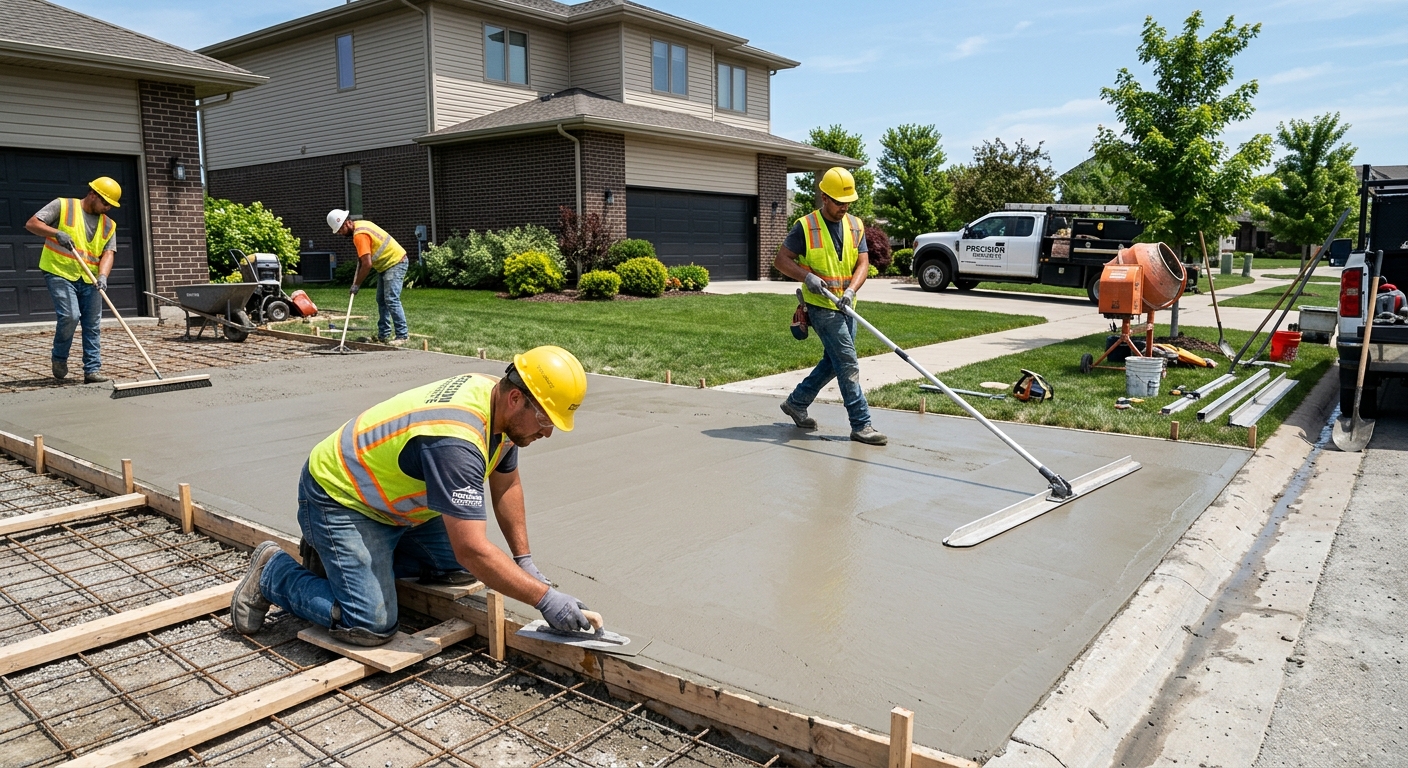
Concrete work in Forest Hill South, Ontario, tends to be most in demand for exterior flatwork—especially driveways, patios, and walkways—because the neighbourhood is largely made up of family homes where curb appeal and durable surfaces matter. With a population of 10,732 people (Statistics Canada, 2021 Census), local crews stay busy in the warmer months when Toronto’s freeze–thaw cycle is at its worst and when better curing conditions make it easier to hit strength targets. In the Toronto economic region, exterior pours are typically planned around the reliable pour window so the concrete can gain strength before temperatures consistently drop.
Cost differences are also driven by how deeply contractors must support concrete where frost can lift moisture in subgrades. In Ontario, structural footings generally need to extend at least 1.2 m below grade to reduce frost heave risk, and GTA crews often rely on air-entrained mixes for exterior slabs to manage freeze–thaw stress. You’ll also see stronger scheduling pressure near sought-after streets and side roads where access is tighter and crews need to stage materials carefully.
For homeowners near portions of Forest Hill—often around the busier commercial stretch and the more established residential lanes—driveway and walkway projects are commonly requested before fall, then scheduled to be poured as conditions stabilize in late spring. That demand is what makes scoping, base prep, and mix selection so important: they protect your investment and help avoid the common problems that show up after the first couple winter seasons. Use the table below to compare realistic scope ranges before you request itemised quotes.
| Application |
Typical Size |
Key Spec |
Finish Option |
Price Range |
| Concrete driveway (standard broom finish) |
400–500 sq ft |
Air-entrained exterior concrete, compacted granular base, control joints |
Broom finish |
$7,500–$12,000 |
| Exposed aggregate driveway |
400–500 sq ft |
Air-entrained exterior concrete, proper curing for consistent wash-out |
Exposed aggregate with color control |
$9,500–$15,000 |
| Stamped concrete driveway or patio |
300–450 sq ft |
Durable air-entrained mix, densifier/curing compound as specified |
Stone/brick stamp pattern |
$9,000–$18,000 |
| Plain concrete patio or walkway |
200–350 sq ft |
Compacted granular base, air-entrained exterior concrete, joints |
Smooth or light broom |
$3,200–$8,500 |
| Garage floor (interior slab) |
300–500 sq ft |
Vapour barrier where required, reinforced slab as needed, curing time |
Light trowel finish |
$5,500–$11,500 |
| Foundation footings (structural, below frost) |
Varies by footing plan |
Concrete below design frost depth, typically engineered reinforcement |
Structural concrete only (no decorative finish) |
$180–$300 |
Prices are estimates only and vary by project scope, site access and material selection.
What affects the price of concrete work in Forest Hill South
In the Toronto economic region, it’s normal to see quotes for the “same” concrete job land 30–50% apart. The biggest reasons are not just the concrete itself—it’s what has to happen before the pour and what has to be built to survive Ontario’s freeze–thaw. In Forest Hill South, builders and contractors plan for winter movement by specifying deeper support and more resilient exterior concrete. That pushes costs upward compared with regions where soils are less frost-sensitive or where curing conditions last longer.
Frost depth and freeze–thaw cycles dictate every exterior spec. Footings must extend below the design frost depth (often in the range of 1.5–2.4 m in Ontario) to prevent frost heave and differential settlement. For slabs like driveways and patios, exterior concrete is typically air-entrained to survive repeated freezing and thawing. On top of that, cold-weather curing precautions become a line-item when pours run late in the season—insulating blankets, temporary heat, and longer protection time can add labour and rental costs. Finally, de-icing salt accelerates surface deterioration, so sealing and surface protection become important for long-term performance.
Two simple examples show why the price range moves. First, if your driveway needs major grading and a deeper, properly compacted granular base, the labour and excavation can push the total toward the higher end of the typical driveway bands (for example, closer to $18,000–$28,000 for a larger, more complex site). Second, a stamped driveway or patio may look only “slightly” different, but labour for stamping, borders, and mix/curing consistency often justifies stepping into the $24,000–$40,000 decorative band for larger areas. Housing age also matters: older properties in Forest Hill South can have older subgrades and drainage issues that require additional base replacement, which directly affects cost.
| Price Factor |
Why It Matters |
Cost Impact |
| Frost line depth — determines footing depth and form height |
Deeper excavation and formwork are required to prevent frost heave and settlement. |
High for foundations; can add substantial labour and material costs. |
| Site preparation — excavation, grading, compacted granular base |
Concrete lasts only as long as the base performs under wet seasons and freeze–thaw. |
Often the difference between low and high bids. |
| Reinforcement — rebar or wire mesh requirement |
Reinforcement helps control cracking and supports structural loads. |
Moderate to high depending on slab thickness and design. |
| Mix design — air-entrainment and compressive strength spec |
Air-entrainment is essential for exterior freeze–thaw durability. |
Moderate; prevents early surface failure. |
| Finish type — broom vs. stamped vs. exposed aggregate |
Decorative finishes add labour, materials, and tighter curing control. |
Low to very high depending on design complexity. |
| Pour size and concrete truck access to site |
Limited access can require smaller loads, more labour, and longer staging time. |
Moderate to high where streets are narrow or drive access is tight. |
| Cold-weather curing precautions — heating and blankets |
When temperatures trend toward 10 °C or below, concrete needs protection to gain strength. |
Moderate; adds rentals and skilled labour time. |
| Control joint pattern and sealing cost |
Joints limit random cracking; sealing helps repel salt and moisture. |
Low to moderate; often skipped by budget bidders. |
Permits & regulations in Ontario
In Ontario, concrete isn’t treated the same way across all scopes. Structural concrete work—such as footings, foundation walls and grade beams—generally requires a building permit, and it’s common for the municipality to review engineered drawings tied to the foundation design. Decorative or cosmetic concrete flatwork like patios, walkways, and typical driveways often does not require a permit, unless the work affects lot grading, stormwater/impervious surface limits, or encroaches into the municipal right-of-way.
Because requirements can vary by municipality and even by lot conditions, the safest approach for a homeowner in Forest Hill South is to confirm before breaking ground. Also, insist the contractor carries proper liability coverage and workers’ compensation coverage (WSIB/WCB) where applicable. Ask for references on similar-scale projects and request proof they’re operating legally and safely.
To verify a contractor in Ontario step-by-step: (1) ask for their certificate of insurance and confirm coverage is current and active for the project address; (2) request WSIB/WCB clearance documentation or proof of registration (as applicable) and verify it matches the contractor legal name; (3) check the contractor’s standing through the appropriate online registry sources available in Ontario (and look for any disciplinary notes); and (4) verify the permit process is handled correctly if your job involves structural elements like footings or foundation walls.
Getting concrete right in Forest Hill South's freeze-thaw climate
Concrete fails in Forest Hill South mainly because water gets into the slab system and then expands when temperatures freeze. Over repeated cycles, that expansion can lead to surface scaling, spalling and widening cracks—especially when the mix isn’t air-entrained, the base isn’t built properly, or control joints and drainage are overlooked. The Toronto market also means many properties are older, with grading and drainage that can collect water near foundations and under driveways, which accelerates freeze–thaw damage.
To spec the job correctly, start with base preparation: use a compacted granular sub-base to the right depth for local soil and drainage conditions, and ensure the slab has proper slope away from the building. Next, mix design: exterior flatwork should use air-entrained concrete with a target air content in the 5–7% range and a minimum compressive strength of at least 32 MPa (confirm what’s required by the project design and local practice). Then, control joints: include a joint pattern that limits random cracking, not just “some joints where convenient.” Curing is critical—plan for at least 7 days of curing under suitable conditions, and if temps dip, request protection measures like insulating blankets or other cold-weather curing steps. Finally, sealing matters for Toronto: apply a penetrating sealer after the concrete cures (often at 28 days) so de-icing salt and moisture are less likely to penetrate and stress the surface.
Ask direct questions to avoid the most common failure: spalling from inadequate air-entrainment. A helpful way to justify costs is this: a basic broom-finish patio may fall in the typical patio band around $16–$26 per sq ft, but if the contractor can’t show evidence of air-entrainment control, you’re not really buying “cheap”—you’re buying early repairs. For the same area, a properly designed mix plus joints and curing can be the difference between a 5–7 year look and a 15+ year surface life.
| Spec |
Why It Matters in Forest Hill South |
What to Ask For |
Impact if Skipped |
| Compacted granular base (depth?) |
In Forest Hill South, moisture and frost movement are controlled by a stable, well-compacted base and proper thickness. |
Specify base thickness and confirm compaction testing/proof method (typical practice). |
Settlement, pumping, cracking and early edge failure. |
| Air-entrained concrete mix (target air %?) |
Freeze–thaw durability depends on air bubbles to manage expansion pressure. |
Target air content of 5–7% for exterior flatwork. |
Spalling and scaling, especially after winter salt use. |
| Compressive strength (MPa rating) |
Strength gain supports impact resistance and slab durability through freeze–thaw. |
Minimum 32 MPa (confirm in mix design for your slab). |
Soft, porous concrete that wears and cracks faster. |
| Control joints (spacing per ACI guidelines) |
Joints control where cracks go during shrinkage and thermal movement. |
Joint spacing and timing plan (saw-cut plan after initial set). |
Random cracking and uneven appearance. |
| Minimum 7-day curing period |
Curing quality in Toronto’s variable shoulder-season weather impacts final performance. |
Protection plan and curing schedule; specify cold-weather precautions if needed. |
Reduced surface strength and higher early deterioration risk. |
| Penetrating sealer (when applied after cure) |
Sealer reduces moisture and salt penetration that worsens freeze–thaw damage. |
Apply penetrating sealer after cure (often 28 days post-pour, per product directions). |
Faster salt-related surface wear and scaling. |
How to choose a concrete work contractor in Forest Hill South
Choosing the right contractor matters as much as the concrete mix—because in Forest Hill South, the details before and after the pour (base compaction, joint layout, curing protection, and sealing) determine whether you get long-term performance. Start by verifying Ontario credentials and protections. Ask for their Ontario business details and confirm the company is in good standing through available Ontario resources. Then request a current certificate of insurance (liability) showing coverage for your job site address. Finally, verify workers’ compensation coverage (WSIB/WCB) and ask for clearance documentation where applicable.
Get 2–3 itemised written quotes rather than one lump sum. A good quote should separate labour and materials, clearly list excavation/disposal (or state it’s excluded), specify slab thickness, base depth, reinforcement (if any), concrete mix air-entrainment and strength, and include the joint plan. Also confirm whether the quote includes pulling permits if your scope requires them (structural concrete generally does).
Warranty should be spelled out: workmanship warranty length, whether it covers cracking, and what conditions apply. Check whether any product manufacturer warranty is included and if it’s transferable to you as the homeowner. For payment scheduling, do not pay more than 10–15% upfront; keep a holdback until the work is complete and deficiencies are corrected.
Timeline matters in Toronto’s short pour season. Get the start date, expected pour date, and completion estimate in writing, and ask how they handle weather drops and curing protection.
- Confirm their experience with freeze–thaw exterior flatwork in the GTA.
- Require itemised quotes: excavation, base material, concrete supply, finishing and joints.
- Check that air-entrainment and curing protection are explicitly included for exterior slabs.
- Ask for slab thickness, base depth, and reinforcement details in the scope.
- Verify disposal is included (haul-away can be a separate cost).
- Confirm if sealing is included and what type (penetrating vs. film-forming).
- Get a joint layout plan and confirm when saw-cutting will occur.
- Request proof of insurance and WSIB/WCB documentation before work starts.
- Review the warranty in writing and what it covers for cracking/spalling.
- Agree on a payment schedule with a holdback until final inspection.
- Ensure the contractor provides a written schedule and weather-protection plan.
- Ask to see similar past projects near Forest Hill South for style and finish consistency.
Concrete red flags in Forest Hill South include: (1) quotes that don’t mention air-entrainment for exterior flatwork, (2) no clear plan for compacted granular base depth or compaction method, (3) missing or vague joint timing/pattern (leading to random cracking), (4) warranties that exclude settlement and cracking without explanation, and (5) contractors requesting large upfront payments (over 15%) or refusing to provide insurance/WSIB proof.
Frequently asked questions — concrete work in Forest Hill South
What causes concrete to spall in Forest Hill South winters?
Spalling in Forest Hill South is usually the result of water getting into the concrete and then freezing repeatedly. In Ontario’s freeze–thaw climate, water expansion creates pressure that can break down the surface, especially when the mix doesn’t have adequate air-entrainment. Salt use during winter can intensify the problem by accelerating surface scaling and penetration. Another common contributor is poor base preparation or drainage—if water accumulates under a driveway or near a patio edge, the slab experiences more wetting and freezing stress. Finally, curing shortcuts matter: if concrete isn’t protected long enough during cold snaps, it may not reach strength and durability targets. A proper exterior spec typically includes air-entrained concrete, control joints, adequate base depth, and a penetrating sealer after curing; otherwise you’re more likely to see early repairs.
What is rebar and when is it required in Ontario?
Rebar (reinforcing steel) is used to add tensile strength and help control cracking in concrete slabs and structural elements. In Ontario, whether rebar is required depends on the design and loading conditions: for example, interior slabs like some garage floors may or may not need it based on thickness, subgrade support, and intended loads. Exterior slabs can also require reinforcement depending on slab thickness, size, and whether the project involves heavier impacts (like vehicle loads). Structural concrete such as footings and foundation walls is typically engineered and uses reinforcement accordingly. The key point for homeowners in Forest Hill South is that concrete reinforcement should be specified in the drawings or in the contractor’s written scope—not left to assumption. Ask your contractor what reinforcement is included, where it sits in the slab, and how it matches the engineered requirements.
How long does a concrete project take in Forest Hill South?
For most homeowners in Forest Hill South, the “hands-on” part of a concrete job is often only a few days, but the total timeline is longer because curing and weather protection are essential. A driveway or patio is commonly poured within a day once the base is ready, but excavation, forming, and base compaction usually take additional time. You also need to account for curing: while concrete gains strength quickly, it still requires at least about 7 days under good conditions before you treat it like a fully finished surface (and sealing is usually scheduled after a full cure period, commonly around 28 days). If the forecast turns cold, contractors may add curing blankets or other protection, which can extend the work window. Seasonal scheduling in the GTA is also real—many exterior projects are concentrated in warmer months to protect curing, which can affect availability and lead times.
What is a concrete overlay and is it suited to Forest Hill South?
A concrete overlay is a new concrete layer placed over an existing slab or surface, usually to improve appearance or address minor deterioration without demolishing everything. In Ontario, whether an overlay is suitable depends on the condition of the existing concrete—especially whether there is active cracking, significant settlement, poor bonding, or water infiltration. In freeze–thaw weather like Forest Hill South sees, overlays can perform well if the substrate is properly prepared and drainage isn’t pushing moisture through the system. However, if the original slab is failing because of water and subgrade problems, an overlay can mask symptoms while the root cause continues. Before choosing overlay, ask for substrate testing and prep method details (including how they ensure bonding), plus the plan for jointing and sealing. If you’re considering upgrading from a plain finish into something more decorative, remember that stamped/decorative work often lands in higher bands than basic work, depending on size and complexity.
How do I seal concrete to protect it in Forest Hill South?
To protect concrete in Forest Hill South, you want a penetrating sealer that reduces moisture and salt absorption. Timing matters: most sealers are applied after the concrete has cured sufficiently—commonly around 28 days post-pour—so the concrete pores are ready to accept the sealer. Before sealing, the surface should be clean, dry, and free of paint overspray, dust, and curing residue (your contractor should handle the cleaning and allow adequate drying time). For exterior driveways and patios, sealing helps repel de-icing salts and slows deterioration during winter freeze–thaw cycles. Ask your contractor what sealer product they use, how many coats (if any), and whether they test moisture conditions before application. If your project is in the typical patio range of around $16–$26 per sq ft, sealing is usually a worthwhile add-on for longevity—especially if you use salt in winter.
What is the difference between concrete and cement?
Concrete and cement are related but not the same. Cement is one ingredient: a powder that reacts chemically with water to bind materials together. Concrete is the finished building material—cement plus water plus aggregates (sand and stone), and often admixtures. In Forest Hill South, the “mix design” matters because it determines durability under freeze–thaw and salt exposure. That’s where air-entrainment comes in for exterior flatwork: contractors specify an air content target to help the concrete resist freeze–thaw stresses. Concrete also includes things like the compressive strength requirement and sometimes fibres or other admixtures depending on the job. So when you compare quotes, don’t just compare “concrete price”—ask for the mix specs (strength and air-entrainment) and whether cold-weather curing and surface protection are included, because those details are what protect your driveway or patio through Ontario winters.