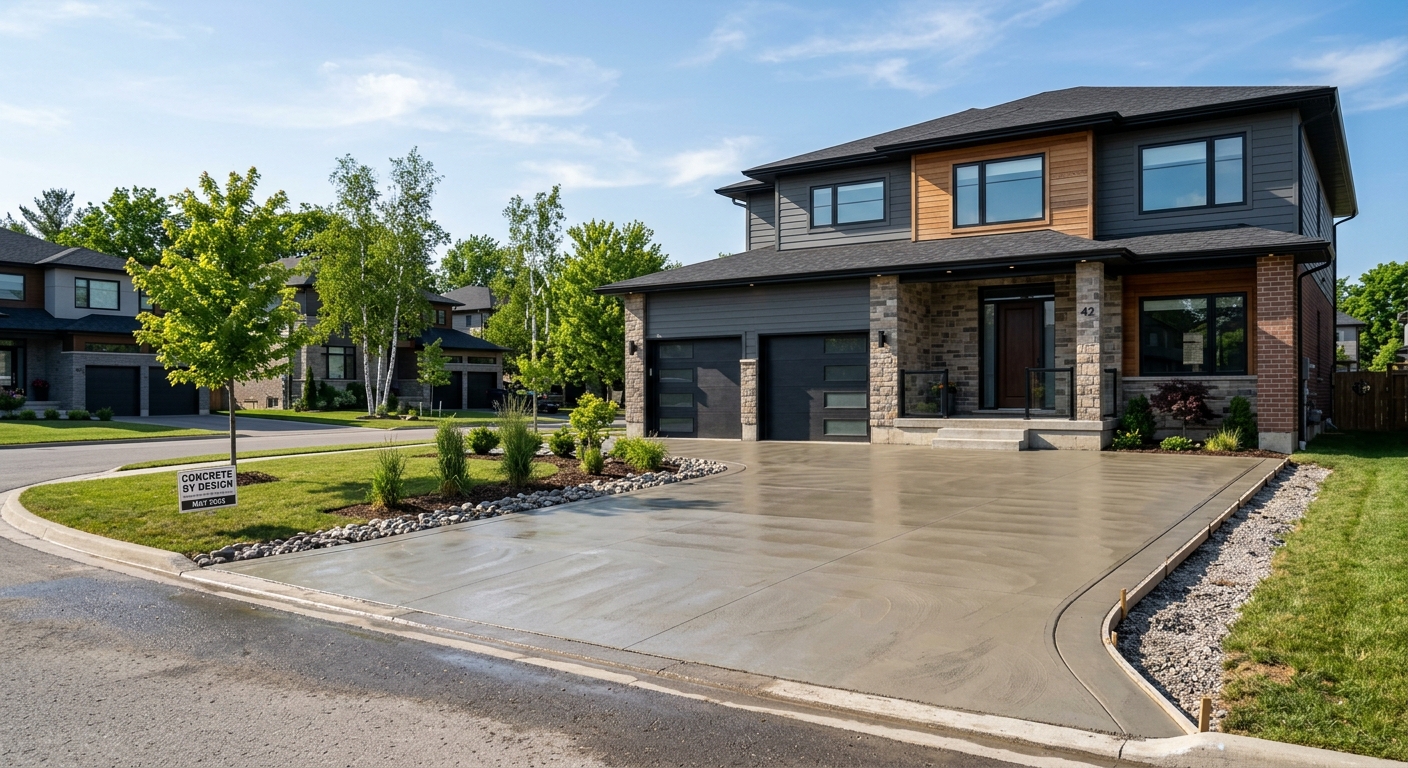
Concrete work options and costs in Old East York
In Old East York, concrete work is a year-round need, but it’s especially noticeable in older, established pockets where driveways and walkways were built decades ago and are now dealing with cracking and surface wear. With a 2021 population of 9,233 (Statistics Canada, 2021 Census), the neighbourhood isn’t huge—but the housing stock is active, and concrete contractors stay busy because exterior flatwork is one of the most common upgrades homeowners pursue. A lot of demand centres around the area near Danforth & Coxwell and the surrounding residential streets, where many properties rely on durable driveway and entry walk solutions that can handle Toronto’s freeze–thaw swing.
Toronto pricing is shaped by frost depth requirements and the way GTA conditions stress concrete every winter. For most structural work, footings need to extend below the design frost depth to reduce frost heave and differential movement, and exterior slabs typically use air-entrained mixes to survive repeated freezing cycles. Even if your project is “just a driveway,” the quote reflects the entire system: excavate, compact granular base, place proper mix, add joints where needed, then protect and cure so the concrete gains strength. When temperatures trend toward 10 °C or below, curing management becomes more labour- and materials-intensive, and that can push costs upward.
Across the Toronto market, pricing differences also come from finish choices and access. Standard broom-finish concrete is the most economical; stamped and exposed aggregate add material, tooling, and more labour. Below is a practical comparison to help you line up quotes against typical sizes, specs, and the local price bands.
| Application |
Typical Size |
Key Spec |
Finish Option |
Price Range |
| Concrete driveway (standard broom finish) |
10 m x 3 m (30 m²) |
4 in (100 mm) thickness, compacted granular base, air-entrained mix, control joints |
Broom finish with saw-cut joints |
$18,000–$28,000 |
| Exposed aggregate driveway |
10 m x 3 m (30 m²) |
Air-entrained concrete, proper surface retarder/exposure timing, reinforced base support |
Exposed aggregate with sealer |
$24,000–$34,000 |
| Stamped concrete driveway or patio |
10 m x 3 m (30 m²) |
Air-entrained mix, stamped pattern, integral colour/dry shake (as specified), joints |
Stone/brick/wood-look stamp + colour hardener |
$24,000–$40,000 |
| Plain concrete patio or walkway |
3 m x 6 m (18 m²) |
4 in (100 mm) thickness, well-compacted base, air-entrained mix, joints |
Broom or lightly textured finish |
$16,000–$26,000 |
| Garage floor (interior slab) |
7 m x 6 m (42 m²) |
Typically 4 in (100 mm), vapour control where required, fibre or mesh (per design) |
Power-trowel or broom finish |
$18,000–$30,000 |
| Foundation footings (structural, below frost) |
Varies by house; typical 40 linear m |
Below frost depth, engineered reinforcement, formwork, inspection-ready placement |
Unfinished structural concrete |
$180,000–$300,000 |
Prices are estimates only and vary by project scope, site access and material selection.
What affects the price of concrete work in Old East York
If you request two quotes for the same driveway or patio in Old East York, it’s not uncommon to see differences of 30–50% across the Toronto region. The main reason is that concrete pricing isn’t just “concrete in a box”—it’s the whole build-up: excavation, compaction, base thickness, reinforcement, mix design, and how the crew protects the pour and curing in our freeze–thaw climate. A contractor who prices for “minimum acceptable” specs will land lower than one who budgets for a robust air-entrained mix, careful jointing, and curing protection during shoulder-season weather.
In Ontario, frost depth and freeze–thaw cycles drive nearly every technical requirement for exterior work. Footings must extend below the design frost depth to prevent frost heave and differential movement, and exterior slabs are typically air-entrained so the paste can resist damage during repeated freezing. When colder conditions shorten the reliable pour season, crews may need cold-weather measures—insulating blankets, temporary heat, and extra coordination—which can add meaningful labour cost. Add de-icing salt to the equation and the surface layer becomes more vulnerable to spalling if the mix and curing weren’t right; sealing is often recommended to help reduce salt-driven surface breakdown.
In Old East York, cost also changes by site conditions. Properties with older, heaving bases under sidewalks or sunken approaches often require deeper excavation and regrading before any slab goes in. Conversely, a straightforward back-lot patio with easy truck access may stay closer to the lower end of the patio/walkway band (often around $16,000–$26,000). If you choose decorative work, stamped concrete can justify the mid-to-upper range (commonly $24–$40 per local band equivalent), especially when the prep is already being done for proper drainage and joints—otherwise you risk paying for aesthetics without fixing the root movement problem.
| Price Factor |
Why It Matters |
Cost Impact |
| Frost line depth — determines footing depth and form height |
Deeper frost protection requires more excavation, more formwork, and more concrete volume |
Can add substantial cost on structural pours; typically priced per linear foot/m³ plus haul and forming |
| Site preparation — excavation, grading, compacted granular base |
Toronto soils and seasonal moisture swings mean base failures show up as cracking and uneven slabs |
Often the biggest “quote swing” item; heavy removal or limited access can increase labour |
| Reinforcement — rebar or wire mesh requirement |
Reinforcement helps manage tensile cracking when loads and movement occur |
Moderate cost increase; can be small vs. the cost of remediation later |
| Mix design — air-entrainment and compressive strength spec |
Air-entrainment and strength targets affect freeze–thaw durability and long-term surface stability |
Moderate materials cost; essential for exterior flatwork in the GTA |
| Finish type — broom vs. stamped vs. exposed aggregate |
Decorative finishes require additional labour, materials and surface processes |
Usually the largest driver for non-standard aesthetics (often pushing projects toward the higher band) |
| Pour size and concrete truck access to site |
Large pours or tight access can require smaller loads, extra labour, or pumping |
Can materially raise costs if access forces extra handling |
| Cold-weather curing precautions — heating and blankets |
Proper curing is critical when temperatures fall; otherwise strength gain and surface durability suffer |
Added labour and materials; can increase overall price during fall/winter pours |
| Control joint pattern and sealing cost |
Joints manage shrinkage cracking; sealing helps reduce salt and moisture attack at the surface |
Typically incremental, but can prevent costly premature deterioration |
Permits & regulations in Ontario
In Ontario, structural concrete work usually requires a building permit, and it often involves engineered drawings that the municipality reviews. This includes footings, foundation walls, grade beams, and other elements that support or transfer loads. For exterior flatwork—driveways, patios, walkways, and similar slabs—permits are often not required by default, but they can come into play when the work affects lot grading, changes drainage patterns, impacts impervious surface coverage limits, or involves work within/near the municipal right-of-way. Because Old East York properties can have varied frontage and drainage considerations, always confirm requirements with the local authority before breaking ground.
For contractor readiness, verify basics before signing: ensure the company carries liability insurance and has WSIB/WCB clearance as required for work on Ontario sites. Then get proof in writing; don’t rely on verbal assurances.
Step-by-step for homeowners in Old East York:
- Confirm the concrete contractor’s Ontario licence/registration using the appropriate provincial/business listings for their trade category (search the contractor’s legal name).
- Request a Certificate of Insurance and verify the policy is current, with liability limits appropriate for your project.
- Ask for WSIB/WCB clearance (a clearance letter or current proof), then review the effective date.
- Check references for similar-size driveway/patio and structural footing jobs; ask for photos and the approximate timeline.
- When permits are required, insist the contractor coordinates inspection steps tied to the structural stage.
Doing these checks upfront helps prevent schedule and rework problems—especially important when frost depth and curing specifications must be met for durable results.
Getting concrete right in Old East York's freeze-thaw climate
Old East York’s freeze–thaw climate punishes concrete systems that aren’t designed as a whole. The most common failures I see after winter aren’t “mystery cracking”—they’re predictable: weak base compaction leading to settlement, inadequate air-entrainment causing freeze–thaw damage, and poor curing that leaves the surface too porous and prone to spalling. Toronto’s humid, often wet shoulder seasons also mean water management is crucial; if sub-base drainage is wrong, the freeze–thaw cycle can expand and contract the foundation material against your slab.
To spec the job correctly, focus on five things. First, base preparation: compacted granular sub-base to the correct depth for local soil and frost conditions, with proper grading so water drains away rather than pooling under edges. Second, mix design: specify air-entrainment (typically 5–7% air content for exterior flatwork) and minimum 32 MPa compressive strength for the concrete class used on your scope. Third, control joints: plan joint placement and spacing so shrinkage and temperature movement crack where you intend—not randomly. Fourth, curing: plan for at least 7 days of curing under proper conditions, and if temperatures drop toward 10 °C or below, use appropriate protection to keep the concrete gaining strength. Fifth, sealing: apply penetrating sealer after the cure period (commonly after 28 days) to better resist de-icing salt and moisture attack.
Here’s a realistic dollar example: a plain patio may land around the local band of $16,000–$26,000. Choosing stamped concrete can push you toward the $24,000–$40,000 range, and that difference is justified when the contractor is also doing the upgraded prep (base thickness, correct joints, and proper curing). If you pay for decoration but the base and jointing aren’t addressed, you’ll still see premature cracks and edge wear.
| Spec |
Why It Matters in Old East York |
What to Ask For |
Impact if Skipped |
| Compacted granular base (depth?) |
Proper compaction and thickness prevent settlement that turns into cracking and trip hazards through winter cycles |
Confirm base type and compacted depth for your soil and slab thickness |
More unevenness, faster cracking, and edge spalling |
| Air-entrained concrete mix (target air %?) |
Air bubbles help concrete resist damage from repeated freeze–thaw |
Ask for target air content (typically 5–7% for exterior flatwork) |
Higher risk of freeze-related scaling and spalling |
| Compressive strength (MPa rating) |
Strength gain supports durability under loads and environmental stress |
Confirm minimum 32 MPa (or the class required for your exposure) |
Surface wear and premature deterioration |
| Control joints (spacing per ACI guidelines) |
Joints control where cracking happens during shrinkage and temperature swings |
Request the planned joint spacing and timing (saw-cut schedule) |
Random cracks that can open and allow water ingress |
| Minimum 7-day curing period |
Durability depends on sufficient early strength development before cold hits |
Ask what curing method will be used and how cold-weather protection is handled |
Weaker, more porous concrete that is vulnerable to salt and freeze damage |
| Penetrating sealer (when applied after cure) |
Helps reduce moisture and chloride penetration from de-icing salts |
Confirm sealer type and that it’s applied after full cure (commonly after 28 days) |
Faster surface breakdown and more frequent cleaning/sealing needs |
How to choose a concrete work contractor in Old East York
Choosing the right contractor matters more in Old East York than in milder climates because small shortcuts—thin base, the wrong mix, rushed curing—show up quickly as cracking and spalling. Start with Ontario checks: request proof of liability insurance and current WSIB/WCB clearance, then verify the effective dates match your project window. For licensing/registration, confirm the contractor’s trade authorization through the appropriate Ontario listings for their business and trade category, and ensure the company is using the legal entity named on the quote.
Next, get 2–3 itemised written quotes rather than one all-in number. A good quote breaks labour and materials separately (excavation, forms, rebar/mesh, concrete supply, finish labour, sealing, and removal/disposal). Review what’s included: Is the permit pull included when required? Is demolition disposal handled? Who protects surrounding landscaping? If access is tight (common on many Old East York lots), ask whether they will use pumping or smaller loads, and how that affects labour and cost.
For warranty, ask for both workmanship coverage and any product/manufacturer warranty tied to concrete admixtures or sealing materials. Clarify whether the warranty is transferable if you sell the home. On payment, never allow a large upfront deposit—typically keep it to 10–15%—and insist on a holdback until the job is complete and cleaned up.
Finally, demand a written start date and completion estimate. In the GTA, weather can shift timelines, but credible contractors will plan for curing and protection and will communicate how they’ll handle temperatures approaching 10 °C.
- Confirm liability insurance limits and that they’re current.
- Request WSIB/WCB clearance proof (not just a verbal statement).
- Verify the contractor’s Ontario registration/licence information through public listings.
- Ask for an itemised labour/material quote (avoid “lump sum with exclusions”).
- Confirm base prep details: base type, thickness, and compaction requirements.
- Require air-entrainment and minimum strength specs for exterior work.
- Ask about reinforcement: rebar vs. mesh and where it’s placed.
- Review joint layout: spacing, edge details, and saw-cut timing.
- Ask how curing is handled, especially if temperatures drop.
- Confirm whether penetrating sealer is included and when it will be applied.
- Clarify demolition and disposal: hauled away or stockpiled on site.
- Use a payment schedule with a holdback until final cleanup and walkthrough.
Concrete contractor red flags in Old East York: they won’t discuss air-entrainment or curing, they minimize excavation depth (“we’ll pour over whatever’s there”), they avoid joint spacing details, they only provide a vague lump-sum estimate with many exclusions, or they ask for most payment upfront before forms and base work are verified.
Frequently asked questions — concrete work in Old East York
What is air-entrained concrete and why does it matter here?
Air-entrained concrete is mixed with microscopic air bubbles that give freezing water somewhere to expand, which helps prevent damage during freeze–thaw cycles. In Old East York and across Ontario, exterior flatwork is exposed to repeated winters, plus de-icing salts in many neighbourhoods, so air-entrainment is a durability requirement—not a luxury. That’s why reputable GTA contractors typically specify air-entrained mixes for driveways and patios, especially when temps can fall toward 10 °C or below during the pour/cure window. If you’re comparing quotes, look for explicit mention of air-entrainment and durability specs; skipping them can lead to early scaling and spalling, even if the concrete looks fine right after placement. Projects often land within the local driveway band of $18,000–$28,000, but the cheaper “no-spec” mix can cost more over time.
How do I prepare the base for a concrete slab?
Base prep is where durable slabs are won or lost. For Old East York, you want the contractor to excavate to the correct depth, remove topsoil/unsuitable material, and then place a compacted granular sub-base designed for local frost and drainage conditions. The contractor should confirm grading so surface water flows away from the slab, not toward it or under it. Proper compaction is usually done in lifts with a plate compactor or similar equipment until the base is stable. If the base is undersized or poorly compacted, you’ll see settlement and cracking—especially after winter. When you review a quote for a patio or walkway (often around $16,000–$26,000), ask them to specify base thickness, compaction method, and drainage/edge details rather than only slab thickness.
How do I compare concrete quotes?
Comparing quotes is mostly about like-for-like scope. In Ontario and in Old East York specifically, the cheapest number can come from thinner base, different mix spec, or missing curing/protection steps. Ask for itemised quotes that break out demolition/excavation, granular base and compaction, reinforcement, concrete mix details (including air-entrainment), finish labour, and sealing (if applicable). Confirm joint pattern and timing (saw-cut schedule) because jointing affects where cracks show up. Also check exclusions: disposal, permit coordination (when required), and protection of landscaping. For driveway work, compare within the typical band of $18,000–$28,000 for standard broom-finish projects; if a stamped quote is near that number, ask what you’re not getting. A credible quote explains curing and winter protection rather than just promising “we’ll pour anyway.”
Can concrete be poured in cold weather in Old East York?
Yes, concrete can be poured in cold weather in Old East York, but it requires control of temperature and curing conditions. When air temperatures start approaching 10 °C or below, you can’t treat curing as optional—strength gain slows and early freezing can weaken the concrete. That’s why contractors often schedule pours for warmer stretches and, when needed, use cold-weather curing precautions such as insulating blankets, maintaining temperature, and protecting the surface until it reaches adequate strength. Your quote should spell out what they will do during cold snaps and how long the protection will be in place. If you’re planning work around fall/winter and one contractor can’t describe their cold-weather plan, that’s a major warning. Even if pricing appears in the normal bands (for example, exterior flatwork around $16,000–$26,000), a poor curing plan can shorten the service life and lead to spalling.
How do I maintain concrete in Old East York's freeze-thaw climate?
Maintenance is mostly about limiting moisture and salt attack. In Old East York, avoid letting water sit at slab edges or pooling in low spots—if you notice depressions, address drainage and regrade rather than simply patching cracks. Keep de-icing practices reasonable; aggressive salt use can accelerate surface wear. A common durability step is applying a penetrating sealer after the concrete has cured (often after 28 days). For exterior slabs, sealing helps repel water and reduce chloride penetration that contributes to spalling. You should also clean debris and organic buildup promptly; it holds moisture against the surface. Inspect seasonally for small cracks: joints may develop minor separation, but widening cracks or raised edges are signs the base/drainage needs attention. Well-installed driveway and patio systems priced around $18,000–$28,000 or higher depend on this basic upkeep.
What causes concrete to spall in Old East York winters?
Concrete spalls in Ontario winters primarily because water and dissolved salts get into the surface, then freeze and expand—pushing material off the surface layer. In Old East York, the risk rises when air-entrainment is missing or insufficient, when curing is rushed (so the concrete isn’t strong and dense enough), and when water gets to vulnerable areas like joint edges and poorly drained transitions. Settlement from inadequate granular base compaction also creates localized cracking, letting water penetrate more deeply. De-icing salt intensifies the problem by driving chloride ions toward the surface and worsening deterioration. That’s why the best bids include air-entrained concrete specs, proper joint spacing, adequate curing time, and (for exterior work) penetrating sealing after cure. If a quote doesn’t clearly cover these points, the “low price” can be the reason for rapid spalling after just a few winters.