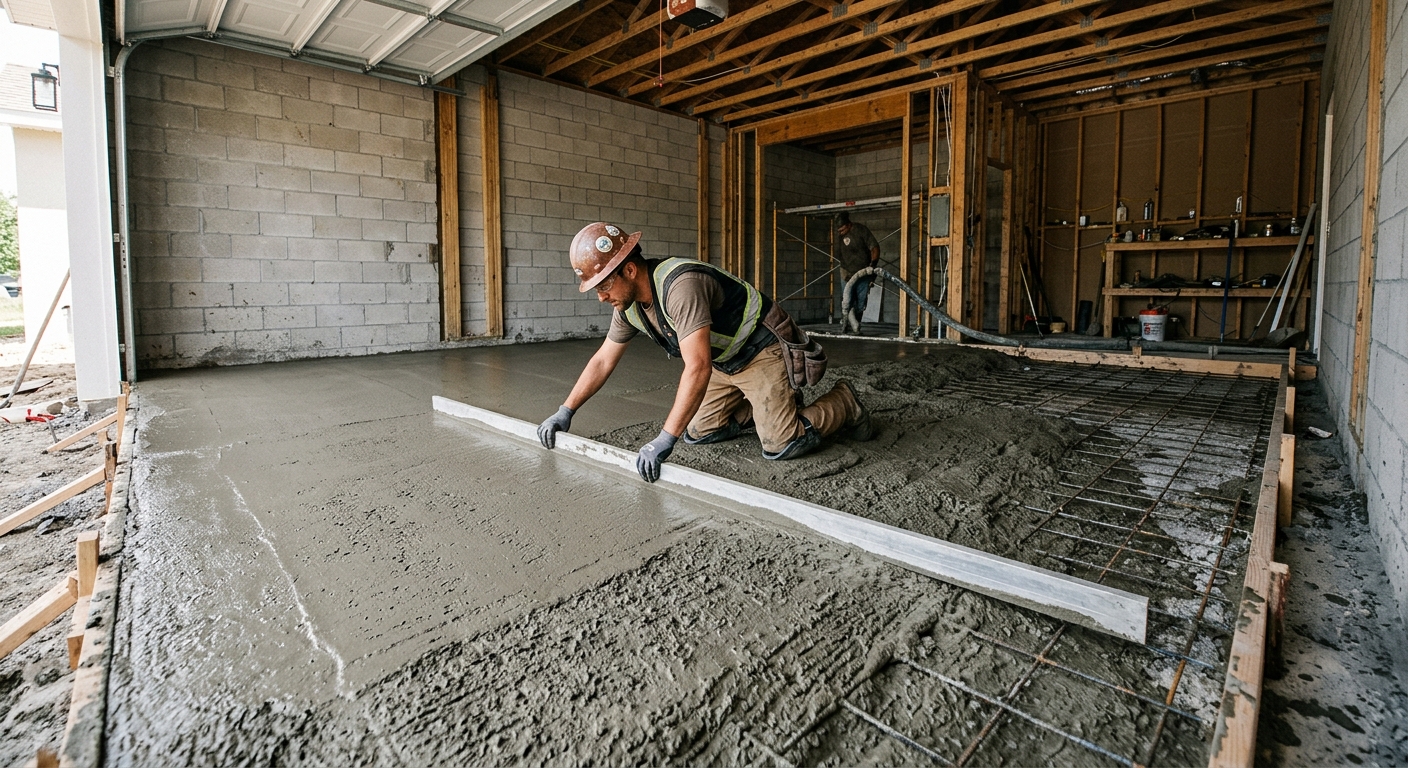
Concrete work options and costs in Clanton Park
Clanton Park, Ontario is one of those Toronto-area neighbourhoods where homeowners constantly weigh the look and lifespan of concrete against the reality of winter freeze–thaw. With a population of 16,472 in the local area (Statistics Canada, 2021 Census), the demand for driveways, patios and walkway repairs stays steady—especially around family homes on the streets near Danforth Avenue and in the broader Clanton Park/Bedford Park-adjacent fabric. Concrete flatwork is a common upgrade in this part of the city because it handles daily traffic well, and it can be tailored to match older and newer landscaping styles.
In the Toronto economic region, costs are strongly driven by frost depth and freeze–thaw cycles. Footings for structural work generally need to extend at least 1.2 m (about 4 ft) below grade to reduce frost heave and differential movement. For exterior slabs—driveways, patios, and walkways—Toronto crews typically price in air-entrained mixes, better drainage, and control joints to manage cracking. Pour timing also matters: contractors prefer the warmer months for reliable curing, and cold snaps near 10 °C can require additional protection like insulating blankets or temporary heat. That’s why you’ll sometimes see wider quote differences here than in milder seasons.
Below is a practical cost comparison for typical projects in Clanton Park. Use it to sanity-check proposals before you start comparing details like base prep, reinforcement, and finish materials.
| Application |
Typical Size |
Key Spec |
Finish Option |
Price Range |
| Concrete driveway (standard broom finish) |
400–600 sq ft |
Air-entrained mix, compacted granular base, control joints |
Broom finish |
$18,000 – $28,000 |
| Exposed aggregate driveway |
400–600 sq ft |
Air-entrained mix, proper curing, higher finish labour |
Exposed aggregate (wash) |
$22,000 – $34,000 |
| Stamped concrete driveway or patio |
300–700 sq ft |
Air-entrained mix, integral colour, release agent + seal |
Stamped pattern (brick/stone look) |
$24,000 – $40,000 |
| Plain concrete patio or walkway |
150–400 sq ft |
Compacted base, slope for drainage, joints where needed |
Float + light broom (or broom where exposed) |
$16,000 – $26,000 |
| Garage floor (interior slab) |
250–600 sq ft |
Vapour considerations, thickened edges as needed |
Concrete finish (broom or smooth steel-trowel) |
$8,000 – $16,000 |
| Foundation footings (structural, below frost) |
Per project; typical home runs 30–80 ln ft |
Below-grade structural concrete, rebar per drawings, excavation + forms |
Structural finish (not cosmetic) |
$18,000 – $30,000 |
Prices are estimates only and vary by project scope, site access and material selection.
What affects the price of concrete work in Clanton Park
In Toronto (and around Clanton Park), you can see quotes for the “same” concrete job vary by about 30–50% because the budget often comes down to the hidden parts: how deep the base is, how much excavation is needed, whether reinforcement is included, and whether the contractor is planning for freeze–thaw curing instead of rushing a pour. Two driveways can both be “500 sq ft,” yet one uses proper compacted granular base, air-entrained concrete, and a sensible joint plan—while the other simply pours over softer subgrade. That difference is exactly what creates the biggest price spread.
Frost depth and freeze–thaw cycles dictate every structural decision. In Ontario, structural footings are typically required to extend below the design frost depth; in practice that means crews planning for at least 1.2 m to reduce frost heave and differential movement. Exterior slabs also generally require air-entrained mixes to survive repeated freezing and thawing. When temperatures drop toward 10 °C or below, cold-weather curing precautions—insulating blankets, wind protection, or temporary heating—can add labour and materials. De-icing salt in the GTA can accelerate surface spalling if the mix, curing, or sealing isn’t handled correctly.
Here are a few Clanton Park examples that push costs up or down: (1) long driveway approaches with soft topsoil or tree-root disturbance can add excavation and granular replacement; (2) sites with limited truck access (narrow laneways, parked cars, or tight turns near older streets) can require smaller pours or additional labour for material handling; and (3) if you choose stamped concrete, you’re paying for colour, pattern labour, and a proper seal—commonly putting you into the $24–$40 band. On the other hand, a plain patio or walkway with straightforward grading typically aligns more with the $16–$26 band, assuming base prep is still done right.
| Price Factor |
Why It Matters |
Cost Impact |
| Frost line depth — determines footing depth and form height |
Deeper footings require more excavation, concrete, and formwork to prevent frost heave |
Often +10–25% on structural scopes |
| Site preparation — excavation, grading, compacted granular base |
Proper base prevents settlement and keeps slabs stable through freeze–thaw |
Can swing +15–30% depending on soil/haul distance |
| Reinforcement — rebar or wire mesh requirement |
Helps control cracking and improves load capacity for driveways/garage slabs |
Typically +3–12% (higher if rebar spacing is dense) |
| Mix design — air-entrainment and compressive strength spec |
Air-entrained concrete resists freeze–thaw damage; strength affects durability |
Usually +5–15% but reduces failure risk |
| Finish type — broom vs. stamped vs. exposed aggregate |
Decorative work requires extra materials and skilled labour time |
Stamped/exposed often +25–60% vs broom |
| Pour size and concrete truck access to site |
Limited access increases labour and can force smaller placements |
Commonly +5–20% |
| Cold-weather curing precautions — heating and blankets |
Protects concrete gain strength when temperatures fall; improves long-term performance |
Can add +8–25% when done properly |
| Control joint pattern and sealing cost |
Joints reduce random cracking; sealing helps repel de-icing salt damage |
Often +2–10% with major durability payoff |
Permits & regulations in Ontario
In Ontario, structural concrete work generally needs a building permit, especially where it affects the foundation system. That means things like footings, foundation walls, and grade beams are typically pulled under the permit process, often with engineered drawings reviewed by the municipality. For cosmetic or light exterior flatwork—driveways, patios and walkways—permits are usually not required unless the work changes lot grading, impacts drainage patterns, increases impervious surface coverage beyond what the municipality allows, or affects municipal right-of-way areas (for example, tying into a boulevard or altering stormwater flow). Even then, the permit need depends on the scope, so it’s worth confirming before breaking ground.
From a homeowner’s perspective in Clanton Park, the verification steps are straightforward. First, ask for a copy of the contractor’s liability insurance certificate—this should list you as an additional insured where appropriate. Second, confirm they have WSIB coverage (or WCB coverage where applicable in their work structure) and ask for a clearance letter or proof of coverage. Third, for structural work, ensure the company is operating under the right licensing/registrations for the activities they’re performing; reputable firms will volunteer their documentation rather than make you chase it.
Finally, request references from similar-sized projects in the GTA and make sure your quote clearly states who pulls the permit (if required), who handles excavation/haul and whether inspections are included.
Getting concrete right in Clanton Park's freeze-thaw climate
Concrete failures in Clanton Park almost always trace back to one of five things: weak base preparation, inadequate thickness, poor mix design, a rushed pour/cure, or skipping joints and sealing. Toronto’s freeze–thaw rhythm punishes concrete surfaces that aren’t air-entrained and that don’t have enough room to crack under movement. That’s why, even if your property “looks flat,” the spec has to be built around ground movement and seasonal moisture.
To spec your job correctly, start with (1) base preparation: compacted granular sub-base to the right depth for local soil conditions, with proper slope and drainage so water doesn’t sit under the slab. Next, (2) mix design: for exterior flatwork, contractors commonly target 5–7% air content and a minimum 32 MPa compressive strength, using air-entrainment to reduce freeze damage. Then (3) control joints: spacing should be planned to limit random cracking to predictable lines. (4) curing: plan for a minimum 7-day cure under appropriate conditions, which is especially important when temps trend down; cold-weather protection can be necessary to avoid surface scabbing or strength loss. Finally, (5) sealing: a penetrating sealer is typically applied 28 days after the pour to repel de-icing salts.
Ask technical questions that catch the most expensive mistakes early. For example, spalling from de-icing is commonly tied to inadequate air-entrainment. If you’re comparing options, it’s normal to see stamped concrete priced in the $24–$40 range because labour and materials add up; the key is that a standard broom driveway can still meet durability requirements. Spending extra on correct base prep and air-entrained mix is usually a better “return” than paying for a fancier finish without durability fundamentals.
| Spec |
Why It Matters in Clanton Park |
What to Ask For |
Impact if Skipped |
| Compacted granular base (depth?) |
Stabilizes soil so the slab doesn’t settle or pump with freeze–thaw moisture |
Base depth to match soil conditions + compaction testing method |
Cracking, uneven surfaces, early failure |
| Air-entrained concrete mix (target air %?) |
Air voids provide room for freezing water to expand without damaging paste |
Target 5–7% air for exterior flatwork |
Spalling and surface scaling within a few winters |
| Compressive strength (MPa rating) |
Strength gain controls durability and resistance to traffic/load |
Minimum 32 MPa (confirm mix design on the proposal) |
Lower long-term wear resistance and faster deterioration |
| Control joints (spacing per ACI guidelines) |
Limits random cracking and directs shrinkage cracks to controlled lines |
Proposed joint layout and saw-cut timing |
Random cracks that spread and collect salt/water |
| Minimum 7-day curing period |
Cold nights and spring/fall temperature swings can interrupt strength development |
Protection plan if temperatures drop (blankets/heating) |
Surface weakness, increased cracking and scaling |
| Penetrating sealer (when applied after cure) |
Helps repel de-icing salts that can accelerate spalling |
Penetrating sealer after 28 days cure (confirm product type) |
Salt intrusion, staining, and earlier surface breakdown |
How to choose a concrete work contractor in Clanton Park
Choosing a contractor in Clanton Park is mostly about proof. Start by verifying Ontario requirements and jobsite coverage. Ask for their liability insurance certificate (with policy limits appropriate for your project) and confirmation of WSIB/WCB coverage. To check, look for an active certificate date, the insured party name matching the company you’re hiring, and coverage consistent with the work you’re approving. If they won’t provide documentation or act cagey about it, move on.
Next, get two to three itemised written quotes that break labour and materials instead of one vague lump sum. You want line items for excavation/grading, compacted granular base, reinforcement (if included), the concrete mix specs, finishing, curing protection, saw-cut joints, and any sealing. Confirm what’s excluded: disposal/haul away, removal of old concrete, or adjustments for thickened edges and slope corrections. Also ask whether a permit (when required for structural work) is pulled and who pays for it.
Warranty matters too. A good workmanship warranty is specific about what it covers (for example, workmanship-related cracking under normal conditions) and for how long. Confirm product/manufacturer warranties separately and whether they’re transferable. Keep payment scheduling sensible: never pay more than 10–15% upfront, and hold back a portion until the work is complete and cleaned up. Get a written timeline with a start date and completion estimate, since Toronto weather can impact curing.
- Ask for air-entrained mix confirmation and where it’s stated in the quote
- Request the proposed base depth and compaction approach
- Confirm reinforcement scope (mesh/rebar) and thickness assumptions
- Verify joint layout (spacing and saw-cut timing)
- Check curing protection plan for cold nights
- Get finishing details: broom type, exposed aggregate method, or stamping process
- Confirm sealing product and when it’s applied (28 days is typical)
- Require disposal/haul away to be specified clearly
- Ask about site access and how they’ll handle traffic control
- Review warranty terms in writing and ask what triggers a claim
- Use a payment schedule with a holdback until punch list completion
- Ensure they can provide references from similar GTA projects
Red flags I see in Clanton Park include: quotes that don’t mention air-entrainment for exterior work, missing base depth details or compaction method, no joint plan (or joints “later if needed”), vague curing/season assumptions, and contractors who demand large deposits before any schedule or materials are confirmed.
Frequently asked questions — concrete work in Clanton Park
Do I need a permit for concrete work in Ontario?
In Ontario, permit needs depend on what concrete you’re installing. Structural foundation work—like footings, foundation walls, and grade beams—typically requires a building permit and often engineered drawings that the municipality reviews. For flatwork such as driveways, patios, and walkways, permits are usually not required unless the work changes lot grading, impacts drainage, increases impervious surface coverage beyond allowed limits, or affects municipal right-of-way. Because Clanton Park properties vary (and many are older with established drainage patterns), it’s smart to confirm before you pour. For contractor accountability, ask if they’re handling any permit pull, and verify they carry liability insurance and WSIB coverage before work starts.
Concrete vs pavers for a patio in Clanton Park?
Concrete and pavers can both work well in Clanton Park, but freeze–thaw changes the durability conversation. Pavers can be easier to repair locally if one section settles, while concrete provides a monolithic surface that resists movement when the base is done properly. The biggest deciding factor is base preparation: both systems fail when the sub-base is poorly compacted or drainage is wrong. If you want a low-maintenance, long-lived surface with fewer seams, a concrete patio is often the stronger choice—especially when priced reasonably in the $16,000 – $26,000 range for typical scopes. If you expect frequent landscaping changes or utility access, pavers may be worth it despite more joints. Either way, ask for joint/crack-control details and sealing or edge restraint plans.
How long does a concrete driveway last?
A well-built concrete driveway in Clanton Park can last decades, but “lifespan” depends on how it was built for Toronto’s freeze–thaw cycles. The essentials are air-entrained concrete for exterior durability, proper base depth and compaction, correct slopes for drainage, and a control joint pattern to prevent random cracking. Sealing helps repel de-icing salts that can accelerate surface scaling. If you choose standard broom-finished concrete in the usual $18,000 – $28,000 band and the contractor actually specs the durability details, it’s realistic to expect long service life. If a driveway is poured too thin, over soft subgrade, or without adequate air entrainment, you can see deterioration within a few winters. When you compare quotes, look for mix and base specs—not just the finish.
What is air-entrained concrete and why does it matter here?
Air-entrained concrete is mixed with microscopic air bubbles that help the cement paste tolerate freezing and thawing. In Ontario—including Clanton Park—the repeated freeze–thaw cycle turns trapped water into an expansion problem. Without adequate air entrainment, concrete can spall (surface flaking) and scale under de-icing salt exposure. That’s why serious GTA contractors build their exterior concrete proposals around air content and curing protection, not just thickness. When you’re reviewing your quote, ask whether the mix is specified as air-entrained and what the target air content is for your slab. For exterior flatwork, a common target is around 5–7% air depending on the mix design. This is one of the biggest reasons quote differences can be large—because the “cheaper” option may skip durability requirements.
How do I prepare the base for a concrete slab?
Base preparation is where long-term performance is won or lost in Clanton Park. The contractor should excavate to the correct depth for your soil conditions, then place and compact a granular sub-base in lifts to achieve stable support. The slab must also be sloped for drainage so water doesn’t collect beneath the concrete, which can worsen freeze–thaw movement. A proper base includes well-compacted granular material (often with verification through compaction procedures) and a clear plan for any soft spots, tree-root areas, or topsoil removal. If you’re comparing bids, don’t accept “we’ll prep the base” as a vague statement. Ask for base depth, compaction approach, and confirmation of whether reinforcement and thickened edges (where needed) are included. Skipping or under-compacting the base can lead to settlement and cracking even when the finishing looks great at first.
How do I compare concrete quotes?
To compare concrete quotes fairly in Clanton Park, insist on itemised scope details. Start by confirming the same basic items are included: concrete mix spec (including air-entrainment for exterior work), slab thickness assumptions, reinforcement (rebar/mesh), base depth and compaction method, drainage slope, and control joint layout. Then compare finishing—broom vs stamped vs exposed aggregate—because that’s where decorative premiums often land in the $24,000 – $40,000 range for typical driveways/patios. Also check logistics: concrete truck access, disposal/haul-away of old material, and whether permits are included when structural work requires them. Finally, look at curing and cold-weather protection—toronto-area pricing often changes when temperatures trend toward 10 °C or below. A quote that’s cheaper but vague about mix, base, joints or curing is usually not a true apples-to-apples comparison.