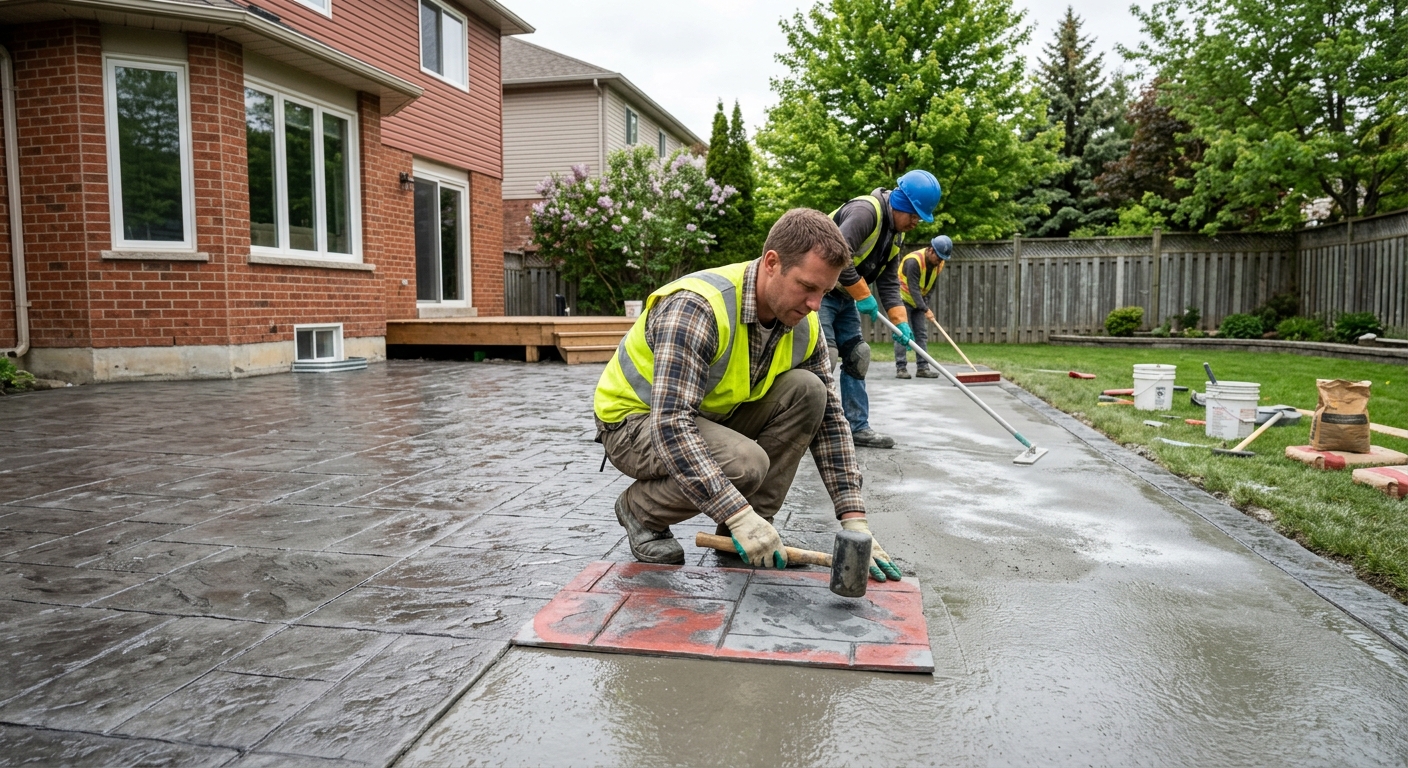
Concrete work options and costs in Moss Park
Moss Park, Ontario sits right inside the Toronto market where concrete pricing is tightly linked to frost depth, freeze–thaw cycles, and how the contractor manages curing. In 2021, Moss Park had a population of 20,506 (Statistics Canada, 2021 Census), and the area’s housing stock is built to handle winters with frequent temperature swings. That means exterior concrete—driveways, patios, and walkways—needs the right base prep, air-entrained mix design, and joints that control cracking.
When you compare quotes in Toronto, the same “flatwork” project can come in noticeably different. In Moss Park’s neighbourhoods near the Don Valley corridor, where soil can be mixed fill and access can be tight, contractors spend more time on excavation, drainage details, and getting equipment and trucks staged without damaging landscaping or curbs. This is exactly where availability and labour rates in the Toronto economic region matter: crews are booked earlier in the pour season because cold nights and wet shoulder seasons can extend prep and protection time.
As a homeowner, you usually have four common directions: standard broom-finished concrete for value, exposed aggregate for a more textured look, stamped concrete for a higher-end appearance, and decorative options for driveways and patios where curb appeal is a priority. For structural work, foundation footings are a different category—measured, engineered, and placed to go below design frost. Use the table below to benchmark typical budget ranges before you request itemised quotes.
| Application |
Typical Size |
Key Spec |
Finish Option |
Price Range |
| Concrete driveway (standard broom finish) |
400–600 sq. ft. |
Air-entrained exterior mix; compacted granular base; control joints |
Broom finish, straight edges |
$10,000–$16,800 |
| Exposed aggregate driveway |
400–600 sq. ft. |
Air-entrained mix; retarder/exposure process; proper curing |
Exposed 3/8 in aggregate; slip-resistant texture |
$12,000–$20,000 |
| Stamped concrete driveway or patio |
300–500 sq. ft. |
Air-entrained exterior mix; integral colour; control joints |
Patterned stamp (wood/stone look) |
$9,000–$20,000 |
| Plain concrete patio or walkway |
200–350 sq. ft. |
Compacted base; air-entrainment; slope to drainage |
Float/trowel then light broom |
$3,200–$9,100 |
| Garage floor (interior slab) |
300–600 sq. ft. |
Vapour barrier; fibre or mesh; joints per plan |
Smooth trowel, optional broom edge |
$5,400–$14,000 |
| Foundation footings (structural, below frost) |
As per engineered layout |
Excavate to required depth; reinforced concrete; waterproofing interfaces |
Wall footings / grade beam work |
$3,600–$12,000 |
Prices are estimates only and vary by project scope, site access and material selection.
What affects the price of concrete work in Moss Park
Concrete quotes in Moss Park can swing by 30–50% for the same “looks similar” job because contractors price the hidden work: excavation depth, base thickness, drainage corrections, reinforcement, mix specifications, and how much time is needed to protect and cure in Toronto’s weather. Even small differences in subgrade condition or disposal can drive cost up fast, especially where streets are busy and truck access is limited.
In the Toronto economic region, frost depth and freeze–thaw cycles dictate design and labour. Structural footings generally must extend below design frost to prevent frost heave and differential movement, which increases formwork, rebar labour, and excavation. For exterior flatwork, well-compacted granular base and proper drainage are critical so saturated soils do not expand and contract against the slab every winter. Because repeated freeze–thaw can damage surfaces, contractors typically specify air-entrained concrete mixes and control joints to manage cracking.
Cold-weather scheduling adds another cost layer: exterior pours are often concentrated in warmer months, and when temperatures drop toward 10 °C or below, crews may need insulation blankets or heating enclosures to keep curing on track. That protection time can push labour and equipment costs up. De-icing salt later in the season accelerates spalling risks, so sealing and surface protection become part of long-term cost control.
Here are a few Moss Park examples: a driveway on soft or variable fill may require thicker granular base and extra grading, increasing the driveway cost bracket (often anchored around the Toronto slab band near $18–$28 per sq. ft.). A stamped patio usually prices higher because colour hardeners, release agents, and additional labour time are required—often landing closer to the stamped band near $24–$40 per sq. ft. Versus a plain walkway, that difference is justified when you want a decorative finish that still meets freeze–thaw durability requirements.
| Price Factor |
Why It Matters |
Cost Impact |
| Frost line depth |
Determines footing depth and form height |
Higher excavation and rebar/formwork labour can add thousands |
| Site preparation |
Excavation, grading, compacted granular base |
Soft subgrade and disposal increase base-build cost |
| Reinforcement |
Rebar or wire mesh requirement |
Material + labour increases, especially for driveways and footings |
| Mix design |
Air-entrainment and compressive strength spec |
Better durability costs more but reduces winter surface failure risk |
| Finish type |
Broom vs. stamped vs. exposed aggregate |
Decorative processes add labour, materials, and cure/protection steps |
| Pour size and concrete truck access to site |
Placement speed and staging feasibility |
Limited access can require smaller loads or extra time |
| Cold-weather curing precautions |
Heating and blankets |
Equipment and labour time can increase significantly |
| Control joint pattern and sealing cost |
Controls cracking and protects from de-icing salt |
Proper joints reduce random cracking; sealing adds materials and labour |
Permits & regulations in Ontario
In Ontario, structural concrete work generally needs a building permit, and municipalities often require engineered drawings for foundation systems. This includes items like concrete footings, foundation walls, and grade beams—work that affects structural capacity and how the building moves with frost and settlement. For Moss Park homeowners, that means the job is typically reviewed for compliance before any concrete is placed.
Concrete flatwork—such as patios, walkways, and standard residential driveways—often does not require a permit. However, it may trigger review if it changes lot grading, affects drainage direction, increases impervious surface coverage beyond local allowances, or involves work near municipal right-of-way or driveway entrances. If your proposed slab ties into a foundation wall or modifies how water is shed, confirm with the municipality before breaking ground.
Before you hire, verify the contractor carries liability insurance and has required workers’ coverage for their crew (WSIB/WCB depending on coverage arrangements). Here’s a simple step-by-step process for Moss Park:
- Request the contractor’s certificate of insurance (COI) and confirm it lists your project address and adequate limits.
- Ask for WSIB/WCB clearance and/or account details, then confirm with the information provided.
- Check the Ontario contractor licence/registration status through the appropriate provincial registry listings (many contractors list this on their website; you should still verify independently).
- Ask for references on similar foundation or exterior flatwork projects in the GTA.
- Confirm whether permits are required and who pulls them; get it in writing.
Getting concrete right in Moss Park's freeze-thaw climate
Concrete failure in Moss Park typically comes down to three issues: inadequate base preparation, incorrect mix/air entrainment, and poorly managed curing—then everything accelerates under Toronto’s freeze–thaw cycles. When water gets into the slab or the base isn’t compacted to a stable depth, the ground can move and the concrete can crack. The most common exterior complaint is surface spalling: the surface breaks down when there isn’t enough air entrainment to protect the paste during winter temperature swings and when de-icing salts attack an unprotected surface.
To spec the job correctly, focus on five areas. First is base preparation: use compacted granular sub-base to the required depth for your soil and frost considerations, and ensure proper slope and drainage so the slab isn’t sitting on saturated material. Second is mix design: for exterior flatwork, ask for air-entrained concrete with 5–7% air content and a minimum 32 MPa compressive strength. Third is control joints: spacing should limit random cracking so joints take the stress, not the middle of the slab. Fourth is curing: plan for at least 7 days of curing under proper conditions, and protect the concrete if the forecast cools—when temperatures drop toward 10 °C or below, crews may need insulation blankets or heating to maintain curing. Fifth is sealing: apply a penetrating sealer after the cure period (often around 28 days) so the surface can better repel de-icing salt.
As a cost example, a plain patio may price closer to the Toronto patio band around $16–$26 per sq. ft., while a stamped option may land near $24–$40 per sq. ft. If the decorative mix and curing steps are handled correctly, that extra cost is justified for curb appeal without sacrificing durability.
| Spec |
Why It Matters in Moss Park |
What to Ask For |
Impact if Skipped |
| Compacted granular base (depth?) |
Stable support limits movement during freeze–thaw |
“What base thickness and granular depth will you compact to for my soil?” |
Settlement and cracking; water pooling under slab |
| Air-entrained concrete mix (target air %?) |
Protects paste against winter scaling and spalling |
“Confirm 5–7% air content for exterior flatwork.” |
Higher risk of surface spalling in Ontario winters |
| Compressive strength (MPa rating) |
Ensures structural capacity and wear resistance |
“Will you meet minimum 32 MPa for the slab?” |
Premature wear, cracking, and reduced durability |
| Control joints (spacing per ACI guidelines) |
Controls where cracks form during temperature movement |
“What joint spacing pattern will you use and where will joints fall?” |
Random cracking and uneven edges |
| Minimum 7-day curing period |
Strength gain and durability depend on curing conditions |
“What curing protection will you use if nights are cool?” |
Weaker concrete; increased risk of early damage |
| Penetrating sealer (when applied after cure) |
Helps repel de-icing salts used through Toronto winters |
“Apply penetrating sealer after cure (around 28 days)—confirm product and timing.” |
Faster scaling and staining; shorter service life |
How to choose a concrete work contractor in Moss Park
Choosing a concrete contractor in Moss Park is mostly about verification and clarity. Start with Ontario licensing/registration and proof of coverage. Ask for the contractor’s liability insurance certificate (COI) and verify workers’ coverage status for the crew (WSIB/WCB clearance or account information as applicable). Then check their registration/licensing independently through the provincial registry sources—don’t rely solely on what’s on a website.
Next, request 2–3 written, itemised quotes instead of one lump-sum number. A strong quote breaks down labour and materials (concrete supply, excavation, granular base, reinforcement, forming, finishing, and sealing). Confirm whether permits are included or handled separately, and whether disposal and compaction testing (if required) are part of scope. You want wording that clearly shows what’s excluded: topsoil replacement, any drainage improvements, crack-chasing repairs, or changes if soft subgrade is discovered.
Warranty matters in exterior flatwork because the freeze–thaw cycle can expose weak details within a season or two. Ask for a workmanship warranty length, whether product warranties apply to any concrete additives/sealer, and whether warranties are transferable if you sell the home. Payment should also be sensible: never pay more than 10–15% upfront, and hold back funds until you’ve confirmed finish quality, joint sealing, and cleanup.
Finally, get a start date and completion timeline in writing, including curing/protection steps if weather shifts. In Toronto, scheduling and protection are not “extras”—they’re part of the system.
- Provide COI with your address and confirm insurance limits
- Provide WSIB/WCB clearance information for their workers
- Show Ontario registration/licence verification (and you confirm it)
- Use itemised quotes (labour + materials), not only lump sums
- Confirm excavation depth, base thickness, and compaction method
- Specify air-entrainment and minimum 32 MPa strength in writing
- Describe reinforcement (mesh/rebar) and where it’s placed
- Explain joint spacing and sealing plan for exterior slabs
- Include curing protection steps for nights near 10 °C or below
- Confirm disposal/haul-away is included or priced separately
- Set payment schedule with a holdback until completion
- Get the start date, concrete pour date, and completion estimate in writing
Concrete red flags in Moss Park include: quotes that omit air-entrainment or strength requirements, “lowest price” bids with no detail on base thickness and drainage, plans with no mention of control joints, pressure to pay most of the amount upfront, and crews that skip curing/protection when cold nights appear in the forecast.
Frequently asked questions — concrete work in Moss Park
Concrete vs pavers for a patio in Moss Park?
In Moss Park, both can work, but concrete usually wins on cost and durability when it’s built as a proper system. A broom-finished patio typically sits around $16–$26 per sq. ft., while pavers can be competitive only if the base and edge restraint are done correctly. Concrete flatwork benefits from fewer joints than pavers, but it still needs control joints and slope so water doesn’t sit. Pavers can shift if the bedding isn’t compacted or if drainage isn’t managed, especially during Toronto’s wet spring and freeze–thaw swings. If you want a consistent, low-maintenance surface that can tolerate de-icing salt better, ask for air-entrained concrete, proper base depth, and a penetrating sealer after curing.
How long does a concrete driveway last?
For properly built residential driveways in Ontario, a service life of 20+ years is common, and sometimes longer—especially when the contractor designs for frost depth, uses air-entrained concrete, and puts in good drainage and control joints. In Moss Park, the freeze–thaw cycle and de-icing salt are the “wear accelerators.” A driveway that’s sealed after curing (often around 28 days) typically holds up better against surface scaling than one left unsealed. If the base is too thin or poorly compacted, the driveway can crack early even if the finish looks good at first. Your quote should reflect the full build-up: compacted granular base, correct thickness, reinforcement strategy, and a curing plan for cool weather so strength develops before winter hits.
What is air-entrained concrete and why does it matter here?
Air-entrained concrete includes tiny, stable air bubbles that give the water in the paste room to expand during freezing. That directly reduces spalling and scaling—two issues that show up in Toronto’s humid, wet seasons followed by cold snaps. For exterior flatwork in Moss Park, reputable GTA contractors typically target 5–7% air content and a minimum 32 MPa compressive strength, because these specs help concrete survive repeated freeze–thaw cycling. If a low bid doesn’t mention air-entrainment, it’s a major technical gap. You can ask the contractor to confirm the mix design and what standard they’re using for exposure conditions. In practice, this specification is one of the biggest reasons two “similar driveways” can perform very differently over winters.
How do I prepare the base for a concrete slab?
Base prep is where most concrete failures are decided. In Moss Park, preparation should start with excavation to the design grade, then a properly compacted granular sub-base sized for your soil conditions and frost considerations. The goal is a stable, well-draining platform—no soft spots and no saturated subgrade trapped under the slab. Contractors should verify grading slope so surface water sheds away from the slab and doesn’t sit and refreeze. For driveways and many patios, ask for a clear description of granular depth, compaction method, and whether reinforcement is installed on chairs/buck supports (not sitting on the bottom). Finally, discuss drainage details and edge restraints; the “base” includes those interfaces too. When base prep is skipped or rushed, cracking and uneven settlement often show up within a few seasons.
How do I compare concrete quotes?
Comparing quotes in Moss Park (and across Ontario) is easiest when you force apples-to-apples scope. Ask for itemised labour + materials: concrete supply, excavation, granular base, reinforcement, forming, finishing, joints, sealing, and disposal. Confirm the mix specs: air-entrainment (for exterior) and minimum compressive strength, plus how control joints will be laid out. Pay attention to weather protection—if the pour is close to cooler nights, a good contractor includes curing blankets or heating strategies and won’t treat it as optional. For budgeting, use the local price bands as a reality check: standard patios and walkways often trend in the $16–$26 per sq. ft. range, while stamped work is frequently higher. If one quote is dramatically lower, ask what critical spec they removed or reduced.
Can concrete be poured in cold weather in Moss Park?
Yes, concrete can be poured in cold weather in Moss Park/Ontario, but it requires cold-weather curing precautions—plain “wait and hope” approaches don’t work well in freeze–thaw conditions. Many GTA contractors limit exterior pours when temperatures fall toward 10 °C or below, because the concrete needs adequate time and protection to gain strength. If colder conditions are unavoidable, they may use insulated blankets, enclosures, and sometimes controlled heating to maintain curing conditions. The key is not just the pour date; it’s protecting the slab so it reaches sufficient strength without freezing during early hydration. Ask the contractor to describe their cold-weather plan in writing, including protection duration and how they’ll monitor curing. If the quote doesn’t mention curing protection for cool nights, treat it as incomplete.